Why Is Car Insurance So Expensive in California
A 2026 California estimate puts full-coverage car insurance near $2,281 per year, while a recent 6% approved increase followed a 15.4% increase in 2024. Those compounding adjustments help explain why a renewal can feel unaffordable even when your driving record hasn't changed.
You open the renewal notice expecting a routine adjustment and find a premium that feels roughly half again as high as last year. The frustration is understandable, but the bill usually reflects several costs moving at once: more expensive repairs, larger injury claims, catastrophe losses, regulatory limits, and the location where you drive and park.
The same household may also be dealing with rising home insurance, a landlord-required renters insurance policy, or a need for life insurance. California's insurance lines aren't identical, but they share a risk environment shaped by wildfire losses, repair inflation, legal expenses, and limited carrier capacity. Understanding that connected picture makes it easier to decide what you can change and what requires a different insurer.
The Cost Reality California Drivers Are Facing
The renewal notice arrives on a Tuesday. Your car hasn't changed, you haven't filed a claim, and your commute is the same. Yet the annual premium is dramatically higher. You check the monthly installment, then the total again, wondering whether the insurer made a mistake.
A statewide 2026 estimate places average California full coverage at $2,281 annually, or $190 per month, while minimum coverage averages $1,312 annually and full coverage in the same estimate reaches $3,001 annually. The figures differ because databases measure different policy mixes, drivers, locations, and coverage levels. That's why one quote can look close to $2,281 while another is materially higher.
California's recent approved increases show why renewals can jump in layers. Major insurers received an average 6% premium increase in 2025, following a 15.4% increase in 2024 and a 13% increase in 2023. Together, those approvals pushed rates for insurers covering about 85% of California auto policies up by more than one-third from 2023 to 2025, according to this California auto insurance rate overview.
What the annual bill feels like
| Coverage Type | California 2026 Avg | U.S. National Avg | YoY Change |
|---|---|---|---|
| Full coverage | $2,281 per year | Varies by source and policy mix | Recent datasets differ |
| Minimum coverage | $1,312 per year | Varies by source and policy mix | Recent datasets differ |
The table should be read as a budgeting tool, not a universal quote. A $2,281 annual premium works out to about $190 per month, roughly $44 per week, or approximately $95 per biweekly paycheck. Those are simple divisions of the annual estimate, not separate insurance averages.
A downtown Los Angeles driver may pay more because dense traffic creates more opportunities for collisions, theft, and expensive claims. A Sacramento commuter may have a different mix of commuting distance, parking conditions, and claim exposure. A Central Valley farm worker may drive farther but face a different traffic pattern and vehicle-use profile. Insurers price the individual policy, not a single statewide stereotype.
Practical rule: Compare your renewal with the same liability limits, deductibles, mileage, drivers, and vehicle use. A lower quote isn't better if it quietly removes protection.
For a broader explanation of California auto coverage and shopping considerations, review this California auto insurance guide. The rest of this guide identifies the line items and California-specific rules that are pushing renewals higher, then shows which choices you can still control.
What Really Drives Up Your Auto Insurance Price
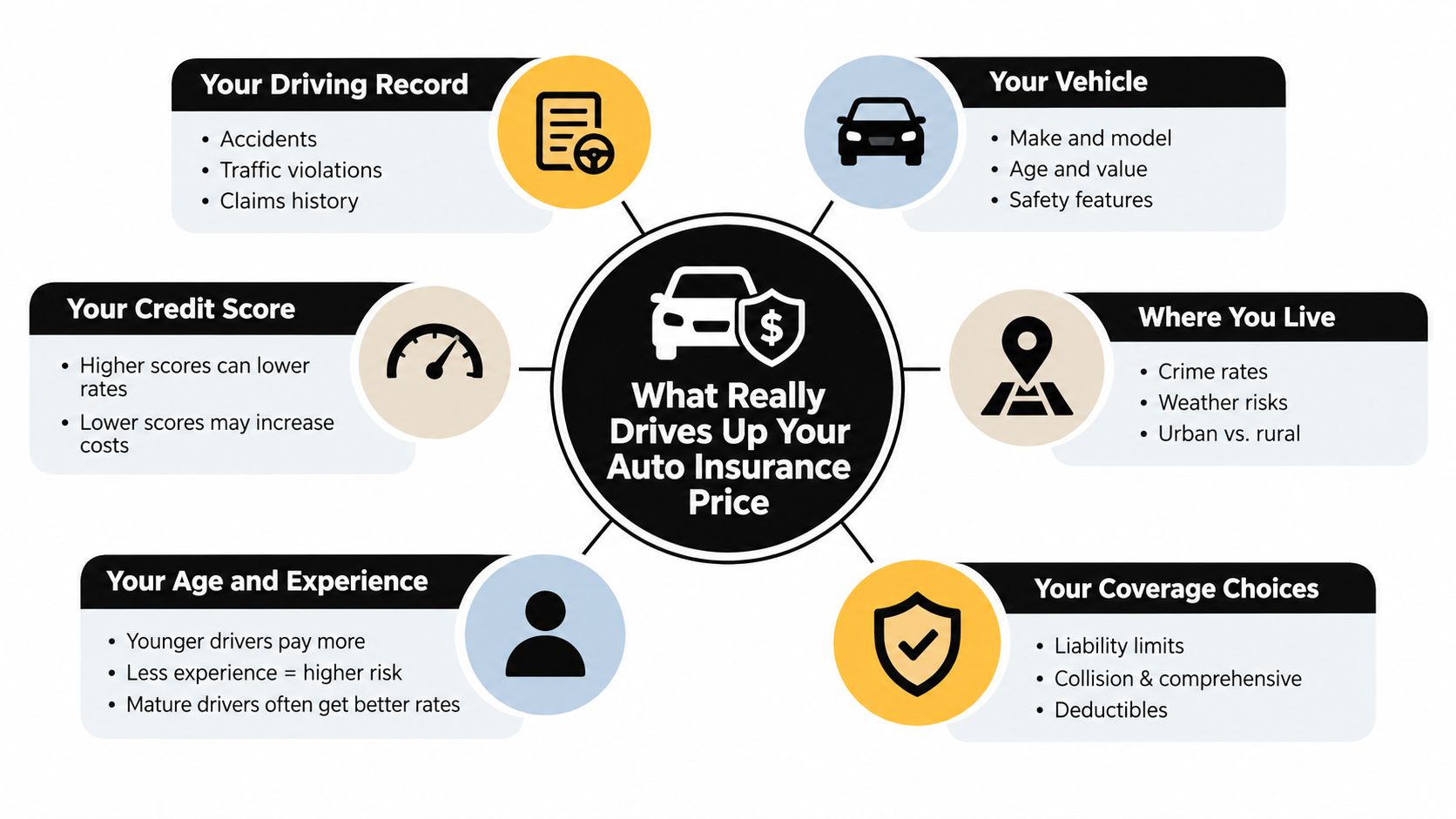
Suppose a driver has a low-speed collision in a Los Angeles parking lot. The visible damage may look minor, yet the claim can include sensors, diagnostics, medical care, a rental vehicle, and legal review. Your premium reflects the insurer's expected cost across that entire chain, not just the dent on the bumper.
The vehicle turns small damage into a complex claim
Modern vehicles pack expensive technology into ordinary-looking parts. A bumper may contain radar sensors, while an LED headlight can be one electronic assembly rather than a replaceable bulb. Aluminum panels also require different repair methods from conventional steel.
After a modest fender-bender, a repair shop may need to replace components, scan the vehicle, recalibrate safety systems, and wait for specialized parts. Each task adds time and expense. The average collision-repair bill reached $4,768 in 2026, up from under $3,300 in 2019, according to reporting on California repair-cost inflation. Parts prices, OEM versus aftermarket choices, technician labor, calibration, and longer repair times all raise what an insurer expects to pay for physical damage.
Injury claims add a separate cost layer
Vehicle repairs may finish quickly. Bodily injury claims can remain open while people receive treatment, miss work, hire attorneys, or disagree about pain and recovery. Those factors can make the liability portion of a claim much larger than the property damage.
California's required liability limits are now $30,000 per person, $60,000 per accident, and $15,000 for property damage, compared with the former $15,000/$30,000/$5,000 limits, as explained by the California Department of Insurance. Higher treatment costs and more severe losses can exhaust minimum limits faster. If a claim exceeds the available limits, the driver's assets may be exposed. Insurers still price policies for that potential loss across their customer base.
Location changes the expected claim pattern. Dense urban traffic creates more opportunities for collisions, while theft and vehicle break-ins add another source of losses. San Francisco and Oakland, for example, also face theft-related claims, including catalytic converter theft. These conditions do not describe every driver. They shape the risk attached to a ZIP code.
You can control some parts of the cost:
- Choose the vehicle carefully: Repairability, safety equipment, theft risk, and parts availability can affect the premium.
- Review the deductible: A higher deductible may lower the premium, provided you can pay it after a loss.
- Verify mileage: Accurate annual mileage keeps the policy aligned with how much you drive.
- Set coverage deliberately: Do not remove liability or uninsured motorist protection without understanding the financial exposure.
- Recognize the broader market: Repair inflation, medical severity, legal costs, and insurer rate filings require changes beyond one driver's control.
A quote comparison works best when these choices match across policies.
How Wildfires and Catastrophe Losses Reprice Every Policy
A driver in Sacramento or San Diego can pay more even without losing a vehicle to fire. California insurers collect premiums across auto, home, renters, and life coverage, then use that pool to pay claims, buy reinsurance, and maintain capital. Severe losses in one region can change where a carrier writes business and how it prices policies statewide.
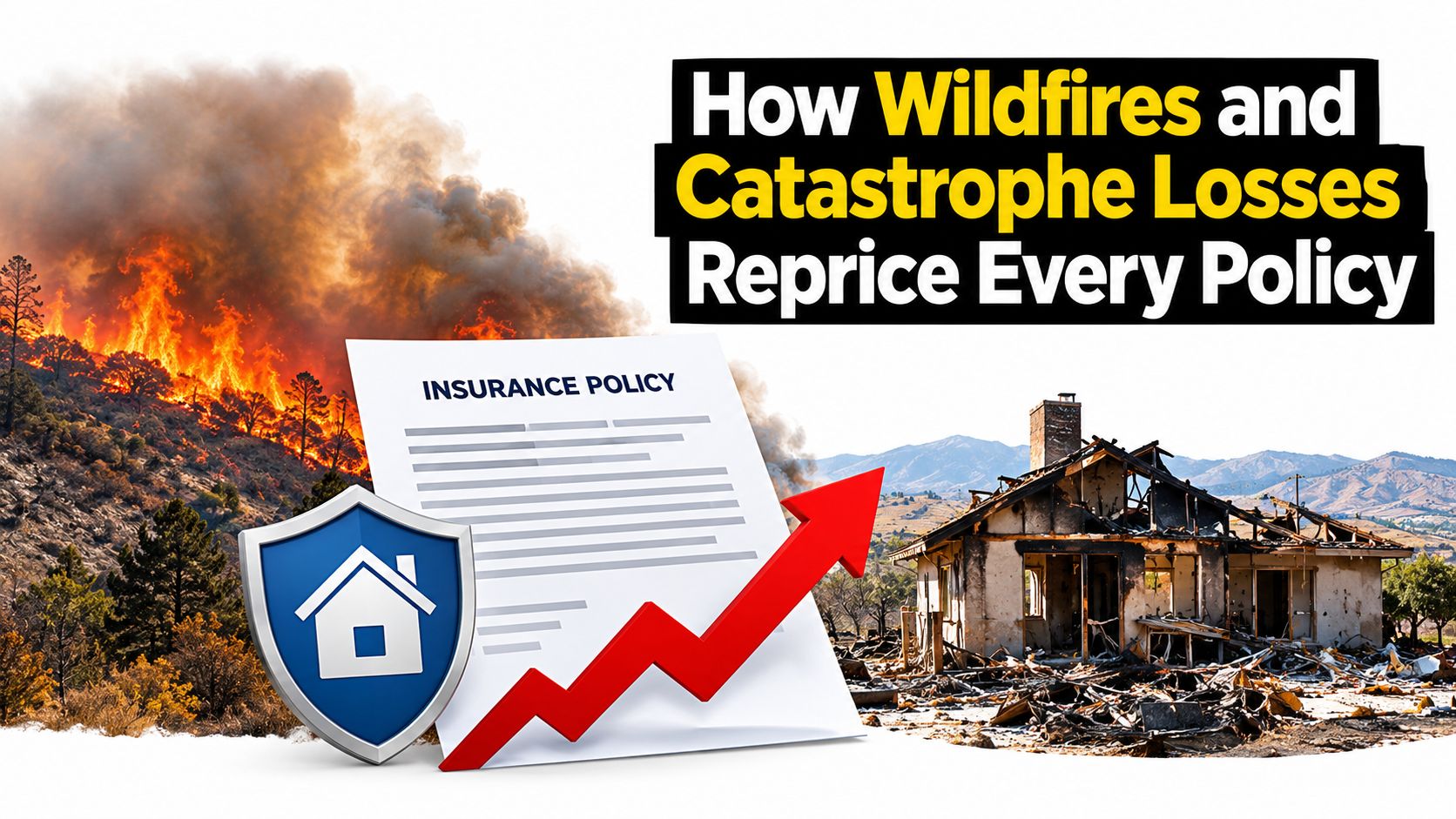
Insurers had paid more than $20.4 billion in claims from Los Angeles County wildfire events as of July 2025. The longer record shows a major shift: average annual fire claims rose from about $100 million between 1964 and 1990 to about $4 billion from 2011 to 2018, according to this analysis of California's insurance resilience challenge. Those losses begin in property coverage, but they can influence auto rates when insurers manage their entire California portfolio.
How property losses reach auto customers
Property catastrophes put pressure on homeowners insurance, reinsurance, and carrier capacity first. A carrier may respond by tightening underwriting, requesting rate changes, limiting new policies, or shifting prices among the customers and coverage lines it continues to serve. Auto insurance does not receive a direct surcharge for a specific wildfire. The carrier's wider profitability and capital needs can still affect auto filings.
The California FAIR Plan serves property owners who cannot find coverage in the standard market. Residential FAIR Plan policies are capped at $3.3 million, while growing exposure places pressure on the program, as described in this FAIR Plan oversight document. The resulting effects can reach drivers through fewer home and auto bundles, lender requirements, umbrella restrictions, and reduced availability of homeowners coverage.
After fire damage, these fire damage restoration tips can help you record conditions and organize repairs. Clear records support conversations with insurers and restoration professionals.
Review carrier restrictions, FAIR Plan availability, and umbrella requirements before renewal. A licensed agency can compare auto alone or examine the combined cost of California home insurance, renters, auto, and umbrella coverage. This connected review shows whether catastrophe pressures are affecting one policy or the household's entire insurance program.
Why California Rules Make Your Premium Look Different
California doesn't just copy the pricing system used elsewhere. Proposition 103, adopted in 1988, requires insurers to justify rate changes, roll back rates when required, and use driving record, mileage, and driving experience as primary pricing factors. Coverage level also matters, and ZIP code can receive limited consideration under California rules.
Credit scoring creates another important difference. California generally doesn't permit credit-based insurance scoring for private passenger auto policies, unlike the common practice in much of the country. That protects drivers from a credit tier directly changing an auto quote, but it also removes one tool insurers use elsewhere to divide risk among policyholders.
Required limits versus useful protection
California's minimum limits are a legal floor, not a recommendation for every household. The current standard minimums are $30,000 per person, $60,000 per accident, and $15,000 for property damage, while many financial advisors recommend limits such as 100/300/100 for drivers with meaningful assets or higher exposure.
| Factor | California Rule under Prop 103 | Typical National Practice |
|---|---|---|
| Driving record | Primary rating factor | Commonly used |
| Miles driven | Primary rating factor | Commonly used |
| Driving experience | Primary rating factor | Commonly used |
| Credit history | Generally not used for private passenger auto | Often used by insurers |
| ZIP code | May receive regulated consideration | Commonly used more broadly |
| Liability limits | State minimums apply, higher limits available | Limits vary by state |
Higher limits can increase the premium because the insurer accepts more potential liability. They can also reduce the chance that a serious accident leaves you personally responsible for losses beyond a low policy limit. The right choice depends on assets, income, household drivers, and risk tolerance.
When reviewing a quote, confirm the declarations page rather than relying on the payment amount alone. Question any credit-score tier shown on a private passenger California quote, and verify that the carrier actively writes California business instead of placing you through a non-admitted surplus lines broker without a clear explanation.
For general policy education and coverage questions, the California insurance guides can provide a starting point before you speak with an agent.
The Wider California Insurance Picture Behind Auto Rates
A driver may renew auto insurance, discover that home coverage has also changed, and then find that renters, umbrella, or life protection affects the same household budget. These policies use different underwriting rules, yet wildfire exposure, insurer capacity, and rising claim costs connect them. A household can feel one insurance problem through several monthly bills.
The FAIR Plan shows how property pressure can spread. Residential policies through the plan are capped at $3.3 million. Reports have also described the plan reaching beyond the highest-risk zones into other parts of California while carrying substantial exposure. The result is not that an auto policy becomes property insurance. Instead, fewer standard home insurance choices can make bundling harder, affect umbrella eligibility, and raise the combined cost of protecting one household.
One household, several connected decisions
Home insurance may be harder to place in wildfire-prone areas, while renters insurance remains a separate way to protect personal property and liability. California law does not require renters insurance, although some landlords do. The average cited premium is $240 per year, or $20 per month, for $100,000 in liability and $30,000 in personal property coverage, according to California insurance coverage reporting.
Life insurance uses another risk model. It considers health, age, income replacement, and policy design rather than vehicle claims or wildfire maps. The household finances are still shared. A steep home renewal can leave less money for auto liability, renters coverage, or life insurance. Reviewing those needs together can reveal gaps that separate quote searches miss.
California regulators have pushed insurers to write more business in high-risk areas. Under the 2026 rules, insurers can choose among writing 85% of their market share in high-risk areas, growing policies there by 5%, or increasing overall policies by 5% by moving customers out of the FAIR Plan, according to reporting on California's insurance market rules.
A licensed agency such as Mai & Associates can review auto, home, renters, and life needs together, then check which carriers will write that combination. Bundling may provide multi-policy pricing when available. Compare the total premium, limits, exclusions, and deductibles rather than assuming one bundle costs less.
Smart Ways to Cut Your California Auto Premium
A renewal notice can feel like a fixed bill, but several parts of your policy remain adjustable. Review the coverage design first, then check discounts and driving programs. The goal is to remove costs you can control without creating a gap that becomes expensive after a crash.
Start with coverage design
Use your declarations page as the baseline. Compare it with the car's age, current value, financing status, annual mileage, and household drivers. Each detail can change the premium or determine which coverage a lender requires.
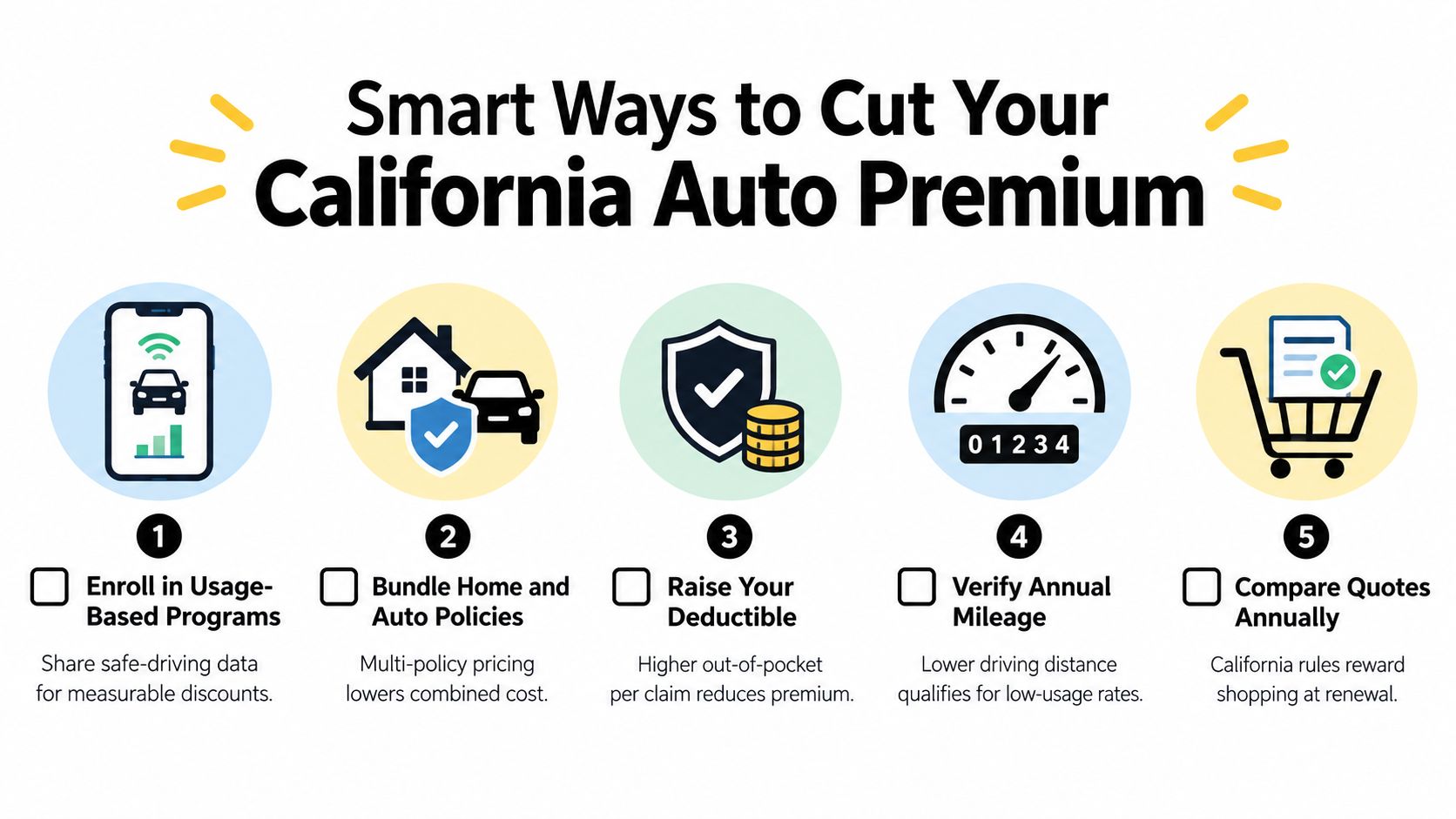
- Bundle where it makes sense: Ask whether placing auto with home or renters insurance creates a real multi-policy reduction. Compare the combined limits, exclusions, and deductibles before switching.
- Review deductibles: Raising a $500 deductible to a $1,000 deductible may lower the premium. Choose that option only if your emergency fund could cover the larger payment after a claim.
- Reconsider older vehicles: For an older car, compare collision and other coverage costs with its current market value. Keep any coverage required by a lender, and weigh the possible claim payment rather than looking only at the premium.
- Correct the mileage: Hybrid workers and low-mileage drivers should report actual use. An outdated commute can make the policy reflect driving that no longer occurs.
- Keep liability protection intact: Lower limits can reduce the bill, but they also leave more of an accident's financial cost with you.
Usage-based programs may help drivers whose habits fit the program's scoring rules. Progressive Snapshot and GEICO DriveEasy use telematics to evaluate signals such as braking, mileage, and time of day. Before enrolling, ask what the app or device records, how the information affects renewal pricing, and whether a poor result can raise costs or only reduce a discount.
California-specific discounts deserve a separate check. Ask about the good driver discount and the requirements under Proposition 103. Also ask about continuous coverage, student-away-at-school, and defensive-driver savings for drivers over 55. Eligibility varies, so request the rules in writing and confirm which household members qualify.

A home non-renewal does not automatically require moving your auto policy. Ask for a FAIR Plan review, then compare separate auto coverage if bundling no longer works. An independent agency such as Mai & Associates can check multiple carriers while keeping limits consistent, so the savings comparison remains meaningful.
Comparing Quotes and Choosing the Right California Agent
Quote shopping works best as a controlled comparison, not a search for the smallest first number. Start by gathering the current declarations page for every vehicle and driver, then record the policy limits, deductibles, annual mileage, garaging address, vehicle use, discounts, and required lender provisions.
Build an apples-to-apples quote
Request quotes from at least three carriers using identical information. A lower premium may reflect lower liability limits, a larger deductible, missing rental reimbursement, or reduced uninsured motorist protection.
Pay particular attention to:
- Uninsured motorist bodily injury: Confirm the limits and whether they match the protection you expect.
- Medical payments coverage: Ask what it covers and how it coordinates with health insurance.
- Rental reimbursement: Check the daily and total limits against local rental costs.
- Full and collision coverage: Verify deductibles, valuation rules, and lender requirements.
- Driver and vehicle details: Confirm license history, household members, commute use, and garaging location.
You can begin with a California auto insurance quote request, then ask each agent the same questions. Is the agent licensed in California? Which carriers do they represent? Can they quote auto with home or renters insurance? How do they handle SR-22 filings, non-standard drivers, FAIR Plan referrals, and high-risk properties?
Multilingual support can make a material difference when English isn't the household's first language. Ask for explanations of exclusions, deductibles, claims procedures, and renewal conditions in the language your family uses for financial decisions.
Ask directly: “What changed from my current policy, and which difference accounts for the premium change?”
Be cautious with teaser rates that depend on unverified information. Treat pressure to drop uninsured motorist coverage as a warning sign, especially if the agent won't explain the tradeoff. Ask for a clear explanation of how the Itemized Fee Schedule affects injury claims and whether the quoted carrier is admitted and actively writing in California.
The goal isn't just to find a cheaper car insurance payment. It's to find a policy that preserves the protection you need, fits your California household, and remains understandable when you have to use it.
Mai & Associates can compare California auto insurance with home, renters, and life coverage, review FAIR Plan and wildfire-related needs, and provide no-obligation quotes through licensed agents. Visit Mai & Associates to request a coverage review and compare options with the limits, deductibles, and household risks clearly laid out.