What Is Universal Life Insurance: A 2026 Guide
Universal life insurance is permanent life insurance that combines a death benefit with a cash value account, and its flexible design is one reason indexed and variable universal life products made up 42% of individual life business sold in 2024, up from 30% in 2019. In plain English, it's life insurance you can adjust over time, with premiums and coverage that can shift as your life changes.
If you're reading this, there's a good chance you're trying to protect more than one thing at once. Maybe you're comparing life insurance while also juggling California auto insurance, home insurance, renters insurance, or car insurance costs. Maybe you bought a home in Escondido, rent in Glendale, or you're raising kids in Costa Mesa and wondering how to build a financial plan that can keep up with real life.
That's where universal life often enters the conversation. It's not as simple as term life, and it's not as rigid as whole life. For some Californians, that flexibility is the appeal. For others, it's exactly what makes the product confusing.
The key is to understand what you're buying before you buy it. Universal life can be useful. It can also disappoint people who assume “flexible” means “maintenance-free.” A California family dealing with mortgage payments, business income swings, rising living costs, and long-term planning needs a clearer explanation than most generic articles provide.
Your Guide to Flexible Life Insurance Protection
A lot of families don't need the exact same insurance plan forever. Early on, you may want enough coverage to protect a spouse, pay off a mortgage, and leave money for children. Later, after debts shrink or income rises, your priorities may change. You might care more about leaving a legacy, supporting retirement planning, or creating liquidity for your estate.
That's the core reason people ask what is Universal Life Insurance. It's designed for changing needs.
Universal life insurance is a permanent policy that combines a death benefit with a cash value account funded by flexible premiums, allowing policyholders to increase or decrease premium payments within limits and even adjust the death benefit as needs change (Policygenius explanation of universal life insurance).
Why that matters in California
California households often face moving parts all at once. A family might be paying for home insurance in a wildfire-aware area, updating auto insurance for a teen driver, carrying renters insurance before buying a house, and trying to make smart decisions about life insurance without overcommitting.
Universal life tries to solve a specific problem. It offers lifetime coverage, but with more room to adapt than a fixed permanent policy.
Think of it this way:
- Term life is built for a set period.
- Whole life is built for predictability.
- Universal life is built for adjustment.
Universal life works best for people who expect their financial picture to change and who are willing to review the policy as life changes with it.
The policy has two big moving parts. One is the death benefit, which goes to your beneficiaries if you die while the policy is in force. The other is the cash value, which is the policy's internal savings component.
For readers who are also sorting through bigger legacy questions, Bryan Fagan PLLC's estate planning advice is a useful companion read because life insurance often works best when it fits into a broader estate plan, not as a stand-alone purchase.
If you're comparing protection across multiple categories, from life insurance to car insurance, home insurance, and renters insurance, a broader set of California insurance guides can help you see how these pieces fit together.
How Universal Life Insurance Actually Works
Universal life is easier to understand if you stop thinking of it as one big payment and start thinking of it as a system with separate buckets.
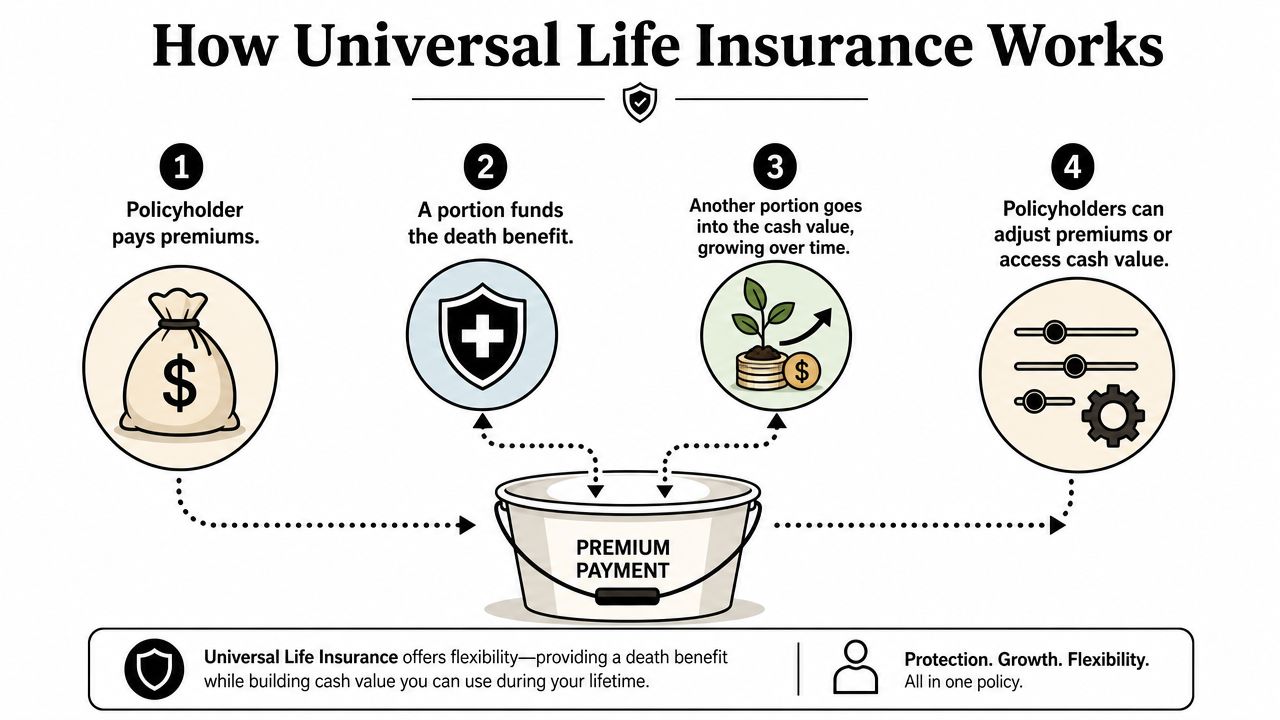
The bucket analogy
When you pay your premium, the money doesn't just disappear into a single black box. Universal life is an unbundled policy. Premiums, interest crediting, and mortality and expense charges are separated so the policyholder can see where each premium dollar is allocated (open exam prep overview of universal life structure).
Here's the simple version:
- You pay a premium.
- Part of that money covers the cost of insurance and policy charges.
- The rest can build cash value.
- The cash value earns interest based on the policy's rules.
That separation is what makes universal life more flexible than whole life. You can often vary how much you pay, within policy limits, because the policy is tracking those moving pieces separately.
What the cash value actually does
Many people hear “cash value” and assume it works like a checking account. It doesn't.
A better analogy is a reserve tank inside the policy. That reserve can help support the policy's costs over time. Depending on the policy and how it's funded, the cash value may grow, and you may be able to access it through withdrawals or loans. But if you pull money out, or if growth is weaker than expected, the policy may need more premium later.
Practical rule: Flexible premiums don't mean optional planning. The policy still needs enough value to carry its internal costs.
Often, people get tripped up by this. They hear that they can lower premiums, skip premiums, or adjust coverage. Technically, that may be true. Financially, it only works if the policy has enough strength to support those choices.
A monthly view of the policy
A universal life policy behaves more like a machine than a simple bill. Each month, charges are deducted, and interest is credited based on the contract. If you overfund early, you may build a larger cushion. If you only pay the bare minimum for too long, that cushion can weaken.
That's why annual reviews matter. You're not just asking whether the policy is active today. You're asking whether it still makes sense for your goals in five, ten, or twenty years.
If you run into unfamiliar terms like cost of insurance, cash surrender value, or participation rate, a plain-language insurance glossary for California readers can make the product much easier to decode.
Universal Life vs Term and Whole Life Insurance
Choosing between term, whole, and universal life usually comes down to one question. Are you buying temporary protection, guaranteed permanence, or flexible permanence?
Term life is usually the simplest to understand. You buy coverage for a defined period. Whole life is built around fixed premiums and stronger guarantees. Universal life sits in the middle. It offers permanent coverage, but with moving parts that require attention.
The practical difference
Term life works a lot like renting. You're paying for protection during a specific stretch of time.
Whole life is closer to buying with a fixed payment structure. It's generally more rigid, but many people like that because the rules don't move around much.
Universal life is for buyers who want permanent coverage but don't want every feature locked in from day one. That flexibility can help if income changes, family obligations change, or estate planning goals evolve.
Life Insurance Policy Comparison
| Feature | Term Life | Whole Life | Universal Life |
|---|---|---|---|
| Coverage length | Temporary | Permanent | Permanent |
| Premiums | Typically fixed during term | Fixed | Flexible within policy limits |
| Cash value | No | Yes | Yes |
| Death benefit changes | Usually no | Usually no | Often adjustable within policy rules |
| Complexity | Low | Moderate | Higher |
| Best fit | Income replacement for a set period | Long-term certainty | Long-term flexibility |
How to think about the choice
Use term life if your goal is straightforward income protection during working years, a mortgage period, or while your children depend on you.
Use whole life if you want stronger guarantees and don't want to monitor the policy closely.
Use universal life if you want room to adapt the policy over time and you're comfortable reviewing performance and funding.
The best policy isn't the one with the most features. It's the one you'll understand, maintain, and keep in force.
For California residents comparing long-term protection options, a focused guide to life insurance in California can help you evaluate how these policy types fit local financial realities alongside other priorities like home insurance, renters insurance, and car insurance.
The Different Flavors of Universal Life Policies
Universal life isn't one single product. It's a category. That matters because two policies with “universal life” on the label can behave very differently.
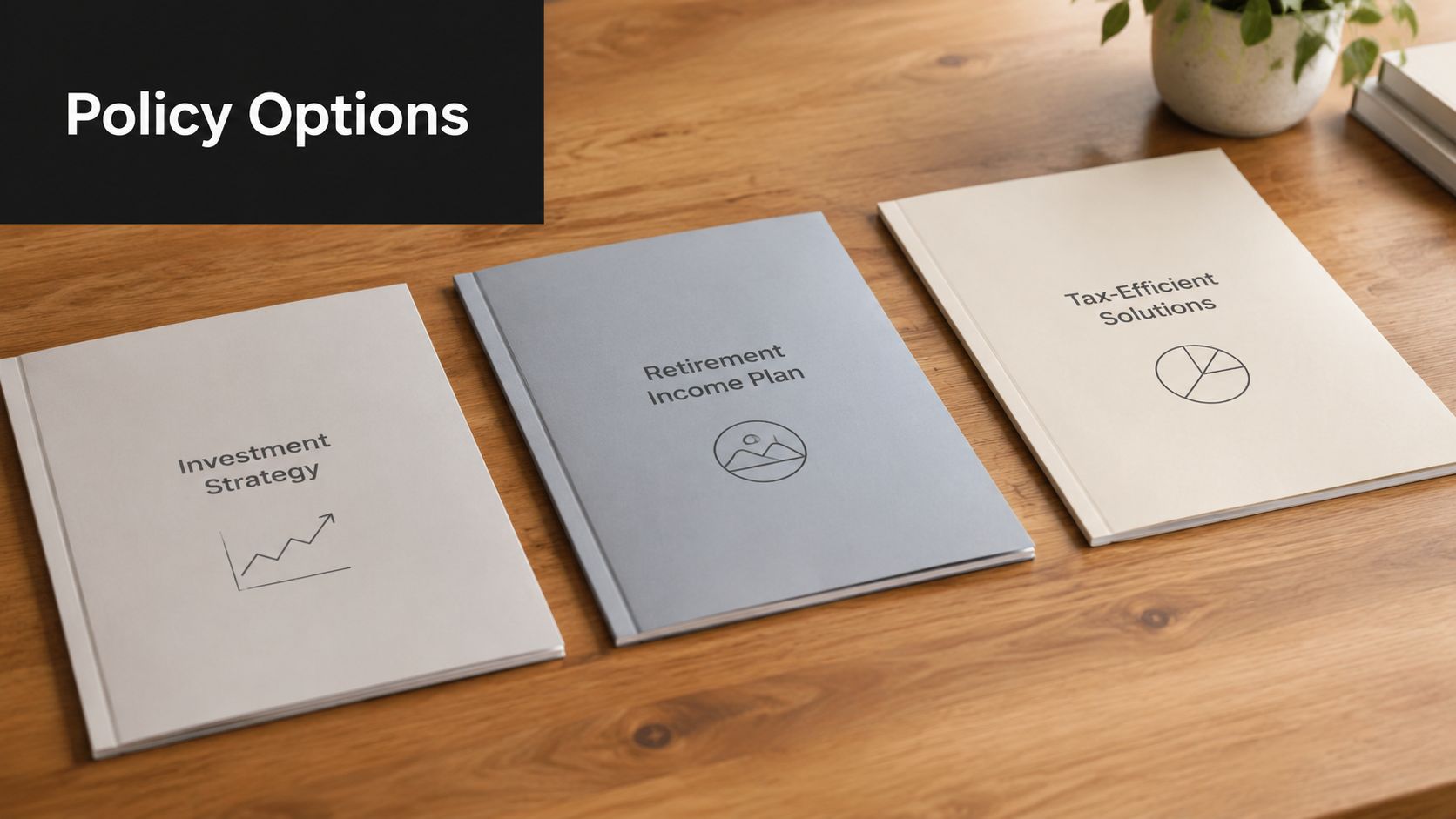
The market has moved strongly toward these products. Indexed and variable UL products made up 42% of all individual life business sold in 2024, up from 30% in 2019, and Indexed Universal Life premiums reached a record $4.5 billion in 2025 according to Milliman's review of five-year U.S. life insurance trends.
Guaranteed Universal Life
Guaranteed Universal Life, often called GUL, is the plainest version for many buyers. Its main appeal is the death benefit, not aggressive cash value growth.
This type often fits someone who wants lifelong coverage with a more budget-conscious focus and less interest in using the policy as a savings vehicle. A Californian nearing retirement might choose GUL if the goal is to leave money behind for a spouse or children.
Indexed Universal Life
Indexed Universal Life, or IUL, links interest crediting to a market index. The policyholder does not directly invest in the index. The index is used as a measuring tool for how interest may be credited.
That distinction matters. People sometimes hear “market-linked” and think “stock market ownership.” That's not how IUL works. The policy can include a floor, a cap, and a participation rate, all of which affect credited growth.
IUL may appeal to someone who wants more upside potential than traditional fixed crediting, but still wants guardrails built into the policy structure.
Variable Universal Life
Variable Universal Life, or VUL, gives the cash value more direct market exposure through investment-style sub-accounts. That creates higher growth potential, but it also brings greater risk.
A buyer in Glendale or Costa Mesa who already understands market volatility might consider VUL if they want permanent coverage and are comfortable with investments rising and falling. This is usually the least forgiving version for someone who wants a simple, low-maintenance policy.
Which flavor fits which buyer
- If your priority is guarantees, GUL is usually the first place to look.
- If your priority is balance, IUL may be the better match.
- If your priority is growth potential and you accept investment risk, VUL may fit.
The label matters less than the design. When someone asks what is universal life insurance, the honest answer is that you first need to know which kind of universal life they mean.
The Real Benefits and Critical Risks You Need to Know
Universal life gets marketed for its flexibility. That part is real. It can be useful for people with uneven income, changing family obligations, or a desire to adjust long-term coverage.
But the same flexibility that makes the product attractive can also create problems when buyers treat the minimum payment as a safe long-term strategy.
The benefits people usually care about
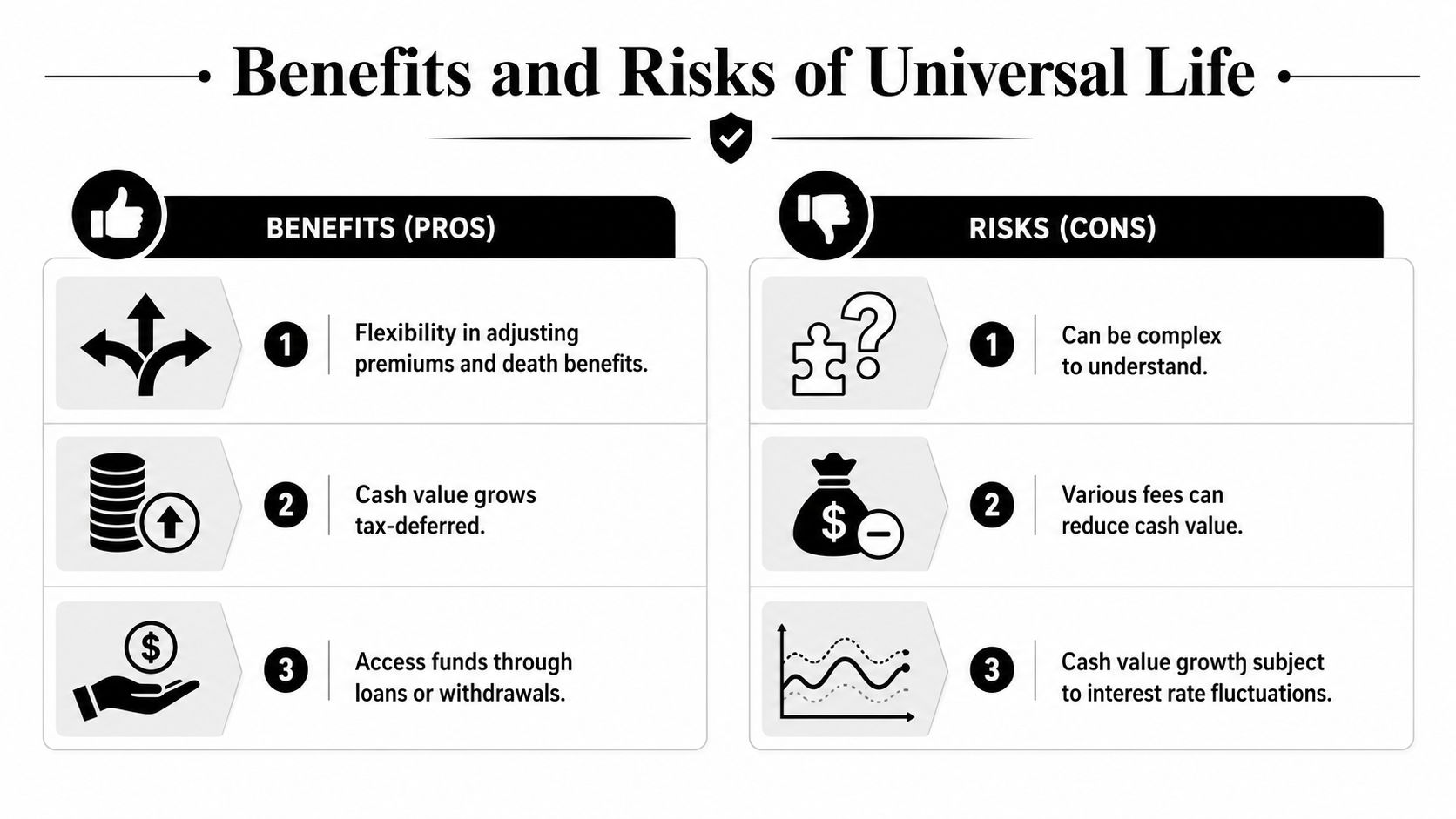
For the right person, universal life can offer meaningful advantages:
- Flexible funding: You may be able to raise or lower premium payments within policy rules.
- Adjustable protection: Some policies allow death benefit changes as needs shift.
- Cash value access: Policyholders may be able to use loans or withdrawals, depending on the contract.
- Permanent coverage: Unlike term insurance, universal life is designed to last for life if properly maintained.
That flexibility can be especially attractive for freelancers, business owners, and households with income that isn't perfectly predictable from year to year.
The risk many buyers miss
Here's the part that needs more attention. UL policies with minimal premiums have a 25% to 30% higher lapse rate than whole life policies because rising insurance costs later in life can outpace interest credits (Guardian's discussion of universal life risks).
That means a policy can look manageable for years and still become fragile later if it hasn't been funded well.
A lot of people hear “flexible premium” and translate it as “pay as little as possible.” That's not a safe assumption. If the internal costs rise and the cash value doesn't keep pace, the policy can collapse unless you put more money in.
If you buy universal life, don't judge it only by today's payment. Judge it by whether the policy is still sustainable at older ages.
A California planning angle
This matters in California because many households are balancing several expensive priorities at once. Mortgage costs, home insurance, auto insurance, renters insurance for adult children, and business volatility can all push life insurance into the background.
Universal life can still work well, but it rewards discipline. It's better for a household that will review statements, revisit funding, and coordinate insurance with tax and estate decisions. If you're also thinking through asset sales or legacy planning, this guide on how to reduce your capital gains taxes can add useful context because insurance planning often sits alongside broader tax strategy.
Estimating Universal Life Insurance Costs in California
There isn't one standard price for universal life insurance in California. Two people the same age can get very different offers because underwriting is personal.

What insurers look at
When an insurer prices a universal life policy, it usually considers your health, age, lifestyle, and how much coverage you want. In many cases, underwriting includes a health questionnaire and usually a paramedical exam, although some carriers offer accelerated underwriting without an exam for certain applicants. The underwriting result places the applicant into a health class such as Preferred Plus, Standard, or a rated class, and that affects cost and policy projections (California-focused overview of universal life underwriting).
Here's what that means in practice:
- Age matters: Coverage generally becomes more expensive as you get older.
- Health matters: Blood pressure, medications, medical history, and build can affect classification.
- Lifestyle matters: Smoking and risky activities can change pricing.
- Policy design matters: A GUL, IUL, and VUL won't be priced or illustrated the same way.
Why California buyers should be careful with illustrations
California buyers often compare multiple financial pressures at once. Someone might be shopping for life insurance while also updating home insurance after a property review, reviewing car insurance deductibles, or trying to keep renters insurance affordable for a family member.
That makes it tempting to focus on the lowest starting payment. With universal life, that can be misleading. A lower early premium doesn't automatically mean a better policy. The stronger question is whether the funding plan matches how long you want coverage to last and how much policy management you're willing to do.
A smarter way to compare
When you review illustrations, ask practical questions:
- What happens if I pay this amount consistently?
- How sensitive is this policy to lower interest crediting or rising internal costs?
- Will I realistically review this every year?
A well-designed policy should match your behavior, not just your hopes. If you want a set-it-and-forget-it plan, universal life may not be the best fit. If you want adjustable permanent coverage and you're willing to pay attention, it may deserve a closer look.
Universal Life Insurance FAQ for California Residents
California buyers usually have a few state-specific questions that deserve direct answers.
What is the free look period in California
California requires a Free Look period for life insurance policies, typically 10 to 30 days, during which you can review the policy and cancel without penalty if you decide it isn't right for you. That window gives you time to read the contract carefully and confirm that the policy matches what you thought you were buying.
How does California's grace period work
California requires a 60-day grace period before a life insurance policy, including IUL, can lapse for nonpayment under Insurance Code 10113.71. That's longer than the typical 30-day grace period mentioned in the verified data, which gives California policyholders extra time to catch up if a payment is missed ().
This is helpful protection, but it's not a substitute for monitoring the policy. A grace period can prevent an immediate lapse. It can't fix a chronically underfunded policy.
Are universal life death benefits taxable in California
Death benefits are generally free of federal income tax to beneficiaries, and California has no state estate tax or income tax on standard death benefits according to the verified source above.
That's one reason life insurance remains a central part of many family protection plans. It can create immediate liquidity at death without adding California income tax on the standard death benefit itself.
Before you sign, use the free look period to review the illustration, confirm the premium plan, and ask how the policy behaves if you pay less than expected.
If you want help with broader California coverage questions, including life insurance, auto insurance, home insurance, renters insurance, and car insurance topics, this California insurance FAQ hub is a good next stop.
If you want personalized help comparing universal life insurance with term life, whole life, and your broader California insurance needs, Mai & Associates can help you review options for life insurance, auto insurance, home insurance, renters insurance, and car insurance with clear guidance and no-obligation quotes.