What Is Property Damage Liability Coverage A Guide for California Insurance
Property damage liability coverage is the part of your insurance policy that pays for the mess you make—specifically, the damage you cause to someone else’s property. It’s a mandatory piece of your auto insurance puzzle in California, designed to cover repair or replacement costs when you’re the one at fault in an accident.
Your Financial Shield Against Costly Accidents
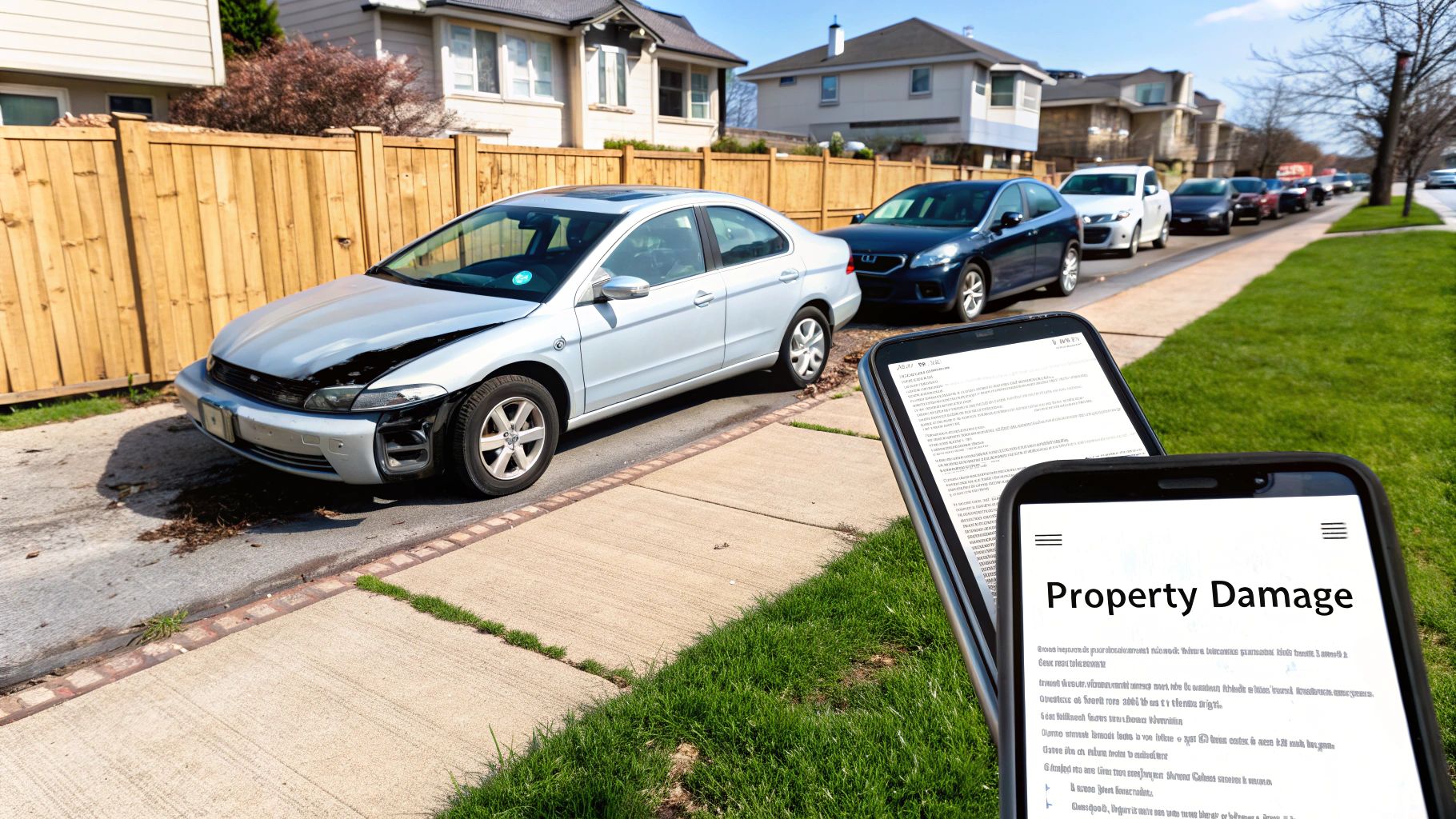
Think of property damage liability as your financial bodyguard. If you cause a car crash in California, this is the coverage that steps up to pay for the damage to the other person's stuff. It’s what stands between your personal savings and a massive, unexpected bill.
This protection is a cornerstone of any solid California insurance plan, whether it’s for your car insurance, home insurance, or even renters insurance. Its whole purpose is to handle the financial fallout from your mistakes, protecting others while keeping your own finances from taking a direct hit.
The Scope of Protection
So, what exactly does property damage liability pay for? You might be surprised. It’s not just about other cars. The protection is actually quite broad.
Here's a quick rundown of what it typically covers:
- Vehicle Repairs: This is the big one. It pays to fix the other driver’s car, truck, or motorcycle after a collision you caused.
- Structural Damage: Ever seen someone back into a garage door or take out a mailbox? This coverage handles repairs to things like fences, lampposts, and even buildings.
- Other Personal Property: It can also cover personal items that were damaged in the incident, like a laptop or phone that was inside the other person's car.
You might not think about property damage often, but it happens all the time. In fact, one report found that in 2023, property damage and theft were behind a staggering 97.3 percent of all homeowners insurance claims. You can see more data on liability insurance trends from industry analysts like Fortune Business Insights.
At its heart, property damage liability isn't for you—it's for them. It's how you meet your legal and financial duty to make things right when an accident is your fault.
To help you get a quick handle on this, here's a simple breakdown of the core concept.
Property Damage Liability at a Glance
| Concept | Simple Explanation |
|---|---|
| Who It Covers | The other person or party, not you. |
| What It Covers | Damage to their car, fence, building, or other property. |
| Why It's Required | To ensure you can pay for damages you cause, protecting victims financially. |
| Where It Applies | On your auto, homeowners, or renters insurance policies in California. |
This table shows why getting this coverage right is so important.
Understanding this key difference is the first step to building a truly protective insurance plan. A well-designed policy for auto insurance in California will always have enough property damage liability to protect you from lawsuits and potentially life-altering debt. It's the coverage that guards everything you've worked for, similar to how life insurance protects your family's future.
Real-World Examples of What This Coverage Pays For
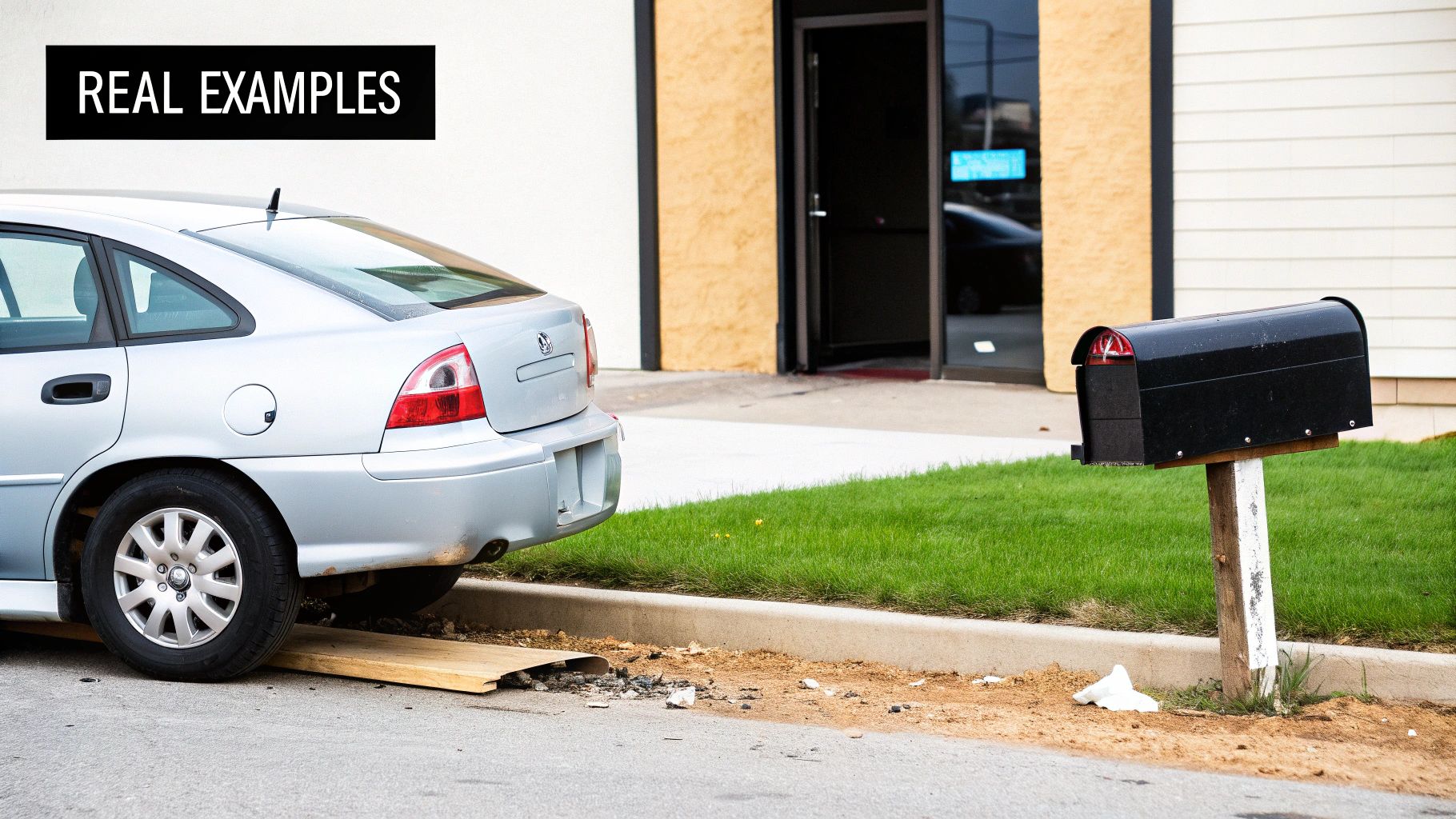
To really understand what is property damage liability coverage, it helps to see how it plays out in the real world. Think of it this way: it’s the part of your auto insurance that pays for stuff you break that belongs to someone else. The key words here are someone else's—it never pays for your own car or property.
This coverage is absolutely essential in a state like California, where crowded roads and tight parking lots make fender benders a daily reality. The numbers are staggering; U.S. property/casualty insurers wrote $172.8 billion in premiums in 2024, and a huge chunk of that comes from liability claims. For a bigger picture, you can dig into insights on the global liability insurance market to see the scale of it all.
Common Scenarios This Coverage Handles
So, when does this California insurance actually step in?
Let's say you're trying to parallel park in Glendale and you misjudge the distance, leaving a long scratch down the side of a brand-new Lexus. Your property damage liability is what will cover the bill for that pricey repair job.
Here are a few other everyday situations where it comes to the rescue:
- Vehicle Damage: This is the big one. It pays the repair costs for any car, truck, or motorcycle you hit when you're at fault for an accident.
- Structural Damage: It’s not just for cars. If you back into your neighbor’s fence in Escondido, swerve into a storefront window in Costa Mesa, or take out a custom-built mailbox, this coverage pays to fix it.
- Landscaping and Personal Items: It can even cover damage to things like a prized rose garden, a city street sign, or even a laptop that was in the other person's trunk during the crash.
Remember, the whole point of property damage liability is to make the other person whole again after an accident you caused. It's the buffer that protects your own savings and assets from being drained to pay for the damages.
These examples show just how quickly the costs can skyrocket, which is why having the right limits on your car insurance is so important. For more tips on navigating California insurance, feel free to check out our comprehensive insurance blog.
What's Not on the Table: Understanding Your Coverage Limits
It's one thing to know what your property damage liability covers, but it’s just as vital to understand what it doesn't. This is where a lot of California drivers get into financial trouble, assuming this coverage is a catch-all safety net.
Let’s clear up the biggest misconception right away: property damage liability will not pay to fix your own car if you cause the accident. It’s strictly for covering the damage you do to other people's property.
Think of it this way: liability coverage looks outward, protecting others from your mistakes. For your own vehicle's repairs, you need an entirely different coverage called collision coverage on your car insurance policy.
Key Exclusions You Need to Know
Beyond your own car, there are a few other important things this coverage won't touch. Knowing these gaps is the first step to making sure you're fully protected, often by supplementing with your home insurance or renters insurance in California.
Here’s a quick rundown of what property damage liability typically excludes:
- Your Personal Stuff: That laptop on the passenger seat or the expensive sunglasses in the glove box? If they're damaged in a crash you cause, this policy won't cover them.
- Intentional Acts: Insurance is for accidents. If you intentionally ram someone's fence or mailbox, you're on your own for the repair bill.
- Business on Your Own Time: Using your personal car for business, like delivering for a food app or running a courier service? A standard policy usually won't cover an accident that happens while you're on the clock.
The golden rule for property damage liability is simple: It's designed to pay for the accidental harm you cause to someone else. It is not a repair fund for your own property or a get-out-of-jail-free card for deliberate damage.
For a deeper dive into how these coverage caps work in practice, this guide on insurance policy limits is a great resource.
Why California's $5,000 Minimum is a Financial Trap
California law says you only need $5,000 in property damage liability. Let’s be blunt: in today's world, that number is dangerously low. What might seem like a minor fender bender can easily blow past that limit, leaving you to pay the rest out of your own pocket.
Think about the cars on the road today. They're packed with sensors, cameras, and complex electronics. A simple rear-end collision isn't just a bumper replacement anymore; it can involve recalibrating sensitive systems. This technology has driven average repair bills up by 20 percent or more.
Suddenly, that $5,000 minimum for California auto insurance feels less like a safety net and more like a financial trap waiting to spring.
Here’s what that looks like in the real world across California:
- Luxury Car Repair: Scratched the bumper of a high-end sedan in San Francisco? That repair could easily cost $8,200, leaving you on the hook for the $3,200 difference.
- Residential Damage: Misjudged a turn and clipped a decorative fence in Pasadena? That can run $6,400 to fix, putting you $1,400 in the hole.
- Commercial Property: A small mishap that breaks a storefront window in Santa Monica could set you back $10,000 or more—double the state minimum.
It’s Not Just Cars—Home and Property Costs are Soaring
The risk isn't just about other vehicles. Imagine accidentally backing into a stucco wall or a custom-built gate in an upscale neighborhood like Beverly Hills. Minor damage can quickly escalate to $6,500 or more, especially with the unique materials and landscaping many properties feature.
With property values and construction costs on the rise, even modest damage can result in a repair bill that completely dwarfs the state-mandated coverage. This mismatch puts underinsured drivers in a seriously precarious financial position. This is why having adequate home insurance is just as critical as proper car insurance.
This problem is part of a bigger trend. As highlighted by global research from platforms like Statista, rising litigation and settlement costs are pushing insurance premiums higher everywhere. For our clients in areas like Escondido or Glendale, where risks like wildfires are also a factor, having inadequate limits is just asking for trouble.
“Relying on the state minimum of $5,000 is an open invitation for a lawsuit to drain your savings.”
If the damages exceed your policy limit, the other party isn't just going to forget about the rest of the money. They can sue you for it. That means the initial repair bill is only the beginning; you could be facing thousands more in legal fees and court costs. This can threaten assets you might protect with other policies, like life insurance.
Let's break down a simple scenario: you cause an accident with $15,000 in damages.
- Your insurance pays its maximum: $5,000.
- You are now personally responsible for the remaining $10,000, plus any legal fees.
- To cover that debt, your personal assets—your home, your savings, even your future wages—are all at risk.
How to Actually Protect Yourself
The good news is that significantly better protection doesn't cost a fortune. Opting for a more realistic limit on your California insurance policy, like $50,000 or $100,000, provides a much-needed financial cushion against the realities of today's repair and replacement costs.
A great strategy is to bundle your auto insurance and home insurance policies. Not only can this often save you money, but it also creates a more comprehensive liability shield, simplifying the claims process if you ever need it.
Don't wait for a costly accident to find out your coverage is too low. Contact Mai & Associates today, and let's make sure your policy truly protects your financial future in California.
How to Choose the Right Coverage Limits for You
Picking the right amount of property damage liability coverage feels like a balancing act, doesn't it? You want to be protected, but you also don’t want to shell out cash for insurance you'll never use. The trick is to look past the monthly premium and think about what’s really on the line if you cause a serious accident.
A great place to start is with a quick, honest look at your own finances. Tally up your assets: the equity in your home, what’s in your savings and investment accounts, even valuable personal items. That total number is what could be at risk in a lawsuit if the accident costs more than your policy covers. Your goal should be to get enough coverage to protect everything you've worked for.
Decoding Your Policy Numbers
When you’re shopping for car insurance in California, you’ll see those classic three numbers, like 50/100/50. It’s the last number that we’re focused on here. In this example, the "50" means you have $50,000 in property damage liability coverage. Think of that number as your financial firewall for any single accident you cause.
This decision tree shows exactly why just sticking with California's $5,000 minimum is such a gamble.
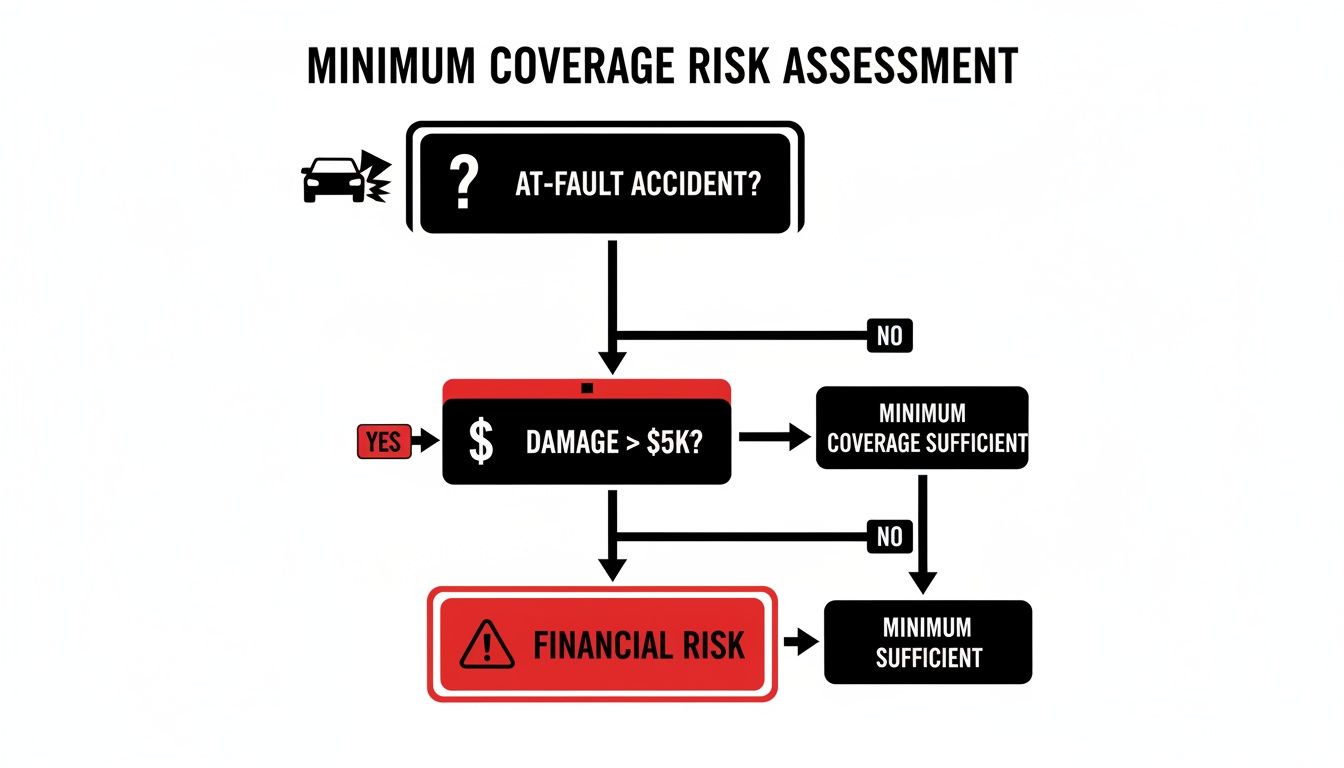
As you can see, one bad day on the road with damages over the state minimum can put your personal finances in immediate jeopardy.
It’s also helpful to know how insurers value the things you damage. They don’t just pay to replace a car with a brand new one. Instead, they typically figure out how Actual Cash Value (ACV) is determined, which accounts for depreciation.
Example Scenarios vs. Coverage Levels
To see how this plays out in the real world, let's look at a few common accident scenarios. This table breaks down what you'd be on the hook for with minimum coverage versus a more realistic limit.
| Accident Scenario | Total Property Damage | Covered by CA Minimum ($5k) | Your Out-of-Pocket Cost | Covered by Recommended Limit ($50k+) |
|---|---|---|---|---|
| Minor fender-bender with a used sedan | $6,500 | $5,000 | $1,500 | $6,500 |
| Hitting a newer SUV, causing significant damage | $28,000 | $5,000 | $23,000 | $28,000 |
| Multi-car pileup involving two other vehicles | $55,000 | $5,000 | $50,000 | $55,000 |
| Crashing into a storefront or utility pole | $90,000+ | $5,000 | $85,000+ | $90,000+ (if limit is $100k) |
The numbers don't lie. A single accident can easily blow past the state minimum, leaving you to pay the difference—which could be tens of thousands of dollars.
For a lot of Californians, a $100,000 limit is a much safer starting point. If you have more assets to protect, it’s worth looking into a personal umbrella policy, which can add $1 million or more in liability protection for a surprisingly small cost. These policies can extend over both your auto insurance and home insurance.
Finding that sweet spot is key to protecting your financial future. For more tips on building the right insurance plan for your life, feel free to check out our other helpful guides here at https://cahomeauto.com/guides.
Your Top Questions Answered
Let's clear up some of the most common questions California drivers have about property damage liability. Think of this as a quick-reference guide to help you feel more confident about your coverage.
Does My Property Damage Liability Cover a Rental Car?
Yes, for the most part. The liability coverage from your personal auto insurance policy usually follows you when you rent a car for personal trips. It’s a great built-in feature that gives many drivers peace of mind.
But—and this is a big but—it's always smart to double-check with your own insurance agent. Policies can have specific quirks. Also, remember that your liability coverage only pays for damage you cause to other people's cars or property, not the rental car itself. For that, you'd need the rental company's collision damage waiver or your own collision coverage.
What Happens If the Property Damage Exceeds My Liability Limits?
This is the scenario every driver wants to avoid. If you cause an accident and the repair bills are higher than your policy limit, you're on the hook for the rest. The other party can sue you personally to get that money.
Suddenly, your savings, your home, and even your future earnings are at risk. This is precisely why choosing coverage limits well above the state minimum is so critical. It’s not just about being legal; it’s about protecting everything you've worked for.
Think of robust liability limits as a financial firewall protecting your personal assets. Settling for the minimum amount on your California insurance leaves gaping holes in that firewall.
How Does Liability Coverage Work for Renters Insurance?
It’s a similar concept but for a different part of your life. Liability coverage in a renters insurance policy protects you from property damage claims inside your rented home. For instance, it could cover the costs if a kitchen fire you accidentally started damages the apartment building.
It also steps in if your negligence causes damage to another tenant's property or even a guest's belongings while they're visiting. It’s an essential safety net for any renter in California.
Is Property Damage Liability the Same as Collision Coverage?
Not at all, though they often work together. They are two distinct parts of a comprehensive car insurance policy, and it’s a common point of confusion.
Here’s the simplest way to remember it:
- Property Damage Liability: Pays for damage you do to someone else's stuff.
- Collision Coverage: Pays to fix your own car after an accident, regardless of who was at fault.
To be truly protected out on the road, most drivers in California really need both. If you're looking for more answers, our comprehensive FAQ page is a great resource.
Figuring out the ins and outs of property damage liability can feel a bit overwhelming, but you don't have to go it alone. The licensed agents at Mai & Associates are here to give you clear, no-obligation quotes and help you find that sweet spot between solid protection and a price you can afford for all your California insurance needs, from auto insurance and home insurance to renters insurance and life insurance. Protect your financial future by getting the right coverage in place today. Visit us at https://cahomeauto.com to compare rates and talk to an expert.