What Is Personal Liability Coverage in California and Why It Matters
Think of personal liability coverage as your financial bodyguard. It's the part of your insurance that steps in to protect your savings and assets if you're found legally responsible for hurting someone or damaging their property. This can happen anywhere—at your home, on the road, you name it, and having the right California insurance is key.
Your Financial Bodyguard: A Deeper Look
Personal liability coverage isn't something you buy on its own. It's a critical piece of the puzzle that's already built into your existing California insurance policies, like your auto insurance, home insurance, or renters insurance. Its whole purpose is to manage the financial mess after an accident you've caused, so one bad day doesn't spiral into a personal financial catastrophe.
At its core, this coverage pays for another person's losses when you're the one at fault. To really get a handle on this, it’s worth understanding the broader concept of What is liability insurance coverage? and how it shields you from legal and financial trouble.
The table below breaks down the essential functions of personal liability coverage.
Personal Liability Coverage At a Glance
| Coverage Aspect | What It Covers |
|---|---|
| Bodily Injury | Covers medical bills, lost wages, and pain and suffering if someone is injured due to your negligence. |
| Property Damage | Pays for the repair or replacement of someone else's property that you accidentally damage. |
| Legal Defense | Handles the cost of hiring a lawyer, court fees, and potential settlements if you are sued. |
This summary shows how personal liability provides a comprehensive safety net against common claims.
What It Actually Protects You From
When an accident happens, the costs can pile up fast. Personal liability is designed to handle three main types of expenses that can come out of a lawsuit or claim against you:
- Medical Bills: If a friend trips and gets hurt at your house, this coverage can pay for everything from the ambulance ride to their hospital stay and physical therapy.
- Legal Fees: Should that injured friend decide to sue you, your policy will cover the costs of your legal defense, including your lawyer's fees and any court expenses.
- Property Damage: This is for the smaller, everyday mishaps. Think of your kid sending a baseball crashing through a neighbor's pristine bay window. Your liability coverage pays for the repair.
The diagram below really brings home how this "bodyguard" stands between you and these significant financial threats.
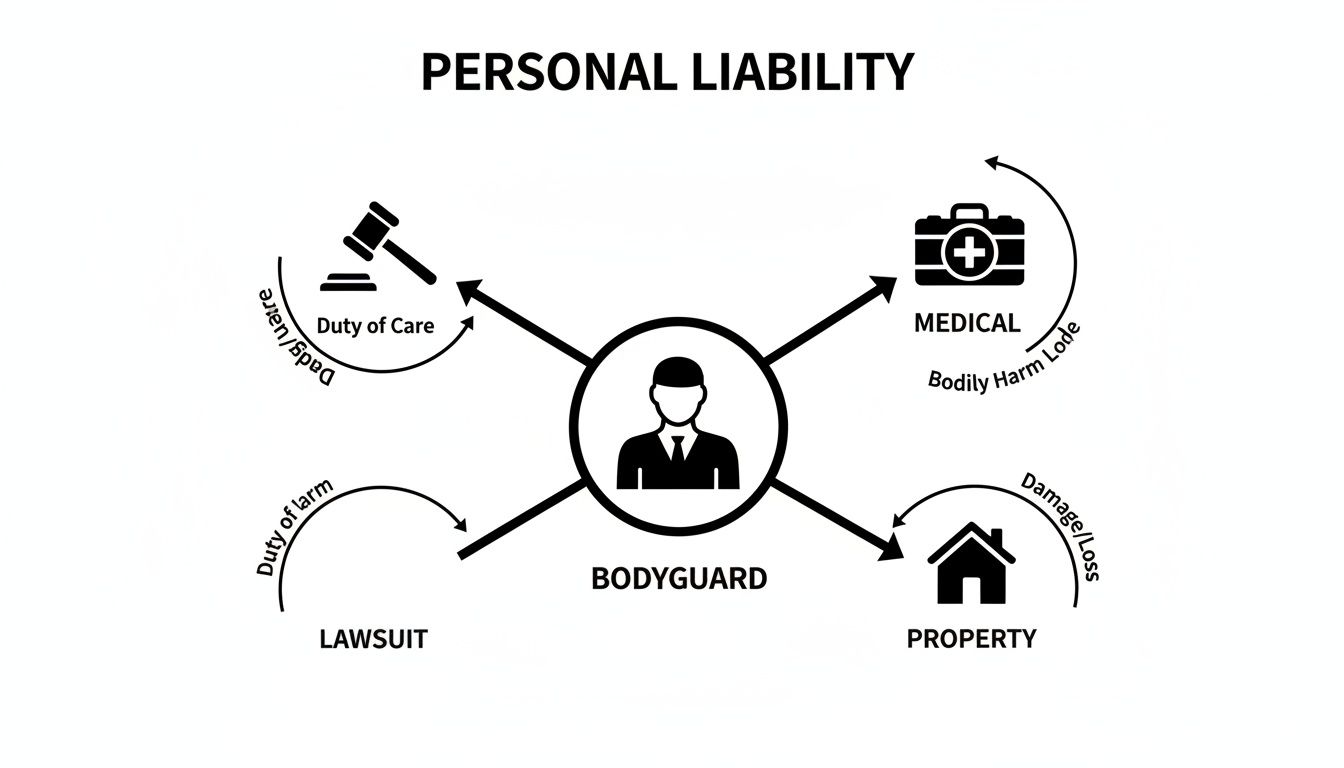
As you can see, liability coverage is your first line of defense. Without it, you'd be digging into your own pockets to cover lawsuits, medical bills, and property damage claims.
Let's put this into a real-world California scenario. Imagine you're hosting a backyard barbecue at your home. A guest slips on a wet spot by the pool and breaks their leg, racking up over $50,000 in medical bills. Your personal liability coverage, part of your home insurance, would kick in to handle those bills, plus any legal costs if they sue, all the way up to your policy's limit.
You can find definitions for other common insurance terms in our detailed https://cahomeauto.com/glossary.
How Liability Works in Your California Auto Insurance
Let’s be honest, driving in California means you need more than just a legal piece of paper saying you're insured—you need a real financial shield. That’s exactly what the personal liability coverage in your California car insurance policy is for. It's designed to step in and handle the financial fallout when an accident is your fault. Think of it as having two key bodyguards protecting your assets.
Imagine you’re caught in a chain-reaction crash on the 405. The costs start piling up instantly—medical bills for the other drivers, repair costs for multiple cars. This is where your auto liability coverage becomes your best friend, preventing you from having to drain your savings to pay for it all.

Bodily Injury and Property Damage Liability
Your auto policy’s liability protection is broken down into two parts, each tackling a different kind of damage you might cause.
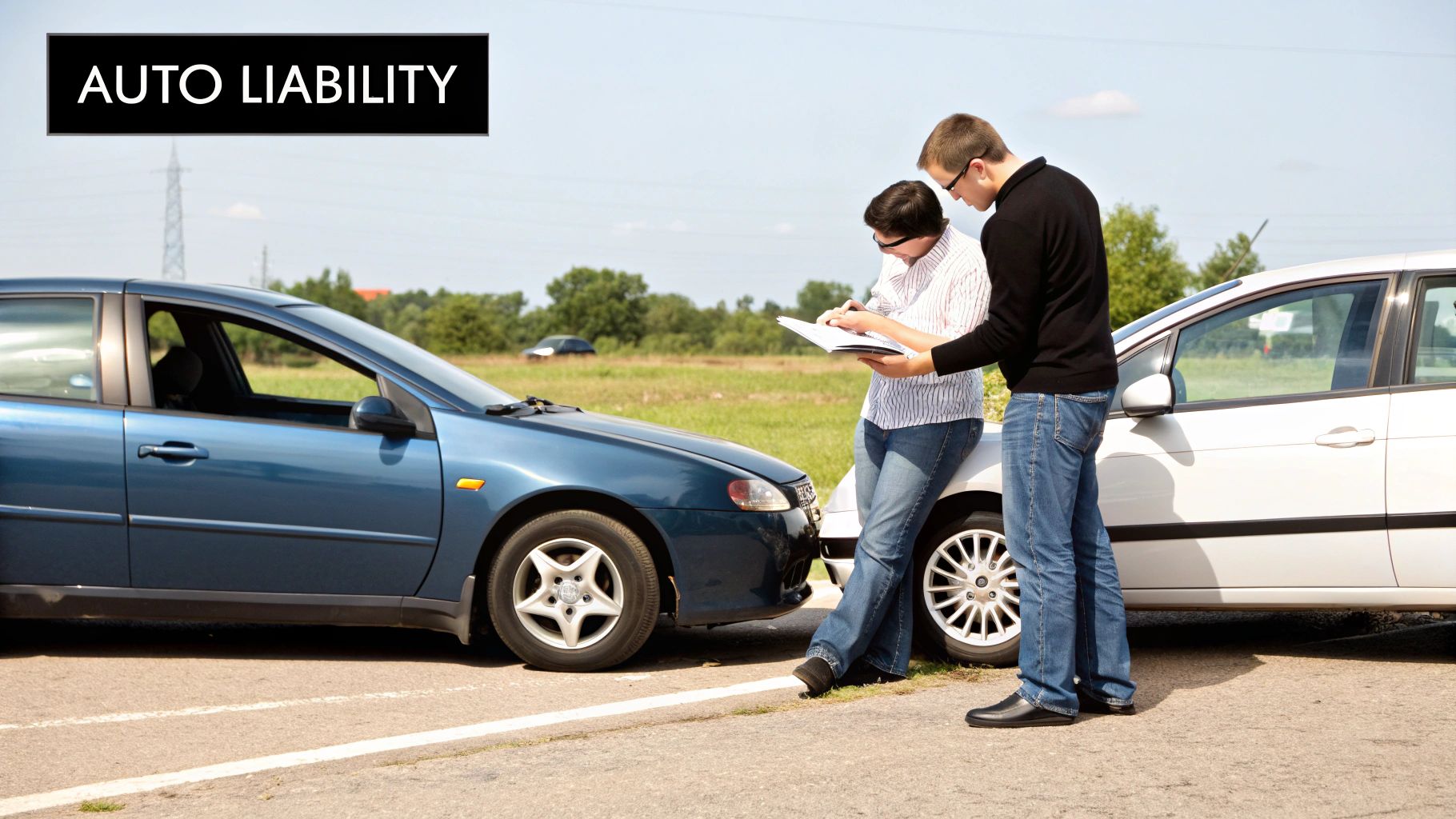
- Bodily Injury Liability (BI): This is the part that pays for other people's medical bills if you cause an accident that hurts them. It’s not just for the initial hospital visit; it can cover everything from ambulance rides and physical therapy to lost income if they can't work. It even covers your legal defense if they sue.
- Property Damage Liability (PD): This piece covers the cost to fix or replace someone else’s property that you damage with your car. The most common example is paying for the other driver's vehicle repairs, but it also applies if you hit a mailbox, a fence, or even the side of a building.
Together, these two coverages are the bedrock of your protection on the road.
Why State Minimums Are a Risky Bet
California law says every driver must have liability coverage. The problem? The state-required minimums—often called 15/30/5—are nowhere near enough for the real costs of accidents today.
A single bad accident can easily blow past the state-minimum coverage. If that happens, you’re on the hook for the rest, which could mean tens or even hundreds of thousands of dollars out of your own pocket.
Let’s put it in perspective. A $5,000 property damage limit is gone in a flash if you total a brand-new sedan, let alone a luxury car. The same goes for bodily injury; a $15,000 limit per person barely scratches the surface of a serious injury claim. It's crucial to understand what liability insurance covers to see how quickly these costs add up.
This is why we always talk about choosing limits that truly protect your financial future. You can learn more about building a smarter policy by looking into your options for auto insurance in California. A few extra dollars for higher limits can mean the difference between a fender-bender being an inconvenience or a life-altering financial disaster.
Liability Protection Beyond Your Driveway
Most people think of liability insurance in terms of car accidents. But what happens if an accident occurs on your property, or even when you're away from home? Your financial responsibilities don’t just vanish once you park your car. This is where the personal liability coverage found in your California homeowners insurance or renters insurance policy kicks in.
Think of it as a financial shield that protects you from all sorts of unexpected mishaps that have nothing to do with your vehicle. While it doesn't replace the need for crucial policies like life insurance to protect your family's future, it's a vital part of your overall financial safety plan.
Unlike auto liability, which is strictly tied to your car, the personal liability in a home or renters policy is incredibly flexible. It's designed to cover you and your family against claims of bodily injury or property damage, no matter where they happen.
Coverage That Follows You
One of the most valuable aspects of this coverage is that it travels with you. That’s right—it often provides worldwide protection. So, whether something happens in your living room in Escondido or while you’re on a vacation halfway across the globe, you’re covered.
Let's look at a few real-world examples of how this plays out in California:
- A Dog Bite at the Park: You're at the local dog park, and your normally friendly dog gets a little too excited and nips someone. Your personal liability coverage can step in to handle their medical bills.
- A Slip and Fall at Home: You're hosting a small get-together, and a guest slips on a wet spot on the kitchen floor, breaking their wrist. The policy helps cover their medical costs and any legal fees if they decide to sue.
- An Errant Golf Ball: You’re enjoying a round of golf in Costa Mesa when you slice a shot that accidentally shatters a window on a nearby house. Your policy can pay for the repairs.
It's easy to see how a perfectly normal day can suddenly escalate into a massive financial headache.
The real job of personal liability insurance is to protect what you’ve worked so hard for. It acts as a firewall between a lawsuit and your savings, your home, and even your future income.
This is a detail that renters, who make up a massive 45% of Californians, often miss. But this protection is just as vital for them. It guards against lawsuits from things as simple as a visitor's injury—a growing concern that's driving more people to get covered. In the U.S., personal liability is included in 85-90% of homeowners policies, which makes sense when property damage claims alone average $45,000.
Why Every Californian Needs This Protection
It doesn't matter if you own a sprawling home in Glendale or rent a studio apartment in Westlake Village—you have a financial future worth protecting. A lawsuit can pop up from the most unexpected accident, and the costs can be financially crippling without the right insurance.
Personal liability coverage isn’t just a nice-to-have; it’s a cornerstone of any solid financial plan that includes car, home, and life insurance. It ensures that one bad day doesn’t erase years of your hard work. Our guide on renters insurance in California dives deeper into how this critical protection is bundled into surprisingly affordable policies. At the end of the day, having the right amount of coverage is all about peace of mind.
Understanding Your Policy Exclusions
Knowing what your personal liability coverage does is only half the story. The other, equally important half is understanding what it won't cover. Every policy has these limitations, called exclusions, and they’re not there to trick you—they’re there to clarify where your protection begins and ends.
Think of it this way: your policy is designed for life’s unexpected accidents, not for intentional acts. If you deliberately damage someone's property or cause them harm, your insurance won't be there to bail you out. That’s a firm line in the sand.
Likewise, this coverage is for your personal life. It’s not a stand-in for business insurance, and confusing the two can leave you dangerously exposed.
Common Gaps in Your Coverage
It's critical to know the situations where your standard homeowners, renters, or auto insurance just won't apply. Recognizing these common exclusions is the first step to making sure you don't have any blind spots in your financial protection.
Here are a few key areas that standard personal liability policies almost always leave out:
- Business-Related Activities: Running a business from your home in California? If a client trips over a rug in your home office, your personal liability policy won’t touch it. Professional work requires a separate business liability policy.
- Injuries to Household Members: This coverage is for guests and third parties, not the people who live with you. If a family member who lives in your home gets hurt, you’ll need to rely on your health insurance, not your liability coverage. Your California life insurance policy is also separate, designed to provide for your dependents, not cover liability.
- High-Risk Dog Breeds: Dog bites are a common liability claim, but many California insurance carriers have a list of breeds they consider too high-risk to cover. It's absolutely essential to check if your policy specifically includes your four-legged family member.
Understanding exclusions isn’t about finding fault with your policy; it's about smart risk management. Knowing where your protection ends allows you to build a complete safety net without any dangerous gaps.
For instance, if you volunteer on the board of a local non-profit, any decisions you make in that role are typically considered a business activity and wouldn't be covered by your personal policy. Each exclusion exists for a reason, usually because another, more specific type of insurance is built to handle that exact risk. Once you see these boundaries clearly, you can make sure you have the right protection for every part of your life.
When You Need Umbrella Insurance Protection
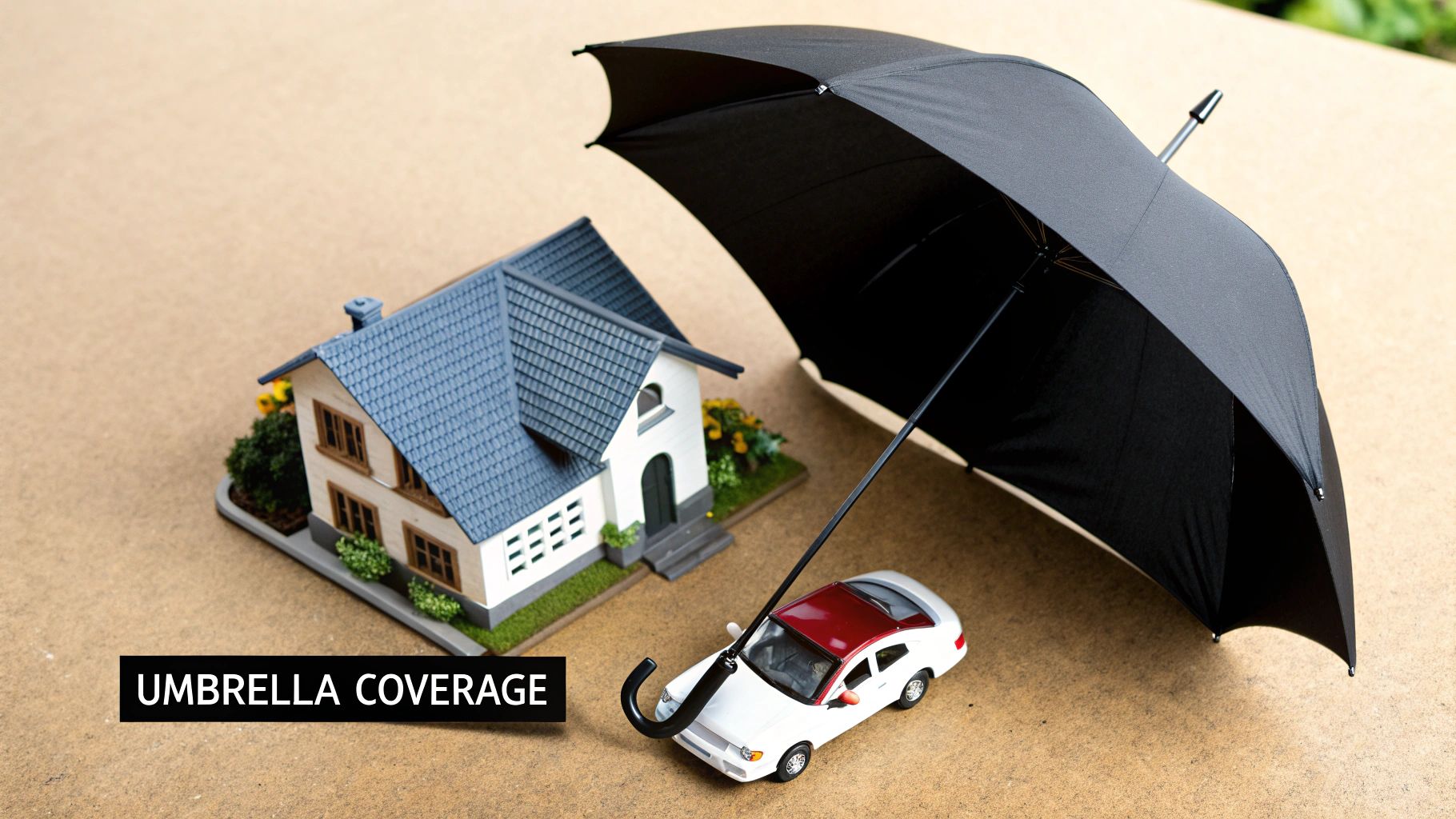
So, what happens when a serious lawsuit completely wipes out the liability coverage on your standard California home insurance or car insurance policy? That’s where an umbrella policy comes in. Think of it as a financial backup parachute, deploying to protect your assets right when your primary coverage runs out. It’s an extra layer of personal liability protection that kicks in only after you’ve hit the limits on your other policies.
This isn't just a luxury for the ultra-wealthy anymore. It's a surprisingly affordable safeguard for anyone with a life they’ve worked hard to build. An umbrella policy sits "over the top" of your existing auto and homeowners insurance, adding protection in big chunks—usually starting at $1 million. If a lawsuit settlement is larger than your primary policy’s $300,000 or $500,000 limit, the umbrella policy is there to cover the rest.
Do You Have a Higher-Than-Average Risk?
While just about anyone can benefit from that extra peace of mind, certain life situations really ramp up your risk profile. If any of these sound familiar, umbrella coverage might be less of a "nice-to-have" and more of a necessity for your financial security here in California.
- You Have Significant Assets: Do you have a healthy savings account, a solid investment portfolio, or a good amount of home equity? The more you have, the more you stand to lose in a lawsuit.
- You Have a Teenage Driver: Let’s be honest, young drivers are still learning. They are statistically more likely to be involved in serious accidents, which can quickly lead to major liability claims on your auto insurance.
- Your Home Has "Attractive Nuisances": Owning a swimming pool, a hot tub, or even a big trampoline on your property unfortunately increases the chances of a guest getting hurt.
- You Have a Public Profile: Being a well-known person in your community or holding a high-profile job can sometimes make you a more attractive target for lawsuits.
An umbrella policy is built for those devastating "what if" scenarios that could otherwise lead to financial ruin. It’s a cost-effective way to secure the future you've spent years building.
The reality is, the need for this kind of protection is growing. The global liability insurance market is projected to expand from $290.45 billion in 2024 to a staggering $462.93 billion by 2032, and North America is leading the charge largely due to a rise in litigation.
With average personal liability claims now hitting $40,000 and lawsuit filings increasing by 15% each year in the U.S., the risk is very real. You can learn more about these market trends and how they affect insurance costs. If your personal risk factors are piling up, it’s definitely time to look into this essential protection.
How to Get the Right Liability Coverage
Alright, now it’s time to put all this knowledge into action. Getting the right personal liability coverage isn't just about picking a random number—it's about making a smart, calculated decision to protect your unique life here in California. Let's walk through a simple framework to help you land on the perfect amount of protection for your auto and home insurance policies.
The whole process boils down to figuring out what you have to lose in a lawsuit. Once you know that, you can spot any weak spots in your current California insurance and make the right moves to safeguard your financial future.
Step 1: Figure Out What You Need to Protect
Before you can even think about coverage limits, you need a clear snapshot of your finances. The entire point of liability coverage is to protect everything you've worked so hard to build.
A great starting point is a quick net worth calculation. Don't worry, it’s not as intimidating as it sounds. Just add up your assets (home equity, savings accounts, investments, even valuable personal items) and subtract your debts (what you owe on your mortgage, car loans, etc.). The number you're left with is your net worth, and that figure is the absolute minimum amount of liability coverage you should have.
Step 2: Review Your Current Policies
With that net worth number in hand, it's time to play detective. Grab your current auto insurance, homeowners insurance, or renters insurance policies and find the sections labeled "personal liability" or "bodily injury and property damage." Look at the limits.
It's a common shock for people to discover their coverage is way less than their net worth. This creates a huge, dangerous gap in their financial armor, especially for folks who have only ever carried the state-minimum auto insurance.
Step 3: Pinpoint Your Personal Risk Factors
Finally, take a hard look at your lifestyle. Do you have a newly licensed teenage driver? A swimming pool in the backyard? Do you love hosting big parties at your house? These aren't just parts of your life; they're risk factors that can increase the odds of a claim. The more of these you have, the stronger the case for higher liability limits or even an umbrella policy.
Once you have a solid idea of your needs, the next step is simple. You can easily get a personalized insurance quote from Mai & Associates to compare your options and lock in the right level of protection for your California lifestyle.
Frequently Asked Questions
When you start digging into the details of personal liability insurance, a lot of "what if" scenarios pop into your head. That's completely normal. Let's tackle some of the most common questions we hear from our clients here in California to give you that extra bit of clarity.
How Much Personal Liability Coverage Do I Really Need in California?
This is the big one, and the honest answer is: it depends, but probably more than you think. While California has minimum liability limits for auto insurance, those numbers are frankly scary low. A minor accident could blow past them in a heartbeat.
Most financial advisors recommend starting with at least $100,000 per person and $300,000 per accident for bodily injury, plus $100,000 for property damage on your car insurance. For your home insurance or renters insurance, a good baseline is anywhere from $300,000 to $500,000.
Here's the real rule of thumb: your liability coverage should be enough to protect your total net worth. In a major lawsuit, everything you've worked for—your savings, your home, your investments—is on the table. The goal is to have a shield big enough to cover it all.
Does My Policy Cover Libel or Slander from Social Media Posts?
Probably not, at least not with a standard, off-the-shelf policy. Most base liability coverage is for tangible harm—bodily injury or property damage. It typically doesn't extend to "personal injury" claims like libel, slander, or defamation that can come from a heated online comment.
But there's a simple fix. Most insurance companies offer a "personal injury endorsement" that you can add to your policy for a small cost. This bolt-on coverage is designed specifically for these modern risks, and in today's world, it's an incredibly smart addition.
Is My Home-Based Business Covered by Personal Liability Insurance?
This is a hard no, and it’s a critical distinction to make. Your personal liability policy is strictly for your personal life and specifically excludes anything related to business activities.
Think about it this way: if a client slips and falls in your home office, or if your professional advice leads to a lawsuit, your homeowners policy will wash its hands of the situation. To cover those risks, you need a separate business liability insurance policy. Keeping your personal and professional protection separate is the only way to ensure both are truly secure.
Ready to find that sweet spot between solid protection and a price that makes sense for your California lifestyle? The team at Mai & Associates is here to cut through the confusion. We'll help you compare quotes for home, auto, and life insurance from top-tier California insurance companies to find the perfect fit.
Get your no-obligation quote today and build a stronger financial future. Learn more by visiting us at https://cahomeauto.com.