what is bodily injury liability coverage: a clear guide to protection and costs
When you hear the term bodily injury liability coverage, it might sound like a bunch of insurance jargon. But in simple terms, it's the part of your auto insurance policy that pays for injuries you cause to other people if you're at fault in an accident. This isn't just a "nice-to-have" — it's a critical safety net required for California drivers that protects your personal assets from someone else's medical bills and legal fees.
Your Financial Shield on the Road

Think of this coverage as your financial shield. Accidents can happen in a split second. If you're found legally responsible for a crash that injures another driver, their passengers, or even a pedestrian, this is the coverage that steps up to the plate.
It's designed specifically to handle the costs tied to the other party's injuries, not your own. That’s a key detail people often overlook. Essentially, this coverage stands between a potentially devastating lawsuit and your personal savings, your home, and even your future income. It's a cornerstone of any comprehensive California insurance plan, working alongside your home insurance or renters insurance to protect your financial well-being.
Decoding the Numbers: What Do 15/30 or 100/300 Mean?
Look at your car insurance policy, and you'll see a set of numbers like "15/30" or "100/300" next to Bodily Injury Liability. These aren't just random figures; they represent your coverage limits in thousands of dollars. Getting a handle on what they mean is key to understanding your protection.
Here’s a simple breakdown:
- The First Number (Per Person): This is the maximum amount your insurance company will pay for a single person's injuries in an accident you cause.
- The Second Number (Per Accident): This is the total maximum your insurer will pay for all injuries combined in a single accident, no matter how many people were hurt.
So, if you have 15/30 limits, your policy would cover up to $15,000 for one person's injuries and a maximum of $30,000 for everyone injured in that single accident. Anything beyond those amounts could fall on you to pay out-of-pocket.
To help clarify, here’s a quick summary of what bodily injury liability covers and a real-world example.
Bodily Injury Liability At a Glance
| Coverage Component | What It Covers | Example Scenario |
|---|---|---|
| Medical Expenses | The other party's hospital bills, ambulance rides, surgery, and rehabilitation costs. | You cause a rear-end collision, and the other driver needs physical therapy for whiplash. |
| Lost Wages | Income the injured person loses because they are unable to work after the accident. | The pedestrian you hit is a contractor who can't work for two months during their recovery. |
| Pain and Suffering | Compensation for physical pain, emotional distress, or long-term suffering caused by the injuries. | An injured passenger in the other car experiences chronic pain and emotional trauma after the crash. |
| Legal & Defense Fees | Your legal expenses if the injured party decides to sue you over the accident. | The other driver sues you for damages, and your insurance provider hires an attorney to defend you. |
This table shows just how broad the protection is, covering everything from immediate medical care to long-term financial consequences.
Why Minimums Might Not Be Enough
While every state sets its own minimum requirements, these legal minimums are often not enough to fully protect you in a serious accident. A single major injury can easily result in medical and legal costs that soar past those basic limits. This is why many California insurance experts advise carrying higher limits to properly safeguard your assets. Having the right amount of coverage isn't just about complying with the law; it's about securing your financial future.
Bodily injury liability coverage is a key component of auto insurance that protects policyholders financially if they are found at fault for injuring another person in a vehicular accident.
You can find more plain-English definitions of common insurance terms in our detailed insurance glossary.
How It Works After a California Car Accident
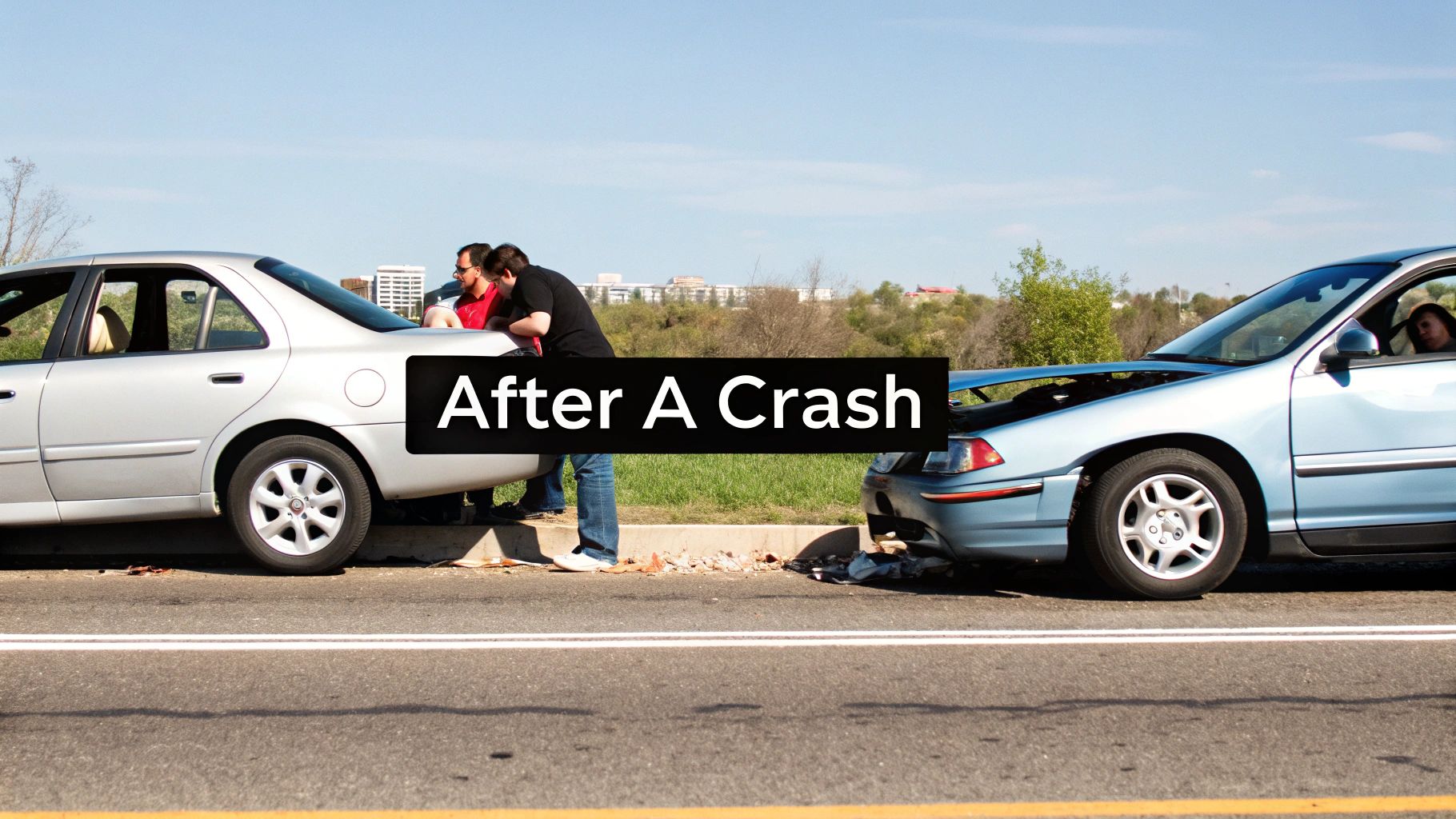
Let's take this out of the theoretical and put it on the road. Imagine you're inching along in rush hour traffic on the I-5. You glance down at your GPS for just a second, but that’s all it takes. Traffic slams to a halt, and you bump the car in front of you.
It feels like a minor fender-bender, but the driver and passenger in the other car are both shaken up, complaining of neck pain. This is where your bodily injury liability coverage suddenly becomes very, very real. It's no longer just a line item on your policy; it's your financial shield.
Once you exchange information and the police determine you're at fault, the claims process kicks into gear. The people in the other car will likely go to the doctor, and their medical bills will start adding up. Your bodily injury liability coverage is designed to step in and handle these exact costs.
Who Gets Paid and for What
A key thing to remember is this coverage pays for the other party's injuries, not your own. Your policy is there to cover the financial damage you caused to others.
So, in our I-5 scenario, here’s what your insurance would cover:
- Medical Bills: This isn't just the ambulance and ER visit. It covers ongoing care for both injured people, like physical therapy, doctor's appointments, and prescriptions they might need.
- Lost Wages: Let's say the passenger is a freelance designer who can't work for a few weeks because of their injury. Your policy can compensate them for the income they lost during their recovery.
- Legal Defense: If the injured parties feel the initial insurance offer isn't enough and decide to sue you, your policy also helps pay for your legal defense—the attorney fees, court costs, and other related expenses.
Because two people were hurt in this one crash, your "per accident" limit is what matters most. If their combined medical bills and lost income are more than your policy's maximum payout, you could be on the hook personally for the rest.
Think of your bodily injury liability coverage as a financial firewall. It’s the barrier that protects your personal assets—your savings, your home, your future income—from the immense costs of an accident you caused.
This is exactly what is bodily injury liability coverage for. A momentary lapse in attention on the road shouldn't have to derail your financial life, threatening everything from your home insurance to your retirement savings. The right car insurance policy makes sure it doesn't.
California's Minimum Requirements Are Not Enough
Here in the Golden State, the law says every driver needs to carry at least 15/30 bodily injury liability coverage. On paper, this makes you a legal driver. In reality? It's like bringing a bucket to a house fire—it's technically something, but it won't do much when things get serious.
Meeting the bare minimum is a huge gamble. It leaves a massive financial gap between what the law requires and what a real-world accident actually costs. Relying on this thin layer of protection puts your savings, your home, and your future earnings on the line.
The Real Cost of an Accident
So, how fast can that $15,000 per-person limit disappear? Frighteningly fast. Even a fender-bender can set off a chain reaction of expenses that will blow past that number in a heartbeat.
Let’s walk through a common accident scenario:
- Emergency Room Visit: The ambulance ride, ER evaluation, and a few diagnostic scans like an MRI can easily hit $5,000 to $10,000 right off the bat.
- Ongoing Medical Care: What if the injury needs more than just a quick fix? Follow-up visits with specialists or a few months of physical therapy can add another $10,000 or more to the tab.
- Lost Wages: If the person you injured can't work for a few weeks while they recover, their lost income gets added to the claim. That could be thousands of dollars more.
Just like that, the total costs have soared well beyond your $15,000 limit. Once your insurance policy has paid its max, you are personally responsible for every dollar that’s left over. This is when things get scary.
A court can issue a judgment against you, allowing creditors to go after your savings, your investments, and even force the sale of your home. They can also garnish your future wages, siphoning money from your paycheck for years.
This is why understanding your coverage is about so much more than just being legal—it’s about protecting your entire financial life. For a deeper dive into these risks, check out our comprehensive guide to California auto insurance.
Don't just take our word for it. The data shows that bodily injury claims are a huge driver of insurance losses, which speaks to how common and expensive these accidents are. Research from the Highway Loss Data Institute highlights how severe these claims can be. You can see the numbers for yourself in these vehicle collision injury claim findings. The bottom line is clear: choosing the right amount of coverage is one of the most important financial decisions a California driver can make.
What This Coverage Does Not Pay For
Knowing what your bodily injury liability covers is half the battle. The other half—and arguably the more important part for your financial well-being—is knowing what it doesn't cover. It’s a common and potentially devastating mistake to think this coverage is a magic wand that takes care of every bill after a crash. It isn't.
This piece of your California car insurance has very specific and important boundaries.
The biggest thing to remember is this: bodily injury liability never pays for your own injuries. If you cause a wreck and end up in the hospital, this coverage won't touch your medical bills. That's a job for your health insurance or a different part of your auto policy, like Medical Payments (MedPay) coverage.
And to be crystal clear, this coverage has absolutely nothing to do with fixing cars. It’s only for people.
Clear Lines Your Policy Will Not Cross
Think of your auto insurance policy like a well-run pit crew. Each member has a highly specialized job. Bodily injury liability is the medic, focused solely on the other driver and their passengers. For anything else, you need a different specialist to step in.
Here’s a straightforward breakdown of what bodily injury liability will NOT cover:
- Your Own Medical Bills: We can't stress this enough. This coverage is for them, not you. It protects your assets from claims others make against you.
- Damage to Your Own Car: Backed into a pole? Caused a fender-bender? You’ll need Collision coverage on your policy to handle your own car's repair costs. Bodily injury liability won’t pay a dime for it.
- Damage to the Other Person's Vehicle: This is another major point of confusion. While you are responsible for the other driver's car repairs, it's covered by a different part of your policy: Property Damage liability. It’s a separate but mandatory coverage in California.
- Injuries to an Employee: If you're driving for work and an employee gets hurt in your car, your personal auto policy isn't the right tool for the job. That situation almost always falls under a workers' compensation policy.
Seeing these lines drawn so clearly helps you understand how different policies—like renters insurance or home insurance—all fit together to form a complete financial safety net. Each one has a specific purpose, and knowing their roles helps you avoid leaving dangerous gaps in your protection. This is how you build an insurance plan that truly has your back.
Choosing The Right Liability Limits To Protect Your Future
Picking the right bodily injury liability limits is a crucial decision. It’s the difference between just having car insurance and having real financial protection. While California's minimums keep you legally on the road, they provide a very thin safety net in a serious at-fault accident. The real goal is to select limits that can truly shield everything you've worked for.
So, where do you start? It begins with a straightforward "asset check-up." Take a few minutes to think about what you have to protect. This isn't just about the cash in your bank account right now; it's about safeguarding your home, your savings, and even your future earnings. Adding up your significant assets gives you a clear picture of what's at risk.
Conducting Your Personal Asset Check-Up
To find the right coverage, you first need to understand what’s at stake. A good rule of thumb is that your liability coverage should be high enough to protect your total net worth.
Here’s what to consider:
- Home Equity: Think about the market value of your home minus what you still owe on the mortgage.
- Savings and Investments: This includes everything from your checking and savings accounts to stocks, bonds, and retirement funds like a 401(k) or IRA. Your life insurance policy's cash value could also be a factor here.
- Future Income: This is a big one that people often forget. Your potential earnings over the coming years can be targeted in a lawsuit.
- Valuable Possessions: Tally up other significant property, like your vehicles, a boat, or other high-value items.
Once you have a rough estimate, you can choose a coverage level that matches or, even better, exceeds that value.
Matching Coverage Tiers To Your Life
California insurance is definitely not a one-size-fits-all product. Your financial risks change as you move through different stages of life.
Here are some common coverage tiers and who they typically fit best:
- 100/300 ($100,000 per person, $300,000 per accident): This is a solid starting point for many people. It’s great for those who are just beginning their careers, have renters insurance, and moderate savings. It provides a much stronger buffer than the state minimums.
- 250/500 ($250,000 per person, $500,000 per accident): We often recommend this level for homeowners, families with a few drivers on their policy, or anyone with established savings and investments. It offers a very robust shield for a growing portfolio of assets.
For anyone with significant assets—like substantial home equity, a large investment portfolio, or high future earning potential—an umbrella policy is the ultimate layer of security. This is a separate policy that kicks in after your auto insurance or home insurance limits are used up, adding an extra $1 million or more in liability protection.
Recommended Bodily Injury Liability Limits Based on Your Profile
Choosing the right limits can feel daunting, but breaking it down by your financial profile makes it much clearer. This table offers a simple guide to help California drivers match their coverage to their life circumstances.
| Driver Profile | Example Assets | Recommended Bodily Injury Limits (Per Person/Per Accident) | Consider an Umbrella Policy? |
|---|---|---|---|
| The Starter | Renter, modest savings, entry-level income. | $100,000 / $300,000 | Not typically necessary yet. |
| The Homeowner | Owns a home, has a 401(k), stable income. | $250,000 / $500,000 | Yes, a great time to start looking. |
| The Established Professional | Significant home equity, investment portfolio, high income. | $250,000 / $500,000 or $500,000 / $500,000 | Absolutely essential. |
| The High Net Worth Individual | Multiple properties, extensive investments, business owner. | $500,000 / $500,000 (as the base policy) | Yes, likely needing $2 million+ in coverage. |
This is just a starting point, of course. A quick conversation with one of our agents can help you pinpoint the exact coverage you need for total peace of mind.
This flowchart clearly shows the core purpose of bodily injury liability: it’s there to protect you financially when someone else gets hurt.
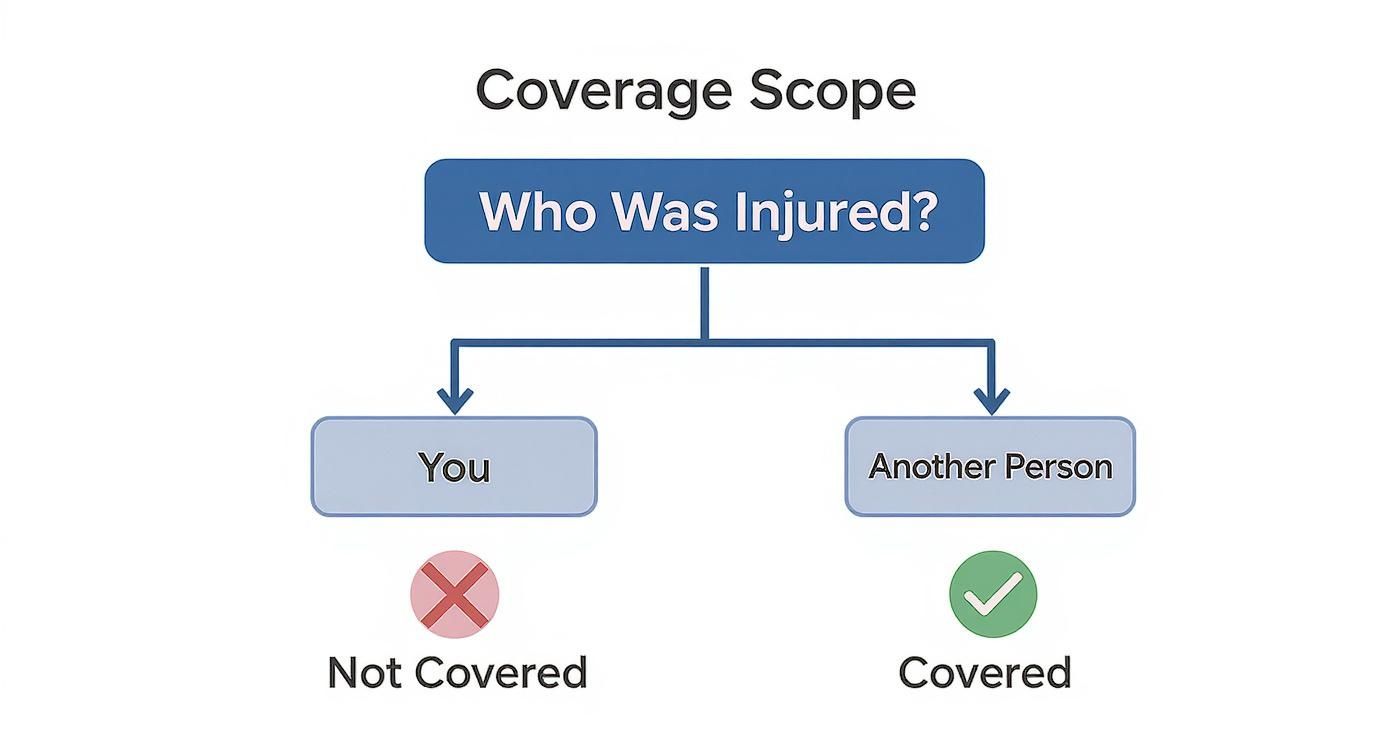
The image makes it simple: this coverage is for injuries you cause to others, not for your own. Making the right choice here is one of the most important things you can do to protect your financial future. To see just how affordable robust protection can be, you can request a personalized insurance quote from our team today.
Why Your Rates Change and How to Manage Them
Ever get your insurance renewal and wonder why the price went up (or down)? The cost of your bodily injury liability coverage isn't just a number pulled out of a hat. It's a carefully calculated premium based on a handful of factors that are specific to you. Getting a handle on these factors is the first step to controlling your costs and making sure you have the right protection.
Right off the bat, the biggest driver of your cost is how much coverage you choose to buy. A policy with higher limits, say $100,000/$300,000, is going to have a higher premium than one with California's bare-bones minimum of $15,000/$30,000. Think of it this way: you're paying for a much larger financial safety net, and that extra peace of mind comes with a higher price tag.
Key Factors That Influence Your Premium
Beyond the coverage limits you select, insurance companies in California look at your personal profile to figure out how risky you might be to insure. Every detail helps them paint a picture of how likely you are to be involved in an accident.
- Your Driving Record: This is the big one. A spotless record free of at-fault accidents and moving violations tells an insurer you're a responsible driver, and that almost always translates into lower rates.
- The Car You Drive: The type of car you own matters. Insurers look at its make, model, age, and especially its safety features. A vehicle with top-tier safety ratings and anti-theft devices can often earn you a nice discount.
- Your Location: Where you live and park your car makes a surprising difference. Rates can change from one zip code to the next based on things like traffic congestion, local crime rates, and how many accidents happen in the area.
- How Much You Drive: The more time you spend on the road, the higher the odds of something happening. Your annual mileage and the length of your daily commute are factored into your premium.
It's easy to see why insurers are so careful. The National Safety Council found that in 2022, roughly one in five Americans needed medical help for a bodily injury. Those situations can lead to staggering medical bills and, often, a lawsuit. That’s exactly when your bodily injury liability coverage becomes critical, stepping in to cover medical expenses and legal defense costs. You can get a deeper look into how these claims impact insurance to understand the stakes.
Proactive Ways to Lower Your Insurance Costs
Here's the good news: you’re not powerless here. You have more control over your insurance rates than you might realize. A few smart moves can help you lower your premiums without cutting back on the coverage you truly need.
Managing your insurance costs isn't just about chasing the lowest price. It’s about finding real value—that sweet spot where you have solid protection for your car, home, and family at a price that works for your budget.
Here are a few proven strategies to put into practice:
- Bundle Your Policies: This is one of the simplest and most effective ways to save. When you combine your auto insurance with your home insurance or renters insurance under one company, you can often unlock some pretty significant discounts.
- Maintain a Clean Driving Record: Your best long-term strategy is simply to be a safe driver. Staying accident-free and avoiding tickets is the surest way to keep your rates low year after year.
- Ask About Discounts: Don't assume you're getting every discount you qualify for. Ask your agent about potential savings for being a good student, having a certain professional affiliation, or even completing a defensive driving course.
- Shop Around: Loyalty is great, but it doesn't always pay when it comes to insurance. Rates can vary dramatically between companies, so it's smart to compare quotes every year or so to make sure you're still getting a competitive deal.
Frequently Asked Questions About Liability Coverage
It's one thing to understand the definition of bodily injury liability, but it's another to see how it plays out in the real world. Let's tackle some of the most common questions California drivers have about their coverage.
What if a Friend Crashes My Car?
This is a classic "what if" scenario. In California, the insurance usually follows the car, not the driver.
So, if you lend your car to a friend and they cause an accident, your bodily injury liability coverage is typically on the hook first. It’s considered the primary insurance and will pay for injuries to other people, right up to your policy limits.
What Happens if I’m Sued for More Than My Coverage Limits?
This is where things can get serious. If you cause an accident and the medical bills exceed your liability limits, you're personally responsible for the rest.
The injured person can sue you, and a court judgment could come after your personal assets. We’re talking about your savings, your house, and even a portion of your future paychecks. This is precisely why just having the state minimum coverage can be such a huge financial gamble.
The gap between what your insurance covers and the actual cost of a serious accident is one of the biggest financial risks you face as a driver. Choosing the right limits is your best defense.
Bodily Injury Liability vs. Uninsured Motorist Coverage?
It’s easy to get these two confused, but they’re essentially two sides of the same coin, designed to protect you from different angles.
- Bodily Injury Liability: This pays for injuries you cause to someone else when an accident is your fault.
- Uninsured/Underinsured Motorist (UM/UIM): This protects you and your passengers. It kicks in to cover your medical bills if you're hit by a driver who has no insurance or not enough insurance to pay for your injuries.
Have more questions about California auto insurance, home insurance, or other policies? We've compiled a ton of answers on our detailed insurance FAQ page.
Ready to make sure you have the right protection? The licensed agents at Mai & Associates are here to help you find affordable auto insurance that truly protects what you've worked for. Get a fast, no-obligation quote today at https://cahomeauto.com.