What Is a Subrogation Claim? Your 2026 Guide to Auto & Home
A subrogation claim is your insurance company's right to step into your shoes and recover what it paid from the person or insurer that caused your loss after your claim has already been paid. In practice, it's a cost-recovery process that can sometimes help you get back some or all of your deductible, although reimbursement isn't automatic and the process can take time.
You might be reading this after a rear-end crash on the 405, a kitchen leak from the condo next door, or a renters insurance claim that left you wondering why your carrier is now contacting someone else's insurer. The word sounds technical, but the idea is familiar. If someone else caused the damage, your insurer may try to collect from the responsible party after helping you first.
That matters in California because the typical question asked isn't about legal theory. It's, “What does this mean for my wallet?” That's the right question. Subrogation can affect your deductible, your out-of-pocket costs, your claim timeline, and how a disputed-fault loss gets handled behind the scenes.
Your Guide to Insurance Subrogation
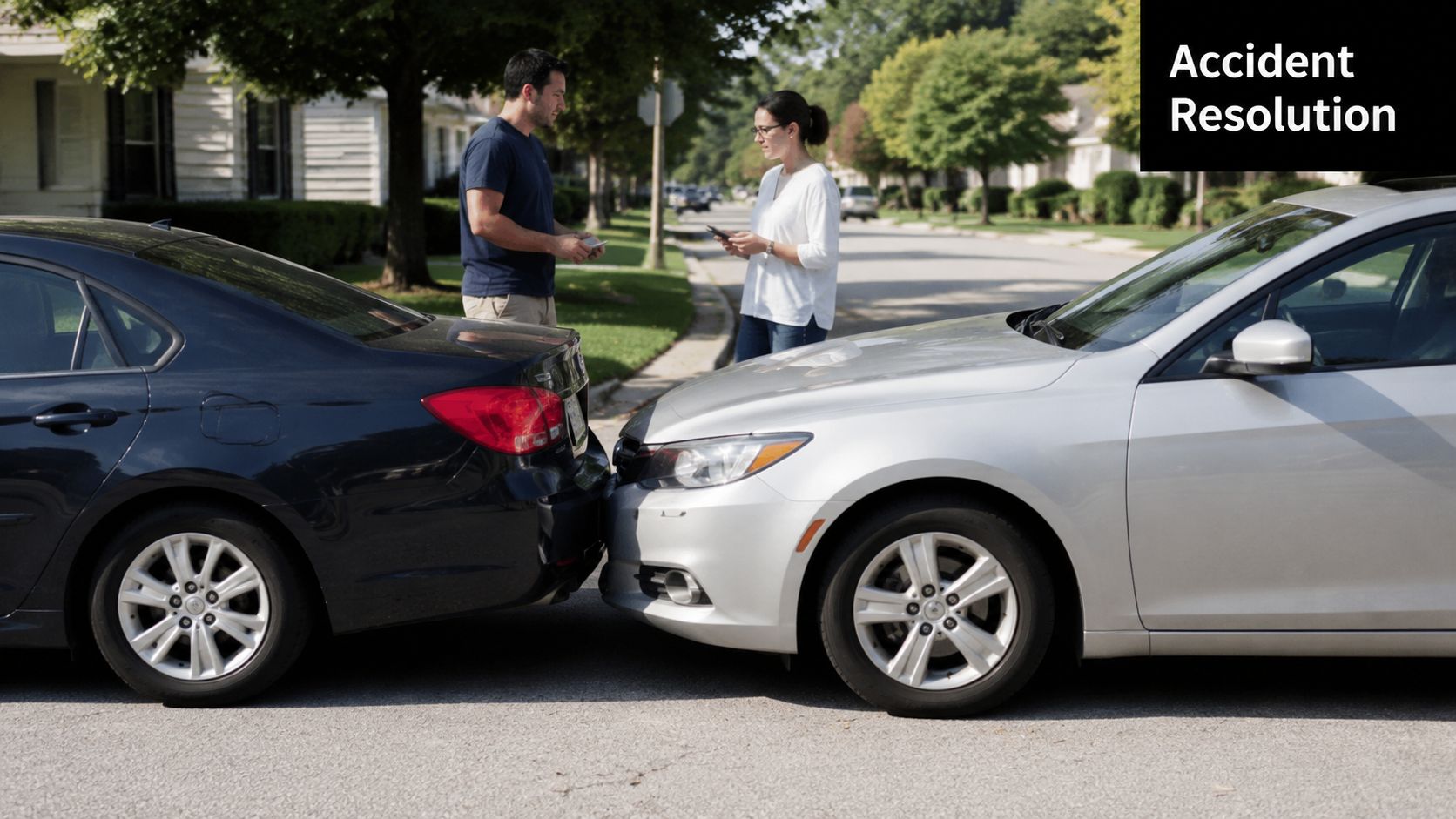
A common example goes like this. You're stopped at a red light, another driver hits you from behind, and your bumper, trunk, and taillight are damaged. You need your car back on the road, so you file through your own auto policy instead of waiting around for the other carrier to finish its investigation.
Your insurer pays the covered loss under your policy, then starts a separate recovery effort against the at-fault side. That recovery effort is the subrogation part. It usually happens in the background, and in many claims you won't need to do much beyond giving accurate information and preserving documents.
Why this term matters after an accident
Subrogation isn't just insurer jargon. It's one of the ways insurance shifts costs back to the party that caused the damage instead of leaving the innocent policyholder to absorb it. Sentry describes subrogation as the insurer's right to step into the policyholder's shoes and recover money after paying the claim, and notes that it helps prevent the insured from being financially responsible for someone else's fault while potentially returning a deductible when recovery succeeds, as explained in Sentry's overview of subrogation in insurance.
If you're also trying to understand the bigger role liability coverage plays before subrogation even becomes relevant, this plain-English guide on protecting your assets with auto insurance is a useful companion read.
Practical rule: Subrogation usually matters most after your claim is paid, not when you're first deciding whether you have coverage.
If you want a quick reference for California insurance terms while you read, keep this California insurance glossary handy.
What Subrogation Means for Your Insurance Claim
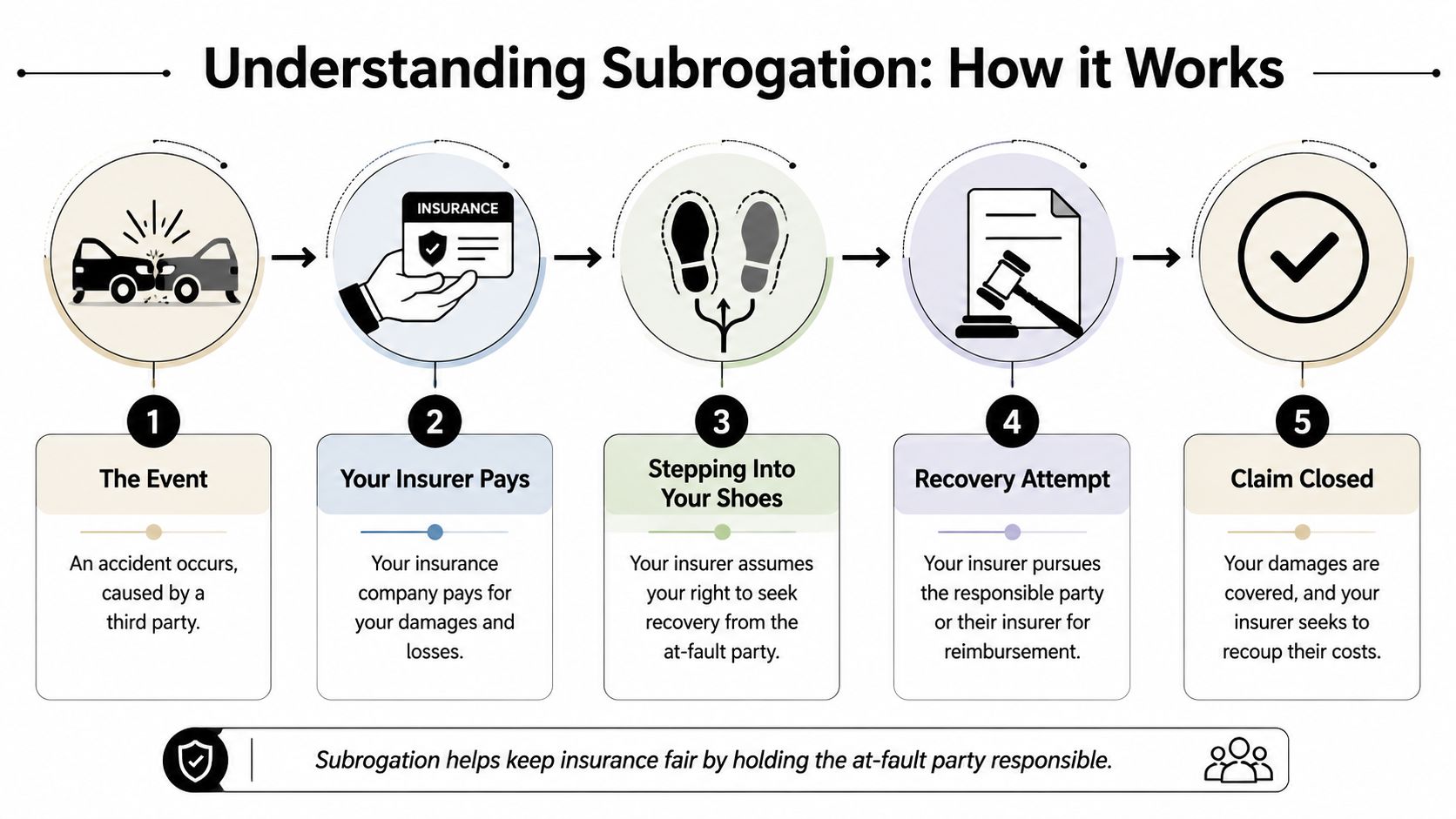
Subrogation is easiest to understand with one phrase: your insurer steps into your shoes. That means once your company pays your covered claim, it may use your legal right against the responsible party to seek reimbursement.
That distinction matters because a lot of people think subrogation is a second claim. It isn't. It's a post-payment recovery right. The underlying loss claim comes first. The recovery effort comes after.
What happens behind the scenes
Here's the basic sequence in plain language:
- A covered loss happens. A driver hits your car, a neighbor's plumbing causes water damage, or another party causes a loss covered by your policy.
- Your insurer pays you under your policy. That helps you repair, replace, or move forward without waiting for a dispute between carriers to end.
- Your insurer pursues the responsible side. It may contact the other insurer, present evidence, and ask for reimbursement.
- Any recovery gets allocated. Depending on the outcome and your policy terms, deductible reimbursement may follow.
Cornell Law School's Wex explains that a subrogation claim is the insurer's legal right to step into the policyholder's shoes and recover from the party responsible after the insurer has already paid the claim. It also notes an important catch. The insured must have a valid underlying claim against the wrongdoer, and if that claim is waived or released, the insurer's subrogation rights can be impaired or extinguished, as described in Cornell's definition of subrogation.
Where people get confused
The biggest misunderstanding is thinking subrogation creates coverage. It doesn't. Your policy still has to respond first. If there's no covered claim under your auto insurance, home insurance, or renters insurance, there's nothing for the insurer to recover later.
Another point of confusion is who the process is really for. It helps the insurer recover its payout, but it can also help the policyholder avoid bearing costs caused by someone else. In many auto claims, the deductible is part of that conversation.
If you settle with the at-fault side too quickly or sign away your rights, you can accidentally interfere with your insurer's ability to recover.
For readers comparing policy structures, deductibles, and claim handling across carriers, this overview of auto insurance in California provides helpful context.
Subrogation Examples for California Drivers and Homeowners
The concept gets clearer when you see it in real life. Here are two common California situations.
Rear-ended on a freeway
You're driving in Los Angeles traffic, stop with the flow, and get hit from behind. The other driver admits they weren't paying attention, but their insurer moves slowly. Your car needs repairs now, so you use your own collision coverage.
Your insurer pays the repair shop according to your policy. Then it seeks recovery from the other driver's insurer for what it paid. Progressive explains that in auto insurance, after a collision claim is paid, the insurer may pursue the at-fault driver's carrier for the repair cost it paid, and if recovery succeeds, the deductible may be refunded in whole or part, as outlined in Progressive's explanation of subrogation.
From your side, the practical effects are straightforward:
- Your car gets fixed sooner. You don't have to wait for the other insurer to finish every step before moving ahead.
- Your carrier handles the recovery effort. That means adjusters and subrogation specialists do the chasing.
- Your deductible may come back later. It might be full, partial, or delayed depending on recovery.
Water damage from next door
Now take a property example. You live in a condo or rent an apartment in California. A pipe in the neighboring unit bursts and water damages your walls, flooring, furniture, or electronics. Your home insurance or renters insurance may cover the loss, subject to your policy terms.
After your insurer pays for covered damage, it may pursue the neighboring unit owner, landlord, contractor, or their insurer if the facts support responsibility. The point is the same as in an auto claim. Your insurer helps you first, then tries to put the financial responsibility where it belongs.
In property claims, subrogation is often less visible to the policyholder, but it can still affect whether out-of-pocket costs are eventually reduced.
That's why documentation matters in both examples. Keep photos, repair invoices, names of witnesses, incident reports, and any communication from the other side. Clear evidence doesn't guarantee recovery, but it gives your insurer a stronger file.
If you're trying to sort out how property coverage fits into these scenarios, this guide to home insurance in California can help you compare how losses are typically handled.
Navigating California Specific Subrogation Laws
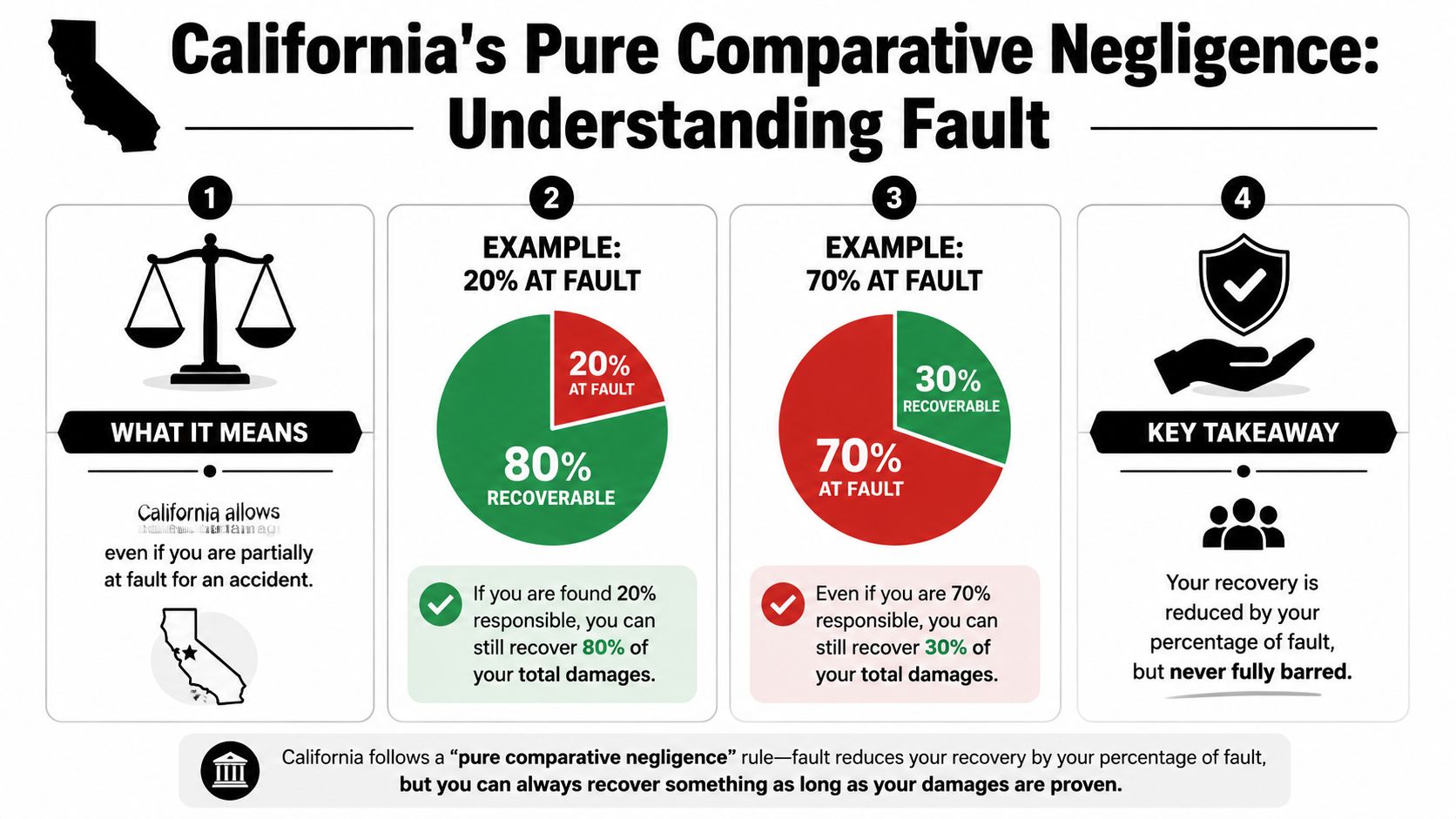
California adds a layer many people don't hear about until there's a dispute. A subrogation claim can still move forward even when fault isn't clean-cut.
That matters because real accidents are messy. Lane changes overlap. Drivers give different stories. Property losses involve multiple contractors, landlords, HOAs, or neighbors. Recovery can still be possible even when the other side is only partly responsible.
Shared fault doesn't always stop recovery
One of the most underexplained parts of subrogation is what happens when fault is shared, unclear, or disputed. Rathbone Group notes that subrogation can proceed even when liability is only partial and may apply when another party is “at least partially at fault,” which is especially relevant in California because shared-fault rules, evidence quality, and claim disputes affect recovery, as discussed in Rathbone Group's subrogation overview.
Here's what that means in plain terms:
- Partial responsibility can still support recovery. Your insurer may still pursue the other side if the facts show they contributed to the loss.
- Evidence quality matters. Photos, statements, police reports, repair findings, and timeline details often shape the outcome.
- Disagreement slows things down. When carriers dispute liability, settlement and reimbursement can take longer.
What this means for California policyholders
In California, people often use the phrase “shared fault” when they really mean “my claim isn't simple.” That's fair. If both sides may carry some blame, your insurer's recovery effort may be reduced, challenged, or delayed rather than denied outright.
A few practical habits can make a difference:
| Situation | Why it matters for subrogation |
|---|---|
| You took photos at the scene | Visual proof helps carriers evaluate liability |
| You gave a consistent statement early | A clear timeline can support recovery |
| You repaired emergency damage promptly | It helps show you protected the property from further loss |
| You signed nothing from the other side without review | You avoid weakening possible recovery rights |
When liability is disputed, the strongest file usually belongs to the party that documented the event carefully and early.
You may also hear people ask about time limits. Those deadlines can matter a lot in disputed cases, and they depend on claim type and facts. Because timelines can affect rights, don't sit on notices, letters, or requests for documents. If your insurer asks for information tied to recovery, respond promptly.
The Truth About Your Deductible and Insurance Premiums
The most common assumption I hear is simple: “If I wasn't at fault, I'll definitely get my deductible back.” Sometimes you do. Sometimes you don't. Sometimes you get only part of it, and not quickly.
That's the part many basic explainers skip. The Hartford notes that deductible reimbursement isn't guaranteed and may depend on whether the insurer fully recovers from the other side. It also points out that partial recovery and policy language matter, which directly affects a California policyholder's cash flow after a loss, as explained in The Hartford's auto subrogation guide.
Why your deductible might not come back right away
There are several common reasons:
- The other side disputes fault. If liability isn't accepted, recovery can stall.
- Your insurer recovers only part of what it paid. That can affect whether your deductible is reimbursed fully or only in part.
- The file takes time to resolve. Recovery often trails far behind the initial repair or payout.
- Policy terms matter. The wording of your coverage and claim handling rules can affect the result.
If you want a consumer-focused look at this issue, especially for auto losses, this resource on California not-at-fault accident deductible info may help you frame the right questions.
What about your premiums
People also worry that filing through their own insurer automatically means they'll be treated like the one who caused the loss. That's not always how things play out. Claim records and underwriting treatment can depend on how the claim is classified, what facts are established, and whether fault is ultimately resolved.
What you should take from that is practical, not speculative:
- Ask how the claim is being coded. “Pending liability review” and “at fault” aren't the same thing.
- Keep proof that supports your version of events. It can matter later.
- Follow up after recovery efforts progress. Updated fault findings can affect how the claim is viewed internally.
A not-at-fault loss can still create short-term out-of-pocket stress, even when the long-term recovery picture is favorable.
For home insurance and renters insurance, the same cash-flow issue shows up differently. You may pay your deductible, replace damaged belongings, or deal with temporary disruption long before a recovery effort finishes. Subrogation can help, but it rarely feels fast from the policyholder's side.
How Mai & Associates Protects Your Interests
Subrogation is easy to summarize and harder to live through. Frustrations usually aren't the definition. They're the waiting, the partial-fault arguments, the deductible questions, and not knowing whether anything is still happening in the background.
That timeline can be longer than many people expect. The U.S. Department of Labor's EBSA reported that subrogation recoveries are likely only about 0.2% to 0.3% of health insurance claims or premiums, while accident-related medical claims account for roughly 5% to 6% of paid health plan claims, and one industry guide cited in that analysis says the subrogation lifecycle often takes about 18 months from injury or accident to settlement and fund recovery. Those figures show why subrogation is a small share of total spending but still operationally meaningful over a long claims timeline, as discussed in the EBSA analysis of healthcare subrogation trends and practices.
Why guidance helps
A good insurance agency can't force another carrier to pay faster, but it can help you understand what's happening and what paperwork matters. That includes things like:
- Clarifying next steps after an auto insurance, home insurance, or renters insurance claim
- Explaining deductible expectations so you're not counting on money that hasn't been recovered
- Helping you communicate clearly with the insurer handling the claim
- Reviewing coverage before the next loss so your policy fits your real risks in California
If you want help reviewing coverage, deductible choices, or claim questions, you can contact Mai & Associates.
Frequently Asked Questions About Subrogation Claims
What if the at-fault driver is uninsured or underinsured
Subrogation can become harder when there's no solvent insurer on the other side or when available coverage is limited. Your own auto policy may still be the starting point for repairs or other covered losses, depending on what coverages you purchased.
For California drivers, this is why policy design matters before an accident happens. Collision coverage, uninsured or underinsured motorist protections, and deductible choices can shape what happens when recovery from the other side is weak or impossible. Subrogation may still be attempted against the responsible person directly, but collectability is a practical issue, not just a legal one.
Can I stop my insurer from subrogating
Usually, your policy gives the insurer subrogation rights after it pays a covered claim. That means you generally can't interfere with those rights once payment is made. You must also be careful not to sign releases, accept side payments, or make private deals with the responsible party without checking first.
A related phrase you may hear is waiver of subrogation. In plain language, that means someone agrees in advance to limit or give up subrogation rights in certain situations. These provisions show up more often in contracts than in everyday personal auto claims, but the key takeaway is the same. If you waive rights carelessly, you can create problems with coverage or recovery.
Will my rates go up if my insurer pays my claim but can't recover
There isn't a one-size-fits-all answer, and it's better not to assume either outcome. Premium impact depends on the claim facts, your insurer's rules, how fault is classified, your claim history, and the type of policy involved.
What you can do is stay organized and ask direct questions:
- Ask whether liability is still under review. A pending fault decision isn't the same as a final one.
- Request updates on the recovery status. Even if the process is slow, you should understand where things stand.
- Review your policy at renewal. If premiums change, compare coverage and classification details before drawing conclusions.
Does subrogation apply only to car insurance
No. People most often hear about it after car accidents, but subrogation also comes up in home insurance, renters insurance, and health-related contexts. The basic structure is the same. Your insurer pays a covered loss, then seeks reimbursement from the party responsible if the facts and policy support recovery.
Do I need a lawyer for a subrogation claim
Not always. In many routine claims, the insurers handle the process directly. Legal help may become more useful when liability is heavily disputed, multiple parties are involved, a release has already been signed, or there's a disagreement over what rights were preserved.
What should I do right after a loss if I want to protect my position
Keep it simple and timely.
- Report the claim promptly.
- Save photos, invoices, estimates, and correspondence.
- Don't discard damaged items too quickly if they may help show cause.
- Avoid signing anything from the other side before your insurer reviews it.
- Ask whether subrogation is being considered so you understand the likely timeline.
Those steps won't guarantee a recovery. They do make it easier for your insurer to evaluate responsibility and pursue reimbursement if appropriate.
If you want help reviewing your California auto, home, renters, or life insurance coverage before the next claim happens, Mai & Associates can help you compare options, spot gaps, and choose protection that fits your budget and real-world risks.