What Does Liability Insurance Cover? A Guide for California
Liability insurance is your financial safety net. At its core, it protects you from having to pay out of pocket when you're legally on the hook for someone else's injuries or property damage. For Californians, understanding this is key to smart financial planning, especially when considering auto insurance, home insurance, or renters insurance.
Think of it this way: it's designed to cover the other person's costs, not your own. It's the shield that stands between an unfortunate accident and your personal assets, like your savings, your home, and your future earnings.
Your Financial Bodyguard: What Liability Insurance Covers
Let's say you're navigating a packed California freeway and cause a minor fender-bender. It happens. But without the right protection from your car insurance, the other driver's medical bills and car repair costs could come straight out of your bank account. This is where liability insurance steps in, handling those expenses up to your policy's limits. It's the bedrock of almost every California insurance policy you have, whether it's for your car, home, or apartment.
This coverage is a critical financial safeguard, especially here in California. With our crowded roads, accidents are a daily reality—statewide, there were over 150,000 injury crashes reported in 2023 alone.
For a clearer picture, imagine you accidentally rear-end someone, and the aftermath includes $50,000 in medical bills and car repairs for them. Your auto insurance liability policy is what covers those costs, preventing a single mistake from turning into a devastating financial blow.
Essentially, liability insurance is split into two key components:
- Bodily Injury (BI) Liability: This covers the costs when someone else gets hurt and you're at fault. It can pay for their medical bills, lost wages if they can't work, and even your legal fees if they decide to sue.
- Property Damage (PD) Liability: This pays to repair or replace someone else's property that you've damaged. The classic example is fixing another person’s car after an accident, but it also covers things like a mailbox you knocked over or a fence you backed into.
Liability Insurance Coverage at a Glance
To quickly break it down, here's a simple table summarizing what liability insurance typically handles versus what it doesn't.
| Coverage Area | What It Covers (Examples) | What It Excludes (Examples) |
|---|---|---|
| Bodily Injury | Medical bills, lost wages, and pain & suffering for others | Your own medical expenses or injuries |
| Property Damage | Repairing another person's car or damaged property (fences, etc.) | Damage to your own vehicle or property |
| Legal Costs | Lawyer fees and court costs if you are sued over an accident | Fines or penalties for traffic violations |
| Intentional Acts | Accidental and unintentional harm caused to others | Deliberate damage or harm you cause |
This table helps you see the clear line: liability insurance is all about protecting you from the financial consequences of harming others or their property.
Getting a firm grasp on these two pillars is the first real step toward building a smart insurance strategy. It’s not just about checking a box to meet legal minimums; it’s about making sure one bad day doesn’t derail your entire financial future.
You can dive deeper into these topics in our collection of California insurance guides.
Bodily Injury Liability Explained with Real-World Scenarios
When people talk about "liability insurance," one of the most important things it does is cover Bodily Injury (BI). This is the part of your auto insurance or home insurance policy that kicks in to pay the bills when you're legally on the hook for injuring someone else. Think of it as a financial shield protecting you from the crushing costs that can follow an accident.
Let's imagine a classic California scene: you're crawling through traffic on the 405, look away for a second, and boom—you rear-end the car ahead. The other driver starts complaining about neck pain. It turns out to be whiplash, leading to months of physical therapy. Your bodily injury liability coverage is what steps in to handle their medical treatments.
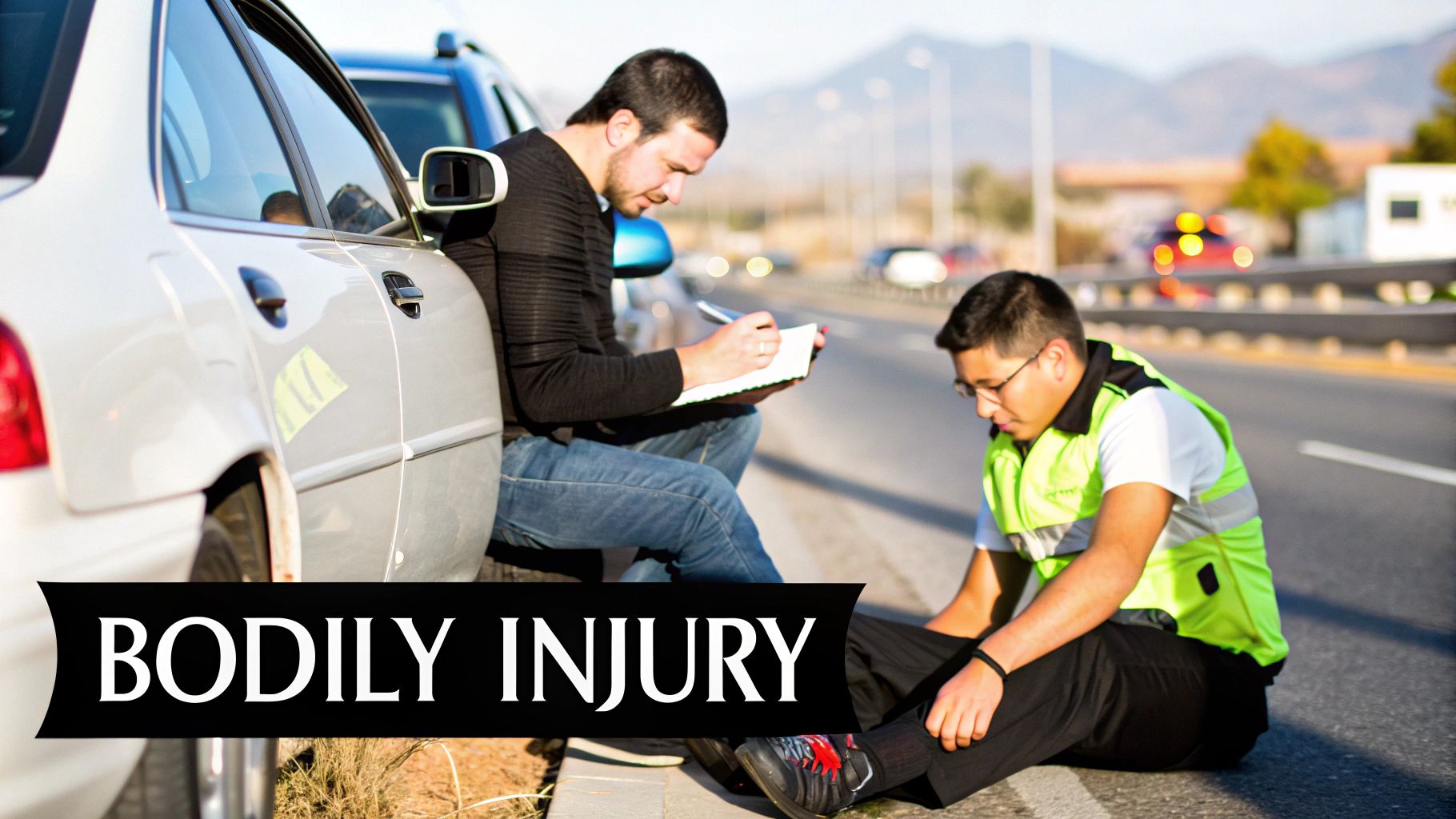
This protection isn't just for car wrecks, either. It covers a whole range of costs tied to another person's injuries.
What Bodily Injury Liability Actually Pays For
BI liability is much more than just a fund for immediate hospital bills. It’s designed to cover a wide variety of financial damages the injured person might face because of something you did.
- Medical Expenses: This is the big one. It covers everything from the ambulance ride and ER visit to major surgeries, follow-up care, prescriptions, and physical therapy.
- Lost Wages: If the person you injured can't work while they recover, your BI coverage can help make up for the paychecks they're missing.
- Pain and Suffering: For more severe injuries, a court might award damages for the physical pain and emotional trauma they've endured. This can also cover a reduced quality of life.
- Legal Fees: Should the injured party decide to sue you, your liability policy also pays for your legal defense—that means lawyer fees and court costs—up to your policy’s limit.
It’s scary how fast these costs can pile up. Even a seemingly small incident, like a friend slipping on your wet patio, could spiral into a major lawsuit. This is exactly why solid BI coverage within your home insurance is so crucial; it protects your savings and assets from being completely drained.
The Financial Reality of Bodily Injury Claims
It's one thing to talk about this in theory, but it’s vital to understand that BI claims are not only common but are also getting more and more expensive. A pedestrian hit by a car, for example, could easily face surgery costs of $25,000 or more.
Bodily injury claims are a huge piece of the liability puzzle. In the U.S., they made up 42% of all general liability payments in 2024, which is up from 38% in 2020. A big reason for this jump is healthcare inflation, which has been steadily climbing at about 5.2% per year.
This trend really drives home the point that just having the state-minimum coverage often isn't enough. The costs from a single serious accident can blow past those minimum limits in a heartbeat, leaving you to pay the rest out of your own pocket. You can learn more about these liability insurance statistics to see why having the right amount of coverage is so important.
Understanding Property Damage Liability Coverage
While Bodily Injury coverage is all about protecting people, Property Damage (PD) liability is your financial shield for the things you break. Its entire job is to pay for repairing or replacing someone else's property when you're at fault for an accident. Most of us think of car insurance first—it's what covers the other driver's vehicle after a collision you caused.
But its reach extends far beyond California's busy freeways. Imagine your kid hits a pop fly that shatters your neighbor's expensive picture window. Or a classic apartment scenario: your dishwasher springs a leak and causes serious water damage to the ceiling of the unit below you. In both cases, the liability portion of your home insurance or renters insurance policy is what steps in to handle the repair bills, saving you from a massive out-of-pocket expense.
These everyday examples show why having a solid grasp of property damage liability is crucial for homeowners and renters alike. Our guide on home insurance in California dives deeper into how this protection works specifically for property owners.
The Rising Costs of Property Damage
These days, it's about much more than a simple fender bender. The cost to repair modern cars has absolutely skyrocketed. Vehicles today are loaded with intricate sensors, cameras, and computer systems that are shockingly expensive to fix. A minor bump that might have been a few hundred dollars a decade ago can now easily turn into a multi-thousand-dollar repair bill.
This is where California's state minimum PD coverage of just $5,000 becomes so dangerously low. A single accident with a newer SUV or luxury car can blow past that limit in a heartbeat, leaving you on the hook for the rest of the bill.
Here's the hard truth: Property damage claims are a massive piece of the puzzle. In 2023, property claims made up 35% of all liability totals in the U.S., with the average payout hitting $4,200. That number is driven heavily by vehicle repair costs, which have jumped 15% since 2020 alone.
This data paints a very clear picture. Relying on minimum coverage is a financial gamble you can't afford to take. You can dig into more liability insurance carrier trends to see why having robust protection is more important than ever.
Common Examples of Property Damage Claims
To bring it all to life, here are a few real-world situations where PD liability is an absolute necessity:
- Car Accidents: The classic one—you're backing out of a parking spot and put a nice big dent in the car next to you.
- Home-Related Incidents: A big storm rolls through, and a tree on your property comes down on your neighbor’s fence or roof.
- Renter Mishaps: You accidentally start a small kitchen fire that, while quickly contained, causes smoke damage to the apartment building's shared hallway.
- Everyday Mistakes: You swerve to miss a squirrel and end up taking out a fancy stone mailbox, which can easily cost over $2,000 to replace.
Each one of these scenarios drives home the same point: accidents are a part of life, and property damage liability is the key coverage that stands between you and financial disaster.
Liability Coverage Across Different California Insurance Policies
Liability protection isn't a one-size-fits-all product. It's really the core ingredient in different California insurance policies, adapting to protect you in various areas of your life. Think of it as having specialized tools for different jobs—you need the right kind of liability coverage whether you’re behind the wheel, hosting a barbecue in your backyard, or just living in your apartment.
Understanding how this works within your auto insurance, home insurance, and renters insurance is the key to building a real financial safety net. Each policy is designed to handle the specific risks you face in those situations, protecting your assets from the unexpected.
Auto Insurance Liability In California
For most of us in California, our first brush with liability coverage comes from our car insurance. It’s not just a good idea; it’s the law. The state requires every driver to carry at least a minimum amount of liability protection, which you’ll often hear referred to by its shorthand: 15/30/5.
So, what do those numbers actually mean? Let's decode it:
- $15,000 for bodily injury liability for one person in an accident you cause.
- $30,000 for total bodily injury liability for all people in a single accident.
- $5,000 for property damage liability per accident.
Here’s the hard truth: these minimums are dangerously low for today's world. Think about the cost of a modern car or a trip to the emergency room. A single fender-bender on a busy freeway can blow past these limits in a heartbeat.
Imagine you cause a crash that results in $40,000 in medical bills for the other driver and $15,000 in damage to their new SUV. Your policy would pay its maximums, leaving you on the hook for the $25,000 gap in medical costs and the $10,000 gap in property damage. That’s a bill nobody wants. To truly protect yourself, it's vital to explore auto insurance in California and choose limits that reflect real-world costs.
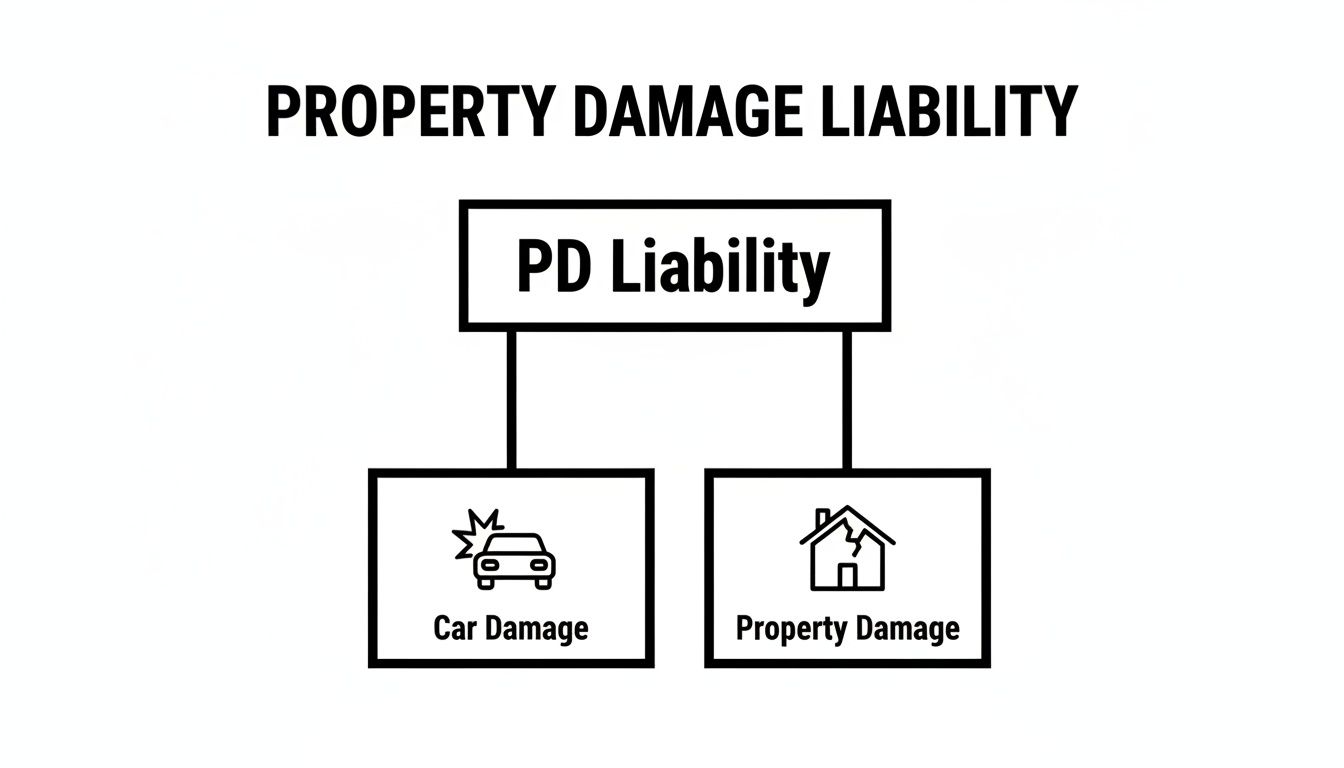
As you can see, property damage isn't just about other cars. It could be a mailbox, a fence, or a storefront—and your liability coverage is what pays to fix it.
California's legal minimums haven't kept pace with inflation or the rising costs of medical care and vehicle repairs. The table below shows just how stark the difference is between what the state requires and what we typically recommend for genuine financial protection.
| Coverage Type | California State Minimum | Recommended Minimum for Asset Protection |
|---|---|---|
| Bodily Injury (Per Person) | $15,000 | $100,000 |
| Bodily Injury (Per Accident) | $30,000 | $300,000 |
| Property Damage | $5,000 | $100,000 |
Choosing higher limits doesn't just protect others; it’s about shielding your own savings, home, and future earnings from being targeted in a lawsuit.
Homeowners Insurance Liability
Liability coverage is also a cornerstone of your homeowners insurance policy, but it protects you from a completely different set of risks. This is your defense if someone gets hurt on your property and you're found legally responsible.
It covers those everyday accidents you hope never happen but easily can:
- A delivery person slips on your icy porch and breaks an arm.
- Your friendly dog gets scared and bites a visitor.
- A dead branch from your oak tree falls and smashes your neighbor's fence during a storm.
In any of these cases, your homeowners liability is there to cover medical bills, legal fees, and any settlement if you get sued. Without it, a simple accident could put your home equity and other personal assets on the line.
Renters Insurance Liability
It’s a common myth that renters don’t need liability insurance because they don’t own the building. This couldn't be further from the truth. Renters insurance is an incredibly affordable and essential tool for protecting yourself.
First, the liability portion covers you if you accidentally damage the apartment or building.
Imagine you leave a candle burning and it causes a small fire, leading to thousands in smoke and water damage to your unit and the ones next door. Your landlord’s insurance will pay for the building repairs, but their insurance company will likely come after you to get that money back. That’s where your renters liability coverage steps in to protect you.
It also works just like homeowners liability if a guest is injured inside your apartment. For what usually amounts to the cost of a few coffees a month, renters insurance buys you a huge amount of financial security and peace of mind.
Common Exclusions: What Your Liability Policy Won’t Cover
Knowing what your liability insurance covers is only half the picture. The real key to protecting yourself is understanding what it doesn't cover. Insurance policies have very specific boundaries, and getting familiar with these common exclusions can save you from major headaches and financial surprises down the road.
Think of it this way: your policy is there for the "oops" moments in life, not the "on purpose" ones. Let's break down a few critical areas where your liability coverage won't step in.
Intentional Acts and Criminal Behavior
This is a big one, and it’s pretty straightforward. Liability insurance is designed for accidents and negligence—not for deliberate harm.
If you get angry and intentionally slash someone’s tires, your auto insurance isn't going to pay for the damage. The same goes for homeowners insurance; if you purposely break a neighbor’s window, you’re footing that bill yourself. Insurance is for unforeseen events, not the predictable outcomes of illegal or malicious acts.
Damage to Your Own Property
This is a common point of confusion. Liability insurance is all about paying for damage you cause to other people or their property—not your own.
So, if you accidentally back your car into your own garage door, your auto liability coverage won't pay to fix the door or your car's bumper. It’s a classic mix-up.
To fix your own car, you'd need collision coverage. To repair your home, you'd look to the dwelling coverage in your homeowners policy. Liability is strictly for claims made against you by a third party.
Business Activities and Professional Services
Running a business from your California home? This is a crucial exclusion to understand. Whether you're a freelance graphic designer or bake cakes for sale, your standard homeowners insurance or renters insurance almost certainly won't cover any liability related to your business.
For example, imagine a client comes to your home for a meeting, trips on a rug, and breaks their wrist. Your homeowners policy would likely deny the claim because the injury happened in the course of business.
To be properly protected, you'll need a separate commercial liability policy or a special business endorsement on your home policy. This is a critical gap many home-based entrepreneurs forget to fill.
And just to be clear, things like life insurance are in a totally different category. That’s a product meant to provide a financial benefit to your loved ones when you pass away and has nothing to do with liability for accidents.
How to Choose the Right Liability Limits for Your Life in California

Picking your liability limits isn't just about checking a box. It’s about building a financial firewall strong enough to protect everything you've worked so hard for. While it's easy to just go with California's legal minimums for auto insurance, the smartest move is to make sure your coverage actually matches your net worth.
The first step is a simple one: take stock of your assets. Add up your savings, investments, home equity, and anything else of significant value. That total is what's on the line in a serious lawsuit, so your liability coverage should, at the very least, be enough to cover it.
Assessing Your Personal Risk Factors
Beyond your bank accounts, your lifestyle plays a huge role in your risk level. Certain things can make you a much bigger target for a liability claim, which means you'll want to think seriously about higher limits on your California insurance policies.
Take a look at this list and see if anything sounds familiar:
- You have a teen driver in the house.
- You own a swimming pool or trampoline.
- You often have guests over to your home.
- You have a long commute on crowded California freeways.
- You own a dog, especially a large breed.
Each one of these adds a layer of risk. For instance, even the most basic renters insurance in California is crucial because a simple slip-and-fall in your apartment could turn into a lawsuit that drains your savings.
Think of it this way: state minimums are the floor, not the ceiling. The goal is to build a defense that ensures one bad day doesn't undo years of financial progress.
In the end, choosing the right limits means changing how you think about insurance. It’s not about what you’re legally required to have; it’s about what’s financially responsible to protect your future.
Your California Liability Insurance Questions, Answered
Thinking about liability insurance can bring up a lot of "what if" scenarios. Let's tackle some of the most common questions we hear from Californians to clear things up and help you feel more confident about your coverage.
Does My Auto Liability Cover Me if I Borrow a Friend's Car?
For the most part, yes. In California, the insurance policy attached to the vehicle is considered the primary coverage. Think of it as the first line of defense.
Your own car insurance policy often acts as secondary coverage. This is a huge benefit—if you’re in a major accident and the car owner's policy limits aren't enough to cover the damages, your policy can step in to handle the rest. It's always a good idea to double-check the specifics of your policy before you get behind the wheel of someone else’s car.
What happens if the accident costs more than my liability limits? This is where things can get serious. You are personally on the hook for any amount above your policy's limit. This is a crucial detail when considering what liability insurance covers—it only pays up to the number you selected.
If the bills from an accident are higher than your coverage, a court could order your assets to be used to pay the difference. This could mean your savings, your home, or even a portion of your future income. It’s the single best reason to choose auto insurance limits that are higher than the bare minimum required by the state.
My Landlord Says I Need Renters Insurance. Is That Just for Liability?
Your landlord’s main concern is definitely the liability portion of a renters insurance policy. They want to know that if you accidentally cause damage to their building—say, from a kitchen fire or an overflowing bathtub—there’s a policy in place to cover the repairs.
But that’s only half the story. A standard renters policy is a lifesaver for you, too. It protects your personal belongings if they're stolen or destroyed and can even cover the cost of a hotel if your apartment is unlivable after a covered event. It’s an essential layer of protection for both you and the property owner.
Just to be clear, this is completely separate from life insurance, which is designed to provide a financial payout to your family or beneficiaries and has nothing to do with liability from an accident.
Ready to make sure your assets are properly protected? The experienced agents at Mai & Associates are here to help you sort through your options. We'll help you compare quotes from California's top carriers for auto, home, renters, and life insurance.
Find the perfect fit for your needs. Head over to https://cahomeauto.com to get your free, no-obligation quote today.