What Are Considered Utilities? a CA Home & Auto Guide
You sign a lease or close on a home, grab the keys, and then the real questions start. Who sets up electricity? Is water already on? Does trash count as a utility? Why does internet feel essential if it isn't always treated the same way as gas or power?
That confusion is normal, especially in California, where monthly housing costs already take enough attention before you add power bills, water service, and wildfire-related reliability concerns. If you're trying to understand what are considered utilities, the short answer is this: some services are core household infrastructure, and others are modern essentials that may be billed like utilities without being regulated the same way.
That difference matters. It affects your budget, your move-in checklist, your lease obligations, and how you think about protection through home insurance, renters insurance, car insurance, and even life insurance. A working household runs on more than walls and a roof. It runs on the services that keep daily life stable.
Moving In Unpacking Your First Utility Bills
A lot of people first learn about utilities during move-in week. You're standing in an empty kitchen, your phone battery is low, the refrigerator is warm, and someone asks whether you've called the electric company yet. That's when “utilities” stops sounding like a vague line item and starts feeling urgent.
In practical terms, utilities are the services that make a home livable from day one. If the lights don't turn on, the water doesn't run, or the sewer system isn't working, the home isn't functioning the way it should. That's why utility setup sits right beside changing your address, getting renters insurance, and making sure your home insurance starts on time.
Why the term feels confusing
Part of the confusion comes from the fact that people use the word in two ways. Sometimes they mean the company that provides the service. Other times they mean the bill itself. Both are common, but they're not exactly the same thing.
In the electric sector, the structure is broader than commonly understood. The U.S. electric-utility industry included almost 3,000 electric distribution companies in 2017, yet investor-owned utilities served about 72% of customers nationwide, while the sector also included publicly run utilities and member-owned cooperatives, according to the U.S. Energy Information Administration's overview of electric utility ownership. That's a good reminder that utilities aren't just random monthly services. They're part of a regulated system tied to essential infrastructure.
Practical rule: If a service is necessary to safely live in the home and depends on a physical delivery network, it's usually in utility territory.
What you should check right away
When you move in, look for these answers before the first bill arrives:
- Account responsibility: Is the service in your name, the landlord's name, or bundled into rent?
- Start date: If service transfer is delayed, you can walk into a home with no power or hot water.
- Billing method: Some buildings use individual meters. Others divide shared costs.
- Backup plan: In California, outages and service disruptions can affect work, food storage, charging, and travel.
That last point connects utilities to financial protection. Renters insurance and homeowners insurance don't create electricity or water, but they help protect the property and routines those services support.
Defining Your Essential Household Services
The clearest answer to what are considered utilities starts with four core household services: electricity, natural gas, water, and sewage. These are the basics that support health, safety, sanitation, and normal home use.
Think of them as the home's circulatory system. One line brings power. Another brings fuel for heat or cooking. Another brings fresh water in. Another takes waste out. When one part fails, the whole household feels it.
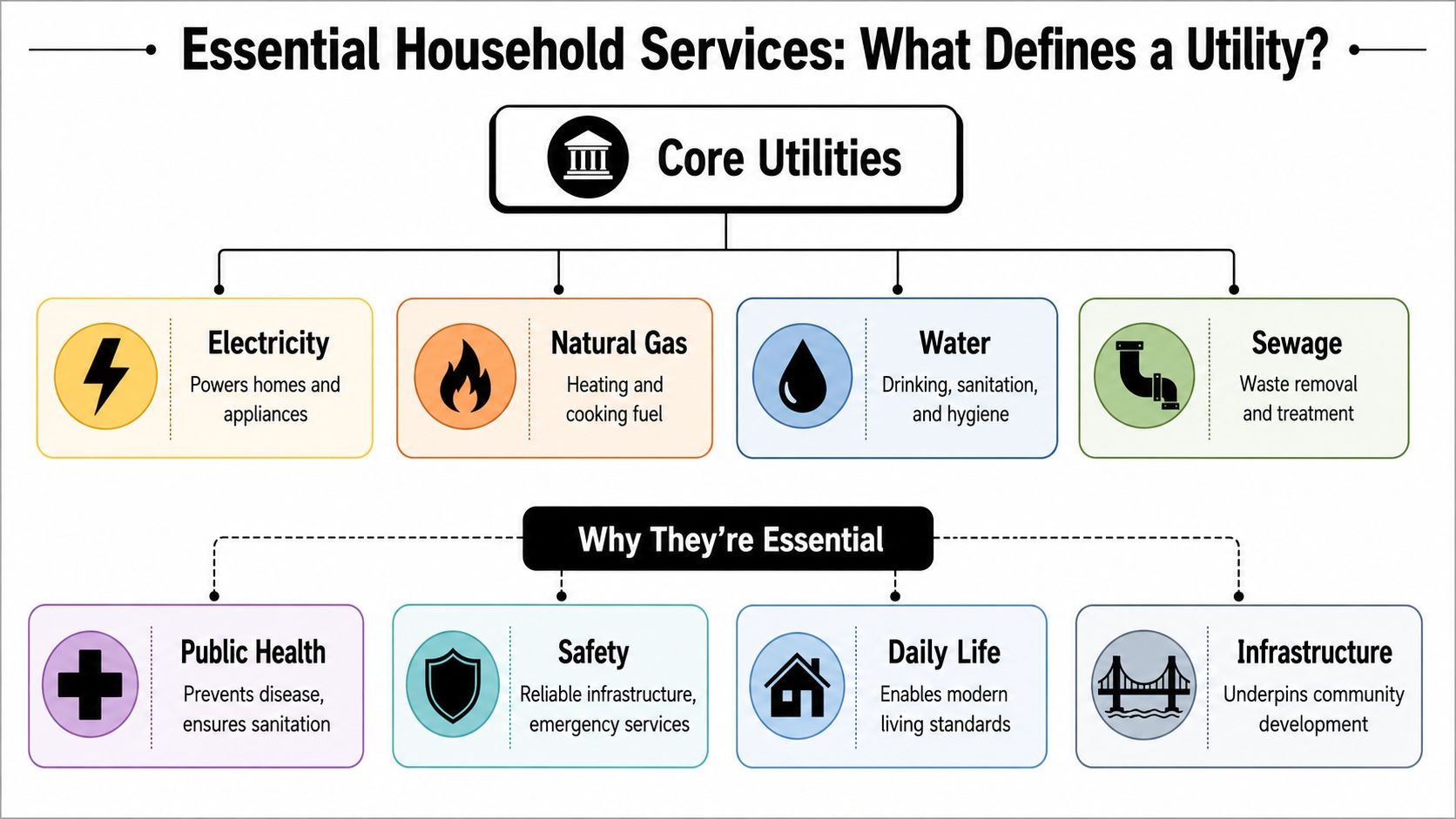
The four services most people mean
Utilities are treated differently from ordinary consumer products because they depend on large delivery systems. In technical terms, utilities are critical infrastructure that deliver commodities such as electricity, gas, and water through a chain that includes production or generation, transmission, distribution, metering, and customer service, as explained in SAP's utility industry training overview. That's also why a problem upstream can affect everyone downstream.
Here's the simplest way to sort the core group:
| Utility | Primary Function |
|---|---|
| Electricity | Powers lighting, appliances, cooling, electronics, and many home systems |
| Natural Gas | Fuels heating, hot water, dryers, and cooking in homes that use gas service |
| Water | Supports drinking, bathing, cleaning, cooking, and sanitation |
| Sewage | Removes wastewater and carries it to treatment systems safely |
If you want a plain-language reference for related insurance and housing terms, a good place to keep handy is this California insurance glossary.
Why these count and others may not
These services aren't considered utilities just because they're expensive or recurring. They count because they are tied to public health and physical infrastructure.
- Electricity keeps refrigeration, lighting, medical devices, chargers, and climate control running.
- Water supports hygiene and safe daily living.
- Sewage protects sanitation by removing waste from the property.
- Natural gas remains a core utility in many homes because it fuels heating and major appliances.
A streaming subscription can be important. It doesn't make a home habitable. Running water does.
That's the simplest test to keep in mind when sorting bills.
What About Internet Cable and Trash Pickup
A common point of confusion arises here. Internet, cable, and trash pickup often feel like utilities because they arrive every month, affect day-to-day life, and can be set up during move-in. But they don't always sit in the same category as electricity, gas, water, and sewer.
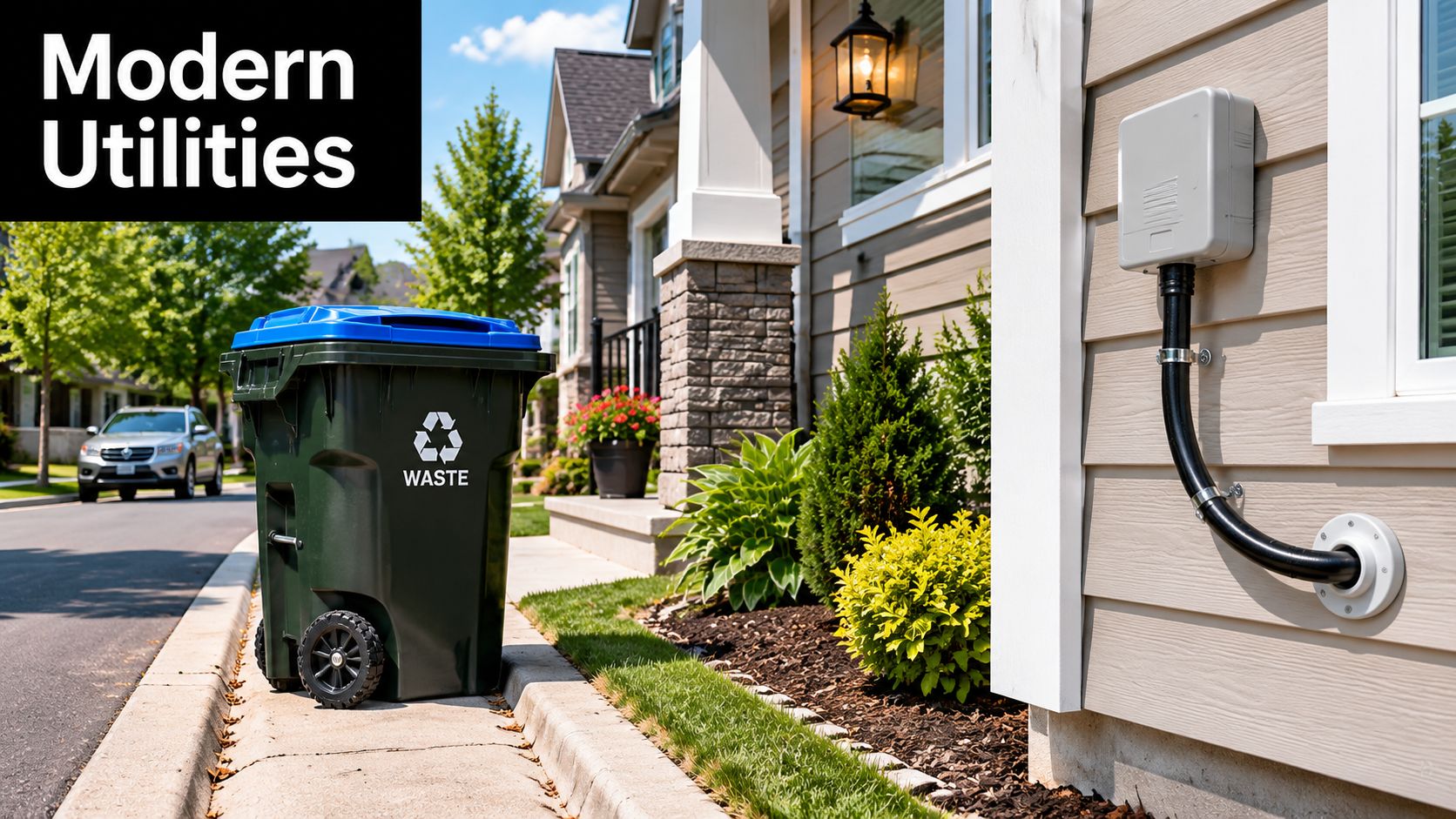
Why they feel like utilities
From a household budgeting standpoint, these services are often “must-pay” bills. If you work from home, internet may feel almost as necessary as electricity. If your city uses a set trash system, you may never think of it as optional.
That everyday experience is real. The legal and regulatory treatment is what changes. Public utilities such as water and sewer are commonly regulated monopolies, while internet and cable are often treated as consumer services in competitive markets, which affects pricing, billing, and service obligations, as described in this overview of how utility classification depends on regulation.
A practical way to classify them
Use this household rule of thumb:
- Core utility: A service tied to essential infrastructure and basic habitability
- Modern essential: A service most households rely on heavily, even if it's not regulated like a public utility
- Optional consumer service: Useful, but not necessary for safe occupancy
That usually puts services into buckets like these:
- Internet: Often a modern essential, especially for remote work, school, and connected devices
- Cable or streaming: Usually a consumer service
- Trash pickup: Often treated locally like a basic municipal service, but it may appear differently on your bill depending on the property and city
- Phone service: Important for many households, though not usually discussed the same way as water or electric service today
Don't budget only by labels. Budget by consequences. Ask what happens if the service stops for a week.
For households comparing providers, speeds, and stability, this guide on internet speed and reliability explained is useful because it breaks down why two internet plans that look similar on paper can perform very differently in daily use.
Bundled plans also blur the lines. A renter might pay one monthly amount that includes water, trash, and internet, then assume they're all utilities in the same sense. They aren't always. That's why the lease and the provider list matter more than the label.
Who Pays the Bill Renter vs Homeowner Obligations
Responsibility for utilities changes fast once you know whether you're renting or owning. Two people can live on the same street, use the same electric grid, and still have very different obligations.
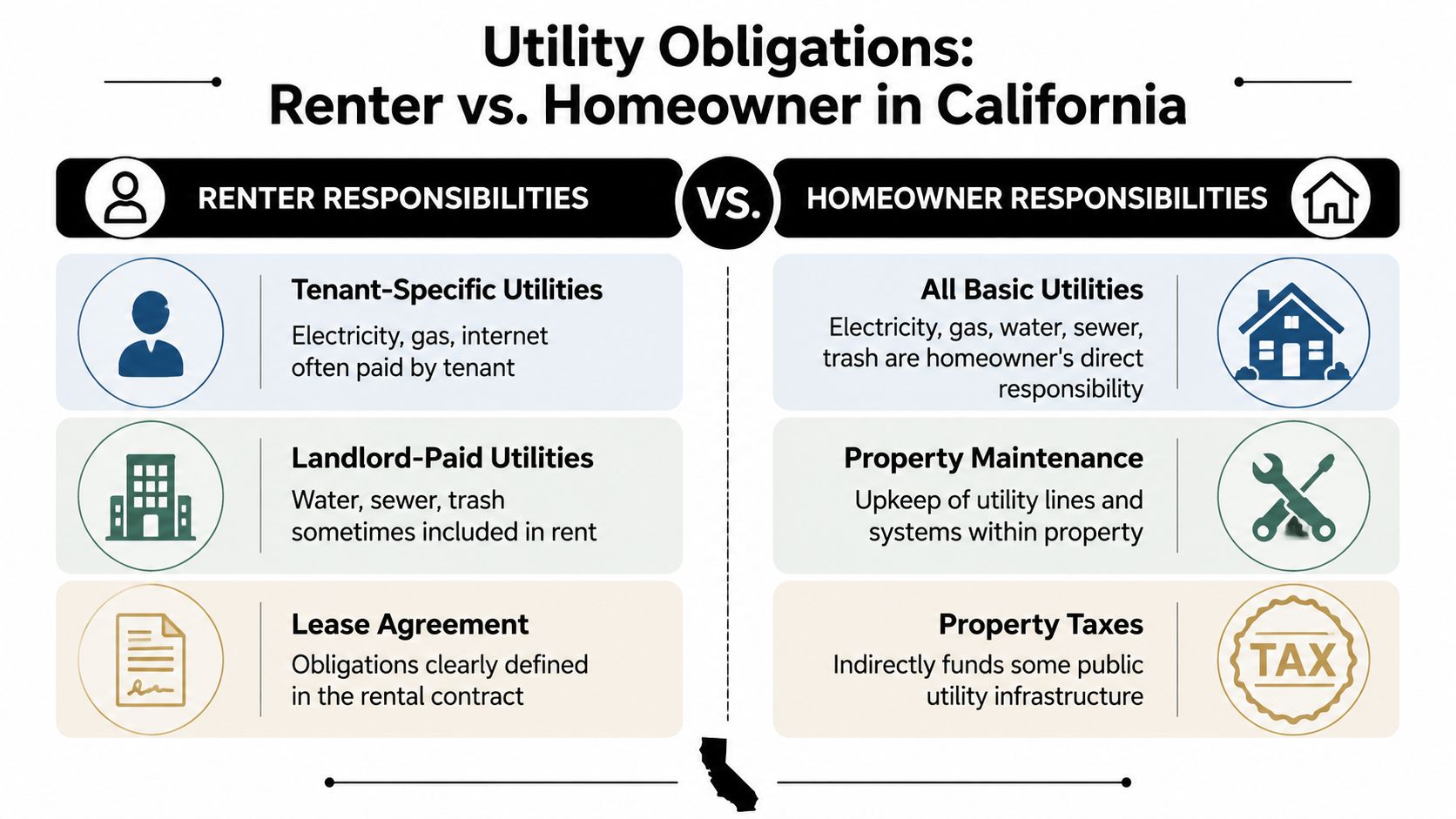
What renters usually handle
Renters often pay for electricity, gas, and internet directly, but that depends on the lease. In many California apartment buildings, water, sewer, or trash may be included in rent or billed through the landlord.
That means the first job isn't guessing. It's reading the lease line by line.
Look closely for terms such as:
- Utilities included: This doesn't always mean all utilities. It may only cover water, sewer, or trash.
- Sub-metering: Your unit may have separate usage tracking, even in a larger building.
- Ratio billing or allocation: Some properties divide certain costs among tenants.
- Provider restrictions: A landlord or building may require a specific trash, internet, or gas arrangement.
A renter should also know that access to essential services is part of basic livability. If there's a serious utility issue, it isn't just an inconvenience. It can become a housing problem that needs immediate attention.
For the personal side of protection, California renters insurance options matter because renters insurance helps protect your belongings inside the home, even though you don't own the structure itself.
What homeowners take on
Homeowners usually carry the full utility picture. The account setup, the payment schedule, and the property-side maintenance issues often land on them.
That can include:
- Direct billing responsibility: Electricity, gas, water, sewer, trash, and internet
- On-property upkeep: Certain lines, shutoff points, or equipment on the property side may become the owner's issue
- Service interruption planning: Owners often need a stronger backup strategy for outages, leaks, and access problems
Side-by-side comparison
| Household role | Typical utility responsibility |
|---|---|
| Renter | Pays only the services assigned in the lease or rental agreement |
| Homeowner | Opens and manages most or all utility accounts directly |
If you rent, trust the lease. If you own, assume the utility question comes back to you unless a municipality or association handles part of it.
This is also where insurance thinking becomes practical. Renters insurance protects the contents and liability side of your living space. Homeowners insurance protects the dwelling and may interact with utility-related risks differently, especially when a service problem causes property damage.
Smart Ways to Manage Utility Risks and Costs in California
California households don't just manage utility bills. They manage utility risk. A bill isn't only a payment request. It can also be a warning sign about energy use, property strain, or reliability problems that could affect the rest of your financial life.
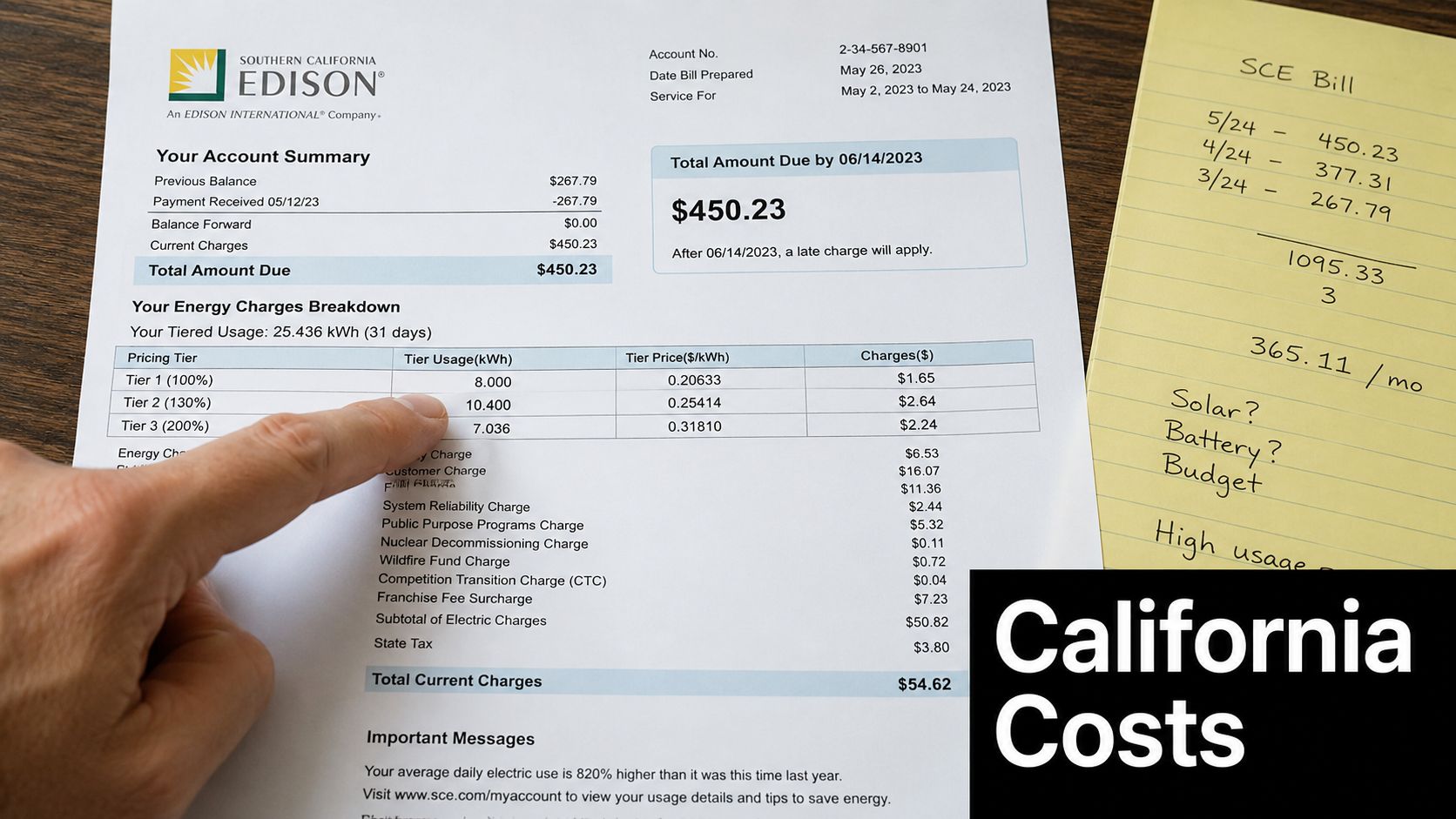
Read the bill like a risk document
Many Californians glance at the total due and stop there. It's better to read the sections that show timing, usage patterns, and service charges. If your provider uses time-based pricing or tiered structures, when you use electricity can matter almost as much as how much you use.
A few habits help:
- Check high-use periods: Evening cooling, laundry, and EV charging can stack up fast.
- Look for repeat spikes: A sudden jump may point to HVAC issues, appliance problems, or changed household patterns.
- Track seasonal changes: Summer cooling and winter heating can shift your budget quickly.
- Review autopay carefully: Convenience helps, but you still need to spot unusual charges.
For homeowners looking for practical ideas, this article on how to save on your electricity bill offers simple ways to cut waste around lighting, appliances, and daily habits.
California risk is bigger than the bill
In California, utility planning connects directly to resilience. Wildfire conditions can affect power reliability. Shutoffs and disruptions can affect refrigeration, medical equipment, remote work, garage access, and charging. If you drive an electric vehicle, utility reliability can even affect transportation planning, which is where household utility management starts to touch car insurance decisions and backup transportation thinking.
The affordability side matters too. One source in the provided materials notes an average U.S. water bill of about $83 per month in a broader utility explainer from Constellation's utility bill overview, but broad averages don't tell a California household what happens when housing type, climate, bundled services, remote work, and resilience upgrades all push monthly costs around.
A stable household budget needs room for utility swings, not just ideal-month estimates.
Build a utility management routine
A useful California routine looks like this:
- Set bill alerts on every major utility account.
- Document shutoff locations for water and gas where appropriate.
- Keep outage basics ready, including charging options and backup lighting.
- Review home systems yearly, especially HVAC, water heaters, and major appliances.
- Treat internet as an operations issue if you work from home, not just an entertainment bill.
For broader guidance on protecting the home, vehicle, and budget together, this collection of California insurance and protection articles can help you think through the bigger picture.
Securing Your Home Beyond the Utility Lines
Utilities are the services that keep a home functioning at the most basic level. Electricity, gas, water, and sewage sit at the center because they support habitability, sanitation, and safety. Internet, cable, and trash may feel similar on a monthly budget, but they don't always carry the same regulatory meaning.
That distinction matters in California. Renters need to know what the lease assigns to them. Homeowners need to plan for the full cost and reliability side of running a property. Everyone benefits from treating utility management as part of household risk management, not just bill payment.
Insurance fits into that same mindset. Utilities keep daily life moving. Insurance helps protect what those services support, including your belongings, your home, your vehicle, and your family's financial stability. If you own a home, it's worth reviewing how your protection lines up with your property, your location, and your exposure to service-related risks through California home insurance coverage options.
If you want help reviewing the bigger protection picture, Mai & Associates can help you compare California home insurance, renters insurance, auto insurance, car insurance, and life insurance options so your coverage matches the way you live.