Things You Need for Your First Apartment: 2026 Guide
You've probably got a lease in one tab, a shopping cart in another, and a running note on your phone with random stuff like “plunger,” “bedsheets,” and “why are shower curtains separate from liners?” That's normal. Your first apartment feels simple until you realize you're not just moving your clothes. You're building a functioning home from scratch.
The good news is that you don't need everything at once, and you definitely don't need to buy the fanciest version of every item. You need the right things, in the right order, with a little planning around move-in logistics, budget, and the boring protection stuff often overlooked until something goes wrong.
Before the Boxes Arrive Planning Your Move
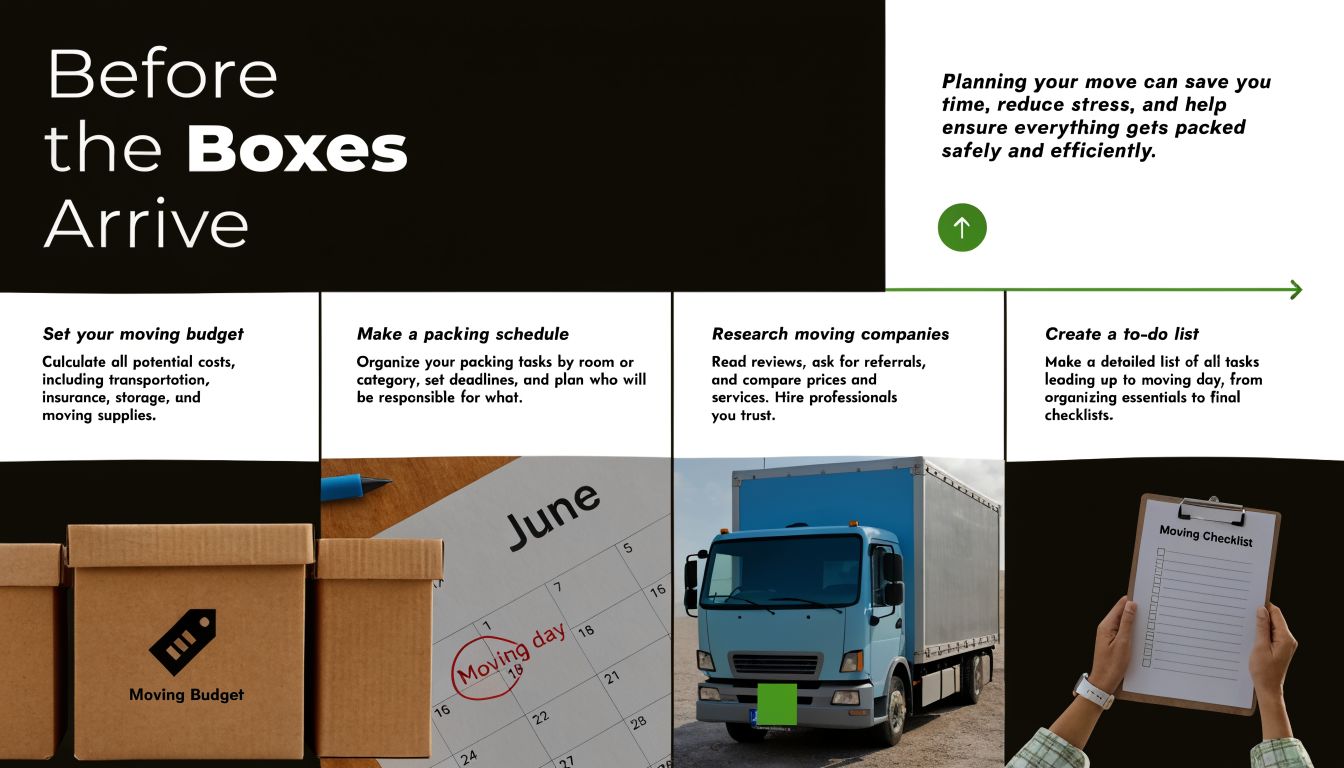
Most first-apartment mistakes happen before move-in day. Not because people are careless, but because they focus on packing and shopping before they handle access, measurements, and paperwork.
Lock down the admin first
Before a single box goes in the car, get these items together in one folder, either printed or saved in a cloud folder you can pull up fast:
- Signed lease and addenda: Make sure you can access every page, especially move-in rules, parking instructions, and key pickup details.
- Photo ID and payment confirmations: Keep proof of deposit, first month's rent, and any utility setup confirmations.
- Move-in checklist from management: If your building provides one, use it.
- Utility account details: Electricity, gas, internet, and any renters setup documents should be easy to find.
- Emergency contacts: Landlord, property manager, maintenance line, and moving help.
A lot of stress disappears when you can answer basic questions without digging through email at the loading curb.
Measure before you buy or move
This is one of the most practical things you need for your first apartment, and almost nobody treats it seriously enough. A cited move-in guide notes that measuring furniture against apartment dimensions helps avoid 35% of common moving-day failures, and that measuring 4+ weeks before the move led to 92% avoidance of delays versus 58% for reactive fixes in the same source's summary of apartment management surveys (first apartment move mistakes and measurement guidance).
Use a tape measure if that's what you have, but a Bosch GLM50 or another laser measurer makes this easier if you can borrow one. Measure:
Your furniture dimensions
Width, height, and depth. Do this for the couch, mattress, bed frame, desk, dresser, and dining table.Your apartment access points
Front door, hallway turns, stairwell width, elevator interior, and room entry doors.Turning space
A couch may fit through the front door and still get stuck at the hall corner.
Practical rule: If an item barely fits on paper, assume it doesn't fit in real life unless it can be disassembled.
If you want a second checklist for logistics, timing, and carrying strategy, this smooth apartment relocation guide is useful because it focuses on the practical stuff people skip.
Document the apartment before your stuff enters it
Walk through the unit while it's empty. Take timestamped photos and short videos of walls, floors, appliances, blinds, windows, and inside cabinets. Open and close things. Photograph scratches, stains, cracked caulking, chipped paint, and missing fixtures.
Then email those photos to yourself and, if appropriate, to management so there's a clear record. This is one of those tasks that feels fussy until move-out.
For extra planning help on coverage, home setup, and practical California moving questions, keep this California insurance and home guide library bookmarked.
Your First 24 Hours The Move-In Day Survival Kit
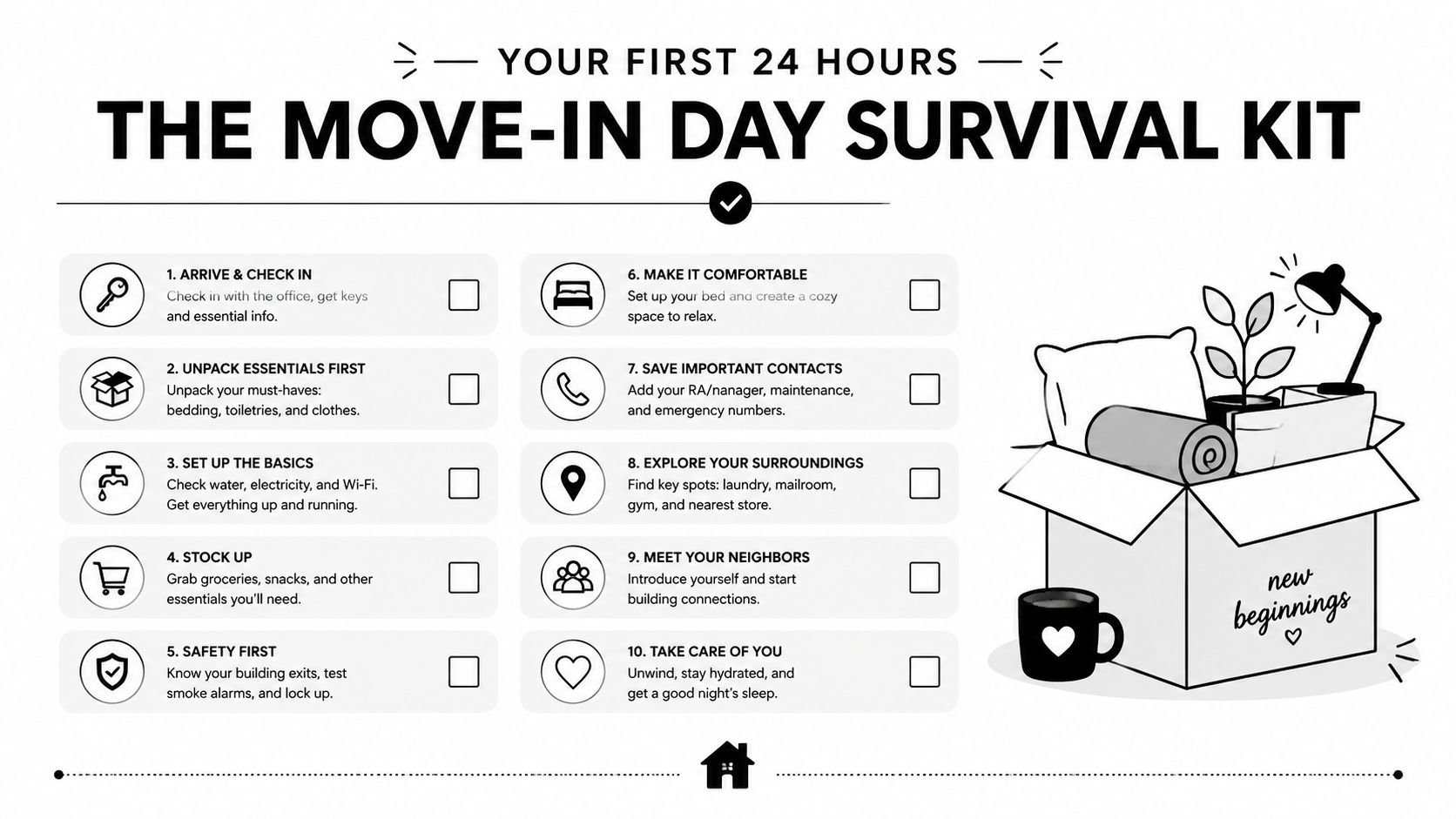
Don't pack your first-night essentials into random boxes. Put them in one suitcase, duffel, or plastic bin that stays with you, not on the truck if you can help it.
What belongs in the survival kit
You're not packing for comfort here. You're packing so you can function when you're tired, dusty, hungry, and surrounded by unopened boxes.
- Bedding you can use immediately: Sheets, pillow, blanket, or an air mattress setup if the bed isn't ready.
- Bathroom basics: Toilet paper, hand soap, toothbrush, toothpaste, towel, shower shoes if needed.
- Chargers and battery backup: Phone charger, laptop charger, and a power bank if you have one.
- Medications and daily personal care items: Don't bury these in the bathroom box.
- A simple tool kit: Screwdriver, Allen keys, box cutter, scissors, tape measure, small hammer.
- Cleaning basics: Paper towels, trash bags, all-purpose cleaner, sponge.
- Food and hydration: Water bottle, snacks, coffee or tea setup if that's part of your morning routine.
- Lighting and power extras: A lamp, flashlight, extension cord, and power strip can save you on night one.
- Important documents: Lease copy, ID, keys, insurance paperwork, and utility information.
- One change of clothes: Include sleepwear and clean socks. You'll be glad you did.
What actually helps on night one
The smartest move-in setup is the least glamorous one. Make the bed first, set up the bathroom second, and locate the kitchen basics third. Everything else can wait until tomorrow.
If you can shower, charge your phone, find your meds, and sleep without digging through ten boxes, the first day was a success.
A few extra first-night items are easy to forget but matter fast: a shower curtain liner if the bathroom doesn't include one, a trash can or at least a few open bags, and a plate or bowl you can eat from. Keep a mug and one set of utensils in that same kit.
What not to do
Don't start by arranging decor. Don't open every box at once. Don't assume the apartment came with basics like light bulbs, paper products, or cleaning supplies.
Label your boxes by room and priority. “Kitchen” is helpful. “Kitchen, open first” is much better.
Furnishing Your Space A Room-by-Room Essentials Checklist
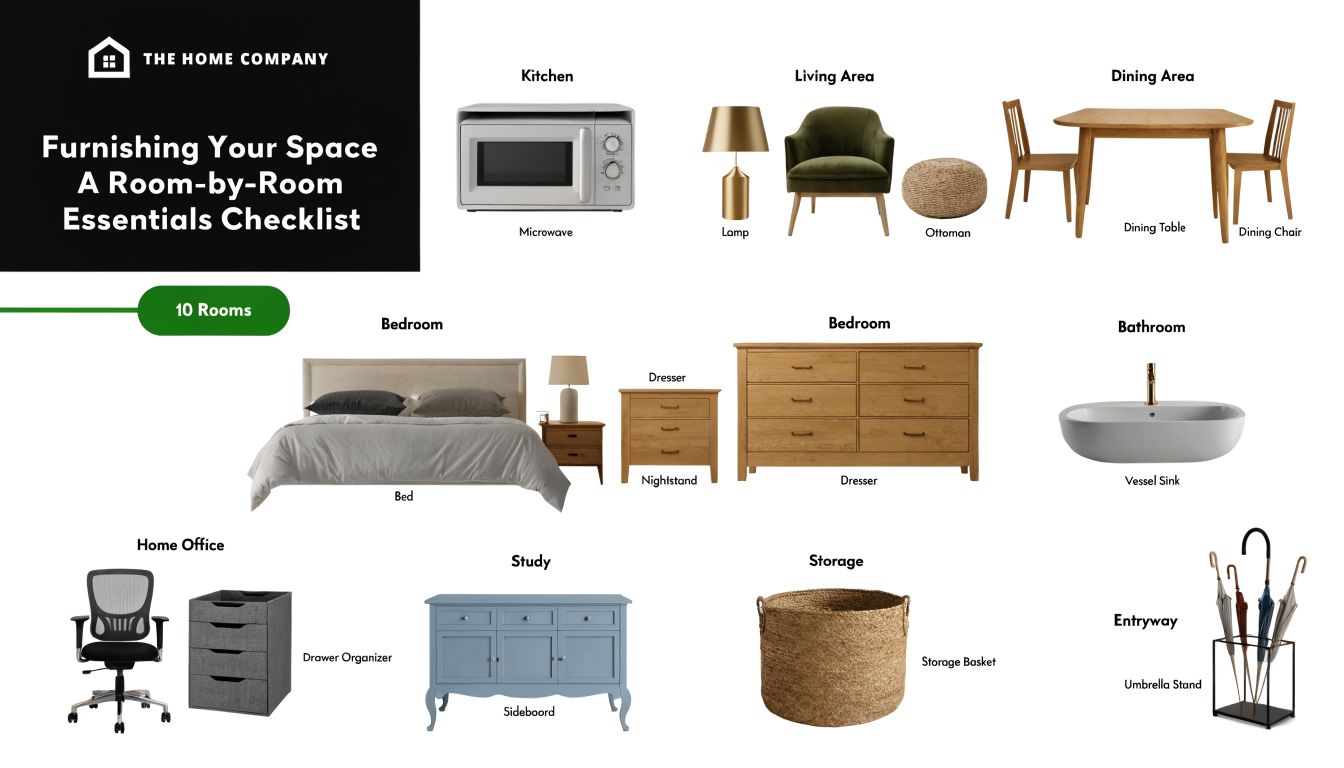
Once the survival gear is handled, the apartment starts to show you what it needs. Empty rooms make this easier, because you notice quickly whether you're missing a place to sit, a pan to cook with, or enough light to make the place feel normal after sunset.
A source on first apartment trends notes that microwave and toaster oven adoption among first-time renters rose from 45% in 2010 to 78% by 2026, and first apartment checklists now average 50 to 70 items (first apartment essentials checklist trend data). That sounds about right. Not because you need to buy 70 things immediately, but because a real apartment runs on lots of small, unglamorous items.
Kitchen essentials that actually get used
The kitchen usually eats the biggest chunk of your shopping list because it mixes equipment, storage, and daily consumables.
Start with the core:
- Cookware: One frying pan, one saucepan, one larger pot, one baking sheet.
- Prep tools: Chef's knife, paring knife, cutting board, can opener, measuring cups, spatula.
- Eating basics: Plates, bowls, cups, forks, spoons, knives.
- Cleaning items: Dish soap, sponge, drying rack or towel, trash bags.
- Food storage: A few containers for leftovers and lunch.
Then think about how you eat. If you reheat often, a microwave or toaster oven may matter more than a blender. If you cook simple meals, you may need fewer gadgets than social media tells you.
Buy for your habits, not your fantasy kitchen.
A coffee maker is great if you use it daily. A panini press isn't an essential just because it looked cute in someone else's apartment tour.
Bedroom items worth prioritizing
The bedroom should work before it looks finished. Sleep affects everything else, including how tolerable the unpacking process feels.
At minimum, get these in place:
- Mattress
- Bed frame or stable base
- Sheets and pillowcases
- Pillows
- Comforter or duvet
- Laundry hamper
- Hangers
- Curtains or another privacy solution
- Lamp if overhead light is harsh or missing
A cheap side table is fine. A mattress that wrecks your back is not. If you're comparing options, this guide on selecting the right mattress for wellness is useful because it focuses on sleep quality rather than just showroom features.
If you need more practical home and lifestyle reads while you set up your space, the California home and insurance blog is a solid bookmark.
Bathroom items people forget
Bathrooms look complete until the first shower or the first clogged toilet.
Get these right away:
- Shower curtain
- Shower liner
- Hooks or rings
- Bath towels
- Hand towels
- Bath mat
- Toilet paper
- Plunger
- Toilet brush
- Soap and basic toiletries
- Small trash can
The plunger is the classic item nobody buys until they need it immediately. Buy it before that.
Cleaning and utility basics
A clean apartment feels furnished faster, even before you own much furniture.
Your starter set should include:
- All-purpose cleaner
- Bathroom cleaner
- Laundry detergent
- Broom and dustpan
- Mop or spray mop
- Vacuum if you have carpet or pets
- Microfiber cloths or paper towels
- Rubber gloves
Then add the small support items that keep daily life from getting annoying: step stool, power strips, extension cords, extra light bulbs, command hooks, and a basic toolkit.
Living room and dining area without overspending
A common pitfall for first-time renters is blowing the budget. They rush to make the place look finished instead of making it livable.
Start lean. A sofa or compact futon, one lamp, a small table or surface, and somewhere to eat is enough. If the apartment is small, a folding dining setup or narrow drop-leaf table works better than forcing in full-size furniture that dominates the room.
What works is buying pieces with a job. Storage ottoman. Lamp with shelving. Narrow entry bench with shoe space. What doesn't work is buying bulky statement furniture before you've lived in the layout for a few weeks.
Budgeting for Your Apartment Without Breaking the Bank
The fastest way to overspend is to treat every missing item like an emergency. Most of the things you need for your first apartment fall into one of three buckets: needed now, needed soon, or nice when the paycheck recovers.
A source on prioritization matrices reports that using a matrix for purchases can lead to 87% budget adherence, compared with 61% overspending for those who don't. The same source says the average California first-apartment startup cost is $2,500 to $4,000, and recommends keeping furnishing costs below a 25% rent ratio to avoid becoming apartment poor (purchase prioritization matrix guidance).
Use a simple buying filter
When deciding whether to buy something now, ask:
- Does it solve a daily problem?
- Does it affect sleep, hygiene, safety, or food prep?
- Can I borrow, thrift, or delay it without making life harder?
That filter cuts out a lot of impulse spending.
Budget checkpoint: If an item makes the apartment look finished but doesn't improve sleep, storage, cleaning, safety, or meals, it probably belongs in the later bucket.
Apartment essentials buy timing
| Category | Buy Now (First Month) | Buy Later (Next 3-6 Months) |
|---|---|---|
| Bedroom | Mattress, bedding, pillows, hamper, hangers | Nightstand, extra decor, upgraded frame |
| Kitchen | Pan, pot, utensils, plates, cups, can opener, cleaning basics | Matching sets, specialty appliances, extra serving pieces |
| Bathroom | Shower curtain, liner, towels, toilet paper, plunger, soap | Decorative storage, extra linens |
| Cleaning | Broom, cleaner, trash bags, laundry detergent | Upgraded vacuum, specialty cleaning tools |
| Living area | Basic seating, lamp, small surface | Coffee table, media console, accent chair, rug |
| Storage and utility | Power strips, extension cords, toolkit, command hooks | Entry furniture, custom organizers |
Where to spend and where to save
Spend more carefully on items that affect your body or get used constantly. Mattress, pillow, cookware you will cook with, and a decent vacuum if you have carpet or allergies.
Save on items that are easy to replace or upgrade later. Side tables, lamps, bookshelves, decor, dishes, and dining chairs are often fine secondhand if they're sturdy and clean.
If you're weighing insurance questions, move-related paperwork, or policy basics while you budget, this California insurance FAQ page can help answer common practical questions.
Protecting Your New Life A Renters Guide to California Insurance
A lot of first apartment lists will tell you to buy a toaster, a bath mat, and a can opener. Then they barely mention insurance, if they mention it at all. That's backward.
The bed, dishes, laptop, clothes, shoes, TV, bike, and everything else you just hauled into your new place are worth protecting. And in California, renters have more to think about than just a random leak from the upstairs unit.

Renters insurance is not optional in practice
A cited first-apartment insurance overview says 60% of renters are uninsured, while renters insurance in California averages $15 to $20 per month. The same source states that landlord insurance offers zero protection for a tenant's belongings and notes average burglary losses of $2,500 for first-time renters who are exposed without coverage (California renters insurance and first apartment risks).
That gap matters because first-time renters often assume the building's policy protects anything inside the unit. It doesn't protect your stuff just because your stuff is inside someone else's building policy.
What a policy helps with
At a practical level, renters insurance matters for two big reasons:
- Your belongings: Clothes, electronics, furniture, kitchen gear, and other personal property.
- Your liability: If someone gets hurt in your apartment or you accidentally cause damage that affects someone else.
That second part gets ignored a lot. People focus on stolen laptops and forget that liability claims can be the bigger financial hit.
Another data point in the background material says California renters insurance can cover substantial personal property and liability limits, and that statewide pricing is often still fairly modest. The headline point for a first apartment is simple. The monthly cost is usually manageable compared with the cost of replacing everything yourself.
Your landlord insures the building. You insure your life inside it.
California-specific risks people tend to underestimate
California renters should think beyond ordinary theft and water damage. Depending on where you live, you may need to ask about:
- Wildfire exposure
- Earthquake options
- Temporary living expenses after a covered loss
- High-value items that may need special review
- Whether your building's location affects carrier options
If you drive, this is also a good time to review auto insurance and car insurance alongside renters coverage. Bundling can sometimes make the overall cost easier to manage, and it keeps your paperwork cleaner. If you're buying a condo or house later, these habits also carry over well into home insurance decisions.
For some people, moving into a first apartment is also the first moment they start thinking about basic financial protection more broadly. That includes life insurance if anyone depends on your income, or if you want to lock in coverage while you're young and healthy.
How to shop without overcomplicating it
Keep it simple:
- List your major belongings before you shop.
- Ask what is and isn't covered in plain language.
- Check deductibles, not just the monthly premium.
- Ask about wildfire and earthquake concerns if you're in a higher-risk area.
- Review any bundle options if you already carry auto coverage.
If you want a starting point specific to the state, this California renters insurance guide is a practical place to compare what coverage usually includes and what to ask before choosing a policy.
The Final Steps Smart Packing and Settling In
Packing gets easier when you stop treating every box the same. Use towels, hoodies, and blankets to wrap breakables. Label boxes by room and by urgency, so “bathroom” and “open first” are separate decisions, not the same label slapped on everything.
Pack for unpacking, not just transport
A few habits save a lot of hassle:
- Keep hardware in labeled bags: Tape the bag to the furniture item or place all hardware in one clearly marked bin.
- Photograph cable setups: This helps when you reconnect internet gear, a TV, or a desk setup.
- Create a simple digital inventory: A note on your phone works. List what's in each box and any valuable items.
- Don't overfill boxes: Heavy boxes break, and movers hate them for good reason.
Settle in with a first-week reset
During the first week, focus on function before aesthetics. Confirm utilities are working properly, update your address with your bank and employer, learn trash and laundry rules, and test appliances while any move-in issues are still fresh.
Clean once before you fully nest. Then set a basic routine you can keep. Wipe counters, stay ahead of laundry, take trash out on schedule, and deal with little messes before they become apartment-wide chaos.
A first apartment feels comfortable faster when you build systems early, even small ones.
Your first apartment is a big step, and protecting it shouldn't be complicated. Mai & Associates helps Californians compare affordable renters, auto, home, and life insurance options, including guidance for wildfire risk, earthquake concerns, and California Fair Plan reviews. If you want clear answers and same-day quote help from licensed agents, they're a smart place to start.