Is Renters Insurance Worth It? Your 2026 Guide
You’re renting in California, your budget is already stretched, and insurance feels like one more bill. Then something small goes wrong. A car window gets smashed outside your apartment. A kitchen flare-up ruins cabinets, clothes, and your laptop. Smoke from a nearby wildfire seeps into everything you own.
That’s when the main question hits. Is renters insurance worth it?
My answer is yes. For most California renters, it’s one of the easiest insurance decisions you can make. The cost is low, the protection is broad, and the risks here are too real to ignore. If you rent an apartment, condo, townhome, or single-family home, renters insurance gives you a practical financial backstop that your landlord, your property manager, and your car insurance usually won’t provide.
Is Renters Insurance Really Worth It in California?
A lot of renters assume they’re covered somehow. They pay rent, the building has insurance, and if something major happens, the property owner’s policy will step in.
That assumption is where people get burned.

If someone steals your backpack from your unit, your landlord’s policy usually doesn’t pay for your belongings. If a guest gets hurt inside your apartment and blames you, your landlord’s policy usually doesn’t defend you. If a fire in another unit forces you out for a while, you may need help paying for somewhere else to stay.
That gap is common. Only 41% of U.S. renters had renters insurance in 2016, compared with 95% of homeowners, and insured renters increased by 15% between 2018 and 2020 according to Orchid Insurance’s summary of renters insurance facts. Even with that improvement, a lot of renters still go without coverage.
Practical rule: If losing your stuff or getting sued would hurt your finances, renters insurance is worth it.
California adds another layer. Rents are high, replacement costs are high, and local risks are not theoretical. Wildfire, smoke, theft, water damage from neighboring units, and liability claims all matter here. When people search renters insurance worth it, what they’re usually asking is whether a small premium can realistically protect them from a much bigger financial mess.
It can.
Your Landlord Is Covered But Are You?
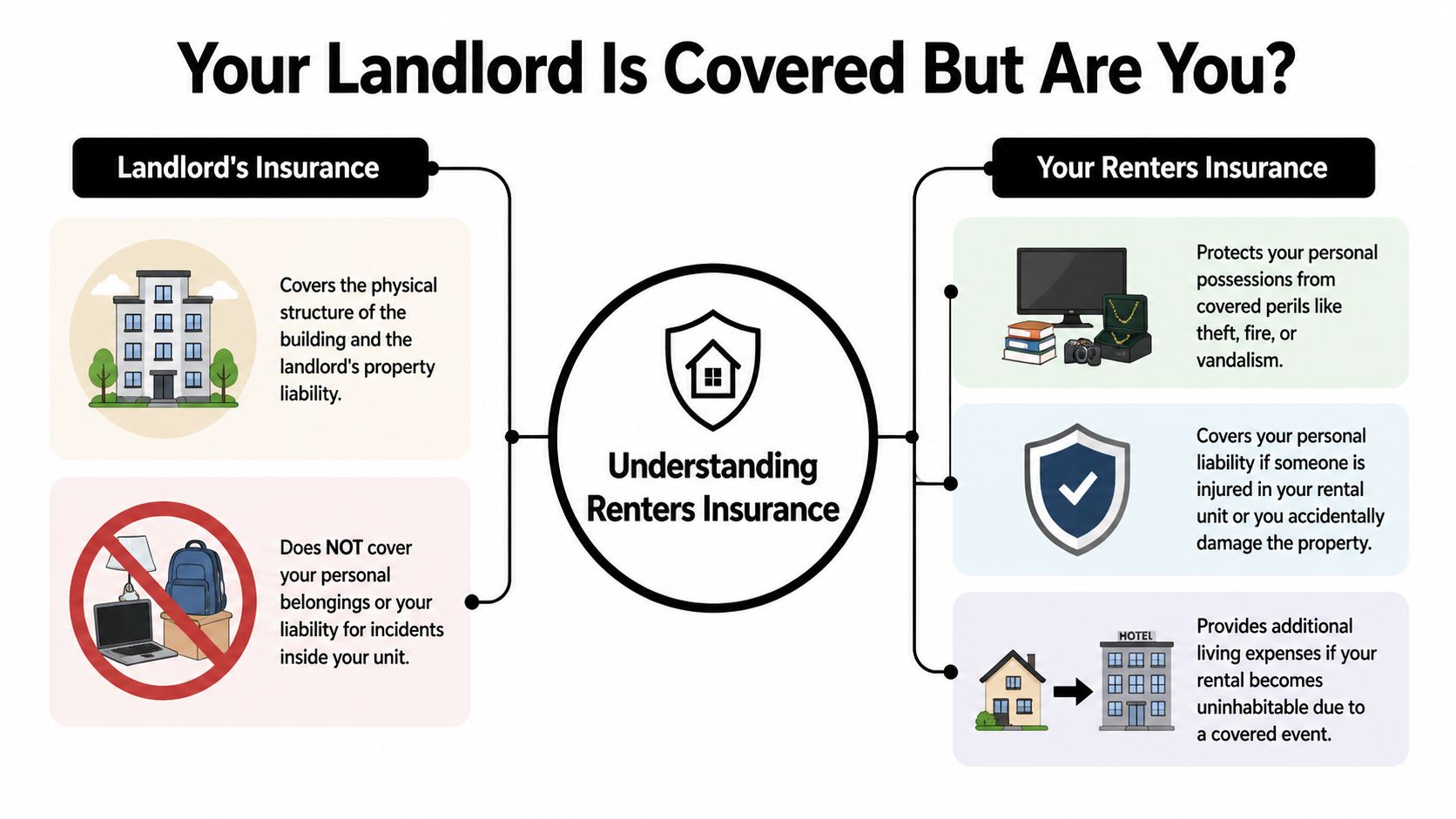
The cleanest way to understand this is simple. Your landlord insures the box. You need insurance for the stuff inside the box and for what happens because of you inside that space.
What the landlord usually insures
A landlord policy generally focuses on the building and the owner’s risk. That often includes:
- The structure itself like walls, roofing, and built-in features
- Owner liability in common areas such as hallways, stairs, or other shared spaces
- Property the landlord owns inside the rental, if any, such as provided appliances in some situations
If you want a broader look at how owner-side coverage works, this guide for California property owners is a useful reference.
What the landlord usually does not insure
This is the part renters miss. The owner’s policy usually doesn’t cover:
- Your personal belongings like clothes, furniture, electronics, cookware, or bicycles
- Your personal liability if a visitor says you caused an injury in your unit
- Your temporary housing costs if a covered loss makes your rental unlivable
- Damage tied to your own use of the unit depending on the situation and lease terms
That’s why relying on the building policy is a gamble.
Your landlord’s insurance protects the property owner’s financial interest. It doesn’t exist to rebuild your life after a loss.
California renters run into this misunderstanding all the time, especially in larger apartment communities where the building feels “fully insured.” It is, but not for you. If you also own a home later on, the same principle shows up in a different form with homeowner coverage, and this overview of California home insurance options helps make that distinction clear.
What Renters Insurance Actually Protects
A standard renters policy usually has three jobs. It protects your belongings, it protects you against certain liability claims, and it helps with temporary living costs after a covered loss.
Personal property coverage
This aspect is often prioritized. It protects the things you own inside the rental and, in many cases, items you take with you away from home.
Think about what would hurt to replace:
- Electronics like laptops, tablets, headphones, game systems, and TVs
- Furniture including beds, couches, desks, and dining sets
- Clothing and shoes that add up faster than people expect
- Kitchen and household basics such as cookware, linens, small appliances, and decor
A lot of renters underestimate what they own because they price items one by one. A lamp doesn’t seem expensive. Neither does a toaster. The total is what matters. Once you add clothing, furniture, work gear, and personal items, the number gets uncomfortable fast.
There’s also an important coverage distinction. Some policies settle losses on an actual cash value basis, which reflects depreciation. Others offer replacement cost coverage, which is usually better because it’s designed to help you buy a comparable new item after a covered loss. If you’re choosing between the two, replacement cost is usually the smarter option.
Liability protection
This part matters more than renters realize. Liability coverage can help if someone gets hurt in your unit or if you accidentally cause damage that affects someone else.
A few common examples:
- A guest slips on your floor and says you’re responsible for medical bills.
- Your bathtub overflows and damages the unit below.
- Your dog causes an injury and a claim follows.
Liability coverage can help with legal defense and covered damages up to the policy limits. That’s a big deal because these claims can turn stressful very quickly.
Renters insurance isn’t just about replacing a TV. It’s also about protecting your paycheck, savings, and future income from a liability problem.
Additional living expenses
If a covered event makes your place uninhabitable, this part of the policy can help with the extra costs of living somewhere else temporarily.
That can include things like:
- Hotel or short-term housing
- Extra meal costs
- Other necessary temporary living expenses
This is the least discussed part of renters insurance, but in California it can be one of the most valuable. When a fire, severe smoke issue, or major water loss pushes you out of the unit, the problem isn’t only your damaged stuff. It’s also where you’re going to sleep tonight and how you’re going to pay for that disruption.
The Real Cost of Renters Insurance in California
Here’s the strongest argument for renters insurance. The premium is usually small compared with the size of the problem it solves.
According to The Zebra’s renters insurance cost guide, the average annual cost of renters insurance in the United States is about $170 to $173, and California averages about $171 to $182 depending on the year and source. The same source notes that the national average had trended downward from $190 in 2014 to $170 by 2021, and even policies with more than $100,000 in coverage average under $25 monthly.
That’s why the renters insurance worth it question usually comes down to basic math, not philosophy.
California cost in plain English
For many renters in California, the premium is closer to a minor monthly expense than a major bill. You’re not insuring a building. You’re insuring your possessions, liability exposure, and your ability to handle a disruption without draining your savings.
If you want to compare local policy options and coverage choices, this page on California renters insurance gives a useful starting point.
Cost versus what you’d pay alone
The issue isn’t whether the premium feels annoying. It’s whether paying out of pocket would feel worse.
| Item | Typical Cost |
|---|---|
| Renters insurance in California | $171 to $182 annually |
| Higher-limit renters policy | Under $25 monthly on average |
| Property loss claim example | $5,000 |
That last figure matters. A single covered loss can wipe out years of premium savings. If your laptop, clothes, furniture, and household basics are damaged or stolen, replacing them yourself can get expensive in a hurry.
Bottom line: Small premium, potentially large protection. That’s the whole case.
Wildfires Earthquakes and Other California Risks
California renters don’t live in a generic insurance market. Your risk profile is shaped by local realities.

Wildfire and smoke are obvious concerns. Theft is common in dense urban areas and busy parking zones. Water damage from neighboring units is also a classic apartment problem. And in many parts of the state, earthquake exposure changes the conversation completely.
According to ResidentShield’s California renters insurance overview, renters insurance in California averages $155 to $177 annually, a single $5,000 property loss claim can recoup 3 to 4 years of premiums, and standard policies exclude earth movement, while an earthquake endorsement can prevent $10,000+ in unreimbursed losses in seismic zones.
What this means for California renters
A standard renters policy can help with covered losses tied to fire, smoke, theft, and some water-related incidents. But earthquake damage is a separate issue. If you live in an area where shaking is a real concern, ask specifically about earthquake options. Don’t assume the base policy includes it.
This is also where renters insurance and car insurance work together instead of overlapping. If someone breaks your car window and steals your laptop from the vehicle, your car insurance may address the vehicle damage, while your renters insurance may address the stolen personal property, depending on the policy details.
Smart preparation matters too
Insurance is part of readiness, not the whole thing. If wildfire exposure is part of your California reality, practical planning helps. This checklist on LuminAID wildfire readiness is a solid companion resource for evacuation basics and emergency prep.
Finding the Best California Renters Insurance Policy
The right policy isn’t just the cheapest one. It’s the one that protects your living situation.
Start with a quick inventory. Walk through your place with your phone and record what you own. Clothes, electronics, furniture, kitchen gear, tools, jewelry, bikes, and work equipment all count. That simple step makes it easier to choose a realistic personal property limit and to document what you had if you ever need to file a claim.
What to look at before you buy
Use this short checklist:
- Property limit. Make sure it fits the value of your belongings, not a guess you picked in two seconds.
- Liability limit. If someone gets hurt in your unit or you damage another unit, this part matters.
- Deductible. A higher deductible can lower your premium, but you need to be comfortable paying that amount during a stressful moment.
- Special items. Jewelry, collectibles, instruments, cameras, and other high-value items may need extra attention.
- Earthquake needs. In California, ask the question directly. Don’t leave it vague.
Bundle when it makes sense
If you already carry auto insurance, bundling renters and auto can be a smart move. It can simplify billing, keep your policies aligned, and sometimes lower the total cost. That matters for California drivers who want to keep car insurance and renters coverage efficient under one plan.
If you’re ready to compare options, get started with an online California insurance quote request. It’s the fastest way to see what different carriers are offering for your situation.
Common Questions About Renters Insurance
Do I need my own policy if I have roommates
Usually, yes. Some carriers allow shared arrangements, but that doesn’t always mean it’s the best setup. Separate policies are often cleaner because each person has their own property, liability protection, and claims history.
Does renters insurance cover pets
It can help with certain liability situations involving pets, depending on the policy and breed restrictions. It does not work like pet insurance for vet bills or routine care.
Are expensive items automatically covered
Not always to the level people expect. Jewelry, watches, collectibles, fine art, musical instruments, and specialty electronics may have category limits or require scheduled coverage. If you own something you’d be upset to lose, ask about it specifically.
Why does my landlord require renters insurance
Because landlords know where their policy stops. Requiring renters insurance reduces disputes after losses and helps make sure tenants have their own liability protection in place.
Does renters insurance help if I work from home
It can, but don’t assume every work-related item is fully covered under a standard personal policy. If you use business equipment at home, ask whether you need an endorsement or separate business coverage.
For more policy basics and common insurance scenarios, the Mai & Associates FAQ page is a helpful next read.
If you want clear answers, fast quotes, and real help comparing renters, auto, home, and life insurance in California, Mai & Associates is a smart place to start. Their licensed California agents can help you compare multiple carriers, review coverage gaps, and find a renters policy that fits your budget without leaving you exposed where it matters most.