Renters Insurance Coverage Types: Your 2026 Guide
You sign a lease, move in, stack a few boxes in the corner, and tell yourself you'll deal with insurance later. Then the upstairs neighbor's plumbing fails while you're at work. Water drips through the ceiling, hits your laptop, soaks your couch, and leaves you sorting out what belongs to the building owner and what belongs to you.
That's where first-time renters get tripped up. Your landlord's policy usually protects the building, not your clothes, electronics, furniture, or your liability if someone gets hurt in your apartment. In California, that gap matters even more because renters face everyday losses like theft and burst pipes, plus regional concerns that make California insurance decisions more nuanced than generic advice suggests.
Why Every California Renter Needs a Safety Net
You move into a California rental and do the normal first-week things. You plug in your laptop, set up the coffee maker, park your bike in the garage, and assume the building's insurance takes care of the big problems. Then smoke from a neighboring unit seeps into your apartment, or a winter storm pushes water through a ceiling, or a fast evacuation leaves you with only what you grabbed on the way out.
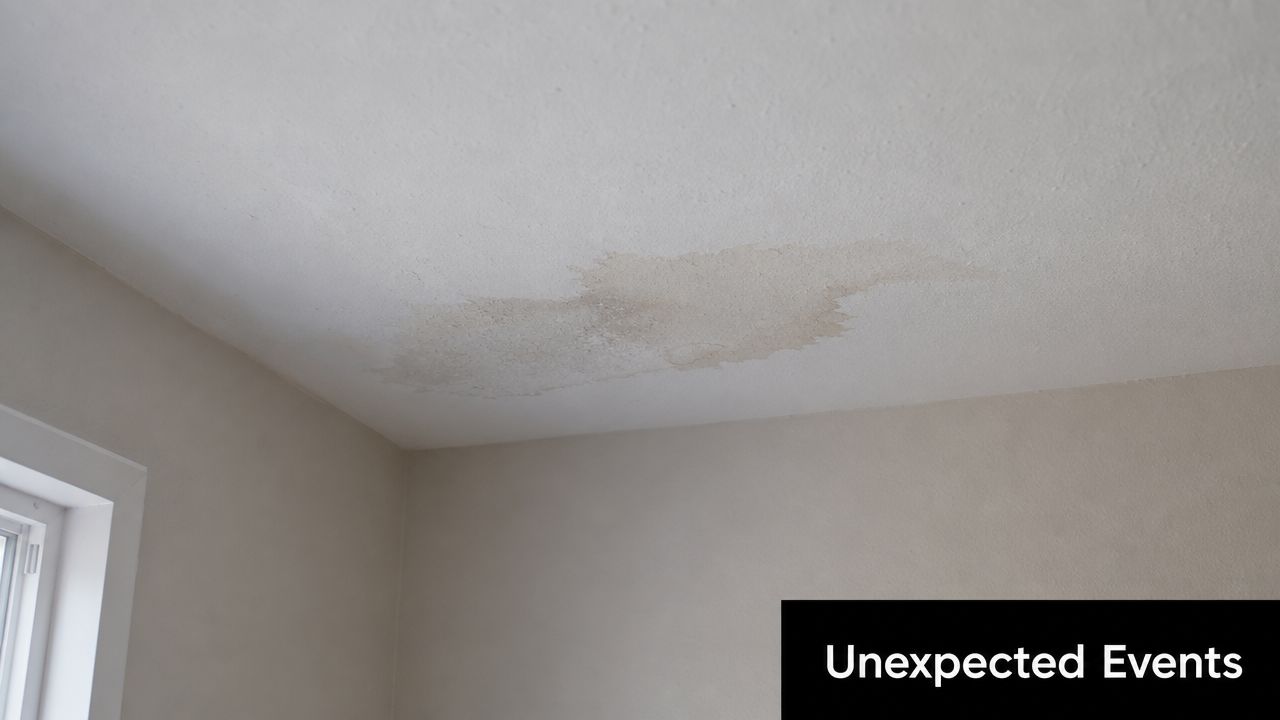
For first-time renters, the confusion usually starts with one question. “Doesn't the landlord's policy cover this?” In plain English, the landlord's insurance usually protects the building itself. Your mattress, clothes, dishes, gaming system, work equipment, and your own liability are generally your responsibility. The Insurance Information Institute explains the basic split between landlord coverage and renters coverage on its renters insurance overview.
That gap matters in every state, but California renters have a few extra layers to consider. Wildfire smoke can damage belongings even if flames never reach your unit. Heavy rain can lead to water intrusion or temporary displacement. Earthquake and flood losses follow separate rules that catch many renters by surprise if no one explains them early.
Renters insurance works like a financial shock absorber. It can help pay for damaged or stolen belongings, cover certain temporary living costs after a covered loss, and protect you if someone gets hurt in your apartment or you accidentally damage someone else's property.
A simple way to look at it is this:
- Personal belongings protection: for things you own, from furniture to electronics to everyday essentials
- Liability coverage: for accidents that could leave you responsible for injuries or property damage
- Loss of use coverage: for hotel bills, meals, and other extra living costs if a covered loss makes the unit unlivable
- Medical payments to others: for smaller guest injuries, even before a larger claim develops
That matters more than many renters expect. Replacing one couch is annoying. Replacing your bed, clothes, kitchen items, phone, laptop, and toiletries at the same time can wipe out savings fast.
California lease terms and local housing rules can add another layer of planning, too. If you are trying to understand the broader impact of 2026 rental changes, it helps to treat insurance as part of the same risk picture. Your lease sets some responsibilities. Your policy helps cover the costs that can follow when real life interrupts your routine.
If you want a local starting point before you compare policy details, this guide to California renters insurance options can help you see how standard coverage fits California risks more clearly.
The Four Pillars of Standard Renters Insurance
A California renter can lose access to an apartment in more than one way. A kitchen fire is the obvious example, but smoke from a neighboring unit, a burst pipe, or wildfire-related damage can create the same problem. Standard renters insurance is built around four core protections that respond to different parts of that loss.
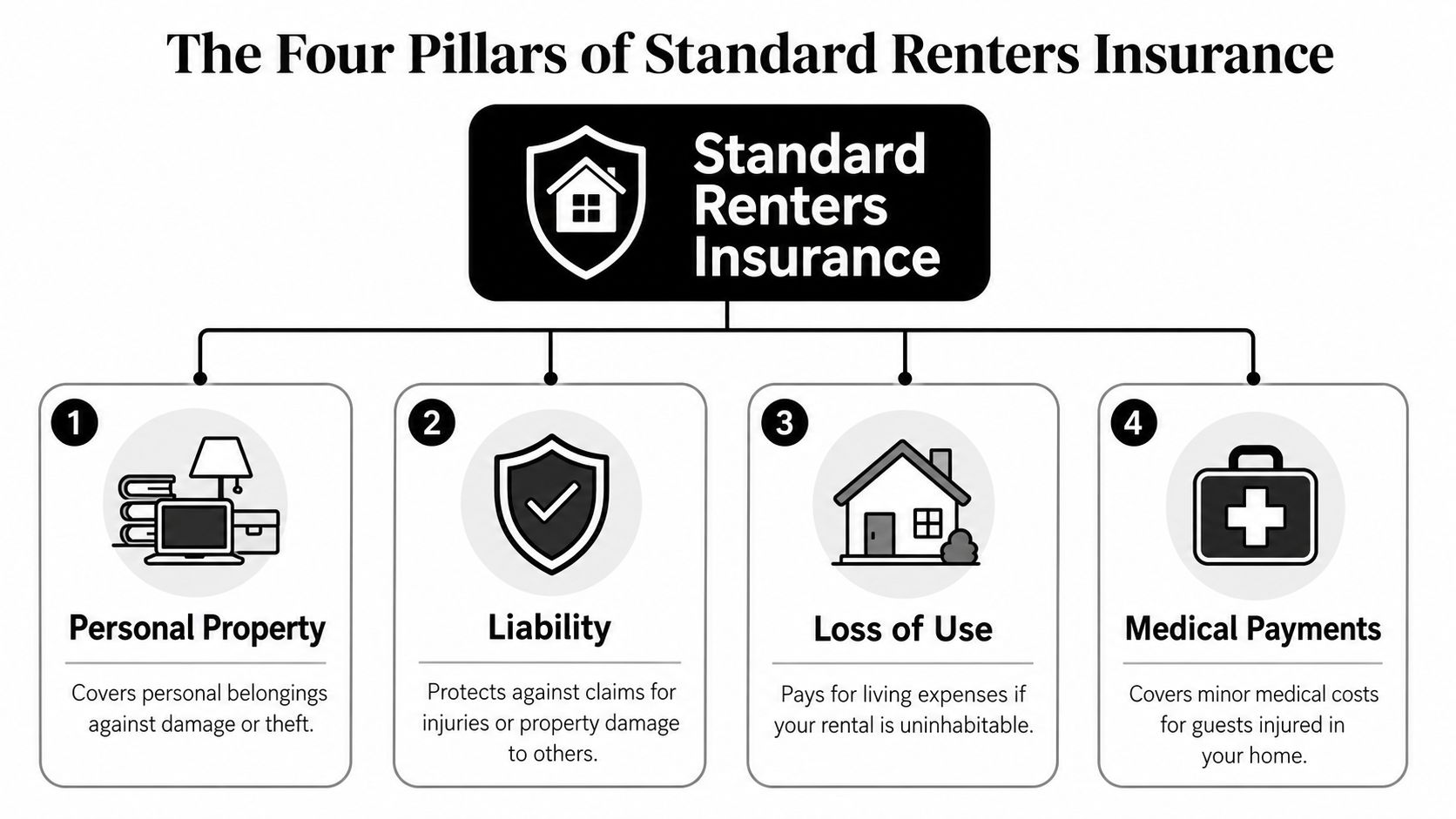
The easiest way to understand these pillars is to separate them by question. What happened to your stuff. Did someone else get hurt. Do they need quick medical care. Can you still live in the unit.
If a policy term feels unfamiliar, our California insurance glossary for renters coverage terms can help translate the fine print into plain English.
Personal property coverage
Personal property coverage pays for covered damage to the belongings you own, such as furniture, clothing, cookware, electronics, and everyday basics. It can also extend to some items away from home, though off-premises limits are often lower and the policy wording matters.
That detail trips up many first-time renters.
A standard policy often lists a personal property limit that you choose when you buy the policy. The right number depends less on how expensive your couch looks and more on the total cost to replace your whole apartment at once. Bed. Shoes. Towels. Laptop. Small kitchen appliances. It adds up fast.
In California, this part of the policy deserves extra attention because wildfire smoke, apartment fires, and theft after an evacuation can all affect personal belongings. Earthquake and flood damage are different. Those losses are usually not covered under a standard renters policy, which is why California renters often need to look beyond the base form.
Personal liability coverage
Liability coverage applies when someone claims you caused bodily injury or property damage. A guest slips on water near your sink. Your child breaks a neighbor's window. Your dog damages someone else's property, if the policy allows for that situation.
This coverage works like a financial shield around your savings. It may help pay covered legal costs, settlements, or judgments up to the policy limit.
For renters in California, liability can matter outside the apartment too. A claim can start in a shared courtyard, at a dog-friendly complex, or in another everyday setting tied to rented living. The main point is simple. Personal property coverage protects what you own. Liability coverage protects you from what you may owe others.
Medical payments to others
Medical payments to others is smaller, narrower coverage for guest injuries. It is meant for minor incidents, and it can apply without a long fault dispute.
For example, a friend cuts a hand on broken glass while helping you cook and needs stitches. Medical payments coverage may help with that immediate bill, subject to the policy terms and limit.
People often confuse this with liability. The cleaner way to separate them is this. Medical payments handles smaller guest injuries quickly. Liability addresses larger claims where responsibility, legal defense, or higher damages are in play.
Loss of use coverage
Loss of use coverage, often called additional living expenses, helps pay the extra cost of living somewhere else if a covered loss makes your rental temporarily unlivable. That can include a hotel, temporary rental, extra meal costs, laundry, and similar necessary expenses above your normal budget.
This is one of the most practical protections for California renters.
If smoke damage from a nearby fire forces you out for two weeks, the policy may help with the added cost of staying elsewhere while repairs are completed. If the reason you cannot return is a non-covered cause, such as flood or earthquake under a standard policy, this part usually does not apply. That distinction matters in California, where the event that displaces you is just as important as the displacement itself.
One quick example that ties the pillars together
A small fire starts in your kitchen and spreads smoke through the apartment. Your table, dishes, and clothes are damaged. A visiting friend suffers a minor burn. The unit is unsafe to live in for several days.
| Coverage type | What it may help pay for |
|---|---|
| Personal property | Covered damage to your furniture, clothing, dishes, and electronics |
| Liability | Covered injury or property damage claims made against you |
| Medical payments | Minor guest injury costs, within the policy limit |
| Loss of use | Hotel bills, extra food costs, and other temporary living expenses after a covered loss |
If you keep some belongings outside your apartment, this article on understanding storage unit policies can help you think through how off-premises property may be handled.
Actual Cash Value vs Replacement Cost Coverage
One of the most important choices in renters insurance isn't about whether you have coverage. It's about how your belongings are valued after a claim.
The practical difference
With Actual Cash Value, or ACV, the insurer pays the item's depreciated value. Age and wear matter. A used couch is treated like a used couch.
With Replacement Cost, or RC, the policy pays what it costs to replace the item with a new equivalent, without subtracting depreciation. According to the Insurance Information Institute, Replacement Cost coverage typically costs about 10% more than Actual Cash Value coverage (III explanation of ACV and RC).
A simple example
Say your five-year-old laptop is stolen.
Under ACV, the claim payment reflects that it wasn't new anymore. You'd likely get less than what it costs to buy a current equivalent.
Under RC, the policy is designed to help you replace it with a new comparable laptop. That usually means less out-of-pocket spending when you're trying to get back to normal.
The cheaper premium isn't always the cheaper outcome. ACV can save money upfront and cost more after a loss.
Which option fits most renters
If your apartment is full of older furniture you'd probably replace slowly anyway, ACV might feel acceptable. But many first-time renters underestimate how expensive it is to rebuy everyday essentials all at once. A bed, desk, cookware, headphones, monitor, clothing, and phone accessories add up fast.
Replacement Cost often makes more sense for renters who own:
- Frequently updated tech: laptops, tablets, gaming systems, monitors
- Newer household items: mattresses, couches, dining sets
- Work-from-home gear: office chairs, printers, external drives
If insurance terminology still feels slippery, a plain-English insurance glossary for California consumers can help decode terms before you compare policies.
Customizing Your Policy with Riders and Endorsements
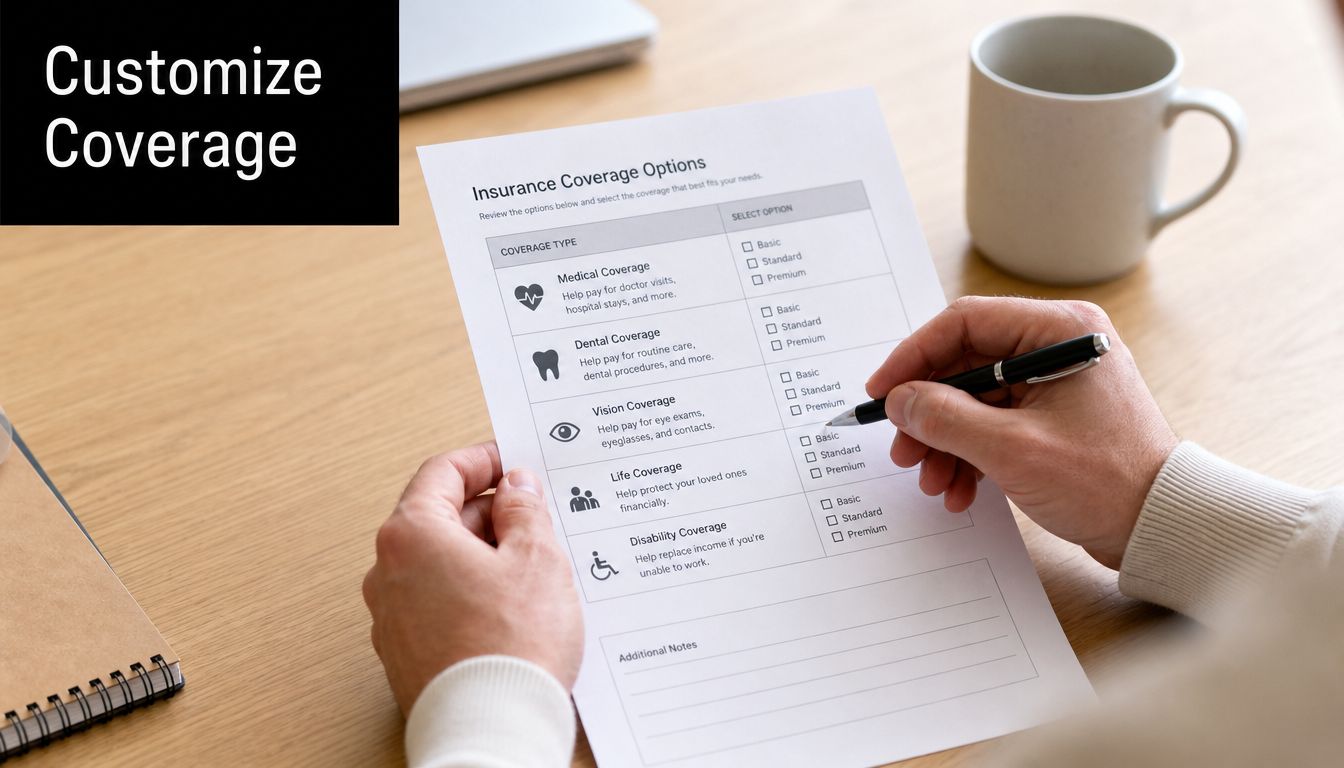
A standard renters policy is a solid base, but it isn't built to cover every possession equally. Riders and endorsements are used for this purpose. They let you upgrade parts of your policy to close specific gaps.
Why high-value items need extra attention
Many renters assume that if their policy includes personal property coverage, every item they own is covered up to that full limit. That's not how it usually works. Standard policies often include per-item or category limits, especially for valuables.
For jewelry, those limits are often around $1,500 per item, and 38% of renters are unaware of these limits while fewer than 12% buy the scheduled personal property endorsement needed for fuller protection on high-value items (California Department of Insurance guide).
That matters if you own:
- Jewelry: engagement rings, watches, family heirlooms
- Art or collectibles: framed pieces, signed items, rare collections
- Premium electronics: high-end cameras, audio gear, specialty devices
What scheduling an item means
Scheduling an item usually means listing it specifically on the policy, often with a description and value. Instead of hoping it fits under a general category limit, you carve out dedicated protection for it.
A renter with a standard policy might be well covered for a couch or toaster. That same renter may be underinsured for a ring, camera lens, or collectible guitar.
Good question to ask your agent: “Do any of my belongings have special limits even if my personal property total looks high enough?”
Water damage is another common blind spot
California renters also run into confusion around water losses. Many policies cover sudden and accidental events such as accidental discharge or overflow from plumbing, but they may exclude gradual leaks, long-term seepage, and mold tied to maintenance issues.
That means the source and timing of the damage matter. A sudden burst pipe is very different from a slow leak under a sink that goes unnoticed for months.
A practical policy review should look at:
- High-value items you'd struggle to replace
- Category limits hidden inside the policy
- Water damage wording for sudden versus gradual loss
- Any special lifestyle risks like instruments, collectibles, or business equipment
If you want more policy-reading help before you buy, these insurance guides for California consumers can help you prepare better questions.
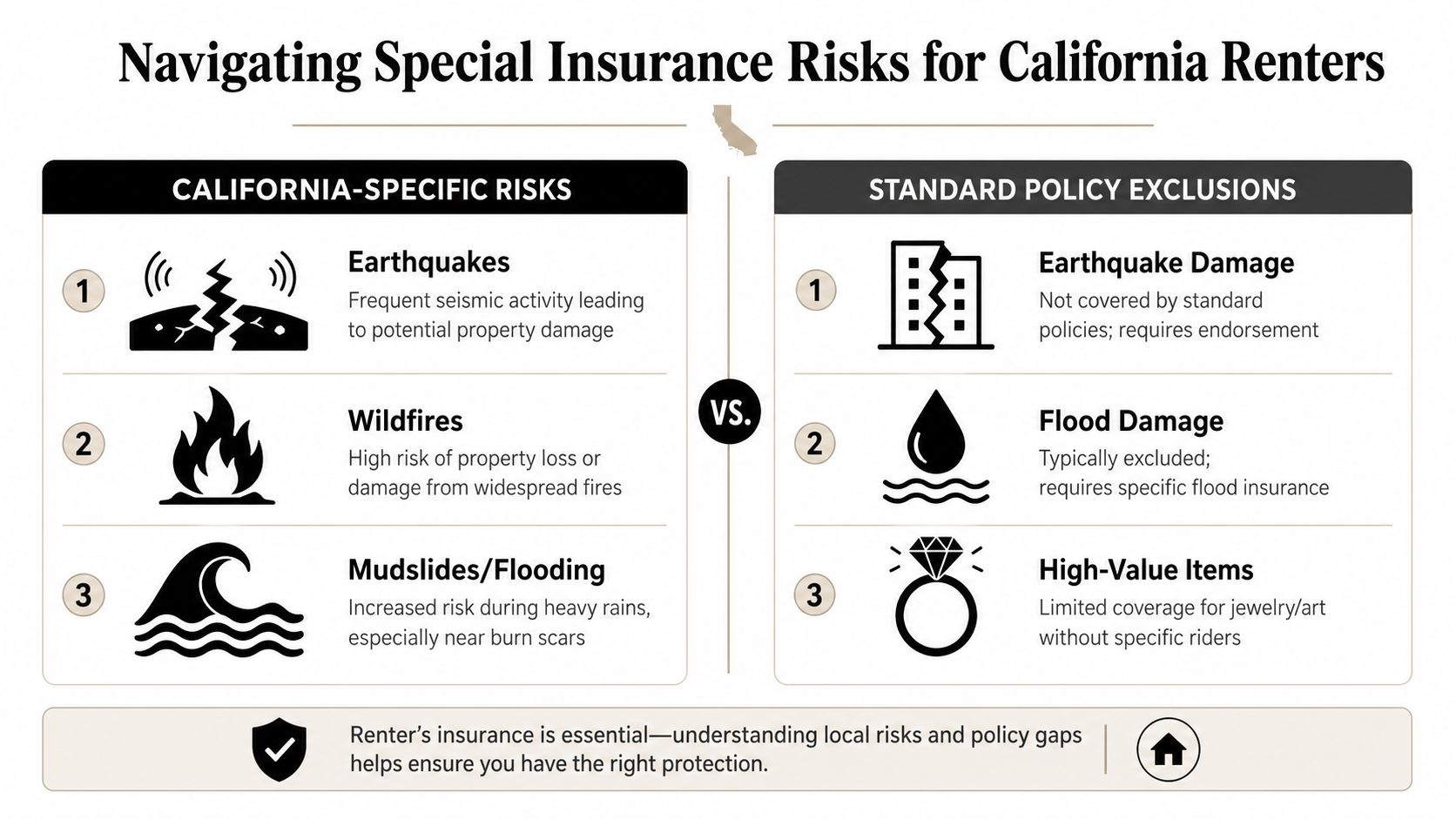
Navigating Special Insurance Risks for California Renters
A first-time renter in California can do everything right, buy a standard policy, and still be surprised after a loss. That usually happens when the loss comes from a California-specific risk the policy was never designed to cover.
Named perils means the policy covers listed causes of loss
Standard renters insurance often works like a guest list. If a cause of loss is on the list, the policy may respond. If it is not, coverage may not apply.
That matters in California because renters here face a mix of risks that sound similar but are treated very differently by insurance. Fire and smoke are commonly covered causes of loss under standard renters policies. Flood and earthquake are usually separate conversations.
The California Department of Insurance guide for renters explains that renters insurance generally protects personal property and liability, while policy terms and exclusions still control what is covered in a specific claim.
Earthquake risk
A standard renters policy usually does not cover earthquake damage to your belongings. If shaking cracks walls and your TV, laptop, or dishes are damaged, you may need separate earthquake coverage to avoid paying those costs yourself.
For renters, the question is not rebuilding the apartment building. The bigger question is whether your own property, and possibly your extra living costs after a serious event, have any protection tied to earthquake loss.
Flood and mudslide concerns
Flood is another common misunderstanding. If water comes from outside the building, such as heavy rain runoff, rising water, or street flooding, a standard renters policy usually does not cover that damage.
California renters should pay close attention to location. Burn scar areas, foothill communities, lower-lying neighborhoods, and properties near creeks or drainage channels can have a different risk profile than a typical national article suggests. Mudslide and debris flow claims can also become complicated after wildfires because the cause of loss matters.
If you are unsure how your address affects your options, our California renters insurance FAQ can help you start with the right questions.
Standard renters insurance covers many common apartment losses. It does not automatically cover every California disaster risk.
Wildfire and smoke losses
Wildfire creates more nuance. Direct fire damage and smoke damage are often covered under a standard renters policy, but an actual claim is not always as simple as "wildfire happened, so everything is covered."
Evacuation, unusable housing, smoke contamination, and cleanup delays can all affect how a claim plays out. Renters should review loss-of-use coverage, any limits that apply to temporary living expenses, and how the policy handles damage to personal belongings after a major fire event.
A simple way to read the big picture is this:
| Risk | Standard renters policy |
|---|---|
| Fire and smoke | Often covered if listed in the policy |
| Burst pipe water damage | Often covered if sudden and accidental |
| Flooding from outside water | Typically excluded |
| Earthquake damage | Typically excluded |
Cost is one reason many California renters start with a base policy instead of going without coverage. The National Association of Insurance Commissioners renters insurance report notes that renters insurance is often one of the more affordable personal insurance products, which makes it easier to build a foundation first and then ask about earthquake options, flood solutions, or added protection that fits your ZIP code.
How to Choose the Right Coverage Limits and Deductible
A California renter often finds out their limits are wrong after a bad day, not before one. A kitchen fire, a theft from a parked car during a move, or a fast evacuation before wildfire smoke reaches your neighborhood can turn a rough week into an expensive one if your policy was built on guesswork.
The simplest fix is to build your policy from your real life.
Start with a room-by-room inventory
Walk through your home with your phone and make a quick record of what you own. Take photos, record short videos, and note the items you would need to replace if everything in that room were gone.
Start with the obvious pieces, then keep going until you reach the small stuff that adds up fast:
- Bedroom: bed, mattress, dresser, clothes, shoes, jewelry
- Living area: sofa, TV, lamps, tables, rugs, decor
- Work and school gear: laptop, monitor, headset, printer, desk chair
- Kitchen and bath: cookware, dishes, utensils, towels, small appliances
- Entry and storage areas: luggage, tools, sports gear, seasonal items
That inventory is your measuring tape. It helps you choose a personal property limit based on what you own, not a number that just sounded reasonable on a quote screen.
Choose liability limits with your savings in mind
Liability coverage protects your bank account when someone claims you caused injury or property damage. New renters sometimes treat it like a side feature. It is often one of the most important parts of the policy.
If a guest slips in your apartment, your dog bites someone, or you accidentally cause water damage to a neighboring unit, liability coverage can become the part you care about most. Many renters prefer more than the minimum because they want more distance between one accident and their savings.
That matters in California, where medical bills, repair costs, and legal expenses can climb quickly.
Pick a deductible that fits a stressful month
Your deductible is the amount you pay out of pocket before insurance starts paying on a covered property claim. It works like the share of the repair bill you agree to handle yourself.
A higher deductible usually lowers your monthly premium. A lower deductible usually raises it. The right choice depends less on theory and more on your emergency cash.
If paying your deductible would mean using a credit card, borrowing from family, or skipping rent, the deductible is probably set too high.
Use a simple decision process
Keep it practical:
- Add up your belongings and set your personal property limit from that total.
- Review your local California risks so you understand where standard renters insurance helps and where separate flood or earthquake protection may be needed.
- Choose a liability limit that protects more than just your furniture.
- Set a deductible you could realistically pay on a hard month.
- Ask about available discounts if you bundle with auto coverage or carry more than one policy.
If you want a plain-English reference before you buy, this California renters insurance FAQ page answers many of the questions first-time renters ask.
One last tip from a local agent. Revisit your limits after major purchases, a move, a new roommate situation, or a shift in wildfire, flood, or earthquake exposure in your area. Good renters insurance should fit the way you live in California.
Protect Your California Lifestyle with the Right Coverage
Renters insurance works best when you understand what each part does. Personal property protects what you own. Liability protects you when someone else claims injury or damage. Medical payments can help with smaller guest injuries. Loss of use helps if a covered problem pushes you out of your home for a while.
For California renters, the details matter. A standard policy can be an affordable foundation, but earthquake and flood risks often require extra planning. So do high-value items and special limits that hide inside the fine print. Once you know how these renters insurance coverage types work, you can choose coverage with a lot more confidence.
The good news is that this doesn't have to be complicated forever. A careful inventory, a realistic deductible, and a clear look at your local risks can turn insurance from a vague monthly bill into a useful financial tool that protects your apartment life, your budget, and your peace of mind.
If you want help comparing renters insurance, auto insurance, home insurance, car insurance, or life insurance in California, contact Mai & Associates for a no-obligation quote. Their licensed California agents can help you review coverage gaps, compare policy options, and choose protection that fits the way you live.