Renters Insurance Cost California: Find Affordable Coverage
So, what can you expect to pay for renters insurance in the Golden State? A good rule of thumb is a monthly premium somewhere between $15 and $25, which works out to about $180 to $300 a year.
That's a solid ballpark figure, but your actual price tag will be unique to you. Think of it less as a fixed price and more as a starting point that gets adjusted based on where you live, how much coverage you need, and a few other personal factors. In the world of California insurance, personalization is key, whether you're buying renters insurance, auto insurance, or home insurance.
Understanding the Baseline Cost for California Renters
Comparing renters insurance costs across California is a bit like looking at gas prices. You see a statewide average, but the price at the pump on your specific street corner is what really matters. It's the same deal with insurance.
Insurers look at risk on a hyper-local level. The premium for a policy in Los Angeles will almost certainly be different than the exact same coverage in Sacramento or Fresno. Why? Because risk factors like local crime statistics, weather patterns, and even the cost of construction materials vary from one zip code to the next. A neighborhood with a higher-than-average number of break-ins, for example, will likely have slightly higher base rates. This is a fundamental principle that applies across the board, from car insurance to home insurance.
How Location Impacts Your Monthly Premium
To give you a clearer picture of how much geography matters, we've put together some estimated monthly premium ranges for major cities across California. This really drives home why a one-size-fits-all price doesn't exist and why getting a quote specific to your address is so important.
Here's a look at what you might expect to pay in different parts of the state:
| City | Estimated Monthly Premium Range |
|---|---|
| Los Angeles | $18 - $28 |
| San Diego | $16 - $25 |
| San Francisco | $20 - $32 |
| San Jose | $17 - $26 |
| Sacramento | $15 - $23 |
| Fresno | $14 - $22 |
| Bakersfield | $14 - $22 |
| Oakland | $19 - $30 |
Disclaimer: These figures are estimates for illustrative purposes. Your actual premium will depend on your specific coverage limits, deductible, and personal rating factors.
As you can see, where you rent has a direct and noticeable impact on your monthly cost. While these ranges provide a helpful guide, only a personalized quote can tell you your exact price.
It’s no surprise that more Californians are seeing the value in this protection. The number of renters insurance policies in the state shot up to 2.96 million by 2022. In a place with such a high cost of living, it’s a smart financial safety net.
Interestingly, while demand has grown, the average price has actually dipped over the years. Back in 2009, the average annual premium hit a high of $220. By 2022, it had dropped to $177. This shows how a competitive market can work in your favor. You can dig into more data on renters insurance trends to see how things have evolved.
Getting a handle on these basics is the first step. The goal isn't just to find the cheapest plan, but to find the right one that gives you genuine peace of mind. Whether you're also juggling auto insurance or looking into life insurance, the core idea is the same: the best policy is the one built around your life.
What Goes Into the Price of California Renters Insurance?
Figuring out the cost of renters insurance isn't some black-box mystery. Insurers are essentially risk detectives, and your premium is the result of their investigation. They look at a combination of broad, location-based risks and the specific choices you make as a renter to land on a final number.
When you understand these key factors, you move from being a price-taker to an informed consumer. You can see exactly why your rate is what it is. The big three are where you live, how much coverage you want, and your own insurance history.
Your Zip Code is a Big Deal
Where you rent is probably the single biggest factor in what you'll pay. Insurance companies have a ton of data tied to specific zip codes, and they use it to predict the likelihood of a claim. They look at things like local crime statistics, especially theft, and the area's history with natural disasters.
For example, if you live in a neighborhood with a higher-than-average number of break-ins, your premium might be a bit higher. This same logic applies to other types of California insurance, too. Whether it’s auto insurance or home insurance, your address is always a primary piece of the puzzle.
Your Personal Insurance Footprint
After looking at your location, the focus shifts to you. Your personal claims history is a major data point. If you've filed several claims in the past few years, an insurer might see that as a pattern of higher risk, which could nudge your rate up. On the flip side, a clean record with no claims usually helps you get a better price.
This infographic gives you a great visual of how all these pieces fit together.
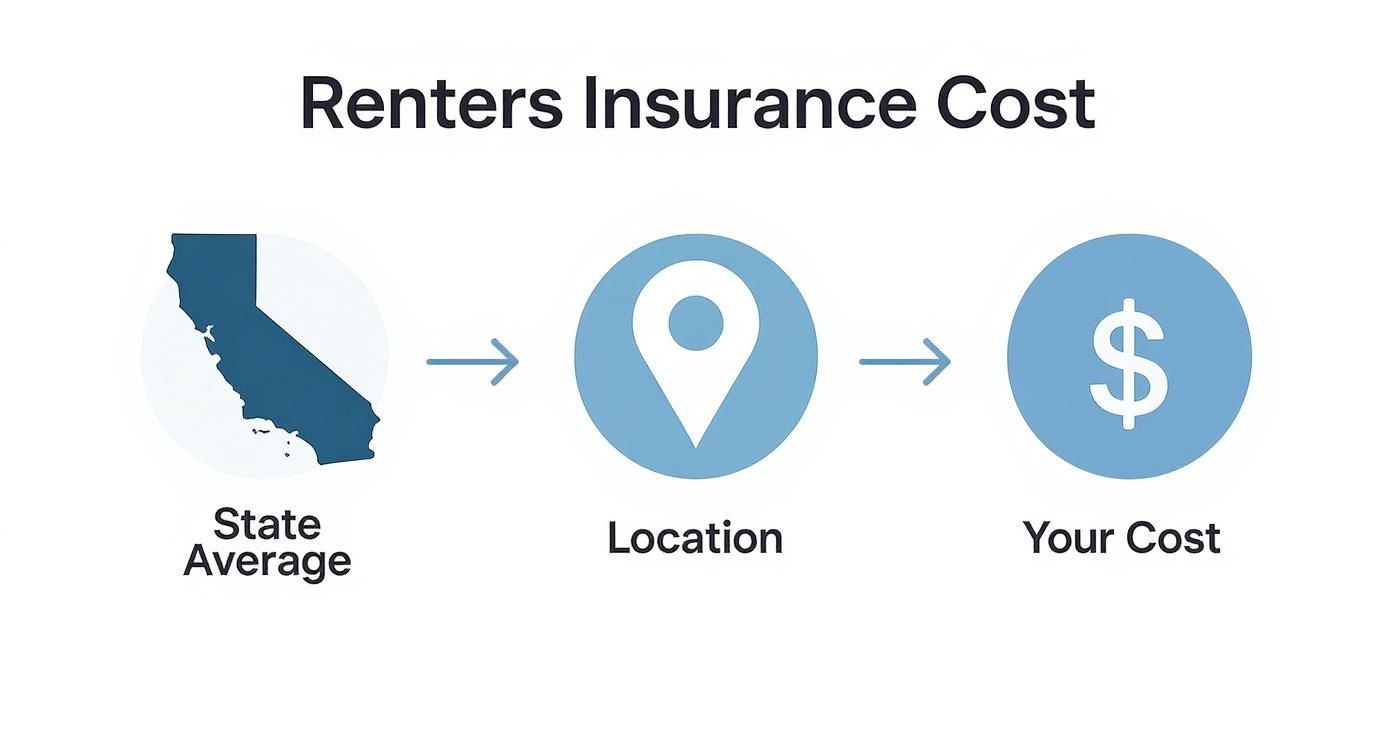
You can see how the price gets more and more specific, starting with the state average, then zeroing in on your city, and finally landing on a personalized rate based on your coverage choices.
The Trade-Off: Coverage vs. Deductible
The amount of protection you buy directly shapes your premium. It's simple, really: a policy that covers $50,000 worth of your stuff is going to cost more than one that only covers $15,000. The more financial responsibility the insurance company takes on, the more they have to charge.
Your deductible is the other lever you can pull. Think of it as your share of the cost when you file a claim. It’s the amount you pay out of pocket before the insurance company pays the rest.
- Go with a higher deductible (like $1,000), and you're telling the insurer you'll handle the smaller stuff yourself. They reward you for taking on more of that initial risk with a lower monthly bill.
- Choose a lower deductible (say, $250), and you'll have less to pay if something happens. The trade-off is that your premium will be a bit higher each month.
It's a balancing act. You have to decide what makes more sense for your budget—paying less now or paying less later. If you're new to these concepts, our glossary of insurance terms can help clear things up.
In a state where 44% of residents are renters and housing costs are a huge concern, every dollar counts. Knowing how to adjust these factors helps you find a policy that protects your belongings without breaking the bank.
Your Building and Its Safety Features
Insurers also look at the building you live in. Is it a newer building made with fire-resistant materials, or an older wood-frame structure? Things like the age and construction of your apartment or rental home can influence the rate.
Even better, safety features you have in place can actively work to lower your premium. These tell an insurer that you're a lower-risk tenant, which they love to see.
- Smoke Detectors: This is a basic expectation, but make sure they're working!
- Fire Extinguishers: Having one handy in the kitchen can sometimes earn you a small discount.
- Security Systems: A monitored alarm system that alerts the police or fire department is a big one. It's one of the best ways to get a meaningful discount.
- Deadbolts: It sounds simple, but solid deadbolt locks on your doors are a security basic that insurers look for.
Every one of these details gets factored into your final renters insurance cost in California. The more you know about how they work, the better equipped you'll be to find the right coverage at the right price, whether you're shopping for renters insurance, car insurance, or life insurance.
How Your Coverage Choices Shape Your Final Rate
Think of your renters insurance policy as a custom-built safety net. A basic, one-size-fits-all net will be cheap, but it might not catch you if you fall. If you want a net woven with stronger materials and wider coverage, it’s naturally going to cost a bit more. The choices you make are what directly determine your final premium.
Your final renters insurance cost in California isn't some fixed, off-the-shelf price; it's the sum of the parts you choose. Every policy is built on a foundation of three core protections, and tweaking the levels of each one is the single biggest way you can control your monthly bill.
Breaking Down the Core Coverage Components
A standard California renters policy is really a bundle of three distinct layers of protection. Getting a handle on what each one does is the first step toward figuring out how much you actually need.
- Personal Property Coverage: This is the heart of your policy. It’s what helps you repair or replace your stuff—your furniture, clothes, laptop, bike—if it gets stolen or damaged in something like a fire or burst pipe.
- Personal Liability Coverage: This is your financial backstop if you're ever held responsible for injuring someone or wrecking their property. Say a guest slips and falls in your kitchen, or your dog nips the mail carrier; this coverage helps pay for their medical bills or legal fees so you don't have to.
- Loss of Use (Additional Living Expenses): If a fire or major water leak makes your rental uninhabitable, where do you go? This coverage kicks in to help pay for temporary living costs like a hotel, meals, and other essentials while your place is being repaired.
Each of these pieces works together to shield you from financial disaster. The trick is to find the right balance for your life.
Personal Property: The Biggest Cost Driver
Of those three, your personal property coverage limit has the most direct impact on your premium. It's simple, really. The more stuff you have, and the more it's worth, the more coverage you'll need—and the higher your premium will be.
For example, if you’re just starting out in a small studio with some hand-me-down furniture and an old laptop, a policy with $20,000 in coverage is probably plenty. Your premium will be at the very low end of the scale.
But let's say a few years down the road, you've upgraded to a two-bedroom and filled it with a nice sofa, a new 4K TV, quality kitchen appliances, and maybe some expensive photography gear. Suddenly, the cost to replace everything is closer to $50,000. To be properly protected, you'd need to raise your coverage limit, which would cause a noticeable—but often surprisingly small—increase in your monthly payment.
This is the key trade-off. The goal isn't just to find the cheapest policy, but to make sure your coverage actually matches the value of what you stand to lose. Being underinsured is a painful lesson to learn after a disaster strikes.
Visualizing the Impact on Your Premium
The best way to see how these choices play out is to put them side-by-side. The link between coverage limits and cost is direct, but it's not always a 1:1 ratio. As you add more protection, your premium goes up, but often not as dramatically as you might think. This is a fundamental concept across all lines of California insurance, whether you're looking at home insurance or even life insurance.
Let's look at a few common packages to see how different coverage levels can affect your estimated monthly cost.
Sample Renters Insurance Coverage Packages And Estimated Costs
This table gives you a clear picture of how raising your personal property and liability limits affects your estimated monthly payment.
| Coverage Level | Personal Property Coverage | Liability Coverage | Estimated Monthly Premium |
|---|---|---|---|
| Basic | $20,000 | $100,000 | $15 - $20 |
| Standard | $35,000 | $300,000 | $20 - $28 |
| Enhanced | $50,000 | $500,000 | $28 - $40 |
Disclaimer: These are sample estimates. Your actual premium depends on your specific location, claims history, chosen deductible, and other factors.
As you can see, jumping from a "Basic" to a "Standard" plan—nearly doubling your property coverage and tripling your liability protection—doesn't double your premium. The increase is often just a few dollars a month, making robust protection much more affordable than most renters realize. This same principle of balancing coverage and cost applies when you're shopping for auto insurance or car insurance—more protection costs more, but the peace of mind it provides in a crisis is priceless. By thoughtfully picking your limits, you can build a policy that fits your life and your budget perfectly.
California's Unique Challenges: Wildfires and Earthquakes
Renting in the Golden State is different. You’re not just thinking about a leaky pipe or a break-in; you're living with the very real possibility of wildfires and earthquakes. This is where a lot of renters get tripped up, assuming their standard policy is a catch-all for any disaster California throws their way.
It’s a dangerous assumption. Your basic renters insurance is a fantastic starting point, but it has some major gaps. Understanding what isn't covered is just as important as knowing what is.
What Your Standard Policy Won't Cover
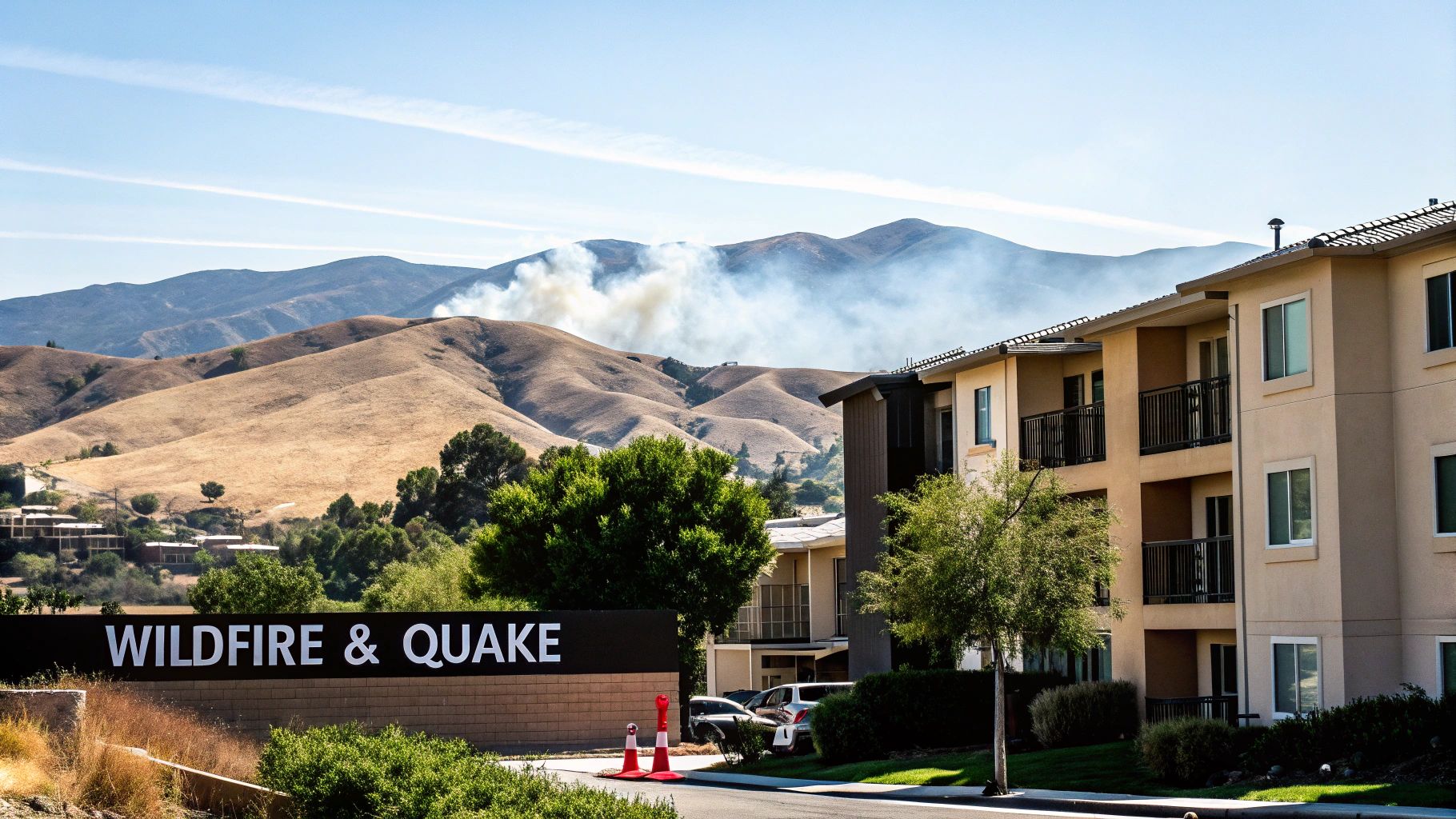
Let's get straight to the point: the biggest exclusion is for "earth movement." This is insurance-speak for damage caused by earthquakes, landslides, or mudslides. If a tremor sends your 65-inch TV crashing to the ground, your standard policy won't pay a dime to replace it. For a California renter, that’s a massive financial risk to leave uncovered.
And what about wildfires? It gets a bit tricky. While a standard policy will almost always cover your belongings if they burn in a fire, the "Loss of Use" coverage for evacuation living expenses often has a catch. It usually only kicks in when a civil authority, like the fire or police department, issues a mandatory evacuation order.
How to Fill the Coverage Gaps
To be truly protected, you have to look beyond the basic policy and bolt on the right protection. Think of these as essential upgrades for California living.
- Earthquake Insurance: This is almost always a completely separate policy you buy. It’s built specifically to cover your personal property when it’s damaged in a quake.
- Flood Insurance: Just like earthquake coverage, damage from flooding is a standard exclusion. If you're in an area where a wildfire could lead to mudslides or flooding, a separate flood policy is a must-have.
A common thought is, "What are the odds it'll happen to me?" But for what is often a small additional cost, you’re buying peace of mind and preventing a total financial wipeout if the unthinkable happens.
How the Homeowners Insurance Crisis Affects You
You might think the headlines about the home insurance crisis are just a problem for homeowners, but that’s not the case. The turmoil in the market has a direct impact on the renters insurance cost in California.
When major insurance companies stop covering homes in high-risk fire zones, landlords are the first to feel the pain. They face insane premium hikes or get dropped entirely. This instability trickles down. When State Farm announced it wouldn't renew 42,000 landlord policies in 2023, it sent property owners scrambling for pricier coverage.
Those costs can get passed on to tenants through higher rent. More importantly, it signals a volatile market that affects the price and availability of renters policies, too. The same risk factors driving up premiums for home insurance in California are shaping the world you live in as a renter. Being proactive and locking in the right coverage is your best defense.
Practical Ways to Lower Your Insurance Costs
Knowing what shapes your premium is one thing, but actively lowering it is where you can make a real difference. You have more control over your renters insurance cost in California than you might realize. A few smart moves can lead to significant savings without cutting back on the protection you actually need.
Let’s walk through some of the most effective, easy-to-implement strategies that can have a real impact on what you pay each month.
Bundle Your Insurance Policies
This is one of the quickest wins. If you already have auto insurance, combining it with your renters policy from the same company can unlock a multi-policy discount. This discount often shaves 5% to 15% off both premiums.
Insurance carriers love loyalty. When you give them more of your business—whether it's renters insurance, car insurance, or even life insurance—you become a more valuable customer. In return, they pass some savings back to you. It also just makes life simpler, with all your policies in one place.
Increase Your Deductible
We touched on this earlier, but it’s worth repeating. Your deductible is what you pay out of pocket before your insurance coverage starts. By choosing a higher deductible, you can directly lower your monthly premium.
Think of it as sharing a little more of the initial risk. For instance, bumping your deductible up from $500 to $1,000 can create a noticeable drop in your premium. The key is to make sure you have enough in your emergency fund to comfortably cover that higher amount if you ever need to file a claim.
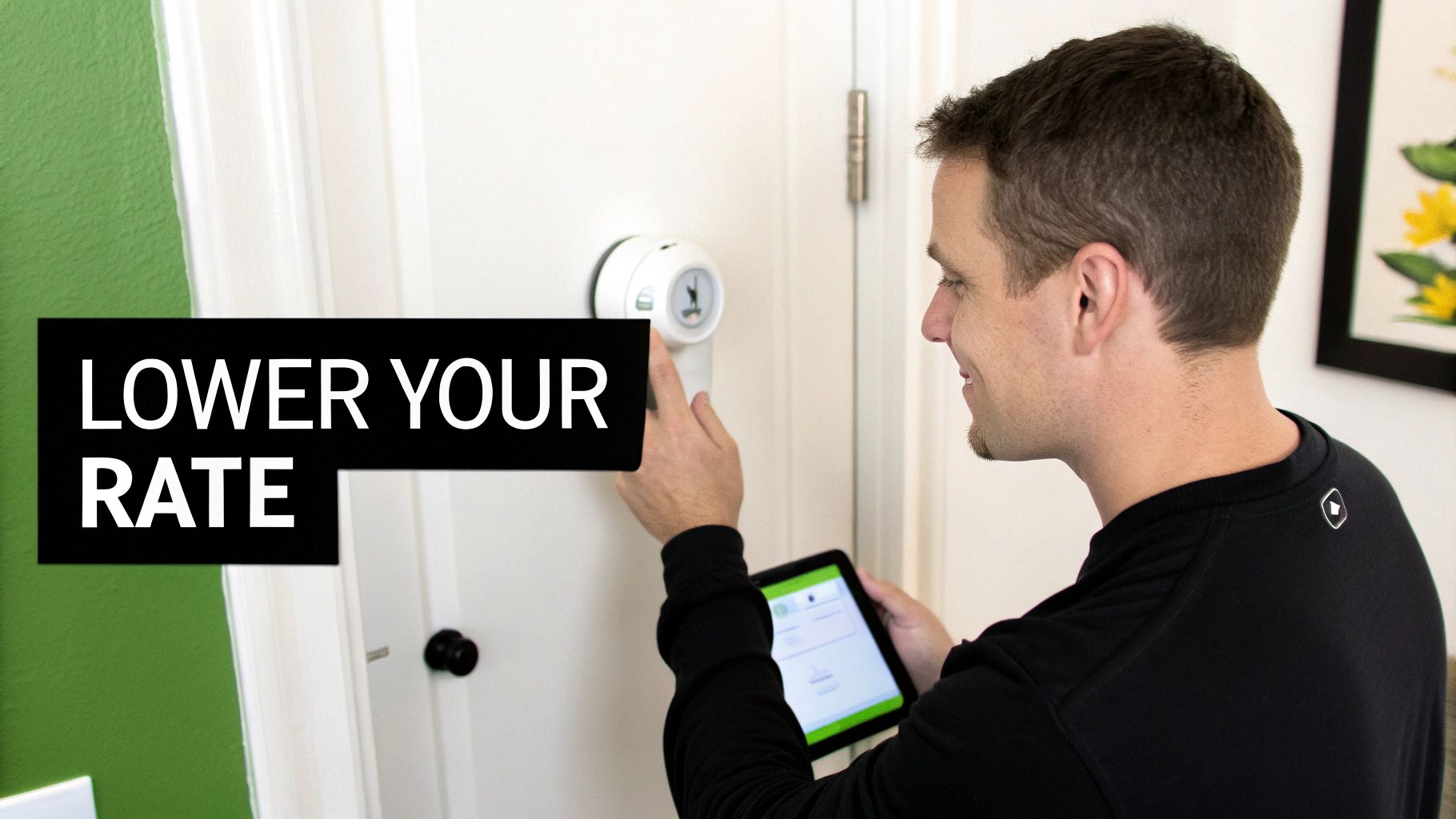
Install Safety and Security Devices
Insurance companies are in the business of risk. So, anything you do to make your rental safer reduces the chance they'll have to pay a claim—and they'll often give you a discount for it.
Taking proactive steps to protect your home shows insurers that you're a responsible, low-risk client. Even small, inexpensive additions can lead to consistent monthly savings.
Here are some common devices that can trigger a discount:
- Smoke Detectors and Carbon Monoxide Alarms: Most rentals already have these, but confirming they are installed and working can qualify you.
- Fire Extinguishers: Simply keeping a rated fire extinguisher in your kitchen is a small step that some carriers recognize with a premium reduction.
- Monitored Security Systems: This is a big one. A system that automatically notifies the police or fire department can seriously lower your rate.
- Deadbolt Locks and Window Locks: Solid, basic security like sturdy locks on all exterior doors and windows is often a baseline for getting the best rates.
Each of these helps reduce common risks like fire and theft, making your home a safer bet for your insurance provider.
Improve Your Credit-Based Insurance Score
In California, insurers can use a credit-based insurance score to help determine your premium. It’s not the same as your FICO score, but it's built from similar information in your credit report.
A solid history of on-time payments and responsible debt management signals financial stability, which insurers associate with lower risk. Keeping your credit in good shape is a powerful long-term strategy for keeping all your California insurance costs down, from renters insurance to home insurance.
Ask About Other Available Discounts
You won't get a discount you don't ask for. Insurers have all sorts of savings programs, and you might qualify for some you don't even know exist. When you're shopping for a quote, make it a point to ask about every possible discount.
You might find savings for things like:
- Being claims-free for a number of years.
- Setting up automatic payments from your bank account.
- Going paperless by receiving your documents electronically.
- Being a non-smoker, which reduces fire risk.
- Membership in certain professional organizations or alumni groups.
By actively looking for these opportunities, you can trim your premium and make sure you're getting the most competitive renters insurance cost in California. Every dollar you save adds up, which is a welcome relief given the high cost of living in our state.
Finding Your True Renters Insurance Cost in California
Reading about averages and looking at charts is a great starting point, but it's just that—a start. The only way to know what you'll actually pay is to get a personalized quote. This is where the rubber meets the road, turning those general numbers into a real figure you can plan around.
To make the quoting process quick and painless, it helps to have a few key details ready to go. Think of it like a mini-dossier on your rental life. It ensures the numbers you get back are accurate, not just a shot in the dark.
What You Need for an Accurate Quote
Getting a quote is surprisingly simple when you have your info lined up. Before you start, just pull together these basics:
- Your Full Address: This is the most critical piece. It tells an insurer everything about location-specific risks.
- Building Details: Jot down the type of place you live in (a big apartment building, a duplex, a rented house) and any safety features it has, like smoke alarms, a security system, or sprinklers.
- Desired Coverage Amounts: Have a rough idea of how much your stuff is worth and what level of liability protection makes you feel comfortable.
With this handful of details, you can get a precise picture of your insurance costs. This is where you can really start to see the differences between providers. The California Department of Insurance actually pointed out that fierce competition has helped keep premiums down, with the state average dropping from $220 back in 2009 to just $177 in 2022. That's a nice trend, especially given our unique risks. You can read more about these insurance trends in California directly from their report.
Working with an insurance expert can uncover hidden discounts and help you find the right balance between cost and coverage, especially in a complex market like California’s.
Ultimately, this isn’t just about finding the cheapest renters insurance possible. It’s about securing smart, solid protection for your life. An independent expert can do the heavy lifting, comparing policies across multiple top carriers—including your auto insurance and even home insurance if you have other properties—to find the absolute best value.
Ready to see your real numbers? You can get your personalized insurance quote in just a few minutes and take that final, crucial step toward protecting what matters most.
Your Top Questions About California Renters Insurance, Answered
Even after crunching the numbers, you probably still have a few questions floating around. Let's tackle some of the most common ones about the renters insurance cost in California so you can move forward with total confidence.
Is Renters Insurance Required By Law In California?
Nope. The state of California doesn't have a law on the books forcing tenants to buy renters insurance.
That said, your landlord absolutely can—and very often will—require it as part of your lease agreement. This is standard practice statewide. They do it to shield their own investment from potential liability lawsuits and to make sure you have a way to get back on your feet after something like a fire, which helps keep everyone's financial situation stable.
Will My Credit Score Impact My Insurance Rate?
Yes, it can. Insurance companies in California are allowed to look at a credit-based insurance score when they figure out your premium.
Think of it from their perspective: a strong credit history suggests you're a lower risk, which can earn you a better rate. A lower score might lead to a higher premium. This makes keeping an eye on your credit a smart, long-term move for saving money on all kinds of California insurance, from renters insurance to car insurance.
The most important thing is clarity. Having separate policies is the simplest, most secure way to guarantee that your personal property and liability are fully protected, leaving no room for doubt or disputes.
My Roommate Has Insurance, So I'm Covered, Right?
I wouldn't count on it. In fact, you should get your own policy.
Your roommate's policy is designed to cover their stuff and their liability, not yours. If there's a fire or a break-in, your belongings won't be protected under their plan. Some carriers might let you add a roommate to a policy, but this can get messy fast, especially when it's time to file a claim or if one of you decides to move out.
For more answers like these, feel free to dive into our complete FAQ page. The bottom line? Your own policy is the only way to guarantee your protection is clear, direct, and undisputed.
Navigating the world of California insurance—whether it's renters insurance, auto insurance, home insurance, or life insurance—is just easier when you have an expert in your corner. At Mai & Associates, our licensed agents are here to find the perfect coverage that fits your life and your budget. Get your free, no-obligation quote today and get the peace of mind you deserve. https://cahomeauto.com