My Car Was Stolen, What Do I Do: A 2026 Guide
You're walking back to where you parked, and the spot is empty. No curbside mix-up, no borrowed car, no bad memory. Just a gap where your vehicle should be, and now the clock is running on police reporting, insurance notice, recovery efforts, and identity protection.
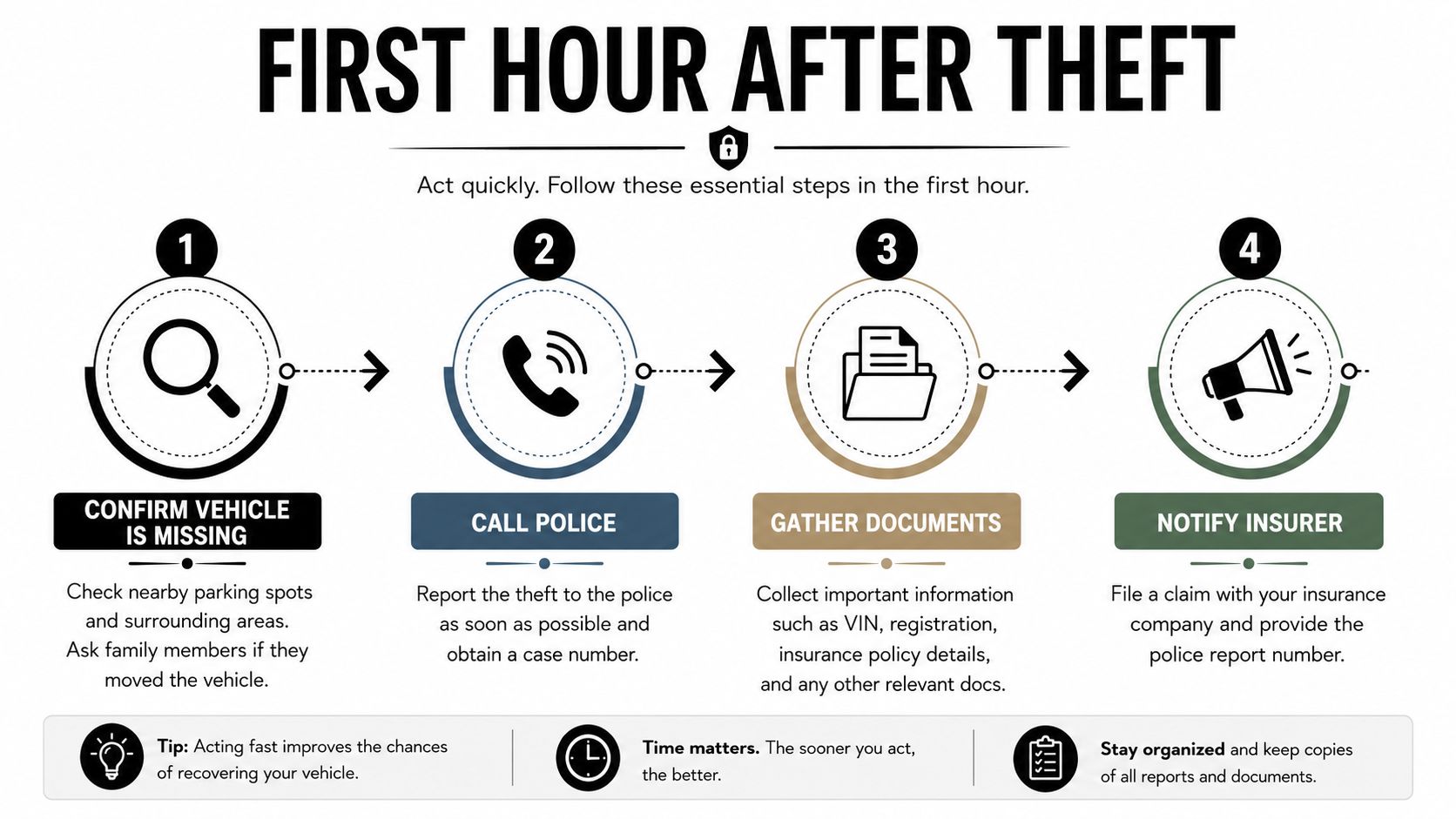
If this happened in California, don't waste time debating whether it's “really” stolen. Verify it wasn't towed, borrowed, repossessed, or moved by someone you know, then treat the loss as a financial and legal workflow. The first move is simple, and it matters because the NHTSA says you should contact police immediately and file a stolen-vehicle report, then notify your insurer within 24 hours. The same guidance says you'll usually need the police report or case number, plus the vehicle's license plate, make, model, color, VIN, and identifying characteristics to start the claim process, and the NICB says immediate reporting gives you a better chance of getting the vehicle back. NHTSA vehicle theft prevention guidance
The First Hour After a Theft in California
Don't call it stolen until you've ruled out the obvious
The worst mistake is calling 911 too early with a report that should've been a tow inquiry. Police and insurers both get skeptical when the facts are sloppy, and a sloppy report slows everything down. Check the parking spot, ask family members, text the person who might've borrowed it, and look for any towing signs or nearby lot notices before you escalate.
Once you're sure the car is gone, call the right agency for where it disappeared. In California that might be CHP, LAPD, or your local municipal police department, depending on the location. Give the dispatcher a clean story, not a guess, and have the VIN, license plate, make, model, color, and any distinctive marks ready so the call gets logged correctly.
Practical rule: the police report comes first. Insurance follows the report, not the other way around.
Build the report like an insurer will read it tomorrow
That means specific facts, not emotion. Tell them the exact location where you last saw the car, the time window, whether you have spare keys, and whether there are bumper stickers, decals, dents, or other identifying marks. A strong report helps later when the adjuster asks for a case number and wants the claim file to match the police record.
If you want a sober reminder of how exposed personal data can become when a vehicle disappears, the Autorec Co Jp data breach is a useful read. The lesson is plain, a stolen car can become a data problem fast if paperwork, devices, or mail are inside.
Filing a Police Report That Insurers Will Accept
A theft report that lacks detail can stall a claim. Carriers want a report they can match to the policy, and that means the basics have to be right the first time. If the plate number is misspelled, the VIN is missing digits, or the time window is vague, expect a delay when the adjuster starts comparing notes.
What the report needs to say
Include the location last seen, the time window, the VIN, the license plate, the make and model, the color, and any distinguishing marks. If the theft happened in a city different from where you parked, tell the agency that clearly so the case doesn't bounce around between departments. California's DMV and law-enforcement process tends to be paperwork-heavy, so precision is not optional.
Ask for the case number or report number before you hang up. That number is what your insurer will ask for when the theft claim opens, and many carriers won't move without it. If you need a copy of the report later, request the process for getting one right away so the insurance file doesn't sit half-finished.
What to avoid saying
Don't guess. Don't say the car was “probably stolen” if you haven't confirmed it wasn't towed or borrowed. Don't round off the time window just to sound certain. Those shortcuts create questions later, and questions create delay.
A lot of drivers also forget that they may need to confirm the theft with the police and then update the insurer if the vehicle turns up. That's covered later, but the point here is simple, the report has to be usable downstream. If it can't survive an adjuster's review, it won't help the claim.
Which Coverage Actually Pays for a Stolen Car
Only full coverage pays for a stolen vehicle. Liability does not. Collision does not. An umbrella policy doesn't step in for the car itself, either, because theft is a non-collision loss, not a crash.
That's the distinction California drivers miss most often. State minimum liability gets the other guy paid if you hurt someone, but it won't replace your car after theft. If you own your car outright and skipped collision, you may be standing there with a police report and no theft payment at all.
How the common coverages actually behave
| Coverage type | Pays for stolen car | Pays for personal items inside | Pays for damage after recovery |
|---|---|---|---|
| Comprehensive | Yes, if included on the policy | Usually not the auto policy, often renters or homeowners instead | Yes, for theft-related damage if covered |
| Liability only | No | No | No |
| Collision | No | No | No |
| GAP coverage | Not by itself, it helps with loan balance shortfall after a covered theft payout | No | No |
| Lease or lender-required comprehensive | Yes, if the policy is in force | Usually no | Yes, if the claim is covered |
The cleanest California rule is this, if there's a loan or lease, the contract often forces full coverage even when state law doesn't. That's why financed and leased cars usually have a better outcome than liability-only vehicles. For a deeper look at policy structure, the basics are laid out in this California auto insurance guide.
The loan problem nobody likes to talk about
If the car's value is less than the remaining loan balance, the claim can leave you short. That's where GAP coverage matters, because it's designed to address the difference between the insurer's payout and what you still owe. Without it, you can end up paying a loan on a car you no longer have.
California households in wildfire areas often bundle coverage decisions more carefully because they already juggle auto, home, renters, and sometimes Fair Plan related issues. That makes the theft conversation bigger than one car. It's about whether your coverage stack actually protects the household balance sheet.
What the Insurance Claim Process Looks Like
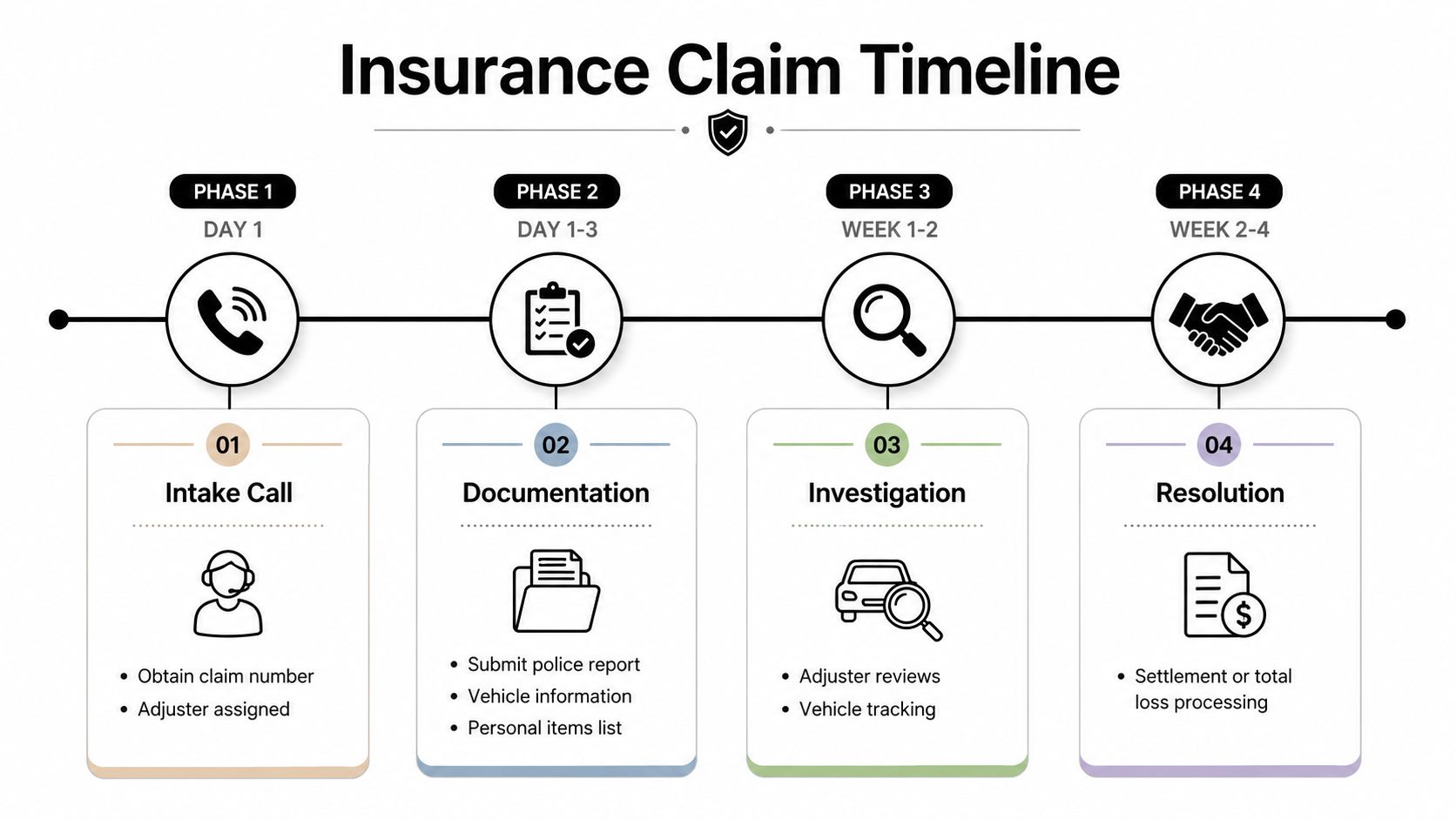
The claim starts the day you call, not when the adjuster feels ready. On day one, the carrier usually opens the file, assigns a claim number, and asks for the police report number, VIN, plate, and policy details. If the loss looks unusual, the file can get flagged for more review, which is why your first statement needs to be calm and consistent.
The first call matters more than people think
Say what happened, where the car was parked, and when you noticed it missing. Don't freestyle details you're unsure about. If you don't know whether the keys were in your bag or on the counter, say that you're checking, not that you're certain.
You'll usually be asked for documents next, including the police report, your vehicle information, and a list of anything stolen from inside the car. Some carriers take claims by phone, some online, and some through an agent. The point is to get the file moving, not to wait for the perfect hour.
The NICB's stolen-vehicle reporting guidance matches what adjusters want: a report first, then the insurance claim with the right vehicle details. That sequence saves time later.
What usually happens during the investigation
The adjuster checks whether the theft fits the policy and whether the car may be recoverable. If the file looks clean, settlement often moves after the initial documentation is complete. If the vehicle is recovered during the claim, the carrier can change the payout approach based on damage and timing.
Recorded statement advice: answer directly, stick to facts, and don't speculate about who took the car or why. If you don't know, say you don't know.
If you want a practical reminder of what carriers ask for and how claims are usually submitted, this claims resource page is the kind of place people check once the paperwork starts piling up. The mistake is waiting until the adjuster is already asking for the same information twice.
Identity Theft and Personal Items Left in the Car
A stolen car is bad. A stolen car with your wallet, mail, work badge, or laptop inside is worse. The auto claim may handle the vehicle, but it usually does nothing for personal property unless a separate policy applies.
That's why renters and homeowners coverage matter here. Personal belongings inside the car often belong under those policies, not the auto policy, and theft-related claims for those items may need their own filing path. If you live in California and keep mail, keys, or work devices in the car, treat the event like an identity-theft risk the second the vehicle disappears.
Lock down your identity before the paperwork catches up
Freeze credit if you can. Place fraud alerts where appropriate. If your mail, phone, wallet, or work badge was in the vehicle, assume the thief may have enough data to probe your accounts, your home access, or your employer's access points. California residents can also file an identity-theft report with the state Attorney General's office when the facts warrant it.
The best advice is blunt: the car can be replaced, but the open garage door and the visible mail on the passenger seat can't be taken back. That's why the risk isn't just transportation loss. It's household exposure.
What belongs where
- Laptop: usually a renters or homeowners issue, not an auto issue.
- Mail: a red flag for identity theft, especially if it shows addresses or bank details.
- Garage door opener: a home security problem first.
- Wallet and phone: immediate account-access concerns.
- Work badge: can create building access and data risk.
For California renters, the practical place to look first is your renters insurance policy, because that's often where stolen personal items live. Don't wait for the auto adjuster to tell you that after the fact.
If the Car Is Recovered After the Claim
Recovery doesn't close the file. It changes the file. The moment the police say the car has been found, notify both the police and the insurer right away, because the claim, the recovery, and the impound clock can all start moving in different directions at once.
One California driver I'd caution would often discover the car was towed to an impound lot after a thief abandoned it. The owner assumed the insurer would handle everything, then storage fees piled up while nobody called the lot. That's how a bad day gets more expensive.
What happens next
The car needs an inspection for theft-related damage. If it's drivable, getting it out of impound quickly can help you avoid storage charges. If the insurer already paid out, the company may treat the vehicle as salvage, take possession, or allow a buyback depending on the policy and the recovery timing.
One source that's useful here is how to unify your inbox, because recovery can scatter notices across email, texts, and voicemail. You want one place to catch the police update, the adjuster note, and the impound message before fees start compounding.
Don't skip the damage log
Take photos before the car moves, then photograph the interior, ignition area, tires, windows, and anything broken or missing. Separate old damage from theft damage. If you had a scratch on the bumper before the theft, say so. If the thief tore the steering column apart, that belongs in the claim file.
If the insurer has already issued payment, stop assuming you're done. The payout may trigger salvage handling or settlement adjustments, and the release rules can get procedural fast. The paperwork matters more than the emotion.
How Mai & Associates Helps California Drivers Prepare
The value is not in reacting faster after the theft. It's in knowing before the theft whether your policy protects you. A solid review checks comprehensive coverage, the deductible, whether the carrier uses an actual cash value approach, and whether rental reimbursement is enough to keep life moving while the claim is open.
If you want a carrier comparison before something happens, start with a California insurance quote review. That's where the practical questions get answered, not in a panic after the car disappears.
What good prep looks like
A good California agent should look at the auto policy next to the home or renters policy, not in isolation. That matters when the loss includes stolen keys, a broken-in garage, or personal property taken from the car. For households that also carry life insurance, the broader conversation is about keeping the family stable if theft is part of a larger event, not just replacing metal.
The same logic applies to keyless-entry vehicles, which are vulnerable if the key fob signal isn't protected. The Blade Auto Keys guide on blocking key fob signal is worth reading if your car uses that tech. Prevention is cheaper than claims, every time.
Why the agency setup matters
California drivers often need help in plain English, Spanish, Armenian, Russian, or Vietnamese, especially when a theft hits at 8 a.m. and the phone won't stop ringing. Offices in Glendale, Westlake Village, Escondido, and Costa Mesa give people local access, and same-day quoting across multiple carriers helps compare actual protection instead of guessing. The smart move is to review the policy before the theft, not after the tow yard invoice shows up.
A CTA for Mai & Associates.