Moving to Another State: 2026 Planning & Insurance

You've probably got tabs open for apartments, school districts, moving truck quotes, and the DMV. Your phone is full of reminders. Half your attention is on the excitement of a new start, and the other half is on the fear of missing one small step that turns into a costly problem later.
That fear is justified.
Moving to another state isn't just packing boxes and forwarding mail. It's a chain of decisions that affect your car insurance, home insurance, renters insurance, life insurance, registration, billing, and legal compliance. The part people miss most often is insurance. They assume they can “update it later,” or that a simple address change covers everything. In many cases, it doesn't.
Your Interstate Move Starts Here
A lot of people reach the same point at the same time. The lease is ending, the job start date is approaching, or escrow is closing. The move is real now. The list in your head gets longer by the hour.

That's why a clean plan matters. Interstate moves are less common than local moves, but they still happen at meaningful scale. The U.S. Census Bureau reported an 8.7% mover rate in 2022, and 17% of movers went to a different state, which shows how significant these relocations remain for American households each year, as noted in the U.S. Census Bureau's review of why people move.
Why generic checklists fall short
Most moving guides tell you to change your address, book movers, and update insurance. That's fine as far as it goes. It's not enough if you're moving into California, leaving California, or changing the kind of property and driving risk you have.
A California move has extra layers. Wildfire exposure can affect home insurance options. Earthquake protection is a separate decision. Auto insurance rules don't follow you across state lines because the policy form, state minimums, underwriting rules, and rating factors can all change.
If you want a broader set of California coverage resources while you plan, the Mai & Associates insurance guides are a useful place to compare topics before you start making policy changes.
Moving stress usually comes from dependencies, not effort. One missed appointment can delay three other tasks.
What works
The people who handle moving to another state best usually do three things early:
- They separate logistics from legal tasks. Packing and paperwork are different projects.
- They decide insurance before move week. Waiting until the truck is loaded is too late.
- They treat California as a special market. That applies whether they're arriving or leaving.
The 3-Month Countdown Your Pre-Move Blueprint
Most bad moves don't fail because people didn't work hard enough. They fail because the work happened in the wrong order. Booking a mover before deciding what's going. Setting up utilities before the lease is signed. Calling the insurer after arrival instead of before departure.
Expert moving checklists recommend starting 8 to 12 weeks ahead, with a process built around research, securing housing, creating a written timeline, and decluttering. They also warn that people commonly underestimate lead times for bookings and paperwork, according to this interstate moving planning guide.
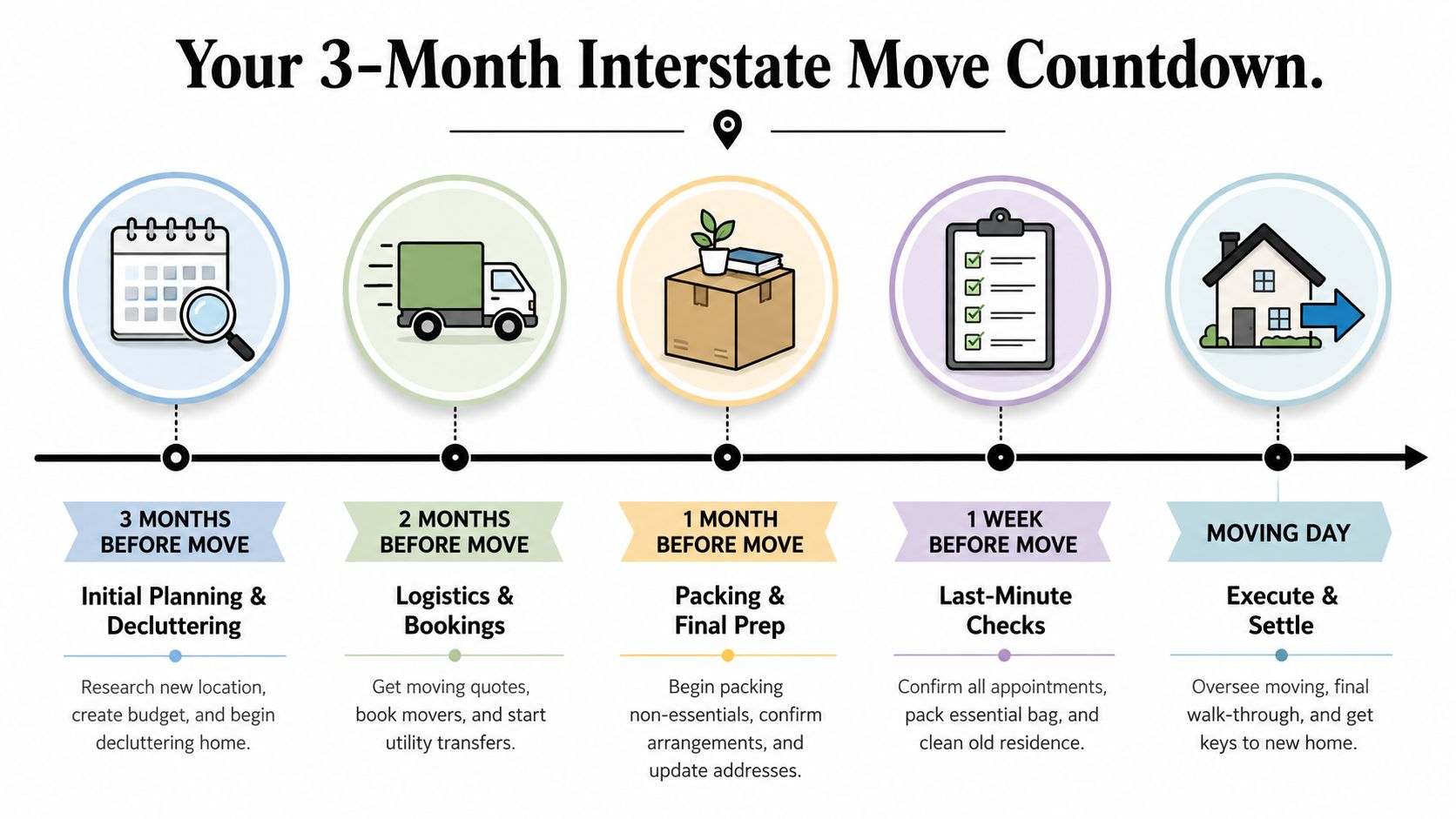
Twelve weeks out
Start with decisions that affect every other decision.
Create one master document. A spreadsheet works. A notes app works. Paper works if you keep it updated. Track housing status, move date, utility contacts, insurance renewal dates, vehicle details, and every appointment that requires a confirmation number.
Then review your destination like an underwriter would.
- Housing reality: Look at commute pattern, parking, storage, neighborhood rules, and whether the property type changes your insurance needs.
- Climate and hazard exposure: If California is the destination, think beyond zip code appeal. Hillside location, brush exposure, older wiring, and roof condition can shape home insurance options.
- Job and cash flow timing: If payroll, contract work, or business income won't start immediately, your move budget needs room for a soft landing.
Eight weeks out
At this point, you begin cutting cost and reducing complexity.
Decluttering isn't just about being tidy. Every item you move creates labor, handling, and unpacking time. Sell, donate, recycle, or dispose of things you already know you won't use in the new place. Be especially ruthless with damaged furniture, duplicate kitchen items, old electronics, and boxes you haven't opened since your last move.
If you're moving into a rental first, it helps to review how a California renters insurance policy fits into the plan before you start signing utility transfers and delivery contracts.
Practical rule: Don't move low-value items that create high-friction setup. Replace them locally if the move cost, hassle, and storage burden are higher than the item's value.
Four weeks out
Now the timeline gets tactical.
Use a weekly checklist, not a giant unordered list. Assign tasks by deadline and dependency.
- Confirm housing access dates. Keys, elevator reservations, parking restrictions, and loading windows.
- Book transport. DIY truck, container, or full-service mover.
- Start packing non-essentials. Seasonal items, décor, books, and duplicates.
- Create a records folder. Lease, purchase contract, IDs, insurance declarations, registration, and school or medical documents.
- List cancellation dates. Utilities, internet, pest control, parking permits, local memberships.
One week out
At this point, the move should feel narrow, not chaotic.
Use this short pre-departure checklist:
| Task | What to verify |
|---|---|
| Utilities | Shutoff at old address and activation at new address |
| Insurance | Effective dates, policy forms, ID cards, lender or landlord requirements |
| Movers | Arrival window, inventory process, payment method |
| Documents | License, registration, lease, policy declarations, moving contract |
| Essentials | Medication, chargers, toiletries, pet supplies, basic tools |
People usually get in trouble here by assuming providers will “just transfer.” Many won't. Some require new accounts, new underwriting, or separate cancellation steps.
Navigating Moving Logistics and Costs
The physical move has one job. Get your property from one address to another without surprise charges, preventable damage, or blown deadlines. That sounds simple until you compare quotes that don't match, coverage terms you didn't read, and service windows that are broader than you expected.
Choosing the move type
There isn't one best method. There's only the best fit for your budget, timeline, and tolerance for labor.
A DIY truck makes sense when your inventory is modest, you can lift safely, and your route is manageable. If you're comparing options, this practical guide on how to rent uhaul gives a useful overview of what to review before committing to a truck rental.
A container service works better when your dates are less certain or you need some storage flexibility.
A full-service mover is usually worth the premium when you have stairs, fragile furniture, limited time, or a household that can't afford delivery delays.
How to screen movers
Ask direct questions and listen for direct answers. If a company can't explain its estimate clearly, move on.
Use this checklist when comparing companies:
- Licensing for interstate work: They should clearly confirm they handle cross-state moves.
- Estimate type: Ask whether the estimate is binding, non-binding, or binding not-to-exceed, and ask what can change the final total.
- Inventory process: The company should describe how items are listed, tagged, and checked at delivery.
- Claims handling: Ask what happens if something arrives damaged or missing.
- Delivery window: Interstate delivery often comes with a range. You need that range in writing.
If the quote looks dramatically cheaper than the rest, assume something is missing until proven otherwise.
Packing to reduce claims and friction
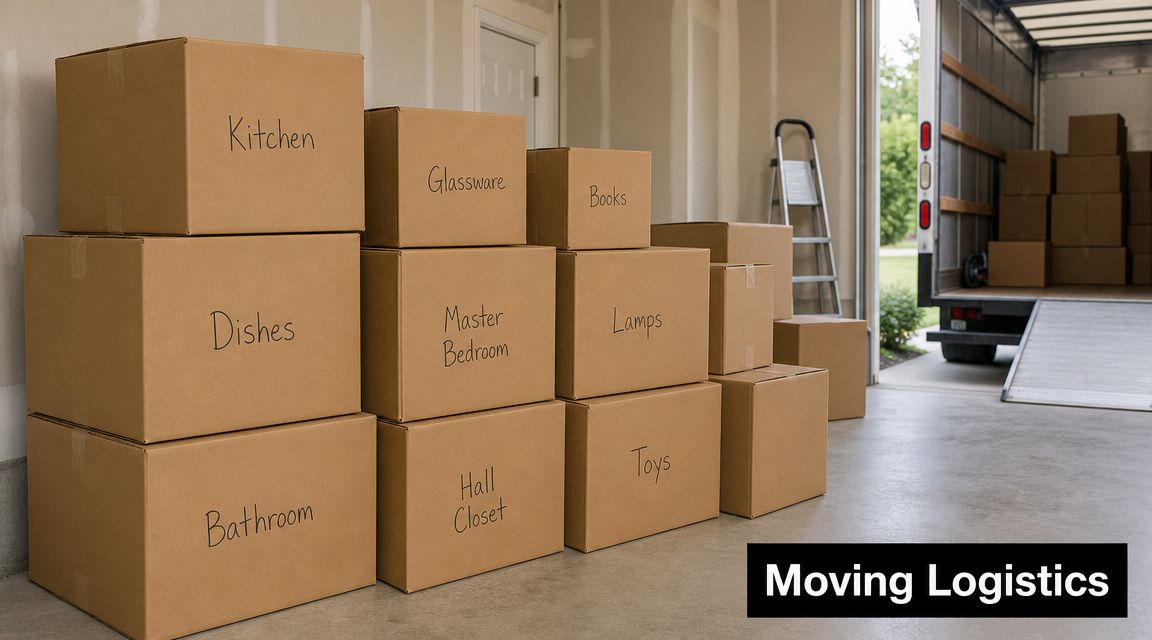
Room labels aren't enough. Add contents and priority. “Kitchen” tells you where a box goes. “Kitchen, plates, coffee gear, daily use” tells you what to open first.
A few practices save real headaches:
- Photograph valuables before packing. Especially electronics, artwork, bicycles, and furniture with existing wear.
- Keep documents with you. Insurance papers, IDs, financial records, and medications do not belong on the truck.
- Build one open-first group. Bedding, towels, chargers, cleaning supplies, basic cookware, and pet items.
The costs people forget
The mover's fee is only one line item. The move also creates a cash-flow problem if several obligations hit at once.
Expert guidance recommends budgeting 3 to 6 months of living expenses because job transitions and service setup, including insurance, can lag the physical move, as discussed in this 2025 moving trends summary.
Look beyond the truck or mover invoice:
| Expense area | Common oversight |
|---|---|
| Travel | Fuel, lodging, meals, tolls, pet fees |
| Housing | Deposits, temporary stays, storage overlap |
| Utilities | New account deposits, installation delays |
| Insurance | New premium timing, rewritten policies, vacant-home concerns |
| Time off work | Reduced income during transit and setup |
That last row gets ignored too often. If your move creates even a short gap in earnings, the stress level rises fast.
The Official Switch Admin Legal and Paperwork
This is the part of moving to another state that people postpone because it isn't visible. Boxes are visible. A stale bank address or an expired registration deadline isn't. Then a claim, renewal, toll notice, or ballot goes to the wrong place.
California adds urgency because so many residents are already moving in and out. In 2024, California was reported to have the greatest percentage of individuals moving out, and one source noted that 60% of moves occurring in California were outbound, according to these state moving trend summaries. That volume is one more reason not to leave administrative work until the final week.
Handle the identity layer first
Your official move starts with documents and records, not furniture.
Take this sequence seriously:
- USPS mail forwarding
- Banks and credit cards
- Employer and payroll
- Loan servicers
- Insurance carriers
- Subscription services
- Voter registration
The order matters. Financial institutions and insurers should hear from you directly, not through forwarded mail.
Driver's license and registration
Your new state will set the timeline for switching your driver's license and vehicle registration. Don't guess. Check the state agency site, gather your proofs early, and book any required appointments as soon as you have a qualifying address.
If California is involved, your auto paperwork and insurance need to stay in sync. A registration issue can expose an insurance problem, and an insurance mismatch can stall registration. If you need to compare the coverage side before the DMV side, review a California auto insurance policy overview before you start changing vehicle records.
Build a cancellation and activation log
Most service errors come from bad documentation, not bad intentions.
Create a simple log with five columns:
- Provider
- Old service end date
- New service start date
- Confirmation number
- Final bill status
Keep screenshots and emails for every cancellation, activation, and address change. If duplicate billing shows up later, those records matter.
Don't forget the quiet accounts
The easy ones are utilities and banks. The forgotten ones are the accounts that renew automatically or only contact you occasionally.
Check your list for:
- Pharmacy profiles
- Cloud storage billing
- Vehicle toll accounts
- Streaming platforms
- Online marketplaces
- Professional licensing boards
- School, medical, and veterinary records
Administrative cleanup isn't glamorous. It's still one of the fastest ways to prevent expensive messes after the move.
The Insurance Playbook for Your Interstate Move
Insurance is where moving to another state stops being generic and gets highly state-specific. This is especially true when California is on either side of the move.
A major overlooked issue is that car insurance rules, prices, and minimums can change immediately when you cross state lines, and you often need a policy filed for the new state within the insurer's required window to avoid being underinsured or non-compliant, as explained in this moving and insurance guidance.
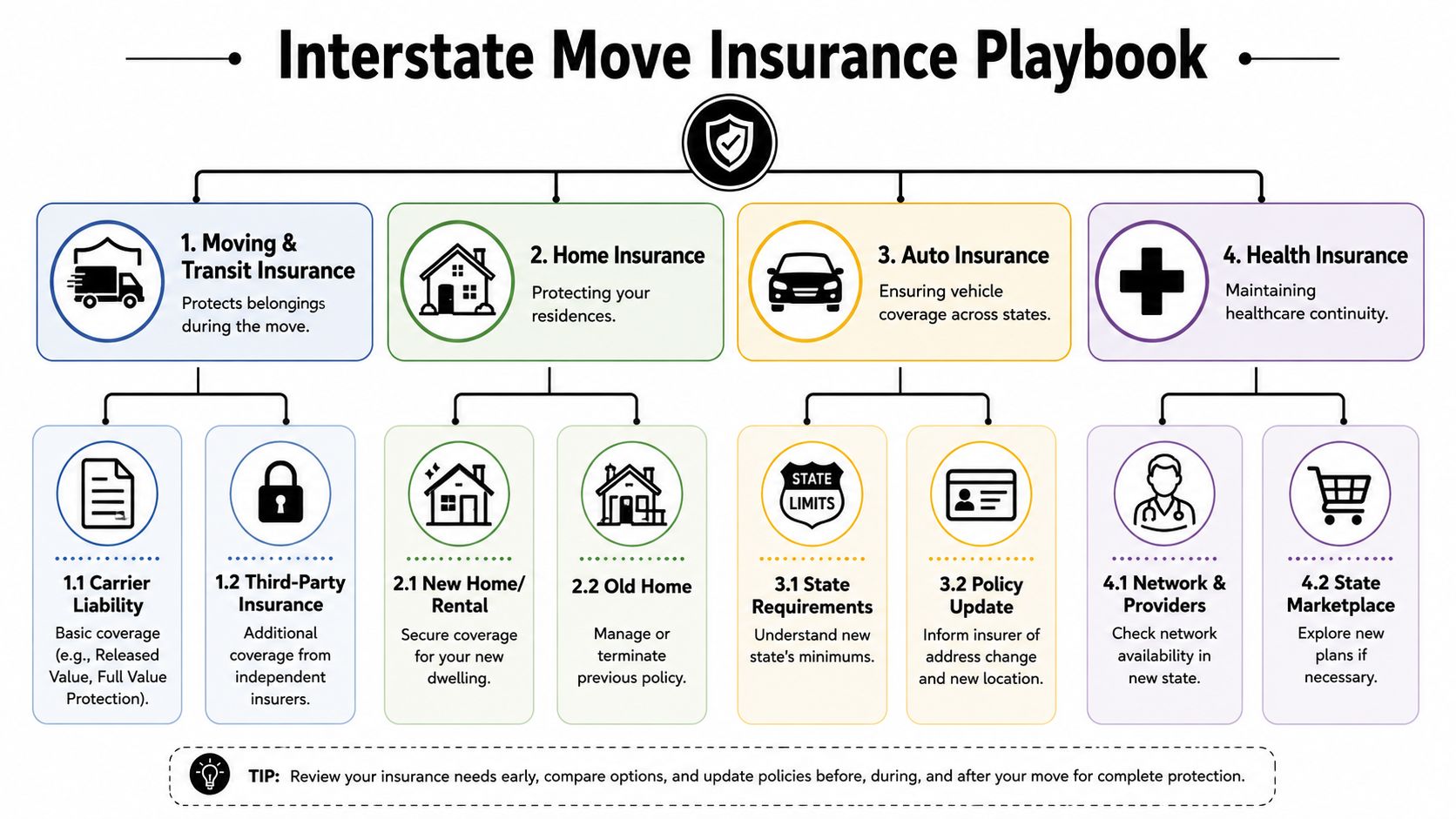
Auto insurance isn't just an address change
This is the biggest mistake I see.
People assume they can keep the same car insurance and update the garaging address after they arrive. Sometimes the carrier can rewrite the policy cleanly into the new state. Sometimes it can't. Sometimes the required coverages, forms, and underwriting rules force a new policy issue.
What to review before the move:
- Where the vehicle will be garaged
- Whether the carrier writes in the new state
- Whether your lienholder needs updated proof
- Whether the new state has different minimum requirements
- Whether your commute, parking, or annual driving pattern changes
If you're moving into California, your premium may be influenced by a very different mix of traffic density, repair costs, theft patterns, and regional wildfire-related disruption than your prior state. If you're leaving California, your new state may handle rating and policy structure differently than you're used to.
Home insurance and renters insurance need day-one continuity
Property coverage has no room for sloppy timing.
If you're buying a home in the new state, your home insurance should be reviewed before closing. If you're renting, your renters insurance should start when your possession starts, not after the first load is already inside.
Use this basic decision table:
| Situation | Insurance move |
|---|---|
| Renting in the new state | Start renters insurance for the new address on move-in day |
| Buying a new home | Confirm home insurance before closing and lender review |
| Keeping the old home temporarily | Review vacancy implications with the current insurer |
| Ending a lease | Don't cancel renters insurance until your obligation to the old unit actually ends |
People often cancel the old policy too early. If you still have legal possession, personal property, or liability exposure at the old address, you may still need coverage there until the handoff is complete.
California home insurance has its own complications
California isn't a normal property insurance market. If you're moving into the state, especially into a brush area, foothill community, canyon location, or another higher-risk zone, start insurance shopping early.
Three California issues deserve immediate attention:
Wildfire exposure
Wildfire risk can affect carrier appetite, inspection requirements, and eligibility. Roof age, defensible space, property access, and prior loss history can all matter. Buyers sometimes focus on mortgage approval and only learn late that insurance options are narrower than expected.
FAIR Plan considerations
The California FAIR Plan may come into the conversation if standard market options are limited. It's often part of a layered solution rather than a complete answer for every protection need. If a home ends up there, review what the FAIR Plan does cover and what it doesn't, then look at companion coverage for liability and other gaps.
Earthquake coverage
Standard home insurance policies generally don't function as earthquake policies. If you're new to California, don't assume the home policy handles seismic loss the way it handles fire or theft. Earthquake coverage is a separate decision and should be reviewed based on your property type, equity position, and financial tolerance for repair costs.
California property insurance should be evaluated by location, construction, and hazard profile. Two homes with similar prices can have very different insurance paths.
Life insurance after a move
Life insurance gets less attention during relocation because it doesn't affect move day. It still deserves a review.
Check these items after the move:
- Beneficiary details: Confirm they're current.
- Mailing address and billing: Avoid lapse notices going to the old residence.
- Trust or estate updates: Coordinate if your legal documents changed during the move.
- Household budget fit: A move often changes debt load, mortgage size, and dependent needs.
If your family moved for a new job, bought a larger home, or added new financial obligations, the old life insurance amount may no longer match the risk you're carrying.
A clean insurance transition looks like this
The best insurance transitions are boring. That's the goal.
- Review all policies before the move
- Set effective dates deliberately
- Confirm state-specific policy issuance where needed
- Keep proof of coverage accessible
- Cancel old policies only after replacement is active and appropriate
A smooth move isn't just getting the couch delivered. It's arriving with auto insurance that complies, home or renters insurance that starts on time, and life insurance records that still protect the people who depend on you.
Settling In and Finalizing Your California Move
The first month after the move is when you find out whether your planning was real or just optimistic. This is when forwarding errors show up, final bills post, and insurance documents either match your new life or don't.
Start with the household basics. Confirm that your utility accounts are active under the correct name, check that recurring deliveries are reaching the right address, and verify that your old property has no leftover billing or service tied to it. If a moving company handled transport, review the final invoice and compare it to the estimate and inventory before you file everything away.
The first 30 days checklist
Use your first few weeks to close loops, not just unpack.
- Healthcare: Find local doctors, pharmacies, and specialists that fit your current coverage.
- Vehicle records: Make sure insurance ID cards, registration records, and garaging address all align.
- Mail and billing: Watch statements, toll notices, and renewal notices closely.
- Property protection: Test smoke alarms, inspect locks, photograph the condition of the new place, and document any issues immediately.
- Coverage review: Revisit deductibles, liability limits, and excluded perils now that you've settled in.
If you've moved into California housing, this is also a good time to evaluate whether your current California home insurance options match the property's wildfire, theft, liability, and replacement concerns.
What people regret skipping
The common regret isn't packing too many boxes. It's assuming everything “went through.”
That usually means:
- old autopay still pulling from the wrong account
- old policy cancellation not processed correctly
- renters insurance ending before lease responsibility ended
- vehicle documents not matching the insured state
- beneficiary or mailing records left untouched
The move feels finished when the boxes are gone. Financially and legally, it isn't finished until every policy and account matches your new reality.
A move is a reset. That's the upside. It's also a moment when coverage gaps, stale records, and bad assumptions get exposed. If you tighten up those loose ends in the first month, you protect the version of your life you just worked so hard to build.
If you're moving into California, leaving California, or trying to coordinate auto insurance, car insurance, home insurance, renters insurance, life insurance, FAIR Plan questions, wildfire concerns, or earthquake options, talk with Mai & Associates. Their licensed California team can help you review existing coverage, identify gaps, and line up the right policies for your new address without turning your move into an insurance scramble.