Licensed Insurance Agent California: Your 2026 Guide
You're probably doing what a lot of Californians do when insurance shopping starts. You open a few tabs for car insurance, compare home insurance quotes, click into renters insurance options, and then realize every policy uses slightly different language. Liability, dwelling, endorsements, deductibles, replacement cost, exclusions. By the third quote, it's hard to tell whether one policy is cheaper because it's better, or because it covers less.
That's where a licensed insurance agent in California can make a real difference. Not as a salesperson first, but as a state-regulated guide who can explain what you're buying, what you're missing, and whether the person helping you is even allowed to sell the type of coverage you need.
Why Choosing a Licensed Insurance Agent Matters in California
A common situation goes like this. A driver in Los Angeles needs auto insurance fast because registration is due. At the same time, their spouse wants to review life insurance, and a relative in a wildfire-prone area is worried about home insurance and earthquake coverage. They search online, get flooded with quote forms, and assume any person with “insurance agent” in their title can handle all of it.
That assumption can create problems.
California insurance is a big, complicated marketplace. The Insurance Brokers & Agencies industry in California reached $32.1 billion in 2026, which shows how large and active the market is in the state, according to IBISWorld's California industry report. In a market that large, consumers aren't choosing from just one kind of policy or one kind of agent. They're choosing between different coverages, different carriers, and different legal permissions.

Why California feels harder than other states
California adds its own layers of complexity.
Drivers have to keep up with current auto liability rules. Homeowners in higher-risk areas may need to ask about wildfire protection strategies, California Fair Plan reviews, and separate earthquake coverage. Renters often assume the landlord's policy protects their belongings when it usually doesn't. Families looking at life insurance need help comparing policy types and carrier options in plain English.
Practical rule: If a policy affects your car, home, apartment, income protection, or family finances, verify the person advising you before you trust the advice.
A licensed agent helps you sort risk from noise
A properly licensed agent gives you something quote websites can't always give. Context.
They can explain why one car insurance quote has a lower premium but weaker protection. They can point out when a home insurance policy leaves out a major local risk. They can tell you whether a renters insurance policy fits your actual living situation. And for life insurance, they can help you compare options from multiple carriers if they have that authority.
That matters because insurance isn't just about price. It's about whether the policy works when your family needs it.
Understanding the Role of a California Insurance Agent
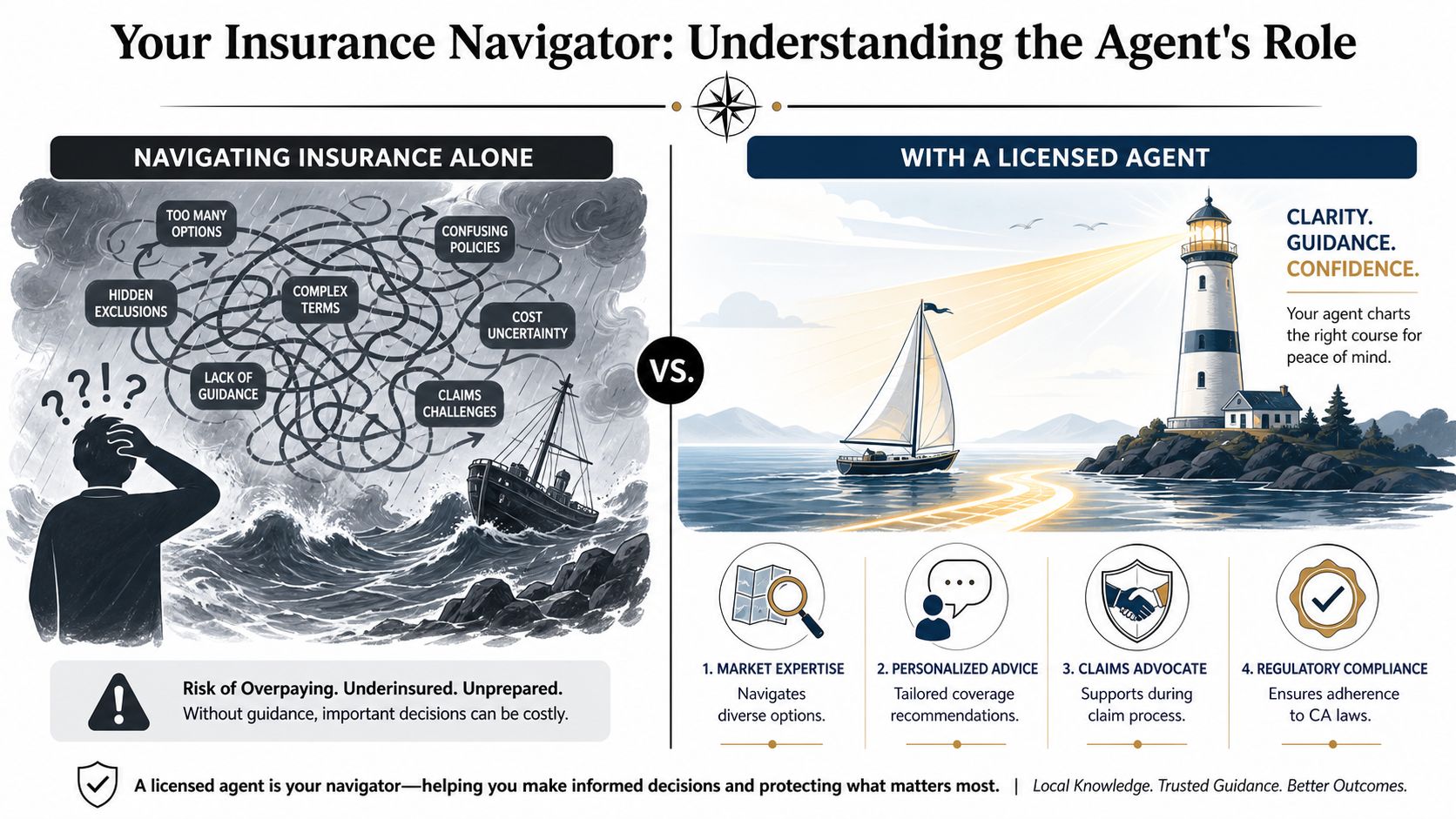
Think of an insurance agent like a skilled shopping guide for financial protection. You tell them what you need, such as car insurance for a new teen driver, home insurance for a first purchase, renters insurance for an apartment, or life insurance for a growing family. Then they help match those needs to available policies.
That sounds simple, but the marketplace has several different players. If you don't know who represents whom, it's easy to assume they all work the same way.
Agent, broker, and direct insurer
Here's a practical comparison:
| Option | What they generally do | Good fit for |
|---|---|---|
| Captive agent | Sells products for one insurer | People who already know the company they want |
| Independent agent | Can present policies from multiple carriers | People who want comparison shopping for auto, home, renters, or life insurance |
| Broker | Represents the client's side in the marketplace | People with more specialized placement needs |
| Direct insurer | Sells straight from the insurance company to the consumer | People comfortable researching and comparing on their own |
A captive agent works with one insurance company's products. That can be helpful if you already trust that carrier and want a straightforward purchase path.
An independent agent has a different role. They can compare policies from more than one carrier, which is often useful when you're balancing price, coverage, and California-specific concerns. If you're trying to understand terms while also improving how prospects connect with agencies online, this guide on how agencies improve insurance lead capture gives a useful look at the communication side of the business.
Why the independent model often helps with comparison shopping
If you're buying California auto insurance, direct shopping can feel fast at first and messy later. Each insurer structures coverage options differently, and terms can sound similar while meaning different things. An independent agent can line those differences up side by side.
That's especially helpful when you're still learning the language. If you run into unfamiliar terms, a plain-English California insurance glossary can help before you compare quotes or ask follow-up questions.
Buying insurance directly can work. But if you're not confident reading exclusions, limits, and endorsements, a licensed human guide often prevents expensive misunderstandings.
What an agent should actually do for you
A good agent doesn't just send a price.
They should ask how you use your vehicle, whether your home has special risks, whether you rent or own, and what protection your family would need if income stopped unexpectedly. They should also explain where their authority begins and ends. That point becomes important in California, because not every licensed agent can sell every type of insurance.
How an Agent Earns Their California Insurance License
When you work with a licensed insurance agent in California, you're working with someone who had to go through a formal state process. That matters because insurance advice affects legal compliance, financial risk, and family protection.
The process isn't just “take a test and start selling.” California requires specific training, an exam, and background screening. The key point for consumers is this: licensed means state reviewed, but it still doesn't mean authorized for every product line.
Step one involves required ethics education
California made changes to pre-licensing rules, leading to confusion for many people.
California insurance agents must complete a mandatory 12-hour Code and Ethics pre-licensing course covering the California Insurance Code and ethical practices, and that requirement still applies even after legislative changes removed some other line-specific education requirements, according to this summary of California insurance license requirements.
That means if you're talking to someone who recently became licensed, they still had to complete that ethics-based course. The rules changed in one area, not all areas.
Important distinction: The old line-specific course changes did not erase the mandatory Code and Ethics requirement.
The typical path to a California license
Most consumers don't need every technical detail, but the broad sequence is useful to understand:
Required pre-licensing education
The applicant completes the mandatory Code and Ethics course.State examination
The applicant must pass the appropriate California insurance licensing exam for the line they want.Background review
The applicant completes Live Scan fingerprinting so the state can conduct a background check.License application
The applicant submits materials for state review and waits for license issuance.
If you want more background on California policy basics while you shop, these California insurance guides can help you connect the licensing process to real consumer decisions.
Licensed doesn't mean licensed for everything
This is the part many shoppers miss.
An agent may be properly licensed and still not be authorized to sell the policy you need. Auto insurance and home insurance generally fall under a property and casualty line. Life insurance requires its own authority. Health-related products can require separate authority as well.
That's why the label alone isn't enough. “Licensed insurance agent” is a starting point, not the final answer.
Here's a simple way to view it:
| If you need | The agent should have authority for |
|---|---|
| Car insurance | Property and casualty |
| Home insurance | Property and casualty |
| Renters insurance | Property and casualty |
| Life insurance | Life |
| Certain health-related products | Accident and health, if applicable |
A careful consumer checks both the status of the license and the specific line tied to the product being discussed.
A Step-by-Step Guide to Verifying an Agent's License
If you only do one thing before buying California insurance, do this. Verify the agent yourself.
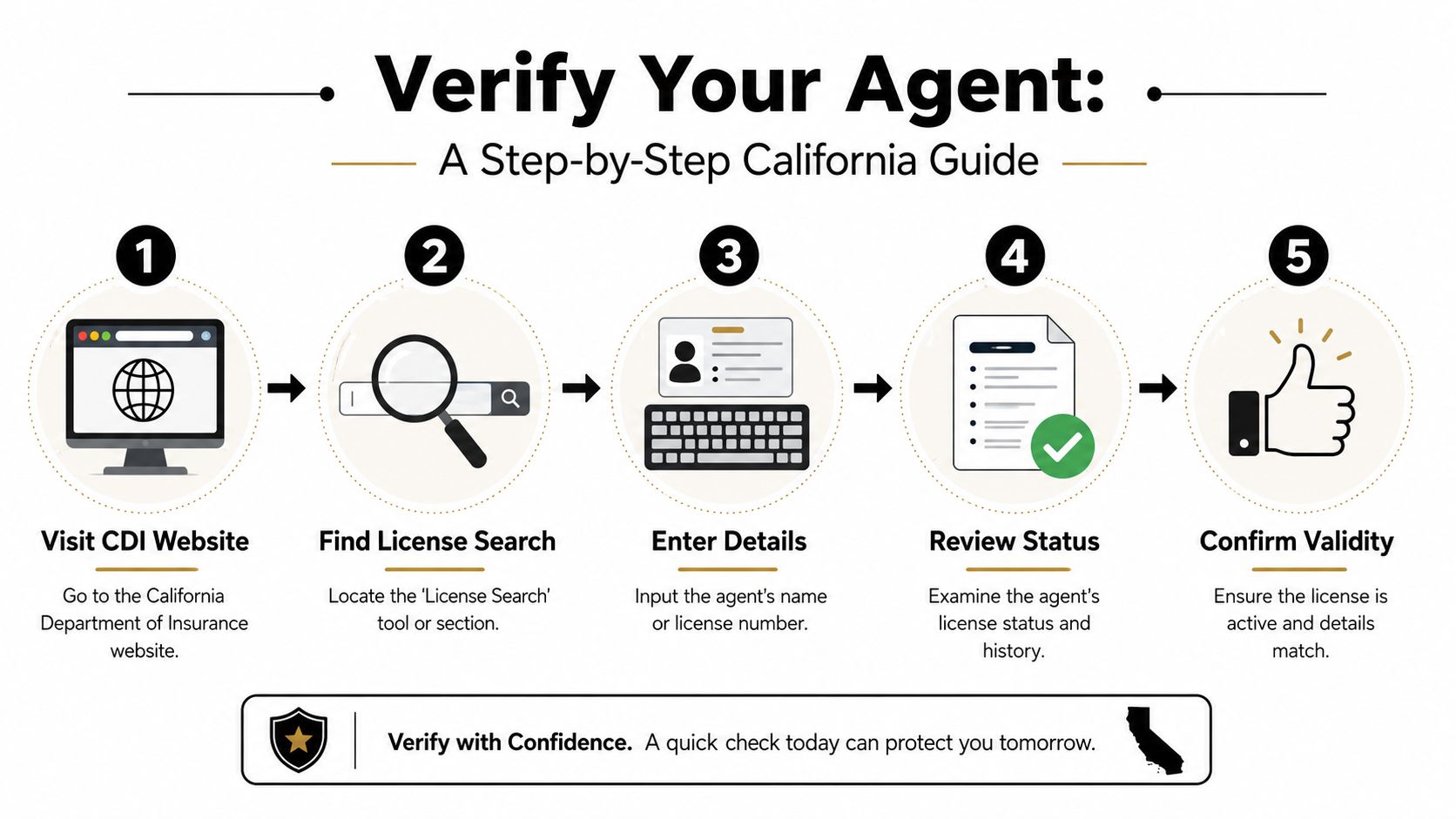
A lot of people stop after seeing that someone appears in a directory or has a business card with a license title. That isn't enough. A “Licensed Insurance Agent” label does not automatically authorize selling all products; consumers should use the CDI tool to verify an agent's specific line of authority for products such as property and casualty for auto or home, or a distinct accident and health authority for health-related products, as explained by the California Department of Insurance line-of-authority FAQ.
The five checks that matter most
Use the California Department of Insurance online license search and walk through it slowly.
Find the agent by name or license number
Ask for the full legal name if possible. That reduces confusion when several people have similar names.Confirm the license is active
You don't want expired, inactive, or otherwise unusable status.Read the lines of authority
This is the critical step. Don't stop at “active.”Match the authority to your need
If you want auto insurance, home insurance, or renters insurance, you're checking for the appropriate property and casualty authority. If you want life insurance, confirm life authority.Check before discussing specialized products
If your situation involves less common products or special endorsements, verify first and ask questions second.
A real-world example
Say you're buying home insurance for a house near a wildfire-prone area. You also want to ask about earthquake coverage and whether your current arrangement needs a California Fair Plan review. If the person helping you doesn't hold the right authority for the products involved, you could spend time discussing options they aren't legally able to sell.
That's not just inconvenient. It can send you down the wrong path when you need accurate guidance.
The safest habit is simple. Verify first, then shop.
What to look for on the search result page
When the California Department of Insurance tool shows the record, pay attention to:
License status
Make sure it shows as active.Identity details
The person or business should match the name you were given.Authority type
Read the actual line listed. Don't assume.Fit with your policy need
Car insurance, home insurance, renters insurance, and life insurance don't all sit under one permission.
This one habit can prevent a lot of confusion. It also changes how you interview the agent, because now you're starting with confirmed facts instead of assumptions.
Key Questions to Ask Your Prospective Insurance Agent
You have already checked two facts that matter. The license is active, and the line of authority matches the policy you want. Now the conversation changes. You are no longer asking, "Are you allowed to sell this?" You are asking, "Are you the right person to guide my family through this decision?"
That difference matters.
A good agent should make insurance feel less foggy, not more. If you ask a simple question about deductibles, exclusions, or optional coverage, the answer should be plain and patient. An agent who is properly licensed for your product can still be a poor fit if they rush, stay vague, or avoid specifics.
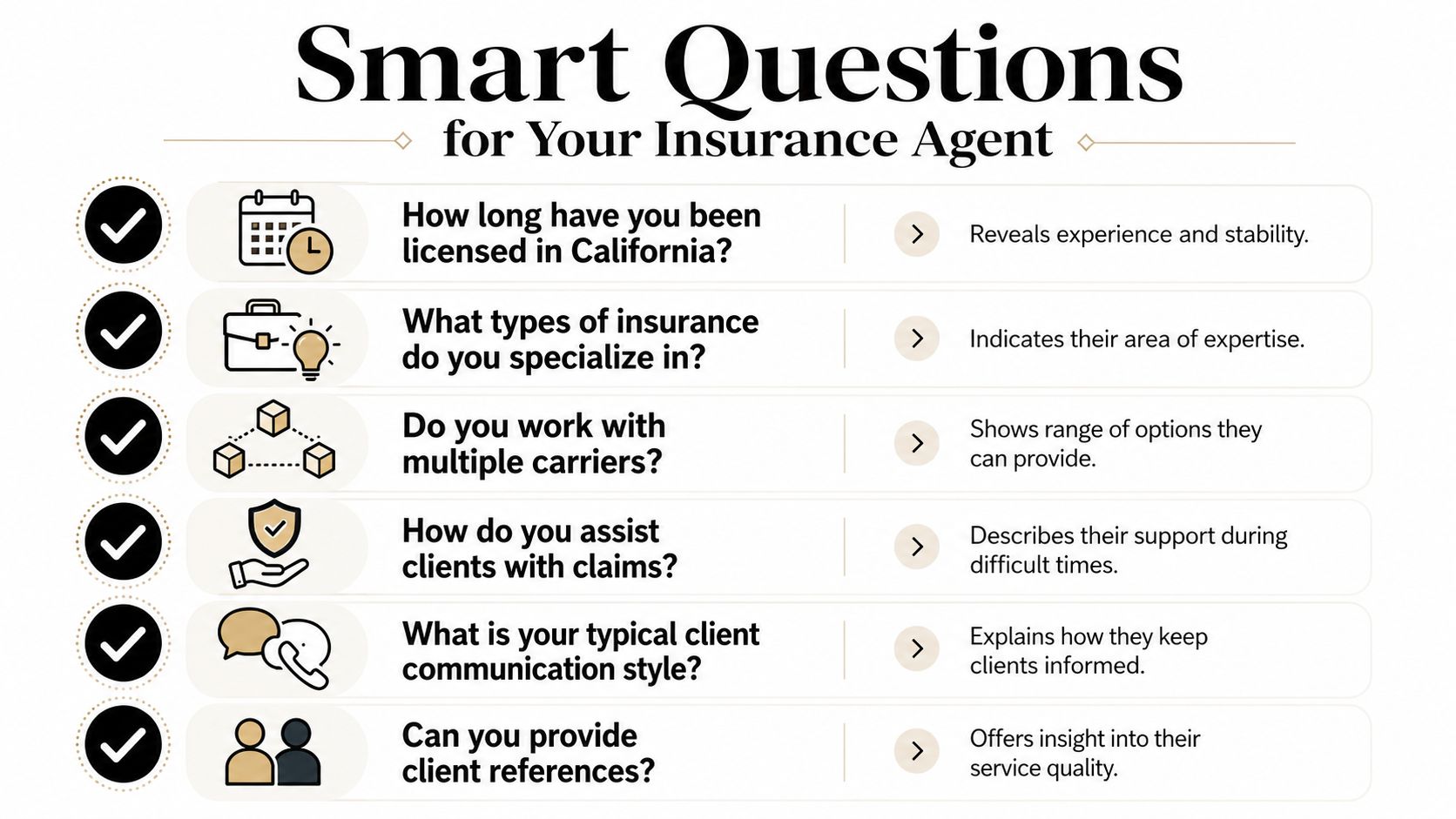
Here are the questions that usually tell you the most:
Which insurance companies do you represent?
This helps you understand whether the agent can compare several carriers or is offering one company's policies.What kinds of policies do you work with most often?
Experience should match your need. A person who mainly writes auto policies may not be the best guide for life insurance or a complex homeowners situation.How do you help if I need to file a claim?
Some agents stay involved after the sale and help explain next steps. Others hand you the carrier's claims number and step back.How do you explain coverage choices to clients?
Listen for a teaching style. A careful agent can explain what the policy covers, what it does not cover, and where you may need to choose higher limits or optional protection.How do you prefer to communicate?
This sounds simple, but it matters. If you want email records and the agent only wants phone calls, small misunderstandings can grow.
If you want more examples before you make calls, this California insurance FAQ page for common consumer questions can help you compare answers.
California families should also ask about local risks. If you own a home, ask how the agent handles wildfire-area properties, higher deductibles, FAIR Plan questions, and earthquake coverage. If you rent, ask how they help people choose personal property and liability limits that fit real-life needs. If you are shopping for life insurance, ask how they explain the tradeoff between lower premiums and shorter coverage periods.
Here is a useful way to listen to the answers. A strong answer sounds concrete. It includes examples, limitations, and clear next steps. A weak answer stays broad. "We write everything" or "You're fully covered" should make you slow down and ask for details.
You can also ask one question that ties back to your CDI search: "Can you confirm that the policy we are discussing fits the line of authority on your license?" A qualified professional should have no problem answering that directly. This is often the missing step. People verify that an agent is licensed, but forget to connect that license to the exact type of policy being discussed.
For example, if you need homeowners coverage for a house in a wildfire-prone area, you want answers that show the agent can explain standard home insurance, separate earthquake options, and any FAIR Plan issues that may come up. If the discussion turns to life insurance for income protection, that is a different product category and should be handled by someone authorized for that line.
The goal is simple. Choose an agent who is legally qualified, clear in how they explain coverage, and comfortable answering practical questions before you sign anything.
Understanding Your Rights as an Insurance Consumer
California consumers have more power than many people realize. You don't have to accept confusing explanations, pressure tactics, or coverage descriptions that don't match what you asked for.
An insurance agent should explain the policy truthfully and accurately. If someone misstates what a car insurance policy covers, brushes off major exclusions in a home insurance policy, or pressures you into buying life insurance that doesn't fit your situation, that's not something you're expected to just tolerate.
What fair treatment looks like
You have the right to ask for clear answers in plain language. You have the right to understand the product before you buy it. You also have the right to walk away if the conversation feels rushed, evasive, or unsuitable for your needs.
Common warning signs include:
Misrepresentation
The agent describes coverage in a way that conflicts with the policy.Pressure without explanation
They push for payment or signatures before answering basic questions.Product mismatch
They keep steering you toward a policy that doesn't line up with your goals.Unclear authority
They avoid explaining what they're licensed to sell.
What to do if something feels wrong
Start by saving your documents. Keep emails, text messages, quote sheets, applications, and policy materials in one place. Write down dates and a short summary of what was said.
Then contact the agency and ask for clarification in writing. Sometimes a misunderstanding can be corrected quickly when everyone is looking at the same documents.
If the explanation still doesn't make sense, move the issue to the regulator instead of arguing in circles.
Filing a complaint with the California Department of Insurance
If you believe an agent acted improperly, you can file a complaint with the California Department of Insurance. The practical steps are straightforward:
- Gather the policy and communication records.
- Identify the agent and agency involved.
- Summarize the problem in plain language.
- Submit the complaint through the California Department of Insurance complaint process.
- Keep copies of everything you send.
The goal isn't to “win an argument.” It's to create a clean record so the regulator can review what happened.
Taking Action to Secure Your California Coverage
The safest way to buy insurance in California is to slow down just enough to make good decisions. Verify the license. Confirm the line of authority. Ask direct questions. Then compare policies based on fit, not just price.
That approach works whether you need auto insurance, home insurance, renters insurance, car insurance for a new household driver, or life insurance for family protection.
Match the next step to your situation
If you're a driver, review your liability limits carefully. As of January 1, 2025, California auto insurance minimums increased to 30/60/15, meaning $30,000 for bodily injury liability per person, $60,000 per accident for multiple injuries, and $15,000 for property damage, according to AAA's summary of California car insurance requirements. Minimums may satisfy the legal rule, but they don't automatically mean the protection is enough for your finances.
If you own a home, especially in a higher-risk area, don't assume your current policy handles every local hazard the way you expect. Ask detailed questions about wildfire-related concerns, earthquake options, and whether your current setup needs a closer review.
If you rent, make sure your renters insurance protects your belongings and gives you liability protection that fits your living situation. If your family depends on your income, it may be time for a life insurance review, especially after marriage, a home purchase, or a new child.
Make verification part of your routine
A good habit is to treat insurance the way you'd treat hiring any other licensed professional. Check credentials first. Then ask how they work. Then decide whether the advice fits your life.
If you're ready to compare your current policy with other options, request a California insurance quote only after you know the person helping you is properly licensed for the policy type you need.
Your goal isn't to become an insurance expert overnight. It's to make one careful decision after another so your family has the right protection when it counts.
If you want help comparing California auto insurance, home insurance, renters insurance, or life insurance with a licensed local agency, Mai & Associates offers quotes, policy reviews, and multilingual support for Californians who want clear guidance before they buy.