Get Affordable Insurance on Jeep Wrangler for 2026
You’ve probably done the fun part already. You found the Wrangler you wanted, compared trims, maybe debated hard top versus soft top, and started thinking about your first road trip up the coast or your first weekend on a trail. Then the insurance question shows up and slows everything down.
That’s normal. A Jeep Wrangler is not insured like an ordinary commuter sedan. It’s part daily driver, part adventure vehicle, and for many California owners, part ongoing project. That mix changes how you should think about insurance on jeep wrangler models, especially if you live in a state where wildfire exposure, urban theft, and heavy traffic all affect pricing and coverage choices.
A lot of drivers make the same early mistake. They shop by monthly price alone, pick the cheapest quote, and assume “full coverage” means everything on the Jeep is protected. Then they add a lift, tires, lights, or a winch and don’t realize the policy may still treat those upgrades like they don’t exist.
A better approach is to build your policy the way you’d build a trail setup. Start with the right base. Add protection where the terrain demands it. Make sure every piece works together.
Your Guide to Insuring a Jeep Wrangler in California
A Wrangler can be easy to love and a little tricky to insure well.
On paper, it’s an SUV. In real life, it can be a commuter in Glendale, a beach cruiser in Costa Mesa, a weekend trail rig near Escondido, or a financed new vehicle that still owes more than it’s worth. California adds another layer because location matters so much. The same Jeep can face different risks depending on whether it spends nights on a city street, in a garage, or near brush-heavy areas.
That’s why a Wrangler policy should answer a few very specific questions.
- How are you using it: Daily driving creates one set of needs. Off-road weekends create another.
- Is it stock or modified: A factory Sport and a built Rubicon shouldn’t be insured the same way.
- What California risks apply: Theft, fire exposure, and uninsured drivers all matter.
- What other policies can work with it: Auto, home, renters, and life insurance often fit together better when reviewed as one overall protection plan.
If you’re comparing options, a California-focused auto insurance review helps more than a generic national guide. A good starting point is this overview of California auto insurance options, especially if you want to understand how local carriers and state rules affect your quote.
Practical rule: Don’t ask only, “What’s the cheapest policy?” Ask, “If my Wrangler is stolen, damaged, or modified, what exactly gets paid for?”
That single question clears up most of the confusion new owners have.
How Much Is Insurance on a Jeep Wrangler in California
You buy a Wrangler for weekend freedom, then the first quote lands in your inbox and stops you cold. In California, the insurance price can feel less like a small line item and more like part of the build budget.
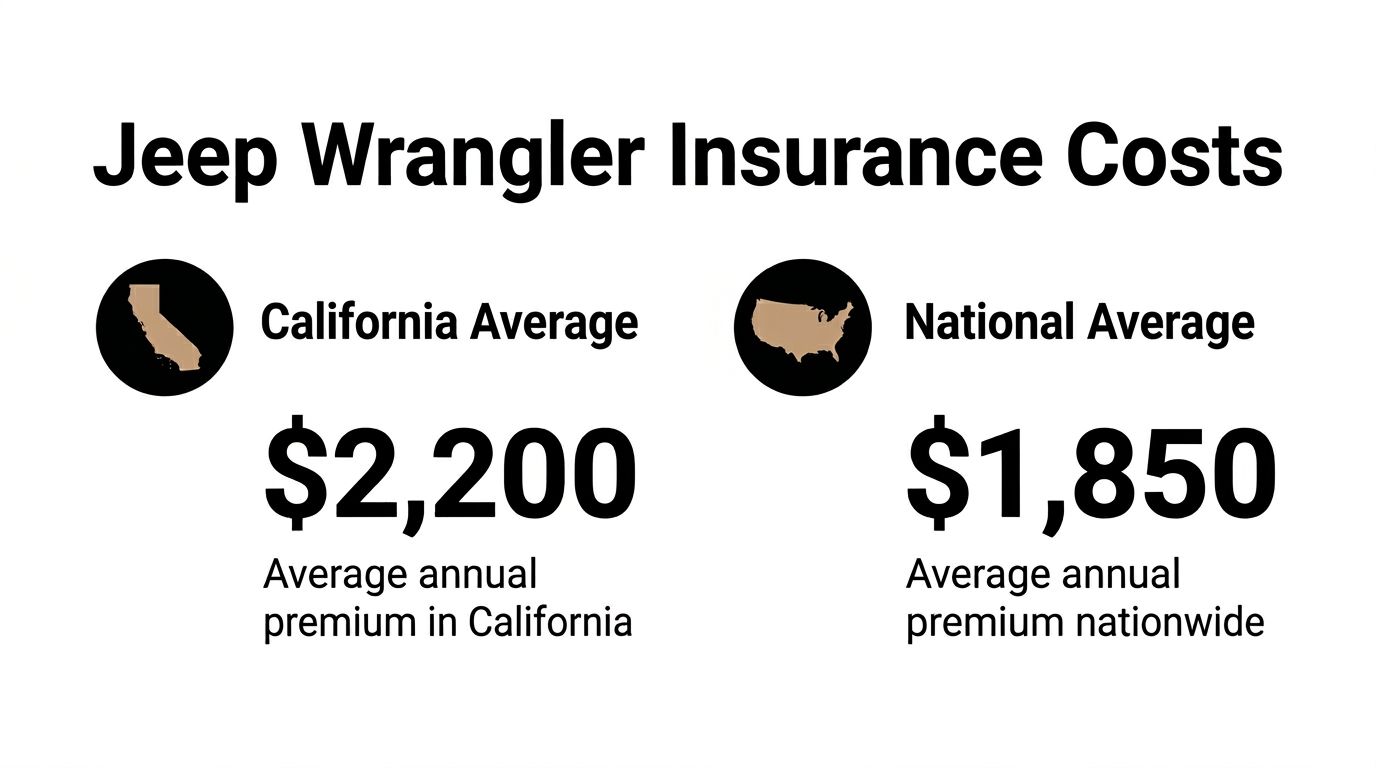
The starting point is higher here than many new owners expect. The average annual full coverage insurance cost for a Jeep Wrangler in the United States is about $2,396, while California drivers average about $3,269 per year, or roughly $272 per month, according to Insure.com’s Jeep Wrangler insurance cost analysis. California sits well above the national average, which is why national articles often underprepare local drivers.
That same Insure.com analysis shows how wide the state-by-state gap can be. Alabama averages $1,949 annually, and Alaska averages $2,257. California is different because the risk picture is different. Denser traffic, higher repair bills, theft exposure in urban areas, and wildfire risk in some ZIP codes all push pricing upward.
Why California Wrangler rates run higher
Insurance pricing works a lot like choosing a line on a trail. The Jeep matters, but the terrain around it matters just as much.
A Wrangler parked overnight on a street in Los Angeles presents a different risk than one kept in a garage in a quieter suburb. A Jeep driven through heavy Bay Area traffic every day usually looks different to an insurer than one used mainly for weekend trips. In parts of California, brush and wildfire exposure also become part of the equation, which many generic Wrangler guides skip entirely.
A few California factors show up again and again:
- Urban theft risk: Wranglers attract attention, especially when they have removable tops, doors, aftermarket wheels, or visible gear.
- Higher repair costs: Labor and parts prices in California can make even moderate claims expensive.
- Heavy traffic: More time in congestion usually means more opportunity for a collision claim.
- Wildfire exposure: In some areas, fire risk affects how an insurer views the vehicle and where it is garaged.
Your Wrangler’s version matters too
A Jeep Wrangler is not one insurance profile. A newer Rubicon, a basic Sport, and a heavily equipped Sahara can produce very different quotes because the repair cost and replacement value are different.
That is the part many first-time owners miss. They shop for a Wrangler, pick a trim, add a few options, and assume the insurance difference will be minor. Sometimes it is. Sometimes it is not.
Newer Wranglers often cost more to insure because they are worth more and usually cost more to repair after a covered loss. If your Jeep has advanced electronics, larger factory packages, or higher trim content, the premium often follows.
What changes the quote from one California driver to another
Two people can insure the same model year Wrangler and still get noticeably different prices. Insurers usually look at:
- Driving history: Accidents, tickets, and prior claims affect pricing quickly.
- Age and experience: Newer drivers often pay more.
- Annual mileage: A daily driver usually costs more to insure than a weekend Jeep.
- ZIP code: Where the Wrangler is garaged matters a lot in California.
- Coverage choices: Lower deductibles and higher liability limits raise the premium.
- Vehicle setup: Trim level, factory options, and modifications can all change the rate.
One more California wrinkle matters here. A stock Wrangler and a lightly modified one may not be treated the same way, even if they look similar at first glance. Lift kits, upgraded wheels and tires, bumpers, lighting, roof racks, and recovery gear can affect both value and claim handling. That does not always show up in a quick online estimate, which is one reason quote ranges can feel inconsistent.
A cheap-looking quote can get expensive later if it assumes your Wrangler is stock, garaged safely, and used only for ordinary commuting.
Carrier pricing also varies more than many owners expect. One insurer may look favorably at your driving record and mileage, while another puts more weight on your ZIP code or vehicle configuration. The practical lesson is simple: use the California average as a reference point, not a promise.
For budgeting, start with the California figure, then adjust for your exact situation. Your ZIP code, trim, driving history, annual mileage, and whether the Jeep has off-road modifications will do more to shape your real premium than a national average ever will.
California Minimum Requirements vs Recommended Wrangler Coverage
California lets you drive legally with a very basic liability policy. Legal doesn’t always mean well protected.
For a Wrangler owner, the state minimum is a lot like bringing a factory jack on a serious trail. It’s useful in a narrow situation, but it won’t solve the bigger problems you’re likely to face.
The minimum liability limits many California drivers ask about are $15,000 for bodily injury per person, $30,000 per accident, and $5,000 for property damage. Those numbers satisfy the legal requirement, but they can run out quickly after a crash involving a newer vehicle, medical bills, or multiple people.
Why minimum coverage often falls short
A Wrangler sits higher, can carry expensive accessories, and often shares the road with vehicles that cost far more than the state minimum property damage limit would cover. If you hit a newer SUV, a luxury sedan, or several vehicles in one accident, the gap between the damage and your policy limit can become your problem.
That’s why many owners choose stronger protection than the legal minimum, especially if the Jeep is financed, newer, or used heavily.
Here’s a side-by-side view.
| Coverage Type | California State Minimum | Recommended for Wrangler Owners | What It Protects |
|---|---|---|---|
| Bodily Injury Liability | $15,000 per person | Higher limits often make more sense | Injuries you cause to others |
| Bodily Injury Liability | $30,000 per accident | Higher limits often make more sense | Total injury claims per accident |
| Property Damage Liability | $5,000 | Higher limits often make more sense | Damage you cause to other vehicles or property |
| Collision | Not required by the state | Usually recommended for financed or newer Wranglers | Damage to your Jeep after a crash |
| Comprehensive | Not required by the state | Strongly worth considering in California | Theft, fire, vandalism, falling objects, some weather losses |
| Uninsured and Underinsured Motorist | Not required by the state | Often recommended | Helps if the other driver has little or no insurance |
The coverages that matter most
Collision coverage pays for damage to your Wrangler after an impact, regardless of fault in many claim situations. If your Jeep is newer or financed, this usually isn’t optional in practical terms.
Protection for damages unrelated to impacts handles the non-collision side. For California drivers, that can be the difference between having help for theft, vandalism, or fire-related damage and paying out of pocket.
Uninsured and underinsured motorist coverage is one of the least understood parts of a policy. It’s there for the other driver problem. If someone hits you and they don’t have enough insurance, this coverage can help protect you.
A better protection mindset
A good Wrangler policy usually aims for two things at once:
- Keep you legal
- Keep one accident from wrecking your finances
That’s why many owners prefer higher liability limits instead of staying at the floor. If you use your Jeep for commuting, drive in crowded California traffic, or carry passengers often, stronger liability protection tends to be easier to appreciate before a claim than after one.
Minimum coverage protects your registration. Better coverage protects your savings.
If you’re unsure where to draw the line, start with the Jeep’s value, your loan status, where it’s parked, and how much financial risk you could comfortably absorb yourself.
Insuring a Modified Wrangler for Off-Road Adventures
At this stage, many Wrangler policies become problematic.
A standard auto policy may do a decent job insuring a stock vehicle. The moment you add a lift kit, oversized tires, aftermarket bumpers, a winch, rock sliders, upgraded lighting, or other trail gear, you may be insuring only part of what you own.
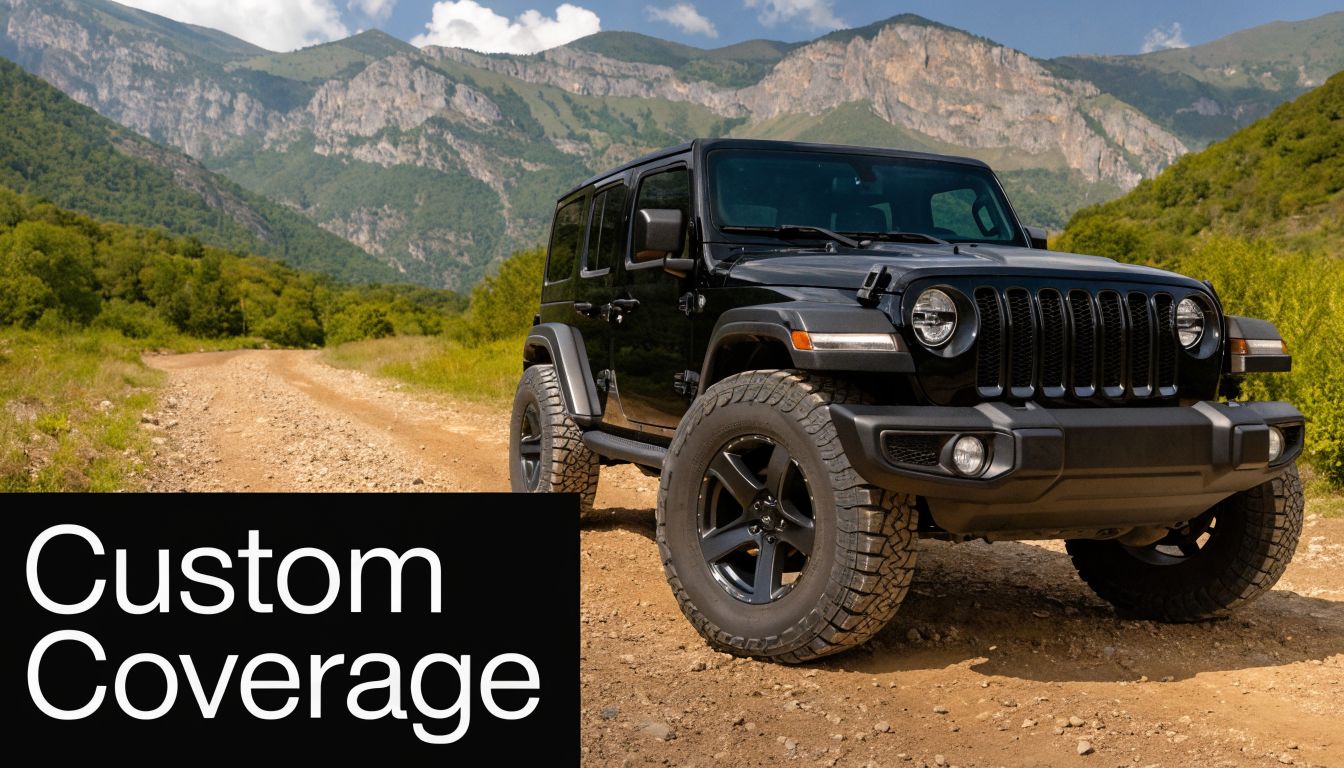
According to a JL Wrangler Forums insurance discussion, Wrangler owners regularly struggle with this issue. The verified data tied to that discussion notes that many standard policies may not cover modifications such as lifts, oversized tires, and winches, and that some estimates suggest mods can increase premiums by 20% to 50% without a specialized endorsement like Custom Parts & Equipment coverage, often shortened to CPE.
Why stock coverage can leave a gap
Think about your Wrangler in layers.
The base vehicle is one layer. Everything you’ve bolted onto it is another. If the insurer only values the factory vehicle, then a claim payment may ignore thousands of dollars in added equipment.
That’s the coverage gap modified owners run into. The Jeep is insured, but the build may not be.
Common upgrades that deserve a conversation with your agent include:
- Lift kits
- Oversized tires and custom wheels
- Winches
- Steel bumpers
- Roof racks and cargo systems
- Off-road lights
- Armor and skid protection
What CPE coverage does
Custom Parts & Equipment coverage is designed to insure aftermarket additions that didn’t come standard from the factory. If your Wrangler has meaningful upgrades, this endorsement is often the cleanest way to align the policy with the vehicle you drive.
Without it, you can end up in a frustrating spot after a claim. The insurer may pay based on stock parts while your actual replacement cost reflects modified parts.
That’s why modified Wrangler owners should ask direct questions, not broad ones.
- Are my listed accessories specifically covered
- Is there a dollar limit for aftermarket parts
- Do I need receipts or photos
- Will the claim pay for equivalent upgraded parts or only stock replacements
Don’t assume your policy “knows” your Jeep is modified just because the insurer has your VIN.
How to document your build
Documentation makes claim handling smoother. It also reduces the chance of arguing over what was on the Jeep before the loss.
A simple file should include:
- Receipts for parts and installation
- Photos from several angles
- A written mod list with approximate values
- Updated records every time you add something major
For heavily customized rigs, some owners also ask about an agreed value approach if available through specialty markets. That can make sense when the Jeep’s actual build value no longer resembles a typical used-vehicle valuation.
Off-road use needs its own conversation
Another point many owners miss is that “modified” and “used off-road” aren’t the same issue. A policy can acknowledge accessories and still leave questions about what happens during off-road use, recovery, or damage on trails.
That’s why you want the conversation in plain language. If you use the Jeep beyond pavement, ask where the policy draws the line. Official trails, off-road parks, and recovery situations may be treated differently by different carriers.
A modified Wrangler isn’t hard to insure. It just needs to be described accurately, line by line, before there’s a claim.
Essential Policy Endorsements for California Drivers
You park your Wrangler outside overnight after a weekend trip to Big Bear. Two days later, a wildfire forces a fast evacuation in your area. A month after that, your Jeep is in a body shop waiting on parts after a theft-related claim in the city. The base policy matters, but these are the moments when endorsements decide whether the claim feels manageable or expensive.
For California Wrangler owners, endorsements work like the recovery gear you keep in the back. You hope you never need them, but the right tool can save a bad day from getting worse. That matters even more here because California risk is not one thing. It can be wildfire exposure in one ZIP code and catalytic-converter or vehicle theft pressure in another.
GAP insurance for newer Wranglers
If you financed a newer Wrangler with a small down payment or a long loan term, ask about GAP early.
Here’s the simple version. Cars usually lose value faster than loan balances shrink in the first part of the loan. If your Jeep is totaled or stolen, your insurance settlement is generally based on the vehicle’s covered value at the time of loss, not the amount you still owe the lender. GAP helps cover that difference.
This endorsement tends to matter most for recently purchased Wranglers, especially when the loan balance stays high for a while. If you already put a lot down or your loan is well into the payoff period, the need may be smaller. A quick loan-to-value review with your agent clears this up fast.
Rental reimbursement
Rental reimbursement is easy to overlook until your Wrangler is in a repair queue for two weeks instead of two days.
California claims can drag out for reasons that have nothing to do with fault. Parts delays, shop backlogs, and surge claims after fire events can all stretch repair time. If your Jeep is your daily driver, this endorsement can keep one covered claim from turning into rideshare bills, missed work time, or a lot of favors from family.
Check the daily limit and the maximum number of days. Those details matter more than the checkbox itself.
Roadside assistance
Roadside assistance sounds straightforward, but Wrangler owners need to read it like a trail map.
A flat tire on the 405 is one situation. A stuck Jeep on a forest access road or in deep sand is another. Many policies handle normal towing and battery service on public roads, but off-road recovery, winching, or extraction can be limited or excluded. If you drive to remote trailheads, ask where the policy stops covering help.
The same caution applies if you often remove doors or tops and carry extra gear. Practical prevention matters here too. Along with investing in robust car security systems, confirm whether your carrier offers any support for lockout service, towing distance, and trip interruption.
Endorsements that deserve a California-specific review
A few add-ons are worth asking about because they fit problems California Jeep owners see more often than generic guides mention.
- OEM parts coverage: Helpful if you want claims settled with original Jeep parts instead of aftermarket replacements when available.
- Full glass coverage or lower glass deductibles: Worth a look for Wranglers because upright windshields are more exposed to rock cracks.
- Transportation expense options beyond basic rental: Useful if a long repair delay would hit your household hard.
- Pet coverage: Some carriers include limited protection if your dog rides along often.
- Personal property limits: Good to review if recovery gear, camping equipment, or removable accessories are regularly inside the Jeep, though coverage often has strict limits.
If you want more examples of California claim scenarios and policy add-ons, the California auto insurance blog is a helpful place to continue your research.
A quick endorsement check
Use the same approach you would on a trail. Match the gear to the terrain.
- New loan, low down payment: Review GAP.
- Daily commuter Wrangler: Price out rental reimbursement.
- Frequent mountain, desert, or remote travel: Read roadside wording carefully.
- Concerned about theft or vandalism in urban areas: Ask about OEM parts, glass options, and claim service details.
- Living in a wildfire-prone area: Focus on how quickly you could replace transportation after a total loss, not just the physical damage coverage itself.
The best endorsement lineup matches how your Wrangler is used in California. A weekend beach cruiser, a built trail rig, and a financed daily driver usually need different backup plans.
Smart Strategies to Lower Your Jeep Wrangler Insurance Cost
A strong policy doesn’t have to mean an uncontrolled premium.
California drivers usually save the most when they combine several smaller moves instead of hunting for one magic discount. That approach works better because Wrangler pricing reflects both the vehicle and the state you insure it in.
One verified California-specific point matters here. ValuePenguin’s Jeep Wrangler insurance review states that California premiums are 30% to 50% higher than national averages due to risks like wildfires, earthquakes, and urban theft. The same verified data says non-collision protection can increase by over $500 per year in high-risk wildfire zones, which is one reason bundling with home or renters insurance can matter.
Bundle where it actually helps
Bundling is often the cleanest savings move because it can work across the policies many California households already need.
Useful combinations can include:
- Auto and home insurance for homeowners who want one review of vehicle and wildfire-related exposure
- Auto and renters insurance for apartment or condo residents who still want multi-policy savings
- Auto and life insurance when a household wants to organize protection more deliberately instead of buying one policy at a time
For California households, this matters beyond price. When someone lives in a fire-prone area, it often helps to review car insurance, home insurance, or renters insurance together so the protection makes sense as a whole. If you want examples of how agencies discuss these combinations, the Mai & Associates insurance blog is one place where California coverage topics are grouped by need.
Change the parts of the quote you control
Not every rating factor is in your hands, but several are.
- Raise the deductible if you can absorb it: A higher deductible often lowers the premium. Just make sure the deductible amount is realistic for your budget.
- Keep the driving record clean: This sounds obvious because it is. Violations and accidents can erase years of careful shopping.
- Choose the trim thoughtfully: A base or older Wrangler may cost less to insure than a newer, more expensive version.
- Review mileage accurately: If the Jeep isn’t your main commuter, make sure the quote reflects that.
Lower theft risk where possible
Wranglers attract attention. Reducing theft exposure can help from both a claims and shopping perspective.
If you’re improving physical protection, a practical side read is this guide on investing in robust car security systems. It’s useful for understanding the kinds of anti-theft measures owners consider when they want to protect accessorized or easily targeted vehicles.
Use a California-specific quote process
The right quote for a Wrangler often depends on details national comparison tools don’t capture well, especially when you add wildfire concerns, bundled policies, or modifications.
That’s where an independent California agency can be useful. Mai & Associates works with multiple carriers and offers same-day quote comparisons for auto, home, renters, and life insurance, which is relevant when you want to compare policy combinations instead of just one isolated auto quote.
The main point is simple. Saving money on insurance on jeep wrangler ownership usually comes from smart structure, not stripped-down protection.
How to Get an Accurate Quote from a California Agency
A fast quote is easy. An accurate quote takes better information.
That matters with Wranglers because small details can change the result. A stock Jeep and a modified one are not the same risk. A vehicle parked in a garage and one left on a city street are not priced the same way. If the first quote feels surprisingly low, there’s a decent chance something important wasn’t included.
What to gather before you ask
Bring these items together before you start comparing carriers:
- Driver’s license information for all household drivers
- The VIN for the Wrangler
- Your current declarations page if you already have insurance
- A list of aftermarket parts and accessories
- Basic use details, such as commute, annual mileage, and where the Jeep is parked
That declarations page helps more than generally realized. It shows your current limits, deductibles, and endorsements so the new quote can be compared on equal terms instead of looking cheaper only because it removes coverage.
What to say clearly
Wrangler owners should be unusually direct about three things:
- Whether the Jeep is financed or owned outright
- Whether it has modifications
- Whether it’s used off-road
Those answers shape the policy. If you skip them, the quote may look cleaner than the actual coverage will be.
For drivers who want a quote without a long back-and-forth, this California insurance quote request page is a practical starting point. It’s easier to get a usable comparison when you already have your documents and modification list ready.
The most expensive insurance mistake is often not overpaying. It’s under-describing the vehicle and finding out during a claim.
A good quote should feel specific to your Jeep, not just to the Wrangler nameplate.
Frequently Asked Questions About Jeep Wrangler Insurance
Wrangler owners usually have a few questions that don’t fit neatly into a standard quote form. These are the ones that come up most often.
Does my personal auto policy cover me on an off-road trail
Sometimes, but don’t assume yes.
A personal auto policy may cover certain losses away from paved roads, but carriers often draw careful lines around where the vehicle was used, what kind of location it was, and what caused the damage. An official trail, private land, and a designated off-road park may not be treated the same way.
The safe move is to ask your carrier how it handles off-road use before the weekend trip, not after. If the Jeep has modifications, ask that question separately because accessory coverage and off-road use are different issues.
Does a soft top change insurance decisions
It can, especially for covering non-collision damage.
Soft tops, removable tops, and removable doors can change how owners think about theft risk and stored items inside the vehicle. Even when the premium difference isn’t dramatic, claim expectations can be. Owners sometimes assume everything taken from or damaged around an open-air setup is handled the same way. It often isn’t.
If you switch between top configurations, ask how your policy treats theft, vandalism, and weather-related losses. That conversation is more useful than guessing based on the Jeep community’s informal advice.
Are there special insurance considerations for the Wrangler 4xe in California
Yes, mainly around value, repair considerations, and how the vehicle is equipped.
Hybrid models may be priced differently than non-hybrid Wranglers depending on the carrier. California drivers should also review whether replacement parts, trim level, and financing status make endorsements like GAP more relevant. If you’re comparing a 4xe with a gas model, make sure the quotes match in liability limits, deductibles, and endorsements before deciding one is cheaper.
If I remove the doors and theft happens, am I covered
Maybe, but this is another area where assumptions cause problems.
Coverage depends on what was stolen, how the loss occurred, and how your policy language treats the vehicle and property associated with it. If the Jeep is routinely driven without doors or with a partially open configuration, tell the insurer. You want the policy built around how the vehicle is used.
What about windshield damage on a Wrangler
That’s worth asking because Wrangler windshields are exposed to trail debris, freeway rocks, and angle-related chip damage more often than many drivers expect. If you want a plain-English look at that topic, this explanation of whether insurance covers windshield replacement is a helpful reference before you file a glass claim.
Can renters or home insurance help a Wrangler owner save money
Often, yes.
Bundling auto with renters insurance or home insurance can improve the overall premium picture, especially in California where households often need to think about wildfire exposure and theft risk at the same time. It also gives you one clearer review of how your vehicle, home, and belongings are protected together.
Where can I find more California insurance answers
If you want broader answers about claims, policy choices, and common coverage questions, this California insurance FAQ page is a useful next stop.
The big takeaway from all of these questions is the same. Wrangler insurance works best when the policy matches the specific vehicle, the specific use, and the specific California risks around it.
If you want help comparing coverage for a stock, financed, or modified Jeep, Mai & Associates offers California quotes for auto, home, renters, and life insurance from multiple carriers, with multilingual support and policy reviews that can help identify coverage gaps before you bind a policy.