How to Switch Insurance Companies in California
If you've been hit with high rates or your life has changed, figuring out how to switch insurance companies is one ofthe smartest financial moves you can make as a Californian. It's really just a three-part process: take a good look at your current policy, shop around for better quotes, and then make a clean switch without letting your coverage lapse. A little bit of effort here can genuinely save you a surprising amount of money each year on your California auto insurance, home insurance, or renters insurance.
Why and When to Switch Your California Insurance
The idea of finding a new insurance provider usually pops up after a specific life event or, more commonly, when you just get tired of overpaying. Here in California, where the cost of everything seems to be climbing, staying on top of your insurance costs is crucial. The good news? You don't have to wait for your renewal date. You can make a change anytime you want.
Usually, the push to switch boils down to a couple of common reasons. Maybe you just opened a renewal notice and the new premium for your California car insurance made your jaw drop. Or perhaps you had to file a claim and the customer service was a nightmare. Both are perfect signals that it's time to see what other companies can offer you.
Key Triggers for an Insurance Review
Big life changes are almost always the best time to take a fresh look at your coverage. These milestones shift your risk profile, which means the policy that fit you like a glove last year might be too expensive or not protective enough today.
It’s definitely time to shop for a new provider if you've recently:
- Bought a new car or home: This is a big one. Your auto and home insurance needs will be completely different.
- Gotten married or had a baby: This is the ideal moment to re-evaluate life insurance and see about bundling your auto and home policies for a multi-policy discount.
- Improved your credit score: A higher credit score can often unlock lower car insurance premiums here in California.
- Moved to a new neighborhood: Your zip code is a huge factor in what you pay for home, renters, and even auto insurance.
Life events aside, your current insurer's performance matters. If you feel like you're not getting straight answers or that a claim is dragging on forever, that’s a red flag. Poor service shouldn't be something you just accept.
Here's a pro tip: Blind loyalty to an insurance company rarely pays off. Some might offer a small loyalty discount, but it often pales in comparison to the savings you can find by getting fresh quotes from the wider California insurance market.
The Financial Benefits of Shopping Around
Let's be honest, the biggest motivation for most people learning how to switch insurance companies is saving money. Even what seems like a small monthly difference adds up fast. For instance, knocking just $40 per month off your car insurance bill means you'll have an extra $480 in your pocket at the end of the year. The same goes for your home, renters, or life insurance.
For more detailed strategies on managing these policies, our collection of helpful insurance guides and resources can provide deeper insights. Taking an active role in managing your California insurance ensures you’re not just covered—you're getting the absolute best value.
To simplify the journey, here’s a quick overview of the key stages involved in making a smooth transition.
Quick Guide to Changing Your California Insurance Policy
This table breaks down the core phases of switching your insurance, giving you a high-level roadmap to follow.
| Phase | Key Action | Primary Goal |
|---|---|---|
| Preparation | Gather current policy documents & info. | Understand your existing coverage and identify needs. |
| Comparison | Obtain and compare multiple quotes. | Find better coverage, service, or a lower price. |
| Execution | Purchase the new policy & cancel the old. | Ensure a seamless transition with no coverage gap. |
Following these phases will help keep the process organized and prevent any costly mistakes, like accidentally going uninsured for a day or paying for two policies at once.
Gathering Your Current Policy Information

Before you can even think about getting quotes, you need to know exactly what you're paying for right now. Trying to shop for new insurance without a clear picture of your current coverage is like going to the grocery store hungry without a list—you’ll end up confused, probably overspend, and might forget something critical.
Your first move is to find the declarations page for each of your policies. This is the "cheat sheet" of your insurance, usually the very first page, that spells out who's covered, what's covered, how much it costs, and when the policy is active.
Unpacking Your Auto Insurance Policy
For your California car insurance, that declarations page is your map. It lays out all the specific numbers you’ll need to get accurate quotes that you can actually compare side-by-side.
Can't find the paper copy? No problem. Just log into your insurance company's website or app. It's almost always available to download as a PDF.
Here’s what to look for on your auto policy:
- Liability Limits: This will look like a series of three numbers, such as 50/100/25. These numbers represent the maximum your policy will pay for bodily injury per person, total bodily injury per accident, and property damage in an accident you cause.
- Collision Deductible: This is the amount you have to pay out of pocket before your insurance starts fixing your own car after an accident. A $500 or $1,000 deductible is pretty standard.
- Comprehensive Deductible: Separate from collision, this covers things like theft, vandalism, or hitting a deer.
- Extra Endorsements: Make a note of any add-ons you have. This could be roadside assistance, rental car reimbursement, or special rideshare coverage if you drive for Uber or Lyft.
If you’re staring at these terms and feeling a little lost, you’re not alone. We’ve put together a straightforward California insurance glossary to help translate the jargon.
Decoding Your Homeowners and Renters Insurance
When it comes to property insurance in California, the details are everything. Our unique market means you have to pay close attention to what you’re covered for.
For homeowners insurance, you need to zero in on these figures:
- Dwelling Coverage (Coverage A): This is the big one—the estimated cost to completely rebuild your house. With construction costs and wildfire risks in California, getting this number right is non-negotiable.
- Personal Property (Coverage C): This covers all your stuff inside the house. It's usually a percentage of your dwelling coverage, often between 50% to 70%.
- Liability Coverage: This protects you if someone gets hurt on your property. Most policies start around $300,000, but many homeowners feel more comfortable with a higher limit.
- Deductible: Your out-of-pocket cost for a claim. This can be a flat dollar amount or, for certain things like wind damage, a percentage of your coverage.
If you have a renters insurance policy, it's a bit simpler but just as important. You’ll be looking for two main things: your personal property coverage limit and your liability amount.
By creating this "insurance snapshot," you're not just collecting data; you're building the benchmark for your entire shopping process. This ensures every quote you receive is an apples-to-apples comparison, preventing you from accidentally reducing crucial protections just to save a few dollars.
Finally, for your life insurance, find the policy's face value (that's the death benefit amount) and identify the policy type—is it term life, which expires, or a permanent policy like whole life? Having all this info ready makes you a smarter, more confident shopper and puts you in control of the entire process.
Finding and Comparing California Insurance Quotes
Alright, you’ve done your homework and have your current policy details in front of you. Now for the most important part of the process: shopping around. This is where you move beyond just looking at the bottom-line price and really dig into what you're getting for your money.
You have a couple of ways to tackle this in California. You can call up captive agents who only represent one company (think State Farm or Allstate). Or, you can work with an independent agency, like us at Mai & Associates, that can pull quotes from a whole bunch of different carriers at once. Honestly, the independent route saves a ton of time and often uncovers better deals on California insurance you wouldn't find on your own.
How to Compare Auto Insurance Quotes
When those car insurance quotes start hitting your inbox, it’s tempting to just look at the monthly payment and pick the lowest one. Don't do it. A cheap policy isn't a good deal if it leaves you holding a massive bill after a wreck.
You need to pull out the details from your current policy and do a true side-by-side comparison.
- Liability Limits: Does the new quote match—or beat—your current bodily injury and property damage limits? Slashing these is an easy way for an insurer to offer a low price, but it's a huge gamble on California's crowded roads.
- Deductibles: Look closely at the collision and comprehensive deductibles. A quote might seem like a steal until you realize it has a $2,000 deductible instead of your current $500. That's a big out-of-pocket hit if you file a claim.
- Uninsured/Underinsured Motorist: This coverage is non-negotiable in a state with so many uninsured drivers. Make sure it's included and the limits are high enough to protect you.
A quick pro-tip: Price isn't everything. Check out the company's reputation. The California Department of Insurance has public data on consumer complaints that shows you exactly how different insurers treat their customers when it matters most.
Unlocking Common California Car Insurance Discounts
California drivers can stack up some serious discounts, but you often have to ask for them. When you're looking at a quote, make sure every single discount you qualify for has been applied.
Be sure to ask about these heavy hitters for California auto insurance:
- Good Driver Discount: This is the big one. California law requires a 20% discount for drivers with a clean record for the past three years.
- Multi-Policy Discount: Bundling your car insurance with a home, renters, or life policy almost always knocks a nice chunk off your total premium.
- Good Student Discount: Have a young driver on your policy who's hitting the books? Good grades can mean a serious price break.
- Safety Features Discount: Airbags, anti-lock brakes, and anti-theft systems in your car can all earn you small but meaningful discounts.
If you want to skip the back-and-forth, we can help. When you get a personalized insurance quote through our agency, we automatically hunt for these discounts to make sure you're seeing the best possible price right from the start.
Comparing Home and Renters Insurance in a Tough Market
For California homeowners, especially anyone in a high wildfire risk zone, comparing quotes is a different ballgame. The price is obviously a factor, but what the policy doesn't cover is just as critical.
When you're reviewing a homeowners insurance quote, your eyes should go straight to the dwelling coverage amount. This number needs to be high enough to completely rebuild your home from scratch at today's inflated construction costs, not just what it's worth on the market.
You also need to understand the California FAIR Plan. If you've been turned down for traditional insurance because of fire risk, the FAIR Plan is your backstop, providing essential fire protection. The catch? It doesn't cover things like liability or theft. You'll have to buy a separate "difference in conditions" policy to plug those gaps. A good agent can piece this puzzle together for you.
With renters insurance, it's a bit more straightforward. You'll want to compare the personal property limits to make sure your stuff is covered, and double-check the liability coverage. Many landlords now require their tenants to carry at least $100,000 in liability.
And for life insurance, the monthly premium is only part of the story. You have to compare the death benefit, the length of the policy (for term life), and any special add-ons or riders. Just remember that any initial quote is just an estimate; the final price is locked in after the medical underwriting is finished.
Making the Switch Without Coverage Gaps
So you've shopped around and found a better deal on your insurance. That's great, but now comes the tricky part: actually making the switch without a hitch. The absolute key to doing this right is timing. Even a single day without coverage, known as a lapse, can create a world of legal and financial headaches—especially since California law requires you to have continuous auto insurance.
It might seem complex, but the process is pretty straightforward when you break it down.
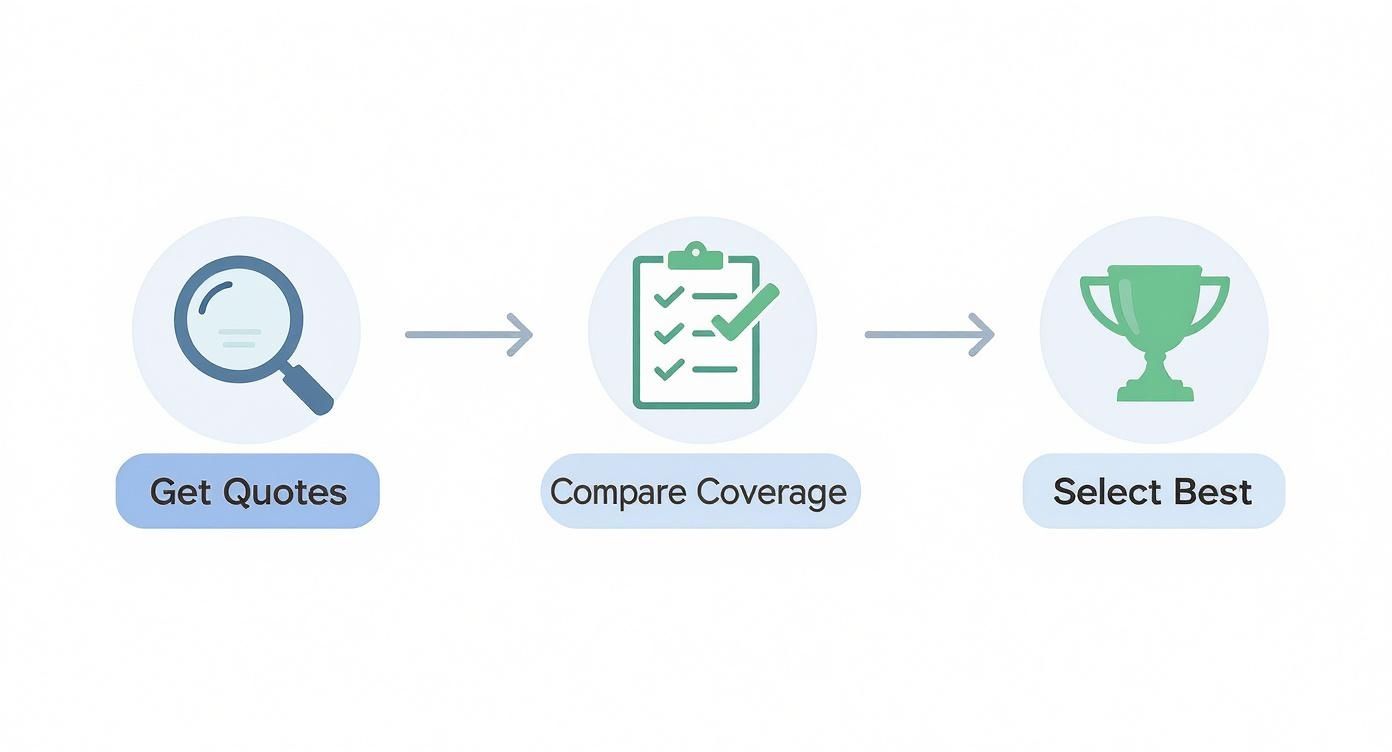
Think of it in three phases: getting the quotes, digging into the details of each one, and then picking the policy that truly fits your needs. It's crucial to follow this order and never, ever jump the gun by canceling your old plan before the new one is locked in.
Secure Your New Policy First
Here’s the golden rule of switching insurance: never cancel your old policy until your new one is officially active. I can't stress this enough. Don't move forward based on just a quote or a verbal promise. You need to have the application fully processed, the first payment made, and the official policy documents—like your new ID cards—in hand.
This simple rule is your safety net. What happens if your final auto insurance rate is higher than the initial quote after the underwriter reviews your driving record? Or if a last-minute problem crops up during a home inspection? By keeping your old policy active, you guarantee you’re never left exposed.
This is even more critical for life insurance. The underwriting process can take weeks and often involves a medical exam. You must wait until you have the final, approved policy. Canceling your old life insurance too soon could be a devastating mistake if you end up being denied the new coverage.
Aligning Your Policy Start and End Dates
With your new policy approved and ready to launch, the next step is to coordinate the dates for a seamless handoff. This is how you avoid any dangerous gaps.
Here’s the best way to line things up:
- Set the start date for your new auto, home, or renters insurance policy.
- Make the effective date the exact same day you plan for your old policy to end. For example, if the old policy cancels on June 15th at 12:01 AM, the new one should kick in at June 15th at 12:01 AM.
- Confirm the dates with both companies. A quick call or email to verify the start and end times ensures there's no overlap or, more importantly, any lapse in protection.
Pro Tip: A lot of people think they have to wait for their current policy's renewal date to switch, but that’s a myth. You can change insurance providers any time you want. Your old insurer is legally obligated to refund any unused premium you’ve already paid.
How to Cancel Your Old Policy and Get a Refund
Once your new coverage is officially in place, you’re clear to break up with your old insurance company. Just stopping payments won't cut it—you have to formally notify them. In most cases, a simple phone call to your agent or the company's customer service line is all it takes.
When you call, be direct. State that you want to cancel and specify the exact date. I always recommend asking for a written confirmation of the cancellation by email. This little document is your proof that you terminated the policy correctly.
After you've canceled, you’re entitled to a prorated refund for any premium you paid for the period after your cancellation date. If you have more questions about refunds or other parts of the switching process, you can find more answers in our detailed California insurance FAQ section. Following this timeline carefully is the best way to protect yourself, your car, and your home from being vulnerable.
Getting Your Ducks in a Row After the Switch
You've done the hard work, compared quotes, and activated your new insurance policy. It feels like you've crossed the finish line, right? Almost. There are a few crucial final steps to make sure your switch is seamless and you don't run into any headaches later on.
Think of it as tying up loose ends. These final notifications are vital in California to keep everyone who has a stake in your coverage—from the DMV to your mortgage lender—in the loop. Skipping these can cause real problems, like your lender thinking your home is uninsured or the DMV flagging your car registration.
New Auto Policy? Here’s What to Do Immediately.
The second your new car insurance policy goes live, you have two things you absolutely must do. These are non-negotiable for driving legally in California.
First, get your new proof-of-insurance card into your car. Whether it’s a paper card they mailed you or a digital one on your phone, you need it handy. If you get pulled over, that little card is the first thing an officer will ask for. Not having it can lead to a hefty fine.
Next, double-check that your new insurer has pinged the California DMV. Insurers are required to electronically report new policies (and cancellations) to the state. This system is what keeps the DMV from thinking you've had a lapse in coverage and suspending your registration. Your insurer is supposed to do this automatically, but it never hurts to check in with them a week after your policy starts just to be sure it went through.
Homeowners: Don't Forget Your Mortgage Lender
If you have a mortgage, this is probably the single most important call you'll make after switching your homeowners insurance. Your loan agreement demands that you keep the property insured, and your lender is listed on your policy for a reason.
You need to tell your mortgage lender about your new policy right away. If they don't hear from you, they might assume the property is uninsured and buy a crazy-expensive "force-placed" policy on your behalf, then bill you for it.
To get them up to speed, send them a copy of your new policy's declarations page. It has all the key details they need:
- Your new insurer's name and contact info
- The new policy number
- Your coverage amounts (especially for the structure itself)
- The effective start and end dates of the policy
This is even more critical if your insurance premiums are paid from an escrow account. The lender needs the new info to send the payments to the right place. Pro tip: your new insurance agent can usually handle this for you. Just give them your mortgage loan number and the lender's contact details, and they'll take care of it.
Notifying Landlords and Others
This isn't just about cars and houses. If you're a renter, you'll need to give your landlord or property manager a copy of your new renters insurance declarations page. Most leases require you to carry liability coverage, so this keeps you in good standing.
And for life insurance, take a moment to review your beneficiary designations and make sure they're still correct. Then, put the new policy documents somewhere safe where your family can easily find them if they ever need to. Taking care of these small but important details is the final piece of the puzzle. You've now officially mastered how to switch insurance, locking in your protection and your peace of mind.
Common Questions About Switching Insurance
Even with a solid game plan, you're bound to have some questions when you're ready to switch insurance companies. This is completely normal. In California, drivers and homeowners often run into the same specific concerns about timing, fees, and who needs to be notified. Let’s walk through the most common questions I hear from clients to make sure you feel confident about every step.
Will Switching Insurance Companies Mid-Term Cost Me Money?
This is easily the number one worry, and I have good news: usually, no. Most insurance companies in California will issue you a prorated refund for the unused portion of your premium. For instance, if you paid for a full six-month auto policy but decide to switch after just three months, you should get a check back for the remaining three months you paid for.
That said, you need to watch out for cancellation fees. Some insurers do charge a small fee, which might be a flat rate like $50 or a small percentage of your remaining premium—often around 10%.
The real question isn't about the fee, but about the math. If you're hit with a small cancellation fee but your new policy is saving you $500 a year, you're still coming out way ahead. The best way to know for sure is to pull out your current policy documents and look for a section on "cancellation," or just give your current agent a quick call.
How Does Switching Car Insurance Affect My California DMV Registration?
This is a big one here in California. The state requires you to maintain continuous liability insurance on any registered vehicle, and they don't mess around. The DMV uses an electronic system to track your insurance status pretty much in real-time.
When you switch your car insurance, here’s the sequence of events:
- Your new insurance company sends an electronic notice to the DMV showing your policy is now active.
- Once you cancel the old policy, that company sends a separate notice to the DMV that coverage has ended.
The timing is everything. As long as your new policy starts on or before the exact day your old one ends, you're golden. But if there’s a gap of even a single day, you can expect an automated notice from the DMV that could lead to a suspended registration. That’s why I always tell my clients: have the new policy completely bought and active before you even think about canceling the old one.
Do I Have to Tell My Mortgage Company I Switched Homeowners Insurance?
Absolutely, and this is a step you can't skip. Your mortgage agreement makes it mandatory to keep homeowners insurance on the property, and your lender is listed on that policy for a reason—they have a massive financial stake in protecting their investment.
As soon as you make the change, you need to send your lender the declarations page of your new policy. This one-page summary has all the critical details: the new insurer, your policy number, and the coverage limits.
This becomes even more critical if you pay your insurance through an escrow account. Notifying your lender ensures they send the payments to the right company. If they don't know you've switched, they might send a payment to the old insurer, causing your new policy to lapse and putting you in violation of your loan terms. A good agent will often handle this notification for you to make sure it's done right.
Can I Switch My Life Insurance Policy Easily?
Switching a life insurance policy is a whole different ballgame. It's a much more sensitive process than just swapping your auto or home insurance. Because your eligibility and premiums are tied directly to your age and health when you first apply, it's not a simple one-for-one exchange.
To get a new policy, you have to go through the full underwriting process all over again, which often includes a medical exam. Your new rates will be based on your current age and health, so it’s very possible a new policy will be more expensive than the one you bought years ago, even for the same death benefit.
The golden rule here is non-negotiable: never, ever cancel your existing life insurance policy until your new one is fully approved, paid for, and officially in force. If you cancel first and then get denied for new coverage because of a new health issue, you could be left with no insurance at all, stripping your family of that vital financial safety net.
Trying to figure out how to switch insurance companies in California doesn’t have to feel like you're going it alone. The licensed agents at Mai & Associates are here to help you navigate all the details, from finding the best car and home insurance rates to ensuring a smooth, seamless transition. We offer same-day quotes, multilingual support, and expert advice that’s specific to California's unique market. Protect what matters most by visiting us at https://cahomeauto.com to get started.