How to Protect Your Home from Wildfires: A California Insurance Guide
Protecting your home from a wildfire isn't about a single magic bullet. It’s about building layers of defense through smart landscaping, strategic home improvements, and a solid insurance plan. Most people think the biggest threat is a giant wall of flames, but the reality is often much smaller and sneakier: wind-driven embers. These tiny firebrands can travel more than a mile, landing on your roof or in your yard long before the main fire ever gets close.
Understanding the Real Threat of Wildfires
When you see wildfire footage on the news, it’s all about the massive flame front. It's dramatic and terrifying. But for most homeowners in California, the more insidious danger comes from those glowing embers carried on the wind. Embers are the number one reason homes catch fire during a wildfire, often igniting small, vulnerable spots far from the primary blaze.
That’s why a complete protection strategy is so critical. You can't just clear some brush and call it a day. It’s about creating multiple layers of resilience that work together, giving your home the best possible odds. This guide will walk you through the practical, actionable steps to build that defense, helping you turn that feeling of anxiety into a sense of control and secure the right California insurance.
A Three-Pronged Approach to Wildfire Safety
A truly effective strategy boils down to three key areas. If you neglect one, you weaken the others.
- Defensible Space: This is all about managing the area around your home—out to 100 feet—by clearing and maintaining vegetation to slow a fire down or stop it completely.
- Home Hardening: Think of this as armor for your house. It involves structural upgrades like installing fire-resistant roofing and fine-mesh screens on vents to keep embers out.
- Financial Protection: This is your safety net. It means having the right insurance coverage that's up-to-date and adequate for your needs. This isn’t just your home insurance; it also means checking your auto insurance for evacuation scenarios and understanding how life insurance protects your family’s future.
Protecting your home is an ongoing process, not a one-time project. Regular maintenance and annual reviews of your home insurance and car insurance are just as crucial as the initial setup.
The Role of Comprehensive Insurance
In a state like California, physical preparations are only half the battle. Navigating the insurance market, especially in high-risk areas, can be incredibly challenging. A strong financial backstop is the final and most crucial layer of your defense. It provides the resources you need to rebuild and recover if the worst-case scenario becomes a reality.
Getting into the details of your policies is non-negotiable. For example, do you know what your renters insurance covers if you're forced to evacuate? Or how bundling different policies might impact your coverage? If you run into unfamiliar terms, a guide that explains insurance terminology can be a lifesaver. Your ultimate goal is to create a complete shield for your property, your finances, and your family with the right California insurance.
Building Your 100-Foot Defensible Space
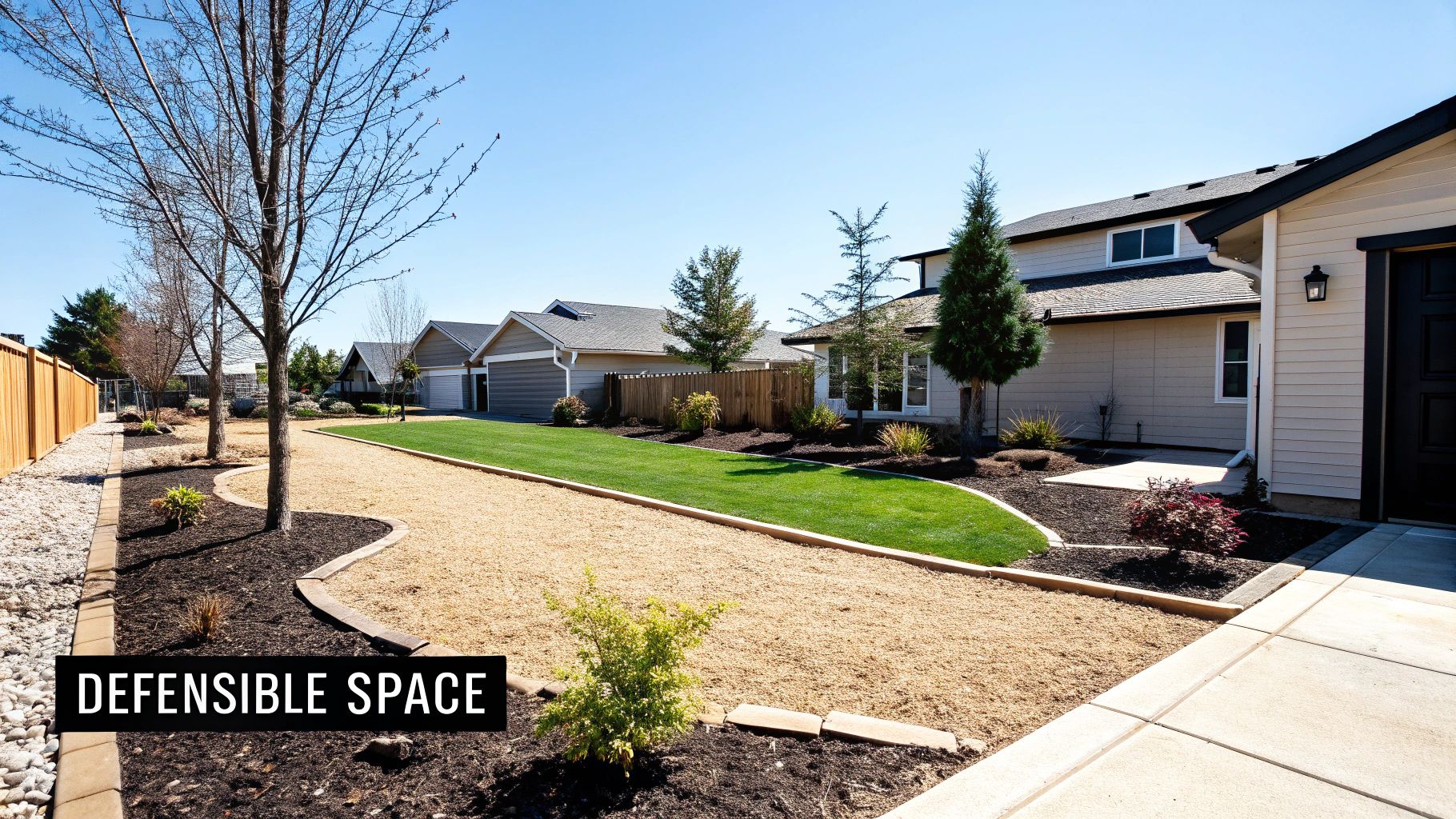
If there’s one thing I’ve learned from years of helping Californians protect their homes, it’s this: creating a defensible space is the single most powerful step you can take against wildfire. This isn't just about clearing a bit of brush. It’s a strategic, zone-by-zone system designed to rob an approaching fire of its fuel.
By carefully managing the 100 feet surrounding your home, you build a buffer that can slow or even stop a ground fire in its tracks. That gives firefighters a real fighting chance to save your property.
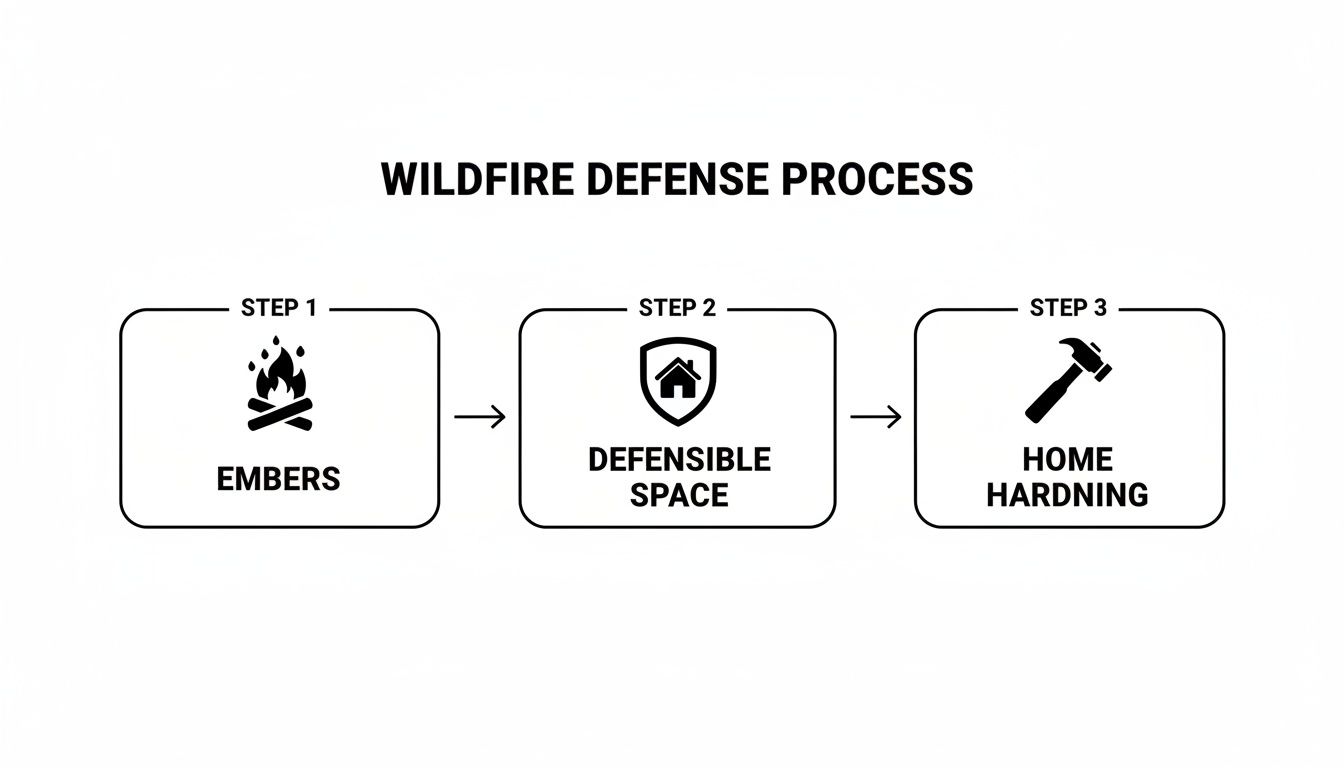
As you can see, it all starts with understanding the threat—embers—and then systematically building out your defense. Let's walk through how to build this space, one zone at a time.
Zone 0: The Ember-Resistant Zone (0-5 Feet)
Think of the first five feet out from your foundation as the most critical ground you have. This is your non-combustible "moat," and it needs to be an ember-free zone. Period. Embers love to pile up against exterior walls, and any fuel here is a direct invitation for them to ignite your home.
Here's how to lock down Zone 0:
- Use hardscaping like gravel, pavers, or concrete right up against the foundation. Get rid of flammable bark or rubber mulches.
- Clear everything. All dead plants, leaves, and pine needles must go. Don’t forget to check under your deck and in those little corners where debris loves to hide.
- No planting against the house. If you have shrubs right up against the siding, it's time to move them or replace them with low-growing, fire-resistant options planted further away.
- Relocate fuel sources. Firewood stacks, propane tanks, and even flammable patio furniture need to be moved at least 30 feet away from your home.
A clean Zone 0 is your last line of defense against embers. A small pile of dry leaves against your siding is all an ember needs to ignite your home.
This zone demands constant vigilance, especially during the dry, windy months. A quick weekly sweep can honestly make all the difference. For more home safety strategies, take a look at our complete collection of California insurance guides, which cover a whole range of protection topics.
Zone 1: The Lean, Clean, and Green Zone (5-30 Feet)
Moving out, Zone 1 is all about creating deliberate fuel breaks. The goal here is simple: interrupt the fire’s path by breaking up continuous vegetation, both on the ground and overhead. Your landscape should be lean, clean, and green.
In this zone, focus on these critical actions:
- Tree Spacing: Make sure there's at least 10 feet of horizontal space between the canopies of trees and large shrubs. This stops a crown fire from jumping from one to the next.
- Eliminate "Ladder Fuels": Prune lower tree branches up 6 to 10 feet from the ground. This gets rid of the "ladder" a ground fire uses to climb into the treetops.
- Keep it Maintained: Mow your grass down to four inches or less. Keep plants and lawns irrigated so they stay healthy, green, and far less flammable.
- Plant Smart: Choose native, drought-tolerant plants that hold more moisture. Steer clear of highly flammable species like juniper, cypress, and certain pines.
A well-maintained Zone 1 is a game-changer. A healthy, irrigated lawn or properly spaced, fire-resistant shrubs can absorb an ember's heat and snuff it out before it has a chance to cause trouble.
Zone 2: The Reduced Fuel Zone (30-100 Feet)
In the final ring of your defensible space, the focus shifts to reducing the overall fuel load. You aren't aiming for bare earth here. The idea is to thin out the vegetation to dial back a fire's intensity and slow its spread as it nears your home.
Here’s your checklist for managing Zone 2 effectively:
- Thin out vegetation. Remove smaller, weaker trees and shrubs to create more space between the remaining ones.
- Clear the ground. Rake up and get rid of fallen leaves, pine needles, twigs, and any dead wood.
- Manage tree density. The canopies of mature trees should not be touching. You want to see the sky between them.
- Mind the slope. If your property is on a hillside, you’ll likely need to extend your defensible space well beyond 100 feet. Fire races uphill, so you need a bigger buffer.
Putting It All Together: Your Seasonal Maintenance Plan
Creating this space isn't a one-and-done project. It requires consistent upkeep. Think of it like any other home maintenance task—it’s just part of owning a home in California.
To make it manageable, I've put together a simple seasonal checklist.
| Task | Zone 0 (0-5 ft) | Zone 1 (5-30 ft) | Zone 2 (30-100 ft) | Frequency |
|---|---|---|---|---|
| Clear Debris | Sweep leaves, needles, and debris from foundation, deck, and roof. | Rake up fallen leaves and needles. | Remove large accumulations of dead wood and leaves. | Weekly (Peak Season) / Monthly (Off-Season) |
| Mow Grass | N/A (should be non-combustible) | Keep grass mowed to 4 inches or less. | Mow annual grasses and weeds before they cure. | As needed |
| Prune Trees/Shrubs | Remove any plants in this zone. | Prune lower tree limbs 6-10 ft from the ground. | Thin dense vegetation and remove dead limbs. | Annually (Late Fall/Winter) |
| Check Irrigation | N/A | Ensure plants are healthy and well-watered. | N/A | Monthly |
| Remove Ladder Fuels | N/A | Clear vegetation under trees. | Remove small trees and brush under larger ones. | Annually |
This checklist gives you a framework to keep your property fire-ready year-round without feeling overwhelmed. Consistent, small efforts are far more effective than a panicked cleanup when a fire is on the horizon.
Hardening Your Home Against Embers
Once you’ve carved out a solid defensible space, it’s time to focus on the house itself. This is what we call home hardening. The real goal here is to make your home tough enough to withstand the primary threat in most wildfires: a blizzard of wind-driven embers.
Think of it this way: defensible space helps slow down an approaching ground fire, but home hardening is what stops your house from igniting from a stray ember that lands on your roof or gets sucked into a vent. It's a critical one-two punch. Homes with multiple hardening upgrades have proven to be dramatically more resilient. This isn’t just about protecting your house; it's an investment that can make it easier to get good home insurance in California.
Start From The Top: Your Roof and Gutters
Your roof is a massive, flat target for falling embers. It's the most vulnerable part of your home, period. If you still have an old wood shake or shingle roof, you're living with a ticking time bomb. The single most important upgrade you can make is switching to a Class A fire-rated roof.
These are your best bets for materials:
- Composition Shingles: The most common choice, offering a great balance of cost and protection.
- Metal: A fantastic option. It's incredibly durable and reflects radiant heat away from your home.
- Clay or Concrete Tile: These are top-tier for fire resistance and will last for decades.
Now, let's talk gutters. They are designed to catch things, and unfortunately, that includes dry leaves, pine needles, and other flammable debris. A clogged gutter is basically a tinderbox waiting for an ember. You have to keep them clean. Installing non-combustible gutter guards is also a smart move to keep that fuel from building up in the first place.
Secure The Vents: A Critical Weak Point
Embers are tiny, sneaky, and relentless. They’ll exploit any opening to get inside your home, and vents for your attic, crawlspace, or foundation are wide-open invitations. Thankfully, this is one of the easiest and most cost-effective home hardening fixes you can do.
The answer is simple: cover every single vent opening with 1/8-inch metal mesh screening. That specific size is the magic number—it’s small enough to block embers but still allows for the airflow your house needs. This is a weekend DIY project that can single-handedly prevent your attic or crawlspace from turning into an oven.
Many California homeowners are surprised to learn that a few dollars spent on metal mesh can provide more protection than thousands spent on other upgrades. It’s the highest return on investment in home hardening.
This small but crucial detail is something an insurance inspector will absolutely look for. It can directly influence your access to comprehensive home insurance and might even help you qualify for car insurance bundling discounts.
Fortify Your Windows and Siding
The sheer radiant heat from a nearby wildfire can cause single-pane windows to shatter, creating a direct path for embers and flames to get inside. The solution is upgrading to dual-paned windows. For maximum protection, make sure the exterior pane is tempered glass, which gives you a powerful thermal barrier against extreme heat.
Your siding is your home's armor. Wood siding is beautiful, but it's also fuel. Swapping it for a fire-resistant material is a game-changer.
Top Fire-Resistant Siding Options
- Fiber Cement: This is a popular choice because it looks just like wood but is made of non-combustible cement, sand, and cellulose fibers. It's incredibly tough.
- Stucco: A classic for a reason. Stucco creates a seamless, durable, and highly fire-resistant barrier.
- Brick or Stone: While they come with a higher price tag, these materials provide the absolute best fire protection you can get.
When you're discussing your assets with an insurance agent for home insurance or even life insurance, being able to show them a list of these upgrades proves you're a low-risk client. That's always a good thing.
Don't Forget The Details: Decks, Fences, and Eaves
Finally, look at the things attached to your house. A wooden deck or a fence butted up against your siding can act like a wick, drawing fire right to your structure.
- Decks: If you can, build with composite or other non-combustible materials. At the very least, keep the space underneath your deck completely free of leaves and debris. You can even box it in with that same 1/8-inch mesh to keep embers from blowing underneath.
- Fences: That last five feet of fencing connected to your house is the most critical. Replace that section with a non-combustible material like a metal gate to create a simple but effective firebreak.
- Eaves: Open eaves are notorious for trapping hot air and embers against the house. Boxing them in with fire-resistant soffit materials closes off yet another sneaky entry point.
Each of these steps adds another layer of defense. Put them all together, and you create a hardened home that stands a much, much better chance of surviving a wildfire. That resilience is what gives you peace of mind and ensures your California insurance policies can function as the true safety net you need.
Your Family's Wildfire Evacuation Plan
Let’s be clear: a hardened home and good defensible space are about protecting your property. But when the evacuation order comes down, the only thing that matters is protecting your family. In those moments, you don't have time to think. You only have time to act.
This is why a practiced evacuation plan is, without a doubt, the most important part of your entire wildfire strategy. It’s what turns the chaos of an emergency into a calm, orderly exit. The difference between a panicked scramble and a safe departure is the work you put in long before you ever smell smoke.
Map Your Way Out—Then Map a Backup
When every second counts, you can't be fumbling with your phone for directions. A wildfire can close your main road in the blink of an eye, so relying on a single escape route is a gamble you can't afford to take. You need options.
Start by identifying at least two separate escape routes from your neighborhood. Your primary route will likely be the one you use every day. Your backup should, ideally, head in a completely different direction. Don't just look at them on a map—drive them. Get in the car with your family, point out landmarks, and make sure everyone, especially any young drivers in the house, can navigate them without help from GPS.
Next, decide on your meeting spots. You'll need a couple of them:
- A neighborhood spot: This is your immediate rally point, just outside the danger zone. Think of a specific landmark, like the big oak tree at the local park or a friend's house a few streets over.
- An out-of-town spot: If the whole town is being evacuated, you need a place to regroup. This could be a relative's house in the next county or a pre-identified hotel.
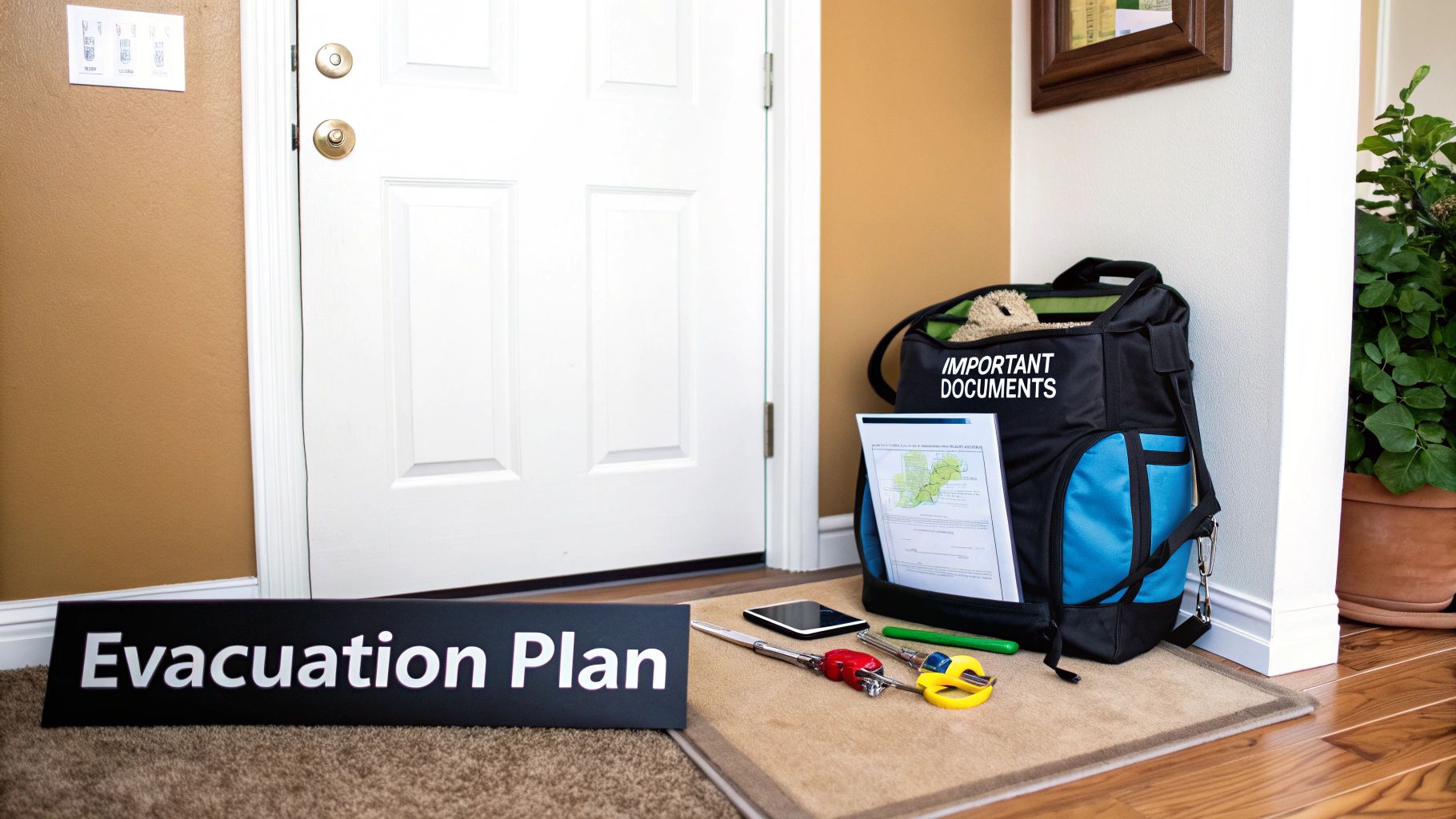
Your "Go Bag": The Lifeline You Grab and Go
A "go bag" is exactly what it sounds like—a kit you can grab without a second thought. Every person in your home should have their own, packed and ready. Keep them somewhere you can get to them in a hurry, like the closet by the front door or in the garage.
Here's a rundown of the absolute essentials for your primary bags:
- Crucial Documents: You'll want copies of birth certificates, passports, social security cards, and property deeds. And this is critical: include your home insurance, auto insurance, and life insurance policies. I always recommend keeping digital copies on a password-protected USB drive as well.
- Money and Cards: Have cash on hand, including small bills. Pack your credit cards and photos of the front and back of each one.
- Health Supplies: This is non-negotiable. Pack at least a week's supply of all prescription medications, a solid first-aid kit, and copies of your prescriptions. Don't forget spare glasses or contacts.
- Stay Connected: A small, battery-powered or hand-crank radio is a must-have. Toss in extra batteries and a few portable phone chargers.
- Personal Comfort: A change of clothes, basic toiletries, and a few N95 masks to protect your lungs from smoke are essential.
Here’s a pro tip from years of experience: keep your insurance agent’s phone number right there with your policy documents in your go bag. When you’re safe, that first call can get the claims process rolling and unlock funds for temporary housing, a benefit often included in good home insurance policies.
Practice Isn't Just a Good Idea—It's Everything
A plan on paper is a good first step, but it’s muscle memory that kicks in during a real emergency. The National Fire Protection Association (NFPA) has data showing that families who actually rehearse their plans get out significantly faster. You should run a full evacuation drill at least twice a year.
Don’t just talk about it. Make it real. Announce the drill, have everyone grab their go bags, get the pets and their supplies loaded into the car, and drive one of your escape routes to your meeting spot. See how long it takes. This is how you find the weak spots in your plan and build the confidence to move calmly when the pressure is on.
This isn't just busywork. The statistics are sobering: evacuees with a practiced plan suffer 70% fewer injuries than those who are caught unprepared. We've all seen the devastating news, like the 2025 wildfire season in Canada where over 7.3 million hectares burned and forced hundreds of thousands from their homes. Preparedness isn't a regional issue; it's a global one that hits very close to home here in California. You can learn more about these global wildfire impacts and preparedness.
Ultimately, your evacuation plan is the final, most critical layer of your wildfire defense. You've done the hard work to protect your home. This is how you protect what’s truly irreplaceable: your family.
Finding the Right Insurance in California's Wildfire Zones
You've done the hard work of hardening your home and creating defensible space. Now it's time for that final layer of protection: your financial safety net. But let's be honest, finding the right home insurance in California these days can be a nightmare. You’ve put in the sweat equity to make your property safer; let’s make sure your finances are just as tough.
The insurance landscape in high-risk areas has become a real challenge. After years of catastrophic losses, many big-name insurance companies have simply pulled out, leaving homeowners with non-renewal notices and a frantic search for affordable coverage. This reality has forced thousands of Californians to turn to the state's last-resort option.
What is The California FAIR Plan?
If you've been turned down by traditional insurers, you’ve probably heard about the California FAIR Plan. It’s critical to understand exactly what it is—and what it isn't. The FAIR Plan is not a standard homeowners policy. Think of it as a basic, foundational fire insurance policy for when you have no other choice.
It primarily covers property damage from fire, lightning, and internal explosions. That’s a decent start, but the list of what it doesn’t cover is what can leave you dangerously exposed.
Here’s what you won't get with a FAIR Plan policy alone:
- Liability Protection: This is a big one. If someone gets hurt on your property, you're on the hook for their medical bills and any legal fees.
- Theft: The FAIR Plan won’t cover your losses if your home is burglarized.
- Water Damage: A burst pipe or a leaky dishwasher can cause thousands in damage, and it's not covered.
- Personal Property: While there's some coverage for your belongings, the limits are usually way too low to replace everything after a total loss.
The biggest mistake I see homeowners make is assuming the FAIR Plan is a complete solution. It's just one piece of the puzzle. Relying on it by itself is a massive financial gamble.
Closing the Gaps with a DIC Policy
So, how do you get the complete protection your family needs? The answer is a second, companion policy called a Difference in Conditions (DIC) policy. A DIC is designed specifically to "wrap around" the FAIR Plan, filling in all those critical gaps we just talked about.
This is where working with a good independent insurance agent becomes invaluable. They can get you set up with the FAIR Plan and then shop around with various carriers to find a DIC policy that adds the liability, theft, and other coverages you need. This two-policy strategy is the new normal for many of us in wildfire country. It lets you build a comprehensive insurance shield, piece by piece. You can get a better handle on finding the right home insurance in California using this approach.
Your Hard Work Can Pay Off Here, Too
Remember all that effort you put into clearing defensible space and hardening your home? That wasn't just for physical protection—it's also your best leverage when it comes to insurance. When you apply for coverage, insurers will want to see proof of your mitigation work.
Document everything. I mean everything. Take "after" photos of your cleared property, keep the receipts for that Class A roof, and make a note of when you installed the 1/8-inch mesh on your vents. This portfolio of work proves to insurers that you're a proactive, lower-risk homeowner. It can make all the difference in getting approved and securing better terms on your California insurance.
Common Wildfire Protection Questions Answered
After talking about defensible space, home hardening, and getting your family ready for an emergency, a few questions always pop up. Let's tackle some of the most common ones I hear from homeowners. Getting these answers straight can help you figure out what to do next and feel more confident in your plan.
Does Creating Defensible Space Lower My Home Insurance Rates?
It absolutely can. While there's no universal rule, proving you’ve taken serious steps to reduce wildfire risk makes your property a much safer bet for an insurance company. When you can show them you have a certified defensible space, documented home hardening upgrades, and a well-maintained property, you look like a responsible partner in protection.
Many California insurance carriers are now offering discounts or are simply more willing to write a policy for a home that's clearly been cared for. A big part of what we do is help you package all this information to highlight your hard work when we're shopping for the most competitive home insurance rates for you.
What Is The California FAIR Plan And Is It Enough Coverage?
Think of the California FAIR Plan as the insurer of last resort. It offers basic fire coverage when you can’t find a policy from a traditional carrier. But let me be clear: on its own, it is not enough.
The FAIR Plan has some major holes. It doesn't cover things like liability claims (if someone gets hurt on your property), theft, or most kinds of water damage. To get the comprehensive protection you actually need, you have to pair it with a supplemental policy called a 'Difference in Conditions' (DIC). Our agents know this landscape inside and out; we specialize in finding the right DIC policy to wrap around your FAIR Plan, closing those dangerous gaps in your home insurance.
How Often Should I Review My Insurance Policies?
You should sit down and review all your insurance policies at least once a year. That means looking at your home insurance, auto insurance, renters insurance, and life insurance. Life moves fast. A big home renovation, a new car, or even just buying some expensive new furniture can quickly leave you underinsured.
An annual check-in makes sure your coverage limits still match your life today. It's also the perfect time to look into bundling your car insurance and home policies to see if you can get better coverage and save some money.
Are There Affordable Ways To Start Home Hardening?
Yes, definitely. Putting on a new roof is a huge expense, but some of the most effective home hardening projects are things you can do yourself on a weekend for not a lot of money. You can make a real difference without a big budget.
Here are a few high-impact, low-cost places to start:
- Install 1/8-inch metal mesh over all your vents—attic, foundation, and crawlspace. This is a pretty straightforward DIY job that's fantastic at blocking wind-blown embers.
- Keep your gutters clean. Dried leaves and pine needles are basically kindling, just waiting for an ember to land.
- Move flammable stuff like firewood piles and propane tanks at least 30 feet away from your house.
These small tasks can make a huge difference in your home’s ability to survive a wildfire. Taking these first steps is a great start, and when you're ready to see how these improvements affect your rates, you can get an insurance quote to find out.
At Mai & Associates, our licensed agents are experts in the unique challenges of California's insurance market. We help you find the right mix of auto, home, renters, and life insurance to build a complete shield for your family and assets. Protect what matters most by visiting us at https://cahomeauto.com.