How to Get Renters Insurance in California
Getting your own renters insurance policy is pretty simple, and it all starts with figuring out what you actually need. The most important thing to get straight from the start is that your landlord's insurance covers the building, not your stuff. This is a critical distinction that makes renters insurance one of the smartest, most affordable ways to protect your finances.
Why Renters Insurance Is a Must-Have in California
There's a dangerous assumption many California renters make: they think their landlord's policy has them covered if something goes wrong. Let me be crystal clear—it absolutely does not. Your landlord’s insurance is there to fix the roof, the walls, and the plumbing. It does nothing for what’s inside your apartment.
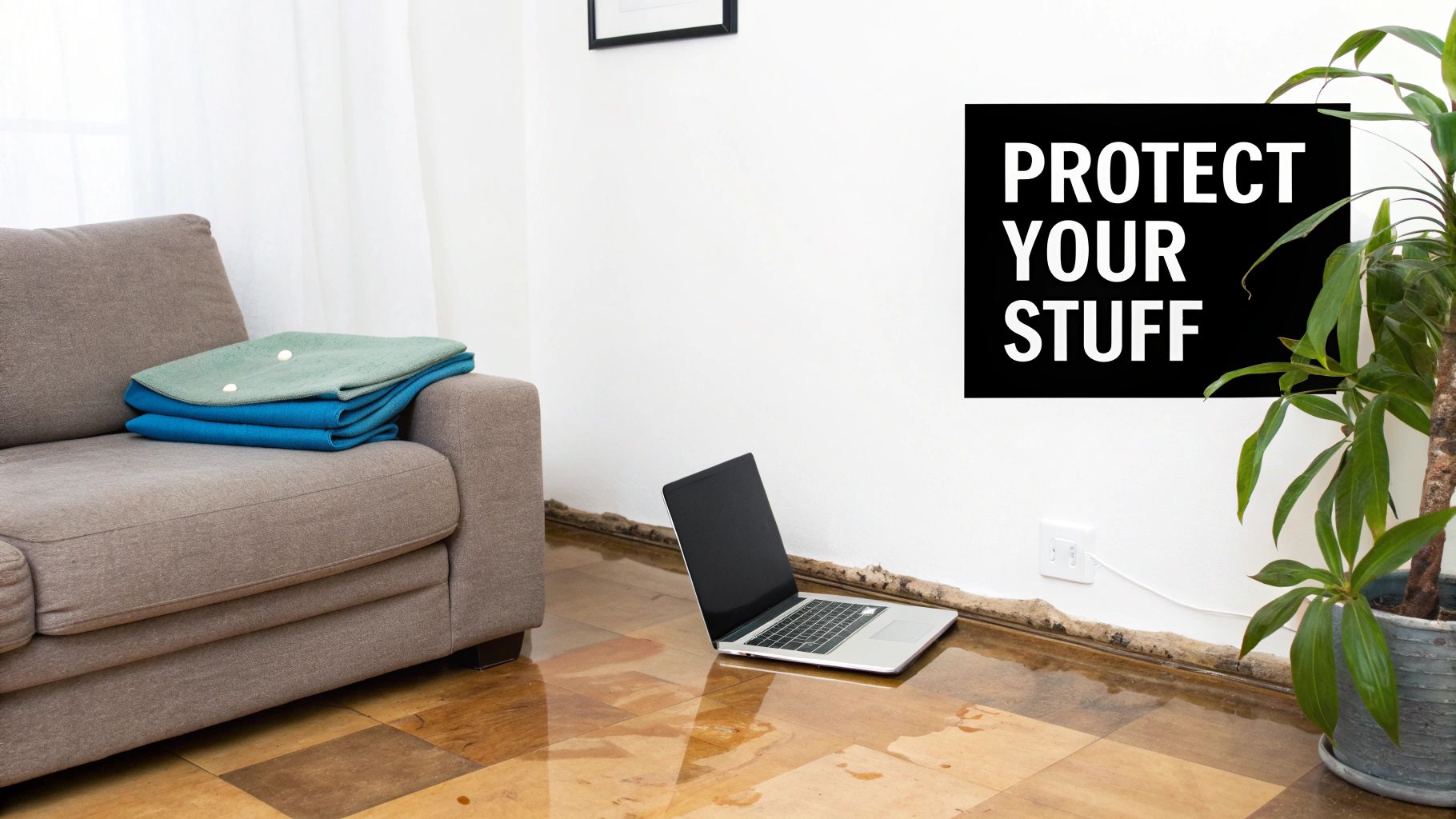
Think about a real-world scenario. A pipe bursts in the apartment above you, flooding your living room and destroying your couch and laptop. Or a small kitchen fire next door leaves all your clothes smelling of smoke and needing replacement. Without renters insurance, the cost to replace everything comes directly out of your pocket.
That’s why you should stop thinking of this as just another monthly bill and start seeing it as a crucial financial shield. For a surprisingly small premium—often less than what you'd spend on a few lattes—you get a powerful safety net. It's shocking how many people skip it. Back in 2014, only 37% of U.S. renters had a policy. While that number is thankfully on the rise, millions of people are still one bad day away from a major financial hit. You can find more insights about the renters insurance market on dataintelo.com.
Core Protections Every Renter Needs
So what are you actually paying for? A good policy is built on three pillars that work in tandem to keep you financially stable.
- Personal Property Coverage: This is the core of your policy. It’s what pays you back if your belongings—your TV, bike, clothes, furniture—are stolen, damaged in a fire, or ruined by a leak. It covers the things that make your apartment a home.
- Personal Liability Protection: This one is huge. What happens if a friend slips and falls in your kitchen? This coverage steps in to handle their medical bills and your legal defense if you're sued. It protects you from a lawsuit that could easily drain your savings.
- Additional Living Expenses (ALE): If a fire or a massive water leak forces you out of your apartment, where do you go? ALE covers the cost of a hotel or temporary rental, plus extra expenses like food and laundry, until your place is livable again.
These three coverages create a comprehensive shield. They work together to ensure that one disaster doesn't completely upend your life and derail your financial goals.
How Much Renters Insurance Do I Actually Need?
Figuring out the right amount of coverage shouldn't be a shot in the dark. It’s all about taking a realistic look at what you own, what you stand to lose, and what kind of risks you face. A little bit of prep work here goes a long way and ensures you don't find yourself underinsured when you need it most.
The best place to start? A home inventory. Don't let that term scare you off; it doesn't have to be some massive, complicated spreadsheet. Honestly, the easiest way is to just pull out your phone and take a video.
Walk through your place, room by room, and narrate what you see. Open your closets, pan across your bookshelves, and point out your big-ticket electronics like your TV and laptop. If you can remember where or when you bought something, say it out loud. This simple video creates a powerful record for a potential claim down the road.
What Are My Belongings Really Worth?
Once you have a handle on what you own, you need to put a dollar value on it. This is a crucial step because it directly impacts your personal property coverage limit.
To help you get started, here's a quick worksheet you can use to tally up the value of your stuff. Don't worry about getting it perfect—a good estimate is all you need.
Sample Home Inventory Worksheet
| Item Category | Item Example | Estimated Replacement Cost |
|---|---|---|
| Electronics | Laptop, TV, speakers, gaming console | $3,500 |
| Furniture | Sofa, bed frame, mattress, coffee table | $4,000 |
| Kitchenware | Pots, pans, small appliances, dishes | $1,500 |
| Clothing | Jackets, professional attire, shoes | $5,000 |
| Jewelry/Art | Rings, watches, prints | $1,000 |
Add it all up, and you’ll have a solid baseline for your personal property coverage limit. It's often more than people think!
Now, the big question: how does the insurance company pay you for that stuff? You have two choices.
- Actual Cash Value (ACV): This pays you for the value of your items at the time of the loss. It's like selling something on Craigslist—it takes depreciation into account. So, that five-year-old laptop isn't valued as new; it's valued as a used, five-year-old laptop.
- Replacement Cost Value (RCV): This is what I recommend for virtually everyone. RCV gives you the money to go out and buy a brand new replacement. If your TV gets stolen, you get enough cash to buy a comparable new model today.
Yes, RCV policies cost a few bucks more each month, but the difference in a payout is massive. It’s the gap between getting back on your feet and struggling to replace everything you lost. For more deep dives, check out our other insurance guides that cover everything from auto to home protection.
Don't Forget Liability and Living Expenses
Renters insurance is about more than just your stuff. Personal liability is a huge piece of the puzzle. This protects you financially if someone gets hurt at your place and decides to sue you. Think about a guest tripping over a rug and breaking their arm—liability coverage can handle their medical bills and your legal defense costs.
We generally recommend starting with at least $100,000 in liability coverage. It sounds like a big number, but medical and legal bills add up shockingly fast. The good news is that increasing your liability limit to $300,000 or even $500,000 is surprisingly cheap—often just a few extra dollars a month for a huge jump in protection.
Finally, there’s Additional Living Expenses (ALE), sometimes called "loss of use." If a fire or major water leak makes your apartment unlivable, ALE covers the costs of staying somewhere else, like a hotel or a short-term rental.
Given how expensive temporary housing is in California, this is a lifesaver. Think about what you'd realistically need for a hotel, meals out, and other basic expenses for a few weeks or a month. That will help you land on an ALE limit that gives you real peace of mind.
How to Compare California Renters Insurance Quotes
Alright, you've done the homework and figured out how much coverage you need. Now comes the part that can feel overwhelming: shopping for the actual policy.
It's tempting to just hunt for the absolute lowest price, but when it comes to insurance, that's rarely the best strategy. The goal is to find the best value—a policy that truly has your back without breaking the bank. You could spend a whole afternoon jumping from one insurance carrier's website to another, but you'll likely end up with a confusing spreadsheet and a headache.
There's a much smarter way. Working with an independent agency like ours lets you see quotes for different types of California insurance from multiple top-rated companies all in one place. We do the legwork for you, ensuring you're comparing apples-to-apples coverage from carriers we trust.
And it’s never been easier to get covered. The days of endless paperwork are long gone. Over 70% of renters now use online tools to find and buy their policies, a huge leap from just 40% in 2018. In fact, you can often go from starting a quote to having an active policy in less than 15 minutes. You can see more on this trend in the full renters insurance market report on researchandmarkets.com.
What to Look for Beyond the Premium
The monthly premium is just one number, and it doesn't tell the whole story. A cheap policy isn't a bargain if it leaves you high and dry when you actually need to file a claim. To make a smart choice, you need to look a little deeper.
The Deductible
This is the amount you have to pay out of your own pocket before your insurance coverage starts paying. A higher deductible usually means a lower monthly premium, which sounds great. But ask yourself: could you comfortably write a check for that amount tomorrow if something happened? If a $1,000 deductible would be a serious financial strain, a policy with a $500 deductible might be worth the slightly higher monthly cost.
Coverage Exclusions
No standard renters policy covers absolutely everything. It’s crucial to read the fine print and understand what isn't covered. For us here in California, you should specifically look for language about regional risks. Damage from earthquakes or wildfires, for example, almost always requires a separate add-on or a completely different policy. Don't assume you're covered.
Carrier Reputation
A low price means nothing if the company is a nightmare to deal with. What's their track record for handling claims? Are they responsive and helpful? A quick search for online reviews can be very revealing. We also have firsthand experience working with these carriers, so we can give you the inside scoop on who is easy to work with and who tends to drag their feet.
Finding the right policy is a balancing act. The sweet spot is a policy with a deductible you can afford, the specific coverage you need, and a carrier known for great service—even if it costs a few extra dollars a month.
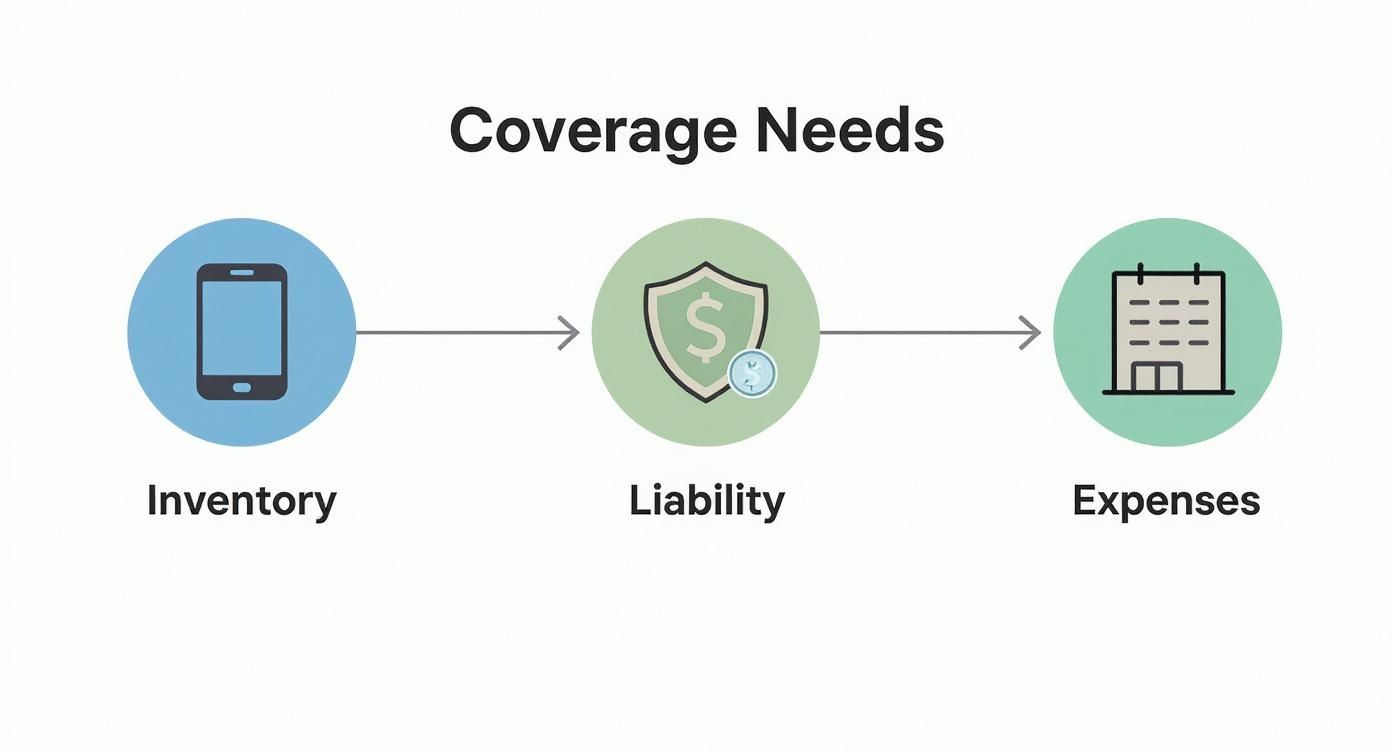
This image really breaks down the three pillars of a solid policy—protecting your stuff, protecting your finances from liability, and covering extra expenses if you're displaced. Seeing them laid out like this helps clarify how everything works together.
Ready to see how the numbers stack up for you? Have your address and that quick inventory list handy, and you can get an instant insurance quote from multiple carriers right now. The whole process is quick, simple, and gives you a clear picture of your best options.
Navigating California-Specific Risks Like Earthquakes and Wildfires
Living in California is fantastic, but it means dealing with a few unique risks that a standard, off-the-shelf renters insurance policy just isn't built for. Your basic policy is great for things like a kitchen fire or a break-in, but it draws a firm line when it comes to major natural disasters. This is where understanding policy add-ons—what we in the industry call endorsements—becomes essential for protecting your stuff and your savings.

It often shocks newcomers to learn that damage from earthquakes is a major exclusion on every single standard renters and home insurance policy in the state. No exceptions. If a quake rocks your apartment building and destroys your belongings, your regular renters policy won't pay a dime unless you've specifically added earthquake coverage.
Understanding Earthquake Coverage
Because earthquake risk is so high here, insurance for it is sold separately. It’s not just a simple checkbox; it's a completely separate endorsement with its own unique rules, especially when it comes to the deductible.
Forget the standard flat-dollar deductible you might be used to (like $500). Earthquake insurance operates on a percentage-based deductible, usually falling somewhere between 10% and 25% of your total personal property coverage limit.
Here’s how that plays out in the real world:
- Let's say you have $40,000 in personal property coverage.
- You opt for an earthquake endorsement with a 15% deductible.
- Your deductible is $6,000 ($40,000 x 0.15).
This means you’d have to cover the first $6,000 in damages yourself before the insurance kicks in. I know, that number can seem high. But this structure is what keeps the coverage affordable while still protecting you from a catastrophic loss that could completely wipe you out financially.
The Growing Threat of Wildfires and Floods
Wildfire danger is now a harsh reality for millions of us in California. If your rental is anywhere near a designated high-risk fire zone, it’s going to affect both your ability to get a policy and what you pay for it. Insurers have become much more cautious about who they’ll cover in these areas.
Your zip code is one of the biggest factors determining your premium. Insurance companies use sophisticated mapping to pinpoint wildfire risk, and living in a high-threat area will mean higher rates. This really highlights the value of working with an independent agent who knows which carriers are still writing policies in your specific neighborhood.
It’s also critical to know that flood damage is another standard exclusion. This isn't just for hurricanes; it applies to overflowing rivers and severe storm runoff, too. For flood protection, you need a separate policy, usually from the National Flood Insurance Program (NFIP) or a private flood insurer. Just as homeowners need specialized policies for these risks, renters must also be proactive to get this crucial layer of protection. For anyone thinking about broader property coverage, it's helpful to understand the details of home insurance in California to see how these risks are managed across the board.
Being aware of these common exclusions is the first step to building the right renters policy in California. You have to be realistic about your personal risk based on where you live and be ready to ask specific questions about adding these vital coverages.
Finding Discounts to Lower Your Insurance Premium
You've got a quote that fits your coverage needs, which is a great start. But let's be honest, everyone wants to pay less. The good news is, there are plenty of ways to trim that premium without cutting your protection.
Insurance companies have a whole menu of discounts available, but they don't always put them on a silver platter. You often have to know what to ask for. A few simple questions can knock a surprising amount off your final price.
The Easiest Way to Save: The Multi-Policy Bundle
If you're looking for the single biggest discount, this is it. Insurers reward loyalty, and the easiest way to show it is by bundling your policies.
Combine your renters insurance with your auto insurance policy, and you can almost always count on a hefty discount—often between 5% and 15% on both policies. It’s the first thing I ask clients about because it’s a no-brainer for anyone who drives. Why pay two separate companies when you can pay one less?
Digging for More Discounts
Beyond the bundle, there are other common discounts that can chip away at your premium. Think of it from the insurer's perspective: anything you do to lower your risk makes you a more attractive customer, and they'll often reward you for it.
See if any of these apply to your situation:
- Safety & Security Devices: Got a smoke detector? A fire extinguisher? How about a burglar alarm or a deadbolt on your door? These are small things, but they make a real difference in preventing theft and fire, and insurers will often give you a small price break for having them.
- Claims-Free History: If you haven't filed a claim in the last three to five years, you've proven yourself to be a lower-risk tenant. Insurers love that, and they'll often reward your track record with a nice discount.
- Good Credit Score: In California, your credit history can play a role in your insurance rates. A solid credit-based insurance score tells the company you're financially responsible, which often translates to a lower premium on your renters, home, and even life insurance policies.
- Autopay & Paperless Billing: This one’s simple. When you sign up for automatic payments and agree to get your documents electronically, you save the insurance company money on postage and processing. They happily pass a small piece of those savings back to you.
Each of these discounts is a direct reflection of your risk profile. An apartment with a security system is less likely to be robbed, so the insurer's risk goes down, and so does your premium. It’s a win-win.
Never hesitate to ask your agent to walk you through every single discount you might be eligible for. A great agent will do this automatically, but it never hurts to check. A five-minute conversation could easily save you a hundred dollars or more over the year.
Bringing It All Home: Finalizing Your Policy
Alright, you’ve done the hard work. You've compared quotes, picked the perfect policy, and now you’re at the finish line. This last part is all about locking in that protection and making sure there are no loose ends. It’s quick, but it's important to get it right.
Before you hit that "buy" button, take one final look at the policy documents. It's a simple but crucial step. Make sure the numbers for your personal property limit, liability coverage, and your deductible all match what you selected. This is also your chance to confirm the policy’s effective date—the exact day your coverage kicks in.
Your Final Policy Checklist
Once you've given everything a final once-over, the rest is pretty simple. You'll need to sort out your payment, which most insurers let you handle either monthly or all at once. Pro tip: paying the full year upfront often shaves a little off the total cost.
Here’s a quick rundown to get everything squared away:
- Sign and Pay: You'll likely need to e-sign a few documents and make your first payment. This is what officially activates the policy.
- Show Your Landlord: Nearly every landlord in California will ask for proof of insurance. Your new provider will give you a "declarations page" – just forward that PDF to your landlord or property manager, and you're all set.
- Keep Your Docs Safe: Save a digital copy of your policy to a cloud service like Google Drive or Dropbox. If you ever need to file a claim, especially if you can't get back into your apartment, having your policy number and agent's contact info handy is a lifesaver.
There's a real sense of relief that comes with knowing you're covered. This small investment acts as a huge safety net, protecting everything from your laptop to your financial stability. It's the same kind of peace of mind that comes with having solid home insurance or life insurance in place.
With your landlord in the loop and your documents safely stored, you are officially covered. You’ve successfully put a shield around your stuff and your savings, so you can relax and enjoy your California rental, knowing you’re prepared for whatever comes your way.
Your California Renters Insurance Questions Answered
Once you get the hang of what renters insurance is, a few practical questions almost always come up. We hear these all the time from Californians trying to nail down the right policy. Let's clear up some of that lingering confusion with straightforward answers.
Does My Landlord’s Policy Cover Me?
Absolutely not. If you remember only one thing, let it be this.
Your landlord's home insurance policy protects the building—the roof, the walls, the physical structure. It does zero for your personal belongings inside. If a fire destroys your laptop or a burst pipe ruins your furniture, you're on your own without a renters policy. Their insurance is for their investment, not your life.
What Does Renters Insurance Cost in California?
It's surprisingly cheap. Most people are shocked when they see the actual numbers.
The average for renters insurance across California floats somewhere between $15 and $30 per month. That works out to about $180 to $360 a year. Sure, you might pay a little more in a dense city like Los Angeles or San Francisco, but the cost is a tiny fraction of what it would take to replace everything you own.
Pro Tip: The fastest way to shrink that already low price is to bundle. If you have car insurance, combining it with your renters policy will almost always trigger a multi-policy discount. You end up saving on both.
What if I Have to File a Claim?
First things first: do what you can to prevent any more damage, and then immediately notify your landlord.
From there, document everything. Pull out your phone and take pictures and videos of the damage. This is where that home inventory you created becomes a lifesaver. Once you’re safe, call your insurance agent to get the ball rolling. They'll walk you through the process and connect you with a claims adjuster who will help you itemize your losses.
Have more questions? We’ve answered dozens more on our full California insurance FAQ page.
Can Roommates Share One Policy?
Technically, some carriers allow it, but we always advise against it. It’s a recipe for headaches.
Imagine one roommate files a claim. That claim now goes on the insurance history for everyone listed on the policy, which could drive up rates for you all down the road. Plus, trying to prove who owned which specific TV or couch after a disaster can get messy and complicated.
The cleanest, smartest solution is for each roommate to get their own individual policy. It keeps your coverage and your financial future separate and secure.
Ready to put a shield around your belongings and your peace of mind? The team at Mai & Associates makes it simple to compare quotes from the best carriers in the state. Find the perfect renters, auto, or life insurance to fit your needs. Protect your California lifestyle today.