How to Compare Insurance Rates: A California Guide
You open the renewal notice, scan down to the premium, and feel that familiar jolt. Maybe it's your auto insurance. Maybe it's your homeowners policy. Maybe it's renters insurance on an apartment you haven't changed a thing about. The first reaction is usually the same. Find something cheaper, fast.
That reaction makes sense, but it's also where people make expensive mistakes. The best value in California insurance usually doesn't come from the lowest number on the page. It comes from comparing policies that are built the same way, then choosing the one that gives you the protection you want at a fair price.
Your Guide to Smart Insurance Shopping
A lot of Californians shop for insurance in a rush. Renewal goes up. Mortgage company wants proof of coverage. A dealer asks for updated car insurance. A landlord needs a renters policy before move-in. Life gets busy, and insurance shopping turns into a speed exercise.
That's when quote comparisons go sideways.
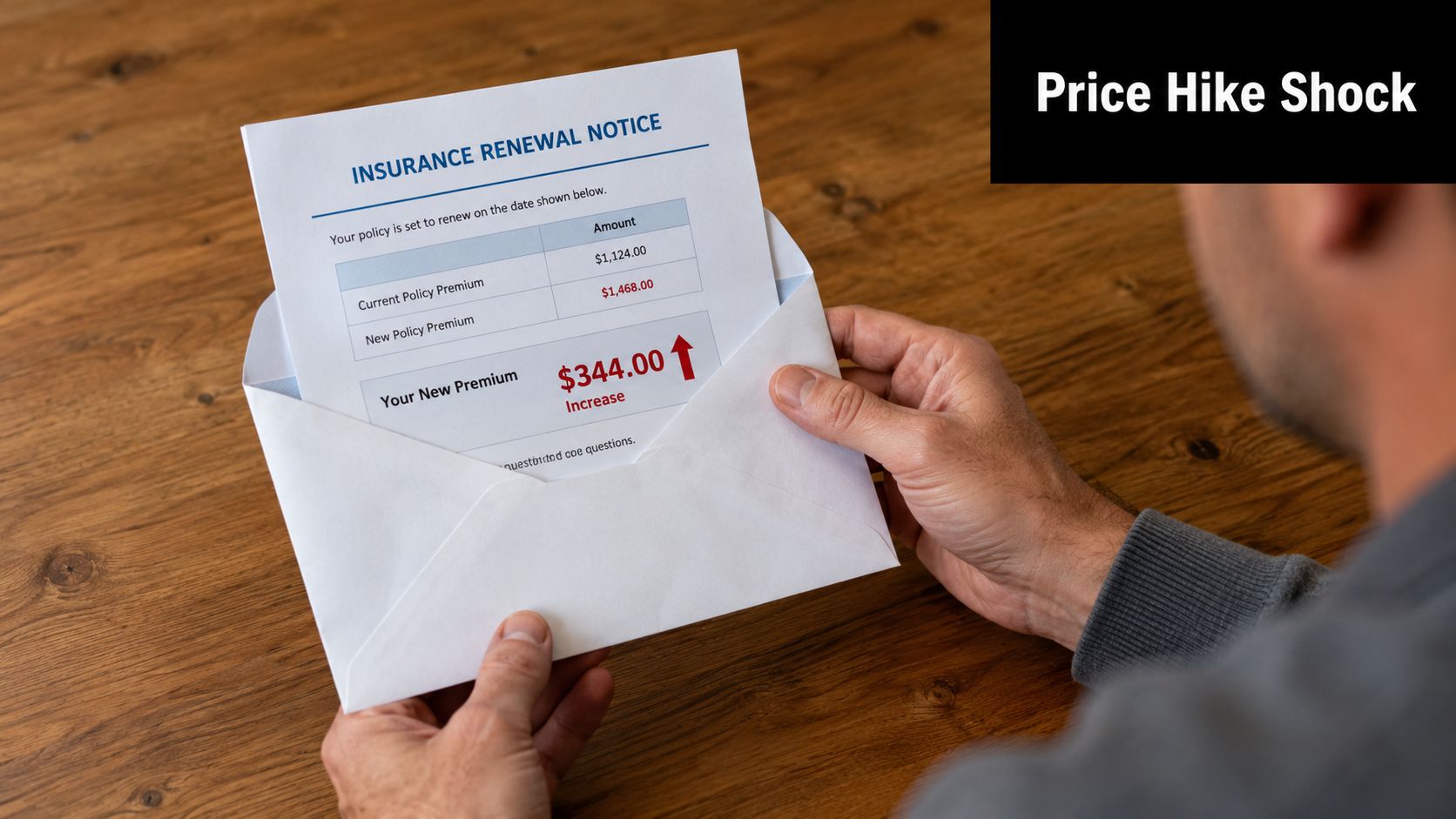
The common assumption is that one is comparing price. In reality, one is often comparing different deductibles, different liability limits, different optional coverages, and different assumptions about the drivers or property. A lower premium can look great until a claim reveals that one quote stripped out protection you expected to have.
Value beats a teaser premium
If you're trying to learn how to compare insurance rates the right way, start with one rule. Price only matters after coverage matches. That applies to car insurance, home insurance, renters insurance, and life insurance.
For California drivers, that might mean checking whether uninsured motorist coverage, rental reimbursement, or collision deductibles line up. For homeowners, it means looking beyond the premium and reviewing the structure of the policy itself. For renters, it means checking whether personal property limits and liability protection fit your actual situation. For life insurance, the same principle applies in a different form. You need to compare policy type, term length, and underwriting assumptions, not just the monthly cost.
A cheap policy that doesn't respond the way you expect at claim time isn't a bargain. It's delayed bad news.
This guide is built for shoppers who want a cleaner process. Gather the right documents. Choose the right quoting channel. Normalize every quote. Check for California-specific gaps. Then move forward with confidence, instead of guessing.
If you want more California-focused consumer resources before you start, browse the Mai & Associates insurance guides.
Prep Work Before You Request Quotes
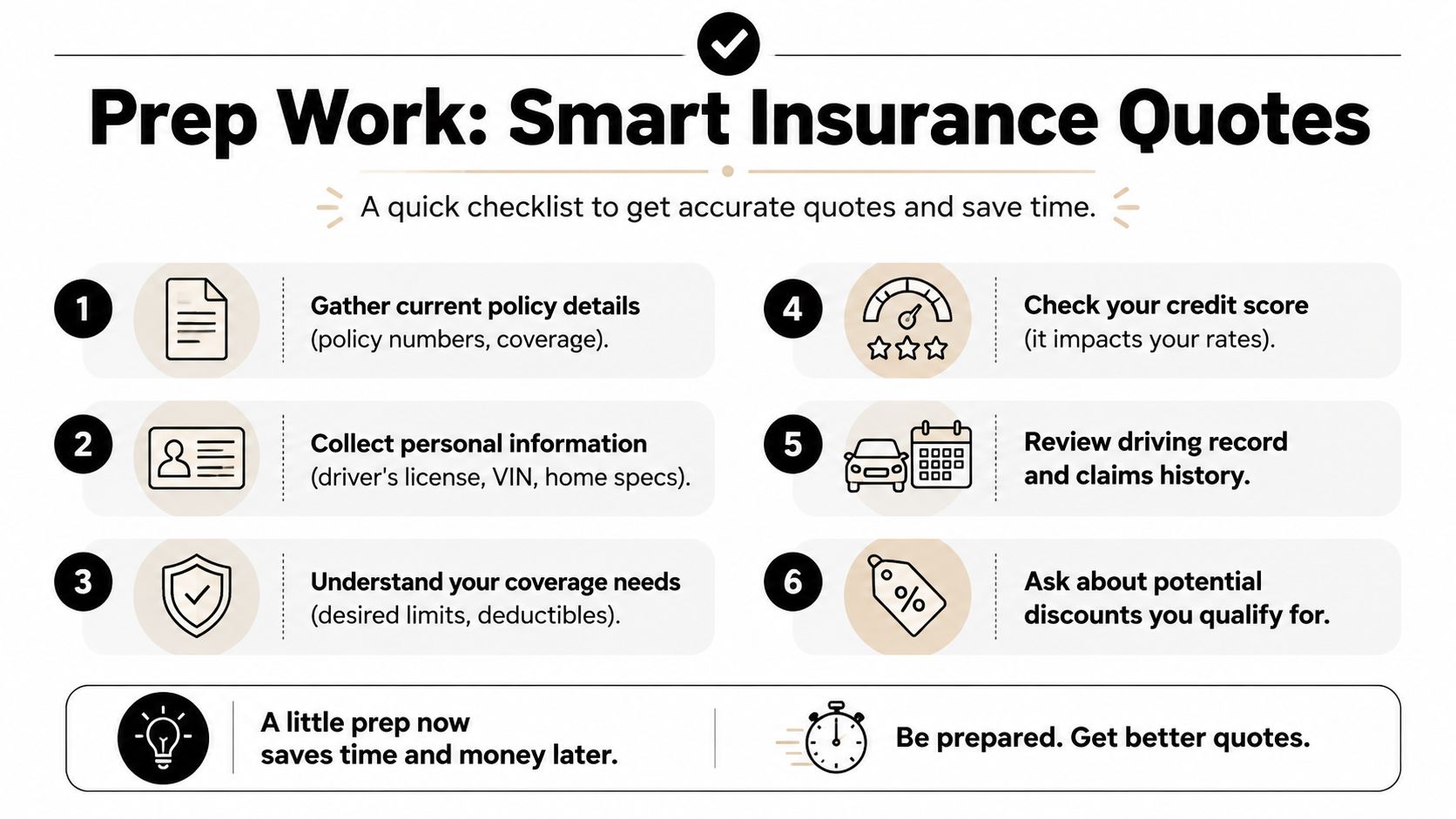
Bad comparisons usually start before the first quote is ever requested. If the information going into each quote isn't consistent, the prices coming back won't be consistent either.
Travelers puts it plainly. Use a like-for-like methodology by gathering the same driver, vehicle, and loss-history inputs for every carrier, then requesting identical coverage types, limits, and deductibles. Travelers also notes that insurers can require up to five years of accident and violation history, and that even small input differences can materially change the quote. That's why your current declarations page is the best control document for side-by-side comparison, as explained in Travelers' guidance on comparing car insurance quotes.
Start with your declarations pages
Your declarations page, often called the dec page, is the fastest way to get organized. It shows what you have now, including limits, deductibles, named insureds, listed vehicles, and endorsements.
If you only gather one document before shopping, make it this one.
For many people, the current policy packet answers questions they would otherwise guess at. Guessing causes mismatched quotes. Mismatched quotes waste time.
What to gather for each policy type
Use this checklist before requesting California insurance quotes:
- Auto insurance. Driver's license information for all household drivers, vehicle identification numbers, garaging address, annual mileage estimate, and your recent accident or violation history.
- Home insurance. Property address, year built if known, square footage, roof details if available, recent updates, and your current declarations page.
- Renters insurance. Address, move-in details, estimated value of personal property, and any high-value items that may need special attention.
- Life insurance. Basic personal details, desired coverage amount, preferred term structure, and any existing life insurance you already own.
Decide your target structure before quoting
Don't ask each carrier, “What would you recommend?” until you've built a baseline comparison. Start by deciding what you want quoted. That doesn't mean you can't adjust later. It means every quote needs the same starting frame.
A practical prep list looks like this:
- Match named insureds and drivers. If one quote includes a household driver and another leaves that person out, you're not comparing the same risk.
- Match addresses and usage details. The same car, same house, same apartment, same occupancy facts.
- Match deductibles and coverage limits. Oftentimes, many “cheap” quotes are really just thinner quotes.
- List discounts separately. Good student, bundle, multi-car, protective device, and similar items should be visible, not buried.
- Keep one master worksheet. One page, same facts, same order.
Practical rule: Don't start shopping from memory. Start from documents.
If you want a clean place to begin, request a California insurance quote review only after you've assembled your core policy details.
Choosing Your Comparison Channels
Once your information is organized, the next decision is where to shop. That choice affects speed, privacy, and how much cleanup you'll have to do afterward.
There are three common paths. Go direct to insurance carriers. Use an online comparison platform. Work through an independent agent. Each has trade-offs, and the right choice depends on how simple or complicated your situation is.
Going direct to carriers
Buying direct gives you control. You can visit a carrier's site, enter your own information, and see how that company prices your risk.
That approach works well if your needs are simple and you already know exactly what coverage structure you want. The downside is repetition. You'll re-enter the same information again and again, then still need to normalize the quotes yourself.
Using online comparison sites
Comparison platforms are fast, and that's why they're popular. Some shoppers like entering their information one time and getting multiple quote options back.
Privacy is the main concern. A consumer education segment on comparison sites advises shoppers to check whether a site is licensed in California, read privacy terms for words like “sell” and “share,” and expect follow-up communications from insurers and marketers. It also notes that the practical question isn't just which insurer is cheapest, but which workflow gives you the best price with the least data exposure. That same segment notes that Insurify says its June 2026 service compares quotes from 120+ insurers and includes an AI-powered policy-upload tool, while Experian says it can compare rates from 30+ insurers and continue monitoring for better rates over time, as discussed in this .
That convenience can be useful. It can also mean your contact details travel farther than you expected.
Working with an independent agent
An independent agent sits in the middle in a good way. You still compare options, but you don't have to submit your information across a wide range of consumer sites to do it.
This route is often the most practical choice when your situation has moving parts, such as:
- Wildfire-area homes. Coverage availability may be tighter, and policy structure matters more.
- FAIR Plan households. You may need to coordinate a companion policy to round out protection.
- Multi-policy shoppers. Auto, home, renters, umbrella, or life often fit better when someone reviews them together.
- Households with unusual details. Teen drivers, higher-value vehicles, vacant-property questions, landlord requirements, and other wrinkles can make direct quotes less reliable.
The fastest quote path isn't always the cleanest path. Sometimes the better result comes from fewer submissions and better review.
How to Normalize Quotes for a True Comparison
This is the step often skipped, and it's the reason they end up choosing the wrong policy for the wrong reason.
Progressive and GEICO both warn shoppers to compare the same coverage options and deductibles, because a lower quote can reflect missing protection or a higher deductible. The key takeaway is straightforward. The cheapest quote can become the most expensive outcome after a claim if coverages don't match, as outlined in Progressive's car insurance comparison guidance.
Build a side-by-side worksheet
You don't need special software. A spreadsheet works. A legal pad works. What matters is lining up the same policy features across every quote.
Here's a simple format for auto insurance:
| Coverage Feature | Quote 1 (Carrier A) | Quote 2 (Carrier B) | Quote 3 (Your Agent) |
|---|---|---|---|
| Bodily injury liability | |||
| Property damage liability | |||
| Uninsured motorist | |||
| Collision deductible | |||
| Comprehensive deductible | |||
| Rental reimbursement | |||
| Roadside assistance | |||
| Medical payments or similar optional coverage | |||
| Discounts applied | |||
| Total premium |
The table does something your eye won't do well on its own. It separates price differences caused by insurer pricing from price differences caused by policy design.
What to match for auto insurance
For California car insurance, I'd review these items before caring about the premium:
- Liability limits. If one quote reduces liability, it may look cheaper for the wrong reason.
- Deductibles. Collision and non-collision deductibles can swing the price and your out-of-pocket cost after a loss.
- Uninsured motorist coverage. This is easy to overlook and important to compare.
- Vehicle list and driver list. Every quote needs the same cars and the same household drivers.
- Usage assumptions. Commute, pleasure use, annual mileage, and garaging all need to be aligned.
A quote that saves money because it includes an unstated change to one of those items isn't really saving money. It's shifting risk back onto you.
What to match for home and renters insurance
Home insurance comparisons need the same discipline, but the worksheet changes.
Look across the quotes and compare these features side by side:
- Dwelling coverage for homeowners
- Personal property limits
- Liability coverage
- Deductible structure
- Named perils, exclusions, and endorsements
- Loss of use or additional living expense coverage
For renters insurance, the dwelling line usually drops out, but personal property, liability, deductible, and optional endorsements still matter. If one renters quote is cheaper because it has thin personal property protection, that lower premium may not help much after a theft or fire loss.
Don't skip life insurance normalization
Life insurance shoppers make a similar mistake. They compare monthly premiums across policies that aren't built the same way.
To normalize life insurance quotes, compare policy type, term length, underwriting class, riders, and conversion features. If you want a separate resource to simplify your life insurance comparison, that guide is useful because it keeps the focus on matching policy structure before judging cost.
A fair comparison asks, “If I have a claim tomorrow, are these policies designed to respond in the same way?”
Use a glossary when wording gets slippery
Insurance language can hide important differences. “Actual cash value,” “replacement cost,” “special limits,” “endorsement,” and “exclusion” all affect what you're buying.
If a quote includes a term you don't fully understand, stop and define it before moving on. A plain-language insurance glossary for California shoppers can save you from comparing labels instead of protection.
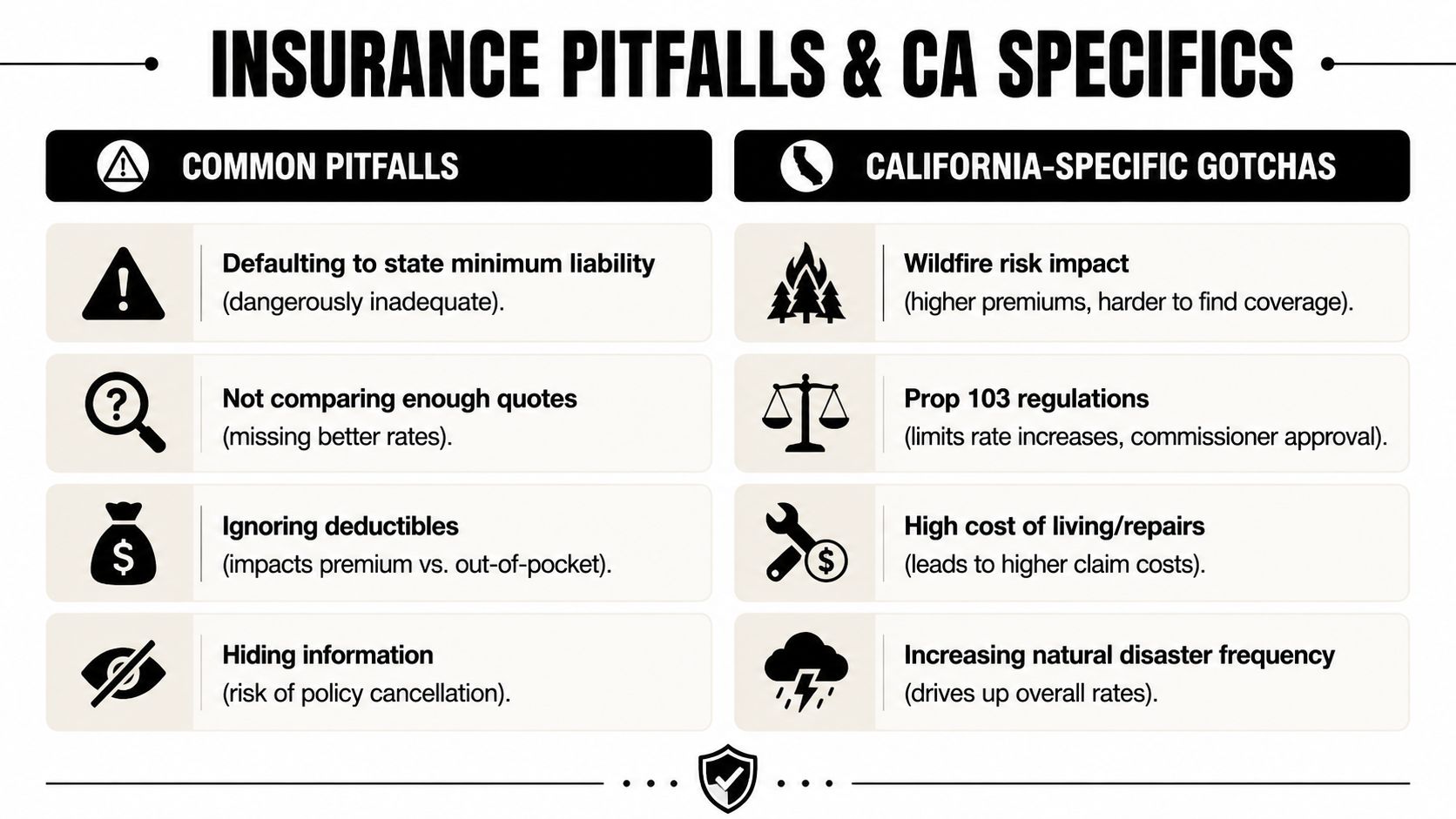
Common Pitfalls and California-Specific Gotchas
Insurance shopping gets expensive when people rely on assumptions. California adds a few extra traps because property risk, carrier appetite, and policy availability can vary a lot by location.
The biggest mistake is treating every line item as optional just because lowering it makes the premium smaller. It's common with auto insurance, especially when someone is staring at a renewal increase and wants immediate relief.
Common comparison mistakes
These issues show up again and again:
- Choosing by premium alone. A low number grabs attention, but it may come from thinner liability limits, fewer optional coverages, or a deductible you'd hate to pay.
- Ignoring exclusions. Homeowners often assume flood, earthquake, or other hazards are built into a standard policy when they may require separate planning.
- Failing to disclose details. If a household driver, business use, property condition issue, or prior claim matters, leaving it out can create larger problems later.
- Forgetting discount review. Bundling, telematics, protective devices, payment choices, and household details can all change the effective net cost.
For drivers, the temptation to default to bare-minimum thinking is especially risky. Liability coverage should be chosen with real-world accident exposure in mind, not just the smallest amount that gets a policy issued.
California issues that deserve extra attention
California homeowners and renters need to think beyond a standard quote screen. Wildfire exposure can affect availability. Some homes need layered solutions. Some households need a FAIR Plan review plus separate companion coverage for broader protection.
Earthquake and flood also deserve their own conversation. A standard home policy isn't a catch-all. If the property has a specific exposure, you need to ask about it directly.
For auto insurance, location still matters, but so does the practical reality of driving in California. Dense traffic, expensive repairs, and severe injury potential make underinsuring a dangerous shortcut. If you're reviewing your current policy, a focused California auto insurance guide can help you spot weak points before you shop.
One overlooked issue for homeowners
People often hire contractors after a loss or while preparing a property for insurance eligibility. That's where another form of comparison matters. If you're checking vendors, HomeProBadge's guide on contractor coverage offers a practical explanation of what “bonded” and “insured” mean.
Read the exclusions with the same care you give the premium. The premium tells you what you pay. The exclusions tell you what you're not buying.
Securing Your Best Policy and Moving Forward
Once you've compared quotes the right way, the last step is procedural. Pick the policy that gives you the strongest fit for coverage, deductible, and price. Then complete the application carefully.
Check every named insured, vehicle, address, and coverage line before signing. Make the first payment on time, and wait for confirmation that the new policy is active. For home and renters coverage, keep your proof of insurance handy if a mortgage company, landlord, or property manager needs it. For auto insurance, confirm you have the ID cards or digital proof you need before the old policy comes off the books.
A simple closing checklist helps:
- Confirm activation first. Never cancel the old policy before the new one is in force.
- Request written cancellation confirmation. If you're replacing an existing policy, get documentation from the old carrier.
- Ask about any refund. If you paid in advance, you may be owed a prorated return.
- Save the final documents. Keep declarations pages, ID cards, and application copies in one folder.
- Schedule a review before renewal. Insurance works better when it's reviewed before you're under pressure again.
The smartest shoppers treat insurance like a living part of their financial plan. Cars change. Drivers change. Homes get updated. People move. Families grow. Renters buy homes. A life insurance need appears after marriage, a child, or a mortgage. The right policy today may not be the right policy next renewal.
Good insurance shopping isn't about winning a race to the lowest quote. It's about choosing a policy you'll still respect when something goes wrong.
If you want help comparing California auto insurance, home insurance, renters insurance, or life insurance without doing all the quote cleanup yourself, Mai & Associates can help you review options, spot mismatched coverage, and find a policy that fits your budget without giving up the protection that matters.