How Do I Switch California Insurance Companies With Confidence: Auto, Home, Renters, Car & Life Insurance

Wondering how to switch California insurance companies across auto insurance, home insurance, renters insurance, car insurance or life insurance without leaving a gap in your coverage? It boils down to timing and comparison. Nail both, and you’ll have seamless protection at a better rate on your California Insurance portfolio.
Quick Overview Of How To Switch Insurance Companies
Why Start Early
Aim to collect three or more quotes about 30–60 days before your current policy renews—whether it’s auto, home, renters or life insurance. Early shopping gives you time to spot deals and negotiate add-ons like roadside assistance, rental car coverage or life insurance riders (e.g., accelerated death benefit).
How To Compare Coverage
Line up your deductible and liability limits side by side for auto, home and renters policies. For life insurance, compare term length, coverage amounts and available riders. Bundle auto, home or renters policies if possible and explore combining term life with other products. Watch for:
- Hidden gaps in everyday scenarios (think flood or wildfire exclusions)
- Lower deductibles versus higher premiums
- Term conversion options and beneficiary flexibility in life insurance
- Special discounts you might qualify for
Timing Your New Policy
Have the new policy kick in the day after the old one expires. That way you avoid:
- Coverage lapses that trigger fines, SR-22 requirements or loss of life insurance lock-in rates
- Double charges for overlapping coverage
In Los Angeles, drivers who follow this playbook save an average of $300 per year across their auto, home and renters insurance lines.
Below is an infographic that lays out this process:
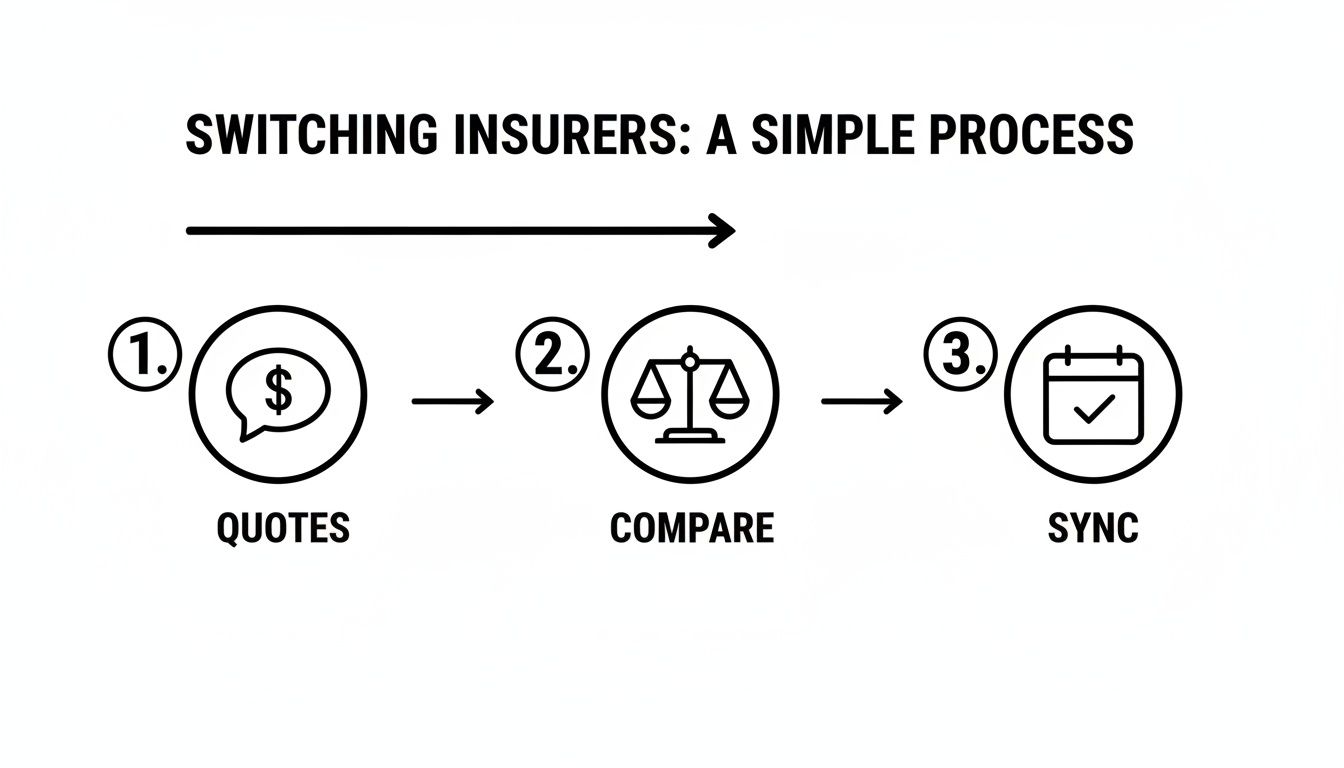
Use this as your roadmap: gather quotes, compare specifics and align your policy dates.
Summary Of Key Actions
| Action | Ideal Timing | Insider Tip |
|---|---|---|
| Gather Quotes | 30–60 Days Before Renewal | Try The Zebra for side-by-side comparisons—auto, home, renters or life. |
| Compare Coverages | As Soon As Quotes Arrive | For life insurance, check term lengths, convertibility and riders—not just the premium. |
| Sync Policy Dates | 1 Day Before Expiration | Ask your agent to backdate the start so there’s zero gap or overlap. |
Keep this table handy when you talk to agents. It’s your cheat sheet for avoiding lapses, penalties and unnecessary costs—all while locking in the best rates across California Insurance products.
When To Shop For A New Insurance Policy
Timing can make all the difference when you’re weighing the question, “How do I switch insurance companies in California?” Ideally, begin gathering quotes 30 to 60 days before your current auto, home, renters, car or life insurance policy renews. For life insurance, also consider any pending health changes that could affect underwriting.
A San Diego family, for instance, requested quotes 55 days ahead on their auto, home and term life policies and snagged a 12% discount. They even leveraged that rate drop to negotiate extra perks with their chosen carrier.
- Set calendar alerts at 60, 45 and 30 days out to avoid last-minute scrambling
- Monitor premium shifts on aggregator sites and call agents whenever rates dip
- Compare at least three carriers side by side to boost your bargaining power
Wait too long and you risk overlapping payments or coverage gaps. In Los Angeles, one driver put off shopping until the week before renewal—and almost ended up rushing to secure an SR-22 filing.
Tracking Rate Changes And Reminders
Tools like RateWatch or Mai & Associates’ portal let you watch premium movements in real time across auto insurance, home insurance and life insurance. At the same time, your calendar app can send SMS or email nudges when you hit that 45-day sweet spot in your renewal window.
Switching auto or home insurers happens all the time in California’s big markets—mostly driven by price. Nationwide, about 30–40% of personal-lines policyholders shop or switch within 12 months, and even a single‐digit percentage swing in premium can make or break a renewal decision. For life insurance, policyholders often shop at term-end or after major life events, so start early to lock in health underwriting classes.
Read more about timing strategies in Allianz’s Report
| Days Before Renewal | Success Rate | Average Discount |
|---|---|---|
| 30–45 | 68% | 8–10% |
| 46–60 | 75% | 10–12% |
| <30 | 40% | 5–7% |
A Sacramento couple checked rates 50 days out, bundled their auto and home policies, and walked away with $350 in annual savings. Another family reviewed term life rates 48 days ahead and secured a 15% reduction on a 20-year term policy.
Real Scenarios And Practical Tips
Far too many Californians panic at renewal and grab the first quote that lands in their inbox. Instead, try these tactics:
- Gather three detailed quotes on the same day so you can see how coverage levels, deductibles and life insurance rates stack up
- Pay special attention to wildfire endorsements or earthquake add-ons if you live in a high-risk zone
- Reach out to a Mai & Associates agent for same-day quotes, multilingual support and side-by-side carrier comparisons
- Double-check discounts—low-mileage, bundling, safe-driver programs and life insurance no-medical-exam offers can knock your premium down further
“Lock in your next policy before your current one expires,” advises an agent in Costa Mesa.
Keep a simple spreadsheet to track each carrier, premium amount and policy period. That way you can align your new coverage to kick in the day your old plan ends—no lapses, no penalties.
Set aside an afternoon this weekend to audit your policies, line up reminders and explore your tech tools. The sooner you start, the more negotiating power—and savings—you’ll enjoy.
How To Compare Insurance Policies And Prices
Comparing just the premium leaves you half blind. In California, bundling auto with home or renters often unlocks 10–15% savings. For life insurance, compare rate per $1,000 of coverage, policy length and convertible options. But that’s only part of the story.
You also have to factor in your deductible, the liability cap, and whether a carrier excludes wildfire, flood, or earthquake damage.
- A $50 deductible gap could translate into $2,000 out-of-pocket during a claim.
- Liability limits decide if you’ll hit steep expenses in a lawsuit.
- Endorsements vary wildly—some carriers offer better wildfire or earthquake protection than others.
- Term vs. whole life: weigh premium stability against cash-value growth.

Policy Comparison Chart
| Insurer | Average Premium | Deductible Options | Multiline Discount |
|---|---|---|---|
| Carrier A | $1,200 | $500 | 12% |
| Carrier B | $1,350 | $250 | 10% |
| Carrier C | $1,180 | $1,000 | 15% |
This quick reference helps you spot where the real value lies beyond just the sticker price for auto, home and renters insurance. For life insurance, build a separate chart tracking age, term length, rated health class and conversion options.
Reading Declarations Pages
A thorough scan of your declarations page can save you from unwelcome surprises later:
- Policy term and renewal dates to ensure continuous coverage.
- Deductible levels paired with premium differences in actual claim scenarios.
- Exclusions, endorsements, and any waiting periods tied to wildfire or earthquake protection.
- For life insurance, check contestability period, suicide clause and riders listed on the declarations.
Using Comparison Tools
Online comparison platforms let you filter carriers by coverage features and cost. Mai & Associates’ portal goes a step further with side-by-side quotes the same day you ask.
Keep in mind that switching too often may invite extra underwriting or premium loadings of 5–15%. It’s about tenure and claims history, not just a fresh price tag.
Dig deeper into how risk scoring works in the Global Insurance Report 2025.
You can check multiple insurers and get detailed comparisons by visiting Get an insurance quote.
Balance immediate savings against long-term costs and carrier reputation for handling claims swiftly. That approach makes the decision to switch insurance companies in California much clearer.
Key Takeaways
- Compare liability limits, deductibles and life insurance riders side by side to anticipate your real exposure.
- Seek out multiline discounts—bundling auto with home, renters or life in California can save 10–15%.
- Factor in a carrier’s loss-adjustment practices, underwriting speed and reputation for fast claims, not just the premium.
- For life insurance, check policy conversion options, contestability clauses and underwriting classes.
“Digging into the fine print and comparing policies beyond their price tags is the best way to avoid surprises at claim time,” says a Mai & Associates agent in Costa Mesa.
Use these insights to build your own comparison chart and lock in the best coverage before your renewal deadline. Mileage, driving habits, health changes and even credit score can unlock extra discounts—so gather your details and start lining up quotes today.
Check Coverage Gaps And Maximize Discounts
A bargain premium might look great in your mailbox, but it can hide serious coverage gaps. Take a close look at your liability, property damage, medical payments and life insurance death benefit to avoid an unwelcome bill after a fender-bender or an unexpected life event. Californians also face wildfire and flood risks—make sure those perils aren’t quietly carved out of your auto, home, renters or life policy.
Start by mapping out your core protections:
- Liability Limits to cover legal fees and damages after an accident
- Dwelling & Contents Coverage for home or renters claims
- Medical Payments that handle hospital bills for you and guests
- Life Insurance Riders such as accelerated death benefit or waiver of premium
- Wildfire/Flood Endorsements if you live in a high-risk zone
Insurers often tack on endorsement fees without shouting about them. Over a year, these extras can tack on $200–$500 if you’re not vigilant. The declarations page is your best friend—read it line by line.
Common Endorsement Fees
| Endorsement | Typical Fee | Why It Matters |
|---|---|---|
| Wildfire Coverage | $150 | Avoid out-of-pocket losses like the Napa case |
| Flood Protection | $200 | Floods can cause $25,000 in damages |
| Earthquake Rider | $350 | Most standard home policies exclude quakes |
| Equipment Breakdown | $80 | Covers HVAC and major appliance failures |
A Napa homeowner skipped the wildfire rider and ended up with a $5,000 loss when flames swept through their neighborhood. It’s a harsh reminder that a small premium bump can save you thousands later.
Spotting Hidden Discounts
Beyond your basic coverages, there are smart ways to lower your bill:
- Low-mileage credits if you drive under 8,000 miles per year
- Good student discounts for teens keeping at least a 3.0+ GPA
- Seasonal promotions when insurers push policies in slower months
- Bundling auto with home, renters or life for 10–15% off overall
Mai & Associates agents can show you these savings in real time with same-day quotes and side-by-side carrier comparisons. When you talk to your agent, ask:
- “Which discounts apply to my mileage and driving record?”
- “How much can I save by bundling auto with renters, home or life coverage?”
- “What fees would I pay for wildfire or earthquake protection?”
“Don’t let a low premium blind you to coverage gaps,” advises our Costa Mesa agent.
Double-check your medical payments limit—many California auto policies default to $1,000, leaving you responsible for anything beyond that.
Mai & Associates makes this review effortless. Their dashboard puts liability, property and life coverage details side by side, so you don’t have to squint at multiple PDF declarations pages.
Use this checklist when reviewing quotes to ensure core protections stay intact while you trim costs. Plus, you can deepen your understanding with our glossary of insurance terms by exploring our glossary of insurance terms.
Manage Cancellation Timing And Avoid Fees

Picking the right moment to cancel your old policy stops you from paying double or leaving yourself uninsured. In California, most auto, home, renters and life insurance contracts demand 30 days notice. Pull out early and you could face a 5% short-rate penalty instead of a full pro rata refund. Life insurance lapses can also mean losing your health class if you reapply later.
Before you finalize anything, request your carrier’s cancellation terms in writing. That document lays out:
- Written cancellation notice and effective date
- Pro rata refund formula versus short-rate refund
- Maximum early termination fees
- Any reinstatement conditions for life insurance
Since rules vary by product and county, run the net-savings numbers before you cancel. It helps you sidestep unwelcome surprises.
Discover more about cancellation timing and penalties in this 2025 outlook. Read the full research
Request Written Cancellation Policy
Reach out to your Mai & Associates agent—or call your insurer directly—and ask for a copy of the cancellation terms.
For instance, if your homeowners policy lapses on July 10, you’ll want to know whether you’ll receive a pro rata refund or incur a short-rate charge. For life insurance, confirm any contestability windows and reinstatement fees.
“Always get cancellation terms in writing so you can compare offers accurately,” advises a Mai & Associates agent.
- Ask for a typed document or email confirmation
- Note key dates and refund percentages
- Verify who signed the policy terms
Calculate Net Savings After Fees
Looking at premiums alone can be misleading. Imagine a $1,200 annual premium:
| Item | Amount |
|---|---|
| Pro rata refund | $657 |
| Short-rate penalty | $60 |
That table reveals your real net benefit. Then, line up your new policy to kick in immediately after the old one ends so you don’t miss a day of coverage—especially critical with life insurance underwriting.
- Set dual calendar alerts on email and phone
- Confirm cancellation and start dates in writing
- Preserve proof of coverage for DMV records
Schedule New Policy Start Date
Even a one-minute gap can trigger SR-22 requirements or fines. Ask your new insurer to backdate the effective time by 1 minute past the old policy’s expiration. For life insurance, ensure your new coverage is binding before you cancel the old one to avoid underwriting gaps.
Keep your coverage continuous to protect your driving record and avoid penalties.
Mai & Associates can pull same-day quotes, lock in precise start times and handle all the paperwork seamlessly.
- Review your old policy to note the exact expiration time
- Store confirmation emails or PDFs in one folder
- Check your DMV driving history after the switch
Plan your cancellation at least 30 days in advance and get everything in writing. This approach slashes the risk of lapses, fees and temporary uninsured periods. Then, keep all documents for at least 1 year in case the DMV or your insurer needs proof of continuous coverage.
These steps answer “how do I switch insurance companies without penalties and coverage lapses?” Use dual reminders, validate dates with agents and trust a seasoned California agency like Mai & Associates to guide you through every turn.
Start lining up your timeline today and switch with peace of mind.
Smoothly secured.
Gather Required Paperwork And California Notes
Before you switch your policy, round up every relevant document and flag any California-specific requirements. That SR-22 certificate after a DUI or other violation isn’t optional—make sure it’s in hand long before you pull the plug on your existing coverage.
Grab your declarations pages, note each driver’s details, and record Vehicle Identification Numbers (VINs). If you’re juggling homeowners or renters insurance, document replacement values or personal property estimates. For life insurance, gather medical exam results, beneficiary designations and policy statements. Finally, assemble your recent claims history—clean records speed things up, while older claims often trigger extra questions.
Required Documents Checklist
- DMV Forms: Form SR-22 (if required) plus a copy of a valid driver’s license.
- Declarations Pages: Policy term, coverage limits, deductible amounts and any endorsements.
- Driver Details: Full names, dates of birth and point totals for everyone listed on the policy.
- VINs: Exact Vehicle Identification Numbers to prevent processing hiccups.
- Property Valuations: Replacement cost or appraised values for homes and valuables.
- Claims History: Dates, dollar amounts and settlement notes for past claims.
- Life Insurance Details: Policy number, beneficiary forms, medical exam summaries and riders.
California’s quake and wildfire risks demand an extra look. An earthquake endorsement can run about $350 a year but fills that seismic-damage gap in your standard policy. In high-risk wildfire corridors—think Napa Valley or Santa Rosa—a $150 annual rider may shield you from losses exceeding $25,000 in a single event.
An SR-22 is like a DMV ticket back into the insurance market—it must be active before any switch.
California FAIR Plan And Risk Endorsements
| Program | Scope | Typical Cost |
|---|---|---|
| FAIR Plan | Last-resort homeowners cover | $1,200 per year |
| Earthquake Endorsement | Seismic loss protection | $350 per year |
| Wildfire Endorsement | Fire and smoke damage cover | $150 per year |
This quick look at California’s safety nets shows how the FAIR Plan steps in when traditional insurers won’t, and how tailored riders fill in the gaps.
When it’s time to finalize, Mai & Associates streamlines the whole process. They’ll fire off same-day quotes, lay out carrier comparisons side by side and double-check that no form slips through the cracks.
Their team speaks English, Spanish, Armenian, Russian and Vietnamese, so you’ll never miss a detail. Agents walk you through each requirement, confirming you’ve got proof of coverage ready.
Learn more about California auto insurance options in our article by Mai & Associates: https://cahomeauto.com/auto-insurance-california
Pull all your documents into one folder—physical or digital—so you can answer “How do I switch insurance companies?” in a flash. Here’s a quick roundup of what to keep handy:
- DMV proof of license and SR-22 if it applies
- Policy declarations pages and endorsements
- Vehicle schedules or home valuation statements
- Agent confirmations and cancellation guidelines
- Life insurance beneficiary forms and exam results
Gather paperwork, verify coverage riders and lock in new policies before your old plan ends for seamless protection.
Keeping continuous coverage not only steers you clear of fines and DMV headaches but also stops SR-22 complications before they start. With a solid checklist, expert support and timely reminders, switching insurers in California becomes a straightforward, stress-free process. Store your finalized forms both digitally and on paper so you can prove coverage instantly—no surprises, no lapses.
Begin your switch today with everything ready to go.
Frequently Asked Questions
Ever wonder how to cancel your old insurance policy without leaving a coverage gap? It’s all about timing. Aim to have your new policy kick in the instant the old one expires.
Before you pull the trigger on cancellation, get any notice period, refund policy or fees in writing. Having details on paper will save headaches down the road.
- Policy Start: Schedule new coverage 1 minute after expiration
- Cancellation Notice: Provide at least 30 days’ written notice
- Refund Amount: Claim a pro rata refund for unused days
Moving to a new carrier won’t ding your DMV record, as long as there’s no break in protection. Reports go straight to the DMV—they don’t add points.
“Verify both your start and end dates before cancelling any policy,” our Glendale agent advises.
Common Questions Answered
When Is an SR-22 Required?
After a DUI or serious traffic violation, most insurers require an SR-22. Once your new policy runs without a gap, the carrier usually handles that filing for you.
What If My Coverage Gets Declined?
First, read the declination notice to identify any flags. Then address those issues and compare other insurers—or explore the California FAIR Plan.
Can I Switch Life Insurance Policies Easily?
You can, but avoid lapses. Always secure your new life policy before cancelling the old one to preserve your health class and avoid underwriting delays. Compare term lengths, riders and conversion options, then request a binding coverage confirmation in writing.
Find more answers in our detailed guide at our FAQ.
Ready to switch? Protect your rates and record with Mai & Associates at Mai & Associates