Frozen Pipes in House? Thaw & Prevent Bursts in 2026
You go to the sink on a cold morning, turn the handle, and nothing happens. Maybe you get a weak trickle. Maybe you hear a strange hollow sound in the wall. In that moment, most homeowners don't care about plumbing theory. They want to know if the pipe is frozen, if it's already burst, and what to do before a bad morning turns into a soaked floor and a major insurance claim.
That reaction is reasonable. Frozen pipes in house situations move fast. A line can sit blocked by ice, then split, then leak only after the thaw starts. The right response in the first few minutes matters more than almost anything you do later.
A Chilling Discovery Frozen Pipes in Your California Home
California homeowners often assume frozen plumbing is somebody else's problem. Then a hard overnight freeze hits a foothill neighborhood, a high desert community, a mountain town, or even a mild area with exposed pipes in a drafty garage or crawl space, and the faucet says otherwise.
This isn't a rare edge case. Frozen and burst pipes affect an average of more than 250,000 homes each year in the United States, with damage costs of $400 million to $500 million annually, according to frozen pipe loss guidance from AfterDisaster. The same guidance notes that pipes can freeze below 20°F, and sometimes even above that threshold if they're uninsulated or exposed to drafts.
That last part catches people off guard. The problem usually isn't just outside temperature. It's exposure. Pipes near exterior walls, in attics, garages, crawl spaces, and other unheated spaces are the ones that get into trouble first.
Why California Homes Still Get Hit
A California house can be vulnerable for simple reasons:
- Older construction: Some homes have plumbing routed through exterior walls with less insulation than you'd want today.
- Unheated areas: Garages, crawl spaces, and attics can get much colder than the rooms you live in.
- Short cold snaps: A brief freeze feels minor, so people skip basic prep.
- Vacancy risk: A second home, rental, or empty property may sit with the thermostat too low.
A frozen pipe problem usually starts quietly. The water stops before the damage starts.
If you're dealing with this right now, focus on the next decision, not the whole repair bill. First, figure out whether you're looking at a simple freeze or a burst line. After that, you can think about cleanup, prevention, and whether your policy is set up for this kind of loss. If you need broader protection planning after the emergency, a California insurance quote review can help you compare home, auto, renters, and life coverage in one place.
Is It Frozen or Burst What to Do Right Now
Start with one question. Are you dealing with a blockage, or has the pipe already failed? The answer changes your next move.
A frozen line often shows up as a faucet that gives no water or only a weak trickle. A more serious situation can look similar at first, which is why homeowners lose time. Practical warning signs of a burst include damp drywall, ceiling rings, unusual odors, visible bulging on the pipe, or hearing water running when every fixture is off, according to guidance on recognizing frozen versus burst pipes from PURE Insurance.
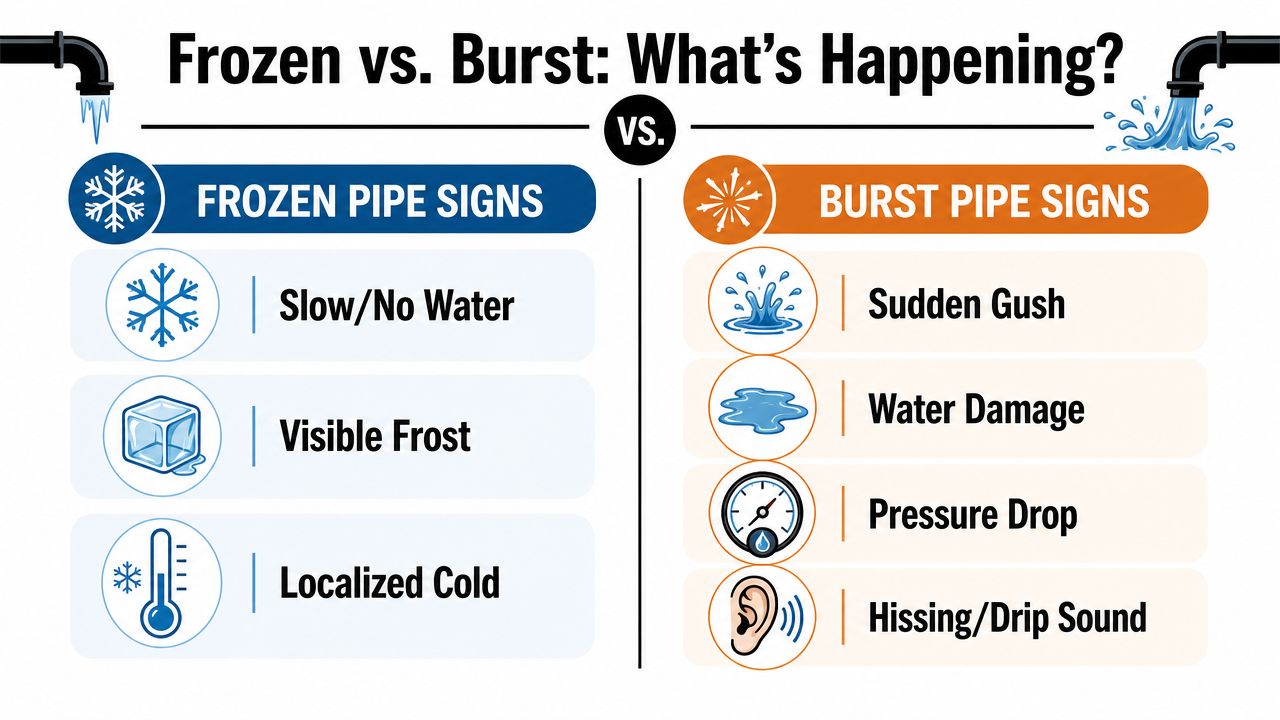
Quick triage checklist
Use this as a practical decision tree:
Turn on the affected faucet.
If you get nothing or only a slow trickle, a freeze is possible.Look around the room and nearby walls.
Damp drywall, staining, or a ceiling ring points away from a simple freeze.Check exposed pipe if you can see it.
Frost, extreme cold, or bulging are strong clues.Listen closely.
If you hear hissing, dripping, or running water with fixtures off, assume there's leakage somewhere.Find the main water shutoff before you do anything else.
Even if the pipe hasn't burst yet, you don't want to be searching for the valve after water starts spreading.
Frozen versus burst at a glance
| Condition | What you may notice | What to do first |
|---|---|---|
| Likely frozen | Slow flow, no flow, frost on exposed pipe | Leave faucet open and prepare for controlled thawing |
| Likely burst | Damp surfaces, odors, bulging, running-water sound | Shut off main water supply immediately |
| Unclear | Mixed signals, hidden pipe, inaccessible area | Treat it cautiously and prepare to shut off water |
Practical rule: If you see signs of water where it shouldn't be, stop thinking "frozen" and start thinking "leak."
What not to do in the first ten minutes
People make the problem worse by moving too fast in the wrong direction.
- Don't ignore a small trickle. It may be the first warning, not a minor inconvenience.
- Don't start cutting into drywall immediately. Confirm the likely location first.
- Don't assume no visible water means no burst. A split pipe may not leak fully until thawing starts.
- Don't wait to locate the shutoff valve. That's the one task that pays off in every scenario.
If you're in a panic, simplify the moment. Identify the symptom. Check for visible water damage. Locate the main shutoff. Then act.
The Right Way to Thaw Frozen Pipes Safely
Start with slow, controlled heat. If a pipe is frozen but not leaking, the goal is to melt the ice without turning a hidden split into a flood. The safest approach is to open the affected faucet, then warm the pipe from the faucet end back toward the colder section, as recommended by the American Red Cross guide on thawing frozen pipes.
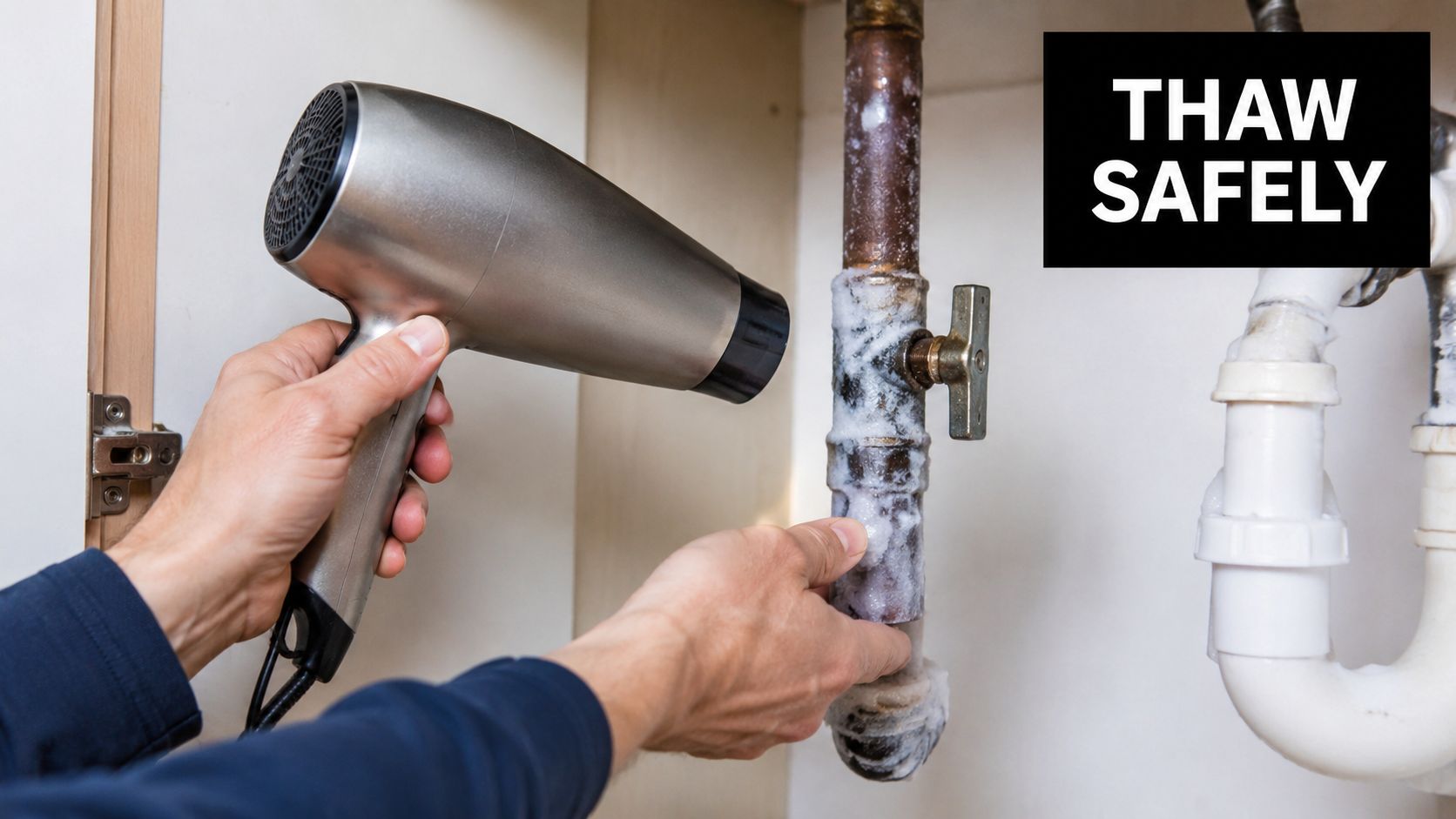
That order matters. Heating the pipe near the faucet gives meltwater a place to escape. Heating the coldest section first can trap pressure behind the ice plug, which is how small pipe failures become expensive insurance claims.
Safe thawing order
Use this sequence and stay patient:
Open the faucet served by the frozen pipe.
Running water will not come immediately. A drip or weak sputter is a good sign.Apply gentle heat near the faucet or nearest accessible section.
A hair dryer works well. A heating pad can work if the product instructions allow pipe warming. Keep the heat source moving.Warm the pipe in short passes.
Move a few inches at a time toward the suspected frozen area. Do not park high heat on one fitting, elbow, or valve.Watch and listen while the pipe thaws.
Returning flow often starts unevenly. If you hear dripping inside a wall or see moisture appear, stop and reassess.Inspect the full exposed run after flow returns.
Ice can hide more than one trouble spot, especially at uninsulated exterior walls, garage lines, and crawl-space plumbing.
What to use, and what to keep away from your plumbing
Some tools are safe for exposed residential pipes. Others create fire risk or overheat the pipe too fast.
| Use | Better option | Why it helps |
|---|---|---|
| Direct heat on exposed pipe | Hair dryer | Controlled heat, easy to aim |
| Steady low heat | Heating pad | Gradual warming with less hot-spot risk |
| Warming the surrounding area | Open cabinet doors, raise room temperature | Helps sink and vanity supply lines thaw evenly |
| Avoid | Why it's risky |
|---|---|
| Torch or open flame | Can scorch framing, insulation, and the pipe itself |
| Propane or kerosene heater in tight spaces | Fire risk and poor temperature control |
| Boiling water poured on pipe | Uneven expansion and a mess around electrical areas |
If the frozen section is behind a wall, use room heat, not force. Open nearby cabinets, raise the thermostat, and give the area time to warm. A space heater can help in a larger room if it is placed well clear of curtains, boxes, and anything combustible, but it should warm the room, not blast one hidden spot.
California homes need a slightly different mindset here. In mountain areas and inland valleys, overnight freezes often hit pipes in garages, exterior walls, and under-insulated crawl spaces that were never built for sustained cold. Coastal homeowners get caught too, because homes there may have exposed lines with little freeze protection. For more state-specific winter prep and recovery steps, review these California home protection guides.
Call for help sooner if any of these apply
DIY thawing is reasonable only when the pipe is exposed, the area is dry, and you can work safely.
- The frozen pipe is inside a wall, ceiling, or slab
- You see bulging, cracking, or separated fittings
- The line will not thaw with gentle heat
- You notice water stains, musty odor, or active dripping nearby
- The area has electrical hazards or poor access
From the insurance side, this is the point where caution saves money. A controlled service call is usually far cheaper than water mitigation, drywall removal, and a deductible. If thawing exposes a leak after all, keep your photos, save any damaged materials if practical, and review what to do after a pipe burst before you start cleanup.
Emergency Protocol for a Burst Pipe
When a pipe has burst, your job changes immediately. You're no longer trying to fix a freeze. You're trying to limit water damage.
The first and most critical step is to shut off the main water supply, then call a licensed plumber, according to emergency burst pipe guidance from BELFOR. Homeowners often make the mistake of trying to thaw first, which can make the flooding worse once the ice blockage releases.
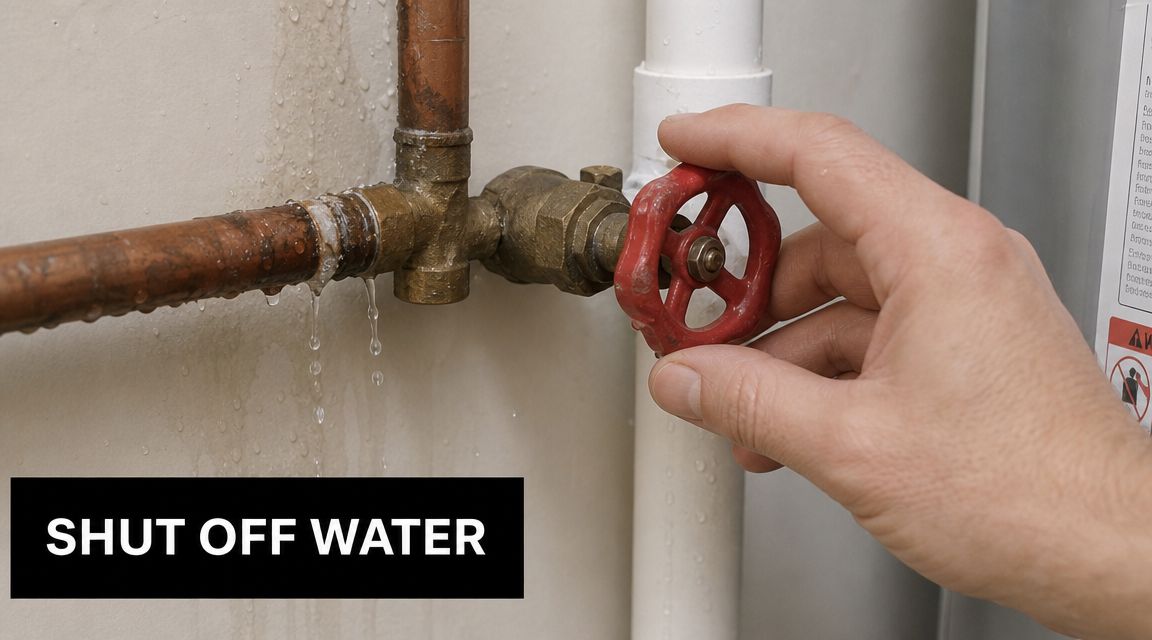
First 15 minutes after you confirm a burst
Act in this order:
- Shut off the main water valve
- Open the affected faucet to relieve line pressure
- Cut power to the affected area if water is near outlets or appliances
- Call a licensed plumber
- Move belongings away from the wet area
- Start documenting damage with photos and video
That order keeps people from wasting time on cleanup while water is still feeding the loss.
What mitigation looks like in a real house
You don't need to perform professional restoration. You do need to stop things from getting worse.
- Protect floors: Put down towels, buckets, and bins where active drips are landing.
- Lift contents: Move rugs, electronics, boxes, and furniture legs off wet surfaces.
- Separate wet items: Keep soaked belongings from spreading damage to dry ones.
- Create airflow if safe: Use room ventilation after the water source is stopped.
If you want a practical outside reference on the cleanup side, this guide on what to do after a pipe burst is useful because it focuses on immediate mitigation rather than theory. For broader home-protection reading after the emergency, the Mai & Associates insurance guides section is also a helpful next stop.
If the water is still running, nothing else on your checklist matters yet.
Documentation that helps with a claim
Keep it simple and organized.
| Document | Why it matters |
|---|---|
| Photos of the pipe and damage | Shows cause and scope |
| Video of active leaking if safe | Helps establish severity |
| Receipts for emergency supplies | Supports out-of-pocket mitigation costs |
| Plumber invoice and report | Clarifies what failed and what was done |
Don't throw away damaged items too quickly unless they're unsafe to keep. Insurers often want to see what was affected, even if only by photos.
Mistakes that cost homeowners later
- Trying to thaw a burst line before shutoff
- Waiting to call a plumber because the leak seems small
- Failing to document early conditions
- Leaving saturated drywall or flooring untouched for too long
Burst pipe losses are messy, but the response pattern is straightforward. Stop the water. Make the area safer. Document. Then hand the repair side to qualified help.
Proactive Pipe Protection for California Winters
A California freeze usually hits one weak spot first. It is often a pipe in the garage wall, a drafty crawl space, an exterior kitchen wall, or an older line with little insulation. The best prevention plan is simple. Keep that small problem from turning into soaked drywall, flooring, and a claim.
Cold-weather guidance from the American Red Cross winter storm preparation guide lines up with what plumbers and adjusters see after a loss. Keep indoor heat steady, protect exposed pipes, and do not let cold air sit on vulnerable plumbing for hours at a time. In California, this matters most in mountain towns, inland valleys during hard cold snaps, the high desert, and older homes with supply lines in garages, attics, or crawl spaces.
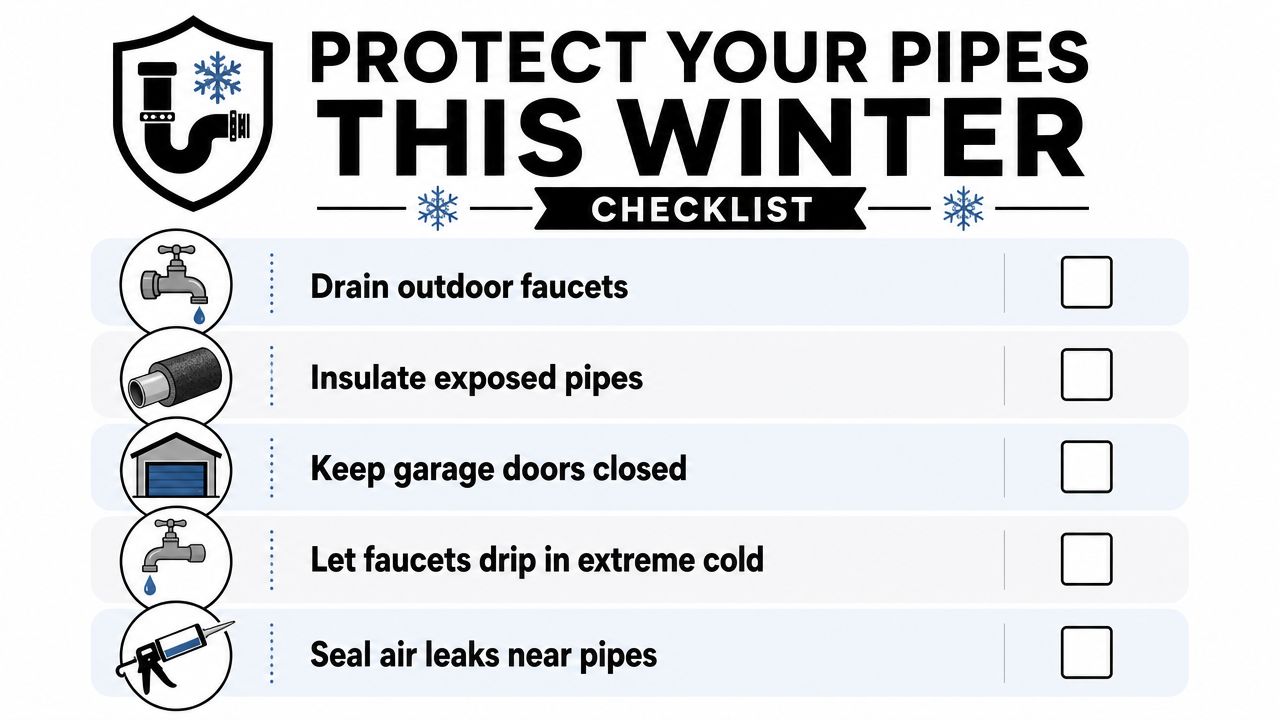
The California checklist that actually matters
Start with the areas that get cold fast and stay cold.
- Insulate exposed pipe runs: Foam sleeves help in garages, crawl spaces, attics, and along exterior walls.
- Seal air leaks near plumbing: Gaps around pipe penetrations, sill plates, vents, and access panels let cold air sit directly on the line.
- Keep indoor heat consistent: Avoid sharp overnight drops, especially if pipes run through underinsulated parts of the home.
- Open sink cabinet doors on cold nights: That lets room air reach supply lines tucked against outside walls.
- Let a vulnerable faucet drip during a hard freeze: A small flow can reduce the chance of a standing section icing up.
- Keep garage doors closed: Attached garages are a common trouble spot in California homes.
Where California homeowners should check first
These locations cause repeat losses because homeowners rarely see them until something fails.
| Location | Why it's risky | What to do |
|---|---|---|
| Garage walls | Often underinsulated and exposed to cold air | Add pipe insulation and keep doors closed |
| Crawl spaces | Outside air moves freely below the floor | Insulate lines and close obvious openings |
| Attics | Night temperatures drop fast | Protect exposed runs and seal nearby gaps |
| Exterior sink walls | Cabinet spaces trap cold air around pipes | Open cabinet doors during cold nights |
One inspection before winter is usually enough to find the problem areas. I tell homeowners to trace the plumbing route, not just look at fixtures. The risky section is often several feet away from the sink or washer.
Habits that prevent trouble when you're away
Vacancy creates expensive claims because small mistakes sit unnoticed for days. If you leave during winter, keep the thermostat set to at least 55°F, ask someone to check the house during cold stretches, and know where the main shutoff is before you pull out of the driveway.
If you own a second home, a rental between tenants, or a house that sits empty part of the week, document your winter prep. That helps with maintenance discipline, and it can help if an insurer later asks what steps you took to prevent loss. For more seasonal maintenance and insurance planning ideas, the Mai & Associates blog on California home protection is a useful reference.
What usually fails
The same mistakes show up over and over.
- Turning the heat down too far because "California doesn't get that cold"
- Assuming sunshine fixes overnight freezing in walls or crawl spaces
- Ignoring a past freeze because the pipe thawed without bursting
- Leaving exposed lines in garages or under the house uninsulated
- Treating prevention as optional because repair seems cheaper
That last one is where homeowners get burned financially. Drying, demolition, temporary housing, and disputed repairs cost more than pipe insulation and draft sealing. If a claim does get difficult, this guide can help you fight low-ball frozen pipe settlements.
Does Your Home Insurance Cover Frozen Pipes
After the leak is stopped and the plumber is scheduled, the money question arrives. Will insurance cover this? In many cases, a homeowners policy may cover sudden and accidental water damage from a burst pipe, but claims can get complicated when the insurer believes the loss was tied to neglect, vacancy issues, or failure to maintain reasonable heat.
What matters most is that frozen-pipe losses are expensive enough to deserve real attention. State Farm reported that from 2024 through June 2025, homeowners filed more than 20,000 claims related to frozen pipes, with over $628 million in paid losses, which works out to an average paid loss of roughly $31,000 per claim, according to State Farm's frozen pipe claims update. That same guidance recommends keeping the thermostat at 55°F or higher, even when the home is vacant.
What your insurer will likely want to see
Claims adjusters usually look for a clear timeline and evidence that you acted reasonably.
- Proof of sudden damage: Photos, videos, plumber findings
- Mitigation steps: Evidence you shut off water and tried to limit damage
- Property condition: Signs the home was heated and maintained
- Damaged contents list: A room-by-room record is easier to review than a scattered pile of receipts
Common claim friction points
Homeowners find this frustrating.
| Issue | Why it matters |
|---|---|
| Home left too cold | Insurer may question whether reasonable care was taken |
| Late reporting | Damage can worsen and become harder to sort out |
| Poor documentation | Harder to prove scope and timing |
| Mixed causes | Long-term leak issues can complicate a sudden-loss claim |
If you're in a dispute over valuation or scope, this explainer on how to fight low-ball frozen pipe settlements can help you understand where policyholders often run into trouble.
Bigger insurance planning for California households
A pipe claim rarely exists in isolation. The same household making decisions about homeowners coverage is often also reviewing auto insurance, renters insurance for family members, and life insurance needs. If you own a home in California, especially in a region with wildfire, earthquake, vacancy, or Fair Plan concerns, your overall insurance setup should work together instead of leaving gaps.
A policy review is worth doing before you have a loss, but it's still valuable after one. The key questions are practical: what your deductible is, how water damage is handled, whether your limits fit current rebuilding realities, and whether your household's home, car insurance, renters, and life insurance are aligned. If you need to compare options, California home insurance guidance is a solid place to start.
Mai & Associates helps Californians review home, auto, renters, car, and life insurance with licensed guidance specific to real property risks. If you want a no-obligation policy review, same-day quote options, or help checking for coverage gaps after a frozen pipe scare, contact Mai & Associates.