French Bulldog Pet Insurance: Costs & Coverage
French Bulldog pet insurance can average about $181 per month, with U.S. prices ranging from roughly $123 to $235, according to Fetch's French Bulldog insurance analysis. That price reflects more than a flat-faced appearance. Frenchies submit predictable claims for allergies, ear infections, breathing disorders, and spinal problems, so the key question isn't, “How cheap is the premium?” It's whether the policy can keep paying when recurring conditions steadily consume your deductible and annual limit.
California owners should approach this coverage differently from ordinary dog insurance. A low monthly price can be worthless if the policy excludes hereditary airway disease, treats every ear infection as a related pre-existing condition, or stops paying after a modest annual cap. Your Frenchie needs coverage designed around repeated illness claims, not just broken bones and one-time accidents.
Why French Bulldogs Cost More to Insure
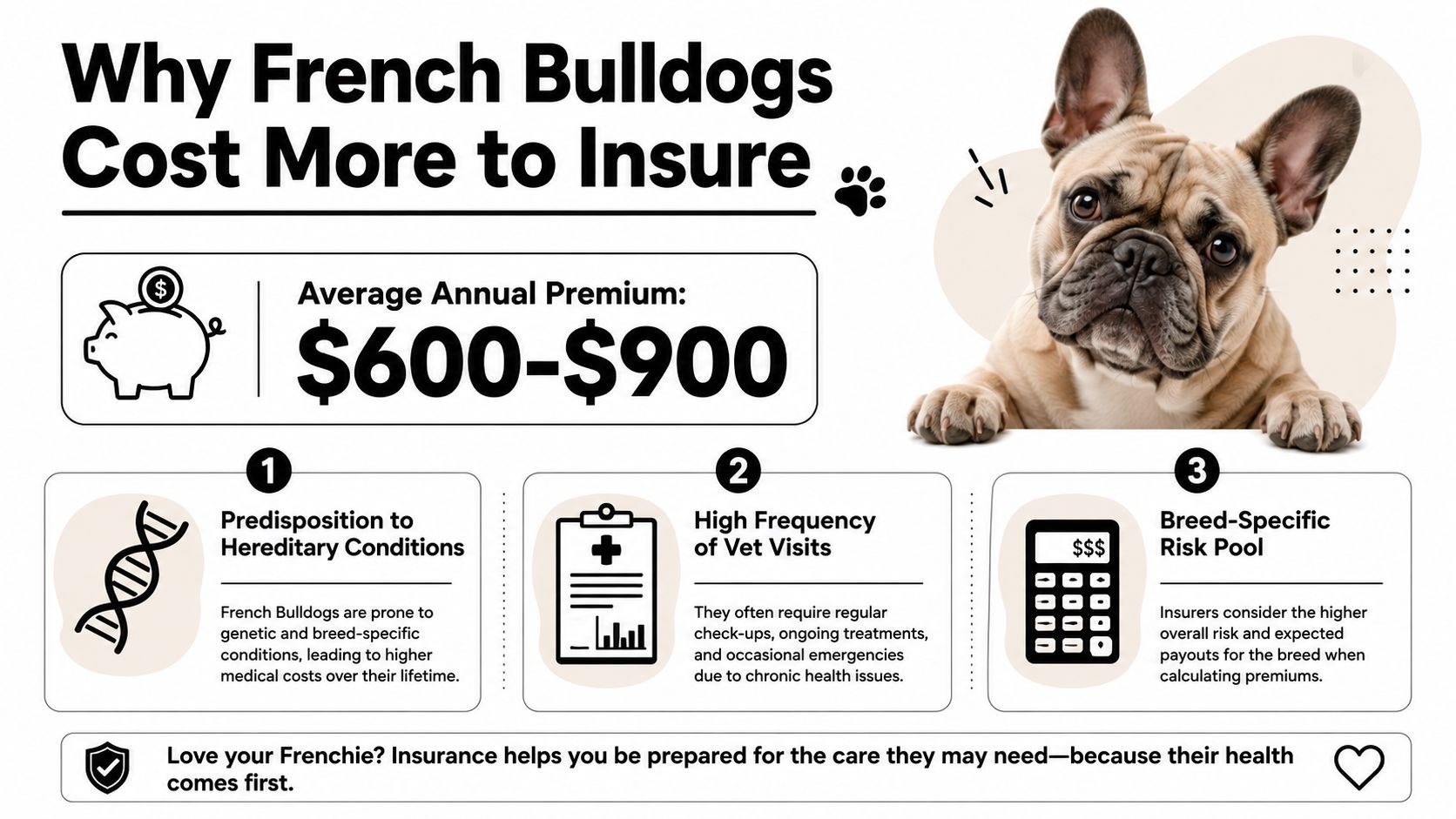
French Bulldogs cost more to insure because insurers expect more frequent claims and higher treatment costs. Industry guidance places French Bulldog insurance at about two to three times more than coverage for a mixed-breed dog of similar size. Another analysis found that a high-coverage French Bulldog policy ran about $63 per month above comparable Chihuahua coverage. Those figures appear in Perfect Pet Insurance's explanation of French Bulldog pricing.
The pricing reflects a concentrated pattern of breed-specific risk. A Frenchie may repeatedly need care for allergies, ear infections, or breathing problems, while its spinal structure can create additional claims. Each appointment may seem manageable, yet recurring treatment can steadily exhaust the deductible and reduce the annual benefit. That claim pattern matters more than the premium alone.
Why California quotes deserve closer scrutiny
California owners should examine policy terms beyond the advertised monthly price. Veterinary charges vary by region and provider, and respiratory, dermatology, or spinal care may require specialist treatment. A cheaper policy can leave you responsible for major bills if it applies narrow condition limits or excludes hereditary and breed-linked disorders.
Review local budgeting guidance, such as this French Bulldog California cost guide from PetCostEngine, then compare the policy wording itself. Ask the insurer how it defines hereditary, congenital, bilateral, and pre-existing conditions before enrollment. Confirm whether recurring allergies, ear infections, and airway disease draw from one shared limit or separate condition benefits.
Practical rule: For a Frenchie, buy coverage for conditions you may claim repeatedly, not only for dramatic accidents.
A broader review of auto, home, renters, and life insurance guidance can help you organize pet coverage with the rest of your household risk plan. Pet insurance does not replace an emergency fund, but a suitable policy can keep recurring veterinary bills from competing with essential household expenses.
Common Frenchie Health Issues That Drive Claims
A Frenchie's first few years can involve a pattern that looks minor at each appointment but becomes expensive over time. One visit addresses itchy paws. Another treats an ear infection. A later consultation evaluates noisy breathing or exercise intolerance. None of these claims may look catastrophic alone, yet together they can consume the deductible and reduce the remaining annual benefit.
Respiratory and spinal problems
Brachycephalic obstructive airway syndrome, or BOAS, deserves the closest attention. Nationwide's analysis found that brachycephalic dogs were almost three times more likely to submit a breathing-related claim than non-brachycephalic dogs, while French Bulldogs were more than 17 times more likely to have a BOAS claim submitted than non-extreme brachycephalic dogs, as reported in MetLife's French Bulldog insurance discussion.
A Frenchie may start with snoring, heat intolerance, or reluctance to exercise. Diagnosis can involve imaging, airway assessment, and specialist review. Nationwide's cited average treatment cost for brachycephalic airway syndrome is $3,000 to $5,000, according to its brachycephalic health white paper. That's why BOAS coverage must be explicit, especially where the policy uses hereditary or congenital exclusions.
Intervertebral disc disease, or IVDD, creates a different claim pattern. A dog that suddenly refuses stairs, cries when lifted, or develops weakness may need urgent examination and advanced diagnostics. Treatment can include medication, imaging, surgery, hospitalization, and rehabilitation. The policy must cover spinal disease without classifying it as an excluded hereditary condition.
Skin, ears, and related care
Skin allergies often generate the most persistent claims. Owners may pay for repeated consultations, prescription medication, testing, special diets, or treatment for secondary infections. Ear infections can follow a similar cycle, particularly when allergies and ear anatomy contribute to repeated inflammation.
Owners should also keep digestive symptoms in context. If vomiting or abdominal pain appears, the vet may investigate conditions beyond routine allergy care. A useful resource for understanding diagnosis and treatment is this veterinary pharmacy guide on canine pancreatitis. The policy question remains the same: confirm that illness claims, diagnostics, prescriptions, and follow-up care are included, subject to the contract's exclusions and limits.
For broader California household planning, owners can also review practical insurance guidance for California residents. The key is to view each recurring claim as part of a multi-year risk pattern, not an isolated inconvenience.
Types of Pet Insurance Coverage Explained
French Bulldog owners usually choose among four coverage layers. They aren't interchangeable, and the cheapest option often covers the least relevant risk.
Accident-only coverage
Accident-only policies generally respond to sudden injuries, such as a fracture, wound, or accidental ingestion. They can be useful for owners who want limited catastrophic protection, but they won't address the claims most associated with Frenchies, including allergies, ear infections, BOAS, or IVDD when those conditions are treated as illness.
This is the narrowest safety net. It may fit a tight budget, but it shouldn't be presented as complete French Bulldog protection.
Accident and illness coverage
Accident-and-illness insurance is the core option I recommend for most Frenchie owners. It combines injury protection with treatment for covered diseases, diagnostics, surgery, prescriptions, and related veterinary services, depending on the policy.
The important phrase is covered diseases. A policy may include illness in bold type while excluding hereditary, congenital, or breed-specific conditions in the definitions. Read those provisions before buying.
Wellness add-ons
Wellness coverage usually helps with routine care, such as vaccinations, preventive examinations, or other scheduled services. It can make predictable expenses easier to budget, but it doesn't replace accident-and-illness insurance. Wellness benefits generally won't solve the financial exposure created by BOAS surgery, chronic dermatology, or spinal treatment.
Treat wellness as a budgeting feature, not the main protection for a high-risk breed.
Hereditary and congenital protection
For French Bulldogs, hereditary and congenital coverage is essential. BOAS, spinal abnormalities, and other breed-linked conditions may be restricted under these clauses. Some insurers include them automatically, while others apply limitations, waiting periods, or exclusions based on the dog's records.
| Coverage type | Best use | Main weakness for a Frenchie |
|---|---|---|
| Accident-only | Sudden injuries | Excludes ordinary illness claims |
| Accident and illness | Broad medical protection | May restrict hereditary conditions |
| Wellness add-on | Routine care budgeting | Doesn't cover major illness treatment |
| Hereditary or congenital coverage | Breed-linked conditions | Must be checked for definitions and limits |
Use a California insurance glossary when unfamiliar terms appear in a quote. Don't assume a policy is all-inclusive because it has a long list of benefits. For this breed, exclusions matter more than marketing language.
Key Policy Features to Prioritize for Your Frenchie
Start with the policy contract, not the quote page. The quote tells you what you'll pay. The contract tells you whether the insurer will respond when your dog develops the condition you bought coverage for.
Read the exclusions first
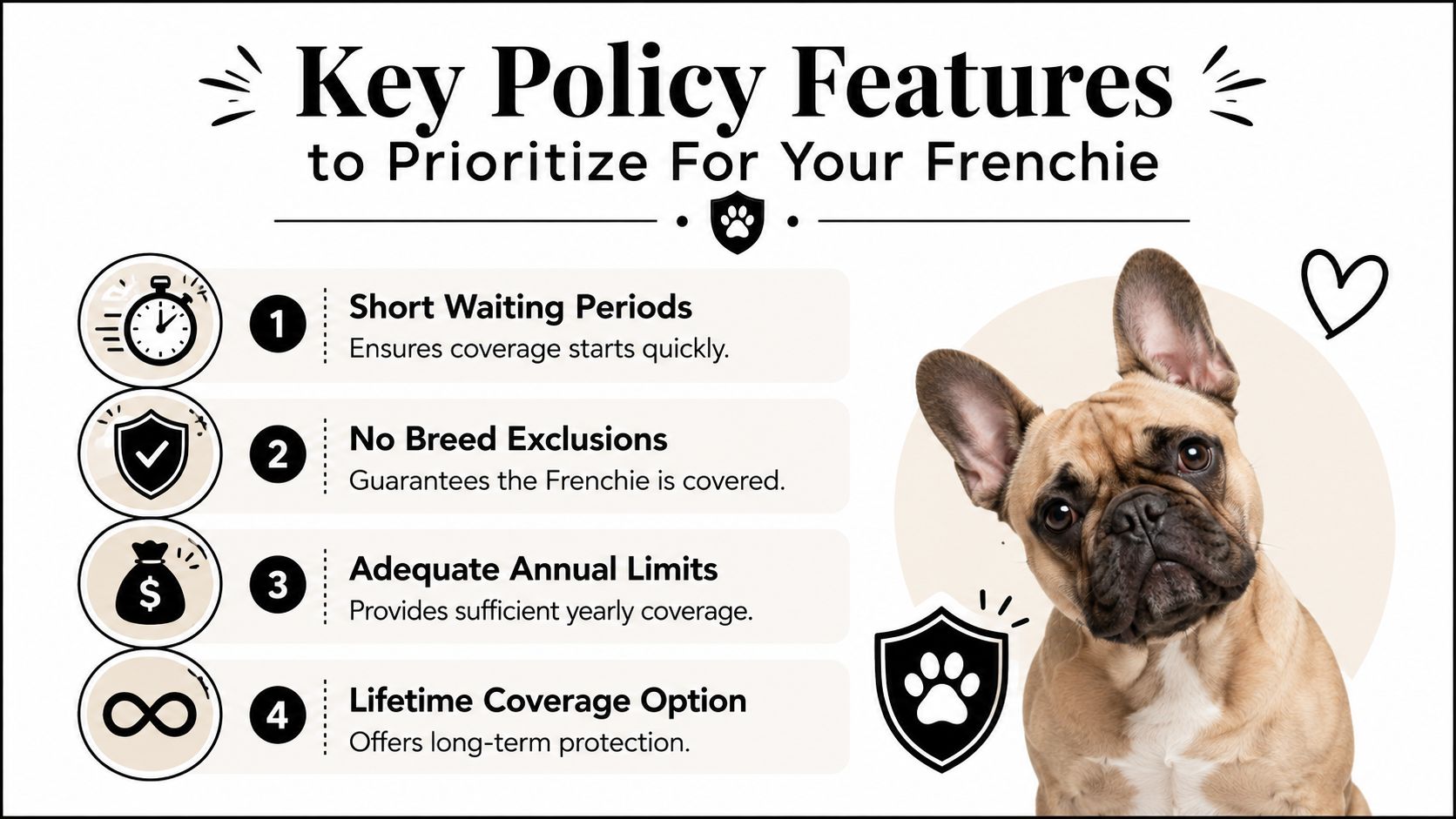
Search the policy for hereditary, congenital, brachycephalic, airway, bilateral, and pre-existing. Don't stop at the general coverage summary. An insurer may cover respiratory illness in principle but exclude a condition tied to the breed's anatomy.
Ask for written clarification if the language is unclear. A phone representative's explanation is helpful, but the policy wording controls the claim.
Check waiting periods and enrollment timing
Waiting periods create a gap between enrollment and eligibility. That gap matters because a vet record showing symptoms before coverage begins can lead to a pre-existing-condition exclusion. Enrolling before signs appear gives you the strongest chance of preserving coverage for future illness, subject to the policy terms.
A Frenchie that already has documented itching, ear inflammation, or breathing difficulty may receive a condition-specific exclusion. Switching carriers later can also restart underwriting for conditions already recorded.
Compare the payment design
Look at the deductible, reimbursement percentage, and annual limit together. A higher deductible may lower the premium, but it shifts more initial cost to you. A lower reimbursement rate leaves you paying more after the deductible. A low annual cap can end coverage for the year just when repeated treatment becomes necessary.
Unlimited annual coverage can be attractive, but it also costs more. If the budget doesn't support that structure, choose the largest limit you can maintain consistently rather than buying a policy you may cancel after a premium increase.
Before enrollment: Ask whether BOAS, allergies, ear disease, IVDD, prescriptions, specialist consultations, and recurring treatment remain eligible after the first claim.
Finally, check whether the deductible applies per year, per condition, or per incident. That single structural detail can change how a chronic skin or ear problem affects your wallet over time.
Understanding French Bulldog Insurance Costs
Premium price matters less than how quickly recurring Frenchie claims consume your deductible and annual limit. Allergies, BOAS, ear infections, and follow-up care can create several eligible claims in one policy year, so compare the policy design before choosing the lowest quote.
A separate industry example places a 3-year-old French Bulldog policy at about $85 per month for $5,000 annual coverage, a $250 deductible, and 80% reimbursement. Unlimited coverage with the same deductible and reimbursement costs about $130 per month.
| Coverage tier | Annual limit | Deductible | Reimbursement | Estimated monthly premium |
|---|---|---|---|---|
| Standard example | $5,000 | $250 | 80% | About $85 |
| Unlimited example | Unlimited | $250 | 80% | About $130 |
These are examples, not a California quote. Age, ZIP code, underwriting history, coverage design, and the dog's medical record can change the price. California veterinary pricing and specialist access may also affect the insurer's risk calculation, and carriers do not all use the same formula.
The lower premium comes with an annual ceiling. Once eligible claims reach that limit, you pay remaining covered expenses yourself for the rest of the policy year. Unlimited coverage costs more each month, but removes one major source of uncertainty during a year involving respiratory treatment, spinal care, or several recurring conditions.
Premium versus usable protection
The deductible determines when insurance starts contributing. Reimbursement determines how much of the eligible balance the carrier pays. The annual limit determines how long that protection lasts.
Model a recurring claim year, not a perfect year. Include allergy consultations, medications, ear-infection treatment, follow-up visits, and one significant BOAS diagnostic or surgical event. If repeated care exhausts the cap quickly, the lower premium only postpones the expense.
Use the French Bulldog California cost guide to frame your budget, then obtain individualized quotes and read the exclusions before selecting a plan. Pay particular attention to whether recurring conditions share one annual limit, because several modest claims can reduce the funds available for a later major procedure.
How to Compare Quotes and File Claims in California
Use the same information for every quote. Otherwise, you're comparing different products rather than different prices.
Compare quotes in five steps
- Gather the records. Have the Frenchie's age, breed, ZIP code, adoption or purchase date, veterinary history, medications, and known diagnoses available.
- Request matching designs. Keep the deductible, reimbursement level, annual limit, and optional benefits consistent across carriers.
- Ask targeted questions. Confirm BOAS, allergies, ear infections, IVDD, hereditary conditions, prescriptions, diagnostics, specialist care, and rehabilitation.
- Review the sample contract. Look for waiting periods, condition definitions, bilateral exclusions, exam-fee rules, and annual or per-condition limits.
- Compare the renewal structure. Find out how the carrier handles age, claims history, premium changes, and continued coverage for chronic conditions.
Don't choose based on the first attractive quote. A cheaper policy can become expensive if it denies the conditions your dog is most likely to develop.
Filing the first claim
After treatment, request an itemized invoice and the complete medical record from the veterinary hospital. Submit the claim form, invoice, payment receipt when required, diagnostic results, and any referral documentation through the carrier's portal or approved process.
Keep a dedicated digital folder for invoices, lab results, prescriptions, and correspondence. Ask the veterinarian to describe the diagnosis and treatment clearly rather than relying on vague labels such as “skin issue” or “breathing concern.”
Claims are commonly delayed when records are incomplete, dates don't align, invoices are not itemized, or the insurer needs earlier medical history to assess a pre-existing-condition question. Read the explanation of benefits carefully. If the carrier denies a claim, request the exact contract provision and submit relevant records supporting your appeal.
California residents should also keep pet coverage separate from their other insurance decisions. Auto liability minimums increased to 30/60/15 on January 1, 2025, meaning $30,000 bodily injury per person, $60,000 per accident, and $15,000 property damage, as listed in California auto insurance guidance. That protection addresses driving liability, not veterinary bills, so don't treat one policy as a substitute for the other.
How Mai & Associates Helps California Frenchie Owners
French Bulldog coverage requires careful comparison because the important differences often sit in exclusions, condition definitions, and reimbursement rules. Online quote tools can show premiums quickly, but they won't always explain whether BOAS, chronic allergies, or recurring ear treatment will remain eligible after the first claim.
Mai & Associates can compare rates from multiple top-rated carriers, provide same-day quotes, and connect California clients with licensed agents. The agency serves more than 50 California cities through offices in Glendale, Westlake Village, Escondido, and Costa Mesa, with multilingual support in English, Spanish, Armenian, Russian, and Vietnamese.
That local guidance also helps households coordinate pet coverage with broader protection. Mai & Associates handles auto, car, home, renters, and life insurance, and can review California FAIR Plan arrangements, earthquake options, and wildfire-related coverage gaps. The Mai & Associates contact page gives owners a direct way to request help rather than trying to interpret every policy clause alone.
California renters should remember that renters insurance isn't legally required statewide, but published 2026 estimates place a standard policy at about $144 to $155 per year, or roughly $12 to $13 per month, according to California renters insurance market estimates. Homeowners in high-risk wildfire areas may also need to understand the California FAIR Plan, which caps a single residential dwelling policy at $3 million, a limit doubled from $1.5 million under a 2019 order effective April 1, 2020, as explained by California FAIR Plan coverage guidance.
Pet insurance remains a separate decision, but a coordinated review can help you identify the coverage gaps that matter most to your dog and your household budget.
Mai & Associates can help you compare French Bulldog pet insurance options, clarify hereditary-condition exclusions, and request same-day quotes from multiple carriers. Visit Mai & Associates to discuss coverage for your Frenchie and coordinate it with your California auto, home, renters, or life insurance needs.