Flexible Term Life Insurance in California Explained

Life in California is anything but predictable. Your financial plan needs to be just as agile. That’s where flexible term life insurance comes in—it’s a modern take on financial protection, built to adapt as your life changes. Think of it not as a rigid contract, but as a responsive safety net for your family’s future. It's a key part of a comprehensive California insurance strategy that should also include your auto insurance, home insurance, and more.
Your Guide to Flexible Term Life Insurance in California
Life in the Golden State is always in motion. One year you're renting in the city, focused on building a career. The next, you might be buying a home in a competitive market, starting a family, or even launching your own business. Each of these milestones reshapes your financial obligations, and your insurance should keep up. This is precisely why flexible term life insurance is such a smart alternative to traditional, static policies.
Let me put it another way. A standard insurance policy is like signing a fixed-term lease on a car. You get a set term and a fixed payment, which is great if your needs stay the same. But what happens when your family grows and that two-door coupe just won't cut it anymore? A flexible policy is more like a modern car subscription—it gives you the freedom to adjust your plan as life happens.
Why Adaptable Coverage Matters for Californians
With California's high cost of living and incredibly varied economy—from Silicon Valley tech to Central Valley agriculture—an insurance policy that can pivot with you is more of a necessity than a luxury. This flexible approach to life insurance brings some key advantages to the table, especially for us here.
- Accommodates Major Life Events: Got married, bought a house, or welcomed a new baby? A flexible policy often lets you increase your death benefit to match your new responsibilities, sometimes without needing a whole new medical exam.
- Adjusts to Financial Changes: On the flip side, if your income changes or you finally pay off that hefty mortgage, you might have the option to reduce your coverage and, in turn, lower your monthly premium.
- Provides a Bridge to the Future: Many of these policies come with a conversion option. This is a huge benefit, as it lets you switch to a permanent policy down the road, locking in your insurability even if your health takes a turn.
This built-in adaptability makes flexible term life insurance a fantastic cornerstone for your financial protection plan. It works hand-in-hand with your other coverage, like auto insurance for your daily commute and home insurance for your property, to create a truly resilient safety net.
If you’re building a comprehensive strategy, you can learn more about securing life insurance in California and see how all the pieces of your California insurance puzzle fit together. This guide will give you a clear roadmap to understanding and choosing the right protection for everything that matters most.
What Makes Term Life Insurance Flexible
Here’s the thing about traditional term life insurance: it’s wonderfully simple. You pick a coverage amount, a set number of years, and your premium stays the same. It’s predictable and reliable. But life rarely stays that simple. Your financial needs can shift dramatically, and that’s where a rigid policy can fall short.
Flexible term life insurance is designed from the ground up to adapt. It has features built right in that let your policy grow and change right along with you.
Think of it this way: a standard policy is like a lease on a reliable sedan. It gets you where you need to go, but it’s a fixed agreement. A flexible policy is more like owning a car you can upgrade. You can add a roof rack for a growing family, tune the engine for better performance, or even trade it in for a completely different model down the road. It’s designed for the journey, not just the starting point.
This is all about matching your protection to your real-life responsibilities—whether that's a new baby, a bigger mortgage, or a growing business.
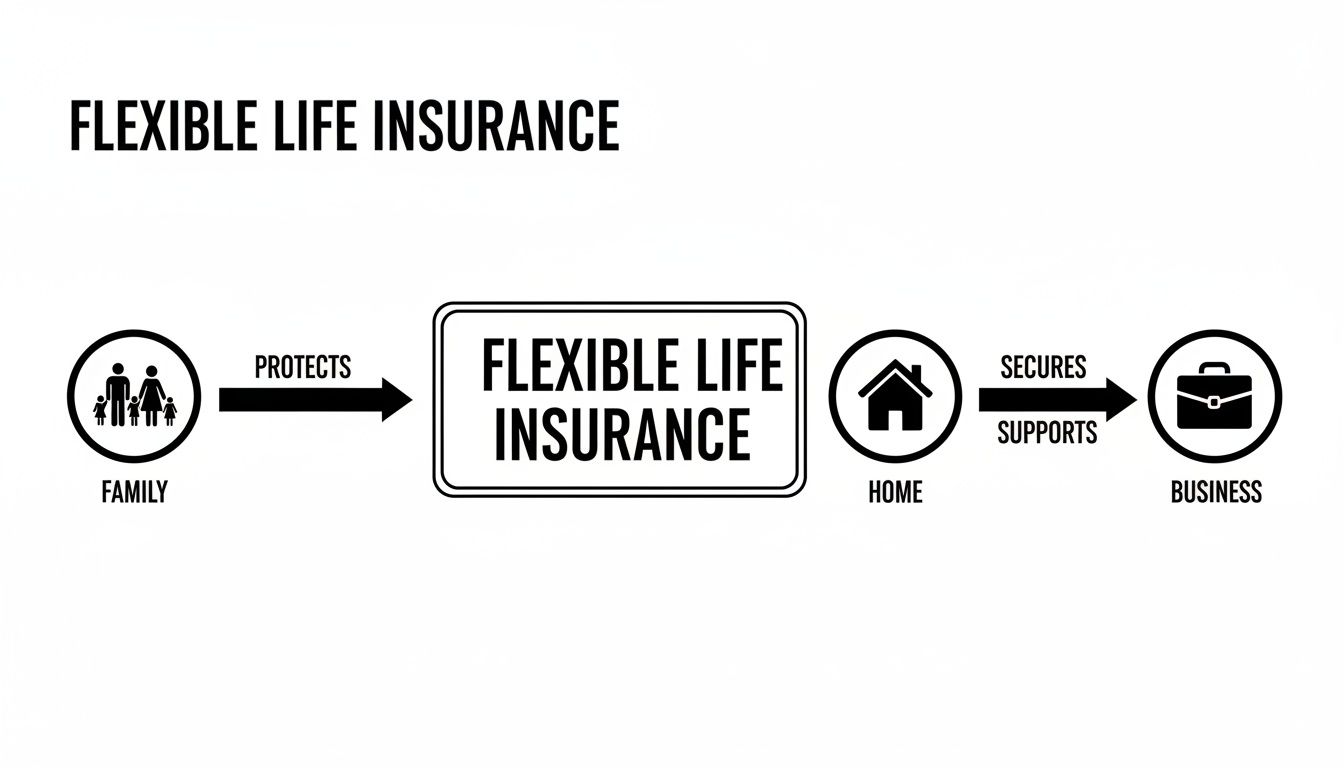
Let's break down the key features that give these policies their power.
Adjustable Coverage Benefits
One of the most valuable aspects of a flexible policy is the ability to adjust your death benefit. Life’s biggest moments often come with new financial obligations, and your insurance should keep pace.
Increasing Your Coverage: Just had a child, bought a bigger house in California, or launched a business? Many policies allow you to increase your coverage to protect those new responsibilities. This is often done through a specific rider, sometimes without you having to go through a whole new medical exam.
Decreasing Your Coverage: On the flip side, what happens when you pay off that huge mortgage or your kids finish college and are financially independent? You may not need a $1 million policy anymore. Flexible term life often lets you reduce your coverage, which directly lowers your premium payments.
This built-in adaptability means you’re not stuck paying for more insurance than you need, or worse, being underinsured when it matters most. It’s the same logic that applies to adjusting your car insurance when you pay off your vehicle or your home insurance as your home's value changes.
The Power of Convertibility
So what happens if you decide you need coverage for the rest of your life, not just for a specific term? That’s where convertibility comes in.
A conversion privilege is a powerful feature that lets you trade in your temporary term policy for a permanent one (like whole life) without another medical exam.
This is a game-changer because it locks in your insurability. If you develop a health issue years into your term, you can still get lifelong coverage based on the clean bill of health you had when you first signed up.
It’s an escape hatch for your future. You get the affordability of term coverage today with a guaranteed option for permanent protection tomorrow, no matter what your health looks like.
To help you see the differences more clearly, here’s a quick comparison of standard versus flexible term life insurance.
Standard Term Life vs Flexible Term Life at a Glance
| Feature | Standard Term Life Insurance | Flexible Term Life Insurance |
|---|---|---|
| Death Benefit | Fixed for the entire term | Can be increased or decreased |
| Premiums | Level; stays the same | May be level or adjustable |
| Convertibility | May be available as a rider | Often a built-in feature |
| Policy Structure | Rigid and unchanging | Adaptable to life events |
| Best For | Predictable, unchanging needs | Evolving financial situations |
Ultimately, the right choice depends entirely on whether you expect your financial responsibilities to change over the life of the policy.
Flexible Premiums and Riders
While most term policies come with fixed, level premiums, some flexible plans offer more dynamic payment options. This can be a huge help for people with variable incomes, like California’s many small business owners, real estate agents, or freelance creatives.
Most of these adjustments are made possible through riders, which are essentially add-ons to your base policy. It’s helpful to understand how these changes are made official; learning the difference between an addendum and an amendment in legal contracts offers a great parallel for how insurers formally modify policies. The demand for this kind of adaptability is growing, with term life insurance capturing 19% of new annualized premiums in a recent year—a major slice of the market.
Who Really Needs a Flexible Policy in California?
Life in California rarely follows a straight line. Your financial needs today probably won't be the same five, ten, or even twenty years from now. While a standard insurance policy is a fixed snapshot in time, a flexible term life insurance policy is built to move and change right along with you.
So, who stands to gain the most from this kind of adaptable coverage? It's really for anyone anticipating major life changes—and in the Golden State, that's most of us. Think of it as a financial tool designed for a life in motion, whether you're buying a home, launching a business, or starting a family.

New Homeowners and Growing Families
Let's picture a young couple in San Jose who just bought their first home. It’s an exciting milestone, but it also comes with a hefty mortgage. They know life insurance is a must, but their budget is stretched thin, and they're planning to have kids in a few years. A rigid, traditional policy just doesn't fit their evolving life plan.
This is the exact scenario where flexible term life insurance makes perfect sense.
- Covering the Mortgage: They can start with an affordable policy that’s just enough to cover their mortgage. This ensures that if the unthinkable happened, the surviving partner wouldn't be at risk of losing their home. It's a smart layer of protection that works hand-in-hand with their home insurance.
- Making Room for Family: Their policy can include a "guaranteed insurability" rider. When they welcome their first child, this feature lets them increase their death benefit to plan for college costs and other child-rearing expenses, all without having to go through another medical exam.
- Planning for the Long Haul: As their careers take off and their income grows, a convertibility feature allows them to exchange some of their term coverage for a permanent policy. This lets them build a lifelong financial asset for their family's future.
For this couple, the policy isn't just a static contract—it's a living financial strategy that adapts to their most important moments, creating a complete California insurance portfolio.
Small Business Owners and Entrepreneurs
Now, imagine an entrepreneur in Los Angeles who's finally launching her dream creative agency. She needs a Small Business Administration (SBA) loan to get everything off the ground, and a common requirement is having a life insurance policy assigned to the bank to act as collateral.
Her challenge is twofold: her income will be unpredictable in the early years, and her business's financial needs will shrink as she pays down the loan.
For entrepreneurs, a flexible term life insurance policy is a game-changer. It satisfies the loan requirements upfront while giving them the agility to adjust coverage as the business finds its footing and the loan balance decreases.
This strategy offers some powerful benefits for business owners:
- Secures Critical Funding: She can get a policy that meets the lender's exact requirements, helping her secure the capital needed to launch.
- Lowers Costs Over Time: As she pays down the SBA loan, she can systematically decrease her policy's death benefit. This lowers her premium payments, freeing up valuable cash flow she can reinvest in the business.
- Creates a Financial Firewall: The policy ensures her business debts would never become a burden for her family. This coverage is a key part of a comprehensive safety net, alongside her business liability coverage and auto insurance for her company car.
Freelancers and Creative Professionals
Finally, think about a freelance writer living in a Costa Mesa apartment. His income can be a rollercoaster, with great months followed by lean ones. Committing to a large, fixed monthly premium feels risky. Still, he needs to cover his final expenses and make sure his partner isn't left on the hook for any co-signed debts.
A flexible policy gives him the financial breathing room he needs. Some plans are designed with premium structures that can absorb income volatility. More importantly, the ability to dial back the coverage amount during a slow year provides a crucial safety valve. This makes it a perfect complement to his renters insurance, protecting both his dependents and his possessions.
For any young professional, locking in a low rate while they’re healthy is a major financial win, as premiums only get more expensive with age. A flexible policy lets them do just that, without locking them into a plan that might not fit in the future.
To really make the right call on life insurance, you need to see how all the pieces fit together. It’s about understanding where flexible term life insurance fits in compared to the more traditional options: standard term and permanent policies. Getting this clear will make your decision a whole lot easier.
A great way to think about it is like getting a car. A standard term policy is like leasing a car for a few years—it’s affordable and covers you for a set period. A permanent policy is like buying the car outright; it’s yours for good and builds equity, but it costs a lot more upfront. Flexible term life? That’s your lease-with-an-option-to-buy. You get the low monthly payments of a lease, but you hold the right to purchase the car later if you decide you want to keep it.
Standard Term Life: The Rented Protection
Standard term life is insurance in its simplest form. You pick an amount of coverage and a time frame, say 20 or 30 years, and your payments are fixed for that entire period. If you pass away while the policy is active, your family gets the money. If the term ends and you're still kicking, the policy just expires. It's that straightforward.
It's a fantastic, budget-friendly solution for covering debts with a clear finish line.
- Pros: Very affordable premiums and easy to understand. It's perfect for covering a mortgage or making sure your kids are covered until they're on their own.
- Cons: The coverage is temporary. There’s no cash value or savings component, and if your needs change, you’re usually stuck unless you want to go through the hassle of applying for a whole new policy.
This is a solid starting point for many, but it just doesn't have the adaptability that a lot of Californians find they need as their lives change.
Permanent Life: The Owned Asset
Permanent life insurance—think whole life or universal life—is built to last your entire lifetime. Besides paying out when you pass away, it also builds up a cash value account that grows over time, tax-deferred. You can even borrow money from this cash value if you need to.
This "ownership" model makes it a serious tool for estate planning or passing on wealth, but that power comes with a much higher price tag.
- Pros: You get lifelong coverage, build an asset you can tap into, and leave behind a guaranteed payout for your loved ones.
- Cons: The premiums are significantly higher than term insurance. These policies can also be pretty complex, and honestly, it’s often more coverage than a young family on a budget really needs.
For a lot of people, the steep cost just isn't realistic, especially when that money could go toward other essentials like home insurance or car insurance.
Flexible Term and Hybrid Policies: The Smart Compromise
This is exactly where flexible and hybrid policies come into their own, giving you a practical middle ground that blends the best features of both term and permanent insurance. A flexible term life insurance policy gives you the affordability you need right now with the options you might want later. It’s designed for a life in progress.
The market has been shifting this way for a while. We've seen a huge rise in adaptable products like universal life insurance, which offer more wiggle room on premiums. For instance, in 2023, indexed universal life (IUL) policies made up 27% of all new premiums in the U.S. People are drawn to these plans because they mix term-like affordability with growth potential tied to the market.
Flexible term life is your 'lease-to-own' option. You lock in affordable protection now with the right to 'buy'—that is, convert to permanent insurance—later on, without having to prove you're still healthy.
This structure is a game-changer, especially here in California. You can get the high-coverage protection your family needs during your peak earning years without breaking the bank. Then, as your income and assets grow, you have the option to convert that policy into a permanent financial tool for your estate. It’s a savvy way to lock in great rates while you're young and healthy, all while keeping your options open for the future.
As you weigh these different paths, remember there's a lot of information out there to help you. For a wider look at various California insurance strategies, you might find it helpful to check out our other guides.
How to Secure Your Policy in California
Ready to move from 'thinking about it' to actually getting covered? Securing flexible term life insurance in California is a straightforward process when you know the steps. It’s all about taking an honest look at your life and responsibilities, then finding the right plan to protect what matters most.
Let's walk through the exact steps to get you from planning to protected.

Here's a tip right from the start: partner with an independent agency that knows the California insurance landscape inside and out. They’ll help you sift through policies from multiple top-rated carriers, which is a huge advantage for finding the best fit—whether that means a no-exam policy or a plan with specific riders.
Step 1 Assess Your Needs
Before you even think about quotes, you need a number. How much coverage do you actually need? This isn't guesswork; it’s about adding up the financial obligations your family would have to handle if you were no longer there.
Think through these four main areas:
- Debt Replacement: Total up your mortgage, car insurance loan, student loans, and any credit card balances. These are the first things your policy should wipe out.
- Income Replacement: How many years of your income would your family need to stay afloat? A good starting point is to multiply your annual salary by the number of years you want to cover.
- Future Expenses: Don't forget the big-ticket items on the horizon, like college tuition for your kids or potential costs for caring for aging parents.
- Final Expenses: Funeral costs and final medical bills can easily run into thousands of dollars. Be sure to account for them.
When you add these figures up, you get a solid baseline for the death benefit you should be looking for. Getting this number right is the most important first step.
Step 2 Gather Your Documents
Having your paperwork in order makes the whole application process feel much less like a chore. Insurers need a complete snapshot of your health and financial life to give you an accurate offer.
You'll make things go a lot faster if you have this ready:
- Personal Information: Your driver’s license number, Social Security number, and basic contact info.
- Financial Information: A solid estimate of your annual income and overall net worth.
- Medical History: A list of your doctors' names and addresses, any ongoing health conditions, and the medications you take.
- Beneficiary Details: The full legal names, dates of birth, and Social Security numbers for the people you want to receive the payout.
Gathering this ahead of time helps your agent work efficiently and pull the most accurate quotes for you.
Securing a policy while you're young and healthy is one of the smartest financial moves you can make. Age is a primary factor in determining premiums, meaning the longer you wait, the more you'll pay for the same amount of coverage.
Step 3 Compare Your Quotes
This is where working with an independent agency like Mai & Associates really pays off. Instead of you having to contact five or six different insurance carriers one by one, we can bring all the quotes to you. It saves a massive amount of time and lets you see everything on a level playing field.
Just remember, the cheapest policy isn't automatically the best one. A good agent will help you look past the price tag to compare the important details: the flexibility options, the conversion rights, and the financial strength rating of the company itself. You're counting on this company to be there decades from now, so their stability is crucial.
Step 4 Choose Your Riders
Riders are what turn a standard policy into one that's truly customized for you. Think of them as optional upgrades that add powerful features to your coverage.
Some of the most popular riders worth considering are:
- Guaranteed Insurability Rider: This lets you buy more coverage in the future (say, after a raise or having a child) without having to go through another medical exam.
- Waiver of Premium Rider: If you become totally disabled and can't work, this rider pauses your premium payments so your coverage stays active.
- Accelerated Death Benefit Rider: This gives you access to a portion of your death benefit early if you're diagnosed with a qualifying terminal illness.
Your agent can walk you through the pros, cons, and costs of each rider, helping you build a policy that fits your life perfectly without overpaying for features you don't need.
Step 5 Finalize Your Application
Once you've landed on the right policy and riders, the final step is to complete and sign the application. Your agent should review every detail with you to double-check for accuracy before sending it off to the insurance company.
From there, the underwriting process kicks off. Depending on your age, health, and the policy, this may or may not require a medical exam. After you're approved, you'll receive your official policy documents. Make sure to review them one last time, make your first premium payment to put the coverage in force, and then store the documents somewhere safe where your family can find them.
Getting the right protection doesn’t need to be overwhelming. For personalized help with your California insurance needs, you can easily get an insurance quote and start comparing your options today. An experienced agent can guide you through every step, ensuring your family’s future is secure.
Answering Your Top Questions
When you’re looking into something as important as protecting your family with flexible term life insurance, you’re going to have questions. And you deserve straight answers. We've helped countless Californians navigate this process, and we’ve found the same core questions come up time and time again. Let’s tackle them head-on.
How Much More Does a Flexible Policy Cost?
This is usually the first thing people ask. It makes sense to think that more features automatically mean a higher price. While some of the riders that add flexibility can nudge your premium up slightly, the difference is often surprisingly small, especially when you factor in the long-term value.
Think of it this way: a standard, rigid policy is like buying a suit right off the rack. It might do the job, but if your life changes, you’re stuck buying a whole new suit. A flexible policy is more like getting that suit expertly tailored. The initial cost is a touch higher, but you can have it adjusted for a perfect fit as you go, saving you the major expense and hassle of starting over from scratch.
The real savings often come later. Being able to lower your coverage after paying off a big debt—like your mortgage or student loans—can save you a ton of money. Instead of being locked into a high premium for protection you don't need anymore, you can reduce your payments and put that cash toward other goals.
Ultimately, that small extra cost for flexibility can lead to much bigger savings and gives you the peace of mind that your policy can adapt with you.
Can I Convert My Policy to Permanent Insurance at Any Time?
The ability to convert your term policy into a permanent one (like whole life) is one of the most powerful features you can have, but it’s not an open-ended offer. Carriers almost always put a time limit on this conversion privilege.
This window is typically defined in one of two ways:
- A Specific Timeframe: For a 30-year term policy, you might have to convert within the first 15 or 20 years.
- A Specific Age: The contract might stipulate that the conversion must happen before you turn 65 or 70.
It is absolutely critical to know these rules upfront. The conversion option is your safety net—it guarantees your ability to get lifelong coverage based on the good health rating you had when you first bought the policy. If you miss that window, you lose the opportunity for good.
Is a Medical Exam Always Required in California?
The short answer is no, not always. The industry has made huge strides in offering "no-exam" underwriting, which is great news for busy people. This is especially true for younger, healthier applicants looking for coverage up to $1 million or even more.
Instead of a full medical exam, these policies rely on data from your application, prescription history, and driving record to make a decision. The process is fast, simple, and lets you skip the hassle of scheduling appointments. An experienced independent agent is your best ally here, as they know exactly which companies offer the most competitive no-exam policies for someone with your profile.
You can find more answers to common California insurance questions on everything from car insurance to renters insurance by visiting our detailed FAQ page.
What Happens If I Can No Longer Afford My Premiums?
Life is unpredictable, and financial strain can happen to anyone. This is another moment where a flexible term life insurance policy proves its worth by providing options that a rigid policy simply doesn’t have.
First off, every policy includes a grace period, which is usually 30 days. This gives you a little breathing room to get caught up on a payment without losing your coverage.
But if the financial pressure is more long-term, a flexible policy gives you a way to adapt. You can work with your agent to lower your death benefit. By reducing your coverage amount, you also reduce your monthly premium to a level you can manage. This keeps vital protection in place for your family, which is always a better outcome than letting the policy lapse and being left with nothing.
At Mai & Associates, our licensed agents are here to help Californians make sense of their options. We provide clear, straightforward guidance on policies for life, auto, and home so you can get the right protection without the confusion. To find a plan that fits your life and your budget, start by exploring your California insurance options at https://cahomeauto.com today.