Emission Test Fail in CA: Your Step-by-Step Guide
You're probably looking at a failed smog report, a registration deadline, and a repair question you didn't budget for this month. That's a rough spot. Most drivers treat it like a mechanic problem only. In California, that's a mistake.
A smog failure can turn into a registration problem, an auto insurance problem, and a personal liability problem if you let it drag on. It can also expose a bigger pattern. If your car has been ignored, your budget usually has too. That matters whether you're shopping for car insurance, reviewing California insurance options, or trying to keep your broader household budget stable across home insurance, renters insurance, and life insurance.
An Emission Test Fail Is Not the End of the Road
Getting an emission test fail notice feels personal. It isn't. California's standards are strict, and plenty of drivers get caught by them even when the car seems to run fine on the road.
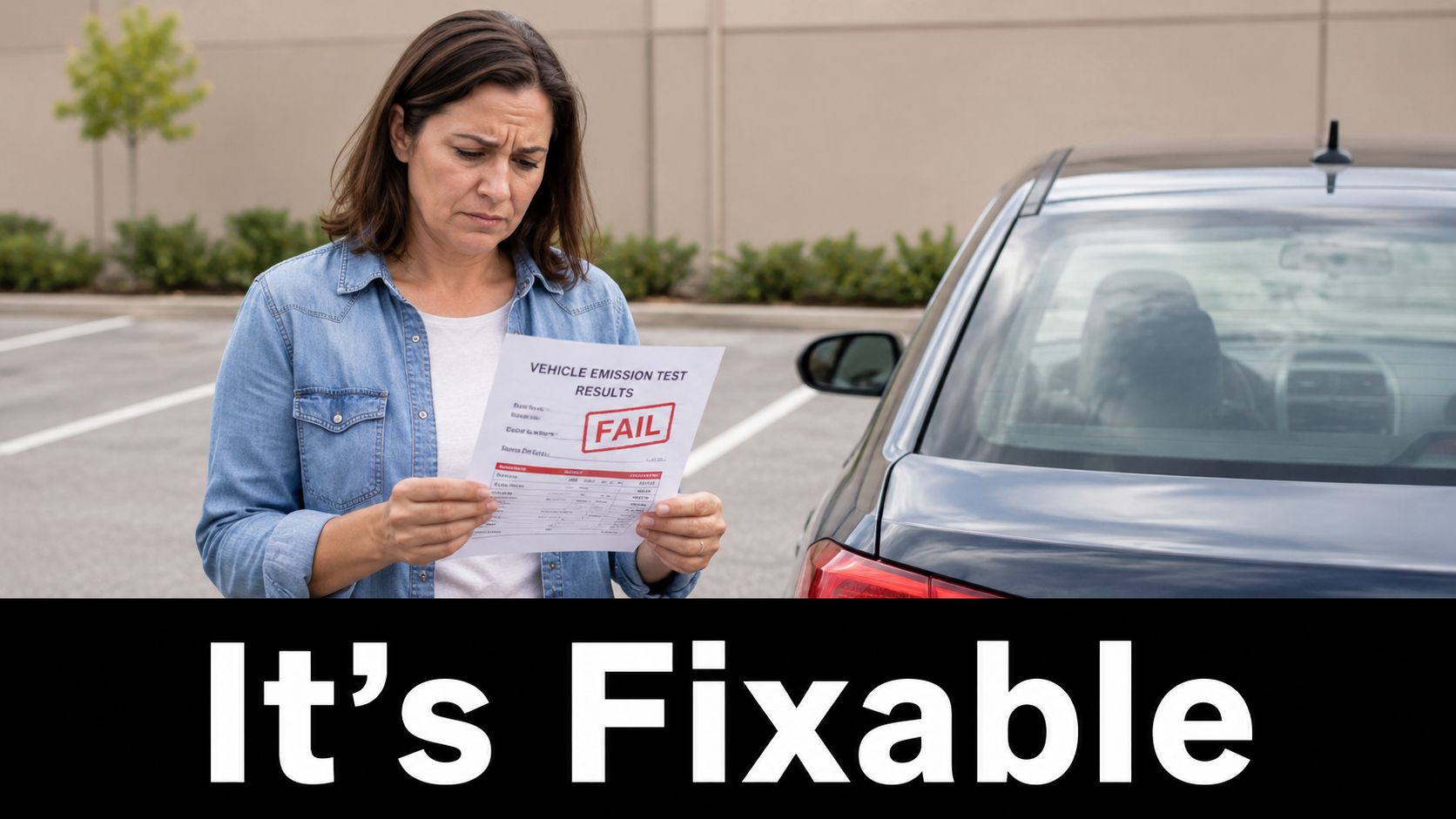
According to the California Bureau of Automotive Repair 2025 Executive Summary Report, approximately 8.51% of all vehicles fail their initial smog check test, and the overall failure rate for all tests is 9.04%. That means nearly 1 out of every 12 vehicles tested will initially fail, which tells you this isn't rare. It's part of owning a car in California.
Treat it like a risk issue, not just a repair issue
Many focus on one question. What part do I need to replace?
That's too narrow. The better questions are:
- What exactly failed
- Can I fix it cheaply
- How fast do I need to act before registration becomes a problem
- What financial exposure am I taking if I keep driving
That last one matters more than people think. A failed smog test can block registration renewal. If your registration lapses and you keep driving, you've created a legal and insurance headache on top of the repair bill.
Practical rule: Don't argue with the failed report, and don't panic-buy parts. Read the result, confirm the cause, and move fast.
The right mindset
You need a simple plan. First, understand the failure code or test reason. Next, rule out the cheap stuff. Then decide whether this is a quick maintenance fix, a real repair, or a case where you need help navigating waivers or assistance.
If you want a broader starting point on California policy questions while you sort this out, the insurance FAQ resource is a useful place to clarify common coverage concerns.
An emission test fail is frustrating. It's still manageable when you handle it in order.
What to Do Immediately After Your Emission Test Fail
Your first move is not calling five shops. Your first move is reading the Vehicle Inspection Report carefully. The report tells you where the failure happened, and that changes what you should do next.
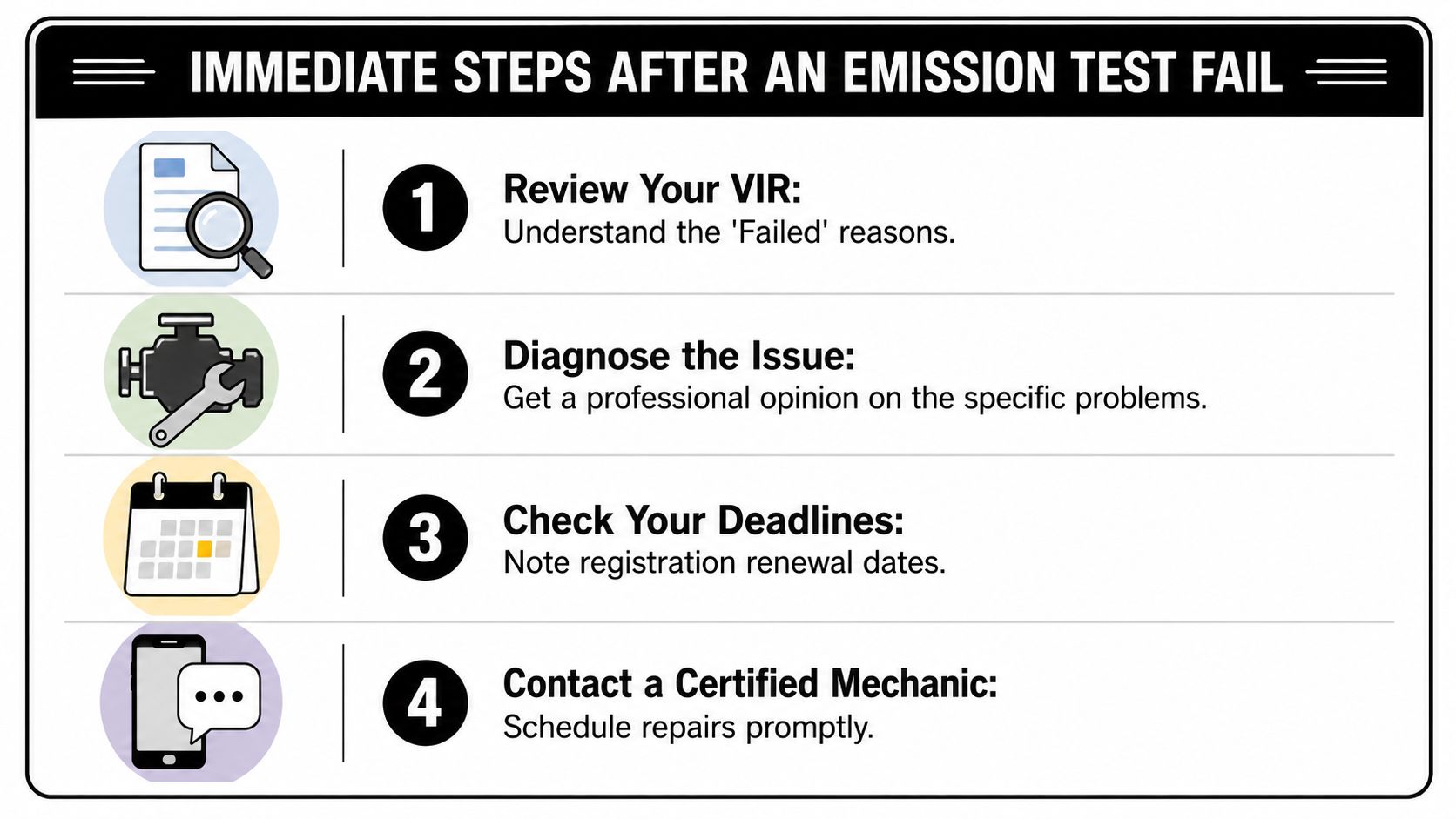
Read the report before you spend money
A failed report usually points you toward one of a few buckets:
- OBD-related issue. The onboard computer has stored a problem code, a readiness problem, or a check engine issue.
- Visual issue. Something required is missing, damaged, disconnected, or obviously noncompliant.
- Tailpipe or emissions output issue. The car is running dirty enough to fail measured standards.
Don't walk into a shop saying, “It failed smog, fix whatever it needs.” That invites lazy diagnostics and expensive guessing. Walk in with the report and ask, “What caused this exact failure point?”
Do the free checks first
Some failures come from neglected components, but some are simple. According to Fleet Rabbit's emissions guide, a loose or cracked gas cap can instantly trigger a Check Engine light and cause a test failure, while other issues can bring average repair costs to around $1,200.
Start with the basics:
Check the gas cap
Tighten it fully. If the seal looks cracked or worn, replace it.Look for obvious hose problems
If you see a disconnected vacuum line or something hanging loose after recent service, fix that first.Ask yourself what changed recently
Battery replacement, recent repairs, code clearing, or ignored warning lights all matter.Use a basic code reader if you have one
Even a simple OBD-II scanner can tell you whether the car is showing stored or pending trouble codes.
If the check engine light is on, stop hoping the smog station made a mistake. The car is telling you there's a fault to diagnose.
Don't clear codes just to get through the test
A lot of drivers make this worse by clearing codes and rushing back for a retest. That can remove useful diagnostic information and create monitor-readiness problems. You've spent money and time, and now the car still isn't ready.
If you like getting more familiar with scanner basics and fault-code logic before talking to a shop, this guide on troubleshooting vehicle issues for DIYers is a solid reference.
Lock down your timeline
Before you book anything, check your registration due date and count backward. If your deadline is close, tell the repair shop that upfront. A good shop will understand that this isn't just about engine performance. It's about getting your car legal again before the paperwork catches up with you.
Finding the Right Mechanic and Common Repair Costs
Once the free checks are done, the next step is choosing the right shop. Many California drivers waste money during this process. They go to a general repair facility, get vague advice, then bounce to a smog station again without a real fix.
Use a shop that can diagnose emissions faults clearly and explain why the car failed. Ask for the trouble codes, the likely root cause, and whether the proposed repair addresses the actual test failure or just a symptom.
What a good shop should tell you
A trustworthy mechanic should answer these without getting defensive:
- What failed on the report
- What code or component points to the failure
- Whether the repair is confirmed or still diagnostic
- Whether the vehicle needs a drive cycle before retest
- Whether there are multiple issues or one primary issue
If the answer is just “you probably need a catalytic converter,” slow down. That's one of the most expensive guesses a shop can make.
Common Smog Failure Causes and Estimated Repair Costs 2026
The table below keeps the cost language qualitative because shops, vehicles, and parts availability vary. The one number worth anchoring to is the average repair-and-retest burden already noted earlier.
| Component | Common Symptom | Estimated Repair Cost |
|---|---|---|
| Gas cap | Check engine light, EVAP-related issue | Usually low |
| Oxygen sensor | Check engine light, fuel trim or sensor faults | Low to moderate |
| EVAP hose or leak point | EVAP code, fuel vapor system issue | Low to moderate |
| EGR-related component | Rough running, emissions fault, failed inspection item | Moderate |
| Catalytic converter | Persistent emissions issue, efficiency-related fault | High |
| PCV-related issue | Rough idle, oil contamination symptoms, emissions impact | Low to moderate |
| Diagnostic labor only | No repair yet, just confirmation of cause | Variable |
That table is intentionally plain. California shops see the same categories over and over, but the final bill depends on your make, model, parts quality, labor rate, and whether someone already misdiagnosed it before you arrived.
How to shop for the repair without getting played
Use a short-list method. Call two or three certified shops, describe the exact failure reason from the report, and compare how they talk through it. The right shop sounds specific. The wrong one sounds rushed.
Ask these questions:
- What is your diagnostic charge
- Will you apply it toward the repair
- Will you print the codes and test findings
- Do you recommend OEM or aftermarket parts for this issue
- What has to happen before the retest
For more California vehicle and policy reading beyond smog repairs, the insurance and ownership blog is a useful background resource.
A good mechanic earns trust by narrowing the problem. A bad one widens the estimate.
Navigating Retests the DMV and Auto Insurance Impacts
The issue stops being mechanical and starts becoming financial. If your smog problem delays registration, you're no longer dealing with a shop inconvenience. You're dealing with compliance risk.
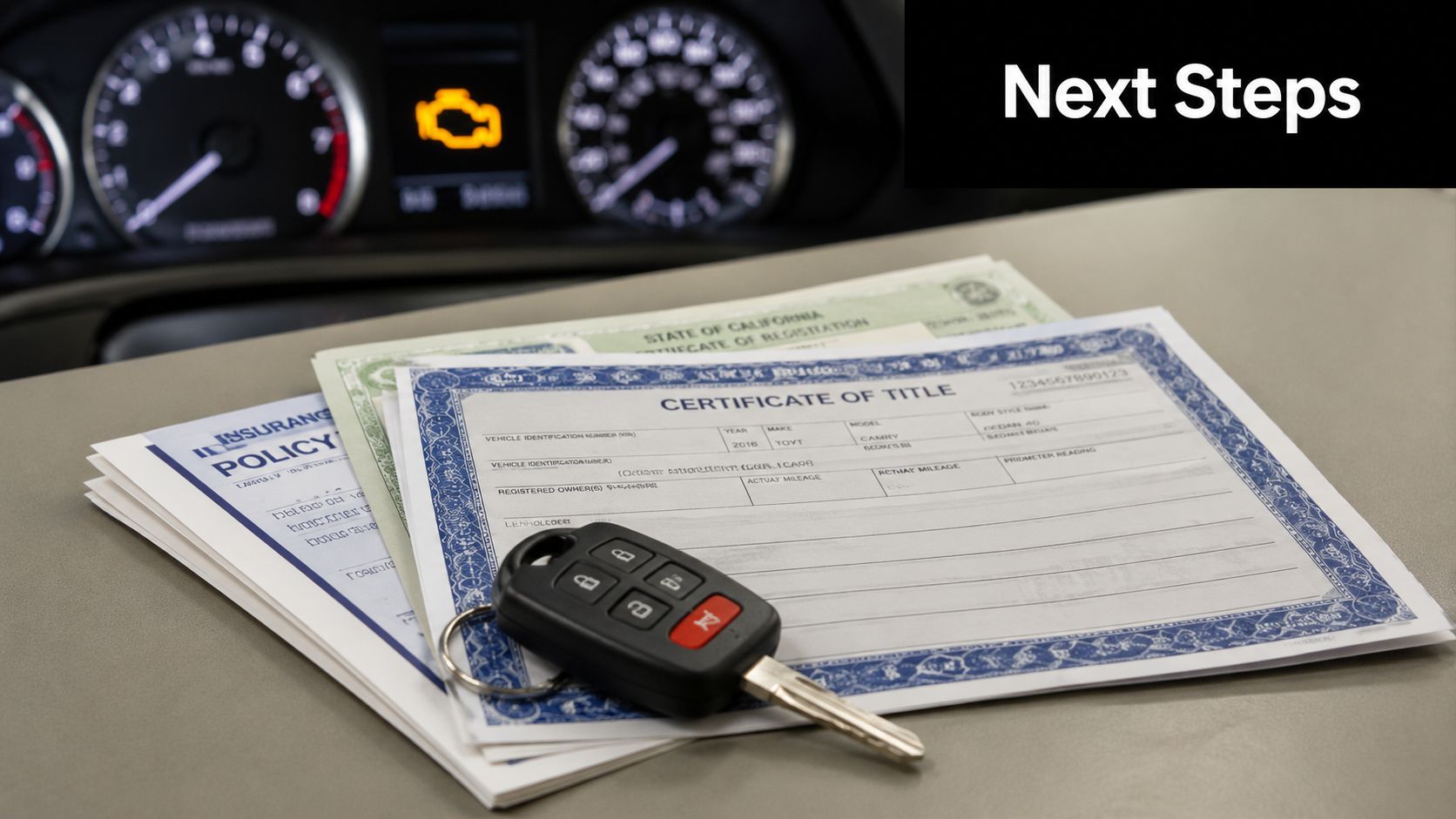
Retests matter, but deadlines matter more
After a repair, don't assume you can just show up and be done. Some drivers rush back too quickly, especially after code clearing or battery work, and end up burning another test because the system still isn't ready.
If you need a practical walkthrough of the paperwork side, this overview of California DMV registration renewal helps explain how the process ties together.
The bigger issue is timing. If you miss the registration window because the smog issue is unresolved, you've created a legal exposure that can follow you onto the road.
Why this affects auto insurance
As of January 1, 2025, California's minimum liability requirements increased to $30,000 per person for bodily injury, $60,000 per accident, and $15,000 for property damage, according to Insurance.com's California auto insurance overview. If a smog-related registration lapse leads to an accident where you're treated as uninsured, those costs can land on you directly.
That's the part too many drivers miss. They think, “I still have my policy, so I'm fine.” Maybe. Maybe not. Registration problems, claim disputes, and vehicle condition issues can all complicate what should have been a straightforward claim.
The insurance angle most smog guides ignore
From an insurance perspective, a failed smog check raises a few obvious questions:
- Is the car still legally registered
- Did the owner keep driving after a known compliance problem
- Was the vehicle properly maintained
- Could a larger mechanical issue have contributed to an accident
No, a single smog fail doesn't automatically spike your premium. But neglected maintenance and registration trouble are exactly the kind of facts that can make a bad day more expensive.
This is why I tell clients to separate two jobs:
| Job | What you need to do |
|---|---|
| Mechanical fix | Diagnose and repair the actual emissions problem |
| Financial protection | Confirm your registration status and review your liability limits |
If your current limits are bare minimum, you're exposed. California roads are expensive, and body injury claims get expensive fast. The California auto insurance coverage page is a good reference point if you need to compare what stronger protection looks like.
The repair bill hurts once. An uncovered liability claim can follow you for years.
There's a budget angle too. If you're already managing rising costs, this is a smart time to review whether your car insurance still fits, and whether bundling with home insurance or renters insurance could free up room in your monthly budget. If you're protecting a family, that same review often reveals gaps in life insurance as well. A smog failure doesn't cause all those issues, but it's often the event that forces people to finally look at the whole picture.
When Repairs Are Too Expensive What Are Your Options
Some smog repairs are manageable. Some are brutal. When the estimate lands in the painful range, you need to stop and compare it against the rest of your budget.
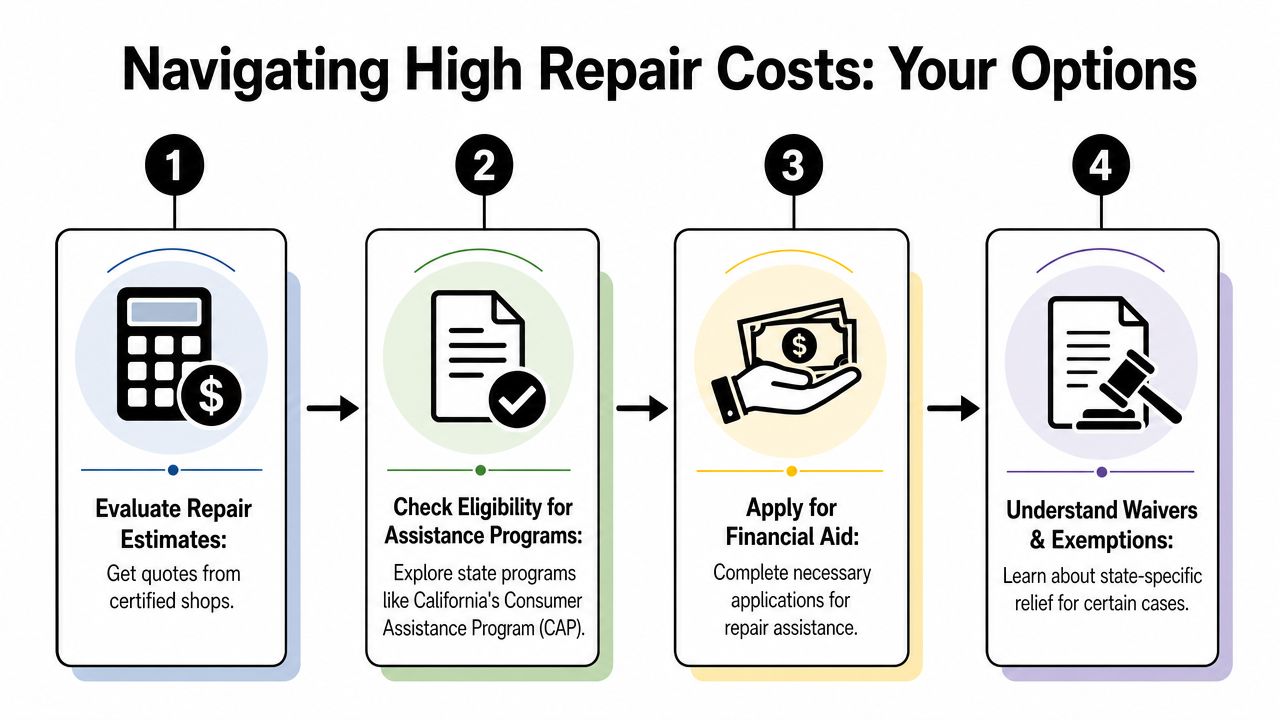
According to The Zebra's California insurance cost overview, the average car insurance rate in California is $1,713 per year, which is 20% higher than the national average. A major smog repair can exceed a full year of premiums. That's why assistance programs and waiver rules matter.
Start with California assistance
If the repair bill is more than you can comfortably absorb, check whether you qualify for California's Consumer Assistance Program, often called CAP. The key point is simple. Don't assume you have to choose between paying the full estimate and giving up on the car.
Use this order:
- Get a written estimate from a qualified shop.
- Confirm whether assistance applies before authorizing major work.
- Keep every invoice and diagnostic record.
- Ask whether the vehicle is a repair candidate or better suited for retirement options.
Understand waivers before you waste money
Drivers hear the word “waiver” and think it means automatic relief. It doesn't. A waiver path usually depends on documented repair effort and proof that the right steps were taken. In other states, the difference between a repair waiver and a diagnostic waiver is significant. Connecticut's waiver guidance is a good example of how those categories can differ when a problem is considered unfixable versus expensive.
What matters for you is this. Don't keep replacing parts without asking whether your state process offers another route if the vehicle remains difficult or uneconomical to repair.
Important: A waiver is a paperwork process, not a shortcut. If the state wants repair records, measurable improvement, or manufacturer documentation, you need to bring exactly that.
Make the hard call clearly
Sometimes the right answer is repair. Sometimes it's assistance. Sometimes it's retiring the vehicle and moving on.
Use a simple decision filter:
- Repair it if the car is otherwise reliable and the fix solves the registration problem cleanly.
- Apply for assistance if the repair cost collides with rent, mortgage, insurance, or other essential bills.
- Walk away from the car if the emissions problem is only one item in a longer list of expensive failures.
This is risk management. Don't throw good money after bad because you're emotionally attached to a car that keeps draining you.
How to Avoid an Emission Test Fail in the Future
The best way to deal with an emission test fail is to avoid repeating it. Most repeat failures don't come from some mysterious new defect. They come from impatience, skipped maintenance, or sloppy prep before the retest.
Don't ignore readiness monitors
One of the most common retest mistakes happens after a battery change, repair, or code reset. According to Jiffy Lube's emissions testing guide, many drivers fail retests because of incomplete readiness monitors, and experts recommend driving 100 to 200 miles with mixed city and highway driving before retesting.
That means the car may feel fixed and still not be test-ready.
Use a pre-test routine that actually works
Before your next smog check, do this:
- Drive enough after repairs. Mixed city and highway miles help the onboard system complete its checks.
- Make sure the check engine light stays off. Not just off for one trip.
- Check the gas cap again. It's basic, but basic failures still count.
- Stay current on oil changes. Dirty oil and neglected maintenance don't help emissions performance.
- Ask the shop if monitors are ready before you schedule the test.
If you want a quick refresher on the patterns shops see most often, this roundup of common smog check fail reasons is a practical checklist.
Good maintenance supports better insurance outcomes
Insurers want lower-risk drivers. They don't reward neglect. A well-maintained car, current registration, and fewer last-minute problems put you in a stronger position as a vehicle owner. That doesn't mean a smog pass earns you a special discount by itself. It means responsible habits reduce the kinds of problems that turn into claims, lapses, or coverage disputes.
For broader California ownership and protection advice, the guides library is a useful place to keep learning.
Keep it simple. Fix warning lights early. Don't clear codes and rush back. Give the car time to complete its drive cycle. And treat smog compliance the same way you should treat auto insurance, home insurance, renters insurance, and life insurance. It's regular maintenance for your financial life.
If you want a second opinion on the insurance side of this, Mai & Associates can help you review your California auto insurance, compare liability limits, and look for savings across car insurance, home insurance, renters insurance, and life insurance so one smog problem doesn't turn into a bigger financial hit.