Does Renters Insurance Cover Flood Damage? CA Guide
Standard renters insurance doesn't cover flood damage. It does cover some other water losses, and renters can buy separate flood coverage for personal belongings through the NFIP with up to $100,000 in contents protection.
If you're renting in California and you just got a storm alert on your phone, that distinction matters more than anything else in your policy. A lot of renters assume "water damage is water damage." It isn't. Water from a burst pipe inside the building is one thing. Water that rushes in from heavy rain, runoff, storm surge, or overflowing water outside is something else entirely.
That gap catches people at the worst possible moment. After an atmospheric river, a flash flood, or runoff moving downhill after a wildfire, renters often find out too late that their standard policy was never built to pay for that kind of loss.
The Hard Truth About Renters Insurance and Floods
California renters need a blunt answer to the question does renters insurance cover flood damage. No. A standard renters policy excludes flood damage, even if the flood ruins your couch, laptop, mattress, clothes, and everything stored near the floor.
That sounds harsh, but it's how renters insurance is designed. A renters policy is built for common losses such as theft, fire, liability, and certain kinds of sudden accidental water damage. Flooding is treated as a separate peril, which means it requires separate insurance.
Why this matters so much in California
California renters face flood risks that don't always look like the classic image of a river overflowing in a rural town. In real life, it can be street flooding after intense rain, drainage overflow in a dense neighborhood, runoff near a hillside apartment, or water moving into a ground-floor unit during an atmospheric river.
You don't have to live in a place that feels "flood-prone" for this to become your problem. That's exactly why flood losses surprise renters.
Practical rule: If water comes from outside and spreads across normally dry ground before entering your rental, assume your standard renters policy won't cover it.
The dangerous misunderstanding
The biggest mistake I see is renters buying a solid policy and assuming they are fully protected. They're not. They have important protection, but not complete protection.
A good renters policy is still worth having. It protects against plenty of real risks, and if you're shopping for California renters insurance options, you should absolutely carry it. But you also need to understand where it stops.
Here's the hard truth in plain language:
- Your renters policy helps with everyday insurance problems. Think theft, fire, liability, and certain internal water losses.
- It doesn't step in for floodwater coming from outside. That's the gap.
- If you want protection for flood loss to your belongings, you need a separate flood policy.
That isn't overkill. It's the correct setup for a California renter who wants real protection instead of assumptions.
Flood Damage vs Water Damage What Your Policy Actually Covers
The insurance industry uses these terms very precisely, and renters need to do the same. If you mix them up, you can end up filing the wrong claim or expecting coverage that isn't there.
The simplest way to think about it
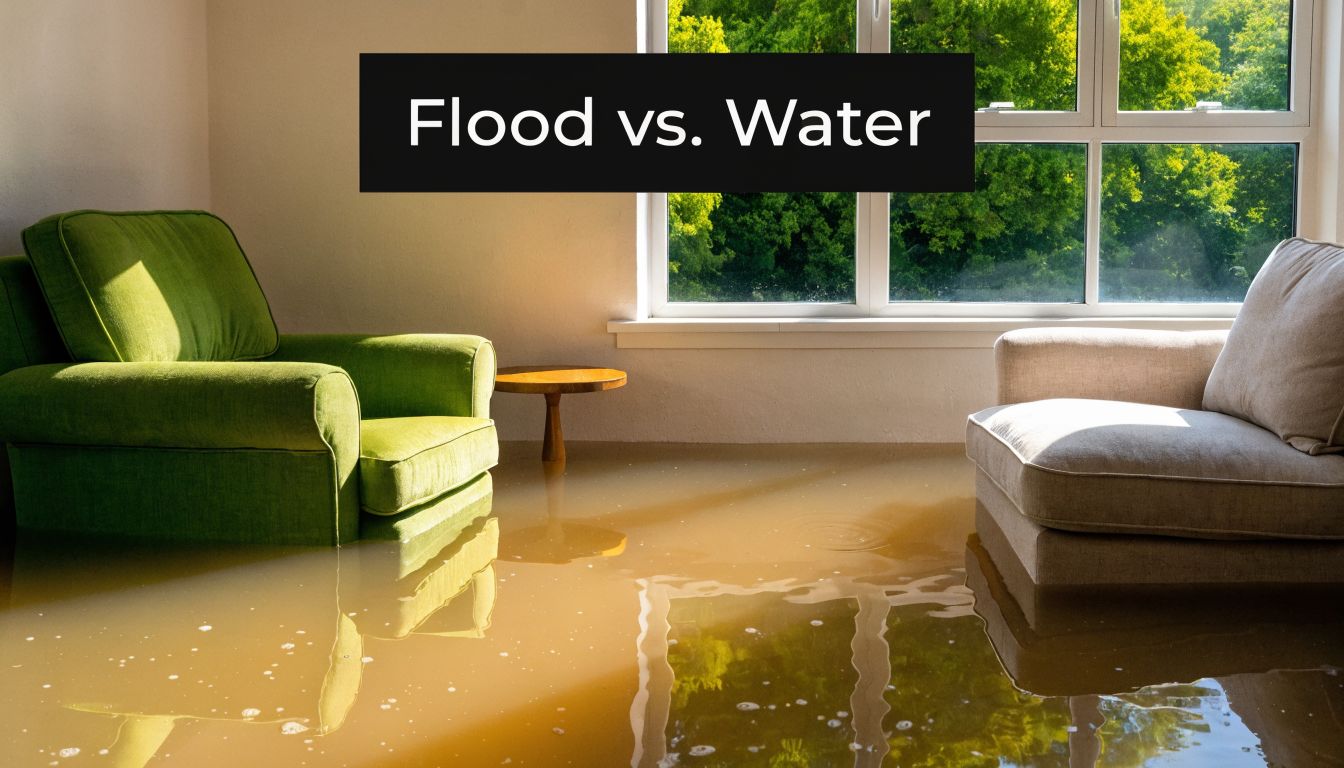
Use this test: water from inside the building versus water rising or flowing in from outside.
If a pipe bursts under the sink, a washing machine hose fails, or an appliance leaks suddenly, that's usually the kind of accidental water damage a renters policy is built to address. If rainwater, runoff, river water, or storm surge moves over land and enters the building, insurers treat that as flood damage.
According to Allstate's explanation of renters flood coverage, standard renters insurance policies in the United States universally exclude flood damage coverage, while still covering sudden and accidental water damage such as burst pipes or leaking appliances. The same source notes that from 2014 to 2024, nearly one-third of NFIP claims originated outside high-risk flood areas.
That last point matters. A lot of renters say, "I'm not in a flood zone." Maybe. But plenty of claims still come from places people didn't think were the problem.
Covered and not covered in real life
Here's how that distinction usually plays out:
| Situation | Standard renters insurance | Separate flood insurance |
|---|---|---|
| Burst pipe inside a wall | Usually yes | No, not the purpose |
| Washing machine overflows suddenly | Usually yes | No, not the purpose |
| Rain enters after storm damage creates an opening | May be covered depending on facts | Not the main use |
| Street flooding enters the unit | No | Yes, if flood policy applies |
| Overflowing creek or river damages belongings | No | Yes, if flood policy applies |
| Storm surge pushes water into the property | No | Yes, if flood policy applies |
Don't confuse flood damage with maintenance issues
Some renters hear "water coming in" and immediately assume insurance will pay. Sometimes the issue is flood. Sometimes it's a building maintenance problem. Sometimes it's neither covered by your renters policy nor by flood insurance.
If you own rental property or manage units, regular plumbing and drainage upkeep can prevent a lot of ugly disputes before they start. This guide for rental property owners is a useful primer on where maintenance failures can create water problems that insurance doesn't neatly solve.
Water damage claims often turn on one question first: where did the water start?
That question decides everything. Not the size of the mess. Not how expensive your belongings were. Not whether the storm felt unusual.
Your Solution Standalone Flood Insurance for Renters
A winter storm parks over Southern California. The parking lot fills first, then the street, then the first-floor units start taking in water under the door. Your renters policy will not step in for that loss. The fix is a separate flood policy for your belongings.
For California renters, the right answer is usually a contents-only flood insurance policy. It protects the property you own inside the unit. Your landlord insures the building. You insure your stuff.
What renters flood insurance can cover
This policy is built for the items you would have to replace after outside water floods the rental, including:
- Furniture: beds, sofas, tables, dressers
- Electronics: laptops, TVs, tablets, gaming systems
- Clothing and daily-use items: shoes, coats, kitchen items, linens
- Personal property throughout the unit: the ordinary belongings that become expensive when you have to replace all of them at once
That last point matters more than renters expect. Flood losses are rarely one ruined item. They are a full-apartment replacement problem.
Where to get it
California renters usually have two options.
NFIP flood coverage
This is the federal flood insurance program. It is the standard starting point for many renters and works well for straightforward contents protection.Private flood insurance
Some private carriers offer renter-friendly flood options that may fit better depending on the property, the location, and how fast you want coverage in place.
If you rent in places exposed to hard rain and runoff, including Escondido, Costa Mesa, Glendale, and other parts of California hit by atmospheric rivers, get quotes from both markets and compare them side by side. Mai & Associates helps renters do that every season, especially in communities where water can move fast from street to unit.
What I recommend
If you rent in California and your belongings would hurt to replace, get flood insurance priced now.
I especially recommend it if any of these apply:
- You live on the ground floor
- Your area has poor drainage or flood-prone streets
- You are near foothills, burn scar zones, creeks, or channels
- You live in a part of California that gets hammered by atmospheric rivers
- You cannot comfortably replace everything out of pocket
That last point is the test.
Do not guess based on a hill, a sunny forecast, or a landlord saying the property has never flooded before. Water ignores optimism. If you want a straight answer before storm season, request a California flood insurance quote for renters and compare your options while you still have time.
Flood coverage only helps if you buy it before the water shows up.
Renters Insurance vs Flood Insurance Compared
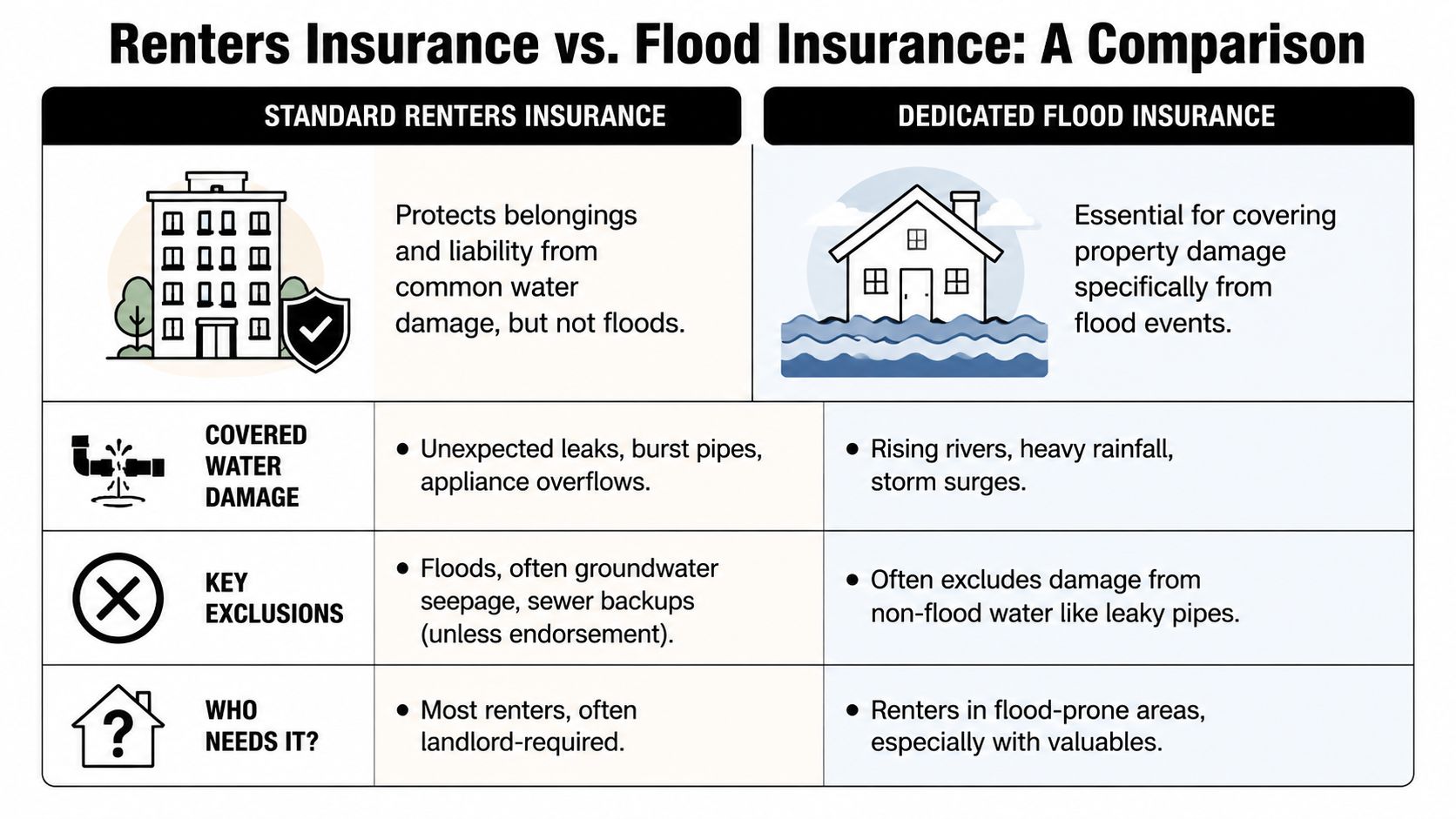
These are two different products with two different jobs. One doesn't replace the other.
The side by side view
| Feature | Standard renters insurance | Flood insurance for renters |
|---|---|---|
| Main purpose | Protects belongings and liability from common covered losses | Protects personal property from flood events |
| Water-related protection | Sudden accidental internal water damage may be covered | Flood damage from outside water sources |
| Typical examples | Burst pipes, appliance leaks, certain accidental water events | Heavy rainfall runoff, overflowing water, storm surge |
| Building coverage | No, renters don't insure the structure | No, contents-only for renters |
| Why you need it | Everyday protection most renters should carry | Specific protection for a major exclusion in renters coverage |
The practical takeaway
If you only carry renters insurance, you have a good start. You do not have complete protection against flood loss.
If you only carry flood insurance, you still have major gaps for theft, fire, liability, and the usual covered causes of loss. Most renters need both products if they want broad protection.
A lot of California consumers first learn this difference while shopping for renters insurance, but it's just as important for people comparing broader California home insurance options for households, landlords, or future home purchases. The same principle applies across property insurance. Each policy covers specific perils. You don't get every water-related risk in one package.
The cleanest rule to remember
- Renters insurance handles many common apartment and condo risks.
- Flood insurance handles flood.
- Real protection means matching the policy to the peril.
That's not insurance jargon. That's the whole decision.
California Flood Risks Renters in Glendale and Escondido Take Note
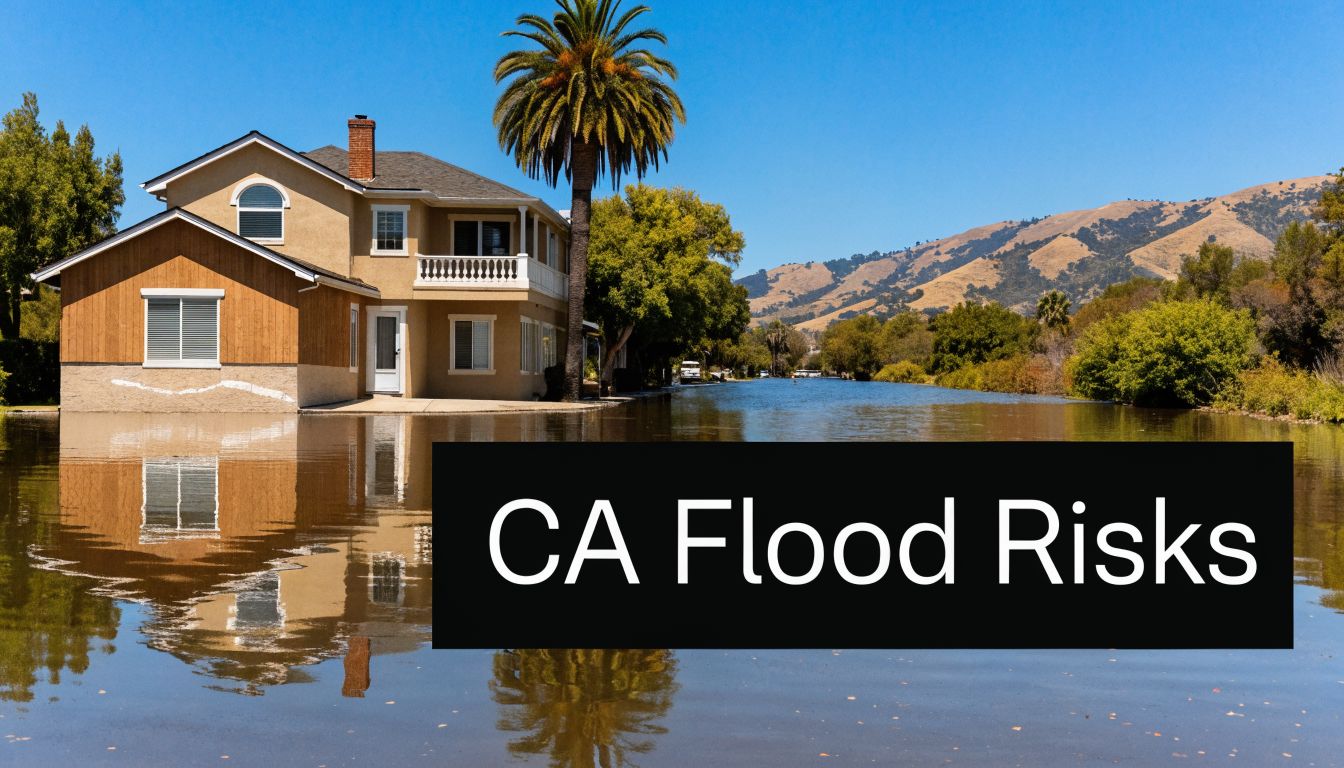
California flood risk has a way of looking temporary right before it becomes expensive. Streets fill up. Parking lots back up. Water runs downhill fast. A unit that felt perfectly safe during dry months suddenly isn't.
Atmospheric rivers change the conversation
For California renters, flood risk isn't limited to homes beside obvious bodies of water. Atmospheric rivers can dump enough water to overwhelm storm drains, parking areas, and lower-elevation streets. Urban flooding can hit apartment communities, duplexes, and condo buildings far from a riverbank.
That matters in places across Southern California, including neighborhoods where renters don't typically think of themselves as flood-exposed.
Burn scars and mudflow are a serious problem
The risk gets even more misunderstood after wildfire season. In wildfire-prone areas, burned ground doesn't absorb water the same way, and runoff can become destructive fast.
According to USAA's renters coverage information, confusion between post-fire mudflow floods and other perils is common for renters in areas like Escondido and Westlake Village, leading to claim denials. The same source notes a 25% rise in hybrid water backup endorsements in the last year, with an average cost of $25 per year, which can help bridge some sewer-related flooding gaps.
That last detail is useful, but don't overread it. A water backup endorsement is not the same thing as flood insurance. It can help with a narrow type of water event. It doesn't solve the flood exclusion.
What California renters should actually do
If you rent in Glendale, Escondido, Costa Mesa, Westlake Village, or anywhere near slopes, recent burn areas, or poor drainage, take these steps:
- Review your floor level: ground-floor units usually face more immediate water intrusion risk.
- Ask about local flooding history: landlords don't always volunteer useful context.
- Check for backup coverage: it may help with certain sewer-related losses, but don't mistake it for flood coverage.
- Price a flood policy anyway: your assumptions about local risk may be wrong.
If you own a home in the area or you're moving from renting into ownership, reviewing home insurance in Escondido can also help you understand how wildfire, runoff, and water exclusions intersect in California property coverage.
A renter in a dry month can still have a flood problem in a wet week.
What to Do After Flood Damage Strikes Your Rental
A January storm dumps rain across Southern California overnight. By morning, your ground-floor apartment in Escondido has water coming under the door, your rug is soaked, and your laptop bag is sitting in muddy runoff. At that point, speed matters more than frustration. Get safe, document everything, and send the claim to the right policy.
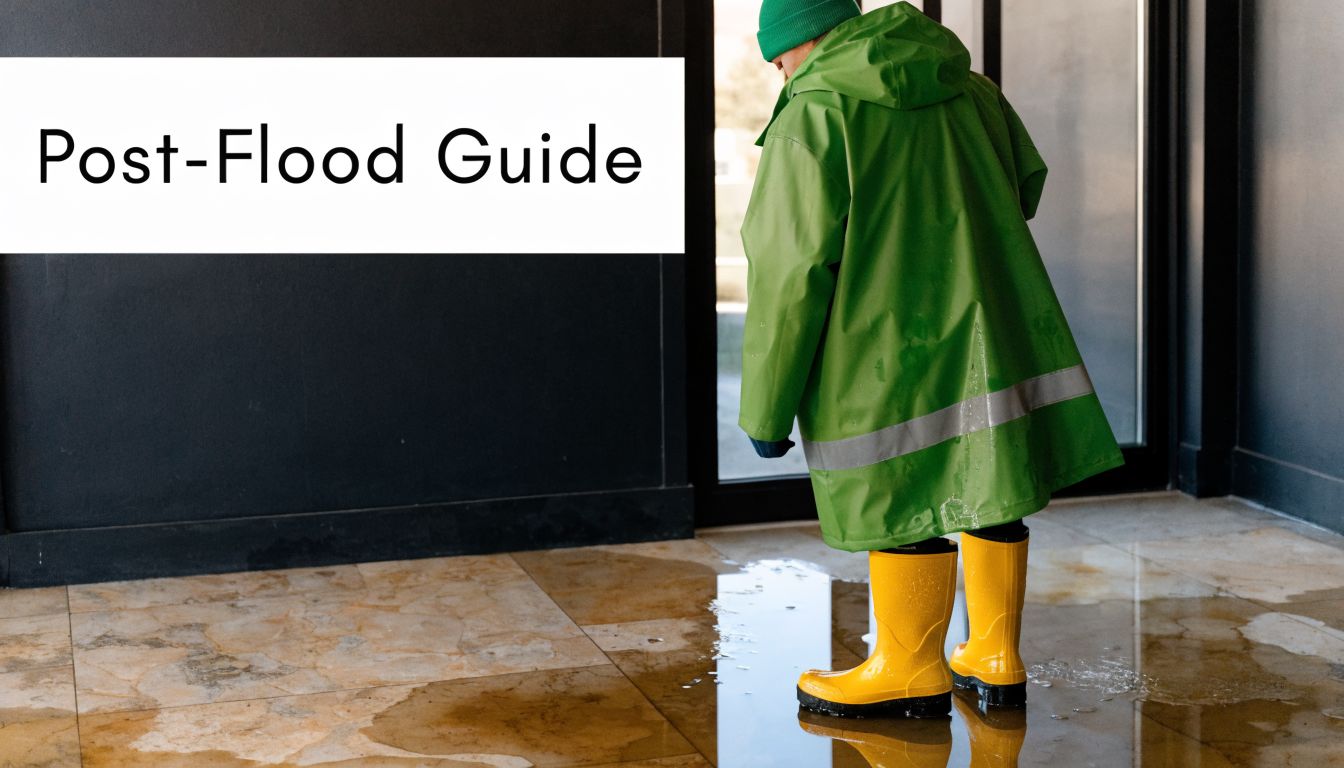
Flood losses get expensive fast, especially once electronics, furniture, bedding, and clothing are contaminated or unsalvageable. As noted earlier, even shallow flooding can wipe out a renter's personal property in a single event. That is exactly why California renters need a clean post-loss routine, especially during atmospheric river season in places like Costa Mesa, Glendale, and Escondido.
Follow these steps in order
Get out if the unit is unsafe
Standing water, active leaks near outlets, and rising water create real danger. Leave first. Sort out insurance second.Call your landlord or property manager right away
They need to address the building, stop additional damage, and deal with habitability issues. Their policy applies to the structure. Your belongings are your problem unless you bought the right coverage.Record the damage before you move things
Take wide photos of every affected room. Then take close photos of water lines, soaked furniture, ruined boxes, damaged cords, warped shelving, and any mud or debris left behind.Make a room-by-room list
Write down what was damaged, where it was, and its approximate age. Do this the same day if you can. Memory gets worse by the hour after a stressful loss.Start the correct claim
Flood damage goes to your flood insurer. Sewer backup may go through an endorsement if you have one. A standard renters carrier may deny the loss if outside water caused it, so report the facts carefully and avoid guessing about the cause.
One mistake causes a lot of trouble. Renters clean up first, then try to prove what happened later. That is backwards.
Documentation is what keeps your claim from falling apart
Your file should show the source of the water as clearly as possible, the height of the water, the condition of each damaged item, and the overall condition of the unit before cleanup starts. Save screenshots of texts with the landlord. Keep receipts for emergency purchases, hotel stays if covered, and any temporary protective steps you paid for.
If flooring swelled, separated, or stayed wet after the water receded, this Flacks Flooring guide for local homeowners gives a useful overview of how water-damaged floors are inspected and repaired. Renters usually will not handle the flooring claim directly, but understanding what moisture does to subflooring and finish materials helps you document the condition of the unit and push for faster action from management.
Do not throw damaged property away until the insurer tells you to, unless it creates a health or safety problem.
What not to do
- Do not assume the landlord's policy covers your belongings
- Do not dry out the unit and toss items before taking photos
- Do not estimate values weeks later from memory
- Do not use vague language about the cause if floodwater entered from outside
- Do not wait days to report the loss
Flood losses are chaotic. A disciplined response gives you a better chance of getting paid and getting out of an unlivable rental faster. If you rent in a California storm corridor, especially near drainage channels, slopes, or recent burn scars, treat every water intrusion like a coverage issue from the first hour.
Protect Your Belongings Before the Waters Rise
A standard renters policy is necessary, but it isn't enough if floodwater is the threat. That's the answer California renters need to remember.
If you're asking does renters insurance cover flood damage, the practical answer is no, not by itself. The right setup is simple. Carry renters insurance for the usual losses. Add separate flood coverage if you want protection when outside water enters your rental and destroys your belongings.
This matters even more in California, where atmospheric rivers, urban runoff, and post-wildfire mudflow can turn a normal rental into a loss scene fast. Waiting until the next storm warning isn't a plan. Reviewing your policy now is.
If you want a clear answer on your current coverage, Mai & Associates can help you review renters insurance, compare flood options, and look for other protection gaps across your auto, home, car, and life insurance policies. Get a no-obligation quote, ask direct questions, and make sure your coverage matches the risks you actually face in California.