Does Insurance Cover Termite Damage? A CA Guide
TL;DR: No, standard homeowners insurance almost never covers termite damage. Insurers classify termites as a maintenance problem because the damage builds over time, like a roof leak from years of skipped repairs. Policies are built for sudden, accidental losses. Termites do the opposite. In rare cases, a separate covered event tied to termite damage may trigger limited coverage, but you should plan as if the termite repairs are coming out of your pocket. For many California homeowners, the smarter move is regular inspections, fast treatment, and, if the property fits, a termite bond.
You find a small pile of what looks like sawdust near the baseboard. A window starts sticking. You press on the trim and it gives way more than wood should. That is usually the moment the question stops being theoretical.
Does insurance cover termite damage?
For California homeowners, this exclusion hits harder than it should. You are already balancing wildfire insurance problems, FAIR Plan gaps, rising rebuilding costs, and older housing stock that hides decay well. Add termites to that mix and the underlying issue becomes clear. Many homeowners discover this exclusion only after finding damage and filing a claim.
That is why a simple yes-or-no answer is not enough. You need to understand why insurers exclude termite damage, where the narrow exceptions live, and how to close the gap before it turns into a five-figure repair. If you want a visual primer before reading further, this guide on how to identify termite damage is a useful place to start.
At Mai & Associates, we treat termite risk as part of a bigger protection plan. Your home policy matters. So do the choices around your California property, your emergency savings, your auto liability, and your life insurance if your family depends on your income. Good coverage works like a safety net with no holes. Termites expose one of the biggest holes in a standard homeowners policy.
That Sinking Feeling Discovering Potential Termite Damage
Termites are rarely discovered during a calm Saturday inspection. Discovery often occurs while performing ordinary tasks: opening a window, moving a couch, or repainting trim. That's part of what makes termite damage so maddening. It often appears, long after the insects have been at work.
In California, I've seen the same pattern again and again. A homeowner spots bubbling paint and assumes it's minor moisture. A landlord gets a tenant complaint about a warped door frame. A buyer notices a few suspicious marks right before closing and suddenly starts wondering whether they're walking into a money pit.
The first signs usually look small
The early clues rarely look dramatic:
- Wood dust or frass: Small piles near trim, windows, or door frames.
- Soft or hollow wood: Tap it and it sounds wrong.
- Mud tubes: Thin shelter paths along foundations or walls.
- Sticking doors and windows: Frames can shift when wood weakens.
- Blistering paint: Damage behind the surface can mimic water issues.
If you're not sure what you're looking at, this guide on how to identify termite damage is a useful visual reference. It can help you separate termite warning signs from normal wear, water staining, or old-house quirks.
Practical rule: If wood looks swollen, brittle, hollow, or oddly dusty, treat it like a termite issue until a licensed inspector tells you otherwise.
The emotional part matters too. A house isn't just lumber and drywall. It's your largest asset, your routine, your equity, and for many families, the center of everything. So when you suspect termites, panic is normal. What matters next is getting clear on what insurance will and won't do, and then acting fast.
The Unfortunate Truth About Termites and Home Insurance
Here is the hard answer clients need. Standard homeowners insurance usually does not cover termite damage. Standard renters insurance usually does not cover termite damage to personal property caused by an infestation either. If termites have been feeding on the home for months or years, the policy almost always treats that as an ownership problem, not an insurance problem.
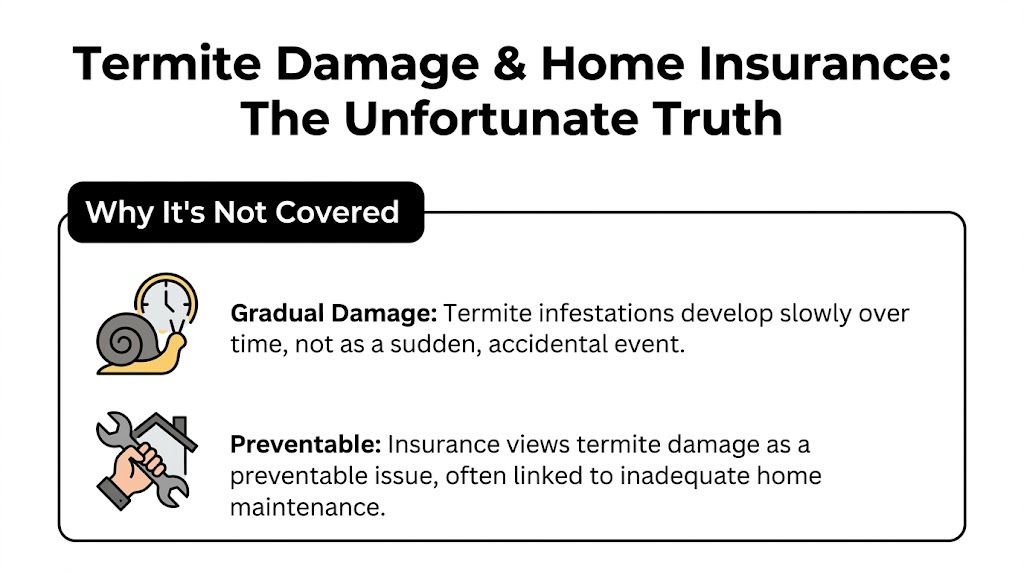
Why insurers exclude it
Insurance is designed for sudden, accidental loss. A kitchen fire. A tree through the roof during a storm. A pipe that bursts without warning.
Termites do the opposite. They cause slow, hidden deterioration. Insurers put that in the same category as rot, deferred upkeep, and preventable wear.
To understand the logic, compare a burst pipe to a slow leak behind a wall. One creates immediate damage from a sudden event. The other causes decay over time because no one caught it early. Termite claims fall into that second category, which is why carriers deny them so consistently.
That distinction matters even more in California. Many homes are older, crawlspaces are easy to ignore, and owners are already juggling wildfire hardening, roof requirements, and rising premiums. With the California FAIR Plan covering more homes in high-risk areas, families need to be even clearer about what a policy does and does not protect. Pest damage sits outside the normal promise of home insurance.
Homeowners insurance coverage at a glance
| Type of Damage | Typically Covered by Standard CA Home Policy? | Reason |
|---|---|---|
| Fire from an accidental event | Yes | Fire is a covered peril under most policies |
| Wind or storm damage | Usually | It is generally treated as sudden physical loss |
| Burst pipe damage | Usually | Sudden and accidental water events are commonly covered |
| Termite infestation | No | Insurers classify it as preventable maintenance |
| Wood rot from long-term neglect | No | Gradual deterioration is excluded |
| Extermination or termite treatment | No | Maintenance and pest control are the owner's responsibility |
If you want a clearer picture of how standard policies handle property risks in this state, review these California home insurance options.
Insurance protects against a sudden hit to your finances. It does not pay for slow damage that regular inspection and maintenance should catch.
This is why I give California clients the same advice every time. Do not build your protection plan around the hope that a termite claim will get approved. Build it around reality. Keep the right home policy for fires, liability, and major sudden losses, then close the termite gap with inspections, maintenance, and enough savings to handle repairs before they spread into a much bigger asset problem.
The Rare Exceptions When Coverage Might Apply
The exclusion isn't perfectly absolute. It's just very narrow.
Secondary damage can change the claim
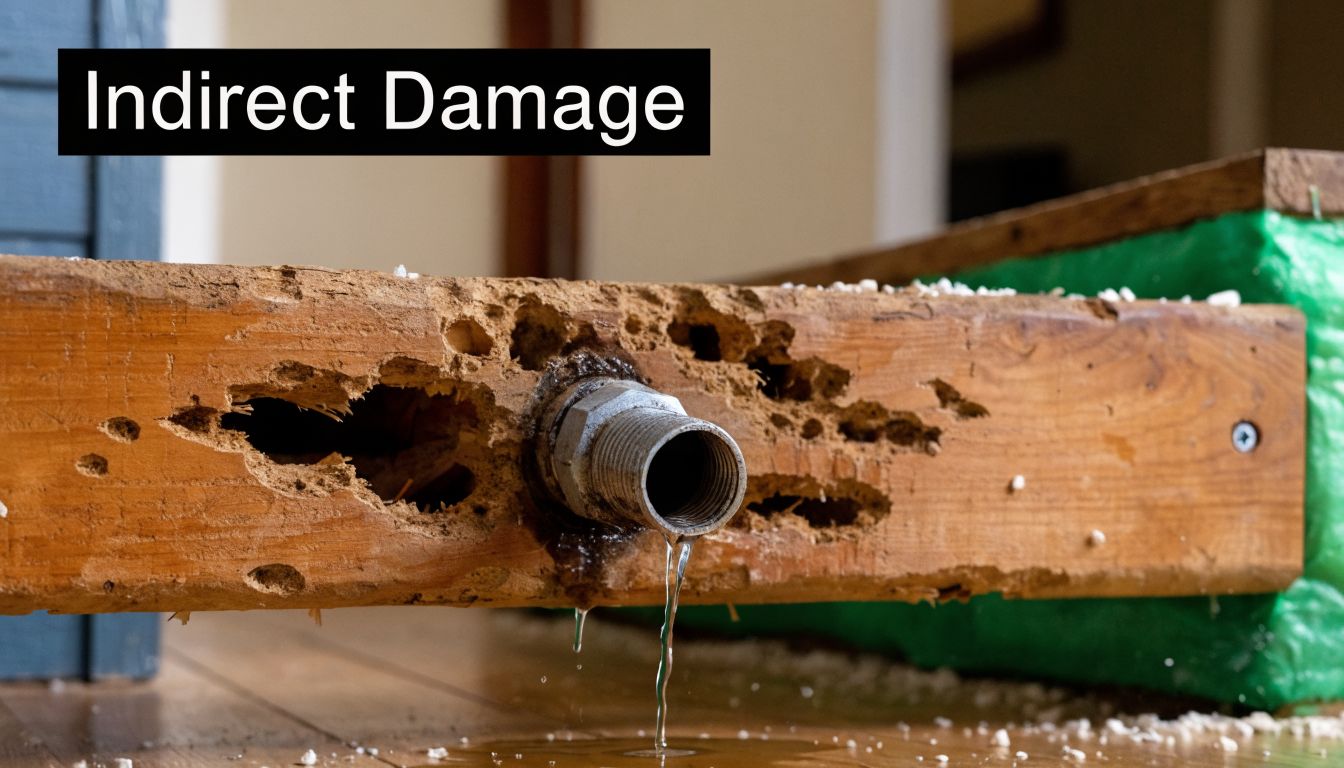
The best-known example is electrical fire. As Plymouth Rock explains in its termite insurance article, if termites chew through wiring and that damage causes a fire, the fire damage may be covered as a separate sudden and accidental peril. The termites themselves are still not covered. The wood they ate is still not covered. The extermination bill is still your problem. But the fire loss may trigger coverage.
That's an important distinction. Insurance may pay for the resulting covered event, not the infestation.
What to document if this happens
If you think termites caused a secondary event, don't rely on a casual explanation over the phone. Build the file.
- Photograph everything immediately. Get the damaged area, the broader room, and anything that shows a sequence of events.
- Preserve damaged material if safe. Burned wiring, affected trim, or collapsed wood can matter.
- Get a licensed inspection. You need a professional report that connects the termite activity to the later loss.
- Report facts, not theories. Tell the carrier what happened and when you discovered it. Let the inspection support causation.
- Review the policy language closely. Words like "ensuing loss" and "collapse" matter.
The bar is high
Homeowners often assume a collapse claim will be easy if termites weakened a structure. Usually it isn't. Insurers scrutinize these claims because they want proof that the actual covered event was sudden and distinct from long-term deterioration.
The chain matters. "Termites existed" is not enough. You need evidence that termites directly led to a separate covered loss.
If you're asking does insurance cover termite damage, this is the most honest answer: it rarely covers the infestation itself, and only sometimes covers the catastrophic event that follows.
Your Best Defense Proactive Prevention and Maintenance
Since the policy usually won't save you, your maintenance plan has to.

Prevention beats arguing with exclusions
I'll be direct here. Too many homeowners treat termite prevention like an optional chore. It isn't. It's structural asset protection.
According to Termite Tom’s prevention guidance, evidence-based prevention is 95% effective. That same source recommends diverting water to maintain less than 20% soil moisture, sealing foundation cracks larger than 1/32-inch, and considering a non-repellent liquid termiticide with a 10-year residual life.
That's the playbook. Not hoping the carrier changes its mind after the damage is done.
A practical prevention checklist
Use this as your working list:
- Control moisture first: Make sure water drains away from the foundation. Damp soil and chronic moisture make the house more attractive to termites.
- Seal entry points: Cracks around the foundation, utility penetrations, and gaps near framing deserve attention.
- Keep wood away from the house: Firewood, scrap lumber, cardboard, and old fencing pieces shouldn't sit against exterior walls.
- Inspect vulnerable areas: Crawl spaces, attics, window trim, fascia boards, and garage framing often show clues first.
- Schedule professional inspections: Especially if your home is older, has previous termite history, or sits in a high-risk part of California.
For homeowners who want broader property-risk guidance beyond pests alone, these California insurance guides can help you think through maintenance, coverage gaps, and policy reviews together.
Key takeaway: The cheapest termite repair is the one you never have to make.
If you're deciding whether annual inspections are worth it, compare that cost to opening a wall, replacing framing, repainting, and living through the disruption. Prevention isn't glamorous. It's just cheaper and smarter.
Special Considerations for California Homeowners
California adds layers to this problem that national articles usually gloss over.
First, the termite risk is real. Experian’s coverage explainer notes that termites cause an estimated $5 billion in annual property damage in the U.S., and that California is a major hotspot where subterranean termites account for 70% of infestations. That matters because California homes already face overlapping risks that strain both budgets and insurance planning.
Older homes and coastal conditions
If you own an older home in Glendale, Costa Mesa, Westlake Village, Escondido, or similar parts of the state, termite exposure isn't just a side issue. Older framing, deferred maintenance, and moisture-prone areas can make small problems expensive fast.
Coastal properties often deal with damp conditions and aging wood components. Inland homes may have slab foundations, landscaping moisture, or hidden entry points around additions and garages. In both cases, the structural risk builds gradually.
Wildfire areas and FAIR Plan gaps
This is the part many California owners miss. If you're in a wildfire-prone area and you've had to rely on a California FAIR Plan, that setup doesn't magically solve non-fire property problems. FAIR Plan coverage is already limited by design. It is not a termite solution.
That creates a dangerous blind spot. People spend so much time trying to secure fire coverage that they stop reviewing the rest of the house's vulnerabilities. Termites, drainage, roof condition, and deferred repairs still matter because none of them become more insurable just because fire is a bigger headline risk.
Think in layers, not single policies
A strong California protection strategy looks at the whole household:
- Home insurance: Make sure you understand what's excluded, not just what's covered.
- Auto insurance: A serious home repair can wreck cash flow, so car insurance deductibles and liability limits should still fit your emergency budget.
- Renters or landlord coverage: If you don't own your residence but do own property elsewhere, keep responsibilities separated clearly.
- Life insurance: If your family depends on one or two incomes, a major uninsured property expense is easier to absorb when the broader financial plan is strong.
The mistake is treating termites like a side issue. In California, they belong in the same conversation as wildfire preparation, deductible planning, and asset protection.
A Step-by-Step Guide If You Suspect Termites
When you find possible termite evidence, move quickly but don't start ripping things apart. Disturbing the area can make inspection harder and sometimes pushes the colony activity somewhere less visible.

What to do in the first day
- Stop and observe. Don't spray random chemicals, tear out trim, or patch over the area yet.
- Take photos and notes. Get close shots and wide shots. Write down where you found it and the date.
- Call a licensed pest control company. Ask for a professional inspection and a written report.
- Check nearby moisture issues. Look for leaks, drainage problems, or wood-to-soil contact.
- Pull your insurance policy. You're not looking for false hope. You're checking whether any related secondary event might need prompt reporting.
What not to do
Homeowners often make the problem worse in one of three ways:
- They delay: Waiting gives termites more time.
- They self-diagnose: Not every wood problem is termites, and not every termite issue looks obvious.
- They assume insurance will sort it out: That assumption usually leads to more frustration than help.
If a licensed inspector confirms termites, treat the infestation first and sort out reimbursement questions second. Structural damage doesn't pause while paperwork catches up.
Ask for the right documents
When the inspector comes out, ask for:
- A written finding: You want more than a verbal opinion.
- Treatment recommendations: Spot treatment, full treatment, or warranty options.
- Repair guidance: Whether a contractor or structural specialist should inspect next.
- Any evidence of secondary loss: Especially if you suspect wiring, water intrusion, or collapse-related issues.
A calm response beats an emotional one. The goal is to preserve evidence, confirm the scope, and stop the damage.
How to Properly Protect Your Home and Finances
If home insurance usually excludes termites, the smart move is to use the right tool for the right job. For termite risk, that tool is often a termite bond or termite warranty from a pest control company.
These agreements aren't insurance in the traditional sense. They're service contracts. But for this specific threat, they often do more practical good than hoping a homeowners policy somehow stretches to cover excluded damage.
What a termite bond can do
A termite bond may include:
- Scheduled inspections: Ongoing monitoring instead of one-time guesswork.
- Treatment if activity returns: This can reduce the cost of recurring infestations.
- Limited repair commitments: Some contracts include repair obligations, but you need to read the exact wording.
- Renewal structure: Some owners keep them year after year as part of routine property protection.
The key is to read the terms carefully. Not all warranties are equal. If you need help understanding the fine print in your policy generally, this guide on how to read and understand your homeowners insurance policy is a useful companion.
Build a complete protection strategy
A house doesn't exist in a vacuum. If termites force you into an unexpected repair bill, the impact lands on your full financial picture. That's why I recommend looking at protection the same way you would look at a family safety plan.
Your home insurance handles sudden covered losses. Your auto insurance protects against liability and vehicle losses that could otherwise drain savings. Your life insurance protects the people who depend on your income. A termite bond fills a different gap. It protects the structure against a risk your home policy was never intended to absorb.
If you're reviewing the full household picture and want to compare options across property and personal coverage, it's worth getting a California insurance quote review that looks at the entire package rather than one policy in isolation.
The mistake is trying to force one product to do every job. Use home insurance for covered perils. Use termite protection for termites. That's the cleanest and most cost-effective answer.
FAQ Termite Coverage for Renters Landlords and Homebuyers
Does renters insurance cover termite damage
Usually no. As Progressive’s renters and termite guidance explains, in California the responsibility for termite treatment falls on the landlord, who must maintain a habitable, pest-free premises. That same source states that renters insurance does not cover termite damage to personal belongings.
If you're renting, your better move is to carry California renters insurance for your covered personal property and liability, while documenting any infestation issue and notifying the landlord formally.
What should tenants do if they discover termites
Keep it simple and documented.
- Take photos: Show the damage and where it appears.
- Notify the landlord in writing: Email is fine if it creates a clear record.
- Request a professional inspection: Ask for a timeline.
- Keep copies of everything: If the issue escalates, your records matter.
California tenants have legal recourse if the landlord fails to act, but documentation is what gives that recourse teeth.
Does landlord insurance cover termite treatment
Policy terms vary, but the core issue remains the same. Termite damage is usually treated as maintenance, not a sudden covered loss. Landlords should assume they may need to handle treatment and repairs directly unless a separate covered event is involved.
What should homebuyers do before closing
Get a wood-destroying insect inspection report. Don't skip it because the kitchen looks updated and the staging smells like fresh paint. Cosmetic improvements don't tell you what the framing looks like.
A termite report can support repairs, credits, or deeper evaluation before closing. That's not nitpicking. That's protecting your down payment and future equity.
If you want a second set of eyes on your California home, renters, auto, or life coverage, Mai & Associates can help you review exclusions, spot protection gaps, and compare practical options without the usual pressure. Termites may not be covered by standard insurance, but the rest of your financial plan still needs to be built to absorb surprises.