Does Car Insurance Cover Towing in California
Fifteen miles is a common standard roadside towing limit, while premium plans may extend towing to 100 miles. Standard California car insurance doesn't automatically cover a mechanical-breakdown tow unless you bought roadside assistance, although collision coverage may pay when the tow directly follows a covered accident.
Your car has stopped on the 405, the engine won't restart, and a tow truck is already asking where to take it. Or you've just had a fender bender and need to get the vehicle off the road. In both situations, the question isn't whether you have insurance. The questions are which coverage applies, who authorized the tow, where the vehicle is going, and who receives the bill.
California drivers often discover these details only after a storage yard starts adding charges or a tow operator reports damage that wasn't there before. Your policy may help, but “covered” doesn't always mean the tow is unlimited, prepaid, or free of disputes.
The Short Answer on Towing Coverage
If your car breaks down because of a dead battery, failed alternator, flat tire, or another mechanical problem, a basic auto policy generally won't pay for the tow. You need a specific roadside assistance or towing endorsement. That distinction matters for anyone comparing California auto insurance coverage options, because having liability, collision, or insurance doesn't automatically create breakdown-service benefits.
A tow after a covered accident follows a different path. Collision coverage can pay for towing when the vehicle must be moved because of a covered crash, although your deductible may apply. Coverage may also become relevant after a qualifying non-collision event, such as recovery of a stolen vehicle. A random roadside failure, however, isn't a collision claim because the vehicle is insured.
Practical rule: Ask whether the tow resulted from a covered loss or from a mechanical failure. That answer usually determines which part of the policy, if any, responds.
The most common mistake is assuming roadside assistance and accident coverage are interchangeable. They aren't. Roadside assistance is designed for service calls such as breakdown towing, while collision coverage addresses damage from covered incidents. Each has separate limits, authorization rules, and claim procedures.
Before accepting service, check your insurance card, mobile app, or policy declarations for “roadside assistance,” “towing and labor,” or a similar endorsement. If the coverage isn't listed, call the insurer before dispatching a private tow whenever safety allows. A quick coverage check can prevent an avoidable out-of-pocket bill.
Types of Towing and Roadside Assistance Coverage
Towing can appear in several parts of a California auto policy, but those parts serve different purposes. Treat them as separate tools rather than one broad promise.
Roadside assistance for ordinary breakdowns
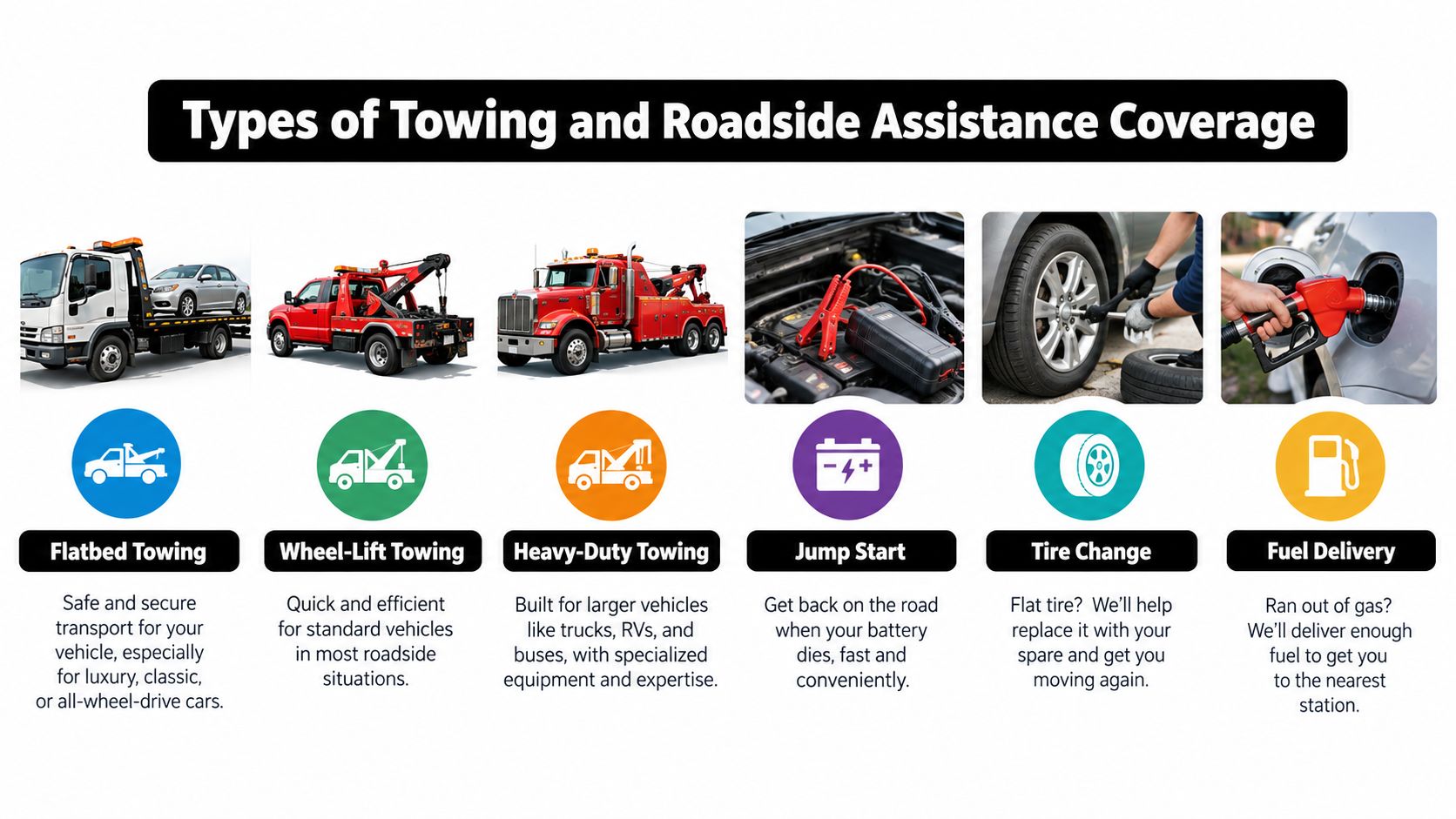
A roadside assistance endorsement is usually the cleanest solution for a vehicle that won't start or can't safely continue. Optional add-ons commonly cost around $5 to $15 per month, according to MoneyGeek's explanation of towing coverage. Depending on the plan, service may include towing, jump starts, flat-tire help, lockout assistance, or fuel delivery.
The low recurring cost doesn't mean unlimited service. The insurer may restrict the mileage, destination, number of calls, or reimbursement amount. You also may need to use the insurer's dispatch network or obtain approval before hiring a provider.
Collision coverage after a crash
Collision coverage addresses physical damage from a covered accident. If the car cannot be driven after the crash, towing may be handled as part of the claim, but the deductible normally remains relevant. An industry estimate cited by MoneyGeek places common collision deductibles around $500 to $1,000. That can make collision coverage a poor fit for a minor breakdown, because a breakdown isn't what collision coverage is designed to address.
Comprehensive coverage for qualifying incidents
Coverage can apply when a covered non-collision event leaves the vehicle needing transport. Stolen-vehicle recovery is the practical example. The insurer may handle reasonable towing and storage through the claim, subject to policy terms and any deductible.
A separate roadside membership can also provide towing, but its rules won't necessarily match your auto policy. Compare authorization, distance, destination, and reimbursement requirements before relying on it.
For broader policy questions, drivers can review the California insurance guides. Towing companies and insurers also need reliable customer-response processes, and service businesses exploring how to stop losing jobs to competitors can use that resource to improve follow-up when customers need urgent roadside help.
Understanding Mileage Caps and Policy Limits
Roadside assistance is useful only within the limits you purchased. A plan promising towing may cover a short distance, a specified dollar amount, or transport to the nearest qualified repair facility. In a large California metro area, a short radius may leave you responsible for the rest of the trip.
Progressive's towing coverage guidance describes a common structure: a standard roadside benefit may cover towing within a 15-mile radius, or transport to the nearest qualified repair shop beyond that radius. The same source describes a premium option offering up to 100 miles. Other plans may use a dollar ceiling instead of a mileage promise.
Typical Towing Coverage Limits
| Coverage Tier | Typical Mileage Cap | Best For |
|---|---|---|
| Standard roadside assistance | 15 miles | Local breakdowns and nearby repair facilities |
| Expanded roadside assistance | 25 or 50 miles | Drivers who travel across neighboring communities |
| Premium roadside assistance | Up to 100 miles | Long commutes, rural routes, or preferred repair shops |
| Dollar-limited benefit | Set policy amount | Drivers who want reimbursement subject to a financial ceiling |
These are typical structures, not a substitute for your declarations page. Published plans commonly use caps of 15, 25, 50, or 100 miles, and some restrict the number of service calls during the policy term, as described by MoneyGeek. A plan can therefore be active and still leave you with a balance.
Match the limit to your actual driving
Don't choose a roadside tier based only on the monthly premium. Consider where you drive, where your preferred mechanic is located, and whether a tow from a remote California highway would exceed the ordinary limit. Ask whether the mileage is measured from the pickup point, whether the destination must be the nearest shop, and whether excess miles are your responsibility.
Also confirm whether the plan pays the provider directly or reimburses you later. That single billing detail affects how much cash you'll need during an already stressful breakdown.
Hidden Costs and California Billing Mechanics
“Covered towing” doesn't mean every charge is automatically accepted. California law uses the specific standard of ordinary and reasonable towing and storage charges for qualifying situations. Under California Vehicle Code section 22524.5, when an insurer is responsible for those charges after an accident or stolen-vehicle recovery, it may pay the towing or storage provider directly, or pay the insured or claimant first. If the insurer pays you first, you remain liable to the service provider.
That arrangement creates a practical risk. You may receive insurance money while the tow operator still expects payment from you, so keep the invoice, confirm the balance, and make sure the payment reaches the correct party. The California Department of Insurance publication containing the statute explains this billing structure and the “ordinary and reasonable” limitation.
Storage is a separate exposure
A vehicle can move from the roadway to a storage yard before anyone has decided whether it will be repaired or declared a total loss. Storage charges can continue while the insurer investigates, the repair shop waits for authorization, or the owner delays giving instructions. Don't assume roadside assistance automatically covers storage. It often addresses the service call, not every later yard charge.
Contact the insurer and storage facility promptly. Ask where the vehicle is, who authorized the tow, what charges have accrued, and what action will stop additional fees. Get each answer in writing.
Damage caused during the tow
If a tow truck damages the vehicle, the original accident claim may not be the only issue. Depending on the facts and fault, the damage may involve collision or other coverage, the towing company's liability policy, or both. Photograph the vehicle before loading when it's safe, then photograph it again after delivery.
Unauthorized providers create another gap. Carrier and independent guidance warns that a claim may be denied when the tow wasn't authorized by the insurer or when the towed vehicle has no separate policy, as discussed in Plymouth Rock's guidance on towed-vehicle coverage. Never sign vague paperwork under pressure. Confirm the destination, charges, and dispatch authority before the vehicle leaves.
How to File a Towing Claim Successfully
The best claim starts before the tow truck hooks up the vehicle. If the car is in an unsafe location, prioritize people and traffic safety. Once you can act, call your insurer's claims line or roadside number and ask whether the provider will dispatch the tow directly.
Follow this sequence
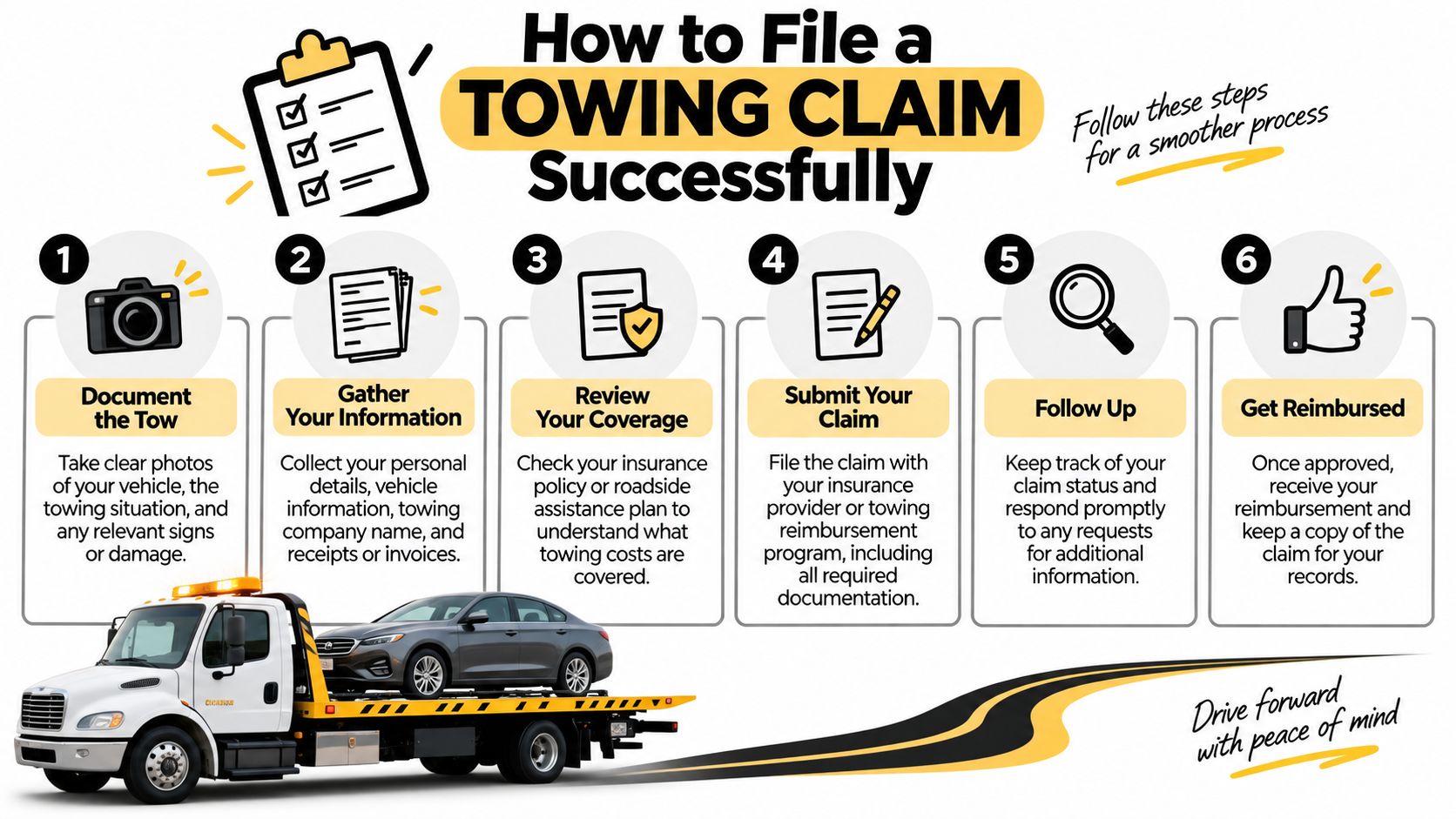
Open the right service request. Tell the representative whether this is a mechanical breakdown, accident, theft recovery, or another incident. Ask which coverage applies and whether authorization is required.
Confirm the destination. Write down the tow company's name, driver information, pickup location, destination, dispatch time, and whether the vehicle is going to a repair shop or storage yard.
Document the condition. Take wide and close photographs before loading, including wheels, bumpers, glass, lights, and visible accident damage. If the tow causes new damage, photograph that condition immediately upon arrival.
Keep every document. Save the tow ticket, invoice, authorization form, storage paperwork, receipts, claim number, and messages with the adjuster. If a key or access problem complicates recovery, use the same care when finding a reputable car key company.
Coordinate with the repair facility. Tell the insurer and shop where the vehicle is located. Ask who is approving inspection, repairs, additional towing, and storage release.
Follow up on unresolved balances. A reimbursement promise isn't the same as a paid invoice. Confirm whether the insurer paid the provider directly or sent funds to you, then resolve the remaining balance before storage charges grow.
Keep a short towing checklist in your vehicle or phone. It should include the insurer's claims number, policy number, preferred repair shop, and instructions for roadside dispatch. More California auto insurance questions are answered in the agency's car insurance FAQ, but your declarations page remains the final authority on your specific limits.
Don't authorize a destination you haven't confirmed. A tow to an unapproved storage yard can turn a simple transport request into a coverage and billing dispute.
Protecting Your Assets Beyond the Road
Towing coverage exposes a broader insurance lesson: a policy can look all-encompassing while leaving important risks outside its contract. California homeowners face this issue with earthquake protection. Standard homeowners policies generally exclude earthquake and flood, and earthquake coverage must be purchased separately, as explained in California FAIR Plan coverage guidance.
The California FAIR Plan is primarily fire-oriented. It covers fire, smoke, lightning, and explosions, but it isn't a complete substitute for broader home insurance. Homeowners in wildfire-prone areas may need supplemental coverage, while earthquake protection requires a separate policy such as one offered through the California Earthquake Authority.
Renters face a parallel problem. A landlord's policy generally protects the building, not the renter's personal property or personal liability. Renters insurance can fill that separate gap. Life insurance addresses another part of the household balance sheet, replacing income and protecting dependents when a family member dies.
Review policies as a connected system
A useful review should connect your auto, home, renters, and life insurance rather than treat each policy as an isolated purchase. Check roadside dispatch rules alongside collision deductibles, then review whether your home or renters policy matches your earthquake, wildfire, liability, and personal-property needs.
Mai & Associates can compare California auto insurance options, review FAIR Plan arrangements, discuss earthquake coverage, and help clients evaluate home, renters, and life insurance needs. Drivers can begin with an insurance quote and coverage review before a breakdown or claim forces rushed decisions.
Mai & Associates helps California drivers review towing and roadside assistance limits alongside collision and coverage, while also evaluating home, renters, and life insurance gaps. Visit Mai & Associates to request a quote and speak with a licensed agent about coverage that fits how you drive and live.