Do I Need Renters Insurance in California? A Complete Guide
So, let's get right to it: do you need renters insurance in California? While the state of California doesn't legally require you to have it, your landlord almost certainly will. It’s become a standard, non-negotiable clause in most lease agreements these days.
And there’s a good reason for that. Your landlord's insurance policy is designed to protect their investment—the building itself. Think of it as an umbrella that only covers the roof, walls, and structure, leaving everything and everyone inside completely exposed. Your stuff is your responsibility. This is a key distinction between renters insurance and home insurance, which covers both the structure and personal property.
Your Personal Financial Safety Net
Renters insurance is your personal financial safety net, built to help you get back on your feet after something goes wrong. A lot of people mistakenly believe their landlord's policy will cover their belongings if there's a fire or a major leak. That’s a dangerous assumption.
The reality is, without your own policy, you're on the hook for replacing every single thing you own after a disaster. Your laptop, your couch, your clothes, everything.
What's surprising is just how affordable this protection is. For a relatively small monthly premium, you get a powerful buffer against financial disaster. A single kitchen fire or a burst pipe could easily set you back thousands of dollars. Renters insurance makes sure it doesn't. It's a fundamental piece of a complete California insurance plan, alongside auto insurance and life insurance.
This quick overview shows the core protections every California renter should know about.
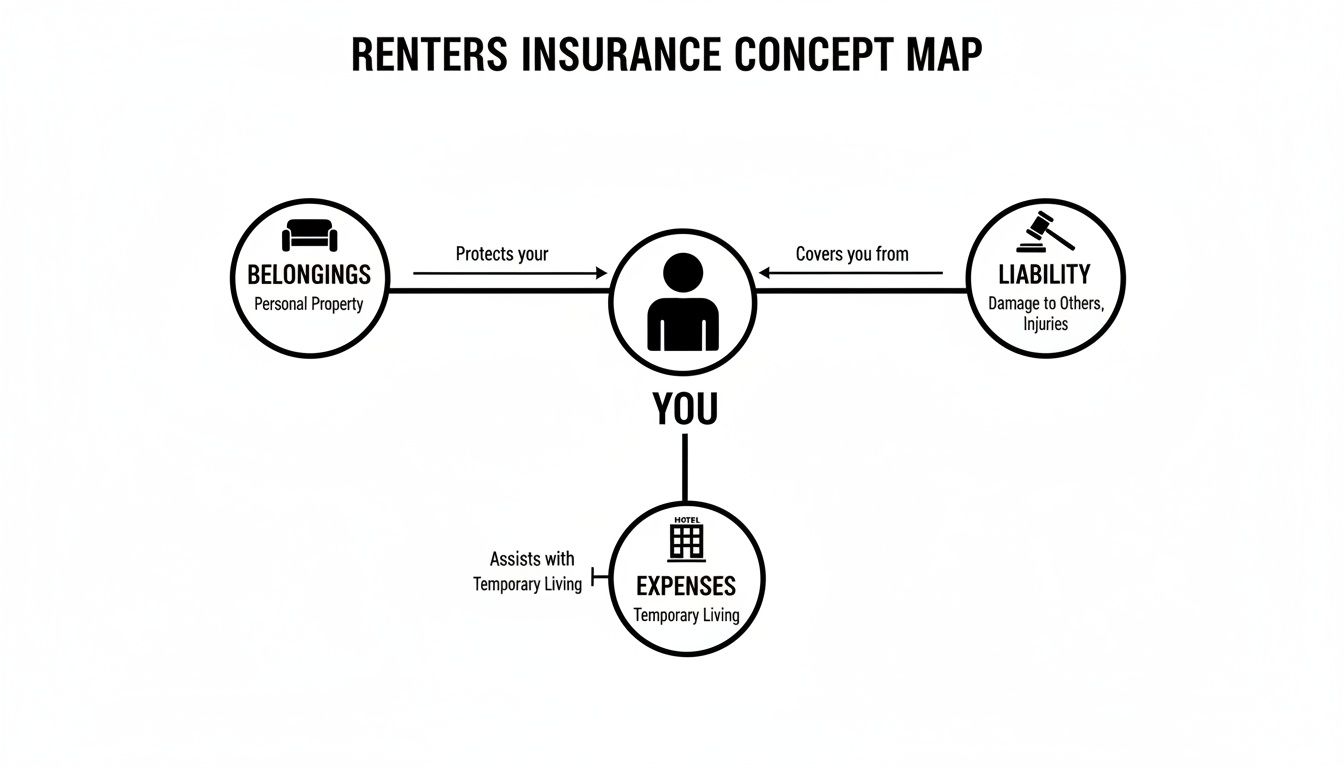
As you can see, the policy shields your personal items, covers you if you're held responsible for an accident, and even helps with temporary housing costs if your place becomes unlivable. These three pillars are the foundation of your coverage.
It’s crucial to understand the clear line between what the building owner is responsible for and what you are. This table breaks it down.
Landlord Policy vs. Your Renters Policy at a Glance
| Covered Item | Landlord's Insurance | Your Renters Insurance |
|---|---|---|
| Physical Building & Structure | ✅ Yes | ❌ No |
| Your Personal Belongings (Furniture, etc.) | ❌ No | ✅ Yes |
| Injuries to Guests Inside Your Unit | ❌ No | ✅ Yes (Your liability coverage) |
| Damage You Cause to Another Unit | ❌ No | ✅ Yes (Your liability coverage) |
| Temporary Living Expenses if Displaced | ❌ No | ✅ Yes |
Essentially, their policy fixes the building, and your policy helps you rebuild your life. They’re two separate but equally important types of protection.
The Three Pillars of Protection
At its core, every renters insurance policy is built on three fundamental types of coverage. Each one tackles a different, common risk you face as a renter:
- Personal Property Coverage: This is the part everyone thinks of first. It’s what pays to replace your stuff—your furniture, electronics, clothes, you name it—if it's stolen or damaged by a covered event.
- Liability Coverage: This is your financial defense. If a guest slips and gets hurt in your apartment, or if you accidentally start a fire that damages a neighbor's unit, this coverage handles the legal fees and medical bills. It can single-handedly prevent a lawsuit from ruining you financially.
- Additional Living Expenses (ALE): Often overlooked but incredibly valuable. If a major disaster like a fire or flood makes your rental uninhabitable, ALE kicks in. It helps pay for a hotel, meals, and other necessary expenses while your home is being repaired, so you aren't left stranded.
What Renters Insurance Actually Protects
When you sign up for renters insurance, you’re not just checking a box for your landlord. You're buying a serious financial safety net designed for the kinds of problems that can pop up when you're renting. It's way more than another monthly bill; it's a solid plan to protect your stuff, your savings, and your sanity.
Let's get into the nitty-gritty of what that protection really covers. It boils down to three main things.

Your Personal Property
This is the part everyone thinks of first. Personal Property Coverage is what pays to replace your belongings if they get stolen or wrecked by something your policy covers, like a fire or a busted pipe. And we’re not just talking about the big-ticket items—it covers pretty much everything you own.
- Furniture: Your couch, bed, dining table, and chairs.
- Electronics: Laptops, TVs, gaming systems, and speakers.
- Clothing and Personal Items: Your whole wardrobe, from shoes to jackets, plus jewelry and all your kitchen gear.
Think about it this way: imagine a fire in your kitchen spreads and ruins your whole living room. To replace just a sofa, a TV, and a laptop on your own, you could easily be out $5,000 or more. Your renters policy steps in to cover these costs so you don't have to wipe out your savings to get back on your feet. The concept is a lot like homeowners insurance, but it focuses only on your possessions, not the building itself. Our guide on home insurance in California dives deeper into how property coverage works.
Your Personal Liability
Here’s the unsung hero of every renters policy: liability coverage. This piece protects you financially if you accidentally injure someone or damage their property. It’s like having a financial bodyguard on call to handle legal messes and medical bills.
For instance, say a friend is visiting, trips over a rug in your apartment, and breaks their arm. They could hold you responsible for their medical bills and the time they had to take off work. Instead of you facing a massive lawsuit, your Liability Coverage would help pay for their medical costs and any legal fees, shielding you from a financial disaster.
This protection is an absolute must-have. A simple accident can spiral into a lawsuit costing tens of thousands of dollars. Liability coverage is a core reason the answer to "Do I need renters insurance?" is almost always yes.
Your Additional Living Expenses
What happens if a major disaster—like a building fire or serious water damage—forces you out of your apartment? That's where Additional Living Expenses (ALE) becomes your lifeline. If your rental becomes unlivable and you have to move out while it's being repaired, ALE helps cover the extra costs.
This typically includes things like:
- Hotel stays or a temporary rental.
- Money for meals if you don’t have a kitchen.
- Other necessities, like laundry services.
It's shocking how many people overlook this. While 36% of U.S. households are renters, studies show that up to 45% of them don’t have a policy. That’s a huge number of people left completely exposed to financial ruin from one bad day.
Why Your Landlord Is Asking for Proof of Insurance
If you’re staring at your lease and see a mandatory insurance clause, you might be wondering: “Is this a California law, or just my landlord’s rule?” It’s a great question, and the answer is simple.
There’s no state law in California that forces you to buy renters insurance. However, your landlord can absolutely require it as a condition of your lease, and it's a completely legal and standard practice these days.
So, why the new rule? It’s not just another fee. For landlords, it’s a smart business decision to protect their property and their finances. Let's break down what they're thinking.
Protecting Their Property from Your Mistakes
Your landlord has their own insurance policy, but it’s designed to cover the building itself—the roof, the walls, the structure. It's not there to pay for damage caused by a tenant's actions. That’s where your renters insurance policy comes into play.
Think about it this way: you accidentally leave the kitchen sink running and it overflows, damaging the floor in your unit and the ceiling of the apartment below. Without renters insurance, your landlord’s policy would have to pay for the repairs. Their insurance company would then almost certainly sue you to get that money back, leaving you with a massive bill.
If you have a renters policy, your liability coverage is the first line of defense. It would pay for the water damage you caused, protecting you from a lawsuit and saving your landlord from having to file a claim. It’s a win-win that keeps their premiums stable and draws a clear line for who pays for what.
A landlord requiring renters insurance isn’t just about protecting themselves. It’s about making sure you have a financial safety net to cover your responsibilities without facing personal bankruptcy. It sets a clear boundary for financial responsibility right from the start.
Making Sure You Can Bounce Back After a Disaster
Liability is one piece of the puzzle, but landlords have another practical reason for this requirement. If something catastrophic happens—a fire, a major pipe burst—they want to know you have the resources to recover.
This is where your personal property coverage and additional living expenses (ALE) coverage are so important.
With these in your corner, you can:
- Replace your stuff: You can buy a new couch, bed, and clothes without wiping out your savings, which helps you get back to normal much faster.
- Pay for a temporary place to live: If your apartment is unlivable during repairs, your policy helps cover the cost of a hotel or short-term rental.
By making sure you have this support system, landlords increase the odds that you can weather a crisis and continue being a reliable tenant. It’s a simple requirement that creates a more financially secure situation for everyone involved.
Navigating California-Specific Risks Like Wildfires and Earthquakes
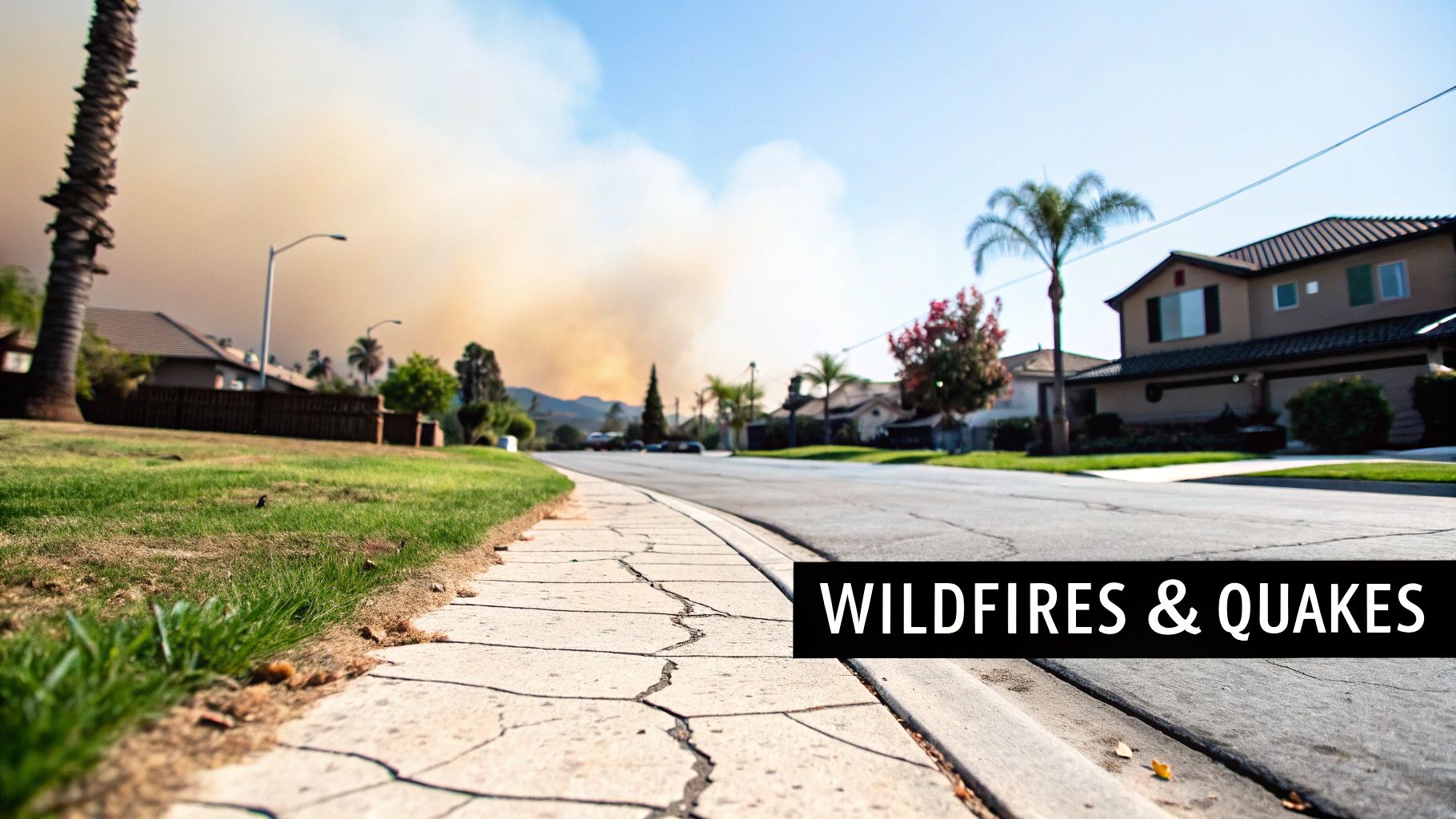
Living in the Golden State is incredible, but let's be honest—it comes with some unique risks you just can't ignore. When you’re weighing whether you need renters insurance, you have to think about California's two big ones: wildfires and earthquakes.
The good news first. A standard renters policy has your back when it comes to fire. Fire damage is almost always a covered event, and that includes the wildfires that have become an unfortunate part of life here. If a wildfire forces you to evacuate, your "additional living expenses" coverage can be a lifesaver, paying for a hotel and other costs. And if the fire damages your stuff, your "personal property" coverage is there to help you replace it.
The Critical Earthquake Coverage Gap
Now for the reality check. There's a huge blind spot in every standard renters insurance policy: earthquakes are not covered. This is a massive gap for anyone renting in California. If a quake rattles your building and destroys your laptop, TV, and furniture, your regular policy won’t pay a dime to replace them.
To protect yourself from an earthquake, you need to buy a separate earthquake insurance policy. It's not a simple add-on or rider; it's a completely different policy designed specifically for seismic events.
This is exactly why working with an agent who knows the local landscape is so crucial. They can help you figure out your actual risk and decide if this separate policy is a smart move for you.
Why Separate Coverage Is Essential
You're not just imagining it—the need for this kind of specific coverage is growing. As more people move into cities and we see more natural disasters, renters everywhere are realizing they need a safety net. For us in California, that means creating a protection plan that's as unique as the state we live in.
Without earthquake coverage, you’re leaving yourself completely exposed to one of our biggest threats. Understanding this distinction is the key to being truly protected. For more tips on protecting your home and belongings, you can find a lot of great information in our guides section.
Getting the right protection really comes down to a few key steps:
- Assess Your Location: Are you in a high-risk earthquake zone? A quick search can tell you.
- Evaluate Your Belongings: Think about what it would cost to replace everything you own after a major quake. It adds up fast.
- Seek Expert Advice: Talk to an agency that gets the nuances of both standard renters insurance and the specialized earthquake policies needed here.
Thinking through these California-specific scenarios is non-negotiable. Your policy needs to do more than just check a box for your landlord—it needs to give you real, practical protection against the risks you actually face every day.
Let's talk about the bottom line: how much is renters insurance really going to set you back in California?
It’s the first question on everyone's mind, and the answer is usually a pleasant surprise. Many people picture a hefty bill, but in reality, renters insurance is one of the most affordable ways to protect yourself. You can often secure coverage for everything you own for less than what you'd spend on a few lattes each week.
While you might hear about homeowners insurance costs climbing, renters coverage has stayed consistently budget-friendly. Why the big difference? It’s simple: you're not insuring the building itself—that's the landlord's job. You're just covering your personal stuff and your liability. The fact that the U.S. renters insurance market is a $5.9 billion industry speaks volumes about how accessible this protection is for millions. You can dive deeper into the market trends on IBISWorld.com.
Of course, your final price isn't pulled out of a hat. The premium you pay is a direct reflection of your specific needs and the amount of protection you decide on.
What Determines Your Premium
Insurance carriers weigh a handful of key factors to figure out your rate. Once you understand what they are, you can see how to fine-tune your policy to fit your budget.
- How Much Stuff You Own (Personal Property Coverage): This is the biggest piece of the puzzle. If you have $15,000 worth of furniture, clothes, and electronics, your premium will be lower than for someone who needs to insure $50,000 in belongings.
- Your Liability Shield (Liability Limit): Most standard policies start with $100,000 in liability protection. Bumping that up to $300,000 or even $500,000 usually only costs a few extra bucks a month, giving you a massive increase in financial safety.
- Your Out-of-Pocket Share (Deductible): This is the amount you agree to pay on a claim before the insurance company steps in. Choosing a higher deductible, say $1,000, will lower your monthly payment. Opting for a smaller $500 deductible means you'll pay a little more each month.
- Where You Live (Your Location): In California, your specific city and ZIP code matter. Insurers look at local trends, like neighborhood crime rates or how often claims are filed in your area, to calculate risk.
Choosing your deductible is a balancing act. A higher deductible saves you money on your premium, but you need to be sure you can comfortably pay that amount if you ever need to file a claim.
One of the easiest wins for lowering your cost is bundling. If you already have auto insurance, ask about adding a renters policy with the same company. Insurers love it when you keep your business with them and usually offer a multi-policy discount that can save you 10% or more on both policies. It’s a simple move that makes both your car insurance and renters insurance more affordable.
Finding the Right Renters Insurance Policy for You
Feeling ready to lock in that financial safety net? Getting the right renters insurance in California is actually pretty straightforward once you break it down. Think of it as a simple game plan to get the exact coverage you need without overpaying.
Your first move? Figure out what your stuff is actually worth.
Create a Quick Home Inventory
Seriously, take a few minutes. Walk through your apartment and make a quick list of your major belongings—furniture, that big-screen TV, your laptop, clothes, kitchen gear. You don't need a detailed spreadsheet with serial numbers right now, just a rough estimate. This helps you figure out if you need $20,000 in personal property coverage or something closer to $50,000.
Next up is liability protection. A standard policy often starts with $100,000, which sounds like a lot, but bumping it up to $300,000 or more often costs just a few extra dollars a month. It's a critical shield if someone gets hurt in your apartment and decides to sue.
After you've got your numbers, the most important step is to compare your options. Getting quotes from different insurance carriers is the only way to know for sure you aren't leaving money on the table for the exact same protection.
Let an Independent Agent Do the Shopping for You
This is where working with an independent agency like Mai & Associates makes your life a whole lot easier. Instead of you spending hours on the phone or filling out endless online forms, we do all that legwork. We'll shop the market for you, comparing policies from multiple top-rated carriers to find the best blend of coverage and cost.
Our team specializes in all kinds of California insurance, from renters and home insurance to auto insurance and life insurance. We know where to look for discounts, like bundling your car insurance with your renters policy, to help you save even more.
Ready to see just how easy and affordable it can be? You can start by getting a personalized insurance quote from our team and see your options in minutes.
Your California Renters Insurance Questions, Answered
Even after getting the basics down, you probably still have some specific "what-if" questions rattling around. That's completely normal. Let's tackle some of the most common scenarios we see from California renters to clear up any lingering confusion.
My Roommate Has a Policy. Am I Covered?
No, you are absolutely not. This is a huge misconception that can leave you in a world of financial trouble.
Think of it this way: your roommate's policy is theirs and theirs alone. It’s designed to protect their stuff and cover their liability. If your laptop gets fried in a power surge or your bike is stolen from the patio, their insurance won't pay a dime to replace it. And if you accidentally cause a kitchen fire, you'll be on your own to face the legal and financial fallout. Relying on a roommate's policy is a massive gamble.
Is My Stuff Covered If It's Stolen from My Car?
Yes, most of the time it is! This is a fantastic, often-overlooked benefit called off-premises coverage. Renters insurance isn't just for things inside your four walls; it protects your personal property pretty much anywhere you take it. Your car insurance policy covers damage to your vehicle, but your renters insurance covers the personal items stolen from it.
So, if someone smashes your car window and swipes your gym bag, or your luggage gets lifted from your hotel room on vacation, your renters policy is what you’ll turn to for help. Just be aware that there are usually specific limits for claims outside the home, so it's always smart to double-check those details in your policy documents.
This off-premises protection is a powerful but often overlooked benefit of renters insurance. It extends your financial safety net far beyond your front door, covering your personal belongings almost anywhere you go.
What's the Difference Between "Replacement Cost" and "Actual Cash Value"?
This is a critical detail that determines how much money you actually get after a disaster. Getting this right when you buy your policy makes all the difference.
Replacement Cost Value (RCV): This is what you want. RCV pays to replace your stolen or destroyed belongings with brand-new, similar items at today's market price. If your five-year-old couch is ruined in a fire, this coverage helps you go out and buy a new one.
Actual Cash Value (ACV): This is the less-protective option. ACV only pays you what your stuff was worth the moment it was destroyed, factoring in depreciation (age and wear-and-tear). You'd only get the "garage sale" price for that five-year-old couch, not nearly enough to replace it.
While RCV policies cost a little more, the peace of mind and superior payout are well worth it. It’s what we almost always recommend.
How Much Liability Coverage Do I Really Need?
Standard policies usually start at $100,000 in liability coverage, but honestly, that's often not enough in today's world.
We strongly advise our clients to consider at least $300,000, or even $500,000, in protection. The best part is that boosting your liability limit is surprisingly cheap—we're often talking just a few extra dollars a month. That small investment buys you a massive financial shield if a guest is seriously injured in your apartment and decides to sue.
For more answers to common questions about various types of California insurance, you can explore our full insurance FAQ page.
Still have questions about California renters insurance or ready to see how affordable your protection can be? The licensed agents at Mai & Associates are here to help. We'll compare quotes from top carriers to find the perfect policy for your needs and budget, ensuring you're protected from every angle.