California 2026: Do I Need Home Warranty?
Your furnace never quits on a mild spring afternoon. It quits when the house is full, the weather is bad, or you've already paid three other bills that week. That's when people start asking, Do I need a home warranty?
In California, I tell clients to stop treating that question like a standalone yes-or-no purchase. It belongs inside your full protection plan. You already make risk decisions with home insurance, auto insurance, renters insurance, and life insurance. A home warranty sits in a different category. It's about repair budgeting, not disaster protection.
If you own a home, or you're about to buy one, you need to separate what protects your property from catastrophe and what helps with aging appliances and systems. One is essential. One is optional. Confusing them is expensive.
That Sudden Gut Punch of a Home Repair Bill
Tuesday afternoon. The dishwasher starts grinding like it swallowed a fork. By dinner, there's water under the cabinet. Or the air conditioner gives out during a California heat wave and suddenly you're pricing repairs while hoping the house cools down on its own.
That moment is why people start shopping for a home warranty.
The fear isn't just the breakdown. It's the budget hit. You own the house, so every weird noise, leak, or failed system becomes your problem fast. That's especially true when you're already juggling a mortgage, property taxes, car payments, school costs, and the rest of real life.
Why this question hits homeowners so hard
Most homeowners don't lose sleep over routine maintenance. They lose sleep over the surprise bill they didn't plan for. A failed water heater, an oven that won't heat, a garage door opener that suddenly stops working. Those aren't glamorous problems, but they can blow up a monthly budget.
If you're trying to get your arms around what repairs might cost in practical terms, a solid starting point is this home repair cost estimate. Not because a blog can predict your exact bill, but because it helps you stop guessing.
Practical rule: If a repair would force you onto a credit card, the question isn't just "Do I need a home warranty?" It's "How am I funding home repairs at all?"
Where a warranty fits in a bigger protection plan
Here's my blunt take. Your first job is to protect against losses that could wreck your finances. That's where homeowners insurance, car insurance, renters insurance, and life insurance matter. Those products protect against major risk.
A home warranty is different. It's a budgeting tool for certain repair scenarios.
Think of it this way:
- Home insurance protects your house from covered sudden losses.
- Auto insurance protects you from liability, vehicle damage, and accident-related costs.
- Life insurance protects your family from income loss after death.
- A home warranty helps with certain covered breakdowns from normal use.
That last item can be useful. It just shouldn't be mistaken for the foundation of your protection strategy.
If your core insurance is weak, underinsured, or outdated, fix that first. Then decide whether a warranty adds value.
What Exactly Is a Home Warranty?
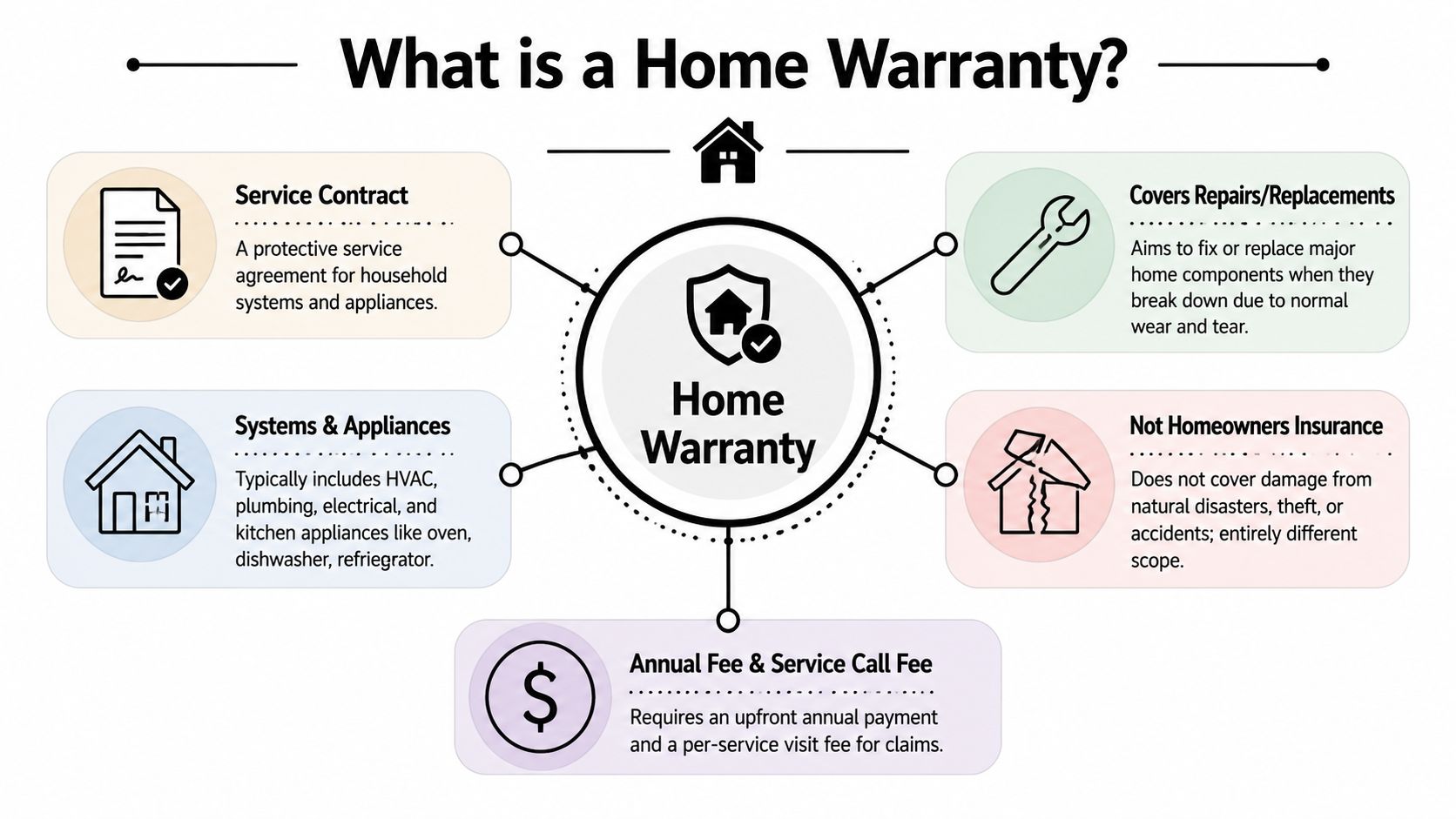
A home warranty is a service contract, not insurance, and it typically lasts one year. It covers the repair or replacement of selected home systems and appliances when they fail due to normal wear and tear. In the United States, the industry was valued at $3.9 billion in 2023, and typical pricing runs about $40 to $70 per month or $450 to $600 per year, plus a service deductible of roughly $75 to $125 per visit, according to ConsumerAffairs home warranty statistics.
The simplest way to think about it
Don't think of a home warranty like a homeowners policy. Think of it more like a repair service membership with rules, exclusions, fees, and item limits.
You pay for the contract. Then when a covered item breaks down from ordinary use, you contact the warranty company, pay the service fee, and they decide whether the issue qualifies under the contract. If it does, they arrange repair or replacement within the plan's limits.
If you need a quick refresher on terms people often mix up, this California insurance glossary helps sort out the language.
What people get wrong
The most common mistake is assuming "warranty" means broad protection. It doesn't. It means specific contract language.
For example, a plan may include plumbing systems but still limit what parts or failures qualify. That's why homeowners should read beyond the marketing page. If plumbing is one of your main concerns, it also helps to learn about plumbing warranties from EZ Plumbing so you understand the difference between a service contract and workmanship or parts-related warranty promises.
A home warranty can make sense. But only if you understand the mechanics:
- Annual or monthly cost: You pay to keep the contract active.
- Service call fee: You usually pay again each time you request service.
- Covered-item list: Only named systems and appliances are eligible.
- Wear-and-tear trigger: These plans are generally aimed at mechanical failure from normal use, not every problem that happens in a house.
Buy a home warranty only after reading the contract the way you'd read a loan document. Every promise lives in the fine print.
Home Warranty vs California Homeowners Insurance
These are not competing products. They solve different problems.
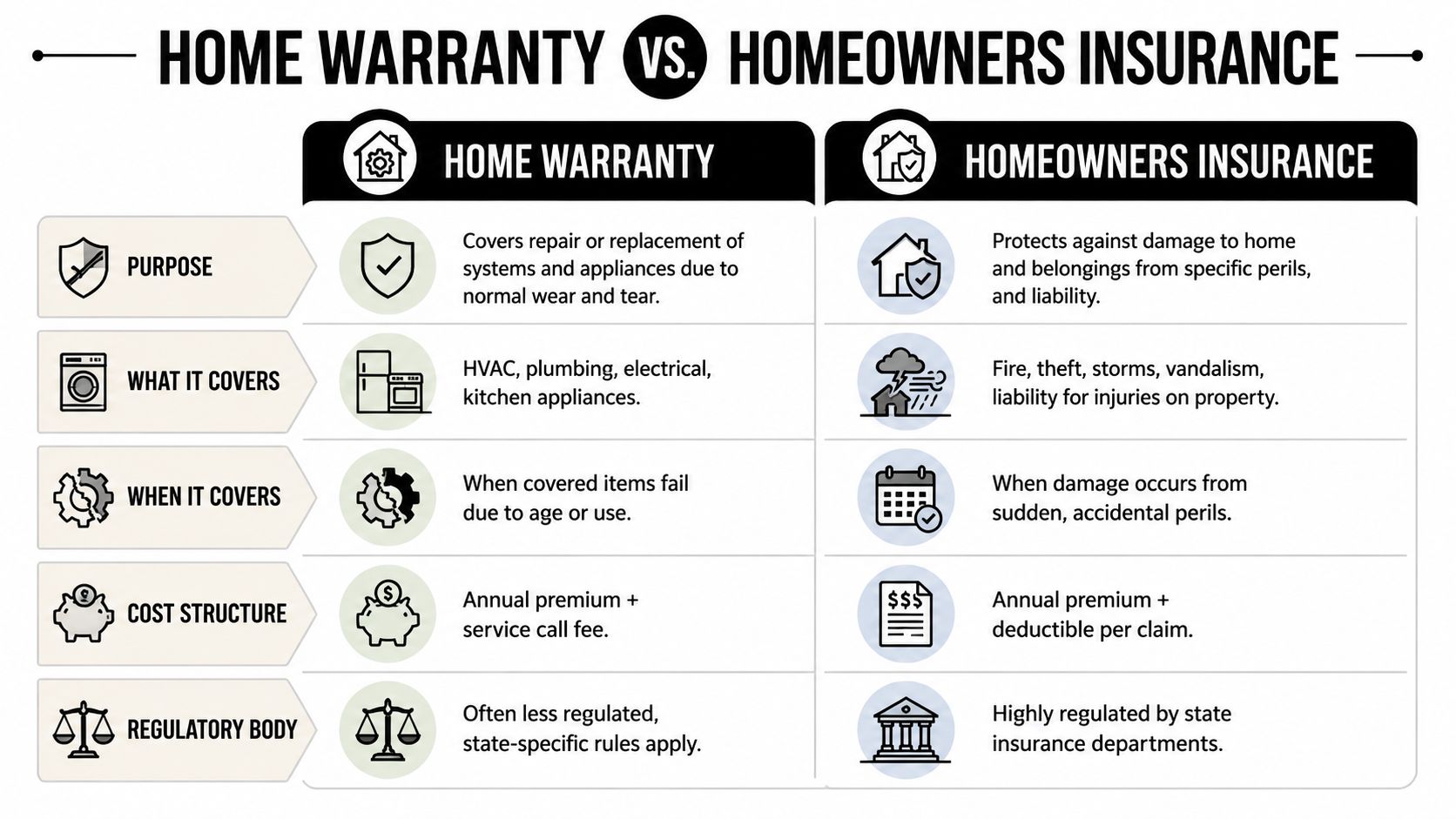
A home warranty is an optional service contract, not a legal or lender requirement. Mortgage lenders typically require homeowners insurance, but not a warranty. Functionally, they cover different risk layers. Homeowners insurance addresses sudden, accidental losses such as fire or theft, while a home warranty is aimed at mechanical failures from normal wear and tear in systems like HVAC, plumbing, electrical, and water heaters, as explained in this guide to whether you need a home warranty.
The side-by-side comparison that matters
| Product | What it's for | Typical trigger | Required by mortgage lender |
|---|---|---|---|
| Home warranty | Covered system or appliance breakdown from wear and tear | Furnace stops working from age or use | No |
| Homeowners insurance | Covered sudden accidental loss and liability | Fire, theft, certain storm damage, liability claim | Typically yes |
That's the cleanest way to look at it.
If you're comparing your options for protecting the house itself, start with your California home insurance coverage options. That's the core policy. A warranty is secondary.
Real-world examples
Use the product based on the event:
- Kitchen fire damages cabinets and structure: That's a homeowners insurance issue.
- Dishwasher motor fails from age and use: That may fall under a home warranty if the contract covers it.
- Pipe bursts suddenly and causes major interior damage: Insurance may be involved for covered damage, depending on the cause and policy terms.
- Water heater stops heating because it wore out: That's the kind of situation people buy a warranty for.
Here's the direct recommendation. Never buy a warranty as a substitute for proper home insurance. In California, that mistake can leave you exposed in all the wrong places, especially if you're already dealing with wildfire concerns, high rebuild sensitivity, or lender requirements.
Your homeowners policy protects assets. A home warranty may help smooth repair costs. Those are not the same job.
What Home Warranties Actually Cover and Exclude
Buyers become confused by the disparity. The brochure sounds broad. The contract is narrower.
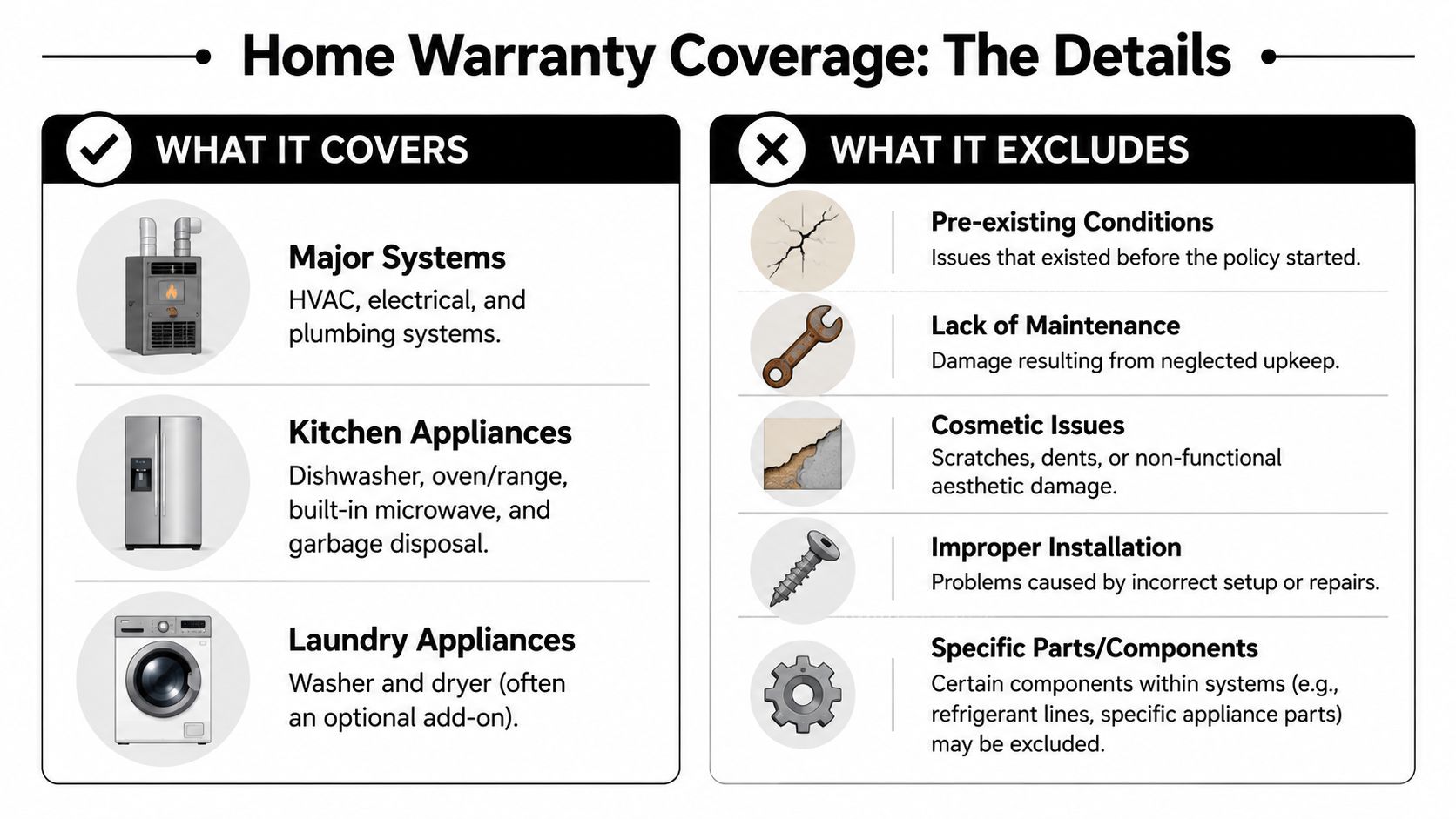
Independent consumer guidance says home warranty providers can refuse repairs for pre-existing issues, lack of routine maintenance, or improper installation, and coverage often excludes damage caused by a failed appliance or system rather than the appliance itself. That matters because many buyers assume a warranty covers the full cost of a breakdown. It often doesn't, as noted in this explanation of what isn't covered by a home warranty.
What contracts often include
Coverage varies by plan, but these categories are commonly marketed:
- Major systems: HVAC, electrical, plumbing, and water heater components
- Kitchen appliances: Oven, range, dishwasher, built-in microwave, garbage disposal
- Laundry equipment: Washer and dryer, sometimes as an add-on
- Other home items: Depending on the plan, some contracts also include extras or optional upgrades
The key phrase is "depending on the plan." Never assume your contract matches an ad you saw online.
Where claims get denied
This is the part homeowners should read twice.
- Pre-existing problems: If the company decides the issue existed before coverage started, you may get denied.
- Maintenance gaps: If you can't show reasonable upkeep, the provider may argue the failure wasn't covered.
- Improper installation: Bad prior work can kill a claim.
- Secondary damage: The failed item might be covered, but the damage it caused may not be.
A plain example helps. If the dishwasher pump fails, the contract may address the pump. It may not pay for damaged flooring, wet baseboards, or cabinet swelling caused by the leak.
Ask one question before you buy: "What proof will I need if this system fails six months from now?"
What to review before signing
Use this short checklist:
- Read exclusions carefully: The exclusions page matters more than the summary page.
- Check component limits: A system may be "covered" while important parts are carved out.
- Keep records: Service history, inspections, and maintenance receipts can matter if a dispute comes up.
- Review old systems closely: The older the equipment, the more important documentation becomes.
If you don't like reading contracts, get help before you buy. Don't wait until the claim is denied.
The True Cost and Hidden Contract Pitfalls
The advertised monthly price is not the actual cost. It's the entry ticket.
Consumer guidance recommends testing scenarios by estimating the repair cost of the most failure-prone system, then adding the annual fee plus service-call fees. Because warranty payouts are often constrained by per-component caps, annual aggregate caps, and documentation requirements, a warranty is most likely to pay off in older homes or in properties with aging systems and limited cash reserves for unexpected repairs, according to this consumer breakdown of when home warranties are worth it.
The math you should actually do
Don't ask, "Is the monthly amount affordable?"
Ask this instead:
- What's the most likely item in my house to fail?
- If it fails, what might I spend out of pocket without a warranty?
- What will I pay over the year for the contract plus service visits?
- What are the plan caps, exclusions, and payout limits?
- Would I still owe a meaningful amount even after the claim is approved?
That gets you to a real answer.
Common traps that make a cheap plan expensive
Some warranty contracts disappoint homeowners for the same reasons over and over:
- Coverage caps: A repair may be approved, but only up to a contract limit.
- Aggregate limits: Total annual payouts can be restricted.
- Cash-out options: The company may offer money instead of full replacement.
- Vendor control: You may not get to choose your own contractor.
- Documentation demands: If maintenance records are missing, the claim can get ugly fast.
None of those issues make every home warranty bad. They do mean you should treat the contract like a cost-sharing agreement, not a blank check.
My opinion on value
If your home is newer, your major systems were recently replaced, and you keep a healthy repair reserve, skip the warranty unless you strongly value convenience.
If your home is older and a single major repair would strain your finances, a warranty can be worth considering. But only if the contract is tight, the limits are acceptable, and you understand exactly what you're buying.
A bad home warranty is worse than no warranty because it gives false confidence.
Your Decision Checklist Is It a Smart Buy For You
The right answer depends less on ideology and more on your house, your cash flow, and your tolerance for surprise expenses.
Recent buyer-focused guidance says a home warranty can be more useful for older homes, first-time buyers without repair reserves, or homeowners facing high replacement costs for HVAC or appliances. The decision depends on cash flow and asset age rather than "coverage in general," based on this Redfin guide to whether a home warranty is required.
You should lean yes if these sound like you
- You're buying an older home: Aging systems create more uncertainty.
- You don't have much repair cash set aside: A warranty may help smooth the hit.
- You want budget predictability: Some people would rather pay known fees than absorb one ugly repair.
- You aren't handy and don't want to manage contractor searches: Convenience has value.
You should probably pass if these fit better
- Your home is new or recently updated: The need is lower when major systems are newer.
- You have a solid emergency fund: You can self-insure smaller and medium repair risks.
- You prefer controlling repairs directly: Many homeowners want to choose their own technician.
- You hate restrictive contracts: If fine print frustrates you, a service contract may annoy you more than it helps.
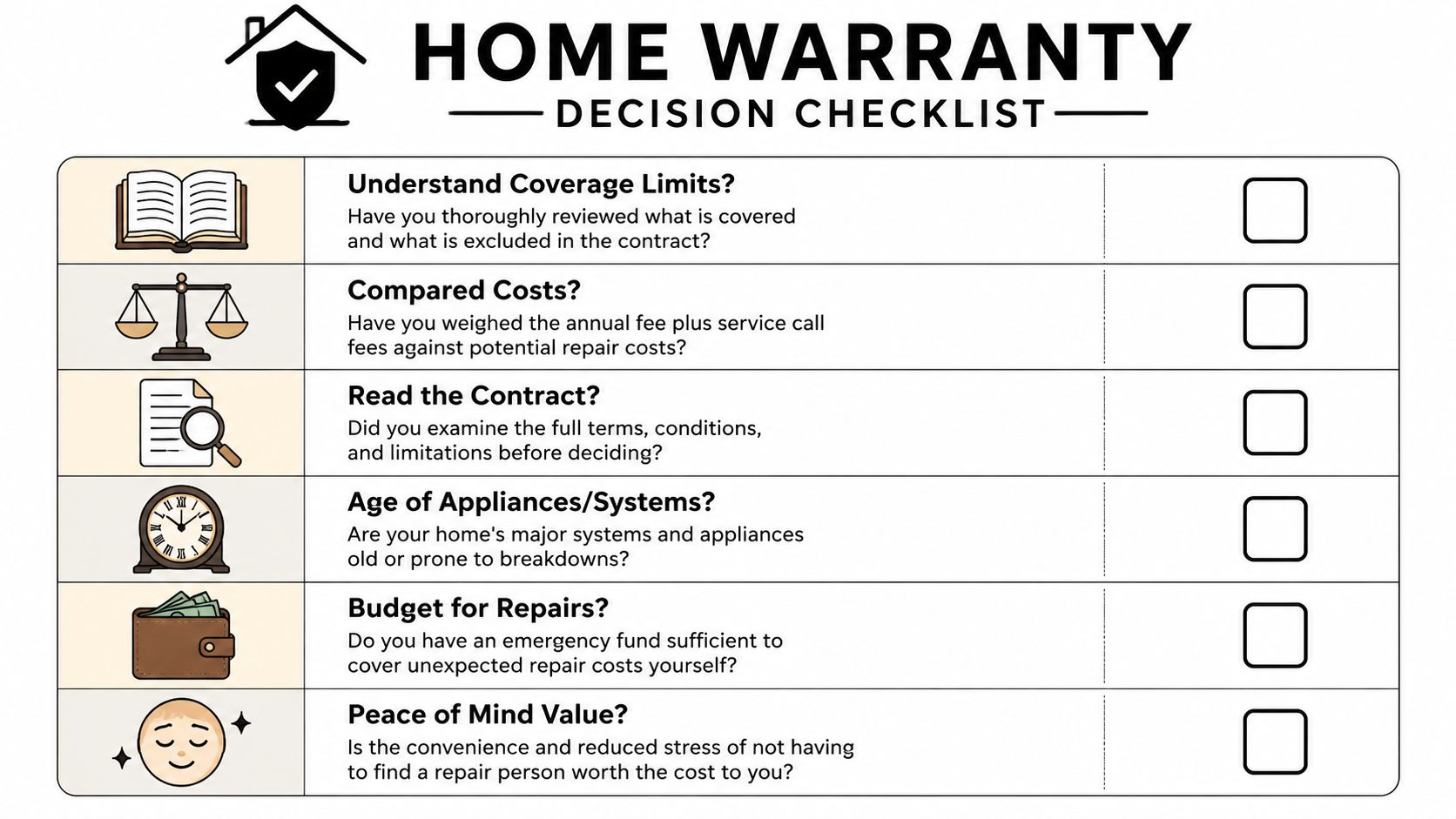
The fast decision filter
Use this checklist before you say yes:
- Contract confidence: Did you read the exclusions and limits closely?
- System age: Are your HVAC, plumbing, water heater, or appliances showing their age?
- Cash position: Could you comfortably handle an unexpected repair without stress?
- Claim realism: Are you prepared to keep maintenance records if the company asks?
- Convenience value: Do you want the service network badly enough to pay for it?
If you want more consumer-focused insurance guidance around home and family protection decisions, the Mai & Associates guides page is a useful next step.
If you need a warranty because your budget can't absorb a repair, that's a valid reason. Just don't confuse budget help with broad protection.
Frequently Asked Questions for California Homeowners
California adds a few wrinkles to this decision because insurance costs, property risks, and repair logistics can feel different here than in other states.
Does a home warranty replace wildfire or FAIR Plan protection
No. Not even close.
If you live in a wildfire-prone area or you're insured through a FAIR Plan setup, a home warranty doesn't solve the same problem. It won't replace the role of property insurance for covered fire-related loss. It also won't act like a substitute for the dwelling and liability protection your insurance program is built to handle.
A warranty is about selected systems and appliances breaking down from use. Fire risk is a separate category entirely.
Does high California repair friction make a warranty more appealing
Sometimes, yes.
When contractor availability is tight or local service is harder to schedule, some homeowners like having a warranty company coordinate the repair process. That convenience can matter. But convenience isn't the same thing as value. If the provider's vendor network is slow, limited, or hard to work with, the convenience argument falls apart fast.
So if you're asking, Do I need a home warranty in California? my answer is this: maybe, but only after you've tested whether the service process in your area is effective.
Is a warranty worth it if I already have strong insurance
Maybe, but it's still a separate purchase decision.
Strong home insurance, auto insurance, renters insurance, and life insurance form the backbone of your financial protection. A warranty sits on top of that. It doesn't replace any of it. It may complement it if your house has aging equipment and you want help with repair budgeting.
If your insurance is solid and your emergency savings are strong, you may not need a warranty at all.
What should California buyers ask before purchasing
Ask these questions in plain language:
- Who chooses the repair technician?
- What records do I need to keep?
- What specific failures are excluded?
- What happens if the item can't be repaired?
- Will they cover the actual failed component, or only part of the job?
- What damage around the failed item is excluded?
And if you have broader questions about policy differences, protection gaps, or California coverage issues, the California insurance FAQ resource can help you sort those out.
My bottom-line answer
Most California homeowners do not need a home warranty in the same way they need homeowners insurance. It's optional. For many people, the better move is building an emergency fund and tightening core insurance first.
But if you own an older home, lack repair reserves, and want a controlled way to handle certain mechanical failures, a carefully chosen warranty can make sense. Just buy it with open eyes.
If you want a real review of your overall protection plan, not just one product in isolation, Mai & Associates can help. Their licensed California team can review your home insurance, auto insurance, renters insurance, life insurance, FAIR Plan setup, and coverage gaps so you can decide whether a home warranty belongs in your budget or whether your money is better spent elsewhere.