Do I Need Car Insurance in California? An Essential Guide
So, do you really need car insurance? The short answer is a resounding yes. In California, it's illegal to drive on public roads without having what's called "proof of financial responsibility"—and for most of us, that means having an active car insurance policy.
This isn't just a recommendation; it's a hard-and-fast state law. It’s designed to protect everyone—you, your passengers, and every other driver—from the financial chaos that can follow an accident. When it comes to California insurance, having the right auto insurance is the first step toward responsible driving.
Why California Law Makes Car Insurance a Must
Try to think of your car insurance policy as less of a monthly bill and more of a financial shield. The whole reason California mandates this type of insurance is to make sure that if someone causes an accident, they have the financial backing to cover the fallout, from fixing a crumpled bumper to paying for unexpected medical care.
Without this rule, a simple rear-end collision could quickly escalate into a lawsuit, potentially leading to garnished wages, liens on your property, or even bankruptcy. It's a system built on shared responsibility.
Here at Mai & Associates, we always tell our clients that the right auto insurance policy is a fundamental part of being a responsible driver. It’s about protecting your financial well-being, not just your vehicle.
The Absolute Bare Minimum You Need
California law sets a specific baseline for what's known as liability coverage. This is the non-negotiable minimum you must have to legally get behind the wheel. You'll often hear these minimums for car insurance referred to as 15/30/5—let's break down what those numbers actually mean.
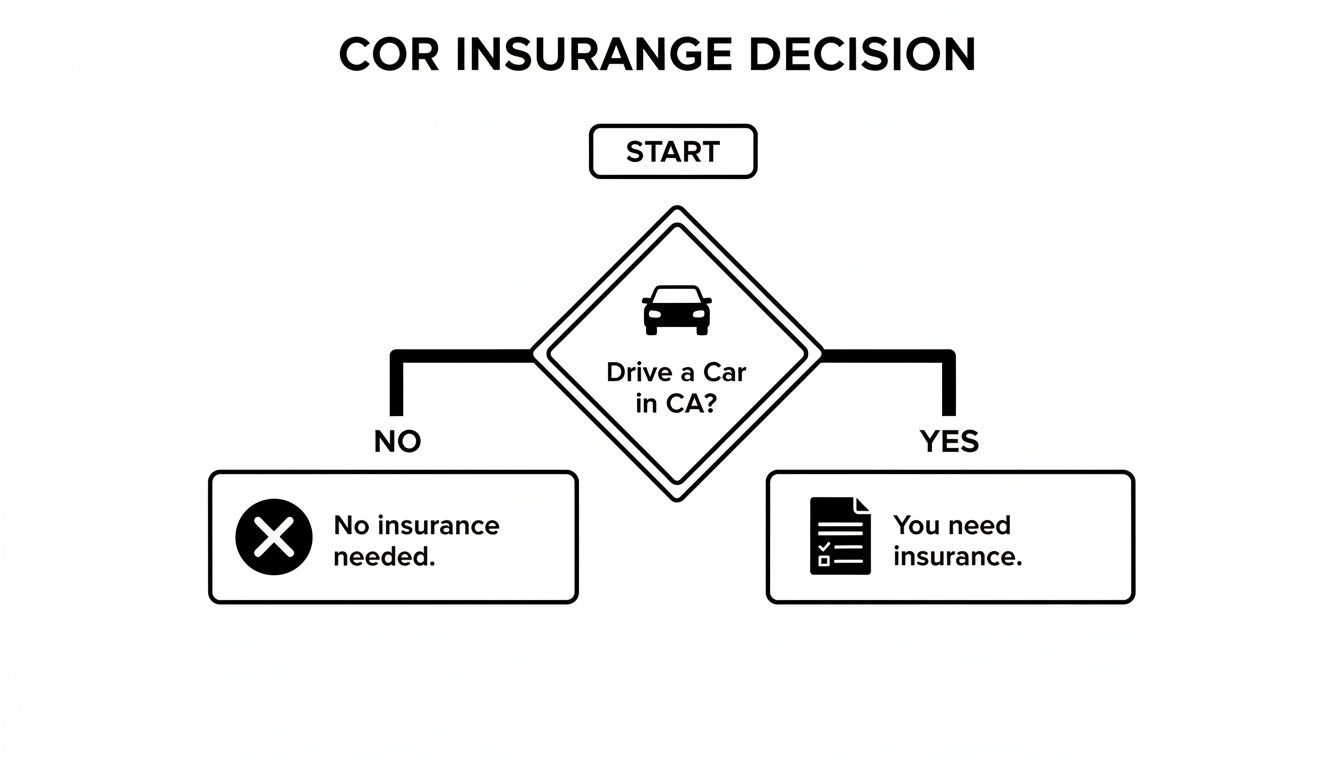
As the flowchart shows, the rule is pretty straightforward. If you drive here, you need to be insured.
To give you a clearer picture, here’s a quick overview of what those minimum liability requirements for car insurance in California look like in practice.
| California's Minimum Liability Car Insurance Requirements | | :--- | :--- | | Coverage Type | Minimum Required Amount | | Bodily Injury Liability | $15,000 per person injured in an accident | | Bodily Injury Liability | $30,000 per accident (for all people injured) | | Property Damage Liability | $5,000 for property damage per accident |
These are the foundational numbers every California driver needs to know. While meeting these minimums keeps you legal, it's crucial to understand that they offer very basic protection, and many drivers opt for higher limits for greater peace of mind.
Understanding California's Minimum Liability Law
It’s one thing to have car insurance; it’s another to know what it actually does for you. The state of California requires every driver to carry liability coverage. Think of this as your financial backstop for other people when you're the one at fault in an accident. It’s about taking responsibility and protecting your own savings and assets from being wiped out by a lawsuit.
This required coverage is usually talked about with a shorthand set of numbers: 15/30/5. Each number stands for a different coverage limit in thousands of dollars, and understanding what they mean is crucial for anyone seeking California insurance.
Breaking Down the Three Core Components
So, what do those numbers actually represent? Let's peel back the layers. These are the maximum amounts your insurance company will pay for specific types of damage you cause.
- $15,000 Bodily Injury Liability per person: This is the most your policy will pay for a single person's medical bills if you injure them in an accident.
- $30,000 Bodily Injury Liability per accident: If you injure more than one person, this is the total pot of money available for all of their medical expenses combined.
- $5,000 Property Damage Liability per accident: This is the maximum your policy will pay to fix or replace someone else's property you damage—usually their car, but it could also be a fence or a mailbox.
It's critical to see these numbers for what they are: the absolute legal floor, not a recommended level of protection. If you ever need a quick refresher on these or other insurance terms, our insurance glossary breaks everything down in simple terms.
Where Minimum Coverage Falls Short
Let's put this into a real-world context. Imagine you cause a pile-up on a crowded freeway. One driver suffers a broken arm, and their medical bills hit $20,000. Another person in a different car has injuries that cost $15,000. On top of that, you've damaged two vehicles—one needs $7,000 in repairs, and the other needs $4,000.
Here’s how your bare-minimum 15/30/5 auto insurance policy would play out:
- For the first driver, your insurance pays $15,000 (hitting the per-person limit).
- For the second driver, it pays the full $15,000 (since the $30,000 per-accident total hasn't been maxed out yet).
- For the vehicle damages, it pays a total of $5,000 (hitting the property damage limit).
You are now personally on the hook for the remaining $5,000 in medical costs and $6,000 in car repairs. That’s a staggering $11,000 you have to come up with out of your own pocket, even though you were technically following the law.
This single example highlights the massive gap between being legally compliant and being truly protected. At Mai & Associates, our job is to help you see these risks clearly and find that sweet spot—coverage that genuinely protects your financial future without costing a fortune. Meeting the state minimum is just step one; building a real financial shield is the ultimate goal.
The True Cost of Driving Uninsured in California
Thinking about skipping car insurance in California to save a few bucks? It's a tempting thought, but it's a gamble that can backfire spectacularly. This isn't just about a potential traffic ticket; you're betting against your entire financial future. One small mistake on the road can trigger a domino effect of fines, debt, and legal troubles that can take years to escape.
The penalties hit hard and fast. For a first-time offense, you’re not just looking at a simple fine. Once all the state and county penalty assessments get tacked on, you can easily be out over $1,000. And that's just the beginning of your problems.
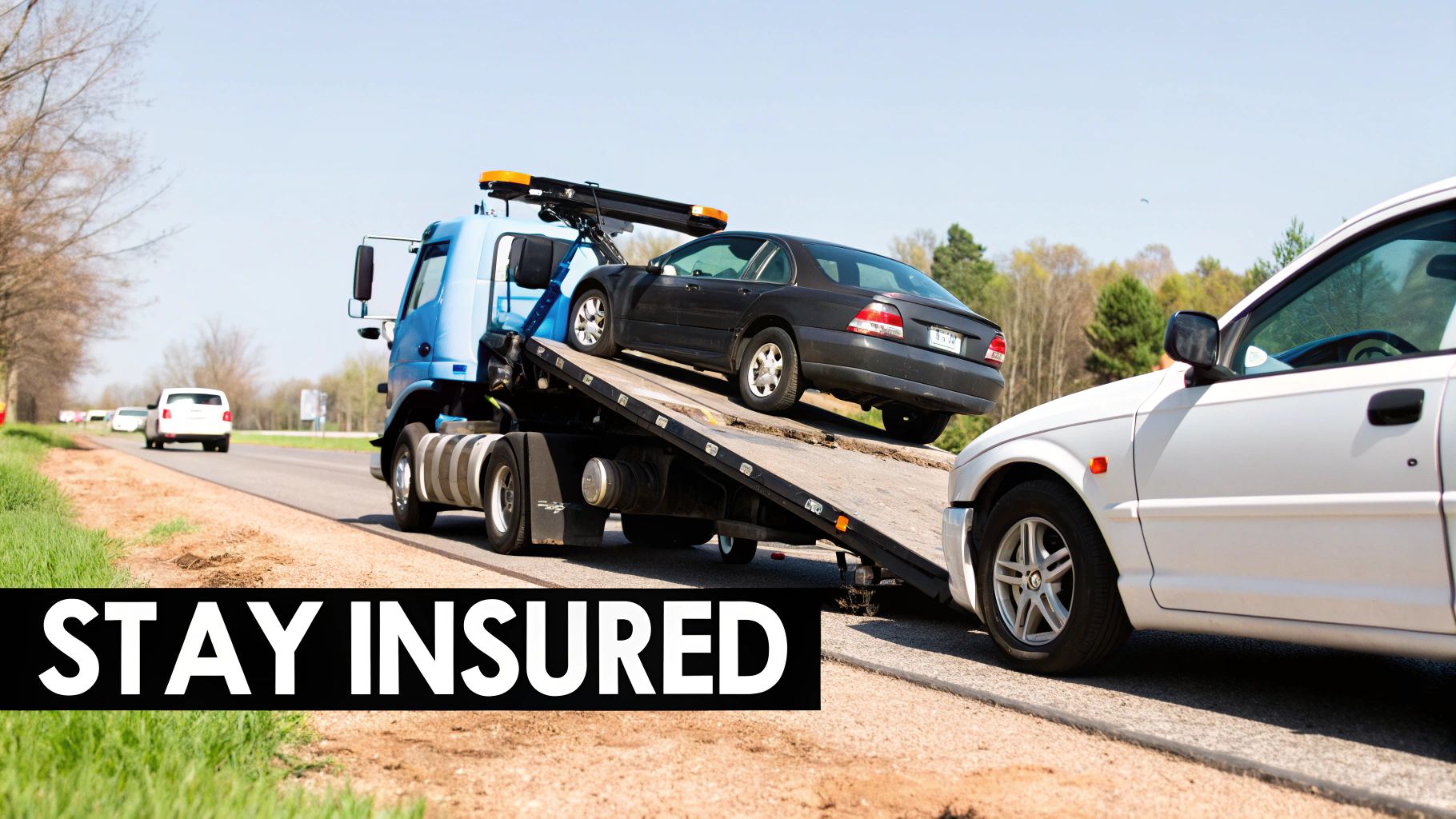
If you're pulled over without proof of auto insurance, the police can impound your vehicle right there on the spot. Getting it back is a whole other expensive ordeal. You'll have to pay the initial fine, cover the towing bill, and then pay daily storage fees that add up incredibly fast. We're talking hundreds, even thousands, of dollars. To top it all off, the DMV will likely suspend your driver's license, making it even harder to get back on your feet.
The Financial Downward Spiral of an Accident
Let's walk through a common scenario. You’re driving uninsured and you cause a minor fender-bender. It doesn't seem like a big deal at first, but the other driver starts complaining about neck pain, and their new SUV has a pretty nasty dent. At that moment, you become personally responsible for every single dollar of the damage.
Think about the numbers. The other driver's medical bills for what seems like a minor injury could easily hit $15,000. The repairs to their vehicle? Another $5,000. All of a sudden, you're on the hook for a $20,000 bill that has to come directly out of your pocket. If you can't pay up, they can and will sue you, which can lead to your wages being garnished or even a lien being placed on your property.
This is how one bad moment turns into a years-long financial nightmare. The scale of this risk is why the global automobile insurance market is so massive—it's projected to grow from $936.73 billion in 2024 to over $1 trillion in 2025. This isn't just about following the law; it's about using an essential tool to protect your assets. To get a better sense of its importance, you can delve into more insights on the global insurance market.
The Long-Term Burden of an SR-22
Once you're caught driving uninsured, the consequences stick with you. California will almost certainly require you to file an SR-22 certificate. An SR-22 isn't insurance itself; it's a form your insurance company files with the DMV to prove you're carrying the state's minimum liability coverage.
This little piece of paper immediately labels you as a "high-risk" driver to every insurance company out there. As a result, your premiums are going to skyrocket—it’s not uncommon for them to double or even triple what a driver with a clean record pays. This isn't a short-term penalty, either. You'll likely be stuck with the SR-22 requirement and the inflated rates for three to five years.
It’s a constant, expensive reminder of the real cost of driving unprotected. The SR-22 isn't just paperwork; it’s a financial anchor that makes it incredibly difficult to get your finances back in order.
Choosing Coverage That Truly Protects You
Meeting California's minimum auto insurance requirement is one thing, but truly protecting yourself on the road is another. Think of it this way: the state minimum is like a flimsy umbrella in a hurricane. It might keep you legally compliant, but it’s not going to do much when a real financial storm hits.
To genuinely protect your car, your health, and your savings, you have to look past the bare minimums. You need a policy built for real-world scenarios.
Beyond the Basics: Essential Coverage Options
Let’s unpack the most common types of car insurance coverage that create a real safety net. While liability insurance is all about covering damage you cause to others, these options are designed to protect you and your own vehicle.
- Collision Coverage: This is what pays to fix or replace your car if you're at fault in an accident, whether you hit another vehicle or something like a guardrail.
- Comprehensive Coverage: Think of this as your "life happens" protection. It covers damage from things other than a collision, like theft, vandalism, fire, falling tree branches, or even hitting a deer.
- Uninsured/Underinsured Motorist (UM/UIM): This is a critical one. If you're hit by a driver with no insurance—or not enough insurance to cover your bills—this coverage steps in to pay for your medical expenses and car repairs. It protects you from other people's irresponsibility.
- Medical Payments (MedPay): This helps cover medical bills for you and your passengers right after an accident, no matter who was at fault. It’s great for immediate costs like ambulance fees or hospital co-pays.
Today’s cars are more like computers on wheels, and fixing them is more expensive than ever. Claims severity—the average cost per claim—is on the rise, driven by advanced sensors, cameras, and electronics. For instance, parts for electric vehicles can cost a staggering 70 percent more to repair than their gas-powered counterparts. Without the right coverage, one bad accident could turn into a financial nightmare. You can discover more insights about rising auto repair costs in recent industry reports.
Comparing Common Auto Insurance Coverages
Feeling a bit overwhelmed by the options? This table breaks down what each type of auto insurance coverage does and who it's generally best for, helping you see how the pieces fit together.
| Coverage Type | What It Typically Covers | Who It's For |
|---|---|---|
| Liability | Bodily injury and property damage you cause to others in an accident. | Everyone. It’s legally required in California. |
| Collision | Damage to your own vehicle from an accident, regardless of fault. | Drivers with newer cars, financed or leased vehicles, or anyone who couldn't afford to replace their car out-of-pocket. |
| Comprehensive | Non-collision damage, such as theft, fire, vandalism, or storm damage. | The same people who need Collision coverage. Lenders often require both. |
| Uninsured/Underinsured Motorist | Your medical bills and vehicle repairs if you're hit by a driver with little or no insurance. | Highly recommended for everyone, especially in a state like California with many uninsured drivers. |
| Medical Payments (MedPay) | Medical expenses for you and your passengers after an accident, regardless of who is at fault. | Anyone who wants immediate medical coverage without waiting for a fault determination or has a high-deductible health plan. |
Ultimately, choosing the right mix of coverage is a personal decision based on your car, your budget, and your tolerance for risk.
Building Your Ideal Policy
So, how do you decide what's right for you? It really depends on your situation. If you have a brand-new SUV with a car loan, you’ll absolutely want Collision and Comprehensive. If you drive an older, paid-off sedan, you might decide to skip them to save money.
However, given how many uninsured drivers are on California roads, UM/UIM coverage is a smart buy for almost everyone.
Building the right policy is about matching your protection to your risks. It's not about buying every option, but about strategically selecting the coverages that shield your most significant financial vulnerabilities.
A well-designed policy gives you a level of confidence that the state minimum simply can't provide. Our guide to auto insurance in California explores these options in much more detail, showing you how to tailor a plan to your life.
At Mai & Associates, our expertise is helping drivers sort through these choices. We’ll help you find that perfect sweet spot between solid protection and a price you can afford.
How to Find Affordable Car Insurance Rates
Finding the right car insurance is non-negotiable, but that doesn't mean it has to cost a fortune. By being a little strategic, you can find a great rate without skimping on the protection you and your family need. Think of it this way: your insurance premium isn't set in stone. You have more control than you might think.
The best defense against high rates is a good offense. Your driving record is, by far, your most valuable asset here. Keeping it clean from accidents and tickets is the surest way to keep your costs down. But beyond that, most insurance companies offer a whole menu of discounts that can add up to serious savings.

Proven Tactics for Lowering Your Premium
You don't have to just accept the first price you're quoted. Small, smart decisions about your policy and driving habits can lead to big savings over time.
- Keep Your Driving Record Clean: We can't say it enough. This is the bedrock of affordable insurance.
- Ask About Every Discount: Are you a good student? Did you take a defensive driving course? Does your car have an anti-theft alarm? These can all trim down your premium.
- Bundle Your Policies: This is one of the simplest wins. If you have home insurance or renters insurance, combining it with your auto insurance from the same company almost always unlocks a substantial discount.
It's a tough market out there. Global insurance market trends show that rates are on the rise, especially as cars get more technologically advanced and expensive to repair. Here in the U.S., and particularly in California, this makes it absolutely critical to be an active, informed shopper.
The Power of Comparison Shopping
If you take only one piece of advice, let it be this: compare quotes. The price for the exact same coverage can differ by hundreds, sometimes even thousands, of dollars between carriers. Each company weighs your risk factors differently, leading to a huge range of prices. But who has the time to call a dozen different companies?
That's the advantage of working with an independent agency like Mai & Associates. We do the heavy lifting for you. Instead of you spending hours on the phone, we shop your policy with a wide network of trusted carriers to find that sweet spot between great coverage and a great price.
Our team knows the California insurance market inside and out. We can pinpoint the best options for you, whether you're looking for auto insurance, home insurance, or even life insurance. We'll break down the choices in plain English so you can feel confident you're getting the right protection at the best possible value.
Ready to Get Covered? Here Are Your Next Steps
Figuring out California's insurance rules can feel like a lot, but actually getting yourself protected is pretty straightforward. If there's one thing to take away, it's this: driving in California means you absolutely need car insurance. It’s not just about following the law—it’s about having a financial safety net for when life throws a curveball.
The good news? Taking control of your car insurance is probably easier than you think. You just need a few key pieces of information to see what's out there and find a policy that truly fits your life and budget.
How to Get a Personalized Quote
Ready to see what your rates could look like? Getting peace of mind is just a few simple steps away.
Get Your Info Together: Before you call, grab your driver's license, your car's basic details (year, make, and model), and your current insurance card if you have one. Having this handy makes the whole process faster and ensures your quote is accurate.
Reach Out to Our Team: The next step is to request a fast, no-obligation insurance quote from us here at Mai & Associates. Our licensed agents will do the heavy lifting, instantly comparing rates from a whole network of top-rated insurance companies.
Compare Your Options: We’ll lay out your personalized policy choices in plain English. One of our experts will walk you through everything, making sure you feel confident you know exactly what you’re getting.
At Mai & Associates, we believe everyone deserves clear, understandable insurance advice. That’s why we offer support in English, Spanish, Armenian, Russian, and Vietnamese to make sure you get the guidance you need.
Don't leave your financial future to chance. Let our team help you find the right coverage so you can get back on the road with total confidence.
Frequently Asked Questions About California Auto Insurance
Even with the basics covered, you probably still have a few questions rolling around in your head. Let's be honest, the world of California insurance can feel a little complicated, but getting straight answers is the best way to feel confident behind the wheel. We'll walk through a few of the most common questions we get from drivers every day.
Thinking through these scenarios now can save you a world of financial headaches later. Each one shows just how critical having the right car insurance is from a different angle.
What Happens If an Uninsured Driver Hits Me?
This is a nightmare scenario for any driver. If someone without insurance hits you, your own Uninsured Motorist (UM) coverage becomes your safety net. This is the specific part of your policy designed to cover your medical expenses and car repairs when the other driver is at fault but has no insurance to pay for it.
Without UM coverage, your only real alternative is to sue the other driver personally. I can tell you from experience, that's often a long and frustrating road that leads nowhere. Someone driving without insurance is unlikely to have the money to pay a court judgment. This is exactly why we consider UM coverage an essential piece of protection for anyone on California roads.
Do I Need Full Coverage If My Car Is Old?
While you always need liability insurance, "full coverage" (which is really just a common term for adding Collision and Comprehensive coverage) is optional once your car is paid off. The decision really comes down to a simple question: is the extra cost worth it? You have to weigh the price of the coverage against what your car is actually worth.
A good rule of thumb we often share with clients is this: if the annual cost for full coverage is more than 10% of your car's cash value, it might be time to drop it. An agent can help you figure out the exact numbers for your vehicle.
Can I Get Insurance If I Don't Own a Car?
Absolutely. What you're looking for is called a non-owner car insurance policy. It’s designed to give you liability protection anytime you’re driving a car you don't own, whether it’s a rental for the weekend or a friend's car you've borrowed. It's the perfect fit for frequent drivers who don't have their own vehicle or for someone who needs to file an SR-22 to get their license back.
Have more questions about auto insurance, home insurance, or other policies? We've compiled a ton of answers over on our California insurance FAQ page.
Trying to figure out the fine print of car insurance, renters insurance, or even life insurance is so much simpler when you have an expert in your corner. The team at Mai & Associates is here to give you clear answers and find the policy that truly fits your life. Get your free, no-obligation quote today!