Cracked Windshield Insurance: Repair or Replace in 2026?
That sharp hit on the freeway is familiar. A truck throws a pebble, you hear the thwack, and within minutes you're staring at a chip that starts to creep across the glass.
Most California drivers ask the same question next. Is this a simple repair, or am I about to deal with an insurance headache? The answer depends less on the crack itself and more on the policy sitting in your glovebox. For California insurance, especially auto insurance, the difference between liability-only and a policy covering your own vehicle's damage matters a lot. It's the same kind of policy detail that also matters in home insurance, renters insurance, car insurance, and life insurance. The small print decides whether a bad day stays manageable or gets expensive fast.
Your Guide to Cracked Windshield Insurance in California
Windshield damage happens all the time. It's not rare, and it's not just bad luck. Windshield damage accounts for approximately 30% of all auto insurance claims nationwide, or about 14 million windshield-related claims each year in the United States, according to Insurance Journal's report on windshield-related auto claims.
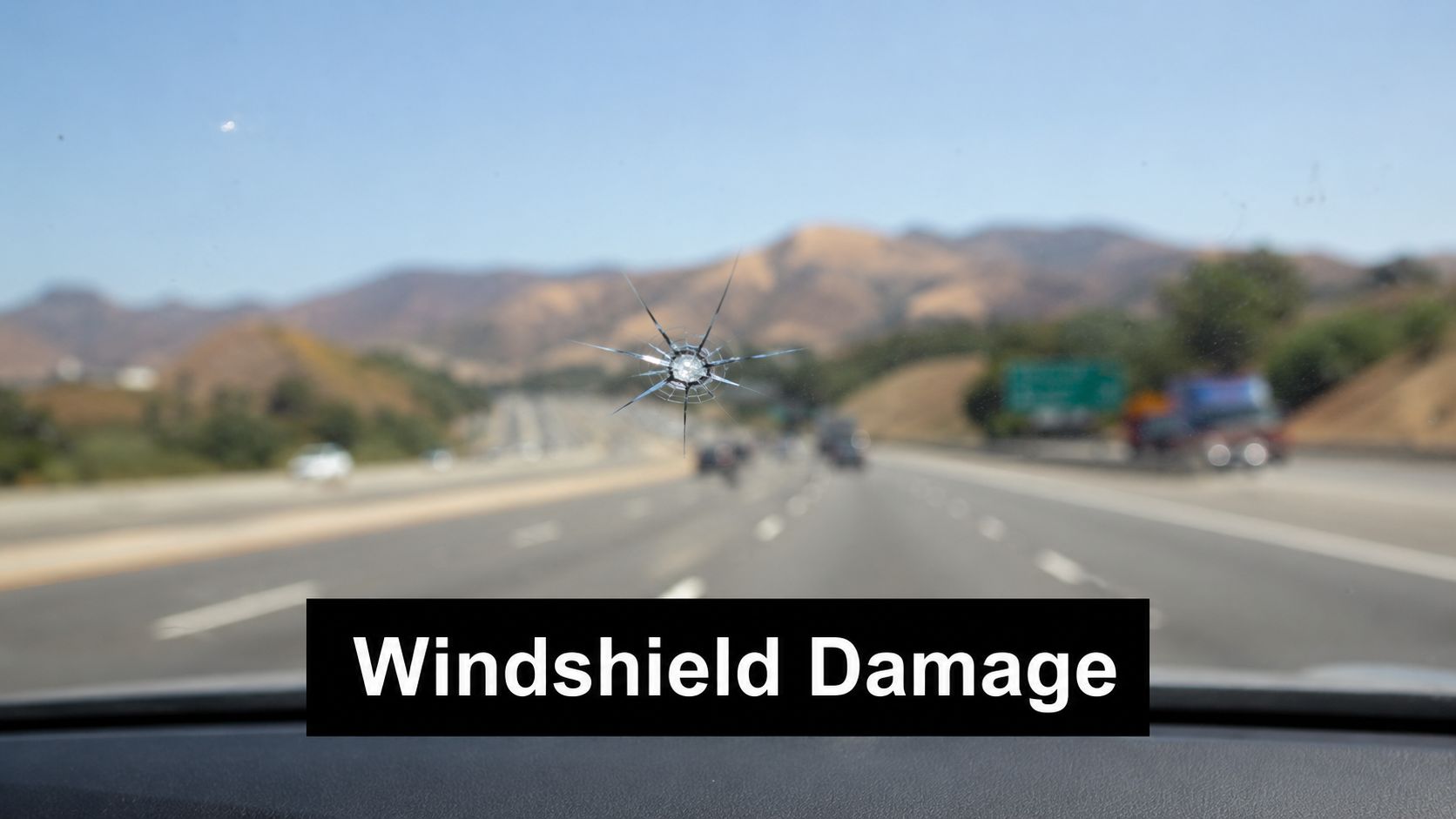
That's the first thing to understand about cracked windshield insurance in California. You're not dealing with some unusual edge case. You're dealing with one of the most common insurance issues on the road.
Start with one question
Before you worry about repair shops or claims, check one thing. Do you have full coverage?
If the damage came from road debris, a falling object, vandalism, or weather, the coverage for non-collision damage is the part of your auto insurance that usually matters. If you only carry basic liability, your insurer generally isn't paying for your windshield.
What to do right away
Use this order:
- Look at the crack location. If it sits in your direct line of sight, treat it as urgent.
- Take photos now. Cracks spread. Your photos should show size and placement before it worsens.
- Review your declarations page. Don't guess about coverage.
- Compare the likely cost against your deductible. That decision drives whether filing makes sense.
Practical rule: A cracked windshield is partly a glass problem and partly a policy problem. Solve both before you file anything.
California drivers often focus only on getting the glass fixed fast. I get it. But the smarter move is to slow down for ten minutes, confirm your coverage, and decide whether this should be a claim at all. That's where many people save money, and just as important, avoid avoidable trouble on renewal.
Understanding Your California Auto Insurance Coverage
Most confusion around cracked windshield insurance comes from people mixing up policy types. California drivers usually carry some combination of liability, collision, and coverage for non-collision damage. Only one of those is built for the classic freeway rock-chip scenario.
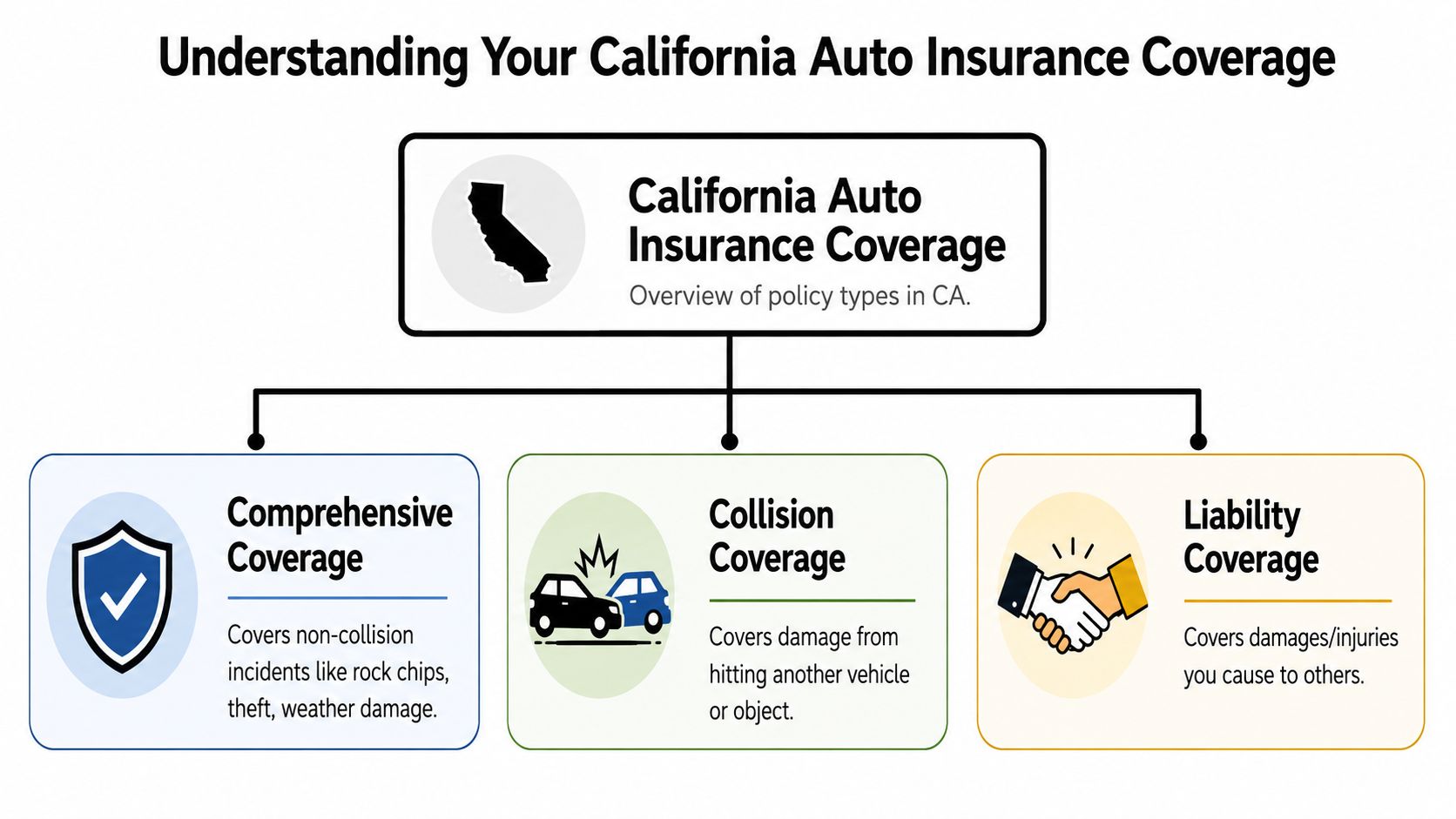
Liability, collision, and comprehensive are not interchangeable
Here's the clean version.
- Liability coverage pays for damage or injuries you cause to other people.
- Collision coverage pays for damage to your own vehicle when you hit another car or object.
- Other than collision coverage pays for non-collision damage, which is where windshield claims usually land.
If you want a broader overview of policy options, this guide to California auto insurance coverage options is a useful place to compare them.
The California rule that matters
In California, auto insurance policies that cover damage to your own vehicle are required to include windshield repair or replacement, while minimum liability coverage excludes auto glass repairs entirely, according to this explanation of California windshield coverage rules.
That means two drivers can have the same crack and face completely different bills.
One driver with coverage for damage to their own car may be covered for repair or replacement, subject to policy terms. Another driver with liability-only coverage pays out of pocket. Same freeway. Same rock. Very different outcome.
If you only remember one thing from this section, remember this. Liability protects other people from your mistakes. It does not protect your windshield from road debris.
A quick side-by-side comparison
| Coverage type | What it generally covers | Typical windshield scenario |
|---|---|---|
| Liability | Damage or injuries you cause to others | Doesn't cover your cracked windshield |
| Collision | Damage from hitting a vehicle or object | May apply if the glass broke in an accident |
| Comprehensive | Non-collision damage to your car | Usually the relevant coverage for chips, cracks, vandalism, and falling objects |
What to check on your own policy
Pull up your declarations page and look for these items:
- Non-collision damage coverage listed on the vehicle
- Your deductible amount
- Any separate glass terms or endorsements
- Whether the vehicle has features that may complicate replacement, such as camera-based safety systems
Auto insurance proves its practical value, moving beyond mere theory. If you also shop your home insurance, renters insurance, or life insurance with the same level of attention, you'll avoid a lot of expensive surprises. The same principle applies across all California insurance. Know what you bought before you need it.
Repair vs Replacement What Your Insurance Will Cover
Insurers prefer repair when repair is safe. You should too. It's cheaper, faster, and usually less disruptive.
The cost gap is significant. Windshield replacement averages $350 to $550 in the U.S., can exceed $1,000 for vehicles with ADAS recalibration needs, and minor chip repairs often cost under $100, according to Mercury Insurance's guide to windshield repair and replacement costs.
The practical difference
Small chips and short cracks often qualify for repair if they don't interfere with the driver's view. Larger cracks, damage at the edge, or anything that compromises visibility usually pushes the claim into replacement territory.
A lot of shops use simple field rules when discussing glass damage. Some also explain repair standards publicly, including regional providers like auto glass Oshawa Ontario, which can be useful if you want a plain-language explanation of why certain cracks spread and others can be stabilized.
Windshield Damage Repair or Replace
| Criteria | Qualifies for Repair | Requires Replacement |
|---|---|---|
| Size | Minor chip or short crack | Longer crack or spreading damage |
| Driver visibility | Outside the direct line of sight | In the driver's direct line of sight |
| Location on glass | Central area with limited damage | Edge damage or structural concern |
| Glass condition | Single, clean impact point | Multiple impact points or weakened glass |
| Vehicle technology | No major replacement complications | Replacement needed, often with recalibration on newer vehicles |
Why insurers push repair first
Repair controls cost. It also reduces the chance that a small chip turns into a claim for full glass replacement plus calibration work.
For you, the bigger point is timing. Waiting is what turns a manageable repair into a larger bill. Heat, cold mornings, freeway vibration, and even a rough door slam can make a crack travel.
A chip is a decision point. If you act early, you may be dealing with a basic repair. If you wait, you may be buying a windshield.
My advice on choosing between them
Use a simple filter:
- Repair it if the damage is minor, outside your sightline, and your insurer approves it.
- Replace it if visibility is compromised, the crack is spreading, or the structural integrity of the glass is in question.
- Don't force a repair to avoid a deductible when replacement is the safer option.
This matters even more on newer cars. If your windshield supports lane departure alerts, forward-facing cameras, or related safety functions, replacement isn't just about installing glass. The system may need recalibration before the vehicle is safely ready to drive.
The Step by Step Cracked Windshield Insurance Claim Process
The claim process is often easier than anticipated. The mistake isn't that drivers don't know how to file. The mistake is that they file too quickly without thinking through whether filing is the best move.
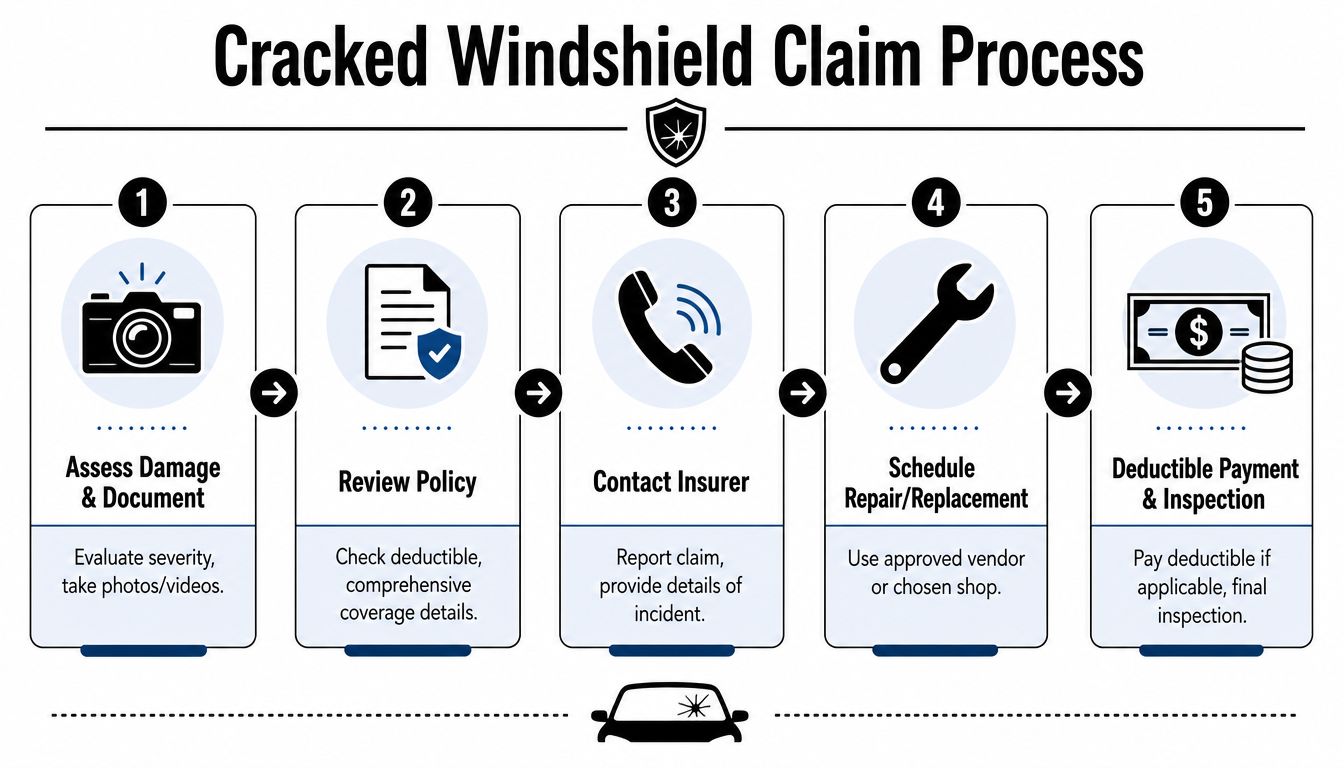
If you want broader insurance explainers before calling your carrier, these California insurance guides are a solid reference point.
Step 1 and Step 2
Start with documentation, then review the policy.
- Photograph the damage clearly. Take one close photo, one wider shot from the driver seat, and one exterior photo.
- Check your coverage and deductible. You need to know whether your policy's relevant coverage applies and whether the cost is likely below or above your deductible.
This step alone prevents bad decisions.
Step 3 and Step 4
After that, contact the insurer or your agent and ask how they want the claim handled. Some carriers route glass claims through a dedicated vendor network. Others let you choose a shop, then confirm reimbursement terms.
Ask these questions before scheduling:
- Will a repair be covered in full or subject to deductible?
- If replacement is needed, what deductible applies?
- Can you use your own shop?
- Does the shop handle ADAS recalibration if your vehicle needs it?
Ask the deductible question before the appointment, not after the glass is already out of the car.
Step 5
Schedule the service and inspect the outcome before you sign off.
A good shop should explain whether the job is a repair or full replacement, whether sensors or cameras need recalibration, and what warranty applies to the work. If the glass is replaced, make sure the driver-assistance features appear to function normally before you leave.
The financial trap most articles skip
Here's the part many generic guides miss. Recent underwriting shifts have made multiple small glass damage claims more consequential than they used to be. Some insurers have denied renewals or increased premiums by nearly $50 per month after as few as three rock chip claims in three years, based on the underwriting discussion summarized in .
That doesn't mean every claim is a bad idea. It means you should stop treating every tiny chip like a free insurance benefit.
A single claim is one thing. Repeated small claims can create a pattern underwriters don't like. That's the modern wrinkle California drivers need to understand before they casually file one more glass claim.
Should You File a Claim or Pay Out of Pocket
This is the key decision. Not “is the windshield damaged?” You already know that. The question is whether using insurance helps you more than it hurts you.
The simple rule still works
If the repair cost is below your deductible, paying out of pocket usually makes more sense. That's especially true for a minor chip that a shop can fix quickly.
If replacement is required and the bill is much higher than your deductible, filing a claim may be the smart move. The same logic applies in other parts of California insurance too. You don't file small losses just because coverage exists. You file when the economics make sense.
The old advice is incomplete
Many drivers still believe glass claims never matter. That used to be safer advice than it is now.
You should separate single-event necessity from repeat-claim habits:
- One substantial windshield loss may justify using your coverage for damage not caused by a collision.
- Several tiny chip claims over time can make your record look worse than you expect.
- A cash repair on a small chip may protect your long-term eligibility better than another claim entry.
I'm direct about this because drivers need the truth, not feel-good advice. Insurance companies don't always view repeated non-collision claims as harmless. Underwriters look for patterns.
California makes the choice more interesting
Many policies with extensive coverage treat glass repairs favorably, which is good news. At the same time, favorable repair treatment doesn't erase underwriting scrutiny if claims stack up over time.
That creates a smarter strategy:
- File when the damage is significant or replacement is clearly needed.
- Pay cash for small repairs when the amount is manageable and the claim adds little value.
- Keep records of paid repairs anyway, so you can show the issue was addressed promptly.
A small chip can be cheap to repair and expensive to report, if it's your third one.
How to choose a shop without creating new problems
Don't choose a glass shop based only on who can get there first. Ask better questions.
- Glass quality matters. Ask whether the shop uses OEM or aftermarket glass and how they match your vehicle.
- Calibration matters on newer cars. If your windshield interacts with driver-assistance systems, confirm the shop can handle recalibration properly.
- Billing clarity matters. Get a written breakdown before work starts.
- Claims coordination matters. If you're unsure whether to file, review common policy questions first through this California insurance FAQ page.
Good judgment beats speed. The right repair is the one that protects your safety, your wallet, and your insurance record.
Navigating California Rules and Getting Expert Help
A cracked windshield in California can turn into two separate problems fast. One is the glass itself. The other is the insurance record you build if you file every small chip as a claim.
California drivers often get decent protection for windshield damage under coverage for theft, vandalism, falling objects, and other non-collision losses. Minor repairs are often easier to get approved than full replacement, and replacement can still leave you paying your deductible. The important point is simpler than the policy wording. A cheap repair is not always worth turning into a claim.

What California drivers should do differently
Use California rules to your advantage, but do not treat glass claims like free money. Insurers and underwriters still review claim frequency. I tell clients the same thing every week. One necessary glass claim is normal. Several small glass claims in a short period can make your policy look expensive to keep, even if none involved a crash.
That means your decision should be based on math and future insurability, not just whether the policy technically covers the damage.
- File the claim when safety is the issue or replacement is clearly needed.
- Pay out of pocket for a small repair when the bill is manageable and your deductible wipes out most of the claim value.
- Check your prior claim history before filing another glass claim. Frequency matters.
- Keep invoices and photos even when you pay cash. That shows you fixed the damage promptly.
California drivers with newer cars need to be stricter here. A windshield is often tied to safety systems and camera calibration. A bad replacement creates bigger costs later, and insurance disputes are harder to fix after poor work is already done.
What to demand from a repair shop
Ask direct questions and expect direct answers. What glass are they installing. Will they handle recalibration if your vehicle requires it. Will they give you an itemized invoice. Will they bill insurance correctly without inflating the job.
If a shop pushes you to file before explaining cost, deductible impact, and calibration needs, slow down. That shop is protecting its sale, not your record.
The smartest move is a policy review before the next claim, especially if you have already filed one or two small non-collision claims. If you want help comparing deductibles, reviewing claim exposure, or tightening up your policy setup, get a California insurance quote for your current coverage and deductible options.
If you want clear advice on cracked windshield insurance and broader protection for your car, home, apartment, or family, talk to Mai & Associates. Their licensed California team can help you compare auto insurance, home insurance, renters insurance, and life insurance options, spot coverage gaps, and find a policy setup that fits your budget before the next claim catches you off guard.