Cheapest Car Insurance for New Drivers in California
You just got your first quote, opened it on your phone, and felt the number hit harder than the DMV line. That reaction is normal. New driver insurance in California is expensive, but the price isn't random, and it's not the same for every driver.
The good news is that the cheapest option usually comes from a smart mix of policy structure, vehicle choice, coverage level, and quote shopping. In other words, you can influence the price more than most first-time drivers realize. If you know where insurers are looking for risk, you can make the quote easier to live with.
Why New Driver Car Insurance in California Is So Expensive

The first quote stings because insurers see a new driver as a bigger unknown. InsureMojo reports an average of $6,024 per year for car insurance for new drivers, compared with a national average of $2,314, which makes the new-driver premium roughly 3 times higher. That same analysis says premiums drop 30% between age 18 and 19 as experience starts to build, which is why a quote can change quickly even when everything else stays the same. InsureMojo's new-driver pricing analysis puts hard numbers behind what most California families already feel.
Why the quote looks so high
Insurance companies price risk, not just car ownership. A driver with little road history leaves the carrier with less evidence about how they'll handle traffic, weather, night driving, parking, and split-second decisions. That's why the same person can look very different to an insurer after another year of clean driving.
California adds its own pressure points too. Dense traffic, a lot of stop-and-go driving, and expensive repair costs all make insurers cautious. If a new driver is also buying coverage for the first time, the carrier has even less data to work with.
Practical rule: the first quote is a starting point, not your final price. New drivers often save the most by changing the structure of the policy, not by waiting and hoping the insurer gets kinder.
Parents also run into this problem when they're deciding whether to add a teen or new driver to an existing policy. A useful guide for parents on teen insurance can help families think through that decision before the first bill arrives.
For a broader California view of how auto coverage fits into the rest of a household's protection plan, the California auto insurance overview is worth a look.
Understanding California's Minimum Insurance Requirements
California's baseline liability rule is the 30/60/15 structure. That means $30,000 in bodily injury liability per person, $60,000 per accident for bodily injury, and $15,000 for property damage, according to SoFi's California insurance guide. Those are the legal floor numbers, not a promise that they'll be enough after a serious crash.
What 30/60/15 really means
If you hit another driver and cause injuries, bodily injury liability helps pay for the other person's medical costs and related losses, up to the policy limit. The per person number is the cap for one injured person, while the per accident number is the total cap for everyone hurt in that one incident. Property damage liability covers the other vehicle, a fence, a mailbox, or similar damage up to the final number.
That's why minimum coverage can be affordable at first glance but still leave a gap after a larger claim. A new driver trying to save money should know the difference between “legal” and “comfortable.” They're not the same thing.
| Coverage Type | Minimum Limit |
|---|---|
| Bodily Injury Liability, Per Person | $30,000 |
| Bodily Injury Liability, Per Accident | $60,000 |
| Property Damage Liability | $15,000 |
The state minimum is the starting line. If the car is newer, financed, or expensive to replace, many drivers need more than the bare minimum to avoid a painful out-of-pocket surprise.
For practical shopping help, the California insurance guides page gives a useful home base for comparing policy language before you sign anything.
Your Playbook for Lowering New Driver Premiums
The biggest savings usually show up before the quote is even finalized. For many California families, the first and best move is to avoid buying a standalone policy if the new driver can be added to an existing parent policy. Policygenius says staying on a parent's policy can cut costs by about 41% versus a standalone policy, which is a major difference for a household budget. Policygenius' new-driver rates analysis makes the key point clearly, the cheapest result depends as much on policy structure as it does on the carrier.
Start with the policy structure
If the family already has a solid auto policy, ask the insurer how much it costs to add the new driver before shopping for a separate plan. This works especially well when the household has a clean claims record and the car is used for normal commuting, school, or local errands. A standalone policy can make sense in some situations, but it's usually the more expensive path at the start.
Choose the car like an insurer is going to inspect it
Insurers reward lower-risk vehicles. A practical, modest car with a good repair profile is usually easier to insure than a sporty trim with high horsepower, expensive parts, or a history of theft appeal. Avoiding modifications helps too, because the carrier wants predictability.
A sensible first car can save money twice. It can lower the purchase price and make the insurance quote less painful.
Use discounts that match real behavior
A good student discount can help if grades qualify. Defensive driving courses can also help when a carrier recognizes them. Telematics, or usage-based insurance, can be useful for a careful driver who doesn't mind having driving habits measured. My advice is simple, if the app makes you anxious, don't force it. If you drive smoothly and consistently, it may be worth testing.
For a family that's trying to balance monthly bills, it also helps to consider fixed expenses carefully. The Fintrack guide to fixed costs is a clean way to separate the insurance premium from the rest of the budget so you know what you can really afford.
Keep the money decision realistic
A higher deductible can lower the premium, but only if you can pay it after a claim. That's where too many drivers get stuck. They chase the cheapest monthly bill, then discover the deductible hurts more than the savings helped.
The right move is usually a blend, not a single trick. Add the driver where possible, choose a reasonable car, ask for discounts, and only then decide whether higher out-of-pocket risk makes sense.
How to Compare Car Insurance Quotes Like a Pro
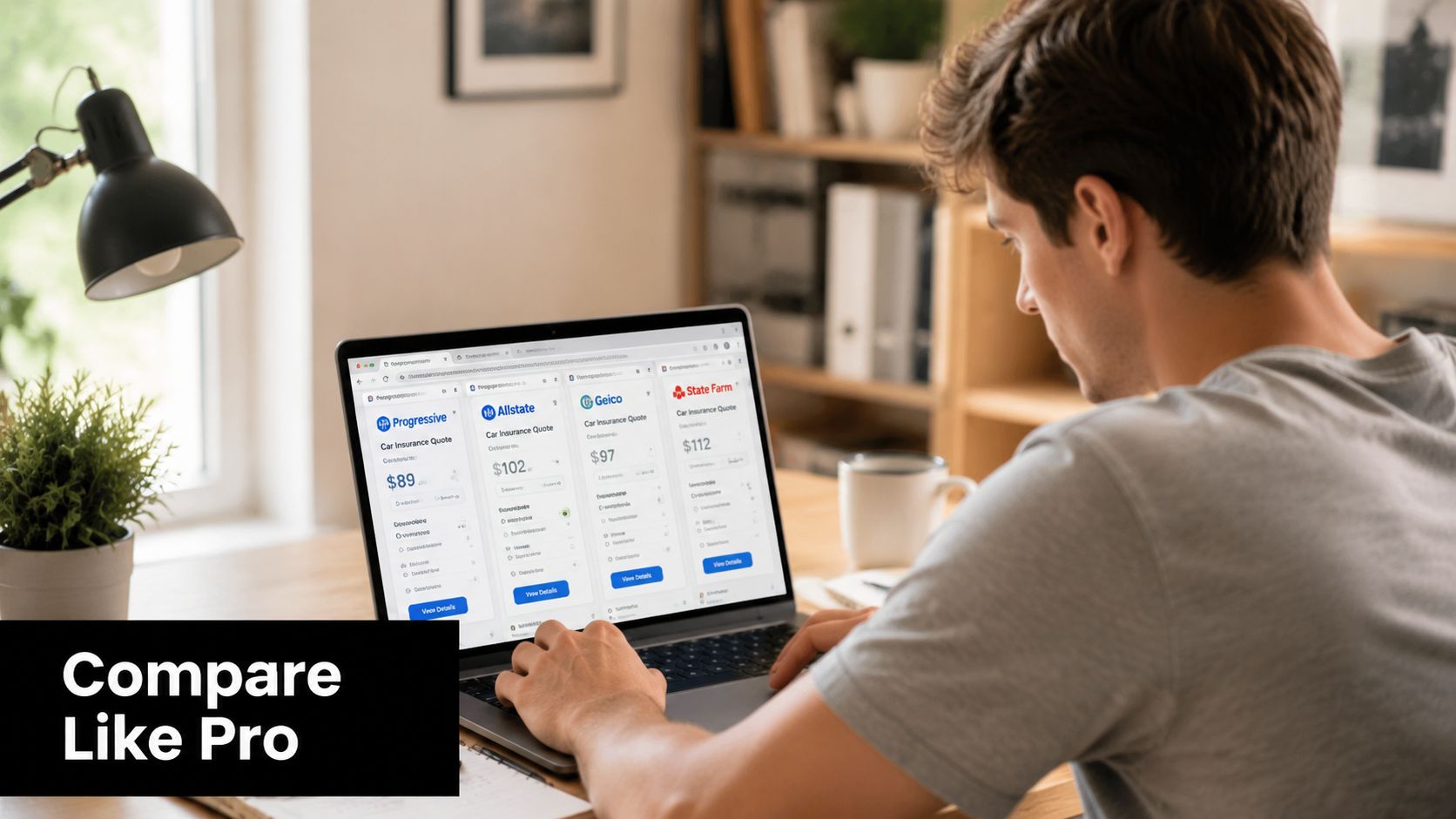
A quote only helps if you compare it the right way. In California, a new driver may see a wide spread between liability and full coverage pricing, so a low monthly number does not mean much unless you know exactly what is included. If a quote looks unusually cheap, check the limits, deductibles, and exclusions before you get excited.
For a local benchmark, Insurify reports average premiums of $173 per month for liability coverage and $360 per month for full coverage. Those figures are not a promise, but they give you a practical frame for judging whether a quote is competitive in this state.
Compare the same coverage, not just the same company
Two quotes can look different for a simple reason, the coverage is not the same. Make sure each carrier is using the same liability limits, the same deductibles, and the same driver details. If one company is pricing minimum liability and another is pricing full coverage, the comparison does not tell you much.
California's 30/60/15 minimum is the legal floor, but many drivers still need to look at full coverage pricing, especially if the car has enough value to protect. A lower premium can be attractive, yet it may come with less protection than you expected. Before choosing the cheaper number, compare what you would pay after a claim.
Ask direct questions while the quote is fresh
While the quote is still open on the screen or on the phone, ask about every discount that fits your situation. Ask whether the car qualifies for a better rating, and ask how the price changes if the annual mileage estimate shifts. Also ask where the insurer assumes the car is parked, in a garage, a driveway, or on the street. Small details change the quote more than most new drivers expect.
Use the quote spread as leverage
Smart shoppers do not stop at one number. Comparing several insurers can expose large differences for the same coverage, and that spread often holds the greatest savings. If one company comes in higher, use the lower quote as a reference and ask Mai & Associates to review whether the difference comes from coverage, underwriting, or a detail in the application.
For a closer look at how California insurers describe coverage and pricing, the California insurance blog can help you read the language before you bind a policy.
Unlock More Savings with a Complete Insurance Picture
A lot of drivers focus only on the car policy and miss the larger household picture. That's a mistake, because insurers often reward customers who place more than one policy with them. If your family already has home or renters coverage, bundling can change the math enough to matter over the course of a year.
Why bundling can help a new driver
Auto insurance, home insurance, and renters insurance are all part of the same underwriting conversation. When one carrier sees multiple policies in the same household, it may treat that account as more stable and easier to manage. For a new driver, that can mean the auto policy doesn't have to carry the entire relationship alone.
Renters insurance is especially useful for young adults moving into their first apartment or shared housing. It's usually inexpensive compared with the car policy, but it can still help organize the account and make the household coverage picture cleaner. The same logic applies when parents want to protect the home and the new driver's car with the same carrier, if the pricing works.
Don't ignore the non-auto policies
A household that reviews only auto insurance may miss a better total cost elsewhere. If the home policy is overpriced or the renters policy is weak, the family can end up paying more overall even if the car quote looks decent. That's why a full coverage review often beats a one-policy comparison.
Life insurance belongs in this conversation too, especially for families that want to keep the budget organized while protecting dependents. The point isn't to buy everything from one carrier automatically. The point is to see whether combining policies gives the family a better total outcome.
Best practice: compare the total household insurance spend, not just the car premium. The cheapest car quote isn't always the cheapest family plan.
Get Your Instant California Car Insurance Quote Today
The fastest way to lower your premium is still straightforward. Start with California's 30/60/15 minimum, choose a practical car, use every discount you qualify for, compare quotes from a few carriers, and ask whether bundling changes the total price.

If you want help with the quote process, Mai & Associates gives California drivers a clear next step. You can compare rates from multiple carriers, work with licensed agents who understand the state market, and get support in English, Spanish, Armenian, Russian, and Vietnamese. The agency also helps drivers review auto, home, renters, and life insurance together, which often makes it easier to spot gaps and keep the total bill under control.
A quick quote request can show you where you stand against real California pricing. Use the Mai & Associates insurance quote request form, then review whether a family policy, a bundled setup, or a separate standalone policy fits your situation best.
A CTA for Mai & Associates.