Changing Homeowners Insurance in CA: A How-To Guide
You open the renewal packet, scan the premium, and read it twice because the first time doesn't feel real. That's where a lot of California homeowners are right now. They aren't casually browsing. They're trying to figure out whether changing homeowners insurance is smart, risky, overdue, or all three.
In this state, the answer is rarely simple. A lower premium can come with weaker wildfire language, a separate deductible structure, or a roof settlement clause that changes the claim experience when you need help. If you're also juggling California auto insurance, renters insurance for another property, car insurance for a young driver, or life insurance for your family, the decision gets even more connected.
Is It Time to Change Your California Home Insurance
A common California scenario goes like this. A homeowner hasn't filed a claim, hasn't moved, and hasn't made any dramatic changes to the property. Then the renewal arrives with a price jump big enough to throw off the monthly budget.
That reaction is understandable. U.S. homeowners insurance rates climbed a cumulative 46.8% nationally between 2020 and 2025, and the average annual premium rose from $1,723 in 2023 to $2,072 in 2024, a 20% increase in one year according to LendingTree's state of home insurance analysis. California homeowners feel that pressure in a market already shaped by wildfire exposure, changing carrier appetite, and rebuilding cost concerns.
Signs your current policy deserves a second look
Some increases are part of the broader market. Others are a sign your current policy may no longer be competitive or may no longer fit your property well.
A review makes sense when:
- Your renewal jumps sharply: A large increase is the moment to compare the premium against the policy language, not just last year's bill.
- Your coverage hasn't been reviewed recently: Dwelling limits, personal property, and liability often drift out of sync with the home.
- You're seeing California-specific restrictions: Wildfire wording, roof limitations, and separate deductibles can change at renewal.
- Your escrow payment changed: Many homeowners first discover the insurance increase when the mortgage payment goes up.
If you're in that spot, start with your current declarations page and compare it against options for California home insurance coverage. The premium matters, but the policy structure matters more.
Practical rule: Don't treat a renewal notice like a bill you simply accept. Treat it like a negotiation prompt.
Why Californians are shopping more carefully
California homeowners also tend to look beyond their own state for context. That's useful because property risk is becoming more location-specific everywhere. For example, people comparing roof age, weather exposure, and home upgrades sometimes look at resources on how solar impacts Florida home insurance to understand how carriers evaluate changing property features in other high-risk markets. The state is different, but the lesson is familiar. Carriers price details that homeowners often assume won't matter.
Changing homeowners insurance isn't just about escaping a bad renewal. It's about checking whether your policy still matches your home, your lender requirements, and the risks that exist where you live.
Key Triggers for Switching Your Home Policy
Some people switch because of price. In California, that's only one trigger. The better reason is a change in fit. A policy that worked two years ago may be the wrong policy now, even if the carrier itself hasn't done anything wrong.

The triggers that justify real shopping
The clearest reason to shop is a non-renewal notice. In higher-risk parts of California, that's not theoretical. If your carrier won't continue the policy, the goal shifts from “Can I save money?” to “How do I replace coverage without creating a gap?”
Other triggers are less dramatic but just as important:
- You renovated the home: A kitchen rebuild, room addition, detached structure upgrade, or major system replacement can change replacement cost and coverage needs.
- You added liability exposure: A pool, short-term rental use, or frequent guests can make an old liability limit feel thin.
- You discovered a coverage gap: This often happens after a careful review of exclusions, settlement terms, or high-risk peril language.
- Your mortgage lender flagged an issue: Lender notices about insufficient coverage, missing proof of insurance, or escrow confusion should be handled quickly.
- You're trying to align policies: Home insurance, auto insurance, renters insurance on another residence, car insurance for family members, and life insurance planning often make more sense when reviewed together.
The hidden costs of switching
The part many guides skip is that switching has trade-offs. One of the biggest is the loss of tenure-based discounts. Data from Consumer Reports shows that 68% of homeowners who switch lose access to entrenched discounts they didn't realize were conditional on continuous tenure, as noted in this Policygenius review of switching homeowners insurance with escrow.
That doesn't mean you shouldn't switch. It means you shouldn't switch blind.
Before you cancel an older policy, ask one direct question: “Which discounts disappear if I leave, and are any of them impossible to restore later?”
Another practical issue shows up after storms or property damage. Homeowners often rush to change carriers right after noticing wear, roof leaks, or exterior damage. That's risky if the condition should be evaluated first. If you need local help documenting recent weather-related issues before making insurance decisions, a resource like finding qualified storm repair pros can help you separate repair needs from insurance shopping.
When switching is smart and when it isn't
Here's the short version.
| Situation | Usually smart to shop | Better to slow down |
|---|---|---|
| Sharp renewal increase | Yes | Only if you haven't compared coverage yet |
| Non-renewal notice | Yes, immediately | Don't wait for the last week |
| Recent renovation | Yes | Not until replacement cost is updated |
| Active unresolved claim | Usually no | Review timing with your agent first |
| High-value tenure discounts | Maybe | Calculate what you'd lose first |
If your reason for changing homeowners insurance is only “this quote is cheaper,” pause. If your reason is “this quote fixes a real problem in my current policy,” that's usually a much stronger move.
How to Compare Home Insurance Quotes in California
Most bad insurance switches happen because people compare premiums instead of contracts. In California, two quotes can look similar on the first page and behave very differently after a wildfire, smoke event, or earthquake-related loss.
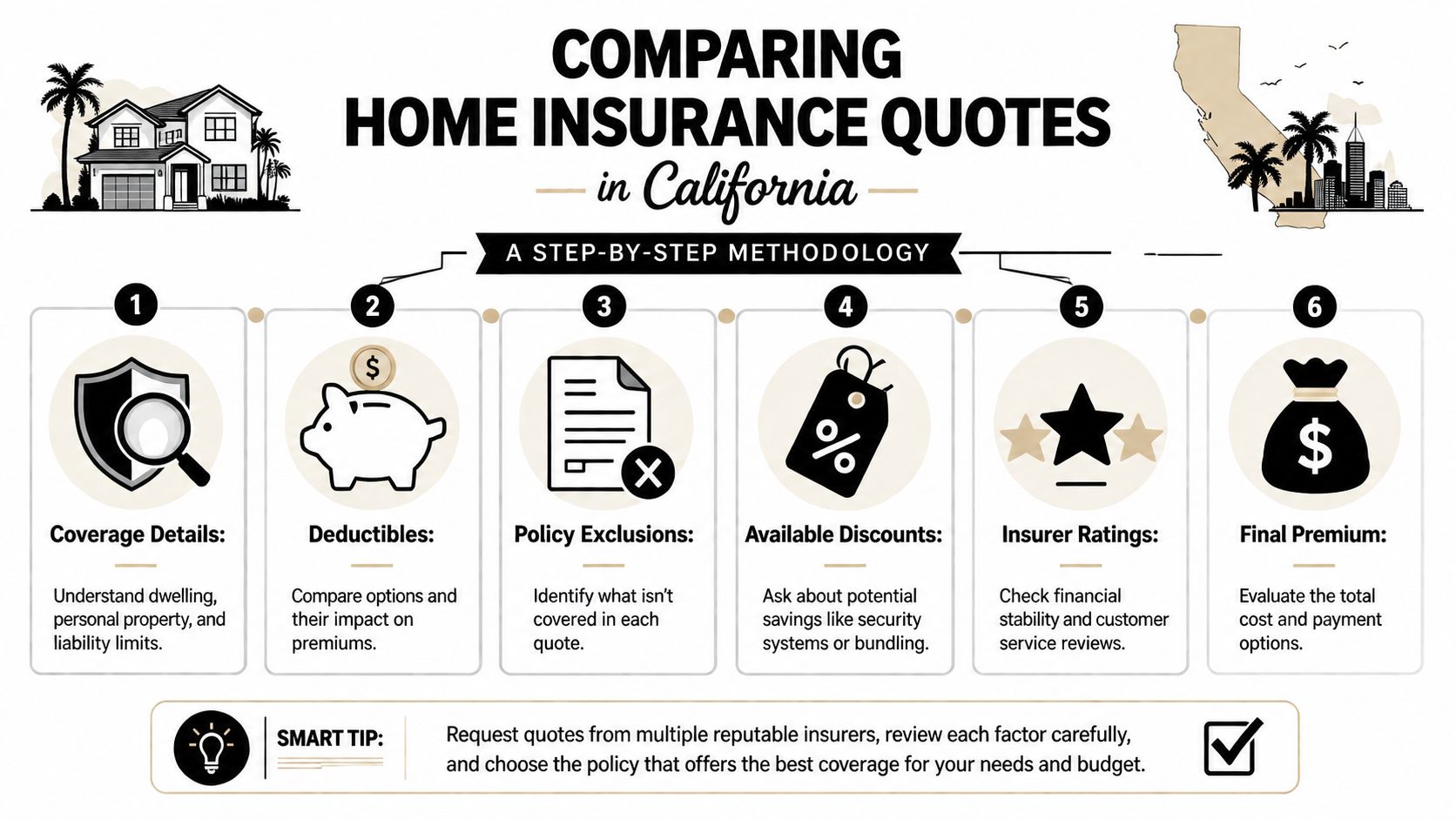
A clean comparison starts with gathering quotes side by side. If you want a starting point, use a California insurance quote request that lets you compare multiple options without rebuilding the same file over and over.
Start with replacement cost, not market value
The first question is simple. Does the dwelling limit reflect what it would cost to rebuild the home, not what the home might sell for?
The actuarial guidance is practical here. A key step is to match policy needs to coverage limits at or above the home's current replacement cost and select a reliable insurer with strong financial ratings from A.M. Best or Moody's, verified against NAIC complaint databases, as outlined by the American Academy of Actuaries.
That means checking:
- Dwelling coverage: Is the amount realistic for current rebuilding conditions?
- Other structures: Gates, detached garages, sheds, retaining walls, and fencing can matter more in California than many owners expect.
- Personal property: Make sure the limit fits what's inside the home.
- Loss of use: If the home becomes unlivable, this part matters a lot.
Read the exclusions line by line
California quote comparisons separate experienced shoppers from frustrated ones. The premium page won't tell the full story.
Most guides omit critical details on how high-risk California homeowners often face new or expanded exclusions when changing carriers. Homeowners may not realize a new insurer is adding post-2024 exclusion clauses like “no coverage for wildfire debris removal” that their existing policy covered, according to Allstate's guide to changing homeowners insurance.
That's why I tell homeowners to inspect three items carefully.
Wildfire wording
Ask whether the quote handles:
- Debris removal after wildfire
- Smoke damage treatment
- Landscaping and outdoor features
- Additional restrictions for homes in brush or foothill zones
A policy can technically cover fire and still narrow what happens after the fire is out.
Earthquake treatment
Standard California home insurance usually doesn't equal earthquake insurance. If the quote references seismic limits, foundation exclusions, or settlement restrictions, read that language slowly. In many cases, earthquake protection is handled through a separate policy altogether.
Don't assume “earth movement” wording is a minor technicality. For California homes, that language can be the difference between having coverage and having none.
Roof settlement and cosmetic exclusions
Some carriers are tightening roof language, especially on older homes. Others limit payment for cosmetic damage or use actual cash value in places homeowners expect replacement cost treatment.
Compare the structure, not just the total
A simple comparison table helps.
| Quote item | What to check |
|---|---|
| Dwelling limit | Rebuild cost, not resale value |
| Deductible | Flat deductible or peril-specific structure |
| Fire and wildfire terms | Debris removal, smoke, cleanup language |
| Roof settlement | Replacement cost or depreciated settlement |
| Earthquake language | Included, excluded, or separate policy needed |
| Carrier quality | Financial ratings and complaint patterns |
Questions worth asking before you bind
Use direct questions. They save time.
- What changed from my current policy besides the premium?
- Is wildfire debris removal covered the same way?
- Are there any limits on foundation or seismic-related repair?
- Is the roof settled at replacement cost or actual cash value?
- Are there any endorsements I need to restore what my current policy includes?
Changing homeowners insurance in California works best when you compare the contract as if you expect to use it. That mindset usually prevents the expensive surprises.
The Seamless Switching Process Explained
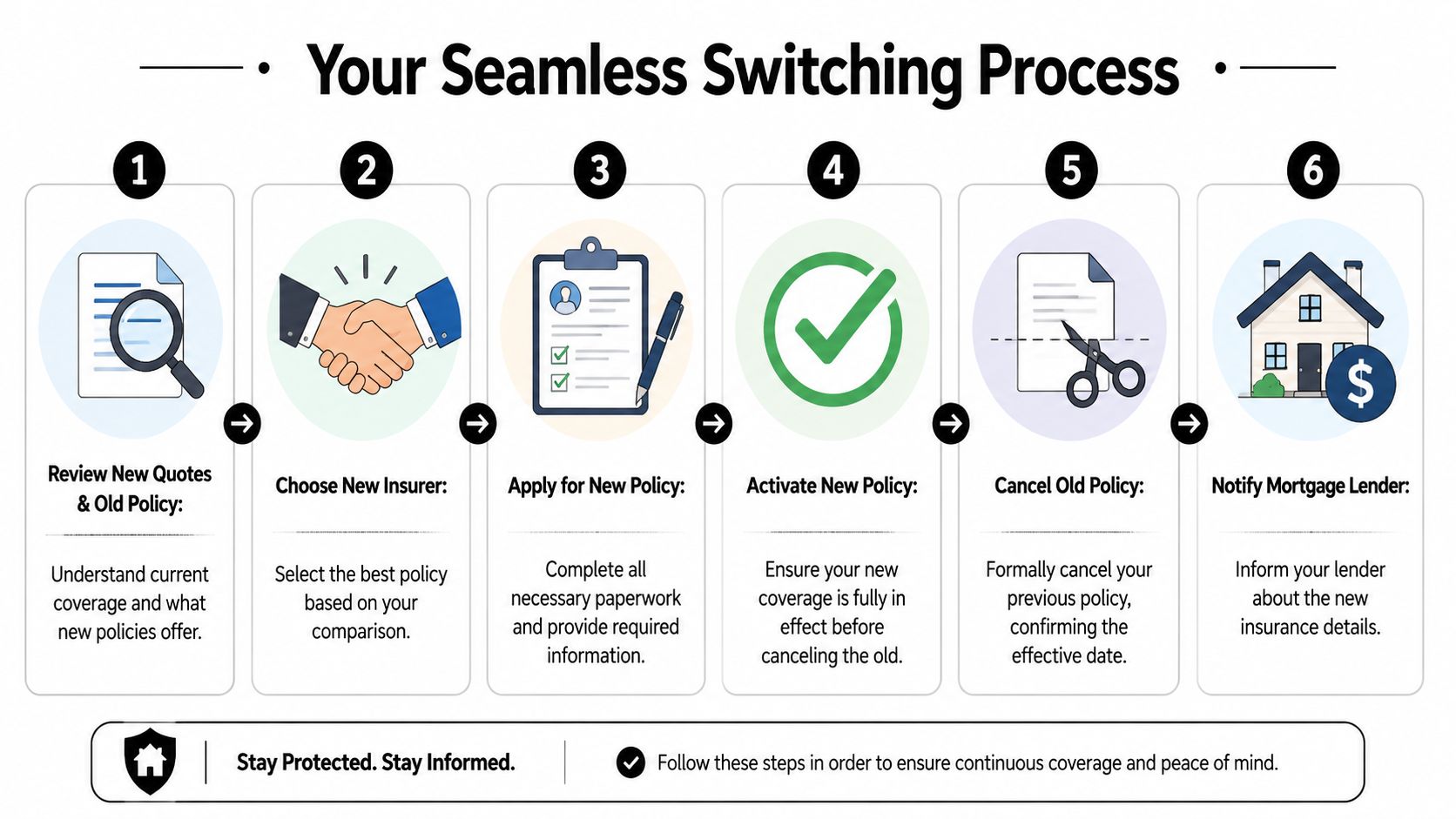
A safe switch follows a strict order. The biggest mistake homeowners make is canceling the old policy too early because they assume the new one is already active. Assumption is where coverage gaps start.
The order that prevents gaps
Use this sequence every time:
Review the current policy carefully
Confirm the present effective dates, deductible, endorsements, mortgage clause, and any California-specific add-ons.Choose the replacement policy
Don't bind based on a verbal summary alone. Review the declarations page and endorsements.Pay what's required to activate coverage
A quote is not coverage. An application is not coverage. Make sure the policy is issued and active.Set the effective date correctly
The new policy should begin before or exactly when the old one ends. There should be no daylight between them.Notify the mortgage lender
If the home is escrowed, the lender needs the new declarations page and mortgagee information updated correctly.Cancel the old policy only after confirmation
Wait until the new insurer confirms activation.
What to verify before canceling
Homeowners can save themselves a lot of trouble. Before sending the cancellation request, check five things.
- Active policy status: Ask for written confirmation that the new policy is in force.
- Replacement cost alignment: The dwelling limit should support the home's rebuilding needs.
- Carrier strength: The insurer should have solid financial ratings and a complaint profile you're comfortable with.
- Lender information: Mortgage company name, loan number, and mailing details must be correct.
- Any separate California policies: If you have companion coverage such as a Difference in Conditions arrangement or separate earthquake protection, make sure nothing is being dropped by accident.
The core standard is straightforward. Match policy needs to coverage limits at or above the home's current replacement cost and select a reliable insurer with strong financial ratings from A.M. Best or Moody's, verified against NAIC complaint databases. That guidance comes from the actuarial source linked earlier, and it's exactly right for a switch.
Coverage should overlap correctly on paper before you touch the old policy. “It should be fine” isn't a process.
Sample email to your mortgage lender
Hello, I've changed my homeowners insurance policy effective [date]. Please update my escrow file with the attached declarations page and confirm receipt. If you need the mortgagee clause listed differently, let me know before the prior policy cancellation date.
Thank you.
Sample cancellation request to your old insurer
Please cancel my homeowners policy effective [date], which is after my new replacement coverage has started. Send written confirmation of cancellation and any refund details to the email and mailing address on file.
One more administrative step people forget
After the switch, save every document. That includes the old declarations page, the new declarations page, proof of payment, cancellation confirmation, and any lender email. If something goes sideways later, your records matter.
If you want plain-language answers to common policy and switching issues, a California insurance FAQ resource can help you double-check the basics before you sign.
Navigating California's Unique Insurance Challenges
California doesn't behave like a standard homeowners market. That's why national advice often falls short. The policy decision isn't only about premium. It's about how your home fits into wildfire modeling, whether a standard carrier still wants the risk, and whether separate coverage is needed for major perils.
When the FAIR Plan enters the picture
Some homeowners can still place coverage with a standard admitted carrier. Others can't, especially in harder wildfire zones. That's often where the California FAIR Plan becomes part of the conversation.
The FAIR Plan can provide access when regular options are limited, but it usually isn't the same as broad, all-in-one protection. Homeowners often need to review whether they also need companion coverage for gaps the FAIR Plan doesn't address fully. That review should be done line by line, not by assumption.
Wildfire risk scores affect the conversation
Insurers look closely at location and property condition. A home's brush exposure, roof type, vents, clearance, access, and surrounding terrain can all affect underwriting interest and final terms. That's why home hardening matters in California, even before you ask for quotes.
Practical upgrades often include:
- Roof and vent attention: Features that resist ember intrusion can change how the home is viewed.
- Defensible space maintenance: Clean perimeters and trimmed vegetation support both safety and underwriting discussions.
- Updated systems: Newer electrical, plumbing, and heating systems are generally easier to place than aging ones.
- Clean documentation: Photos, permits, and upgrade records help when underwriters ask follow-up questions.
In California, the underwriting file matters almost as much as the property itself. Good documentation can keep a quote from stalling.
Earthquake coverage is usually its own decision
A standard homeowners policy usually won't give you full earthquake protection. For many California households, earthquake insurance is a separate evaluation, not an automatic feature. The key question isn't whether earthquakes can happen. It's whether your finances could absorb that type of loss without dedicated protection.
That review gets more important when you're changing homeowners insurance because buyers often assume the replacement quote mirrors everything they had before. It may not.
Bundling deserves a California-specific look
Bundling isn't always the winner, but it deserves attention right now. California auto insurance premiums are projected to rise by an average of 6.13% in 2026, making the state the third-highest rate hike nationwide, according to Starwest Insurance's review of the 2026 California auto insurance rate increase. In that environment, reviewing home insurance and auto insurance together can matter more than it used to.
That doesn't mean every bundled quote is best. It means the math is worth checking, especially if your household also has renters insurance for another residence, car insurance for multiple drivers, or life insurance needs that should be reviewed alongside property liability.
For homeowners in dense urban markets with rebuilding complexity and lender scrutiny, it also helps to compare what insurers are doing in places like San Francisco home insurance markets, where underwriting details can vary sharply by neighborhood and building type.
The California strategy is usually broader than one policy. It's a portfolio decision.
Your Final Checklist for Changing Policies
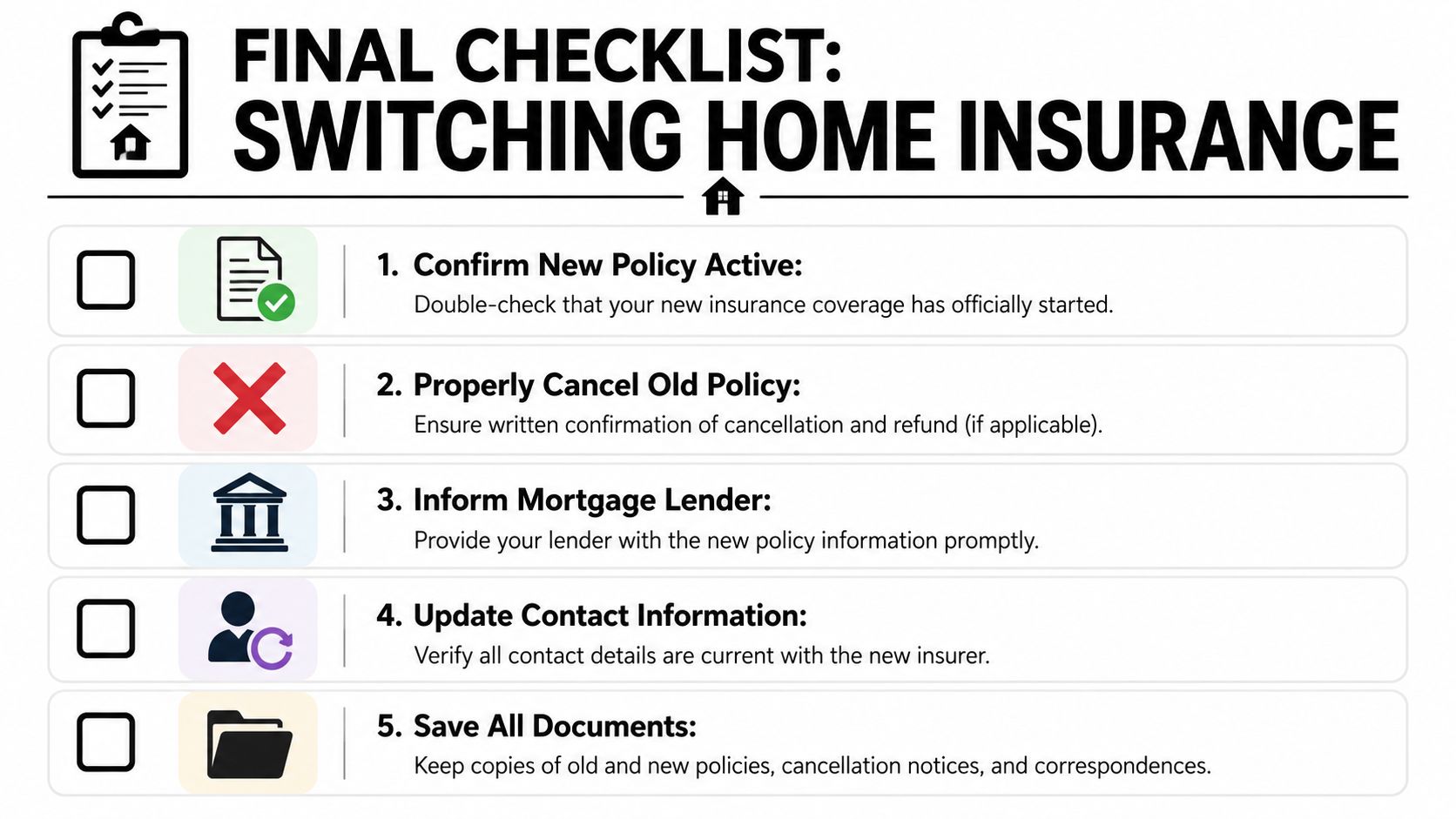
A smart switch isn't rushed. It's verified. If you keep the process orderly, changing homeowners insurance is manageable even in a difficult California market.
Use this checklist before you finalize anything
- Gather the core documents: Pull your current declarations page, mortgage information, prior claim history notes if relevant, and any records of recent upgrades.
- Compare coverage line by line: Review dwelling, personal property, liability, deductibles, exclusions, roof settlement terms, wildfire language, and earthquake treatment.
- Confirm the new policy is active: Don't rely on a quote, application, or verbal approval.
- Send lender documents promptly: Escrow issues create avoidable headaches.
- Cancel the old policy in writing: Ask for written confirmation and keep it.
A short gut-check before you switch
Ask yourself these five questions:
| Question | Why it matters |
|---|---|
| Do I understand what the new policy excludes? | Lower premium can hide narrower coverage |
| Did I compare wildfire and earthquake treatment? | California losses often expose the fine print |
| Did I account for lost loyalty discounts? | Switching can cost more than expected |
| Is my lender fully updated? | Escrow errors can create duplicate billing or force-placed problems |
| Did I save all paperwork? | You'll want proof if billing or cancellation disputes appear |
A good switch feels boring by the end. That's the goal. No gap, no scramble, no surprise letter from the lender.
If you're careful about sequence, realistic about California risks, and disciplined about reading the policy language, you can improve your protection without creating a new problem. That applies whether you're reviewing home insurance alone or coordinating it with auto insurance, renters insurance, car insurance for the household, or life insurance planning.
If you want a second set of eyes before changing policies, Mai & Associates can help review your current homeowners coverage, compare California home and auto insurance options, and flag issues involving FAIR Plan placement, wildfire exclusions, earthquake gaps, renters insurance, car insurance, and life insurance needs.