Certificate of Financial Responsibility: 2026 CA DMV Guide
You open a letter from the California DMV, see the phrase certificate of financial responsibility, and your first thought is usually, “Do I need to buy some special policy now?”
Most drivers don't. What you usually need is proof.
That distinction matters because a lot of expensive mistakes start with a simple misunderstanding. People think the DMV is asking for a brand-new type of insurance, when in many cases it's really asking your insurance company to file the right form and keep the state updated if your policy changes. If you drive in California, that filing can affect your license, your ability to register a car, and your everyday routine in a very real way.
The phrase also sounds bigger and stranger than it needs to. At its core, financial responsibility means showing that if you cause harm, there's money available to cover the damage. That idea sits underneath car insurance, home liability protection, renters coverage, business insurance, and even some highly regulated industries.
Understanding the Certificate of Financial Responsibility
If the DMV asked you for a certificate of financial responsibility, start with one simple idea. It's usually not the insurance policy itself. It's the formal proof that coverage exists and meets a legal requirement.
For California drivers, that proof often shows up as an SR-22 filing. This is a verified note sent directly from your insurance company to the DMV. You don't print it out and hand it over at the counter in most cases. Your insurer files it for you.
Why the term confuses people
The phrase sounds like something only a lawyer or government office would use. But the concept is familiar.
If you rent an apartment, a landlord may want proof you have renters insurance. If you own a home with a mortgage, the lender wants proof of homeowners insurance. If you drive after certain violations or suspensions, the DMV may want proof that your car insurance is active and acceptable under state rules.
That's why “financial responsibility” is bigger than just one DMV form. It's the legal system's way of saying, “Show us there's a financial backstop if something goes wrong.”
For a broader legal explanation of how this works after crashes and injury claims, this legal guide for California injury victims gives helpful context. If insurance terminology itself is slowing you down, a plain-English California insurance glossary can also make the paperwork easier to decode.
Financial responsibility is really about accountability. The state wants proof that damages won't be left unpaid.
What this means in real life
A California driver usually runs into this requirement after a licensing issue, an insurance-related problem, or a serious driving violation. The exact trigger can vary, but the practical question stays the same: Who is going to verify your coverage to the DMV?
That's why it helps to stop thinking of the certificate as a product. It's better to think of it as a filing tied to a real policy.
Once you understand that, the rest gets much easier. You're not shopping for a mysterious government insurance plan. You're making sure your current or new insurer can file the right proof and keep it active.
What This Certificate Means for Your California Car Insurance
In California, the certificate of financial responsibility most drivers hear about is the SR-22. It connects your car insurance policy to your DMV record in a direct way.
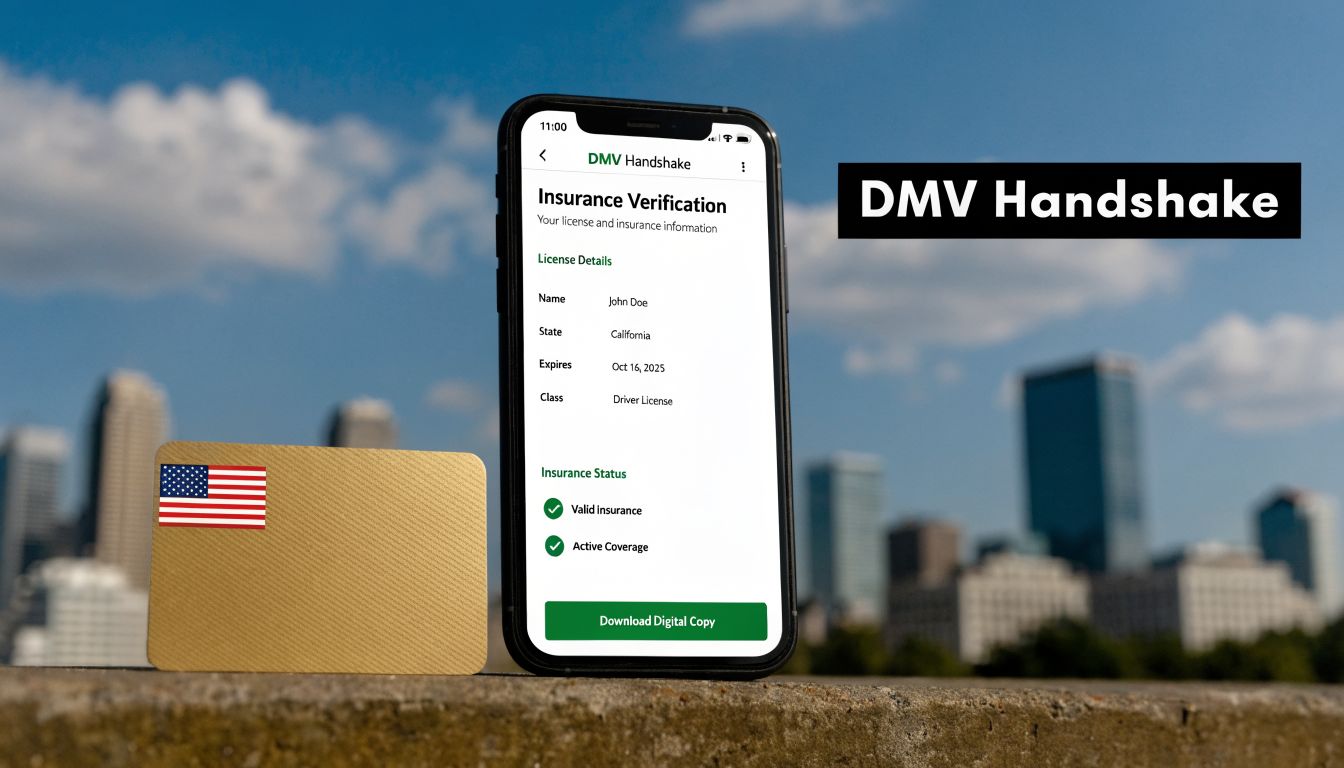
The California DMV explains that a certificate of financial responsibility, commonly an SR-22, is a DMV-recognized proof-of-coverage filing from an insurer showing that a driver meets the state's minimum liability limits. The filing must show coverage at $30,000 per person, $60,000 per accident, and $15,000 for property damage, with updated limits also noted for 2025 under state law in the verified data, and the insurer must electronically report cancellations that can trigger license suspension according to the California DMV insurance requirements guidance.
Think of it as a live report card
A normal insurance card shows that you had coverage when the card was printed. An SR-22 does more than that. It tells the DMV that your insurer is actively standing behind your policy and will keep the DMV informed if that support disappears.
That's why I often describe it as a live report card for your auto insurance. The DMV isn't just checking whether you bought a policy once. It's checking whether the policy stays in force.
If you're comparing policies, a local California auto insurance guide can help you sort out liability coverage, policy options, and what an insurer files.
Practical rule: If your SR-22-linked policy cancels, the insurer doesn't just note it in your account. The insurer reports it electronically, and your license can be suspended until a new certificate is filed.
The certificate is not your policy
Drivers often encounter difficulties at this stage.
Your car insurance policy is the contract that provides liability coverage. Your SR-22 is the filing that proves to the DMV that the policy exists and meets the state requirement. One is the coverage. The other is the proof mechanism.
That means two separate questions matter:
Do you have an active policy?
If not, there's nothing for the insurer to file.Does your insurer offer SR-22 filings in California?
Not every carrier handles them the same way.Will the policy stay active without interruption?
Late payments, cancellations, and missed renewals can create DMV problems fast.
Why stability matters more than people think
A lot of drivers focus on the initial filing and then relax. That's risky. The hard part usually isn't getting the SR-22 filed once. It's keeping the underlying policy in place the entire time the DMV expects it.
That's why payment setup matters. Renewal timing matters. Even choosing a carrier with reliable electronic filing systems matters. If your policy has a gap, the DMV may treat that as a compliance failure, not a minor paperwork issue.
For high-risk drivers, this can become a loop. A lapse can lead to another suspension, and another suspension can make insurance harder and more expensive to place. The cleanest path is boring but effective: buy a policy that fits your budget, set up dependable payments, and treat the SR-22 period like probation for your insurance record.
Comparing SR-22 SR-1P and FR-44 Forms
Not every financial responsibility form means the same thing. Drivers often hear “SR-22” and use it as a catch-all term, but California has more than one form in this area, and other states use different versions entirely.
The easiest way to sort them out is by asking one question: What problem is the form trying to solve?
California Financial Responsibility Forms Compared
| Form Type | Common Trigger | Primary Purpose |
|---|---|---|
| SR-22 | A DMV or court requirement after a serious driving issue | Shows a driver has the required liability coverage and keeps that proof tied to DMV monitoring |
| SR-1P | Often associated with proof requirements involving an accident and insurance issues | Shows proof of financial responsibility in a situation tied to accident-related compliance |
| FR-44 | Used in some other states, not the standard California form | Requires a stronger proof filing structure tied to that state's rules |
SR-22 in plain language
The SR-22 is the form most California drivers mean when they talk about a certificate of financial responsibility. It's associated with drivers the state wants to monitor more closely because of their record or reinstatement status.
The public-safety logic behind these filings is important. Verified data shows that states with mandatory SR-22-style certificates for high-risk drivers have seen up to 20% to 25% lower rates of uninsured-at-fault accidents over a 3 to 5 year period, according to IIHS background on uninsured motorists. That doesn't mean the form magically makes someone a safer driver. It means the ongoing proof requirement helps keep more drivers insured.
SR-1P is different
Drivers sometimes confuse SR-1P with SR-22 because both involve proof, both sound bureaucratic, and both get mentioned after accidents. But they aren't interchangeable.
The better way to think about SR-1P is this: it's tied to a specific compliance context involving an accident and proof of responsibility, while SR-22 is the better-known ongoing filing linked to licensing and monitoring. If you've been told you need one, use the exact form name from your DMV notice. Guessing here can waste time.
If the state asked for a specific form, don't substitute a similar-sounding one. The DMV usually wants the exact filing that matches your case.
Where FR-44 fits
FR-44 adds another layer of confusion because many California drivers see it online and assume it applies here. Usually, it doesn't.
FR-44 is associated with other states, such as Florida and Virginia, and it operates under that state's rules rather than California's. If you're trying to understand how another state handles serious violations, this breakdown of SR-22 requirements for Florida drivers can help show why people mix these forms up.
The takeaway is simple. If your issue is in California, stay focused on the California notice, the California DMV, and the exact filing named in your paperwork.
When a Certificate of Financial Responsibility is Required
Most California drivers don't think about a certificate of financial responsibility until something interrupts their normal driving life. A suspension notice arrives. A reinstatement condition appears. A court or DMV requirement suddenly turns insurance from a monthly bill into a licensing issue.
That's when this stops feeling theoretical.
Common driver situations
A driver may need this kind of filing after a serious violation, after an insurance-related problem, or as part of getting driving privileges restored. The exact trigger depends on the driver's record and the agency's order.
People often come in with one of these situations:
A license reinstatement requirement
The DMV won't fully restore driving privileges until acceptable proof is on file.A violation that changed the driver's risk status
The driver is now being monitored more closely for continuous coverage.An accident or insurance issue that triggered extra review
The state wants stronger confirmation that liability coverage is active.
The paperwork may feel punitive, but there's a practical reason behind it. The state is trying to reduce the chance that a driver returns to the road without valid liability insurance.
The idea goes far beyond car insurance
This same concept appears in other parts of insurance law too. A certificate of financial responsibility is not just a DMV tool. It's part of a larger legal pattern: before someone is allowed to operate in a higher-risk setting, the government may require proof that money is available if harm occurs.
One of the clearest examples comes from marine liability. The U.S. Oil Pollution Act of 1990 requires tankers and other vessels in U.S. waters to carry a Certificate of Financial Responsibility showing they can cover cleanup costs. The Coast Guard administers COFRs for tens of thousands of vessels, with billions in attested financial liability, mostly backed by marine insurance, as described by the U.S. Coast Guard COFR program.
That may sound worlds away from a California driver dealing with an SR-22, but the legal principle is the same. Before the state lets a person or business create risk, it often wants verified proof that someone can pay if the risk turns into real damage.
Why this matters for households too
That's also why smart insurance planning doesn't stop with car insurance. If you own a home, rent an apartment, run a side business, or support a family, financial responsibility shows up in different forms across your life.
A drivers-license issue may be the event that gets your attention first. But the underlying question is broader: if something goes wrong, do you have the right protection in place for your property, your liability, and the people who depend on you?
How to File a Certificate in California Step by Step
The filing process feels intimidating until you break it into actions. For most California drivers, your job is not to master DMV systems. Your job is to choose the right insurer, buy the right policy, and make sure the filing gets submitted correctly.
That's much more manageable.
The four steps that usually matter
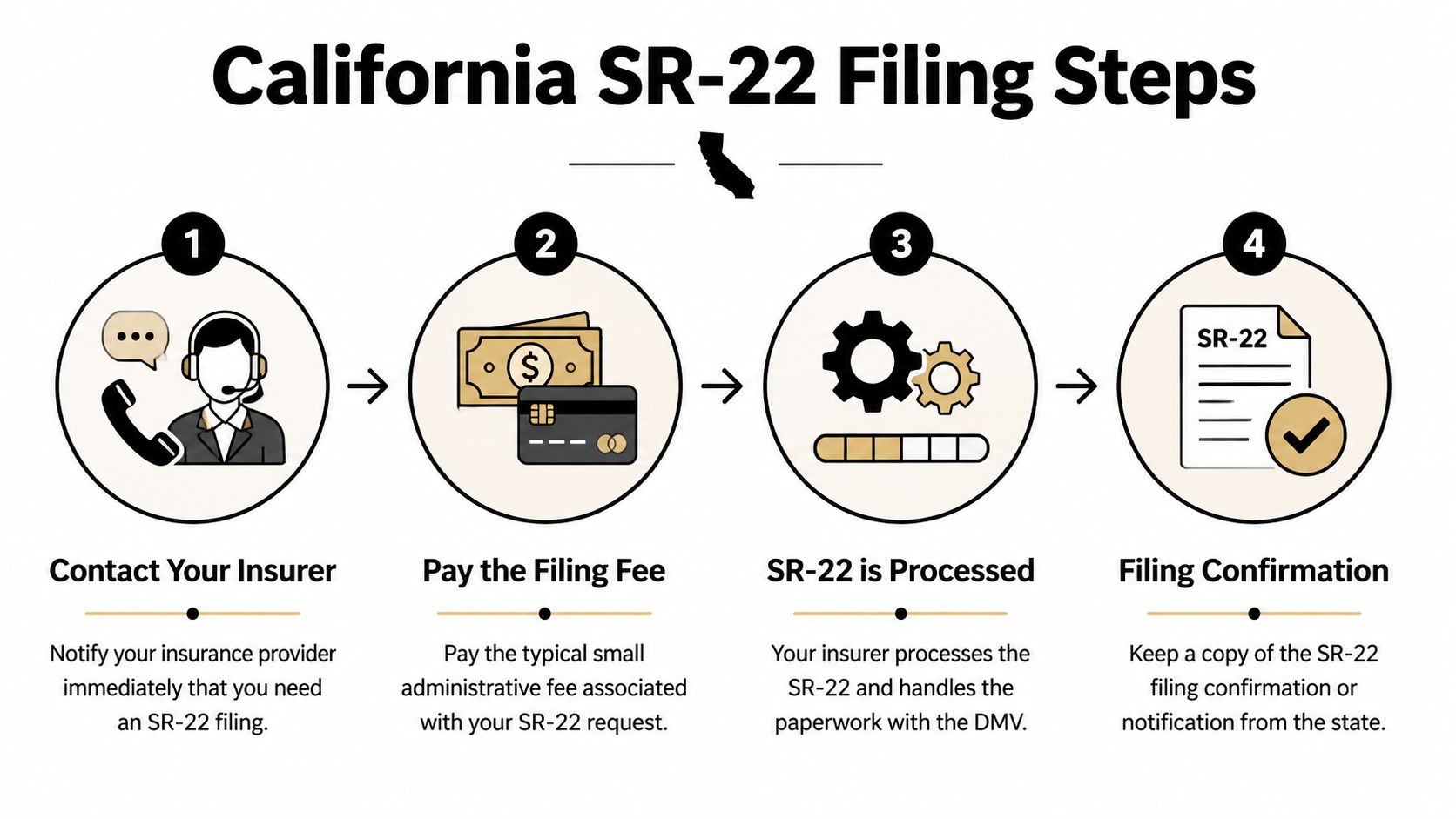
Contact an insurer that handles California SR-22 filings
Don't assume every company does. Ask directly whether the carrier files SR-22s electronically with the California DMV.Buy or update the liability policy
The filing can't exist on its own. It has to sit on top of an active auto policy that meets California's rules.Have the insurer submit the filing
In most cases, the company sends the SR-22 to the DMV for you. This is one of the main reasons working with a carrier or agency familiar with high-risk auto insurance matters.Keep proof and watch for confirmation
Save every notice you receive from the insurer and the state. If the DMV still shows a suspension after filing, you may need to confirm processing status.
If you want a broader consumer-friendly resource on preparing insurance paperwork, this collection of California insurance guides is useful.
What drivers should pay attention to
The filing itself is only part of the job. The bigger risk usually comes later, when people let the policy wobble.
Use a checklist like this:
Check the effective date
Make sure the policy starts when you think it does. A gap between old coverage and new coverage can create trouble.Set up reliable payments
Automatic payment can help if budget timing tends to get tight.Review renewal notices early
Don't wait until the expiration date. A missed renewal during a filing period can undo your progress.Ask how cancellations are handled
You want to know how quickly the insurer reports a lapse and what notice you'll receive.
A certificate filing solves the DMV problem only if the policy underneath it stays active.
Keep the timeline in mind
The required proof period is often tied to a multi-year compliance window in California, and verified data notes that it is typically 3 years after a conviction or at-fault accident in the California SR-22 context. The exact period for your case should come from your DMV notice or court order.
What matters most is consistency. If the policy lapses before the proof period ends, you may need a replacement filing and could face another suspension. Many drivers think the clock keeps running during a lapse. Often, that assumption causes the most frustration.
A steady, affordable policy is usually better than a cheaper policy that's hard to keep active month after month.
Protect Your License and Finances with Mai & Associates
The biggest mistake drivers make with a certificate of financial responsibility is treating it like a one-time errand. They rush to file the form, then go back to business as usual. But this requirement has consequences that can spill into work, family schedules, and overall financial stability if it isn't managed carefully.
When your license depends on continuous proof, insurance becomes part of your legal compliance.
Why expert help matters
Some insurance problems are straightforward. This one often isn't.
You may need a policy that fits a tight budget, supports an SR-22 filing, and won't create surprise gaps at renewal. If you also own a home, rent an apartment, or need life insurance, your insurance choices affect more than your car. They shape how well your household is protected when something unexpected happens.
The value of expert guidance becomes even clearer outside personal auto. Verified data points to a major guidance gap for smaller California-based marine operators, with an estimated 15% of COFR denials tied to inadequate calculations for smaller vessels, according to the cited federal regulatory reference on vessel financial responsibility. Different industry, same lesson: when compliance rules are technical, small errors can block access, delay operations, or create avoidable cost.
What good support looks like
A strong insurance partner should help you do more than submit a form. They should help you avoid the common traps that cause repeat problems.
Look for help with:
Carrier matching
Not every insurer is comfortable with high-risk drivers or filing-heavy policies.Budget planning
A policy only helps if you can keep it in force.Coverage review
Auto insurance should fit with your broader protection plan, including home insurance, renters insurance, and life insurance where appropriate.Clear communication
If English isn't your first language, explanations should still be easy to follow.
Good insurance advice doesn't stop at “file this form.” It asks whether the policy is stable enough to protect your license and your assets.
Why Californians use Mai & Associates
Mai & Associates helps California drivers and households sort through confusing insurance requirements without turning the process into a sales maze. The agency shops across multiple carriers, helps clients compare affordable car insurance options, and supports broader protection needs involving home insurance, renters insurance, and life insurance.
That matters if your driving issue is only one piece of a bigger financial picture. A household may need dependable auto coverage for reinstatement, but it may also need to protect a condo, a rental unit, a wildfire-exposed property, or a family member who depends on future income.
Mai & Associates also serves diverse California communities with support in English, Spanish, Armenian, Russian, and Vietnamese, and offers access through offices in Glendale, Westlake Village, Escondido, and Costa Mesa. If you need a straightforward next step, you can start with an online insurance quote from Mai & Associates.
If the California DMV asked for a certificate of financial responsibility, don't wait and hope it fixes itself. Mai & Associates can help you compare car insurance options, understand SR-22 requirements, and review home, renters, or life coverage so your protection fits your real life, not just the form the state asked for.