Cell Phone Protection in California: A Complete Guide
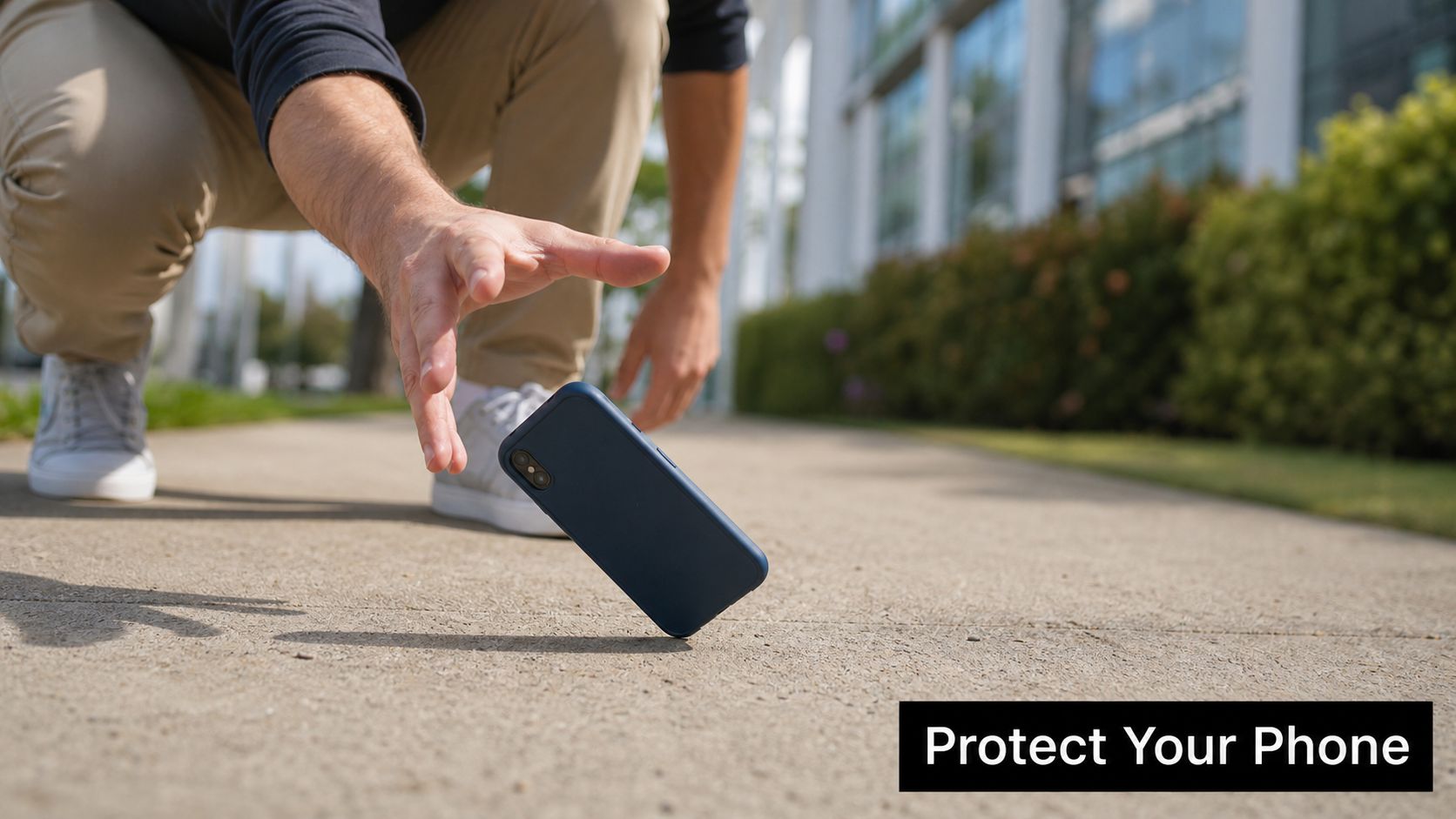
You know the feeling. Your phone slips from your hand, hits the sidewalk, and for half a second you just stare at it before picking it up and hoping the screen survived. In California, that moment hits harder because your phone isn't just a phone anymore, it's your wallet, your map, your camera, your work line, and your backup ID all in one. Cell phone protection makes sense for the same reason auto insurance, home insurance, and renters insurance make sense, it keeps one bad accident from turning into an annoying and expensive mess.
The case for protection is simple. Over 98% of Americans owned a cellphone in 2024, up from 81% in 2015, and Americans checked their phones 205 times per day on average while spending about 4 hours and 30 minutes daily on them in 2024, with the daily average projected to rise to 4 hours and 39 minutes in 2025 (ConsumerAffairs phone statistics). When a device is that central to daily life, replacement and repair risk stops being theoretical. It becomes part of ordinary household risk management.
The market reflects that reality. The global mobile phone insurance market was estimated at USD 28.74 billion in 2022 and is projected to reach USD 73.86 billion by 2030, which implies a 12.5% CAGR from 2023 to 2030 (Grand View Research mobile phone insurance market). That kind of growth tells you consumers are treating phone protection as a mainstream safety net, not a gimmick.
Understanding the Four Layers of Coverage
A phone can have more than one kind of protection at the same time, and each layer handles a different problem. Accidental damage covers drops, cracked screens, and other physical mishaps. Loss and theft addresses the phone going missing instead of being damaged.
Warranty and protection are not the same thing
A manufacturer warranty usually covers defects and mechanical failures, not everyday accidents. If your phone stops working because of a factory issue, that belongs in warranty territory. If it slips off a counter, lands face-first, or disappears at a restaurant, that belongs in a protection plan.
The fourth layer is technical support, and people overlook it until they need it. Some plans include help with setup, transfers, or troubleshooting, which matters if your phone is tied to work, school, or family logistics. It does not replace insurance, but it can cut down on downtime and frustration.
Practical rule: if the problem came from normal use, think protection plan. If it came from a defect, think warranty.
Phone protection also fits into a wider California insurance strategy. If you already carry homeowners or renters coverage, the question is not just how to protect one device, it is how to protect the property you use every day without paying for the same risk twice. That is why terms like deductible, endorsement, and scheduled property matter. They shape whether your phone belongs inside a separate device plan or inside your broader policy structure, and this California insurance glossary helps you sort out the language before you buy.
The market has grown because the risk is real. The global mobile phone insurance market was valued at USD 28.74 billion in 2022 and is expected to grow to USD 73.86 billion by 2030 (Grand View Research mobile phone insurance market). That growth lines up with the risks people face, accidental damage, theft, device malfunction, and the cost of replacing a phone that holds a large share of daily life.
Comparing Your Top Cell Phone Protection Options
The right choice depends on how you use your phone, how expensive it is to replace, and how much friction you'll tolerate if something goes wrong. I'd look at the options in this order, manufacturer plan, carrier insurance, third-party coverage, and then homeowners or renters coverage if your policy can be scheduled to include the device.
Cell Phone Protection Options at a Glance
| Protection Type | Typical Cost | Covers | Best For |
|---|---|---|---|
| Manufacturer plan | Usually built around service fees and deductibles | Accidental damage, often theft or loss depending on the plan | People who want easy device-specific service |
| Mobile carrier insurance | Monthly premium plus deductible | Damage, loss, theft, sometimes device support | Families already tied to one carrier |
| Third-party insurance | Varies by provider | Damage, theft, loss, sometimes accidental separation | Shoppers comparing multiple phones or plan structures |
| Homeowners or renters scheduling | Added to an existing policy structure | Scheduled personal property for a high-value device | Californians who want a broader insurance strategy |
Manufacturer plans are convenient because the claims flow is usually tied directly to the brand ecosystem. Carrier plans can be easy to add at the point of sale, but convenience doesn't automatically make them cheaper. Third-party providers can be flexible, but you need to read the exclusions closely.
Homeowners and renters coverage deserves serious attention, especially if you already carry it and want a more integrated solution. A scheduled item or personal property floater can turn your phone into part of a larger property strategy instead of a separate subscription. For Californians balancing auto insurance, home insurance, renters insurance, car insurance, and life insurance, that kind of coordination is often smarter than stacking separate one-off products.
If you're also shopping for phone cases, handcrafted leather iPhone accessories are a good reminder that physical protection still matters. A quality case can reduce the odds you ever need to file a claim at all.
The best policy is the one you'll actually keep, because abandoned coverage is just another monthly leak.
One more point people miss, homeowners and renters policies are often the better fit when you want your phone protected alongside the rest of your personal property, not isolated in a separate app-based plan. That matters when you're trying to simplify coverage across the household.
The Hidden Costs and Common Exclusions
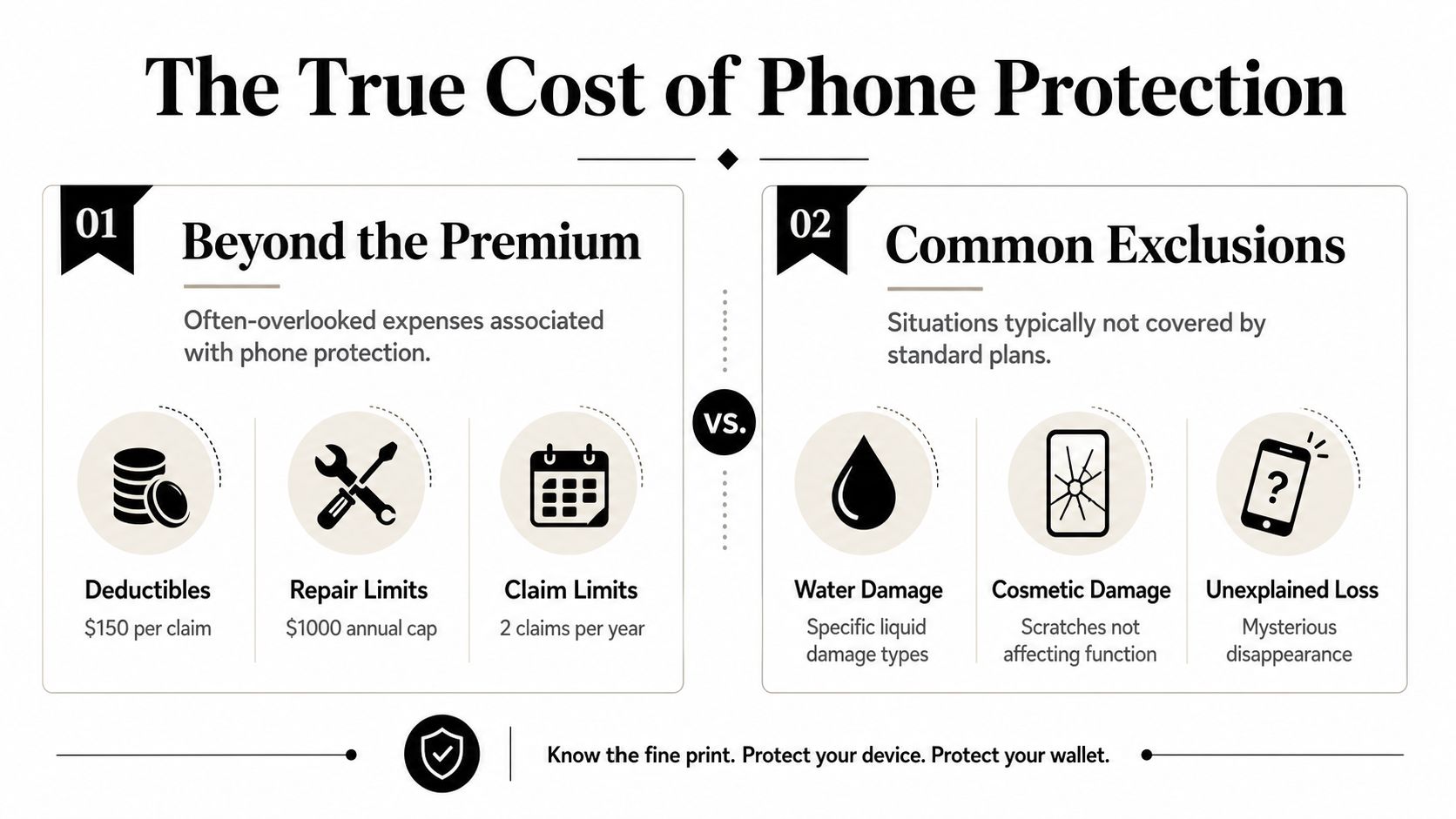
The premium is only part of the bill. Most phone protection products put real weight on deductibles, per-claim caps, and claim limits, and those details decide whether a claim is worth filing at all. A plan can look affordable upfront and still disappoint when the repair estimate arrives.
Read the ceiling, not just the premium
A representative benefit design reimburses theft, damage, or accidental parting up to $600 per claim, with a $100 deductible, and another plan caps reimbursement at $600 per claim with a $25 deductible, two claims per calendar year, and a 60-day filing window (Allstate phone insurance). That means the math matters. If the repair is small, the deductible can swallow most of the value.
A cracked flagship display can justify coverage. A cheap repair usually can't.
Common exclusions also deserve attention. Many plans draw a line around cosmetic wear, unauthorized repairs, or damage that falls outside the policy's trigger language. Water damage can be tricky too, because plans often define covered liquid events differently than consumers expect.
Here's the rule I give clients: if the claim needs a lot of paperwork and the repair cost is close to the deductible, skip the claim unless the device is expensive or the loss is clearly covered. That's the same logic you use with auto or homeowners claims. Not every loss should become a claim.
The practical value of coverage depends on whether the expected repair or replacement cost is comfortably above the deductible and still inside the claim cap. Otherwise, you're paying for the illusion of protection. That's not a good trade.
Special Insurance Considerations for Californians
California households should think about phone protection the same way they think about wildfire, earthquake, and auto risk, as one piece of a broader coverage map. If you already have homeowners or renters insurance, a scheduled personal property endorsement or floater can make sense for a phone you'd rather not replace out of pocket. It's often cleaner to tie the device to the policy you already manage than to scatter protection across multiple small contracts.
Make the phone part of the household policy review
That approach is especially useful if you're already reviewing your property coverage for other California realities. You may be checking deductibles, personal property limits, and whether your broader policy matches your actual lifestyle, and a phone fits naturally into that conversation. For renters in particular, California renters insurance guidance is a smart place to start if your goal is to protect belongings without overcomplicating your coverage stack.
The California Attorney General's consumer guide also gives a strong baseline for device security. It recommends keeping the OS updated, setting auto-lock, and enabling remote erase before a phone is lost or stolen (California AG smartphone guide). Those steps don't replace insurance, but they reduce the damage when something goes wrong.
If you're buying a new phone or refreshing your device setup, don't separate security from coverage. A good insurance strategy protects the asset, and good phone settings protect the data. That's the right California mindset, practical, layered, and built to handle real-world messes.
How to Choose the Right Coverage for Your Needs
Start with the phone itself. If replacement would be painful, either because it's expensive or because you depend on it for work, then protection is worth a hard look. If the device is older and the repair cost is close to the phone's value, a new standalone plan may not be the right move.
Ask the right questions before you buy
- How do you lose phones? If you're prone to drops, focus on accidental damage coverage. If devices go missing, make sure loss and theft are included.
- How much friction can you tolerate? A fast replacement process matters if you use your phone for work, banking, rides, or family coordination.
- Do you already carry homeowners or renters coverage? If yes, ask whether scheduling the device would fit your broader property plan better than a separate protection subscription.
- What's your budget discipline like? A low monthly premium can still be a weak deal if the deductible is high or the claim cap is low.
If you want to compare device protection with stronger account-level security, the 2026 mobile security guide is useful background for people who also care about hacking, scam calls, and account compromise. Phone protection and phone security aren't the same thing, and both matter.
I'd also keep your broader insurance picture in mind. If you're already reviewing auto insurance, home insurance, renters insurance, car insurance, or life insurance, it makes sense to ask whether your phone belongs inside that larger plan or outside it as a separate product. The cleanest solution is the one that fits your risk, not the one with the flashiest sales pitch.
If you want a broader coverage overview from a California agency perspective, Mai & Associates' insurance guides can help you compare the pieces without treating each policy in isolation.
Filing a Claim and Reducing Future Risk
When something happens, document it immediately. Take photos, save repair estimates, note the date and time, and keep any police or carrier reports if theft is involved. Then contact the provider, confirm the deductible, and check whether the claim falls inside the policy window.
Build a better defense before the next drop
The strongest physical setup is still layered. A tempered-glass screen protector with 9H scratch hardness absorbs front impacts, while a hybrid PC+TPU case with raised bezels and air-cushion corners protects against the kinds of drops that usually do the most damage (Alibaba tempered glass guide). Use both. One without the other is a compromise.
If you eventually replace an old device, handle retirement responsibly. Responsible IT asset retirement is the right next step when a phone is no longer worth insuring or repairing. Protecting yourself includes knowing when to stop carrying dead weight.
The cheapest claim is the one you never have to file.
Keep your habits tight too. Don't leave the phone on the edge of counters, don't treat bare glass like it's invincible, and keep your device protected the same way you protect the rest of your personal property. If you want a broader perspective on bundling protection choices with home, renters, and auto coverage, Mai & Associates' blog is a practical place to compare ideas.
If you want help deciding whether to schedule your phone under a California homeowners or renters policy, or compare that option with a standalone protection plan, contact Mai & Associates and ask for a coverage review that fits your auto, home, renters, and life insurance setup.