Can You Get Car Insurance Without a License? Essential Guide
Yes, you absolutely can get car insurance in California without a driver's license. It sounds a bit strange at first, but it's a perfectly legal and common situation. The key is to remember that insurance follows the car, not just the driver. You're insuring an asset—your vehicle—and the policy is built around the risk associated with that asset.
The Surprising Truth About Insuring Your Car
It's one of the biggest myths out there: you need a driver's license to buy auto insurance. The reality is much more nuanced. Insurance companies care most about who is actually going to be behind the wheel, not necessarily whether the person buying the policy is the one doing the driving.
Think about all the real-world scenarios where this comes up. Maybe you own a car but can no longer drive yourself due to a medical issue or age, and a caregiver needs to use it. Or perhaps you're buying a car for your teenager who just got their permit and you need to get the insurance squared away before they can legally hit the road. You might even be in the middle of getting your own license but need to register the car first—which, of course, requires proof of insurance.
Why This Matters for All Californians
Knowing you can get coverage without a license isn't just a fun fact; it's essential for responsible vehicle ownership. The consequences of unlicensed or uninsured driving are serious. Unlicensed drivers were involved in a staggering 18.4% of all fatal motor vehicle accidents in the U.S. back in 2021. The numbers on uninsured drivers are just as concerning.
This is why getting the right auto insurance in California is so important. By insuring your vehicle, you ensure it's both financially protected and legally compliant, no matter who is driving. Of course, while you can insure the car, it's a completely different question whether someone Can I Drive Without A License?.
The key takeaway is simple: your ability to own and insure a vehicle is separate from your ability to drive one. The law requires the vehicle to be insured, and you can meet that obligation by naming a licensed primary driver on your policy.
At the end of the day, working with the California DMV and insurance providers is totally manageable. With the right information and a clear plan, you can protect your investment, stay on the right side of the law, and have peace of mind knowing your car is covered.
Here is the rewritten section, designed to sound like an experienced human expert:
Why Insurance Companies Start with Your Driver's License
Ever notice how the first question an insurance agent asks is for your driver's license number? It's not just a box to check. For an insurance company, that number is the single most important piece of the puzzle when it comes to figuring out risk.
Think of it this way: a bank wouldn't give you a loan without first checking your credit score. Your credit report tells a detailed story about how you handle money. In the same way, your driver's license is the key that unlocks your Motor Vehicle Report (MVR), which tells the story of how you handle yourself on the road.
The Story Your Driving Record Tells
That little plastic card in your wallet does more than just prove you can legally drive; it's the gateway to your entire driving history. Insurers in California lean heavily on this information to predict how likely you are to get into an accident and file a claim.
When they run your license number, they get an instant snapshot of your driving life, including:
- Traffic Violations: Things like speeding tickets, rolling through stop signs, or other moving violations.
- At-Fault Accidents: A history of any crashes where you were found responsible.
- License Status: Any past or current suspensions, revocations, or special restrictions.
- Driving Experience: Simply, how many years you've been a licensed driver.
This information is the foundation of their entire calculation. A squeaky-clean record points to a responsible driver, which means lower insurance costs. On the other hand, a record full of tickets and accidents flags you as a higher risk, and your premiums will reflect that.
How Insurers See Risk Without a License
So, what happens when you need to insure a car but don't have a license? From the insurer's perspective, their main tool for measuring risk is suddenly gone. It creates a major blind spot. They can't pull your MVR, so they have no official record of your driving habits—good or bad.
This is where things get tricky. The lack of data makes them proceed with caution. The risk doesn't just vanish because the car's owner is unlicensed; it simply shifts to whoever will actually be driving the car.
An insurance policy is ultimately a contract built on predictable risk. An unlicensed owner introduces a big question mark, forcing the insurer to shift their entire focus to the person who will be behind the wheel.
This is exactly why naming a "primary driver" is non-negotiable in this situation. When you officially designate a licensed driver for the vehicle, you're giving the insurance company the data they need. That person's driving record becomes the new foundation for the policy. The insurer can analyze their history of accidents and violations to calculate a fair premium, allowing you to get the coverage you need for the car you own.
Proven Strategies to Get California Car Insurance
Trying to get California car insurance without a driver's license can feel like hitting a wall, but it's a problem we solve all the time. The key is to remember that insurance follows the car, not just the owner. Your main job is to show the insurance company exactly who will be driving, giving them a clear picture of the risk they’re taking on.
Let's walk through the three most effective ways to make this happen. Each strategy works a bit differently, and the right one for you will depend on your specific situation—like who will be driving and whose name is on the vehicle's title.
Designate a Licensed Primary Driver
This is the simplest and most common route. As the car's owner, you buy the policy but officially name a licensed, trusted person as the primary driver. Their driving record becomes the main factor the insurance company uses to calculate your rates.
Here’s a good way to think about it: You own the house, but you're renting it to a tenant. The insurance company cares less about your history and more about the person actually living there day-to-day. It’s the same with car insurance. The premium is based on the person behind the wheel, since that's where the real risk is.
This strategy is a perfect fit for a lot of real-world scenarios:
- An elderly family member who owns a car but has a caregiver do all the driving.
- A parent who buys a car for their teenager and needs to insure it under their name.
- Someone with a medical condition that prevents them from driving, but their spouse or partner uses the car daily.
When you apply for a quote, you'll simply identify yourself as the owner and provide the licensed driver's details for the "primary driver" role. The insurance company then pulls their driving record and sets the price based on their history, age, and experience.
List Yourself as an Excluded Driver
A more formal option is to have yourself listed as an excluded driver on the policy. This is a legally binding agreement telling the insurer that you, the owner, will absolutely not drive the insured vehicle. Period. By taking yourself out of the driver's seat, you eliminate any gray area about who is covered.
This is often the best move if the vehicle owner's driving history—or lack of one—is making the policy too expensive or difficult to obtain. For instance, if you have a suspended license due to a major violation, excluding yourself can dramatically lower the premium because the insurer is only focused on the clean record of the listed driver.
Heads Up: Excluding yourself is a serious move. If you get behind the wheel and have an accident, your insurance will not cover a penny of the damage. You'd be on the hook for all the costs, which could easily run into thousands of dollars, not to mention the legal consequences.
This strategy basically tells the insurer, "I own this car, but I'm not the risk. The only person you need to worry about is the named driver on this policy."
The flowchart below gives you a peek into how an insurer thinks, moving from identifying the driver to assessing the risk and setting a price.
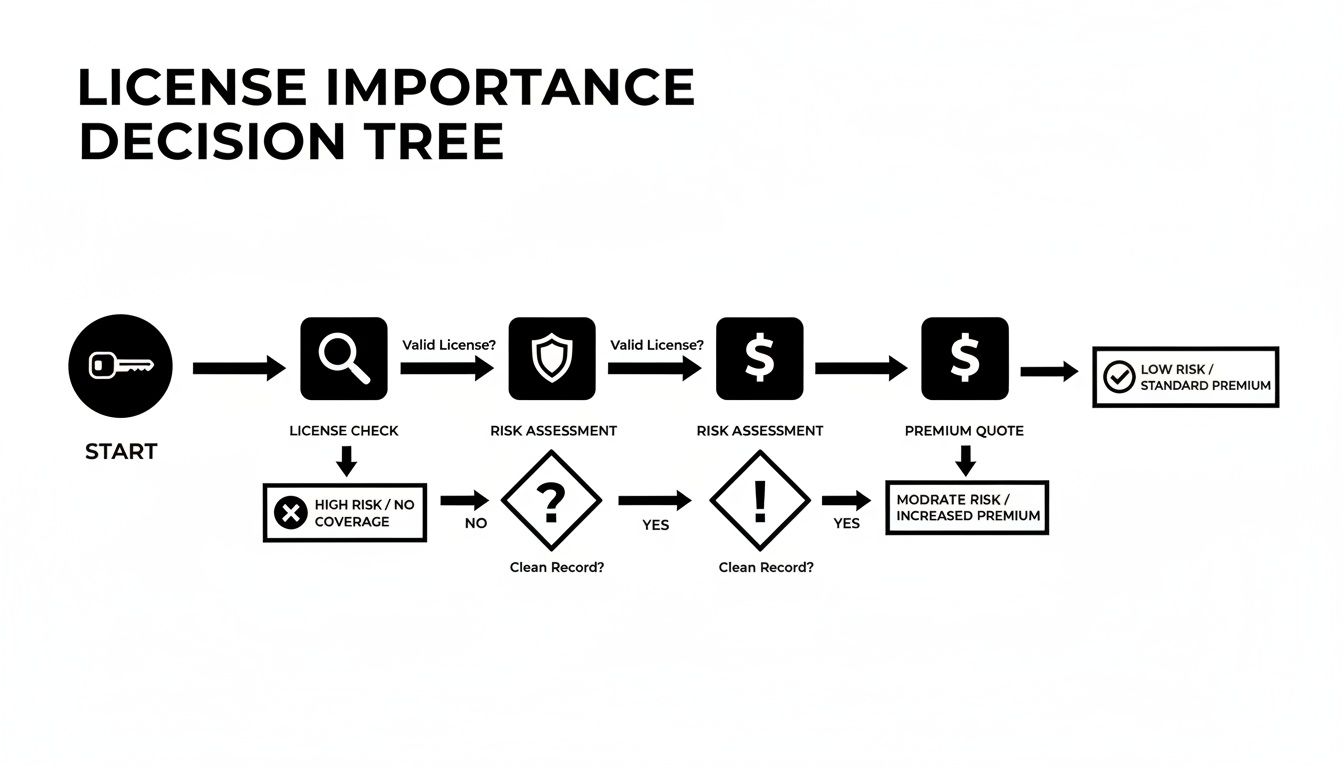
As you can see, the whole process hinges on having a valid license to evaluate. This is exactly why designating a primary driver or formally excluding yourself is so important.
Co-Title the Vehicle with a Licensed Driver
A third path involves changing the vehicle's ownership structure. If you co-title the car with a licensed driver—meaning both of your names are on the official title—the insurance process often gets much smoother. Insurers are just more comfortable when at least one of the registered owners is a licensed driver.
This method lines up ownership with driving responsibility, which insurance companies like to see. The licensed co-owner can be listed as the primary person on the policy, making the application look much more conventional. It’s an especially smart approach for spouses or family members who already share the car and its costs.
Just be aware of the legal side. Co-titling means you both own the car equally. You can't just sell it without their permission, and they have a legal claim to it. This route obviously requires a great deal of trust.
Choosing the right strategy can be tricky, as each has its own pros and cons depending on your specific needs.
Comparing Insurance Strategies for Unlicensed Owners
Here's a quick side-by-side look at these three methods to help you decide which might be the best fit for insuring your car in California without a license.
| Strategy | Best For | Key Requirement | Potential Hurdle |
|---|---|---|---|
| Designate a Primary Driver | Situations where one person owns the car but another person does all the driving (e.g., family members, caregivers). | A trusted, licensed driver with a clean record who agrees to be listed. | Insurer may still rate the owner as a secondary driver, slightly increasing costs. |
| List as an Excluded Driver | Owners with a poor driving record (e.g., suspended license, DUI) who need to lower their premium. | A formal exclusion form signed by the owner, legally preventing them from driving the car. | Absolutely zero coverage if the excluded owner drives the car and has an accident. |
| Co-Title the Vehicle | Spouses, partners, or family members who share ownership and driving responsibilities. | Adding a licensed driver's name to the vehicle's official title with the DMV. | Creates legal co-ownership, meaning you can't sell the vehicle without the other person's consent. |
Ultimately, these options bridge the gap between owning a vehicle and having a license. They provide legitimate ways to meet California's insurance requirements.
There’s a clear link between having a legal license and getting insured. Studies on programs that grant driver's licenses to unauthorized immigrants have shown this connection plainly. After California implemented such a program, there was an immediate jump in the number of licensed drivers, proving that people want to get insured as soon as they are legally able to. It’s a powerful reminder of how having a legal driving status is a huge motivator for getting coverage—a journey Mai & Associates helps people from all walks of life navigate every day. For a deeper dive, you can explore the relationship between licensing and insurance coverage in this study.
Navigating Car Registration and SR-22 Filings
Let's talk about two of the biggest headaches for any car owner in California: registering the vehicle and dealing with an SR-22 filing. When you don't have a driver's license, these two things can feel like a classic chicken-and-egg scenario. You can't register your car without insurance, but how do you get insurance if you can't drive?
It’s a knot, but one we can definitely untangle.
The solution is actually more straightforward than you might think: secure the insurance policy first. By using one of the strategies we've already covered—like listing a licensed person as the primary driver—you can get a valid policy. That insurance card becomes your golden ticket at the DMV, allowing you to legally register the vehicle in your name.
The Registration and Insurance Connection
In California, the DMV won’t even talk to you about registration until you can show them proof of financial responsibility. It's the state's way of making sure every car on the road has coverage in case of an accident. When you're the unlicensed owner, getting that policy in hand is the essential first step.
Here’s how the process breaks down:
- Get Insurance: Work with an agent to set up a policy, making sure to name a licensed primary driver.
- Receive Proof: Your insurance company will issue your policy documents and an insurance ID card.
- Visit the DMV: Head to the DMV with your proof of insurance, the vehicle's title, and any other required paperwork to get registered.
Trying to do it any other way—like attempting to register the car before getting it insured—will just lead to a dead end and a lot of wasted time.
Demystifying the SR-22 Requirement
Now, for the SR-22. This is a big point of confusion for a lot of people, so let’s get this straight: an SR-22 is not insurance. Think of it as a certificate of financial responsibility that your insurance company files directly with the California DMV for you. It's basically your insurer telling the state, "Yep, this person has the minimum liability coverage required by law."
So, why would you need one, especially if you don't even have a license? The state usually orders an SR-22 for serious driving offenses, like:
- Driving under the influence (DUI or DWI)
- A reckless driving conviction
- Getting into an accident while you were uninsured
- Having your license suspended or revoked for any reason
Often, an SR-22 is a mandatory part of the process to get your license reinstated. The state needs to see that you're maintaining continuous, verifiable insurance before it will even consider giving you back your driving privileges. This is where getting insurance without a license becomes absolutely critical. You need the policy to get the SR-22 filed, and you need the SR-22 to start the clock on getting your license back.
You can think of the SR-22 as state-monitored insurance probation. If your policy lapses for even a day, your insurer is legally required to tattle on you to the DMV. That can reset your suspension period and land you in even more hot water.
This isn't just a California issue. Unlicensed and uninsured driving is a global problem. For instance, in 2020, the UK reported a 16% jump in provisional license holders caught driving without insurance, and 15% of all their uninsured drivers didn't have a license at all. You can discover more about these trends to see just how intertwined these issues are everywhere.
Successfully handling the DMV and any SR-22 requirements is non-negotiable, and the rules are strict. For more help with these and other tricky insurance topics, check out our other expert guides for California residents. The best way to make sure everything is filed correctly the first time is to work with an experienced agent who deals with these situations every day.
How Lacking a License Affects Your Policy and Premiums
Let's get down to brass tacks—how does not having a license actually hit your wallet? When you get a quote for car insurance without a license, the price isn't just a random number. Insurers have a very specific way of calculating it, and knowing how they think is the key to figuring out if you're getting a fair shake.
Here’s the most important thing to grasp: your premium will be almost entirely based on the driving record of the licensed person you put on the policy. As the unlicensed car owner, your own lack of a driving history is basically a non-factor. Instead, the insurance company’s spotlight turns directly to the person who will actually be behind the wheel.
It’s a bit like getting a loan with a co-signer. If you don't have a credit history, the bank looks at your co-signer's financial track record to set the interest rate. In this case, your primary driver is your "co-signer," and their history on the road determines your insurance rate.
The Primary Driver's Record Is Everything
The licensed driver you name on the policy becomes the main character in the insurer's story. Their driving history is what the entire risk assessment hinges on. A safe, experienced driver with a spotless record is your golden ticket to more affordable premiums, as their history proves they're a low-risk bet.
On the flip side, if your designated driver is young, just got their license, or has a history of fender benders and speeding tickets, brace yourself for higher costs. The insurance company sees that person as a much bigger risk, and your premium will absolutely reflect that. This is why choosing a trustworthy and safe primary driver is the single most important decision you'll make in this process.
Here’s exactly what insurers will dig into on their record:
- Years of Driving Experience: More time on the road usually translates to lower rates.
- Accident History: Any at-fault accidents, especially in the last few years, will send your costs up.
- Traffic Violations: Things like speeding tickets, DUIs, or other moving violations are huge red flags for an insurer.
- Credit History: In California, some insurers may also look at a credit-based insurance score to help calculate rates.
You’re essentially "borrowing" their driving reputation to secure the policy. The better their reputation, the better your rate is going to be.
Potential Policy Limitations You Might Face
While getting coverage is definitely possible, don't be surprised if some insurance companies place a few restrictions on the types of policies they'll offer an unlicensed owner. It's just another way they manage what they see as a slightly unusual risk.
The most common limitation you might run into involves the level of coverage you can buy. Some insurers might be a little hesitant to offer their top-tier, all-inclusive packages and may guide you toward a liability-only policy instead.
A liability-only policy covers damages and injuries you cause to other people in an accident. Critically, it does not cover repairs to your own vehicle. Comprehensive and collision coverage are the parts of a policy that protect your car from damage or theft.
Some carriers might only be willing to sell you the state's bare-bones minimum liability coverage. Others, however, might be perfectly comfortable providing full comprehensive and collision protection. It really just depends on the company's internal guidelines and how comfortable they are with these non-standard situations.
This is a crucial point to ask about when you're getting quotes. You need to make sure your asset—the car itself—is properly protected. Knowing these potential limitations upfront gives you the power to shop smarter and find an insurer who offers fair terms for your unique needs.
Your Next Steps for Getting Insured in California
Figuring out California insurance can feel like a maze, especially when you don't have a driver's license. But here's the good news: getting coverage for your vehicle is absolutely doable.
It all comes down to a simple concept. You own the car, but the insurance policy needs to be built around the person who will actually be driving it—a designated, licensed driver. Understanding this one thing is the key to getting the car insurance you need to legally register your vehicle and protect your investment.
Instead of spending hours calling around trying to find an insurer who understands your situation, your best bet is to work with an independent insurance agency. That's where we can help.
Find an Expert Who Knows the Ropes
At Mai & Associates, we specialize in these kinds of non-standard situations every day. We’ve built solid relationships with a wide network of insurance carriers across California, so we know which ones are open to writing policies for unlicensed owners. More importantly, we know how to frame your situation to find you a competitive rate. And once you have that policy, it's just as important to understand practical things like how to file an auto insurance claim.
Our team has deep roots right here in the community, so we get the unique challenges Californians face. With multilingual support available, we make sure everyone gets clear, helpful advice. We don't just sell auto insurance; we find real solutions, whether it's for home insurance, renters insurance, or even life insurance.
The most important thing to remember is that you don't have to tackle this alone. A good agent is your advocate, turning what could be a frustrating headache into a simple, straightforward process.
Ready to take the next step with confidence? The best way to see your real options and get actual numbers is to talk to an expert. Let our team do the heavy lifting and find the right coverage for your car.
You can get started right now. Take a minute to get a personalized insurance quote online or just give us a call.
Frequently Asked Questions
Once you’ve got the basics down, it’s natural to have a few lingering "what if" questions about insuring a car without a license. Let's tackle some of the most common scenarios we see from clients here in California.
Can I Buy a Car in California Without a Driver's License?
Yes, you absolutely can. No California law stops you from purchasing and owning a car just because you don't have a driver's license. The dealership is primarily concerned with the sale and getting the title into your name.
The real hurdle appears the second the keys are in your hand. You can't legally drive that new car off the lot. It must be insured and registered first, making insurance your immediate priority.
What Happens If the Licensed Driver on My Policy Has an Accident?
If the primary driver listed on your policy causes an accident, the claims process works exactly like any other. They report the accident, and your car insurance policy steps in to cover the damages up to your chosen limits.
The key difference for you, the owner, is the aftermath. That at-fault accident goes on their driving record, which will almost certainly make your insurance premium go up when it’s time to renew. This is why it's so important to list a safe, responsible driver on the policy.
The actions of the listed driver directly impact your policy's cost. Their clean record keeps your rates down, while an accident will raise them, as the risk associated with your policy has now increased.
Can I Get Insurance With a Foreign Driver's License?
It's definitely possible. Many insurance carriers in California are willing to write policies for drivers with a valid foreign license, but the underwriting rules can be quite different from one company to the next.
Some insurers might require an International Driving Permit (IDP) to go along with the foreign license, while others won't. This is where working with an experienced agent really pays off—we know which companies are best suited for international drivers and can make the process much smoother. For more answers to common questions, you can explore our comprehensive California insurance FAQ page.
What Should I Do After I Get My California Driver's License?
That's great news! The very first thing you should do is call your insurance agent. Let them know you have your license so they can update your policy immediately.
This isn't just paperwork; it’s a critical step to make sure you are legally covered to drive your car. Your premium will be recalculated, and having a California license might even unlock better rates or new coverage options you weren't eligible for before.
Ready to protect your vehicle and get on the right side of the law? The team at Mai & Associates specializes in finding affordable solutions for every situation, including home, renters, and life insurance.
Compare rates and get your free quote today!