California Auto Insurance Minimum Requirements Explained
California's auto insurance minimums are $30,000 per person, $60,000 per accident for bodily injury, and $15,000 for property damage. They took effect in 2025, marking California's first increase in 58 years.
You may be checking your declarations page before registering a car, renewing a policy, or filing an SR-22. The important distinction is simple: the legal minimum keeps you compliant, but it doesn't necessarily protect your savings, wages, vehicle, or household after a serious crash. California's updated minimums address an old coverage floor, yet affordability remains a real problem for new drivers, low-income households, and people with a lapse or high-risk driving record.
What California Drivers Must Legally Carry on the Road
A new California driver may stand in a parking lot with an insurance card in hand and still wonder whether the policy satisfies state law. Start with the three liability figures, not the optional coverage names.
California requires liability insurance for an at-fault driver's responsibility to other people and their property. The shorthand is 30/60/15:
- 30, bodily injury per person: Up to $30,000 for bodily injury or death suffered by one person in an accident you cause.
- 60, bodily injury per accident: Up to $60,000 total for bodily injury or death involving more than one person in that accident.
- 15, property damage: Up to $15,000 for damage you cause to another person's vehicle or other property.
California uses an at-fault system. The driver who caused the collision can be financially responsible for covered losses, and that driver's liability policy generally responds first. The state's California auto insurance requirements provide the consumer-facing starting point for checking your policy.
| Coverage Type | 2025 Minimum Limit | What It Pays For |
|---|---|---|
| Bodily injury per person | $30,000 | Injury or death of one person |
| Bodily injury per accident | $60,000 | Injury or death of multiple people in one accident |
| Property damage | $15,000 | Damage to another person's vehicle or property |
These are liability limits, not protection for your own car. Uninsured motorist, medical payments, collision, and other coverage aren't part of the legal minimum. They can still matter if an uninsured driver hits you, you or a passenger needs medical treatment, or your vehicle is damaged by a collision, theft, fire, vandalism, or another covered event.
A minimum-liability policy is therefore not the same as “full coverage.” Minimum insurance protects you against certain claims made by others. A broader policy can protect your vehicle and help cover your own losses, subject to deductibles, exclusions, and policy limits.
Why the Minimums Changed in 2025 After Nearly Six Decades
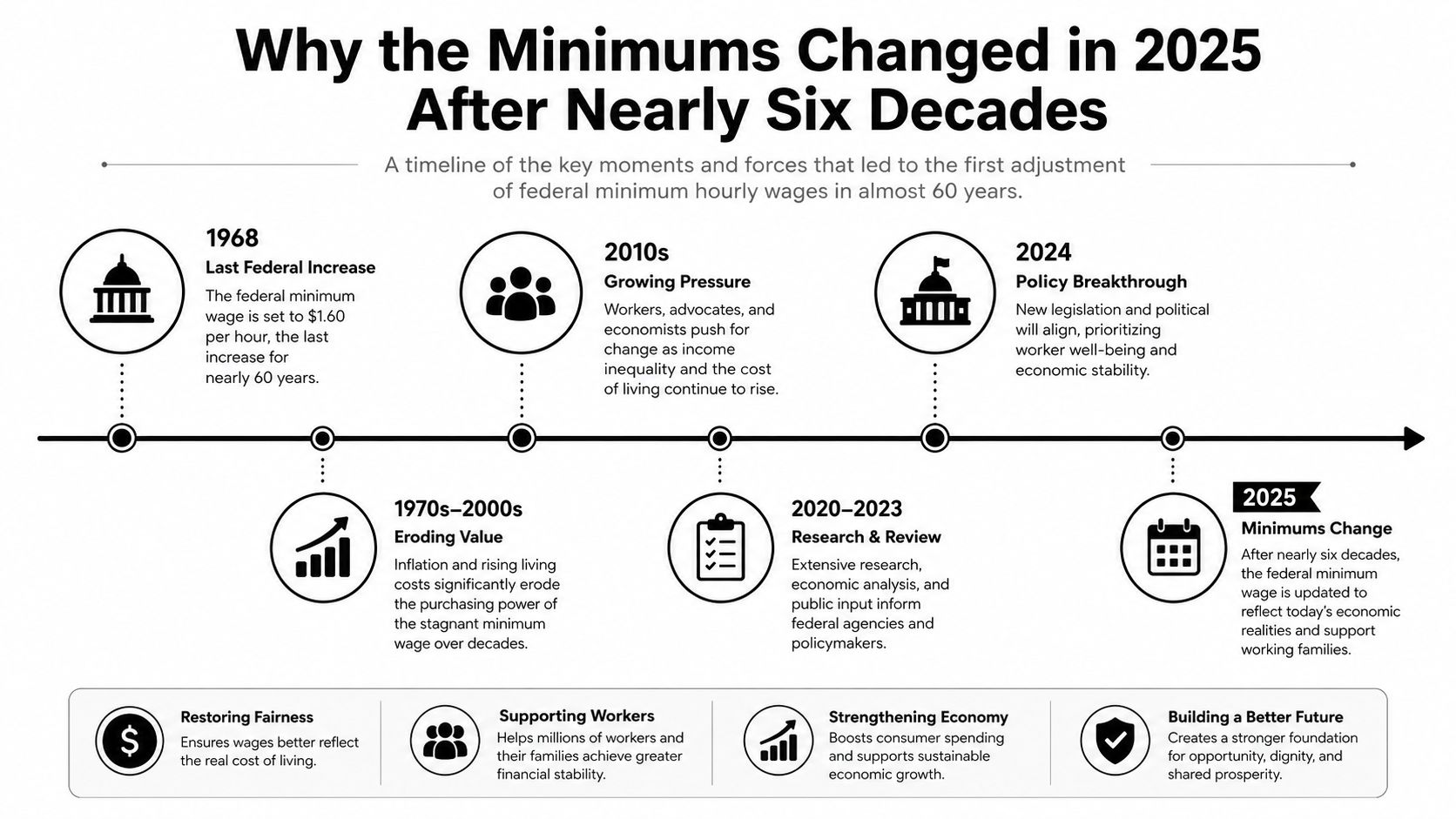
A driver renewing a policy in 2025 could see the liability limits change even without switching insurers. California had kept the old 15/30/5 structure from 1967 through the end of 2024, a period of 56 years, according to FMG. During that time, $5,000 for property damage became increasingly disconnected from the cost of newer vehicles, medical care, and repairs.
A collision with one newer vehicle could exhaust that old property-damage limit through a bumper, sensor system, wheel, or airbag assembly alone. Bodily-injury claims created the same exposure. Serious treatment and long-term losses can exceed the available liability protection, leaving the at-fault driver responsible for the balance.
Senate Bill 1107 changed the required floor. Effective January 1, 2025, California moved to 30/60/15, doubling the bodily-injury limits and tripling the property-damage minimum. The California DMV's insurance guidance confirms the current requirements and explains that existing policies generally adopt the higher limits as they renew during 2025.
Renewal timing affects both compliance and affordability. A policy renewing during 2025 could shift to the new limits at renewal, while a newly issued policy after the effective date must use the updated figures. Drivers should review the premium before renewal, then compare insurers or ask about eligible low-cost options instead of allowing the change to force a lapse. California's minimum limits are a compliance floor, not a permanent number. The law includes a planned increase on January 1, 2035, to 50/100/25, subject to the law remaining in effect and any later changes.
What Each Number in the 30/60/15 Limit Actually Pays For
The 30/60/15 structure sounds substantial until you match each limit to the claim it must absorb. Liability insurance doesn't promise to pay every loss. It pays covered losses up to the applicable limit, and you can remain personally responsible for amounts above that limit.
The bodily-injury limits
The $30,000 per-person limit applies separately to each injured claimant, but the $60,000 per-accident limit caps the total bodily-injury payout for the event. If two people each have serious claims, the combined limit can become the controlling problem. A settlement allocation may be necessary when total injuries exceed the available per-accident protection.
Consider a driver who causes a collision involving two injured people. One claimant's covered damages reach $30,000, and the other's reach $40,000. The policy can't pay the full $70,000 because the accident limit is $60,000. The remaining covered loss may become a personal claim against the at-fault driver.
The Bodily Injury guide from Bell Law is useful for understanding why bodily injury claims can include more than an immediate invoice. Injury claims may involve treatment, lost income, and other legally recognized losses, depending on the facts.
The property-damage limit
The $15,000 property-damage limit applies to damage you cause to another person's car or property. It doesn't repair your own vehicle. If you damage a high-value vehicle, strike multiple cars, or hit a structure, the limit can be exhausted quickly.
A declarations page may display the coverage like this:
Bodily Injury Liability: $30,000 each person, $60,000 each accident
Property Damage Liability: $15,000 each accident
| Real-World Cost | Typical 2025 California Amount | 2025 Minimum Payout |
|---|---|---|
| One injured claimant's covered loss | Varies by claim | Up to $30,000 |
| Multiple injured claimants' combined loss | Varies by accident | Up to $60,000 total |
| Damage to another vehicle or property | Varies by loss | Up to $15,000 |
Use your policy's glossary and declarations page together. The auto insurance glossary can help decode terms such as liability, limits, deductible, and coverage before you choose a policy.
Proving You Have Coverage the Right Way
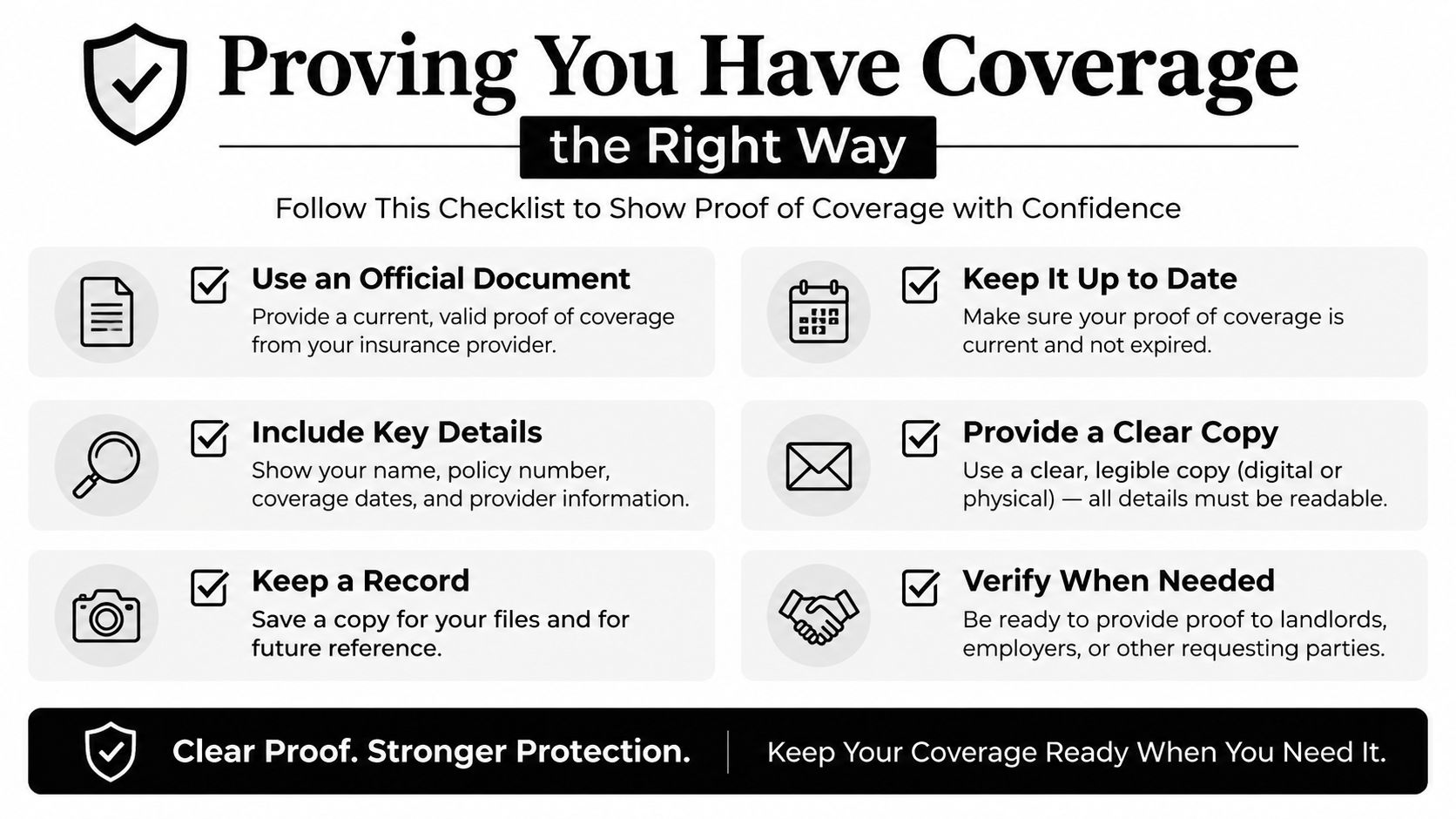
A traffic stop, registration transaction, or collision investigation can expose a simple problem: you have insurance, but cannot prove it. California drivers should keep the carrier's current insurance ID card accessible, either as a paper card or a digital document in the insurer's application.
Keep the proof usable
Your insurance card should identify the insured vehicle, policy information, effective dates, and issuing carrier. Check those details after every renewal. An expired card does not prove active coverage, even if you paid for a new policy.
California permits electronic proof of insurance. Store the current card on your phone, then download the updated document after each renewal instead of relying on an old screenshot. Keep a backup available in case your battery dies or you lose internet access.
The DMV may request active verification through its insurance reporting process. Respond promptly to DMV notices and provide the exact policy information requested. A carrier can often correct a reporting mismatch, but you must identify the error before it creates a registration or license problem.
Understand SR-1P and SR-22 filings
An SR-1P and an SR-22 are filings, not ordinary insurance cards. They give the DMV evidence of financial responsibility when a driver has a qualifying requirement, such as a DUI-related matter, an at-fault collision while uninsured, or reinstatement after a suspended license.
The filing must stay active for the period required by the DMV or court. If the policy cancels and the insurer submits a termination notice, you may face another suspension or reinstatement problem. Ask the carrier to confirm the filing status, effective date, and vehicle or driver information, especially when changing policies near renewal.
California also recognizes a cash-deposit alternative for financial responsibility. The required deposit increased from $35,000 to $75,000 under the updated law. This option suits only someone prepared to tie up substantial cash and handle claims exposure directly. It does not provide the convenience, defense assistance, or broader protection of an insurance policy.
For drivers facing a higher premium after the 2025 minimum-limit change, compare renewal quotes before allowing coverage to lapse. Ask about state-approved low-cost options if you qualify, and preserve any required SR-22 filing during the switch. A lower bill is useful only when the replacement policy remains active and properly reported.
When the Minimum Is Not Enough for Real-World Driving
The state minimum is a compliance answer, not a complete risk-management answer. It may handle a modest claim, but a collision involving a newer vehicle, several occupants, or significant medical treatment can exceed the available limits before the claim is resolved.
Take a parking-structure crash involving a newer Tesla Model 3. If the other vehicle is declared a total loss, the $15,000 property-damage limit may not cover the vehicle's full value. If a passenger also suffers serious injuries, the bodily-injury limits must address that claim separately from the vehicle damage. Your own medical payments coverage, if you bought it, can provide a separate source for eligible medical expenses, but it doesn't increase the liability limit you owe to others.
Practical rule: Choose liability limits based on what you could lose, not merely what lets you register the car.
A higher limit gives the insurer more money to defend and resolve a covered claim before your personal assets are targeted. It doesn't eliminate risk, and it doesn't cover every loss, but it creates more room than the statutory floor.
| Limit Level | Bodily Injury Per Person | Bodily Injury Per Accident | Property Damage | Average Annual Premium Add | Out-of-Pocket Risk on a $45K Total Loss |
|---|---|---|---|---|---|
| California minimum | $30,000 | $60,000 | $15,000 | Quote-specific | High if damage exceeds $15,000 |
| Mid-tier example | $50,000 | $100,000 | $50,000 | Quote-specific | Lower, but still depends on the claim |
| Recommended higher limit | $100,000 | $300,000 | $100,000 | Quote-specific | Lower for covered third-party losses |
I won't invent a premium comparison because your price depends on driving history, garaging address, vehicle, mileage, household drivers, and carrier underwriting. My recommendation is direct: if your assets, commute, household exposure, or vehicle value exceed what the minimum can reasonably absorb, ask for 100/300/100 before renewal. Get the price difference in writing, then compare it with the amount you could personally owe after a serious crash.
Affordable Options Beyond Buying the Cheapest Policy
The cheapest monthly premium isn't always the cheapest way to remain insured. A lapse can create underwriting problems, and a driver who cancels coverage to save money may later pay more or struggle to obtain a standard quote. Maintaining continuous insurance is often more practical than chasing a short-term reduction.
Start with eligibility, not guesswork
California's Low Cost Auto Insurance program is designed for eligible drivers who meet program requirements. The state's consumer alert identifies affordability and eligibility as continuing concerns, while the California Department of Insurance update points consumers toward the program and its qualifying rules.
Eligibility can involve income, vehicle value, and driving history. The program includes an income cap, a vehicle-value limit, and good-driver requirements. Ask for current eligibility rules and a current quote rather than assuming the program will fit your household.
Compare the structure of the policy
A per-mile or usage-based policy may help a low-mileage driver, but review how mileage is measured and how claims are handled. Bundling one vehicle with renters insurance may also change the overall household price, especially when the renter needs personal-property and liability protection anyway.
Named-driver restrictions can affect pricing and access. Don't permit a household member or frequent user to drive regularly unless the policy addresses that person correctly. A discount is not useful if the policy creates a coverage dispute after a crash.
The California FAIR Plan belongs to home insurance, not auto insurance. It covers hard-to-insure homes for perils including fire, wildfire, smoke, lightning, and internal explosion, while earthquake coverage must be purchased separately, as explained by Best HO3's California FAIR Plan overview. Drivers who can't obtain a standard auto policy should instead ask an agent about nonstandard auto carriers.
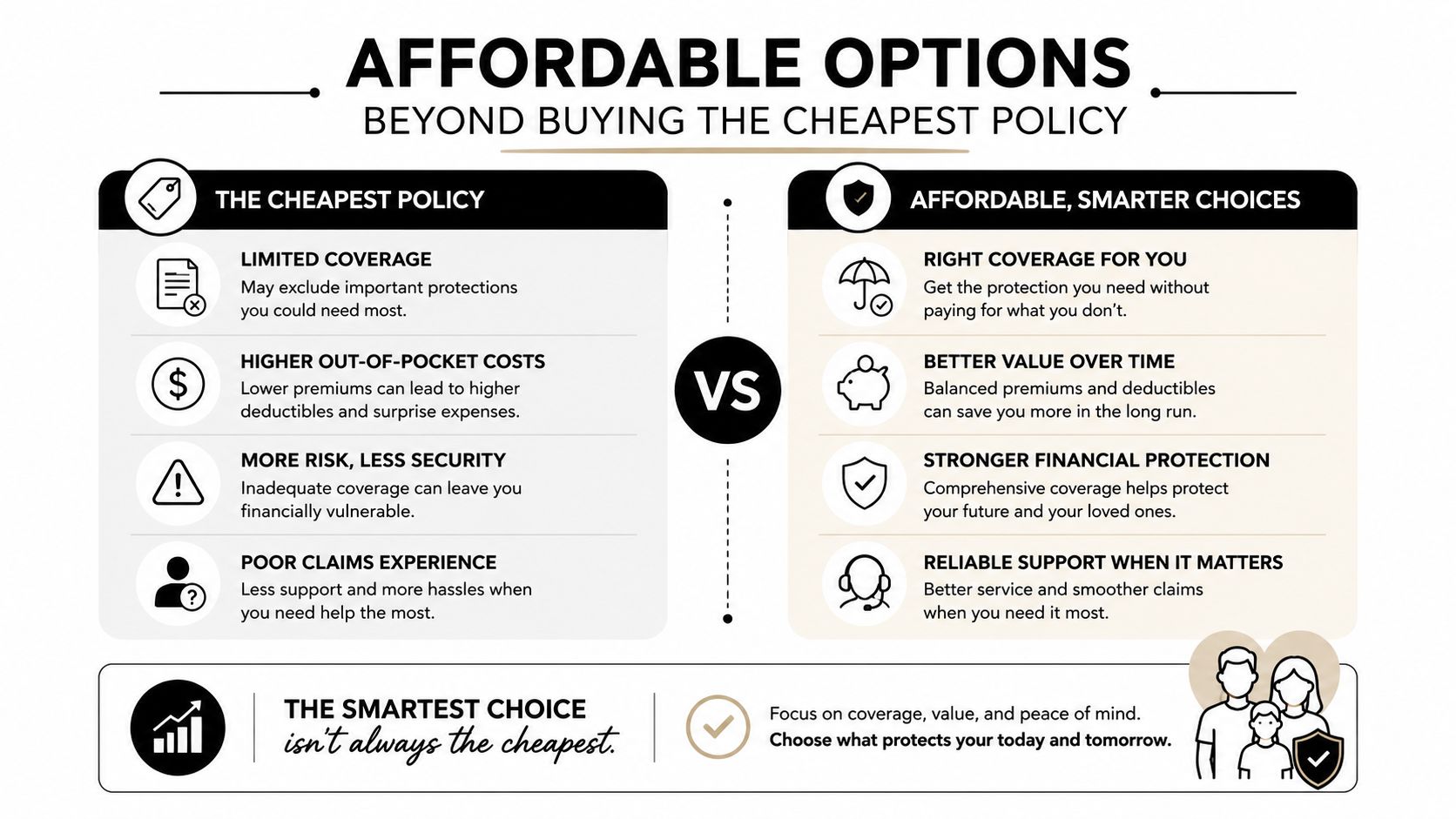
You can request a California insurance quote and compare the legal minimum with broader limits, renters insurance, or other household coverage. Ask for the same coverage limits from each carrier so the comparison is meaningful.
Penalties for Driving Without Proof of Insurance
Driving without valid proof of financial responsibility creates more than a paperwork problem. California can impose fines, affect registration, trigger a license issue, and leave the driver personally exposed if a collision occurs.
Some penalty figures are frequently repeated online without reliable support. I won't present an uncited dollar schedule as settled fact. The safe course is to treat any DMV or court notice as controlling and respond by its stated deadline.
What can happen after a lapse or stop
A driver may face a citation for failing to show proof, a registration suspension, vehicle impoundment, or a license consequence depending on the facts and enforcement action. If the DMV receives a lapse notification, it can require the driver to prove that coverage existed or correct the policy record.
- At the traffic stop: Show the current insurance card or approved electronic proof.
- After a DMV notice: Contact the carrier and verify the exact effective dates, VIN, and policy status.
- After an impound: Expect to prove current insurance and satisfy the release requirements before recovering the vehicle.
- After a qualifying violation: The DMV or court may require an SR-22 or another filing before driving privileges return.
A repeat violation can create a more difficult reinstatement process. DUI-linked incidents may also bring additional requirements, including an ignition interlock device in circumstances set by law or court order.
| Offense | Fine + Court Fees | License Action | SR-22 Required | Vehicle Impact |
|---|---|---|---|---|
| No proof during a stop | Court-determined | May create a DMV issue | Depends on the case | Possible impound |
| Lapse reported to DMV | Court or DMV process | Registration or driving privilege may be affected | May be required | Vehicle may be unavailable |
| Uninsured at-fault collision | Potential personal liability | Reinstatement conditions may apply | Frequently required for qualifying cases | Towing and storage exposure |
| Repeat or DUI-linked matter | Court-determined | More restrictive conditions possible | May be required | Possible impound and added requirements |
Don't wait until a suspension becomes final. Preserve the insurance card, declarations page, payment confirmation, and carrier correspondence. If the DMV gives you a short response window, submit proof through the channel it specifies and keep confirmation of delivery.
Your Next Steps With Mai & Associates
Treat your next renewal as a coverage review, not an automatic payment. Gather the information an agent needs before calling:
- Driver details: Have each driver's license number and current address available.
- Vehicle details: Collect every VIN, registration detail, annual mileage estimate, and financing requirement.
- Current policy: Save the declarations page, insurance card, renewal offer, and any notices about a lapse.
- Filing documents: Include every DMV or court letter involving an SR-1P, SR-22, suspension, or reinstatement.
- Household context: Identify regular drivers, students, commuters, financed vehicles, and renters insurance needs.
Ask for three quotes using identical deductibles and coverage selections. Request the 30/60/15 legal minimum, a 50/100/50 middle option, and the 100/300/100 limit I generally recommend when a household has meaningful assets or serious driving exposure. Seeing the price difference side by side makes the decision clearer than choosing a limit from a dropdown menu.
Also request pricing for uninsured motorist, medical payments, and collision coverage. Financing a vehicle may require physical-damage coverage, while owning an older car may make the deductible and vehicle value the more important comparison. The right choice depends on the vehicle and your ability to absorb a loss.
Mai & Associates can provide California auto insurance quotes, issue an electronic insurance card, and assist with SR-1P or SR-22 filing when required. Use the Mai & Associates contact page to provide your documents and explain whether you need coverage before a registration renewal, court deadline, or reinstatement date.
Ask the agent to confirm the policy's effective time, listed drivers, garaging address, liability limits, filing status, and cancellation rules before you pay. Don't drive while waiting for a quote if you don't have active coverage. A same-day start is useful only when the policy is bound and the required proof has been issued.
Mai & Associates offers California auto insurance quotes that let you compare the 30/60/15 minimum with broader liability limits and useful add-ons. Visit Mai & Associates to submit your details, review coverage options for your budget, and secure proof of insurance before your next deadline.