Burst Pipe Repair: A California Homeowner's Guide
You hear it before you see it. A hard hiss in the wall. A drip that turns into a stream. Then wet drywall, warped baseboards, a spreading stain across the ceiling, and that sick feeling that your house just became an emergency.
If you're dealing with a burst pipe repair issue right now, slow down and get methodical. Panic wastes time. Water doesn't. The right response in the first few minutes protects your floors, your wiring, your drywall, and just as importantly, your insurance claim. In California, I've seen homeowners focus so much on stopping the leak that they forget the financial side until later. That's a mistake. A burst pipe isn't just a plumbing problem. It's a property-loss event.
That Dreaded Sound A Homeowner's First Response
A lot of homeowners discover a burst pipe repair problem the same way. They wake up early, step onto a cold floor, and realize the carpet near the hallway feels soaked. Or they come home from work, see bubbling paint under a second-floor bathroom, and know immediately that this isn't a small leak.
Your first job is simple. Get control.
That means thinking in two tracks at once. First, stop the active damage. Second, protect the evidence and records you'll need when it's time to talk to your insurer, your plumber, and maybe a restoration company. People who handle both from the start usually come out in better shape than the homeowner who scrambles, wipes everything up, throws away damaged material, and later tries to reconstruct what happened.
Stay calm and look for the chain reaction
A burst pipe rarely damages just one thing. Water moves fast. It runs inside wall cavities, under laminate flooring, into cabinets, around outlets, and down to lower levels. That's why it's smart to think beyond the obvious wet spot. If you need help recognizing early signs in walls, ceilings, and trim, this guide on preventing moisture damage is useful because it shows the kind of secondary damage homeowners often miss in the first rush.
First rule: treat the leak you can see as only part of the problem.
In my opinion, homeowners make two common mistakes here. One, they assume the visible hole is the whole failure. Two, they assume cleanup can wait until tomorrow. Both choices get expensive.
Control beats guesswork
You don't need to be a plumber to make good decisions in the first hour. You need a checklist and the discipline to follow it. Shut off the water. Drain the line. Cut power if water is near wiring. Start drying. Call the right people. Document everything.
That's the mindset that turns a chaotic burst pipe repair into a manageable property claim and a cleaner recovery.
Stop the Flood What to Do in the First 30 Minutes
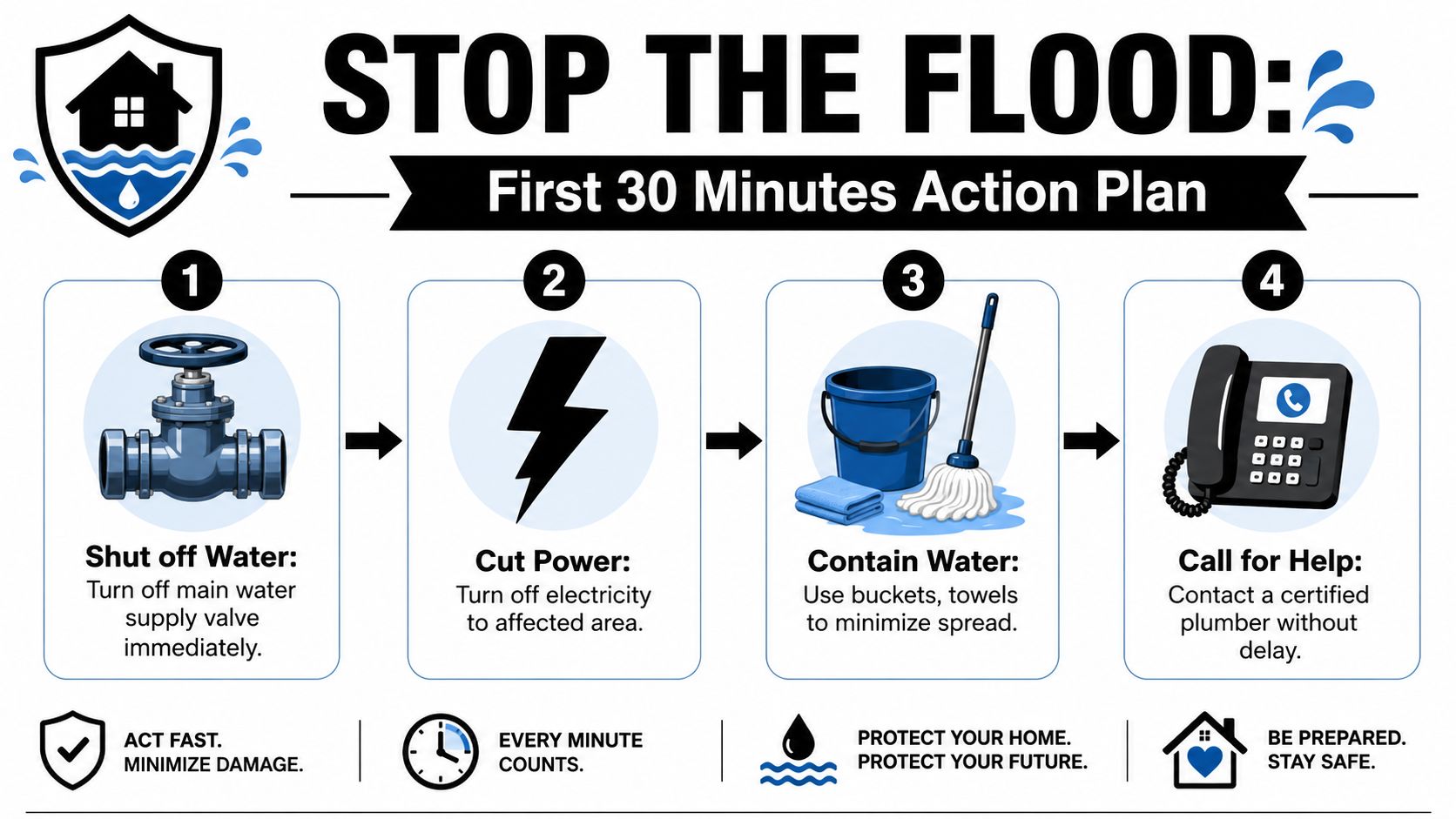
Start with the one move that matters most. Shut off the water main. For a burst pipe, the first technical control step is to isolate the water supply at the main shutoff valve, then open faucets to drain residual pressure and, if water has reached wiring or outlets, de-energize affected circuits before any repair work begins. The area should be dried within a 24 to 48 hour window to reduce secondary damage and mold risk, as noted by this emergency burst-pipe guidance.
Find the main shutoff and turn it fully off
If your home has a house-side shutoff near the perimeter wall, garage, utility area, or crawlspace entry, close that first. If you only have a meter-side shutoff and you know how to use it safely, do it. If you don't know where your main is, stop guessing and start tracing the line where water enters the home.
Once the valve is closed, test a sink faucet. Water should taper off and stop.
Drain the remaining pressure
After the main is off, open faucets. Don't skip this. Residual pressure keeps water sitting in the line, and that water keeps leaking from the damaged section. Open both hot and cold where practical. Flush toilets only if necessary and only after you've confirmed the line isn't feeding more water into the system.
This step also helps your plumber later. A quieter, depressurized line is easier and safer to work on.
Treat electricity like a real hazard
If water is near outlets, light switches, extension cords, appliances, or service panels, cut power to the affected circuits before you touch standing water or move wet materials. If you can't do that safely, call for help and keep people away from the area.
Water on flooring is bad. Water near energized wiring is dangerous.
Contain what you can without playing hero
Now move into damage-control mode. Use towels, buckets, bins, mops, or a wet/dry vacuum if it's safe to do so. Slide foil, wood blocks, or plastic under furniture legs if the floor is wet. Lift rugs off hardwood. Pull curtains and fabric away from the water path.
Use fans and ventilation once the area is safe. The clock is already running on secondary damage.
Make these calls in this order
You don't need ten phone calls. You need the right ones.
- Call a licensed plumber first. You need the source repaired.
- Call a water mitigation or restoration company if the damage is broad. They handle extraction, drying, and moisture tracking.
- Call your insurer promptly if the loss looks significant. Early notice helps.
Don't start ripping out drywall on impulse unless safety requires it or a pro instructs you to. During burst pipe repair, over-cleaning and over-demolition can make your claim harder to document.
Temporary Burst Pipe Repair to Prevent More Damage
Temporary repair has one job. Buy time.
It does not restore the pipe. It does not prove the line is sound. It does not mean you're done. Too many homeowners see a drip stop and decide the problem is solved. That's how a manageable leak turns into a larger claim a day later.
What you can do while waiting for the plumber
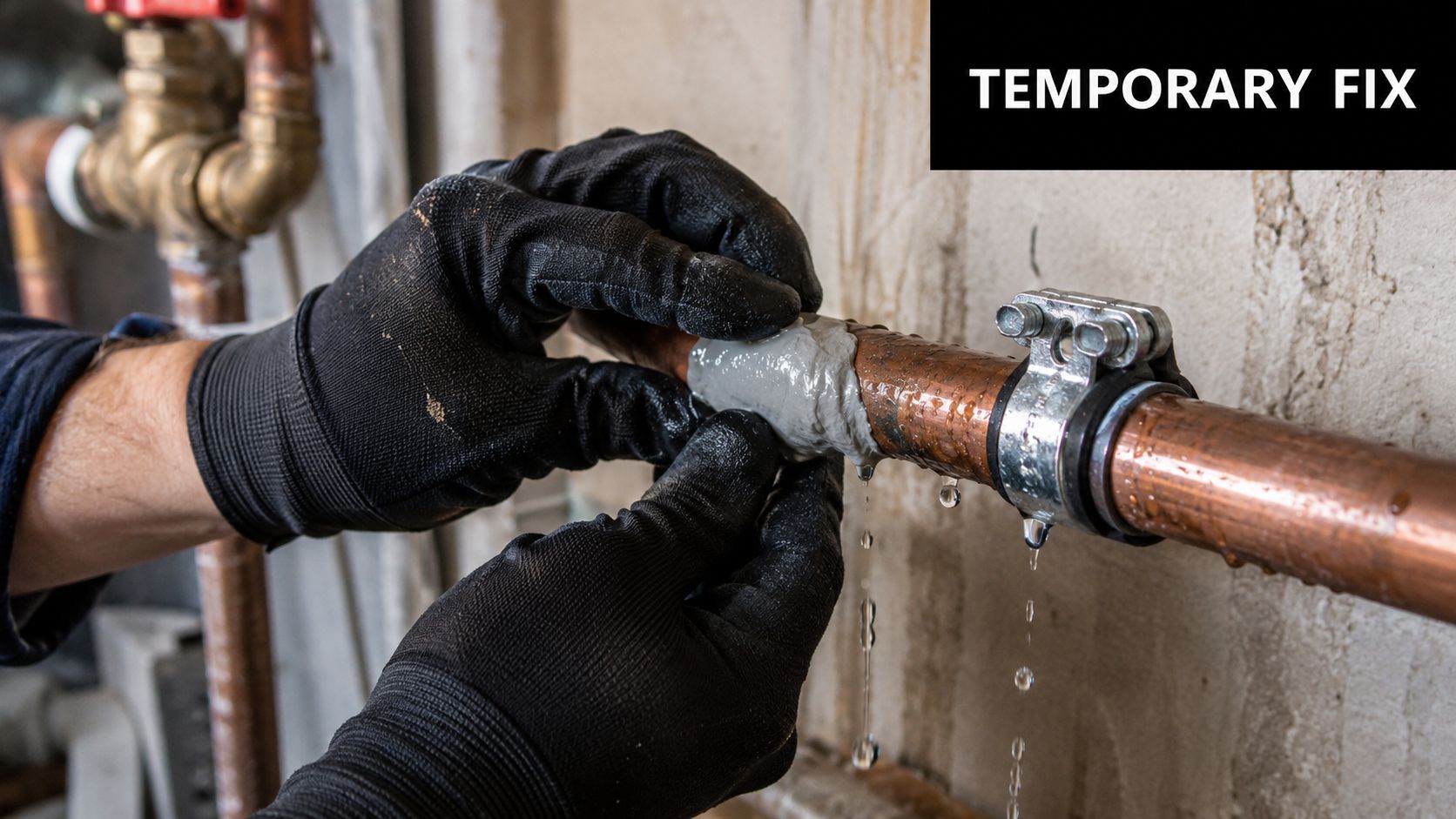
If the damaged section is accessible and the water is already shut off, a few temporary options can help limit spread:
- Pipe repair clamp: Best when you have a localized split or pinhole on a straight section and can tighten evenly over the damaged area.
- Epoxy putty: Useful for a small visible opening after the pipe surface is dried and cleaned as much as possible.
- Silicone repair tape: Helpful as a short-term wrap on some leaks, especially when you need a fast stopgap and can stretch the tape tightly.
Material matters. Copper, PVC, PEX, and galvanized pipe all fail differently. A wrap that appears to hold on one material may be a poor choice on another. That's why I don't recommend treating hardware-store fixes as anything more than damage control.
Why the visible hole isn't the whole story
One instructional source makes the point clearly. A professional repair often involves cutting out at least 10 inches of damaged pipe, not just patching the visible hole. Temporary clamps and tapes may stop visible leaking, but they don't address hidden weakening or pressure damage from events like freezing, as shown in this burst pipe repair demonstration.
Practical rule: if the pipe froze, assume the weak spot may extend beyond the crack you can see.
That's why I don't like the phrase "easy fix" in burst pipe repair. It encourages false confidence. Freeze-related failures, movement at fittings, and old brittle sections can all leave stress outside the obvious rupture.
If you attempt a stopgap, do it cleanly
A bad temporary patch is worse than none because it convinces you to walk away.
- Dry the surface first: Tape and putty fail fast on wet, dirty pipe.
- Use even pressure: A clamp that's cocked to one side can worsen the leak.
- Watch after repressurizing: If you restore water for any reason, inspect carefully and stay there.
For more homeowner maintenance and loss-prevention reading, the California insurance blog is worth bookmarking.
Temporary measures are there to slow damage, not to replace a licensed plumber's repair.
Hiring a California Plumber and Understanding Costs
When the water is under control, the next decision matters more than people think. Hire the right plumber. In California, that means someone properly licensed, properly insured, and willing to explain exactly what they're doing.
A burst pipe repair isn't the moment to hire the first person who answers the phone and promises a miracle. You want a contractor who can identify the failed section, explain whether the issue is isolated or systemic, and document the work in a way that's useful if your insurer asks questions later.
What to verify before work starts
Ask direct questions. Good plumbers won't dodge them.
- License status: Verify the plumber's California license through the Contractors State License Board.
- Insurance: Ask whether they carry liability coverage and, if they have a crew, workers' compensation coverage.
- Scope of repair: Are they patching, replacing a section, testing adjacent pipe, or recommending repipe evaluation?
- Documentation: Will they provide a written invoice with the cause, location, work performed, and materials used?
If someone gets irritated that you're asking, move on. Burst pipe repair affects habitability, property value, and insurance paperwork. You have every right to be careful.
What costs usually include
Pricing varies by access, pipe material, time of day, and how much water escaped before shutdown. I won't invent numbers where none are verified. That's exactly how homeowners get misled online.
Instead, use this table the right way. It's a planning framework, not a promise.
| Service | Estimated Cost Range |
|---|---|
| Emergency plumber visit | Varies by location, timing, and urgency |
| Simple accessible pipe repair | Varies by material and access |
| Complex wall, ceiling, or slab-related repair | Usually higher due to labor and restoration needs |
| Water mitigation and drying | Varies by affected materials and scope |
What matters most isn't the first number someone quotes. It's whether the quote clearly separates plumbing work from drying, demolition, and rebuilding. Those are different tasks, often done by different companies, and they affect your claim differently.
Ask for clear written detail
Get the estimate in writing. Make sure it identifies whether the plumber expects hidden damage, whether access opening is required, and whether the line should be tested again after repair.
If you're reviewing your broader risk exposure after the incident, it's smart to request a California insurance quote and compare what your current protection looks like across home, renters, auto insurance, car insurance, and life insurance. Water losses have a way of exposing weak spots in more than one policy decision.
The cheapest plumber is expensive when the repair isn't documented, isn't code-compliant, or fails a second time.
How to File a Home Insurance Claim for Water Damage
A lot of homeowners get the plumbing fixed, breathe for the first time in hours, and then make an avoidable insurance mistake. They throw out damaged material, lose receipts, forget to photograph the scene, or wait too long to report the loss.
Don't do that. A burst pipe repair and a water-damage claim are connected, but they aren't the same thing. The pipe work solves the leak. The claim addresses the financial hit from the resulting property damage.
Start documenting before cleanup gets too far
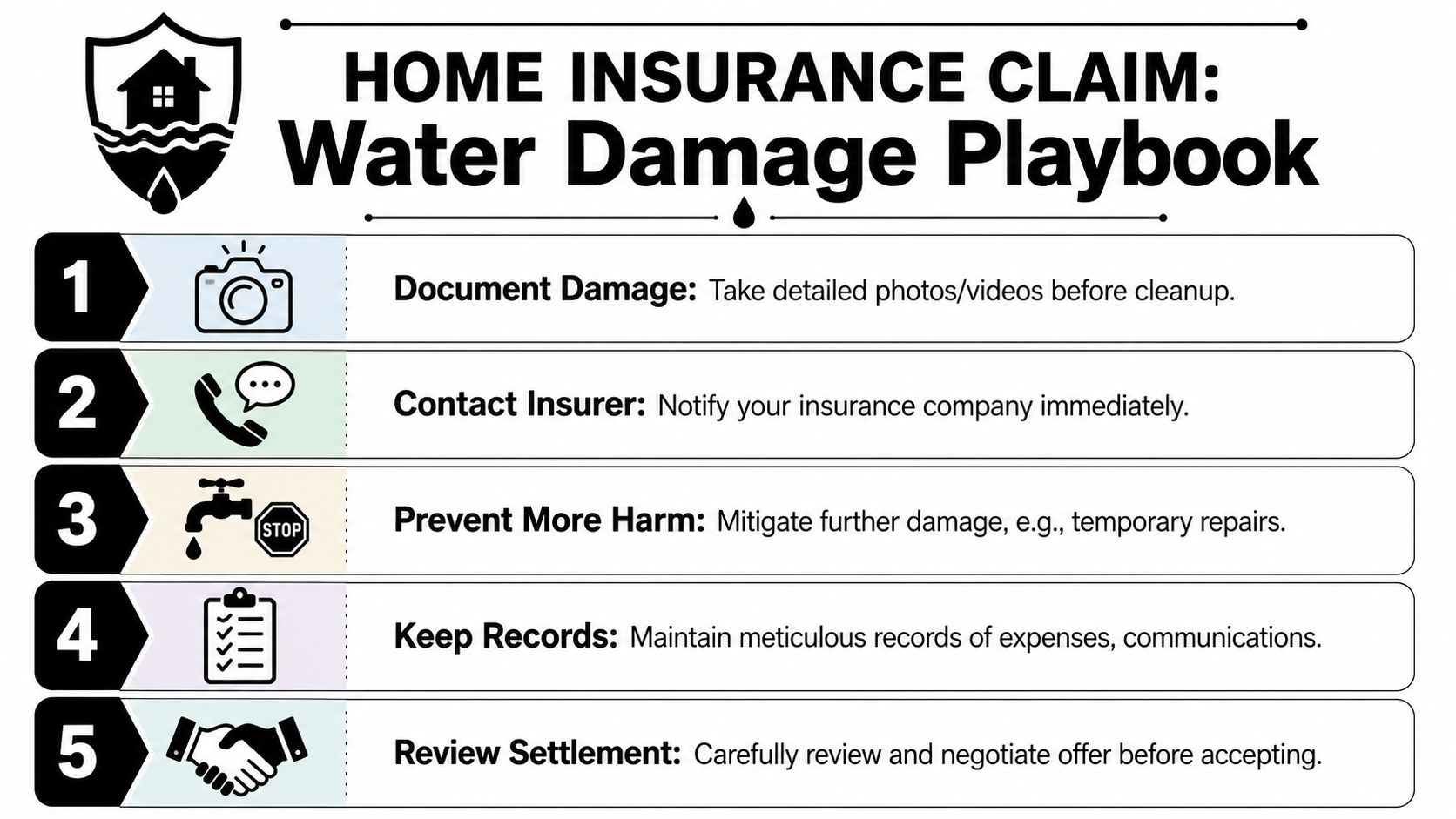
Take wide photos first. Then move in closer.
Photograph the damaged room, the failed pipe if visible, standing water, wet drywall, flooring, cabinets, furniture, insulation, and any personal property that got hit. Record short videos too. If water traveled from an upper floor to a lower one, document both levels.
Keep a simple running log with:
- Date and time discovered
- Where the water appeared
- When the main was shut off
- Who you called and when
- What temporary steps you took
This isn't overkill. It's what makes your timeline credible.
Know what you're usually claiming
In many homeowners policies, the main issue isn't whether water damage happened. It's how the policy treats the event that caused it. Many policies commonly focus on the ensuing damage from a sudden pipe break rather than treating the failed pipe itself the same way. That's why you need to read the actual policy language and not rely on guesswork from a neighbor or a contractor.
Keep your receipts for emergency supplies, plumber invoices, drying equipment, hotel stays if the home becomes unlivable, and any mitigation charges. If your insurer asks whether you took reasonable steps to prevent further loss, this paperwork answers that question.
Report promptly and stay organized
Call the carrier or claims line as soon as you've stabilized the scene. Be factual. Don't speculate about causes you don't know. Say what happened, where it happened, when you found it, and what you've done since discovery.
Then create one folder, digital or paper, with:
- Claim number
- Adjuster contact information
- Photos and video
- Invoices and receipts
- Email notes
- Repair estimates
If you already know your policy details are outdated or unclear, review your California home insurance options before the next loss, not after it.
Keep the damaged items, or at least photograph them thoroughly, until your insurer or adjuster says otherwise.
Don't accept confusion as normal
Here is my opinion after years of seeing these claims go sideways. Homeowners lose money when they become passive. Ask what is covered. Ask what documentation is still needed. Ask whether the adjuster wants to inspect before demolition proceeds. Ask how mitigation invoices should be submitted.
If part of the claim seems unclear, push for a direct explanation in writing. Insurance isn't a favor. It's a contract. Burst pipe repair gets your house functional again. A disciplined claim process is what gets your finances back on track.
Preventing Future Pipe Bursts in Your California Home
California homeowners sometimes assume burst pipes are mostly someone else's problem. That's wrong. Mountain communities deal with harder freezes. Older neighborhoods deal with aging plumbing. Coastal and inland homes alike deal with wear, pressure issues, poor prior repairs, and movement over time.
This is not a freak-event category. A Utah State University based study estimated about 260,000 water main breaks each year in the U.S. and Canada, with associated maintenance and repair costs of $2.6 billion per year, and estimated that 20% of water pipes across the U.S. and Canada need replacement, according to this report on the scale of water-main failures.
The prevention moves that actually matter
You don't need paranoia. You need maintenance.
- Know your shutoff valve location: Everyone in the home should know where it is.
- Inspect vulnerable areas: Garages, crawlspaces, attics, exterior walls, and under-sink cabinets deserve regular checks.
- Watch older materials and prior patchwork: A history of repairs usually means more repairs are coming.
- Prepare for cold snaps in higher elevations: Even in California, exposed lines can freeze.
If you own in a colder pocket of the state or travel during winter, this practical guide to MG Drain Services' frozen pipe solutions is a useful reference for safe thawing basics and prevention habits.
Think like a risk manager, not just a homeowner
The smartest homeowners don't separate maintenance from insurance. They treat them as one system. Routine inspections lower the odds of a loss. Good homeowners insurance helps absorb the financial shock if a loss still happens. For some households, that larger review should also include renters insurance for family members in separate units, auto insurance and car insurance bundling opportunities, and life insurance if other people depend on your income.
If you want broader California property and protection advice, the Mai & Associates guide library is a solid place to continue your research.
Small plumbing warnings are cheap to investigate. Large water losses are not.
A burst pipe repair should change how you think about the house. Not in a fearful way. In a disciplined way. Know the weak spots. Know your coverage. Keep records. Fix problems early.
If you want a clear review of your California home insurance, auto insurance, renters insurance, car insurance, or life insurance, Mai & Associates can help you compare coverage, spot gaps, and make sure one bad plumbing event doesn't turn into a long financial setback.