Best Auto Insurance Rates in California How to Save Now

You're comparing car insurance because the renewal notice jumped, your lease changed, or a neighbor mentioned a lower premium. You enter the same driver details into two quote forms and get two very different answers. That doesn't mean one quote is wrong. It means California insurers price the same risk differently, and the lowest number may come with weaker protection.
Introduction to Finding the Best Auto Insurance Rates in California
The best auto insurance rates in California aren't the cheapest advertised premiums. They're the combination of a competitive price, suitable coverage, manageable deductibles, and the right shopping moment. A quote that looks attractive until you discover that it uses California's legal minimum liability limits, excludes a household driver, or leaves you unable to replace your vehicle after a loss isn't a good deal.
California pricing also changes by geography. The Zebra's 2026 reporting places the average annual U.S. auto insurance premium at $2,256 in 2026, up 3% from the previous year, while Insurify's related midyear estimate puts the nationwide full-coverage average at $2,237 and projects a year-end 2026 average of $2,242. Those figures come from different methodologies, but both show why even a modest market movement can affect a household budget. The same reporting says 27 states had experienced rate increases in the first half of 2026, with 32 states projected to see increases by year-end. California shoppers therefore need to compare both carriers and timing, not rely on an old renewal price. The Zebra's 2026 auto insurance statistics provides the market context.
Long-term pricing puts the pressure in perspective. One public price-history dataset lists the average annual premium at $148 in 1970, $649 in 2000, $982 in 2020, and $1,580 in 2025, including a 61% increase over five years. The same source shows how location changes the result, with 2023 average expenditures highest in Florida at $1,865, followed by Louisiana at $1,754 and New York at $1,753. California drivers should take the lesson seriously: national averages are benchmarks, not personal quotes. This auto insurance price history shows why state and local comparison matters.
Key takeaway: The right rate is the lowest price for the coverage you can actually live with, found after accurate inputs and a fresh comparison.
The workflow is straightforward. Prepare your documents, decide what protection you want, compare quotes on the same coverage structure, check discounts and gaps, then bind the policy without creating a lapse. An independent agency can make that process faster by presenting multiple carrier options instead of forcing you to repeat the same information across separate quote forms.
Mai & Associates serves California drivers with same-day, multi-carrier quote support, including auto, home, renters, and life insurance. That matters when a renewal changes quickly or when bundling several policies could alter the overall value. The objective isn't to accept the first low quote. It's to make an informed choice while the available options are in front of you.
What to Prepare Before You Request Quotes
Accurate information produces a cleaner comparison. Before requesting quotes, create one digital folder with your current declarations page, vehicle records, driver information, and the coverage structure you want quoted. Don't guess. A small input error can trigger a re-quote later, and a cheaper price based on incomplete information isn't a reliable price.
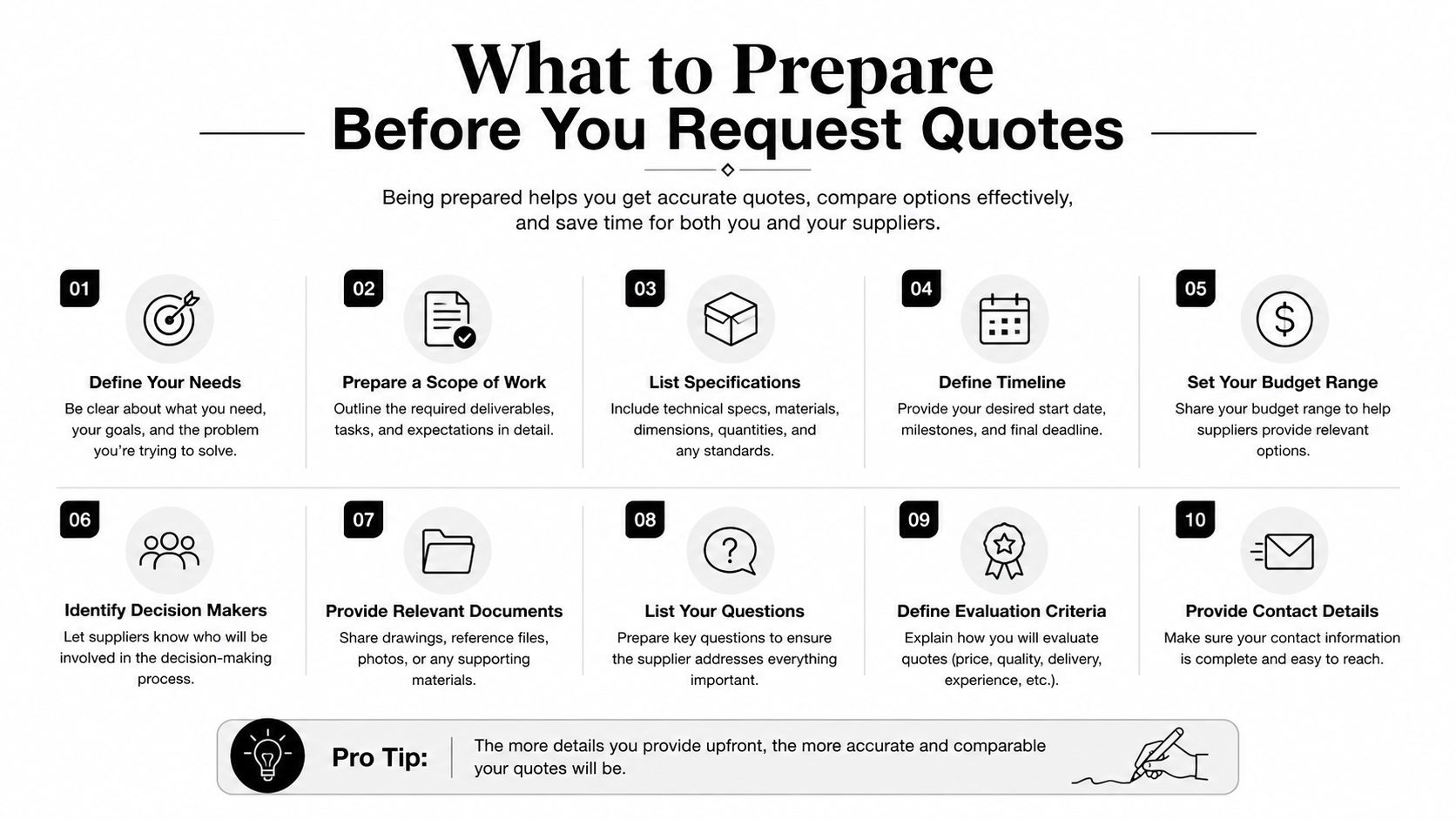
Gather driver and household details
Have each driver's full legal name, date of birth, license information, driving history, claims history, and relationship to the policyholder ready. List every licensed household member who drives, even if that person uses the vehicle only occasionally. Omitting a driver can create underwriting problems or coverage disputes.
Also prepare your current address and prior address history, along with the address where each vehicle is primarily kept. California rates can vary by area, and the insurer needs the correct garaging location. Provide the actual commute, business-use information, school use, and estimated annual mileage. Don't report occasional personal use if the car is regularly used for work or deliveries.
Record each vehicle precisely
For every car, gather the VIN, year, make, model, trim, ownership or lease status, safety equipment, anti-theft features, current mileage, and typical use. A vehicle's repair profile and equipment can influence the quote, so entering only the model name may not be enough.
Your current declarations page is especially useful because it shows existing liability limits, collision coverage, deductibles, uninsured motorist options, medical payments, rental reimbursement, and listed drivers. Ask for quotes using the same structure first. You can request a second comparison later with different limits, but mixing coverage levels between carriers makes the results misleading.
Decide what you want compared
Write down your preferred liability limits, comprehensive and collision deductibles, rental coverage, medical payments, and uninsured or underinsured motorist protection. If you're financing or leasing a vehicle, confirm the lender's requirements before changing physical damage coverage.
If you're also reviewing home insurance, renters insurance, or life insurance, include that context in the same request. Bundling can change the total household cost, but a bundle only makes sense if each policy remains suitable. California renters can use a practical premium benchmark, with independent 2026 comparisons placing average renters insurance around $144 to $155 annually, or roughly $12 to $13 monthly. This California renters insurance comparison offers that reference point.
Keep documents in a clearly named folder and save each quote with its date, limits, deductibles, and carrier. For general policy questions, use the California home and auto insurance FAQ. A tidy file makes same-day review faster and helps you identify whether a new quote is better or thinner.
Why California Rates Vary So Much and What Drives Your Quote
California insurers don't price a driver from one factor. They evaluate the interaction between the driver, vehicle, location, usage, selected coverage, and the insurer's own underwriting approach. That's why two carriers can quote the same household differently without either quote being automatically suspicious.

Location and driving exposure
Where the car is kept matters. A dense urban area can produce different accident, theft, repair, and traffic patterns from a quieter community. Even nearby California neighborhoods can receive different pricing because insurers assess local exposure, not just the city name.
Your driving record and claims history also affect underwriting. Tickets, at-fault accidents, and prior claims can move a quote, while a clean record may open discount opportunities. Annual mileage and use matter for the same reason. A vehicle driven daily through congested corridors presents a different exposure from one used occasionally for errands.
Vehicle characteristics create another split. A high-value vehicle, a model with costly parts, or a car with advanced repair requirements may produce a higher physical damage premium. The quote also changes when you select collision protection rather than liability-only coverage.
California's legal baseline
California's private-passenger minimum liability limits are 30/60/15. That means $30,000 for bodily injury per person, $60,000 for bodily injury per accident, and $15,000 for property damage per accident. The California DMV insurance requirements lists these legal minimums.
California increased those limits from the previous 15/30/5 structure effective January 1, 2025. The current limits are scheduled to remain until January 1, 2035, when they're set to increase to 50/100/25, according to the California Department of Insurance legislative report.
Minimum coverage keeps a vehicle legally insured, but it doesn't automatically protect your savings, income, or replacement needs. A quote built on minimum limits may be lower because it transfers more risk to you.
A quote comparison only works when every carrier is quoting the same liability limits, deductibles, drivers, and vehicle use.
Why timing now matters
California has experienced meaningful rate movement. Insurify reported that full-coverage premiums in California fell 8% in 2025 to an average of $2,309, after reaching $2,589 in January 2025. The report also discussed recent rate approvals and projected 2026 increases, showing that a price seen earlier in the year may not represent the price available today. Insurify's California car insurance analysis explains that volatility.
Consumers sometimes encounter unfamiliar low-cost insurance terminology online. If you're researching unusual affordability programs, review a neutral explanation such as compare dollar a day insurance options from Mattiacci Law, then confirm whether an option applies to your California situation. For location-specific guidance, drivers can also review auto insurance in Los Angeles.
How to Compare Coverage Levels Without Sacrificing Protection
The cheapest quote usually comes from removing protection, lowering limits, or choosing a deductible you may struggle to pay after a loss. Compare coverage in layers instead. Start with the liability limit you can defend financially, then decide whether your vehicle needs physical damage coverage and whether you need protection from uninsured drivers.
California's 30/60/15 legal minimum is a starting point, not a recommendation for every household. Liability coverage pays for damage and injuries you cause up to the selected limit. If a serious accident exceeds that limit, you may face the remaining costs personally.
A practical side-by-side comparison
| Coverage Build | What It Includes | Best For |
|---|---|---|
| Liability-only minimum | California's 30/60/15 liability limits | Owners of lower-value vehicles who understand the risk of paying for their own vehicle damage |
| Liability-focused protection | Higher liability limits, with optional medical payments and uninsured or underinsured motorist coverage | Drivers prioritizing protection for savings, income, and medical exposure |
| Full coverage structure | Liability, comprehensive, collision, and selected supplemental coverages | Financed or leased vehicles, newer vehicles, and owners who can't comfortably replace the car |
| Customized full protection | Full coverage plus rental reimbursement, medical payments, and carefully selected deductibles | Households that need transportation after a loss and want fewer out-of-pocket surprises |
The California Department of Insurance explains that liability-only policies can be paired with $2,000 medical payments, 30/60 uninsured or underinsured motorist coverage, and $3,500 uninsured motorist property damage coverage. Those options appear on the department's automobile coverage limits page.
Deductibles change the risk you keep
A higher collision deductible can reduce the premium, but it also increases the amount you must fund after a covered claim. Choose a deductible that fits your emergency savings, not merely the one that produces the lowest quote.
For an older car owned outright, dropping collision or other protections may be reasonable if you could replace the vehicle without financial strain. For a financed car, the lender may require physical damage coverage. Cutting coverage on a vehicle you depend on for work or family care can create a false saving if a loss leaves you without transportation.
Medical payments and uninsured motorist coverage deserve separate attention. Health insurance may not cover every accident-related cost, and the at-fault driver may carry insufficient protection. Review the full policy rather than judging value from liability price alone. Additional California insurance guides can help you organize those decisions.
Smart Ways to Lower Your Premium and When to Shop
Premium savings work best when you combine underwriting improvements with disciplined timing. Don't start by deleting useful coverage. Start by asking each insurer to apply every discount you qualify for, then compare the final policies on identical limits.
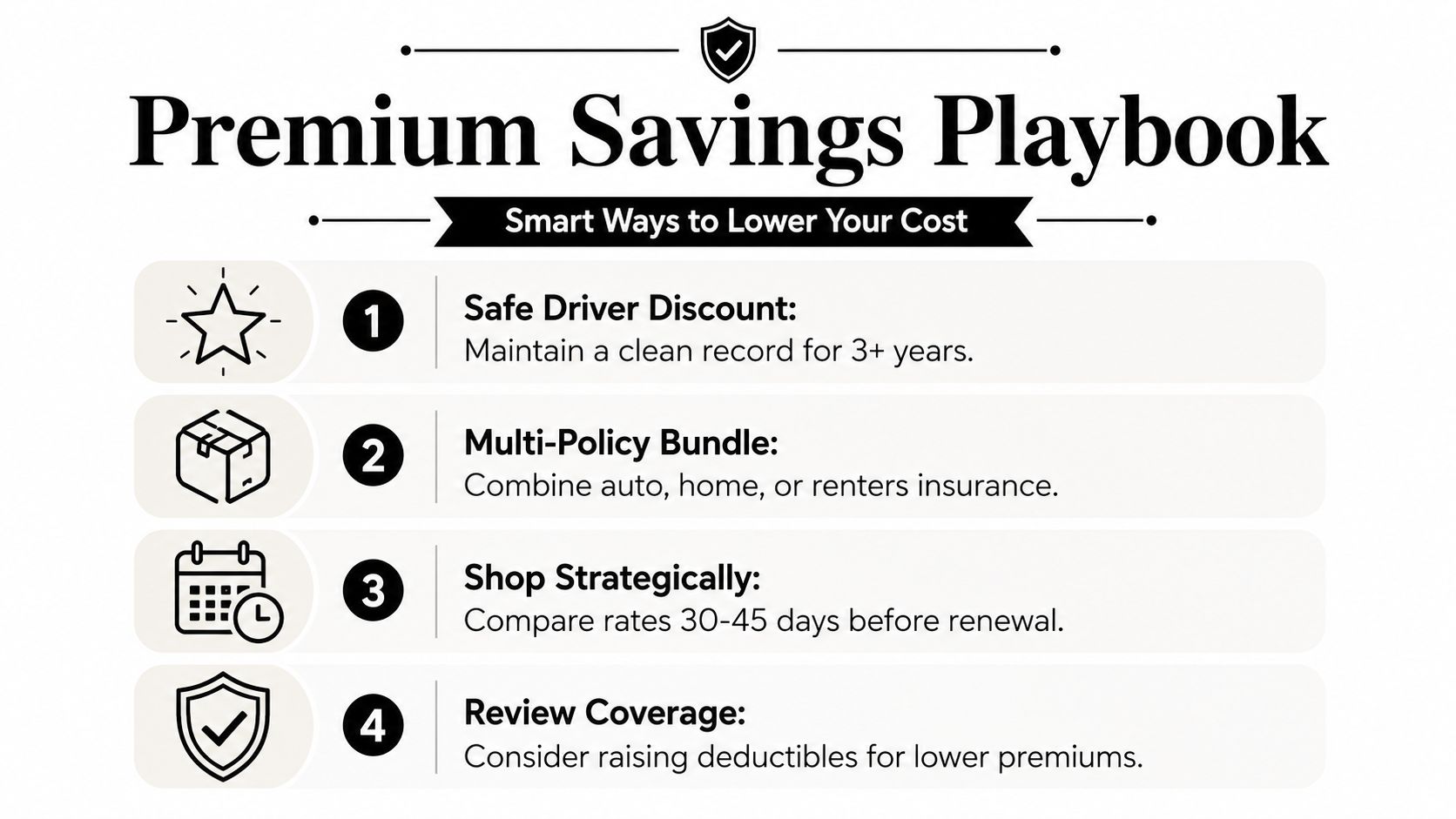
Build a discount strategy
Safe driving, defensive driving courses, vehicle safety equipment, anti-theft features, multi-car policies, and electronic documents may qualify for carrier-specific discounts. Telematics programs can also help some drivers, but they require you to share driving behavior with the insurer. Ask what the program measures and whether participation can affect pricing.
Bundling deserves a household-level review. Combine auto insurance with home insurance, renters insurance, or life insurance when the combined price and coverage make sense. Don't accept a bundle just because the insurer advertises a discount. Compare the total premium, exclusions, deductibles, service, and renewal terms across the policies.
A California renter might review auto and renters coverage together, while a homeowner in a wildfire-prone area may need to evaluate standard home insurance, California Fair Plan arrangements, and supplemental protection separately. A bundle can be convenient, but it isn't a substitute for checking coverage gaps.
Choose the right shopping moment
Shop before renewal rather than waiting for the new premium to become automatic. Also request fresh quotes after a move, vehicle replacement, household driver change, mileage change, marriage, retirement, or meaningful change in commute. Those events can alter the rating information used by insurers.
A quick online comparison works when your household and coverage are simple, your declarations page is current, and you're comfortable checking every limit yourself. An independent agent adds value when you have multiple vehicles, a young driver, prior claims, unusual vehicle use, a home in a high-risk area, or several policies to coordinate.
Shopping rule: Compare the entire policy at renewal, not just the monthly payment.
If you decide to change carriers, verify the new policy is active before canceling the old one. Keep the effective dates aligned and ask about unused premium, automatic payments, and lender notification. For a practical transition overview, read how to switch car insurers from Total Loss Northwest.
Your Same Day Checklist for Securing the Best Rate with Mai & Associates
You don't need a complicated process. You need complete information, consistent coverage comparisons, and a person who will explain why one quote is lower than another.
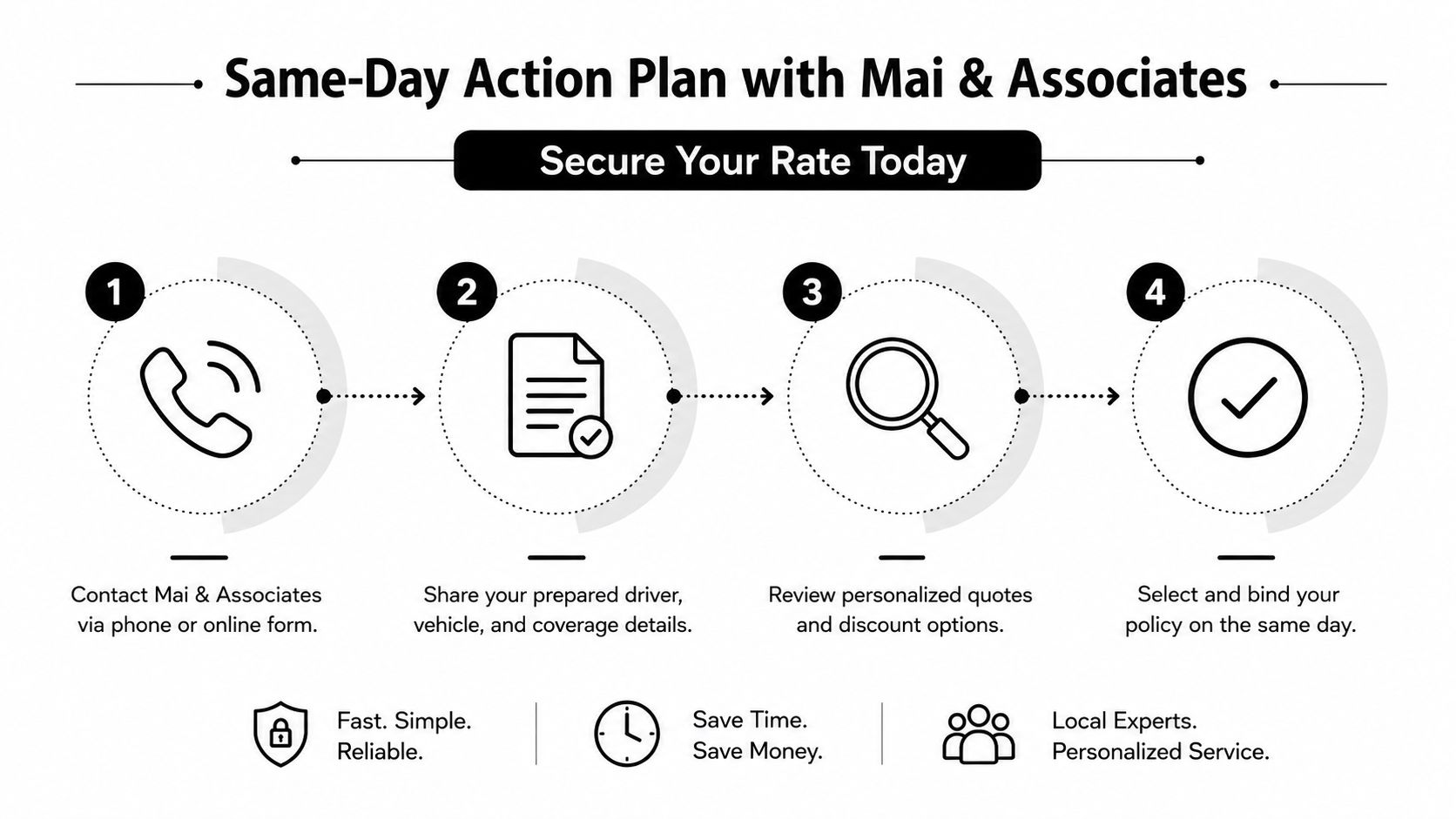
Start with a clean quote request
Send the driver list, vehicle details, garaging address, mileage, usage, declarations page, desired limits, and deductible preferences. State whether you want liability-only, full coverage, or both versions for comparison. If you're reviewing home, renters, or life insurance at the same time, say so at the beginning.
Mai & Associates offers multi-carrier quote comparisons, same-day quotes, a 24-hour response, multilingual support in English, Spanish, Armenian, Russian, and Vietnamese, and no-obligation service. The agency has offices in Glendale, Westlake Village, Escondido, and Costa Mesa, serving clients in more than 50 California cities.
Review the quote, not just the price
Ask for a clear comparison showing liability limits, deductibles, collision status, uninsured motorist coverage, medical payments, rental reimbursement, listed drivers, and exclusions. Check whether the insurer used the correct address and vehicle use. A lower premium based on incorrect information can create a serious problem later.
Homeowners in wildfire-prone areas can also request a Fair Plan review, earthquake coverage discussion, and wildfire protection strategy. Renters should confirm personal property, liability, and loss-of-use protection rather than buying a policy based only on its monthly price. Life insurance belongs in the same household conversation when the goal is protecting income and family obligations.
Bind only after the final check
Before accepting, confirm the effective date, payment schedule, lender or leaseholder information, proof-of-insurance delivery, and cancellation of the prior policy. Save the declarations page and insurance cards where you can access them from your phone.
Use the Mai & Associates insurance quote request to submit your information, then review the available options with a licensed agent. The best rate is the one you can bind confidently, maintain without a lapse, and rely on when an accident or property loss puts the policy to work.
Mai & Associates compares auto insurance quotes across multiple carriers and can also coordinate home, renters, and life insurance reviews for California households. Visit Mai & Associates today with your declarations page and vehicle details ready, and request a same-day comparison built around your actual coverage needs.