Are Annuities FDIC Insured? a Clear California Guide

Annuities are not FDIC insured because FDIC coverage applies only to bank deposit accounts, not to insurance contracts. The backstop is the insurer's financial strength plus state guaranty association protection.
That distinction matters the moment you're comparing a bank CD, a retirement annuity, and the savings you use for everyday bills. A product can sit near a bank on a sales menu and still belong to a completely different legal category, which is why so many first-time buyers ask the same question in the first place.
A lot of California savers run into this while shopping for auto insurance, home insurance, renters insurance, car insurance, or life insurance and then hearing an annuity mentioned in the same conversation. The words sound similar, the paperwork can look similar, and the safety question feels identical. It isn't, and the difference starts with who regulates the product.
The Quick Answer and Why the Confusion Exists
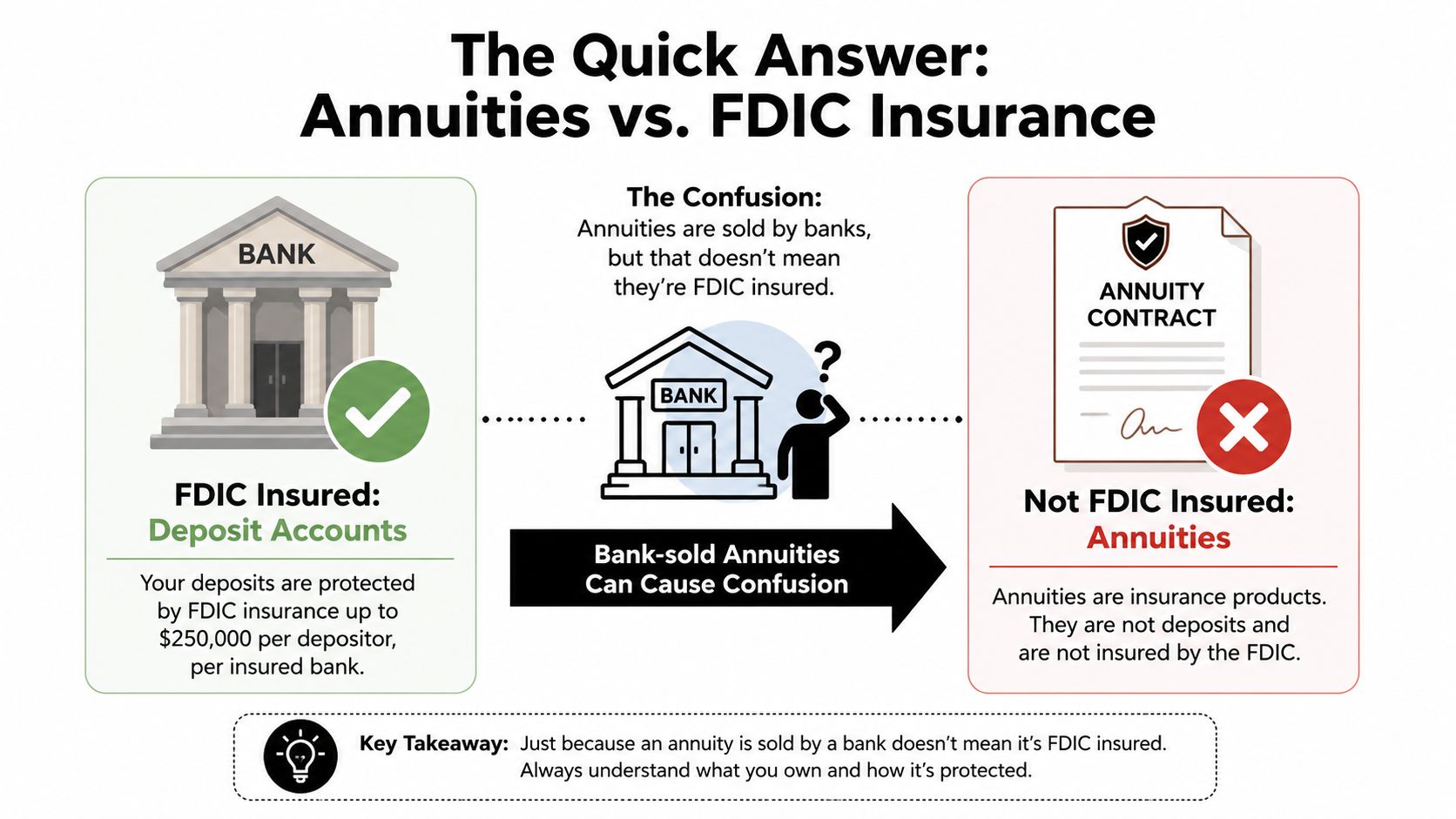
A saver may see a bank branch, a familiar brand name, and a product that promises steady growth, then assume the same federal protection applies. That's the trap. Annuities are not FDIC-insured, because the FDIC protects deposits at insured banks, not insurance contracts, and the FDIC explicitly lists annuities among products it does not insure. The FDIC's standard deposit insurance limit is $250,000 per depositor, per insured bank, per ownership category. FDIC deposit insurance overview
Why a CD and an annuity can look alike
A certificate of deposit and an annuity can both appear as conservative choices. They can both promise predictability, both may be sold around retirement planning, and both can feel like “park the money and wait” products. But a CD is a bank deposit, while an annuity is an insurance contract issued by a life insurer.
That legal difference is the whole story. The FDIC backs deposits at banks and credit unions, while annuities depend on the issuing insurer's claims-paying ability and the state safety net if that insurer fails. Annuity protection explained
Practical rule: if the money is in a bank deposit, think FDIC. If the money is in an annuity contract, think insurer strength and state guaranty protection.
For a plain-English glossary that helps separate common insurance terms from bank products, the California insurance glossary is a useful place to start.
What the FDIC actually does
The FDIC protects deposit accounts at FDIC-insured banks, and that's why people trust checking, savings, and CDs inside the banking system. It does not insure insurance-company promises. So when a bank employee mentions an annuity, the word bank can distract buyers from the more important fact that the contract itself is still issued by an insurer.
That's why the right question isn't, “Is it sold at a bank?” The right question is, “What kind of contract is it, and who stands behind it?”
FDIC Bank Protection Versus State Guaranty Associations
A California buyer who hears “bank protection” and “annuity protection” in the same conversation can easily assume they work the same way. They do not. FDIC coverage protects bank deposits, while an annuity relies on the issuing insurer and the state safety net if that insurer fails. For additional context on annuity protections, see the Kons Law annuity page. State guaranty association overview
The two safety nets side by side
The difference becomes clearer if you ask a simple question: who is promising the money?
| Product type | Main protection | Typical limit framework |
|---|---|---|
| Bank deposit | FDIC | $250,000 per depositor, per insured bank |
| Annuity | State guaranty association | Often at least $250,000 per customer, per insurer, with state variation |
The numbers are only part of the story. FDIC coverage is a federal backstop for deposits, while annuity protection comes from insurance regulation at the state level and the financial health of the insurer that issued the contract. That difference is why a CD and an annuity can both feel conservative, yet still sit under different legal protections. CD and annuity comparison
A California shopper can also get tripped up by where the product was sold. A contract offered inside a bank lobby may sound like a bank product, but the sales setting does not change the legal wrapper. The same basic distinction shows up in consumer guidance on bank-sold annuities. Bank-sold annuities explained
The safety net follows the product, not the storefront.
Why the issuer matters more than the building
An annuity is issued by a life insurance company, so the protection depends on that insurer rather than the branch office, brokerage desk, or bank lobby where the sale happened. If the insurer fails, the state guaranty association can provide a backstop under state law. That protection is different from an FDIC payout, and it does not work like a bank account balance moving through a federal claims process.
For California shoppers, the central question is not where the contract was signed. The central question is which insurer issued it, what type of annuity it is, and how California's guaranty system treats that contract. If you want a broader explanation of how insurance and banking products differ, the California life insurance guide can help with the basics.
Fixed, Variable, Indexed, and Bank-Sold Annuities Explained
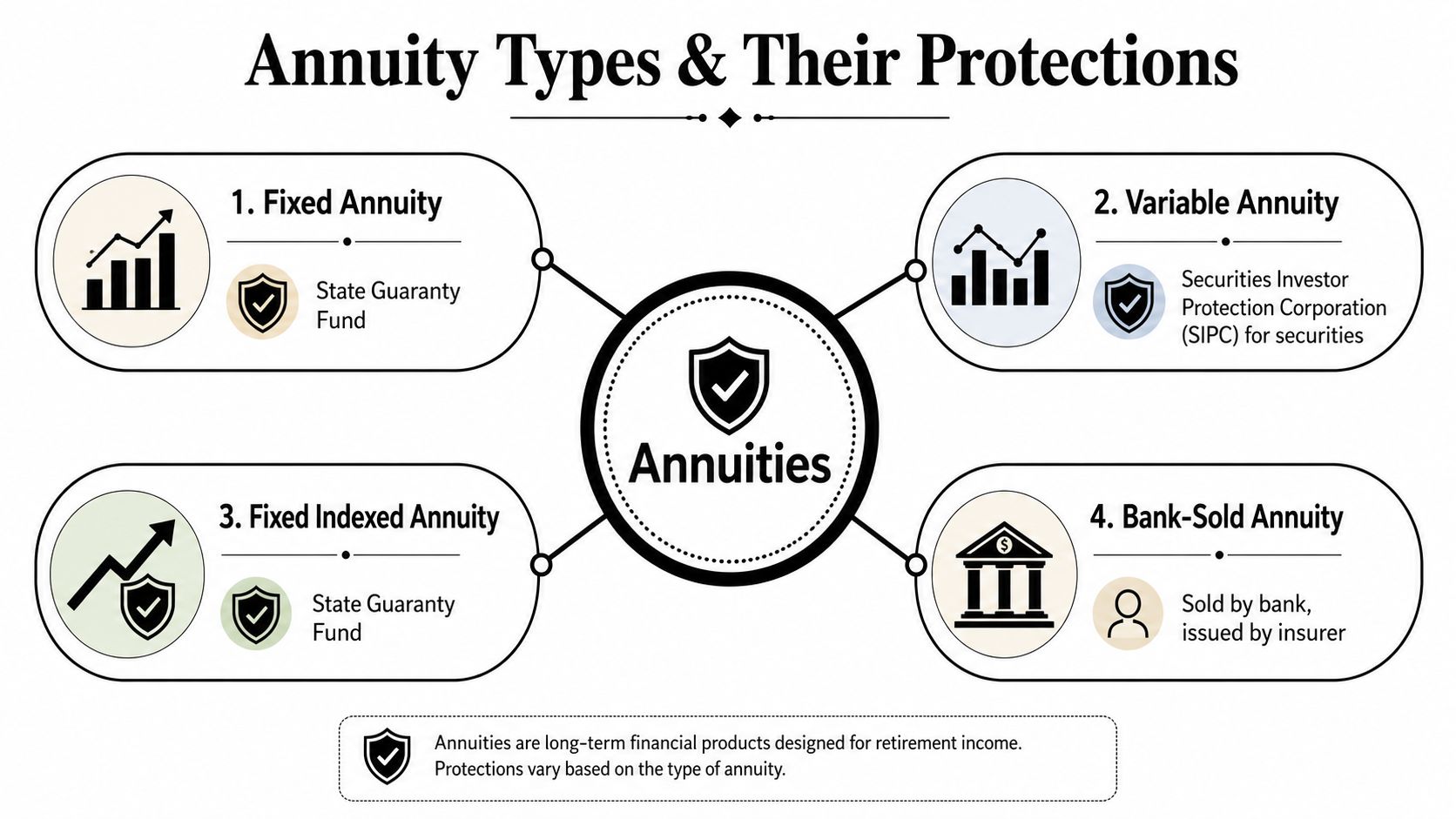
Not all annuities behave the same way, and that's where many buyers get lost. A fixed annuity is designed for predictability. A variable annuity can move with markets. A fixed indexed annuity ties crediting to an outside index formula, and a bank-sold annuity is still just an annuity, even if the sales appointment happened inside a bank. MYGA basics and comparison
Fixed annuities and the appeal of predictability
Fixed annuities appeal to buyers who want a steadier income pattern. They are still insurance contracts, so the protection question is the same one discussed above. The value comes from consistency, not from bank deposit status.
That's why some people compare them to a retirement-focused CD alternative, even though the comparison is only about feel, not legal treatment. The legal wrapper is different, and that's what decides whether FDIC insurance applies.
Variable annuities and added market exposure
Variable annuities add a second layer of risk because their value can move with underlying investments. That means the buyer is not only depending on the insurer, but also accepting market fluctuation inside the contract. This is why variable annuities often feel more complex than fixed contracts.
For California readers who already know the basics of life coverage, the difference is similar to comparing a simple term-life policy with a more layered contract. If you want a broader life-insurance context, the California life insurance guide can help frame how insurance products are structured.
Indexed and bank-sold annuities
Fixed indexed annuities sit between those two ideas. Their crediting formula is linked to an external index, but they're still insurance contracts, not deposits. A bank can sell them, but the bank's counter doesn't transform them into FDIC-insured accounts.
Important distinction: the place where you buy the annuity doesn't decide the protection. The contract type and issuing insurer do.
If you're comparing annuities with other retirement tools, it can help to keep the product wrapper in view. A separate resource on protecting retirement with gold IRA strategies can also show how investors think about sheltering assets in very different categories.
What Happens When You Own More Than the Guaranty Limit
A lot of buyers assume the guaranty system works like a personal umbrella. It doesn't. The limit applies per policyholder, per insurer, so stacking more contracts with the same company doesn't create a bigger safety net.
A simple California-style example
Suppose a retiree in California owns two annuity contracts from the same insurer. The combined value is higher than the state protection limit. If that insurer failed, the guaranty association would not make the entire balance whole just because the money sat in two contracts instead of one. The exposure is still linked to the same insurer.
That's why diversification matters. Spreading annuity purchases across more than one insurer can preserve more of the practical protection available under state law. Concentrating everything with a single carrier can push part of the balance outside the guarantee.
Why this matters before you sign
The buyers most likely to feel this gap are people with larger retirement pools, but the issue can show up with smaller accounts too if they keep rolling multiple contracts into one company over time. The contract count matters less than the insurer count. One insurer, one protection bucket.
Practical rule: if you already own more than one annuity, check whether they're all issued by the same company before assuming you've multiplied your safety.
That doesn't mean large annuities are automatically unsafe. It means the protection ceiling is real, and California buyers should know where it sits before they assume every dollar gets the same treatment.
How to Verify the Protections on Your Specific Contract
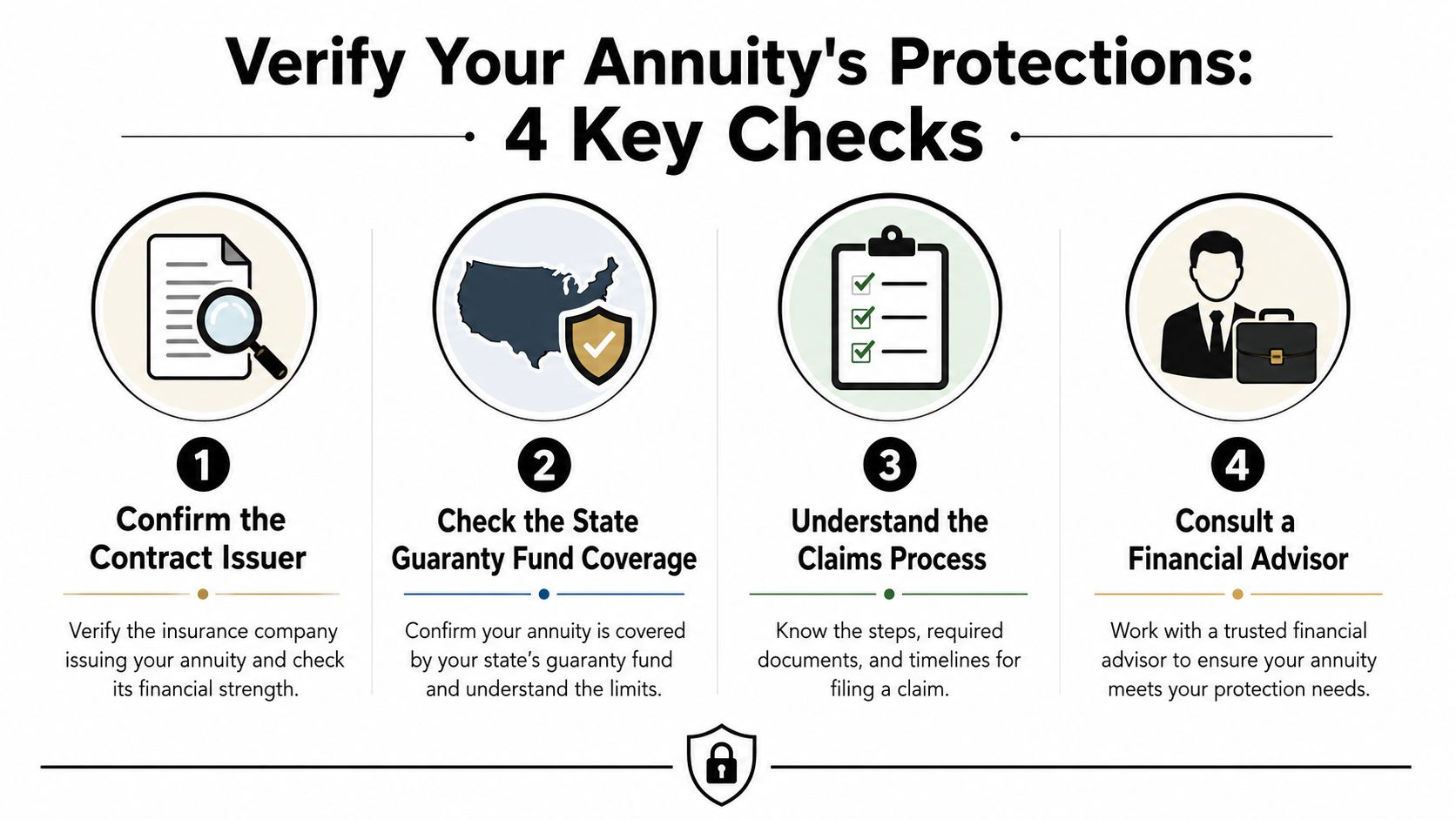
The fastest way to cut through the noise is to read the contract, not the marketing sheet. The protections you have come from the issuer, the state of issue, and the exact contract language. A buyer who checks those items usually gets a much clearer picture than someone relying on the sales summary alone.
A short contract checkup
- Confirm the issuer. Look for the name of the life insurance company on the policy, because that is the entity responsible for the contract.
- Check the state of issue. The state listed on the contract helps determine which guaranty association rules apply.
- Review the exclusions. Some contract types may have different protection treatment, so the fine print matters more than the brochure.
- Look up financial strength. Independent insurer ratings help you judge the company behind the promise, which is especially important when the contract is meant to last for years.
These checks are simple, but they change the conversation. Instead of asking whether the product is “safe,” you can ask a better question, whether the insurer is strong and whether the contract fits within your state's protection rules.
Why the fine print beats the sales pitch
A sales flyer may highlight income, deferral, or interest crediting. It usually won't explain how exclusions work if the issuer fails. That's why contract review matters more than the headline promise.
If you want a checklist-style reminder while comparing products, the California insurance guides page is a practical companion to keep nearby.
Practical Ways to Reduce Your Annuity Risk
Once you know annuities are not FDIC insured, the next move is to reduce the risks you can control. You can't turn an annuity into a bank deposit, but you can choose stronger issuers, structure ownership more carefully, and avoid getting trapped by contract features that limit flexibility.

Five habits that make a real difference
- Choose insurers with strong ratings. A stronger issuer gives you a better starting point because the insurer's ability to pay matters before any guaranty association is ever involved.
- Diversify across multiple insurers. Spreading contracts can help you avoid running into a single-company protection cap.
- Match the contract to your timeline. If you need money soon, a long surrender schedule can work against you.
- Read surrender and bonus terms carefully. Generous features on paper can come with tradeoffs if you need to exit early.
- Keep liquid cash outside the annuity. That way you're less likely to force a withdrawal at the wrong time.
The hidden risk is often liquidity
The most painful annuity surprise usually isn't a dramatic market loss. It's discovering that money you thought was available is tied up by contract terms. That's why keeping a separate cash reserve matters. It reduces the odds that you'll have to make a rushed decision just because life changed.
For California households balancing insurance choices across home, renters, car, and life coverage, this is the same planning habit that helps elsewhere too. The product should fit the need, not force the need to fit the product.
California-Specific Notes for Annuity Owners
California readers need one more layer of clarity because state rules matter here. The relevant safety net is the California Life and Health Insurance Guarantee Association, which exists to protect policyholders if a licensed insurer becomes insolvent. The key idea is still the same, annuities are insurance products, so the backup is tied to state insurance law, not the FDIC. California insurance blog and consumer resources
What California buyers should pay attention to
The first thing to check is whether the insurer is licensed in California and whether the contract is covered under the state guaranty system. The next thing is the protection cap that applies to your specific contract and insurer. California buyers should not assume that all annuities, or all contract features, receive identical treatment.
That matters even more for households already thinking in terms of risk management across auto insurance, home insurance, renters insurance, car insurance, and life insurance. California insurance planning often means comparing multiple forms of protection at once, from wildfire-related property concerns to retirement income products. The question is always the same, what's covered, by whom, and under what limits?
Why California planning feels different
A Golden State buyer may already be comparing carriers for auto or home coverage after wildfire or earthquake concerns. That same habit helps with annuities. Read the issuer name, verify the contract state, and ask where the guarantee comes from.
The biggest mistake is to blur bank language, insurance language, and retirement language into one bucket. California law separates them, and your plan should too.
Next Steps and When to Talk With a Licensed Agent
The answer to are annuities FDIC insured is still no. FDIC coverage is for bank deposits, while annuities rely on insurer strength and state guaranty associations. Once you accept that distinction, the rest becomes a matter of matching the contract to your goals, your time horizon, and your comfort with liquidity.
A smart next step is to review any existing annuity for three things, the issuer, the state of issue, and the surrender terms. Then compare the carrier's independent ratings and think about whether your total exposure with one insurer is larger than you intended. If you're unsure how the contract language changes your protection, a licensed California agent can help you sort the policy details from the sales pitch.
That's especially useful if you're already juggling decisions about auto insurance, home insurance, renters insurance, car insurance, and life insurance in California. The same careful mindset applies here. You don't need to become an insurance lawyer, you just need a clear read on which product you own and which safety net applies.
A CTA for Mai & Associates.