American Heritage Life Insurance: A 2026 CA Guide
You're probably here because you saw American Heritage Life Insurance on a workplace benefits form, a payroll deduction screen, or an old policy packet, and the name didn't match the brand you expected. In California, that confusion matters. If you're trying to protect your family, line up life insurance with your auto insurance, or make sure your home insurance and renters insurance plan won't leave a gap during a wildfire disruption, you need straight answers.
My view is simple. American Heritage Life is real, established, and relevant, but it's often misunderstood. It's not the company I'd treat as a one-stop answer for a California household's full protection plan. It's usually a supplemental insurance player. That distinction is where many people make costly mistakes.
Decoding American Heritage Life Insurance
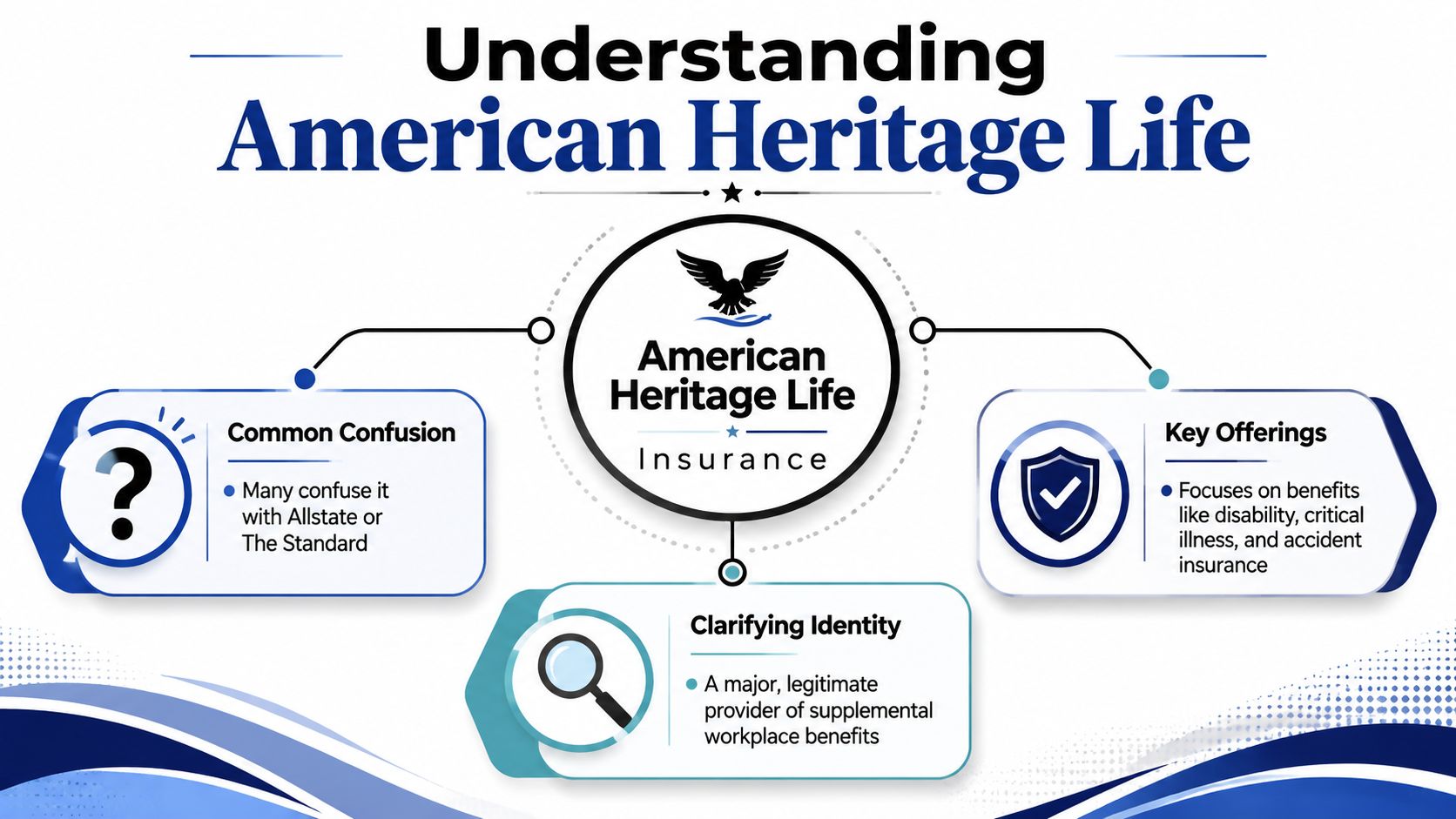
A common California scenario goes like this. A client has car insurance with one company, home insurance through a different carrier, maybe California Fair Plan for the dwelling, and then sees American Heritage Life Insurance Company listed on an employee benefits enrollment screen. The next question is always the same. “Is this Allstate, or is it somebody else?”
The answer is yes and no, and that's why people get tripped up.
American Heritage Life Insurance Company was founded in 1956 in Jacksonville, Florida, and was acquired by Allstate in 1998, after which its voluntary benefits division was rebranded as Allstate Benefits, according to Life Insurance International's report on the business history and later transaction activity.
Why the branding confuses people
American Heritage Life sits in a segment of insurance not typically shopped for in the same manner as California auto insurance, car insurance, home insurance, renters insurance, or individual life insurance. It often shows up through work. That makes people assume it's just a label inside a larger company.
That assumption is partly right. But from a buyer's standpoint, what matters is this:
- It has its own legal identity: Your policy documents may still name American Heritage Life Insurance Company.
- It has operated under Allstate Benefits branding: That's why the names overlap in marketing and benefits materials.
- It now creates new confusion because of ownership changes: Californians have to separate brand names from the actual insurer on the contract.
If you want to sharpen your understanding of policy language, the insurance glossary for California coverage terms is useful because many workplace benefit documents use terminology that sounds simple but has very specific legal meaning.
If the name on the brochure and the name on the policy aren't identical, read the insurer name on the certificate first. That's the company attached to the obligation.
Where it fits for a California household
My practical read is that American Heritage Life belongs in the “gap-filler” category, not the “foundation” category. For most families, your foundation is still your major medical coverage, your properly built life insurance plan, your home or renters insurance, and your auto insurance with liability limits that match your assets and income.
American Heritage Life can matter. It just usually matters after those basics are handled.
American Heritage Life Today Financial Strength and Ratings
Before you buy any insurance policy, check whether the insurer looks capable of paying claims. I advise clients to consider it akin to checking a restaurant's health grade before dinner. The menu may look great, but you still want confidence in the operation behind it.
That's where financial data helps.

What the numbers say
American Heritage Life Insurance Company, now operating under the Allstate Benefits branding, reports total assets of $3,447,814,805, liabilities of $3,166,924,459, and an A.M. Best rating of B++ (Good), according to Annuity Advantage's insurer profile.
Those numbers aren't the whole story, but they're enough to make one point clearly. This isn't a tiny fringe insurer with no operating scale. It's a meaningful company with a real balance sheet.
How to interpret that without getting lost
Use a simple filter:
- Look at the asset base. A company with substantial assets has more room to absorb obligations and keep operating through normal claim cycles.
- Look at liabilities next. Insurance companies always have obligations. What matters is whether the balance sheet appears managed and stable.
- Check the rating, but don't worship the rating. A rating is a signal, not a guarantee.
- Match the company's strength to the product you're buying. A short-term supplemental accident policy and a long-term life insurance strategy aren't the same decision.
Practical rule: Financial strength matters more as your policy becomes more important to your household. If you're relying on a benefit to protect your family income, don't treat ratings as an afterthought.
What I'd tell a California client
I wouldn't reject American Heritage Life based on this financial profile alone. That would be lazy analysis. But I also wouldn't use this section as a reason to stop asking hard questions.
For California families, especially those balancing home insurance, renters insurance, life insurance, and high liability exposures from car insurance and property ownership, the better question is this: does the product solve the right problem?
A solid insurer can still offer a policy that's too narrow for your needs. That happens all the time in workplace benefits. People see payroll deduction convenience and confuse it with complete protection.
What Policies Does American Heritage Offer
American Heritage Life is best understood as a workplace benefits insurer with a strong supplemental focus. It is authorized to sell products in 49 U.S. states and offers three core categories of group coverage, health plans, supplemental coverage, and life insurance, serving over 4 million individuals, according to HelpAdvisor's company overview.
That product mix tells you what the company is trying to do. It's not trying to replace every part of your financial safety net. It's designed to sit next to your other policies and pay limited benefits in defined situations.
The three buckets that matter most
Some workplace plans are broad on paper, but the practical uses usually fall into these categories:
- Health-related supplemental plans: These can help with specific expenses tied to accidents, hospital events, or critical illnesses.
- Supplemental coverage: This is the catch-all category where many accident and limited-benefit products sit.
- Life insurance: Often offered in group form, sometimes as employer-paid base coverage with optional employee buy-up amounts.
What that means in real life
A California employee with a high-deductible health plan might use a supplemental accident policy to soften out-of-pocket costs after an emergency room visit. A parent with minimal employer life insurance might buy extra workplace coverage because it's easy and payroll deducted. A renter in Los Angeles or Sacramento might keep the workplace policy for convenience but still need a separate plan that properly protects dependents.
That's why I tell people to stop asking, “Is this policy good?” and start asking, “What gap does it close?”
| Policy Type | Key Feature | Typical California Use Case | Works With |
|---|---|---|---|
| Accident coverage | Limited cash benefits tied to covered accidental injuries | Helps with out-of-pocket medical costs after a car crash or injury at home | Major medical, auto insurance medical-related expenses, emergency savings |
| Critical illness style supplemental coverage | Pays defined benefits for covered health events if the policy terms are met | Adds cash support when a serious diagnosis disrupts work and household bills | Health insurance, disability planning, savings reserves |
| Disability-related workplace benefits | Replaces part of income under covered disability terms when available through the employer | Useful for workers whose household budget would struggle after missed paychecks | Emergency fund, life insurance, mortgage protection strategy |
| Group life insurance | Employer-linked life benefit, often simple to enroll in | Starter protection for employees who need some immediate coverage | Individual life insurance, estate planning, debt protection |
What it is and who it's for
Accident coverage
This is the most practical fit for many Californians. If your medical plan leaves you exposed to deductibles, copays, and surprise bills after a covered accident, a supplemental accident plan can help. It can also matter after an auto-related injury, even when your California car insurance handles the vehicle side and liability issues rather than your personal medical cost structure.
Best fit: employees who want a cash buffer after an injury and understand it's not broad medical insurance.
Group life insurance
This is useful, but I'm blunt about it. Group life through work is often a starting point, not a complete family protection plan. If you have kids, a mortgage, or anyone counting on your income, don't assume workplace life insurance alone is enough.
Best fit: workers who need quick-access coverage now, especially while building a larger individual life insurance plan elsewhere.
Critical illness and similar supplemental products
These policies can help when a covered diagnosis creates immediate budget stress. They are not a replacement for full health coverage, and they shouldn't be treated like one.
Best fit: households that have some savings but don't want one medical event to throw off the mortgage, rent, transportation, and daily bills.
For clients with larger estates, business ownership, or multiple properties, supplemental workplace coverage should be coordinated with broader planning. A useful reference on that side of the market is this guide to securing high net worth protection, because higher-asset households need more than a convenient payroll product.
The Impact of The Standard Acquisition on Your Policy
The conversation now gets more serious.
A corporate acquisition doesn't automatically harm policyholders. But when a company changes hands, confusion rises fast. Claims departments, billing systems, service channels, and policyholder communications can all feel different during a transition, even when the contract itself hasn't changed.
What concerns deserve attention
A major unresolved issue is the lack of clear consumer-facing guidance. A critical underserved angle is the lack of transparent consumer guidance on how AHL's recent acquisition by The Standard impacts existing policyholders' rights, claim processing speeds, and guaranteed renewal privileges, especially with AM Best placing its A+ rating under review.
That matters because policyholders don't care about corporate press language. They care about whether the policy they bought still functions the way they expect when they file a claim.
If you already own a policy, your first job isn't to panic. Your first job is to confirm the current administrator, claims instructions, premium draft status, and whether your policy language changed in writing.
The right questions to ask now
If you're a current policyholder, ask these directly:
- Has the legal insurer on my policy changed, or only the parent ownership?
- Are claim forms, submission methods, or service contacts different now?
- Do my guaranteed renewal or guaranteed issue provisions remain exactly as written?
- Will payroll deduction continue the same way through my employer?
- If I leave my job, what portability or conversion options still apply?
My opinion on the acquisition issue
Don't accept vague reassurance. Ask for documentation.
In California, I'm especially cautious with any insurer transition because people already deal with enough uncertainty around home insurance, wildfire risk, property exclusions, and rising pressure in the personal lines market. The last thing you need is another layer of confusion in a supplemental policy that was supposed to make life easier.
For existing policyholders, the acquisition is not a reason to cancel blindly. It is a reason to review every moving piece now, before you need the policy.
Is American Heritage a Good Fit for Californians
For the right person, yes. For the wrong expectation, no.
That's the cleanest answer I can give.
Where it works well
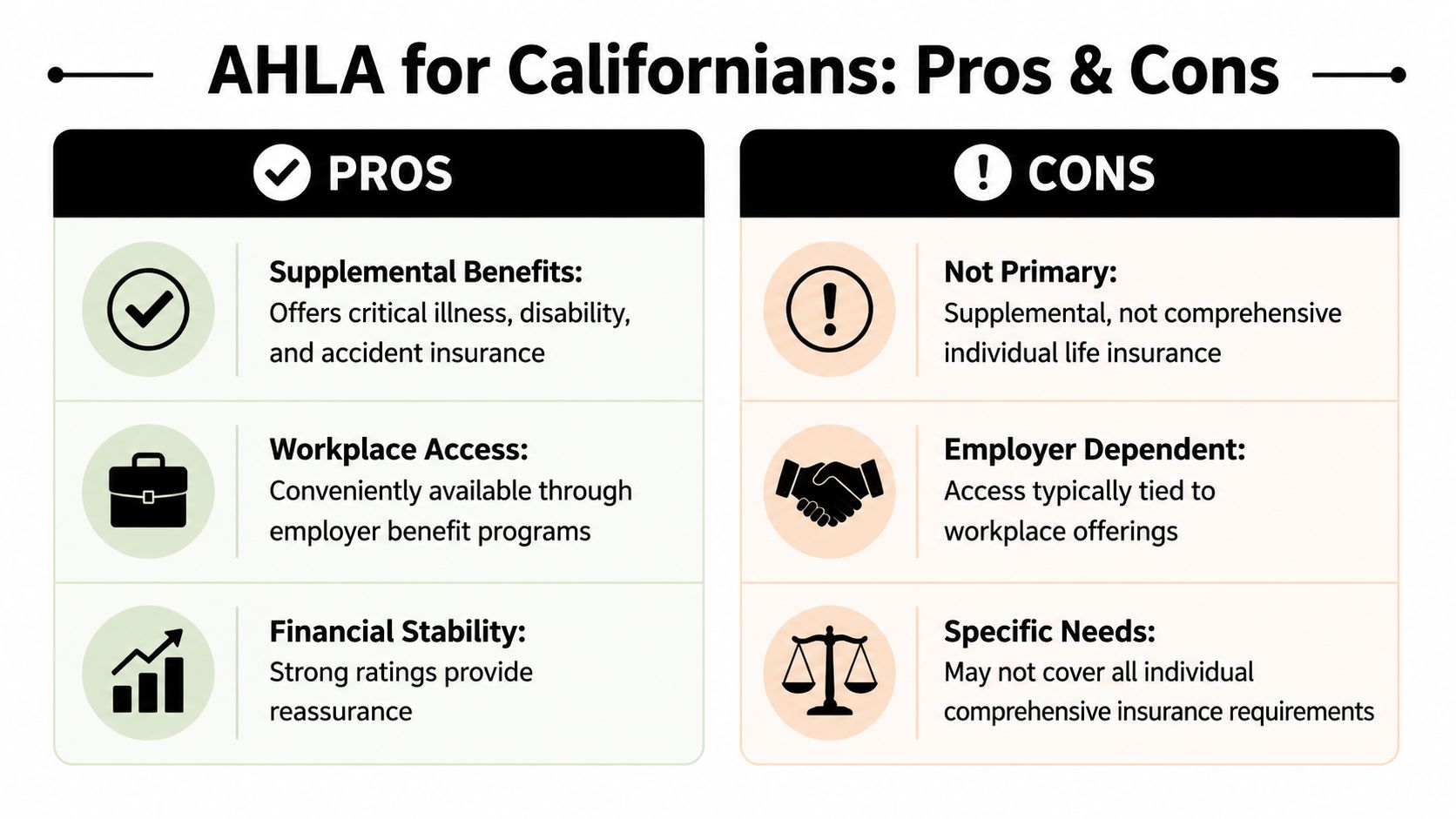
American Heritage Life can fit Californians who get access through work and need supplemental support, not a complete stand-alone solution. If your employer offers an accident plan, disability-related option, or group life add-on at a reasonable payroll cost, that can be a smart layer.
It's especially useful when your household has obvious short-term risk points:
- A thin emergency fund: An unexpected injury can create immediate cash stress.
- A high-deductible health plan: Supplemental products may help with costs your regular health plan leaves behind.
- A basic employer life benefit that's too small: Buying some additional workplace life coverage may be better than doing nothing.
Where Californians get misled
The biggest mistake is thinking a supplemental policy will behave like broad protection during a catastrophe.
A frequently asked question is how AHL's no waiting period supplemental plans for accidental injury differ from competitors, particularly regarding benefit caps and exclusions for California residents with pre-existing conditions or those in high-risk wildfire zones.
That question matters because California risk is unusual. Wildfires, smoke events, displacement, evacuation costs, and property loss create chain reactions across multiple policies. A supplemental accident plan might help in a narrow covered scenario. It won't replace proper home insurance, renters insurance, health coverage, disability planning, or a serious life insurance strategy.
If you own in a wildfire-prone area, this is the practical truth:
- It won't replace property protection: You still need a strong homeowners structure, and sometimes a Fair Plan plus companion policy.
- It won't solve evacuation-related financial chaos by itself: Limited-benefit policies are not broad disaster reimbursement contracts.
- It may still be useful: If a covered accidental injury happens during a disruption, the cash benefit could still relieve pressure.
Buy supplemental insurance for precision, not for fantasy. It's there to handle a defined gap, not every financial shock in California.
My recommendation for California households
Use American Heritage Life when it complements your core protection stack. Don't use it as a substitute for that stack.
For many readers, the better order of operations is this:
- Lock down your auto insurance and liability limits.
- Fix your home insurance or renters insurance, especially if you're exposed to wildfire or landlord-related gaps.
- Build a real life insurance plan based on income replacement and family obligations.
- Then evaluate whether a workplace supplemental policy adds useful extra protection.
If you're comparing workplace life benefits with outside options, this guide to California life insurance choices helps frame that decision in a more complete way.
Complaints Customer Service and Alternatives
A smart insurance decision needs more than product brochures. You also need a read on service quality.
I'm careful here because complaint analysis gets sloppy fast. One person's bad service story doesn't prove a pattern. On the other hand, a clean marketing page doesn't prove smooth claims handling either. The right move is to check objective complaint sources yourself, including regulator complaint data and business reputation platforms, then read them with context.
How to evaluate service without overreacting
Use this filter:
- Look for complaint themes, not isolated anger: Billing issues, claim delays, and communication problems matter more than generic venting.
- Separate employer administration problems from insurer problems: Workplace benefits often involve HR systems, payroll feeds, and third-party administration.
- Check recency: An insurer going through a branding or ownership change may show temporary service friction.
Alternatives worth comparing
American Heritage Life sits in a market where alternatives often come from other large workplace and supplemental carriers. That means the right comparison usually isn't “Is this better than my home insurance company?” It's “Is this the best supplemental option available through work or in the broader market?”
A balanced comparison should look at:
- Portability: Can you keep the policy if you change jobs?
- Clarity: Are benefits easy to understand before you enroll?
- Fit: Does the coverage solve a real household risk?
- Service path: Is claims handling straightforward?
If you want a second set of eyes on what you're seeing, the best next step is direct review with a licensed California team through the Mai & Associates contact page.
A policy that's easy to enroll in but hard to understand is where buyers get burned.
How to Get Quotes and Secure the Right Coverage
American Heritage Life is not typically “shopped” in the same manner as California auto insurance, home insurance, renters insurance, or open-market life insurance. They usually encounter it through an employer enrollment package. That means your job isn't just to ask whether the premium looks affordable. Your job is to decide whether the offer deserves a place in your overall protection plan.
The right process
Start with your current policies and obligations. Review your life insurance, health coverage, emergency savings, debt load, and the biggest risks facing your household. In California, those risks often include property exposure, liability from driving, and income disruption after injury or illness.
Then review the workplace offer line by line.
- Check what type of policy it is. Accident, supplemental health-style coverage, or group life are different tools.
- Read the exclusions and triggers. A policy isn't valuable just because it's easy to enroll in.
- Confirm whether the coverage is tied to your job. If you leave, ask what follows you and what doesn't.
- Compare workplace convenience against open-market quality. Payroll deduction is useful, but policy design matters more.
When to pass
Skip it if the policy duplicates coverage you already have, if the benefit language is murky, or if you're using it to avoid making a bigger decision you need to make, especially with life insurance.
For example, a parent who needs meaningful income protection for dependents shouldn't hide behind a modest workplace add-on and call the problem solved. The same logic applies to homeowners who are underinsured on property risks and renters who assume a workplace accident plan somehow replaces renters insurance. It doesn't.
When it makes sense
It makes sense when the policy is affordable, targeted, easy to understand, and clearly fills a gap. That can be true for an employee with limited savings, a family managing tight monthly cash flow, or a worker who wants some immediate life coverage while building a stronger long-term plan.
If you want to compare your current setup, review a workplace offer, or line up life, auto, home, and renters coverage in one place, use the California insurance quote request page.
If you want clear guidance from a California agency that understands how American Heritage Life Insurance fits into the bigger picture, Mai & Associates is a smart place to start. Their team can help you compare workplace benefits with stronger individual options, review your auto insurance, home insurance, renters insurance, and life insurance together, and spot the gaps that put families at risk.